Cáo Studio · Mga gabay sa photoshoot sa Vietnam · Ao Dai Photoshoot Vietnam: Mga Opsyon at Gabay sa Pagbili 2026
Ao Dai History for Travelers: What to Know Before Your Photo Session
Cáo Studio team · Hanoi
The áo dài is a fitted, floor-length tunic worn over loose silk trousers—Vietnam's national dress since the 18th century. It originated from Chinese influences but became distinctly Vietnamese under the Nguyễn dynasty (1802–1945), when the modern silhouette emerged. For travelers, it's iconic in photographs and cultural sites; proper wearing means buttoned tunic, hair either loose or pulled back, and respectful posture at temples. Cáo Studio – Makeup & Photoshoot offers dedicated ao dai photoshoots in Hanoi and Ho Chi Minh City where styling, makeup, and location scouting are handled by experienced teams. Sessions typically run 1–2 hours with multiple outfit changes and backdrops. Cost and inclusions vary; contact via WhatsApp for quotation and availability. 📸 Book on WhatsApp — ao dai photoshoot --- #
The áo dài represents more than fabric and thread—it encodes Vietnamese identity across dynasties, wars, and cultural revival. Understanding its past transforms a photoshoot from costume play into respectful cultural participation. This guide walks travelers through history, wearing rules, styling choices, and how to book an authentic session.
Paano naging iconic ang áo dài sa Vietnam? (How did the áo dài become Vietnam's national dress?)
The áo dài evolved over five centuries, beginning as a court garment in the 15th century under Trần and Lê dynasties. Chinese-influenced tunics dominated early forms, but by the 18th century, Vietnamese tailors modified the cut: narrower sleeves, higher armholes, and a longer silhouette that skimmed rather than concealed the body. The modern version—fitted at the bust and waist, flared at the hip—crystallized under French colonial rule (1887–1954), when educated urban women wore áo dài as a symbol of national pride. Actresses and scholars posed in them in photographs; áo dài became visual shorthand for "Vietnam." After 1975, it remained ceremonial (weddings, Tết, national holidays) and was officially recognized as the national dress in the 1990s.
Conclusion: The áo dài's geometry and symbolism evolved to balance Chinese tradition, French modernization, and Vietnamese self-definition.
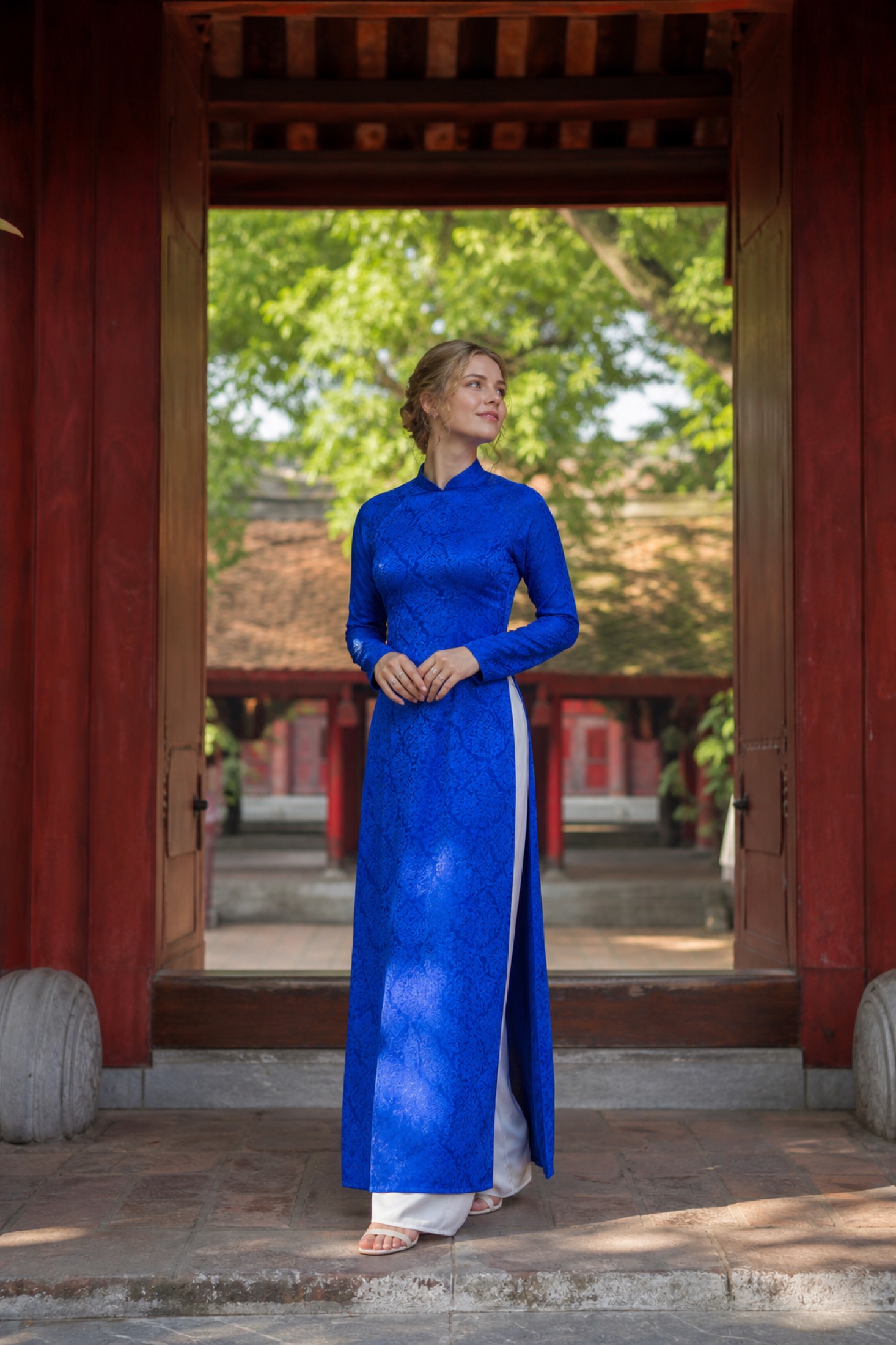
Ano ang tamang paraan ng pag-isuot ng áo dài? (What is the correct way to wear an áo dài?)
Proper áo dài wear follows strict etiquette. The tunic buttons from neck to waist, always fully fastened (never open-front, which reads as casual or incomplete). The neckline sits at the collarbone; sleeves end 2–3 cm above the wrist. Underneath, wear the accompanying silk trousers (called "quần"), which sit high on the waist with a flat front and flow loosely to the ankle. The tunic's side seams sit directly over your hip bones; when standing, the hem should brush or kiss the floor by 1–2 cm. Shoes are optional for photoshoots (bare feet or sandals look graceful) but if worn, they must be low-heeled or flat and covered by the tunic hem. Hair is typically worn loose and flowing, or pinned up to show the neckline and long silhouette. At temples, áo dài must cover the shoulder, elbow, and knee—any visible upper arm is disrespectful.
Conclusion: Buttoned, fitted, floor-length, with visible trousers and covered limbs signals respect and photogenic elegance.
Ano ang pinagkaiba ng áo dài para sa photoshoot at para sa pang-araw-araw? (How does a photoshoot áo dài differ from everyday wear?)
Travelers booking photo sessions wear special áo dài, not the ceremonial wedding versions or daily-wear mass-produced copies. Studio-quality áo dài are custom-tailored to the client's exact measurements to ensure a flawless silhouette on camera—no bunching, no gaps, no wrinkles from improper fit. Fabric selection differs too: studio pieces use pure silk or silk-blend materials that drape, catch light, and photograph with depth and luminosity, unlike polyester daily wear. Colors are chosen for skin tone, season, and location aesthetic—pastels photograph beautifully in natural light at temples (Hoan Kiem Lake surroundings in Hanoi, Tao Đàn Park in Ho Chi Minh City), while jewel tones stand out against colonial architecture. Studio sessions also include professional alteration: hems are steamed, button tension is checked, and undershirts are fitted so no tugging happens during movement. At Cáo Studio – Makeup & Photoshoot, the makeup and hair service integrates áo dài fitting into the pre-shoot prep—your stylist checks tunic alignment and ensures makeup contrasts with fabric and backdrop.
| Aspect | Photoshoot Áo Dài | Daily-Wear Áo Dài | Why It Matters for Travel Photos |
|---|---|---|---|
| Tailoring | Custom-fitted to client measurements | Off-the-rack, one-size-stretch | Camera reveals every wrinkle; fit must be perfect |
| Fabric | 100% silk or luxury silk-blend | Cotton, polyester, synthetic blends | Silk photographs with richness; synthetics look flat |
| Color | Chosen for skin tone + location lighting | Practical durability colors (black, navy) | Pastels and jewel tones pop in morning/golden light |
| Hem length | Precision steamed, 1–2 cm above floor | Varies widely; often too long or short | Hem hitting floor lengthens silhouette on camera |
| Cost basis | Premium (handmade or small-batch tailoring) | Budget to mid-range (mass production) | Reflects artisan finishing and fabric quality |
Studio-quality wear also allows multiple outfit changes within one session—you might try three colors and two silhouettes across 2 hours, something impractical in everyday garments.
Saan sa Vietnam ang pinakamahusay na background para sa áo dài photoshoot? (Where in Vietnam do áo dài photos look best?)
Light, architecture, and natural beauty dictate which locations suit áo dài photography. In Hanoi, the Hoan Kiem Lake area (around Ngọc Sơn Temple and the Red Bridge) offers soft morning and golden-hour light with water reflections that complement silk; temple gates and wooden railings frame the silhouette. Tao Đàn Park provides tree canopy, flower gardens, and colonial-style pathways. French Quarter facades (Hanoi Old Quarter) photograph well if you avoid harsh midday sun (shoot before 10 a.m. or after 3:30 p.m.). In Ho Chi Minh City (Hồ Chí Minh City, formerly Saigon), the Saigon River promenade and Tao Đàn Park offer open water and landscaping; Bitexco Financial Tower's surroundings provide urban geometry for contrast. In Hoi An (a UNESCO heritage town in Quảng Nam province), the Ancient Town's yellow shutters, lantern-lit streets, and Japanese Bridge create postcard-perfect backdrops; morning shoots (6–8 a.m.) capture mist and soft light before tourists arrive. Cáo Studio – Makeup & Photoshoot operates in Hanoi and Ho Chi Minh City with scouted locations; for Hoi An, ask on WhatsApp about travel dates.
Conclusion: Temple areas, parks, and heritage towns photograph best during golden hour (first 2 hours after sunrise or last 2 hours before sunset) in áo dài.
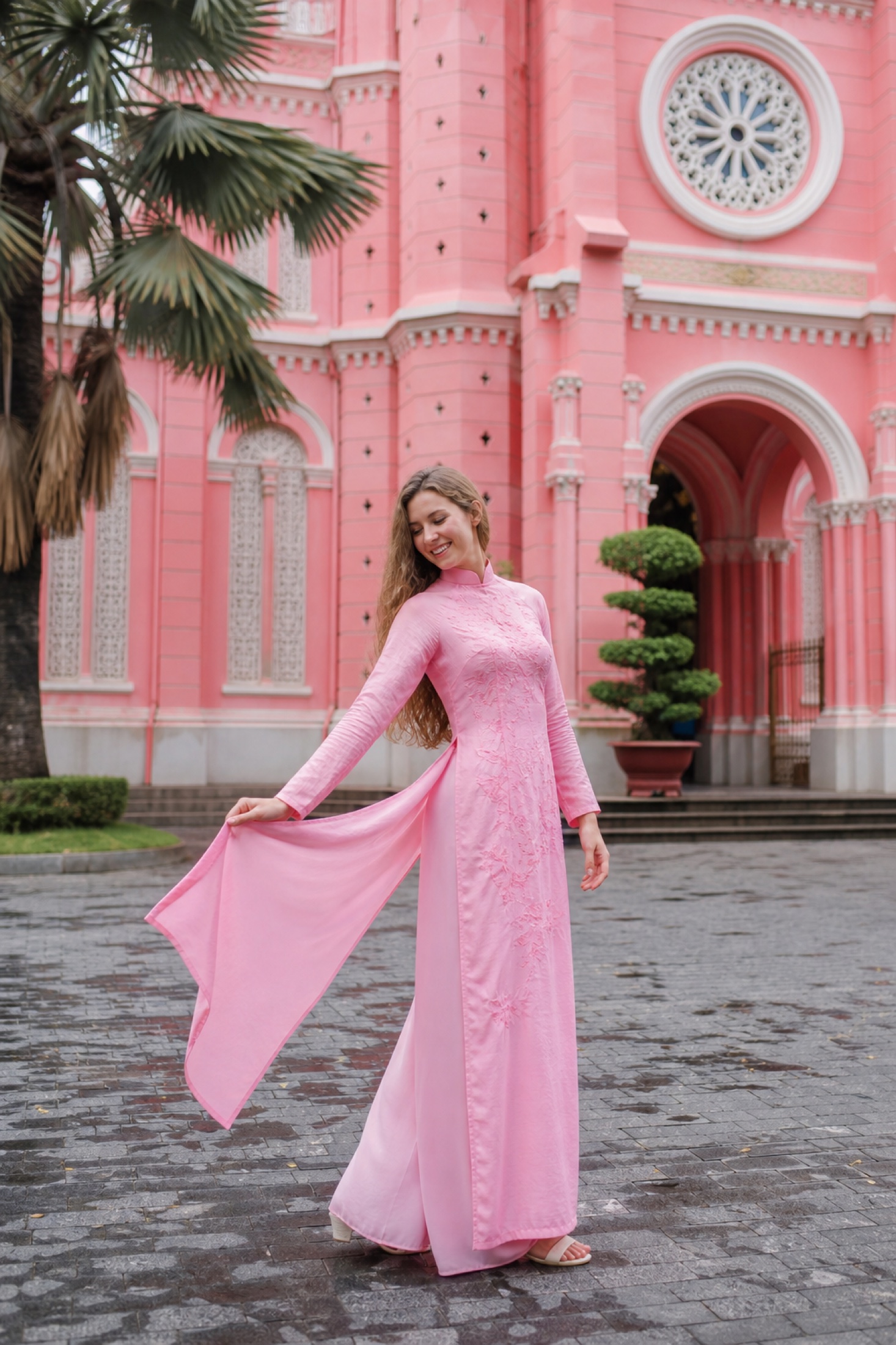
Paano pumili ng kulay ng áo dài na bagay sa iyong balat at sa background? (How do you choose an áo dài color that flatters your skin tone and background?)
Color selection requires balancing skin undertone, lighting conditions, and backdrop. For warm undertones (golden, peachy skin), jewel tones (emerald, sapphire, burgundy) and warm pastels (peach, warm pink, gold) photograph richly without washing you out. For cool undertones (pink, rosy skin), pastels (lavender, pale pink, white), cool silvers, and true reds complement skin without clashing. For neutral/olive undertones, almost every color works; prioritize hue saturation and the backdrop instead.
Backdrop matching: If you're shooting at a heritage temple with ochre and rust tones (common in Hoi An), avoid orange-toned áo dài—choose white, lavender, or deep jewel tones for contrast. Lake or water backgrounds (Hoan Kiem) benefit from cool or jewel tones that don't mirror the water; pastels often blend too much. Gardens with green foliage need non-green colors; coral, pink, or white stand out.
Light time matters: Golden-hour light (6–8 a.m. or 4–6 p.m.) warms all fabrics; cool colors stay jewel-like, and pastels glow. Midday sun bleaches pastels and washes warm skin; reserve midday for saturated, deep tones. Overcast days (common in Hanoi's rainy season, May–September) suit pastels and whites without glare.
Professional studios like Cáo Studio scout your outfit choice during the booking consultation via WhatsApp, so you arrive with a color decision already vetted for the date, time, and location.
Conclusion: Match undertone to color, contrast color to backdrop, and time your session for light that keeps your áo dài visually distinct and flattering.
📸 Book on WhatsApp — ao dai photoshoot
Ano ang dapat malaman tungkol sa áo dài etiquette sa mga temple at cultural site? (What temple and cultural-site etiquette applies to áo dài wear?)
Áo dài is respected formal wear at temples and cultural sites, but specific etiquette prevents disrespect. Coverage rules: The tunic must cover both shoulders, elbows, and the knee in full when sitting or kneeling. If your áo dài has short sleeves (a modern style variation), wear a long-sleeved undershirt beneath to comply. At shrines and altars, remove your shoes before stepping onto mat areas; if the áo dài floor hem is long, lift it slightly at the hip seam to avoid dragging it across sacred ground. During prayers or ceremonies, stand or sit quietly; photography is sometimes forbidden during active worship, so ask your guide or a staff member first. Temple donations (incense, flowers) are offered respectfully, not casually—hold items in both hands. At tombs and ancestral spaces (common in Huế, Hue City in Thừa Thiên Huế province), áo dài signals respect for the deceased; refrain from loud talking, rushing, or posing too casually near memorial structures. Many older temples and heritage sites have signage in English and Vietnamese indicating photo restrictions—read them before shooting.
Cáo Studio's pre-wedding and elopement packages often include temple locations, and our guides brief clients on etiquette beforehand to ensure smooth sessions and authentic experiences.
Conclusion: Fully cover shoulders, elbows, and knees; remove shoes in sacred areas; ask permission before photographing active worship; and move respectfully in spiritual spaces.
---
Ano ang dapat suriin bago mag-book ng ao dai photoshoot session? (What to check before booking your áo dài photoshoot.)
1. Tailoring timeline: Ask if the studio custom-fits áo dài or if you're renting stock sizes. Custom work takes 5–7 days; stock rentals fit off-the-rack. Ensure measurements are taken at booking.
2. Fabric and color range: Confirm the studio has silk options and a palette matching your skin tone and backup choices in case your first color doesn't suit the location light on the day.
3. Location and time: Specify your preferred location (temple, lake, heritage area) and golden-hour time slot. Outdoor shoots depend on weather; ask the reschedule policy for rain.
4. Hair and makeup inclusion: Check if styling is included in the package or charged separately. Some studios bundle it; others bill separately.
5. Image delivery and usage rights: Clarify how many edited photos you receive, timeline for delivery (often 1–2 weeks), and whether you can use images for social media or print.
6. Group size and duration: Confirm session length, number of outfits you can change into, and whether you can bring a partner for couple and family photoshoots if desired.
7. Cancellation and weather policy: Understand deposit terms and rescheduling options if weather or personal emergencies force a reschedule.
---
#
FAQ
Magkano ang average cost ng isang ao dai photoshoot session para sa travelers?
Cost varies by location (Hanoi vs. Saigon), duration, outfit changes, and tailoring vs. rental. Cáo Studio quotes are sent via WhatsApp after you provide session details. Studio-quality áo dài photoshoots typically include styling, makeup, and multiple locations; contact us for a personalized quote.
Dapat bang mag-rent o bumili ng sariling ao dai para sa photoshoot?
Renting from a studio (like Cáo Studio – Makeup & Photoshoot) ensures custom fit, professional fabric, and styling guidance. Buying is worthwhile if you plan to wear it repeatedly or want a keepsake. Rentals suit one-time travelers.
Gaano katagal ang typical ao dai photoshoot session?
Sessions run 1–2 hours depending on number of locations and outfit changes. Most travelers do 2–3 áo dài colors or silhouettes within 2 hours. Longer sessions are available by request.
Pwede bang mag-photoshoot ng ao dai kung walang experience sa pag-pose?
Yes. Studio photographers direct poses and angles; you don't need modeling experience. Professional teams guide you through movement, expression, and positioning so every shot looks natural and confident.
Available ba ang ao dai photoshoot outside Hanoi at Ho Chi Minh City?
Cáo Studio operates branches in Hanoi and Ho Chi Minh City. For Hoi An (a popular heritage destination), ask on WhatsApp about team travel dates and bookings. Other destinations require independent local photographer booking and áo dài rental sourcing.
Dapat bang mag-alok ng sariling ao dai, o ang studio ay may inventory?
Studios typically maintain inventory for rental. If you own an áo dài and wish to use it, inform the studio beforehand—they'll check fit, condition, and suitability for the session. Many travelers prefer studio áo dài to avoid wear and handling costs. --- 🌸 Ideas & lookbook
Mga karaniwang tanong
Magkano ang average cost ng isang ao dai photoshoot session para sa travelers?
Cost varies by location (Hanoi vs. Saigon), duration, outfit changes, and tailoring vs. rental. Cáo Studio quotes are sent via WhatsApp after you provide session details. Studio-quality áo dài photoshoots typically include styling, makeup, and multiple locations; contact us for a personalized quote.
Dapat bang mag-rent o bumili ng sariling ao dai para sa photoshoot?
Renting from a studio (like Cáo Studio – Makeup & Photoshoot) ensures custom fit, professional fabric, and styling guidance. Buying is worthwhile if you plan to wear it repeatedly or want a keepsake. Rentals suit one-time travelers.
Gaano katagal ang typical ao dai photoshoot session?
Sessions run 1–2 hours depending on number of locations and outfit changes. Most travelers do 2–3 áo dài colors or silhouettes within 2 hours. Longer sessions are available by request.
Pwede bang mag-photoshoot ng ao dai kung walang experience sa pag-pose?
Yes. Studio photographers direct poses and angles; you don't need modeling experience. Professional teams guide you through movement, expression, and positioning so every shot looks natural and confident.
Available ba ang ao dai photoshoot outside Hanoi at Ho Chi Minh City?
Cáo Studio operates branches in Hanoi and Ho Chi Minh City. For Hoi An (a popular heritage destination), ask on WhatsApp about team travel dates and bookings. Other destinations require independent local photographer booking and áo dài rental sourcing.
Dapat bang mag-alok ng sariling ao dai, o ang studio ay may inventory?
Studios typically maintain inventory for rental. If you own an áo dài and wish to use it, inform the studio beforehand—they'll check fit, condition, and suitability for the session. Many travelers prefer studio áo dài to avoid wear and handling costs. --- [🌸 Ideas & lookbook](/fil/lookbook)