Cáo Studio · Mga gabay sa photoshoot sa Vietnam · Ao Dai Photoshoot Vietnam: Mga Opsyon at Gabay sa Pagbili 2026
Ao Dai Photos sa Tran Quoc Pagoda: Guide para sa Hanoi Photoshoot
Cáo Studio team · Hanoi
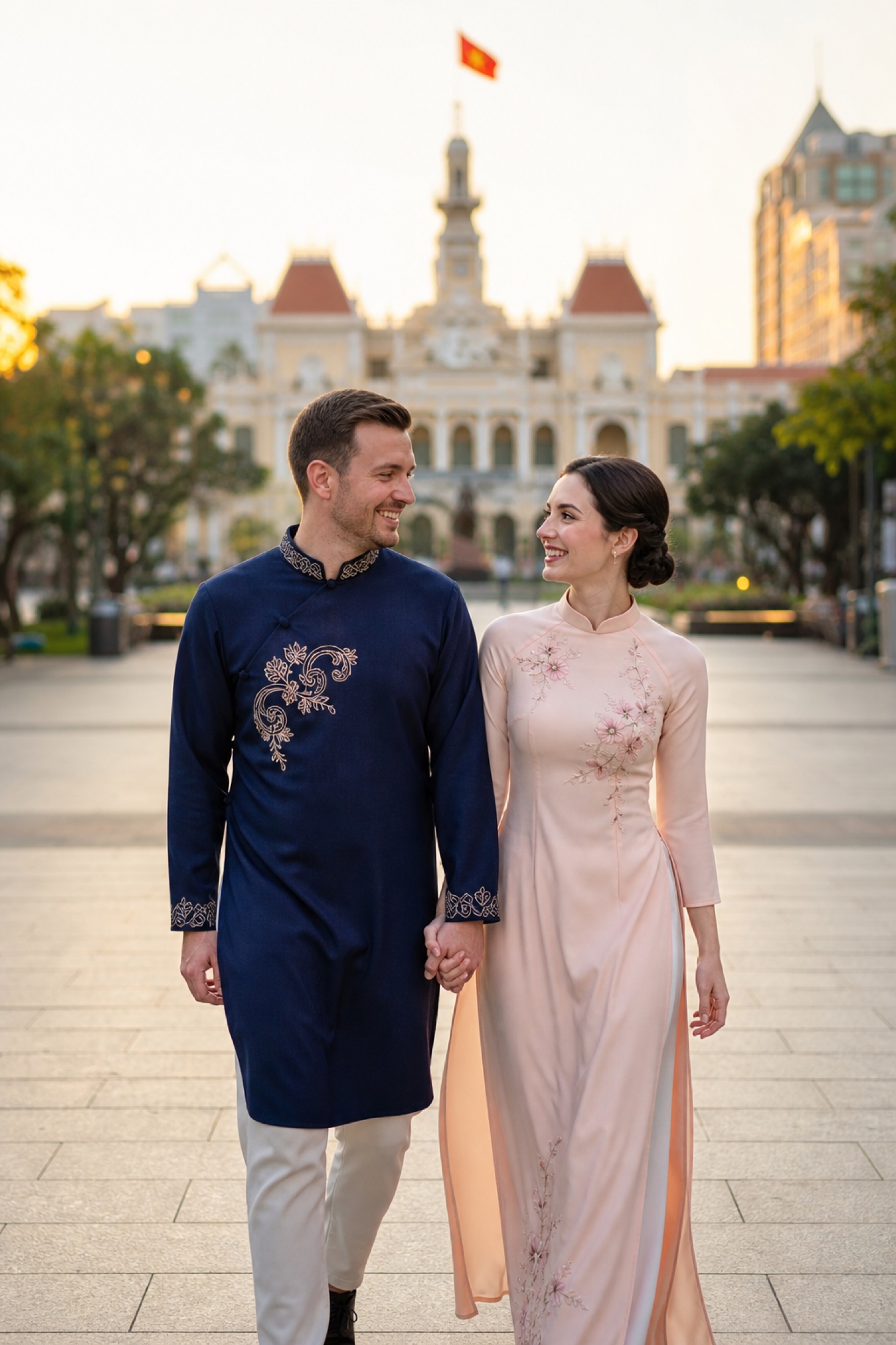
Tran Quoc Pagoda is Hanoi's oldest temple and its most photogenic. Red lacquered pillars, golden accents, and views across the Red River (Sông Hồng) create a natural frame for ao dai portraits. Whether you're visiting Hanoi as a tourist or marking a milestone, shooting here requires planning: light windows close fast, temple protocol matters, and outfit preparation prevents regret. This guide walks you through it.
Bakit Tran Quoc Pagoda ang Best Backdrop para sa Ao Dai?
The pagoda's architectural detail—curved roof tiles, gilded Buddha statues, weathered stone—photographs differently every hour. Morning light strikes the east face at a warm angle. Late afternoon bathes the lake-facing courtyard in gold. The interior shrine, with its low-hanging lanterns and incense smoke, creates moody portraits without needing a studio. Few outdoor temples in Southeast Asia offer this range in one location.
📸 Book on WhatsApp — ao dai photoshoot
The lake itself (Tay Ho Lake / Hồ Tây) adds depth—reflections in still water amplify color and symmetry. Tour groups typically crowd the entrance 10–11 a.m. and 3–4 p.m., so timing your session outside these windows keeps your photos clean. First-time shooters often underestimate how busy this spot gets; a professional booking coordinator (like those at Cáo Studio Hanoi) pre-arranges timing with temple staff to avoid crowds and secure permission for portrait work.
Anong Oras ng Taon ang Best para sa Photoshoot dito?
October–November (cool, low humidity, clear skies): Golden hour lasts longer, humidity won't damage hair or makeup, and ao dai colors pop against crisp backdrops. Expect 15–22°C mornings; bring a shawl if shooting before 9 a.m.
December–February (cold, occasional drizzle): Red ao dai looks striking against gray skies, but you'll need waterproof makeup and protective styling. Temple floors turn slippery; wear non-slip shoes under your áo dài. Sessions here feel intimate and moody.
March–May (hot, increasingly humid): Sweat interferes with makeup longevity; sessions need more frequent touch-ups. Hair frizz is real. If you shoot in this window, request a makeup artist trained in humidity-resistant techniques and choose venues with partial shade (the temple's interior shrine, not open courts).
June–September (monsoon, rare shooting window): Avoid. Thunderstorms arrive fast, and wet stone is dangerous. If you must shoot, pick an indoor corner and expect limited light.
Pro tip: Book early morning (6:30–8:30 a.m., before crowds) in any season. Photographers at Cáo Studio know the temple's seasonal mood and adjust camera settings to match.
Ano ang Dapat Suotin Under an Ao Dai para sa Comfort at Photos?
Your undergarments make or break a 2-hour shoot. Here's the checklist:
- Underslip (áo dài lót): A structured white or skin-tone slip prevents the outer layer from clinging or showing seams. Must reach your ankles. Budget-conscious option: wear a fitted white underdress (available at fabric shops near Hanoi's Old Quarter); custom-fit slips cost slightly more but last through multiple shoots.
- Undergarments: Go minimal—a simple bra or bandeau, cotton briefs. Heavy bras create visible lines under the fitted bodice; many studios recommend strapless or adhesive options.
- Trousers (quần): Traditional white silk or cotton pants come with ao dai rentals or custom tailors. If you own yours, ensure they're hemmed to just touch your shoe tops (no bunching). Synthetic fabrics stick in humidity.
- Shoes: Slip-on flats or embroidered fabric slippers. Avoid heels on uneven temple stone; many photographers recommend soft ballet-style shoes for comfort during long poses.
Cáo Studio provides styling guidance when you book; if you're renting an ao dai locally, ask the tailor which underslip style matches your chosen outer layer's weight and color.
| Item | For Comfort | For Photos | Common Mistake |
|---|---|---|---|
| Underslip | Breathable cotton/silk blend | Prevents seams showing, smooths silhouette | Wearing a thin, flimsy slip that bunches |
| Bra/Bandeau | Minimal band to avoid sweat | Invisible lines, allows natural movement | Visible strap lines under fitted bodice |
| Trousers | Natural fabric, ankle-length | Clean white line, elegant proportion | Hemmed too short or wrinkled |
| Shoes | Non-slip sole on stone | Frames ankles, matches aesthetic | Heels that catch on temple threshold cracks |
Paano mag-Shoot sa Tran Quoc Pagoda na May Respect sa Temple?
This is non-negotiable. Tran Quoc Pagoda is an active Buddhist site with morning and evening rituals.
- Dress code: Ao dai is appropriate and honored. Avoid showing shoulders or knees in non-photo contexts (when walking through living areas).
- Photography zones: The exterior courtyard, lake-facing platforms, and decorative corners are photographer-friendly. Main shrine interiors require permission; ask the temple keeper (typically a monk or caretaker near the entrance). Most allow brief portrait sessions if you're respectful.
- Incense and altar etiquette: Don't lean on or move religious objects for a "better angle." Smoke creates beautiful atmospheric photos naturally—work with it, don't stage it.
- Timing around ceremonies: Monks chant at dawn and sunset. These moments add authenticity but also require stepping back. A professional team (like Cáo Studio Hanoi) knows the schedule and books around it.
- Offerings: A small donation (50,000–100,000 VND) at the entrance is customary and appreciated. It's not required for photography but reflects respect.
Most temples in Hanoi welcome tourists with ao dai—it signals cultural interest. Disrespectful shoots (posing on altars, mocking gestures, ignoring prayer times) get you asked to leave.
Lighting Tips at Posing Angles na Gumagana Best dito
Golden hour magic (6:30–8 a.m., 4:30–5:30 p.m.):
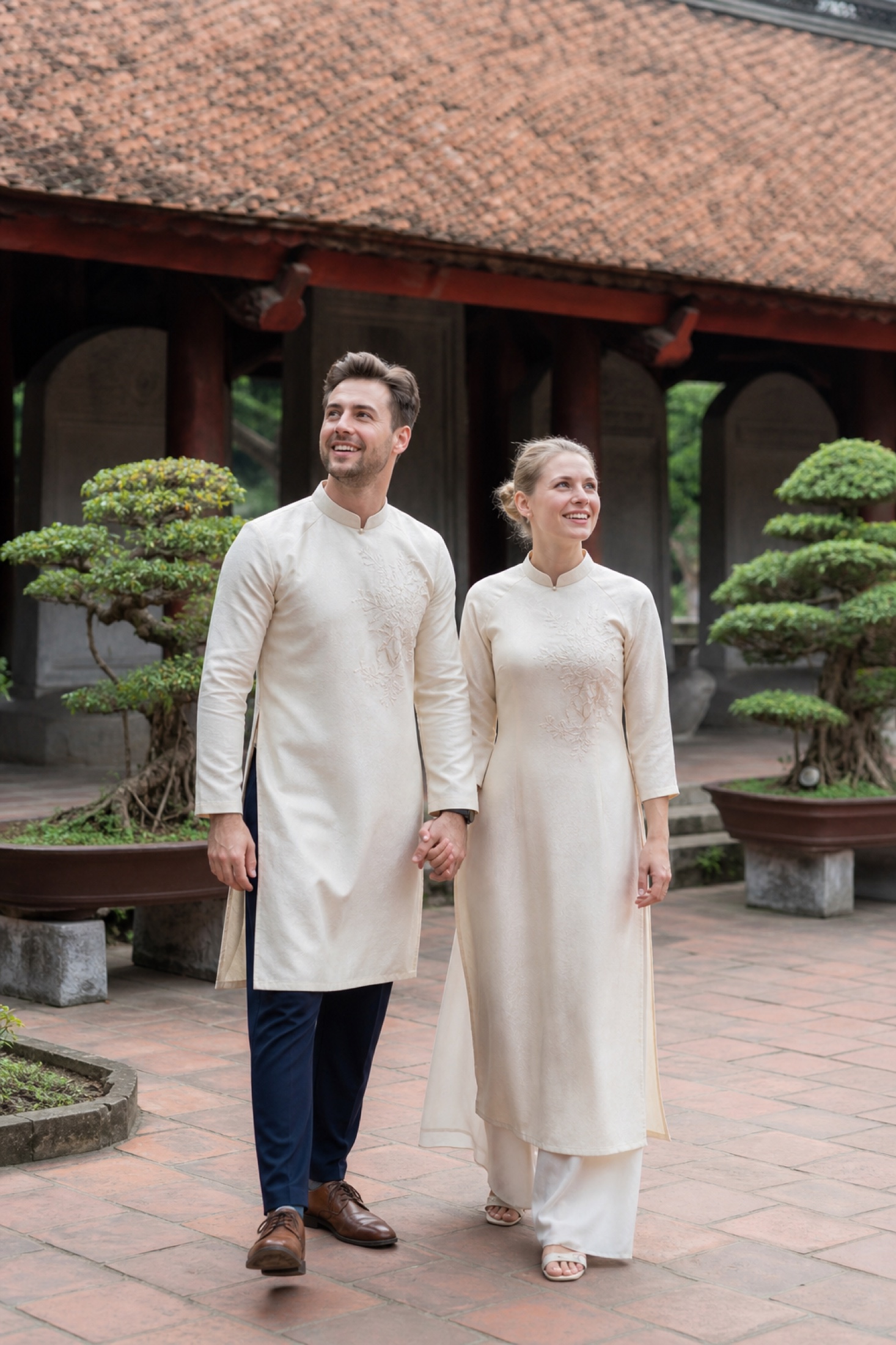
- East-facing entrance: Backlit at sunrise creates a halo effect around your áo dài fabric.
- Lake-facing steps: Afternoon light reflects off water, softening shadows on your face.
- Side profile near columns: Red pillars frame you without competing for focus.
Midday (11 a.m.–3 p.m.):
- Avoid open courtyards—harsh shadows flatten features. Seek dappled shade near overhanging eaves or beside trees.
- Wear sunglasses between frames to protect your eyes; direct sun causes squinting.
Posing fundamentals:
- Stand at a 45-degree angle to the camera, one foot slightly forward (lengthens your silhouette).
- Hands: Rest gently on the ao dai's bodice or at your side; avoid stiffness.
- Eyes: Look just past the camera, then slowly toward it—this motion prevents vacant stares.
- Respect the architecture: Use columns as visual anchors, not hiding spots.
A professional photographer on your team Cáo Studio's services directs these poses in real time, so you don't overthink it.
Kumpisal: What Could Go Wrong—and How to Avoid It
Makeup fading in humidity or sweat: Request waterproof, long-wear formulas when you book. Many studios apply a setting spray before you leave the studio and bring touch-up powder on-site. If you're shooting in March–May, mention this when booking.
Ao dai wrinkles after 90 minutes: Natural wrinkles in silk are normal and often add character. If you want a pristine look throughout, wear a protective robe until shooting starts, and ask your makeup team to steam the garment if needed.
Temple access denial: Always confirm photography is allowed when you arrive. Some days are ritual-heavy. A booking coordinator from a studio (like Cáo Studio) typically handles this pre-shoot, but independent shooters should ask a temple staff member at entry.
Crowd interference: If you book solo or with a small crew, 10–11 a.m. guarantees 50+ tourists in your frames. Early morning or late afternoon sessions sidestep this entirely.
Shoe slipping on wet stone: Bring a towel in your bag. Wipe the temple floor before posing if morning dew or incense-water residue is present.
Edited photos looking over-processed: When you receive digital files, check the color grading first. Ao dai colors should look vibrant but natural. If skin tones appear orange or fabric looks artificially saturated, ask for a re-edit or original file.
---
Ano Ang Kasama sa Isang Professional Ao Dai Photoshoot Session?
When you book with Cáo Studio:
- Hair and makeup styling (1 trial look + up to 2 adjustments during shoot).
- Professional photographer (1.5–2 hours on-site).
- 50+ edited digital photos in high resolution.
- Guidance on temple protocol and posing.
- Optional: Ao dai rental coordination (local tailor referrals) or styling advice if you bring your own.
Sessions don't include printed albums or framed prints, but Cáo Studio's partner collections offer keepsake products—custom storybooks, canvas prints, or acrylic displays—to preserve your photos. Quotes and package details arrive via WhatsApp after you describe your vision.
---
FAQ
Puwede ba akong mag-shoot ng ao dai sa Tran Quoc Pagoda kung sarili ko lang ang dadalhin?
Yes, but temple etiquette and timing still apply. You'll need to arrange your own hair and makeup (local salons in Hanoi Old Quarter offer quick services). Photography will lack professional posing direction and editing. A studio team handles permits, optimal timing, and post-production quality.
Ano ang best time of day para talaga sa lighting?
6:30–8 a.m. or 4:30–5:30 p.m. (golden hour). Early morning avoids crowds and gives soft, flattering light. Afternoon creates reflections in the lake. Midday (11 a.m.–3 p.m.) is too harsh; seek shade if you must shoot then.
May additional cost ba kung gusto ko ng wedding or couple photoshoot sa Tran Quoc?
Pricing depends on session length and number of people. Cáo Studio's couple and family photoshoots can be booked at this location. Request a custom quote via WhatsApp mentioning Tran Quoc and your specific needs.
Dapat ba akong magrent ng ao dai or bumili?
Renting (1–2 days, ~500,000–1,000,000 VND from Old Quarter tailors) works for one-time shoots. Buying a custom ao dai (~2–5 million VND, 2–4 week lead time) suits repeat photographers or special occasions. Both options work photographically; choice depends on your budget and future plans.
Gaano kalaki ang file size ng delivered photos, at pwede ba akong mag-print?
Digital files are typically high-resolution JPGs (3000×2000px or larger), suitable for prints up to 12×18 inches without quality loss. Studios send files via cloud link or USB. Print-ready files are included; use a professional lab for best results.
Pwede ba akong mag-book ng makeup at photoshoot on the same day but different locations?
Yes. Cáo Studio's makeup and hair service is available at your hotel or studio. You can do morning styling, then travel to Tran Quoc for a late-morning or afternoon shoot. Coordination happens via WhatsApp when you book. --- 📸 Book on WhatsApp — ao dai photoshoot
Mga karaniwang tanong
Puwede ba akong mag-shoot ng ao dai sa Tran Quoc Pagoda kung sarili ko lang ang dadalhin?
Yes, but temple etiquette and timing still apply. You'll need to arrange your own hair and makeup (local salons in Hanoi Old Quarter offer quick services). Photography will lack professional posing direction and editing. A studio team handles permits, optimal timing, and post-production quality.
Ano ang best time of day para talaga sa lighting?
6:30–8 a.m. or 4:30–5:30 p.m. (golden hour). Early morning avoids crowds and gives soft, flattering light. Afternoon creates reflections in the lake. Midday (11 a.m.–3 p.m.) is too harsh; seek shade if you must shoot then.
May additional cost ba kung gusto ko ng wedding or couple photoshoot sa Tran Quoc?
Pricing depends on session length and number of people. [Cáo Studio's couple and family photoshoots](/fil/services/couple-photoshoot) can be booked at this location. Request a custom quote via WhatsApp mentioning Tran Quoc and your specific needs.
Dapat ba akong magrent ng ao dai or bumili?
Renting (1–2 days, ~500,000–1,000,000 VND from Old Quarter tailors) works for one-time shoots. Buying a custom ao dai (~2–5 million VND, 2–4 week lead time) suits repeat photographers or special occasions. Both options work photographically; choice depends on your budget and future plans.
Gaano kalaki ang file size ng delivered photos, at pwede ba akong mag-print?
Digital files are typically high-resolution JPGs (3000×2000px or larger), suitable for prints up to 12×18 inches without quality loss. Studios send files via cloud link or USB. Print-ready files are included; use a professional lab for best results.
Pwede ba akong mag-book ng makeup at photoshoot on the same day but different locations?
Yes. [Cáo Studio's makeup and hair service](/fil/services/makeup-and-hair) is available at your hotel or studio. You can do morning styling, then travel to Tran Quoc for a late-morning or afternoon shoot. Coordination happens via WhatsApp when you book. --- [📸 Book on WhatsApp — ao dai photoshoot](https://wa.me/84865239183)