Cáo Studio · Mga gabay sa photoshoot sa Vietnam · Ao Dai Photoshoot Vietnam: Mga Opsyon at Gabay sa Pagbili 2026
Ao Dai Wedding Dress Vietnam: Guide to Choosing & Wearing
Cáo Studio team · Hanoi
An ao dai wedding dress is Vietnam's most recognizable traditional garment: a flowing silk tunic that skims the body, paired with matching high-waisted pants. Western travelers often choose it for wedding photoshoots, anniversary celebrations, and formal travel portraits. Unlike a Western wedding gown, an ao dai is elegant, practical, and deeply connected to Vietnamese culture—a choice that honors both aesthetics and heritage.
Cáo Studio – Makeup & Photoshoot helps international visitors navigate this choice. Our team has dressed hundreds of Western clients in wedding ao dais for professional shoots. This guide covers what to look for, how to fit one correctly, and how professional styling transforms a dress into unforgettable imagery.
Áo Dài Cưới (Wedding Ao Dai) vs. Ready-to-Wear: What's the Real Difference?
The key difference lies in fabric, construction, and fit personalization. A true wedding ao dai uses silk or premium silk blends; seams are reinforced; tailoring is custom. Ready-to-wear versions use polyester or cheaper blends, rely on standard sizing, and often pucker at the shoulders or ride uneven at the hem.
Wedding-grade dresses cost more upfront—but photograph sharper, move more fluidly, and last decades. Ready-to-wear works if you're renting for a single session; it won't hold shape through multiple wearings or look polished in close-up photography.
The decision: If you're booking a professional photoshoot at Cáo Studio – Makeup & Photoshoot, invest in premium fabric. If you're attending a casual family gathering, rental ready-to-wear is practical.
| Factor | Wedding-Grade (Custom/Premium) | Ready-to-Wear (Standard) | Best For |
|---|---|---|---|
| Fabric | Silk or silk blend (100% or 95%+) | Polyester or cotton blend | Professional photoshoots, formal weddings |
| Tailoring | Custom fitted to your measurements | Fixed S, M, L sizing | Budget travelers, single events |
| Lifespan | 20+ years if cared for | 3–5 years | Keepsake gowns vs. rentals |
| Photography | Sharp seams, vibrant drape, color clarity | Duller finish, possible puckering | Magazine-quality shoots |
| Price Range | $200–600+ | $50–150 | Investment vs. experience |
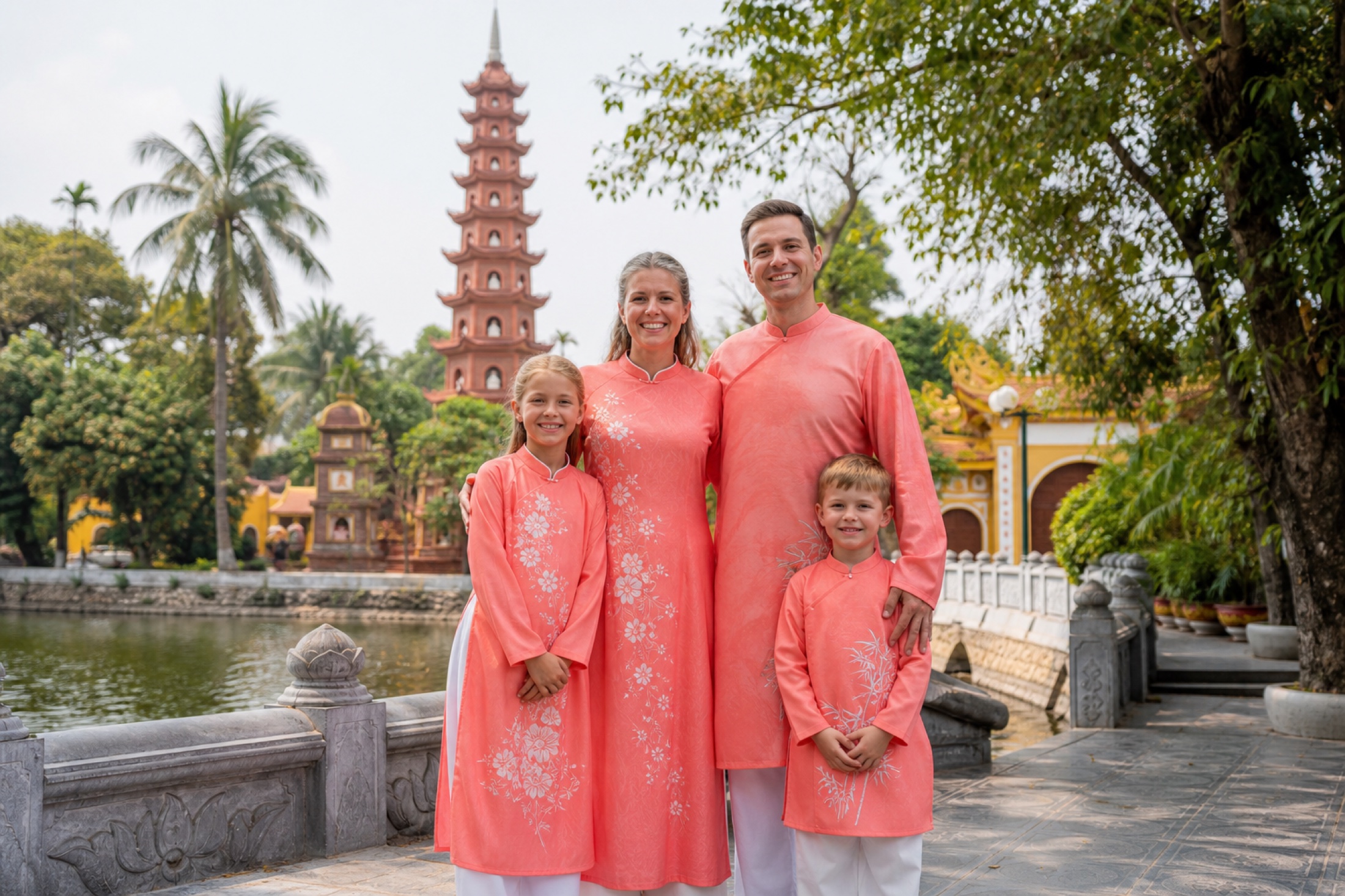
Màu Sắc (Color) Choices: Beyond White
Most Western brides assume white; Vietnamese tradition often favors jewel tones or pastels. Understanding color is essential—wrong shades can clash with your skin, fade in tropical light, or look washed out in photos.
For fair/cool skin tones: Soft white, ivory, pale pink, lavender, or deep emerald read beautifully. Avoid muddy pastels.
For warm/olive skin tones: Champagne, blush, coral, gold, ruby, or deep rose gold elevate the look. Pure white can look stark.
For deeper skin tones: Jewel tones (sapphire, emerald, burgundy) and gold sing. Cream and champagne also work well; avoid very pale shades.
Light in Vietnam (bright tropical sun) changes color perception. What looks perfect indoors appears washed out in noon sun. Professional studios like Cáo Studio shoot during golden hour (early morning or late afternoon) to preserve color saturation. If you're choosing a dress remotely, request studio samples or ask to see color swatches in daylight before committing.
📸 Book on WhatsApp — ao dai photoshoot
Đo Kích Thước (Sizing & Fit): Why Off-the-Rack Fails
An ao dai must fit the chest, waist, and hip without gaps or pulling. Unlike Western dresses, a loose ao dai looks sloppy; a tight one restricts breathing and creates unflattering wrinkles in photos.
Key measurements tailors need:
- Bust (fullest point)
- Waist (natural waist)
- Hip (fullest point)
- Shoulder width
- Sleeve length (from shoulder seam to wrist)
- Total length (from shoulder to ankle)
- Inseam (waist to ankle for pants)
Standard Vietnam sizing runs small for Western frames. A US size 8 often needs a size 12 or 14 equivalent in Vietnam. Many rental shops don't stock XL or XXL; custom tailors can.
When shopping online from abroad, never assume photos show true color or fit. Fabrics bunch differently on different bodies. Cáo Studio clients who bring or ship dresses ahead receive a fitting session before shooting; we make micro-adjustments to ensure comfort and photograph perfection.
Phụ Kiện (Accessories) & Layering: The Hidden Game-Changers
An ao dai worn bare looks incomplete. Strategic accessories elevate the look and add cultural authenticity.
Essential layers & additions:
- Silk underdress (inner áo): Prevents transparency; most premium dresses include one. Thinner fabrics must have it.
- Hair accessory: Fresh flowers, vintage combs, or beaded pins. Avoid bulky tiaras (Western bridal convention, not Vietnamese).
- Jewelry: Delicate necklace or chandelier earrings; avoid oversized modern pieces.
- Shoes: Flat embroidered slippers or elegant sandals in matching silk. Never wear Western heels (they disrupt the dress line and temple etiquette).
Professional shoots include styling consultation. At Cáo Studio, our team sources or advises on accessories. The difference between "wearing an ao dai" and "wearing an ao dai expertly" lies in these details.
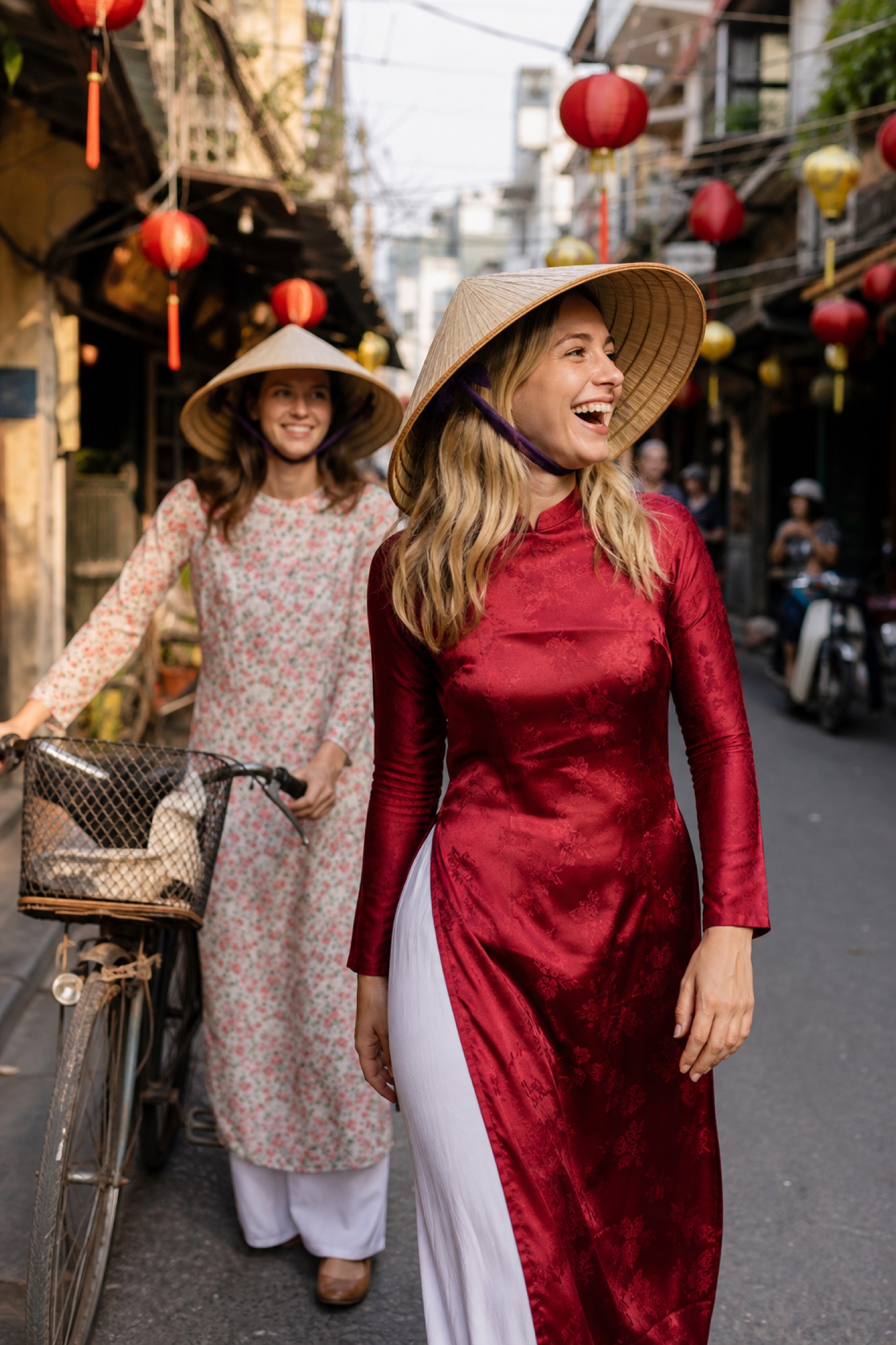
Mùa & Thời Tiết (Seasons & Weather): Fabric Weight Matters
Vietnam's climate shifts dramatically by season and region. Heavy silk is miserable in June humidity; thin silk sags in December cool. Choosing the right fabric weight for the season prevents discomfort and wardrobe failure.
Hanoi & Saigon Seasons:
- May–September (hot/humid): Choose lightweight silk, linen blend, or rayon. Avoid heavy brocades.
- October–April (cool/dry): Heavier silk, brocade, or embroidered options work well. Pair with a silk shrug or light jacket for morning shoots.
- Hoi An (year-round coastal): Lightweight silk resists mold in humid storage. Tropical rain peaks September–November; indoor studios or covered locations recommended.
If you're renting in Vietnam, ask the shop about fabric weight. If you're shipping a dress from abroad, time arrival to match the season. Thick fabric crumpled in a suitcase looks terrible; allow 2–3 days for steaming before your shoot.
Booking a Photoshoot: What Sets Professional Studios Apart
Wearing an ao dai is one thing. Being photographed in one by someone who understands light, pose, and cultural dignity is another.
Professional studios invest in:
- Location scouting: Temple gates, old town streets, gardens—each lit at specific hours for best color.
- Makeup for photography: Studio lighting requires heavier makeup than everyday wear to avoid washing out.
- Posing guidance: Many Western clients feel stiff in a dress they've never worn; a good photographer directs natural movement.
- Retouching standards: Wrinkles, sweat, or fabric bunching are smoothed; skin and colors are color-corrected for the season's light.
- Outfit backup: Professional studios have alternate dresses or accessories if something doesn't photograph well.
Cáo Studio operates branches in Hanoi, Saigon, and travels to Hoi An by appointment. Each shoot includes hair and makeup. Packages range from 2-hour single-dress sessions to full-day pre-wedding coverage. When booking, clarify what's included: number of outfits, locations, retouched files, print options.
Mẹo Trước Khi Mua (Checklist Before Buying or Renting)
Before committing to an ao dai, verify these non-negotiables:
- Transparency test: Hold to light indoors and outdoors. Can you see the inner áo? If not, inspect the underdress inclusion.
- Seam strength: Run your finger along seams. Loose stitching fails under studio lighting or repeated movement.
- Color in daylight: View the actual dress sample in natural light, not just under shop lights or in photos.
- Alteration allowance: Confirm the tailor can adjust waist, hem, and sleeves. Budget 200,000–500,000 VND for alterations.
- Care instructions: Silk demands dry-cleaning. Does the price include a care bag or protective cover?
- Cancellation policy: If renting, what's the deposit and refund policy if plans change?
- Fitting appointment: Professional studios like Cáo Studio offer a fitting before your shoot. Use it—last-minute fixes happen here.
For international clients, we recommend booking couple photoshoots if you have a partner, or proposal & anniversary packages if celebrating a milestone. Hanoi, Saigon, and Hoi An each offer distinct backdrops; your location choice shapes both the aesthetic and logistics.
---
FAQ
Can I wear an ao dai as a wedding dress if I'm not Vietnamese?
Absolutely. Many Western brides choose ao dais for wedding shoots in Vietnam—it's respectful, photogenic, and makes a powerful statement. Wear it with intention; ask your photographer about temple etiquette if shooting on sacred grounds.
What's the difference between buying and renting in Vietnam?
Buying (custom-tailored) costs $200–600, takes 5–10 days, and gives you a keepsake. Renting costs $20–80 per day, fits standard sizes (often small), and is practical for travelers. For professional photoshoots, tailored fabric photographs better.
Does my ao dai need to be white for a wedding?
No. Vietnamese tradition embraces jewel tones, pastels, and metallic silks. Choose colors that flatter your skin tone and photo well in tropical light. White is one option, not the only one.
How do I know if an ao dai fits correctly before buying?
It should not gap at the chest, pull at the waist, or bunch at the hips. The pants should skim your legs without baggy knees. If ordering online, provide exact measurements and request a fitting video from the tailor before final payment.
Can I wear a Western dress and just have photos taken in an ao dai?
Yes, many clients do. Book a makeup & hair session and a short ao dai shoot (2–3 hours). You change into the ao dai on-site. This works if you want professional styling without committing to an all-day dress.
What happens if the ao dai doesn't arrive before my shoot date?
Contact your studio immediately—they often have backup dresses or can arrange emergency alterations. At Cáo Studio, we keep common sizes on-site for last-minute clients. WhatsApp +84 865 239 183 to confirm availability.
How do I care for an ao dai after my wedding?
Dry-clean only; never machine wash silk. Store flat or on a padded hanger in a breathable garment bag, away from sunlight. Properly stored, a silk ao dai lasts 20+ years and becomes a heirloom.
Mga karaniwang tanong
Can I wear an ao dai as a wedding dress if I'm not Vietnamese?
Absolutely. Many Western brides choose ao dais for wedding shoots in Vietnam—it's respectful, photogenic, and makes a powerful statement. Wear it with intention; ask your photographer about temple etiquette if shooting on sacred grounds.
What's the difference between buying and renting in Vietnam?
Buying (custom-tailored) costs $200–600, takes 5–10 days, and gives you a keepsake. Renting costs $20–80 per day, fits standard sizes (often small), and is practical for travelers. For professional photoshoots, tailored fabric photographs better.
Does my ao dai need to be white for a wedding?
No. Vietnamese tradition embraces jewel tones, pastels, and metallic silks. Choose colors that flatter your skin tone and photo well in tropical light. White is one option, not the only one.
How do I know if an ao dai fits correctly before buying?
It should not gap at the chest, pull at the waist, or bunch at the hips. The pants should skim your legs without baggy knees. If ordering online, provide exact measurements and request a fitting video from the tailor before final payment.
Can I wear a Western dress and just have photos taken in an ao dai?
Yes, many clients do. Book a [makeup & hair session](/fil/services/makeup-and-hair) and a short ao dai shoot (2–3 hours). You change into the ao dai on-site. This works if you want professional styling without committing to an all-day dress.
What happens if the ao dai doesn't arrive before my shoot date?
Contact your studio immediately—they often have backup dresses or can arrange emergency alterations. At Cáo Studio, we keep common sizes on-site for last-minute clients. WhatsApp +84 865 239 183 to confirm availability.
How do I care for an ao dai after my wedding?
Dry-clean only; never machine wash silk. Store flat or on a padded hanger in a breathable garment bag, away from sunlight. Properly stored, a silk ao dai lasts 20+ years and becomes a heirloom.