Cáo Studio · वियतनाम फोटोशूट गाइड · Vietnam में Ao Dai Photoshoot: Studio को कैसे चुनें #
Ao Dai Photoshoot: Vietnamese Costume Etiquette Guide 2026
Cáo Studio टीम · हनोई
Ao dai photoshoots have become a beloved ritual for travelers and locals alike—but many don't realize this elegant silk tunic carries deep cultural weight. Getting it wrong risks disrespecting Vietnamese heritage and spoiling your images. This guide walks you through every rule, from temple etiquette to fabric care, so your shoot feels authentic and respectful.
Kya ao dai ke neeche sahi kapde pehne chahiye?
Wear a full slip or soft slip dress under your ao dai—never go bare or wear thick underwear that shows lines through silk. Vietnamese tailors traditionally pair ao dai with white or black cotton slips that reach your ankles; visible panty lines or a bare silhouette breaks the garment's elegant drape. If you're wearing the front panels loose (as many younger travelers do for photos), a slip becomes even more important for modesty. Choose breathable cotton over polyester to stay cool in Hanoi or Saigon's heat; synthetic slips cling uncomfortably and create sweat stains on delicate fabric.
At Cáo Studio, we supply slip recommendations in your pre-shoot brief and can advise on rental options if you don't own one. Many Western travelers skip this step, then feel self-conscious during the shoot—proper undergarments let you move and pose confidently.
📸 Book on WhatsApp — ao dai photoshoot
Mandir aur mandir sthalo mein ao dai mein kaise vyavahar kare?
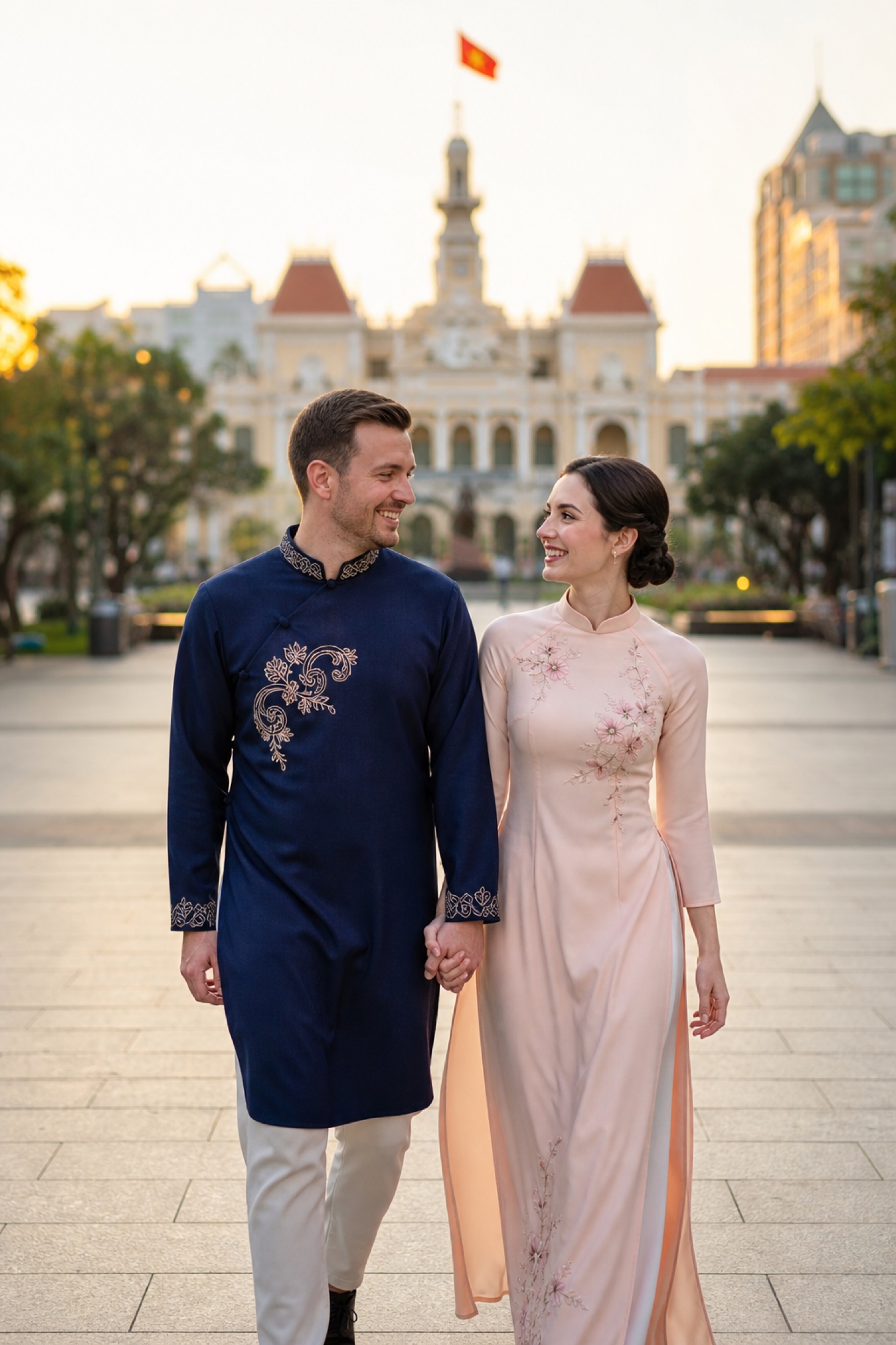
Never enter an active temple in an ao dai without explicit permission from monks or staff. Many temples in Hanoi (Tran Quoc, One Pillar) and Saigon (Jade Emperor Pagoda) attract daily worshippers—your photoshoot, no matter how respectful, may distract prayer or feel commercial in sacred space. Instead, book shoots at designated heritage sites like ancient temples that welcome photography, or hire a local guide who can negotiate access at smaller, quieter pagodas during off-hours.
Proper temple etiquette means:
- Removing shoes before entering.
- Keeping hands together or at your sides (never touching statues).
- Staying silent and still during prayer times.
- Asking permission via the temple office before any shoot.
Professional studios like Cáo Studio's Hanoi team know which temples allow photography and at what times. They handle permissions so you don't inadvertently offend monks or other devotees. A rushed temple shoot can ruin both your images and your reputation.
Ao dai mein pose karte samay kaunse mudra avoid kare?
Avoid suggestive or overly casual poses in an ao dai. Don't crouch, sit with legs spread, or lean back in ways that reveal your thighs or emphasize sexuality—the garment is formal and modest, and your posture should match. Crossed legs, hands on hips, or reclined poses can feel jarring in traditional costume. Instead, stand with one foot slightly forward, hands held softly at your waist or gently touching the fabric, shoulders back, and gaze directed calmly.
Comparison: What Poses Work for Ao Dai
| Pose Type | Why It Works | Why It Doesn't | Best For |
|---|---|---|---|
| Standing, weight on back foot | Elongates silhouette, shows fabric drape | — | Solo shots, formal portraits |
| Walking slowly, hands at side | Captures the garment's flow naturally | Requires open space & skilled photographer | Movement, candid moments |
| Sitting upright, knees together | Maintains modesty, shows tailoring | Can feel stiff if not relaxed | Seated family photos |
| Reclining or legs spread | — | Contradicts modest tradition, feels commercial | Never recommended |
| Hands touching fabric | Shows detail, feels intimate & purposeful | — | Close-ups, lookbook images |
Cáo Studio's photographers coach every client through poses that flatter both the wearer and the garment. Many travelers expect to recreate Instagram-style poses they've seen; our team redirects toward authentic, culturally grounded movements that actually photograph better in ao dai.
Ao dai ko kaise samभhaalna chahiye shoot ke baad?
After your shoot, treat your ao dai as formal wear: hang it immediately on a padded hanger, away from direct sunlight. Silk fades quickly in UV light, and wrinkles set if the garment sits folded or bunched. If you've rented from a studio, return it within 24 hours and report any snags or stains honestly—rental agreements typically cover normal wear, not neglect.
For your own ao dai:
- Spot-clean minor stains with cool water and mild soap.
- Dry-clean only if heavily soiled (dry cleaning weakens silk over time).
- Store in a breathable cotton garment bag, never plastic (plastic traps moisture).
- Keep away from heat, humidity, and perfume.
Most travelers who rent for a single shoot don't need to worry about long-term care, but understanding proper handling shows respect for the garment and helps rental studios maintain quality pieces for future clients.
Family ao dai shoots mein kaun-se customs follow kare?
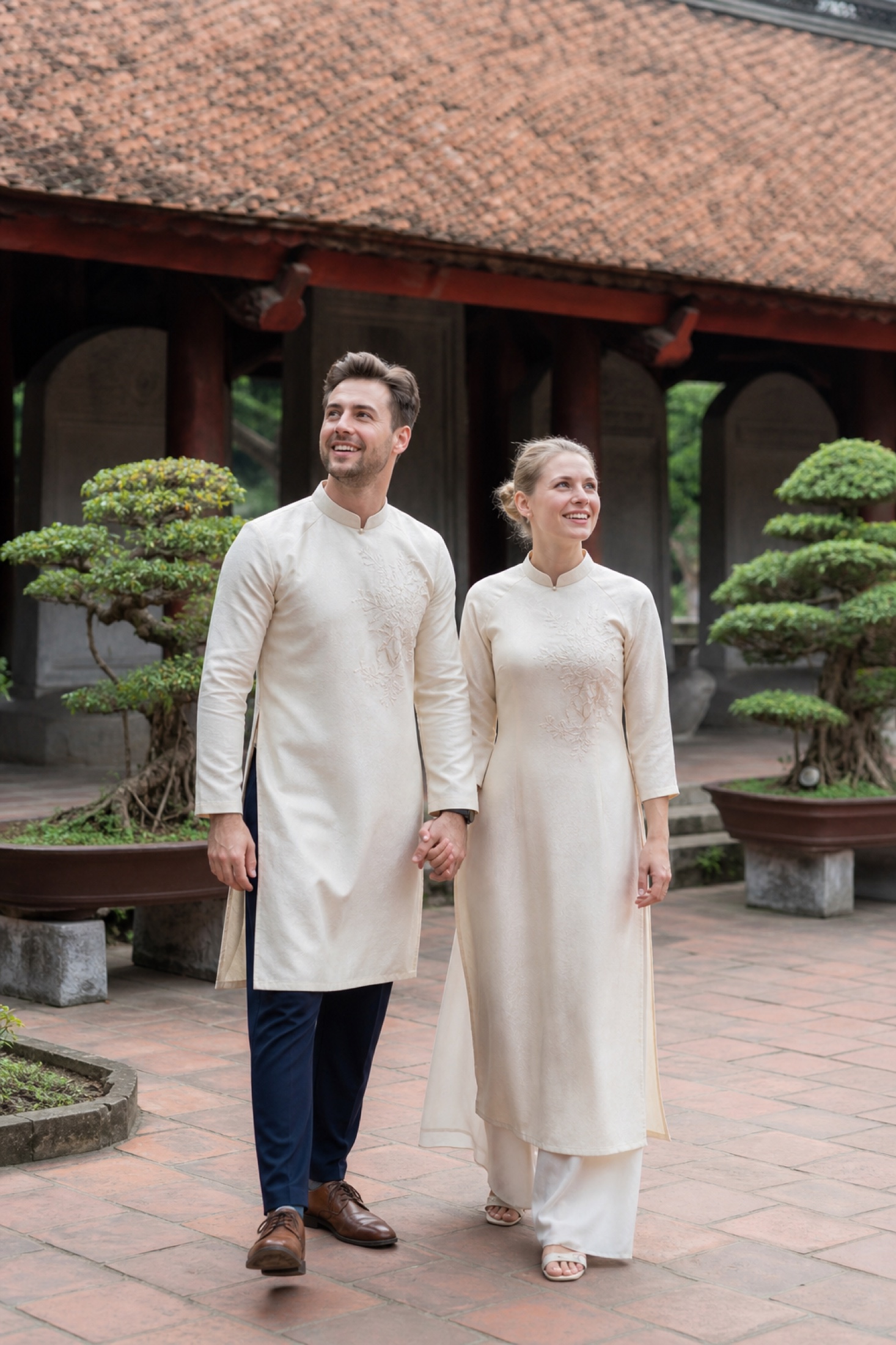
If you're doing a family or couple photoshoot in ao dai, coordinate outfits carefully—matching or complementary fabrics and colors unite the image. In Vietnam, families often choose jewel tones (emerald, sapphire, burgundy) or pastels (soft pink, cream, lavender) rather than clashing bright colors. Elders wear more formal, muted shades; children can wear slightly brighter tones. Men typically wear white shirts and dark trousers under ao dai, never casual t-shirts.
Children's ao dai follows the same sleeve and neckline rules as adults—never sleeveless or with exposed shoulders. Babies and toddlers wear simplified versions, often sleeveless vests over traditional clothing, which respects the tradition while allowing comfort for tiny bodies.
At a family shoot, hierarchy matters subtly: the eldest family member (grandmother, mother) often wears the most elaborate fabric or jewelry, while younger members wear simpler pieces. This reflects Vietnamese respect for age and experience. A photographer unfamiliar with these customs might pose everyone equally, missing an opportunity to honor your family structure.
Cáo Studio's coordinators ask about family dynamics during booking so they can suggest outfit combos and pose arrangements that feel natural and meaningful to you.
Ao dai rental vs. apna likha—kaunsa sahi hai?
For travelers: Renting makes sense if you're visiting for a week or less. Studios in Hanoi, Saigon, and Hoi An offer rental packages; you choose your size, color, and style, then return after the shoot. No shipping hassle, no storage at home. Most rentals include basic tailoring (hem, bust adjustment) but not full custom fitting. Rental costs depend on fabric quality—silk blends start lower, 100% silk pieces cost more.
For locals or extended stays: Buying a tailor-made ao dai costs more upfront but gives you a perfectly fitted piece you own. A skilled tailor takes 1–2 weeks to complete a garment, measuring your exact proportions and adjusting neckline, sleeve length, and fit. Handmade ao dai from boutique tailors in Hanoi's Old Quarter or Saigon's District 1 are heirloom-quality; they'll last decades with proper care.
For pre-wedding shoots: Many couples buy their ao dai or commission custom pieces. If you're doing a pre-wedding or elopement photoshoot, you'll wear the outfit multiple times during the session, so a perfectly fitted rental or owned piece matters more than a one-time tourist photo.
Decision framework: Will you wear this outfit again? If yes, buy or commission. If no, rent. Will you need major alterations? If yes, rent a pre-sized piece or buy custom. Is your trip under 10 days? Rent. Over 2 weeks? Consider buying.
Aao dai shoot mein makeup kaisa hona chahiye?
Ao dai demands classical, clean makeup that lets the fabric dominate the frame. Avoid heavy contouring, glitter, or bold graphic liner—these distract from the garment's elegance and look dated in photos. Instead, choose matte or subtle shimmer eyeshadow in neutral browns, golds, or rose tones; a soft winged liner; and lip color that complements your ao dai's hue (not compete with it).
Many Western travelers over-contour for selfies, then regret heavy makeup in formal ao dai photos. The garment's beauty lies in simplicity; your makeup should enhance, not overwhelm. Skin should look luminous and smooth, brows groomed but natural, and lips defined but not neon.
If you're shooting in Hanoi or Saigon and want makeup applied by professionals who understand ao dai styling, book Cáo Studio's makeup & hair service. Our artists regularly style for ao dai shoots and know how makeup reads on camera in tropical heat and humidity.
What to Check Before You Book an Ao Dai Photoshoot
- Studio experience: Does the photographer or studio specialize in ao dai? Ask for examples of ao dai work, not just random portraits.
- Rental condition: If renting, inspect seams, fabric, and fit during pickup. Photo-document any pre-existing damage.
- Tailor fit: If buying or commissioning, meet the tailor in person. Request try-ons before payment.
- Location permits: Will you shoot in temples or heritage sites? Confirm the studio has permission.
- Weather & season: Ao dai feels heaviest in Hanoi's summer humidity. Winter (Nov–Feb) is more comfortable for longer shoots.
- Hair & makeup coordination: Is makeup included, or do you arrange separately? Confirm before booking.
- Shooting time: Early morning (6–8 am) and late afternoon (4–6 pm) offer best light and fewer tourists at popular sites.
---
FAQ
Kya mein apni khud ki ao dai shoot ke liye pahen sakta hoon?
Bilkul. Apni ao dai laaye to studio use rental cost se bacha. Par pakka karo ki properly tailored ho, aur thik se clean ho shoot se pehle. Zada wrinkled ho to steam kerna padega—studio pehle se pooch lo ki steaming service de rahe hain ya nahi.
Agar temple mein shoot karne de to kaunse rules hain?
Shoes utaar, respectful posture rakho, puja ke waqt quiet rho. Idols ya religious objects touch mat karo. Always ask monks first—they can say no anytime. Studios jo temple shoots handle karti hain wo permissions handle karti hain.
Ao dai shoot ke liye best season kaun sa hai?
November se February (winter) ideal hai—cooler weather, clear skies, aur fabric ko wear karna comfortable. April se September muggy aur garam hai; makeup aur sweat zyada dikhega photos mein.
Agar ao dai tear ho shoot mein to kya hota hai?
Rental agreement padho—normal wear usually covered hai. Badi tear ya stain par you pay small fee. Usse bachne ke liye careful movement aur photographer ko bataao agar tu anxious feel kar rahi ho.
Kya men bhi ao dai pehne sakte hain shoot ke liye?
Haan. Men's ao dai traditional white shirt aur dark pants ke saath pehni jaati hai. Design slightly different hota hai (looser sleeves, straight cut), par etiquette same hai. Family shoots mein families often match करते हैं.
Makeup aur hair studio mein apply karaoon ya khud se laao?
Agar ao dai aesthetic ke saath perfect makeup chahiye to studio service book karo. Photographers jante hain kaunsa look ao dai ke saath suit karta hai. Agar khud laana ho to matte, neutral shades rakho aur heavy makeup avoid karo. --- 📸 Book on WhatsApp — ao dai photoshoot | Visit our Hanoi studio or Saigon location, or ask about Hoi An shoots on WhatsApp. For couples and families, see our couple & family photoshoot package. Explore pre-wedding and elopement options if you're planning a milestone celebration.
अक्सर पूछे जाने वाले सवाल
Kya mein apni khud ki ao dai shoot ke liye pahen sakta hoon?
Bilkul. Apni ao dai laaye to studio use rental cost se bacha. Par pakka karo ki properly tailored ho, aur thik se clean ho shoot se pehle. Zada wrinkled ho to steam kerna padega—studio pehle se pooch lo ki steaming service de rahe hain ya nahi.
Agar temple mein shoot karne de to kaunse rules hain?
Shoes utaar, respectful posture rakho, puja ke waqt quiet rho. Idols ya religious objects touch mat karo. Always ask monks first—they can say no anytime. Studios jo temple shoots handle karti hain wo permissions handle karti hain.
Ao dai shoot ke liye best season kaun sa hai?
November se February (winter) ideal hai—cooler weather, clear skies, aur fabric ko wear karna comfortable. April se September muggy aur garam hai; makeup aur sweat zyada dikhega photos mein.
Agar ao dai tear ho shoot mein to kya hota hai?
Rental agreement padho—normal wear usually covered hai. Badi tear ya stain par you pay small fee. Usse bachne ke liye careful movement aur photographer ko bataao agar tu anxious feel kar rahi ho.
Kya men bhi ao dai pehne sakte hain shoot ke liye?
Haan. Men's ao dai traditional white shirt aur dark pants ke saath pehni jaati hai. Design slightly different hota hai (looser sleeves, straight cut), par etiquette same hai. Family shoots mein families often match करते हैं.
Makeup aur hair studio mein apply karaoon ya khud se laao?
Agar ao dai aesthetic ke saath perfect makeup chahiye to studio service book karo. Photographers jante hain kaunsa look ao dai ke saath suit karta hai. Agar khud laana ho to matte, neutral shades rakho aur heavy makeup avoid karo. --- [📸 Book on WhatsApp — ao dai photoshoot](https://wa.me/84865239183) | Visit our [Hanoi studio](/hi/hanoi) or [Saigon location](/hi/saigon), or ask about [Hoi An shoots](/hi/hoi-an) on WhatsApp. For couples and families, see our [couple & family photoshoot package](/hi/services/couple-photoshoot). Explore [pre-wedding and elopement options](/hi/services/pre-wedding-photoshoot) if you're planning a milestone celebration.