Cáo Studio · Panduan sesi foto di Vietnam · Sesi Fotografi Áo Dài Vietnam 2026: Panduan Pilih Studio & Paket
Ao Dai Wedding Dress Vietnam: Choose Your Style & Shoot
Pasukan Cáo Studio · Hanoi
An ao dai wedding dress (áo dài cưới) remains Vietnam's most meaningful ceremonial garment. Whether you're Vietnamese, marrying in Vietnam, or honoring heritage abroad, this guide covers choosing your ao dai, understanding the fit, timing your photoshoot, and avoiding common ordering mistakes.
What makes a wedding ao dai different from everyday wear?
A bridal ao dai differs in fabric weight, embellishment, and fit. Wedding versions use silk or silk-blend materials (not cotton), feature gold or silver embroidery, beading, or hand-painted panels, and sit higher on the waist with a longer, more dramatic back panel. The neckline is often more formal—rounded or asymmetrical—and the overall silhouette is constructed to photograph well and move elegantly during ceremony and photos.
Everyday ao dai are simpler: thinner cotton, minimal embroidery, shorter back panels. Wedding versions are investment pieces—they're made to heirloom quality and worn once or twice, not daily.
📸 Book on WhatsApp — ao dai photoshoot
Should you rent, buy locally, or order custom?
| Option | Best for | Timeline | What to expect |
|---|---|---|---|
| Rent in Vietnam | Travelers, one-time wear, budget-conscious | Book 1–2 weeks ahead | Standard sizes; limited color choice; fast turnover |
| Buy from local shop | Staying in Vietnam; want custom adjustments; budget $150–400 | 5–7 days for alterations | See in person; try on; tailor nearby; limited international shipping |
| Order online (international) | Know your size; want specific style; willing to wait | 3–4 weeks prep + shipping | Wider range; more styles; higher shipping cost; returns complex from abroad |
| Commission a tailor | Custom fit; specific vision; time to fit twice | 2–3 weeks + fittings | Bespoke; adjustable; requires in-person meetings in Vietnam |
Most travelers in Hanoi, Ho Chi Minh City, and Hoi An rent or buy from local shops because tailors can fit you same-day or within days. Cáo Studio – Makeup & Photoshoot works with your ao dai (borrowed, rented, or owned) and handles hair and makeup to complete the look.
How should an ao dai fit your body?
Fit is critical—a poorly fitted ao dai shows in photos. The tunic should:
- Sit snugly from shoulder to hip (not baggy, not tight).
- Have a back panel that skims your spine without bunching.
- Reach mid-calf (traditional) or ankle (modern bridal).
- Sit level at the waist—if it rides up on one side, tailoring is needed.
- Allow arm movement without shoulder strain.
The trousers (worn beneath) should be tapered, ankle-length, and sit at your natural waist. They're usually white, cream, or black—check local shop stock before ordering. If you're ordering from abroad, measure your bust, waist, hip, shoulder width, and inseam in centimeters. Most international sellers ask for photos of your measurements against a ruler.
Pro tip: Rent first to understand your size if you've never worn one. Then order custom if you want a keepsake.
When and where do you photograph an ao dai in Vietnam?
Light and location matter as much as the dress. Best times are:
- Early morning (6–7 a.m.): Soft golden light; temples less crowded; cooler weather.
- Late afternoon (4–5 p.m.): Warm, directional light that flatters the ao dai's silk sheen; fewer tourists.
Avoid midday (11 a.m.–2 p.m.)—hard shadows, heat, busy backgrounds. Common locations:
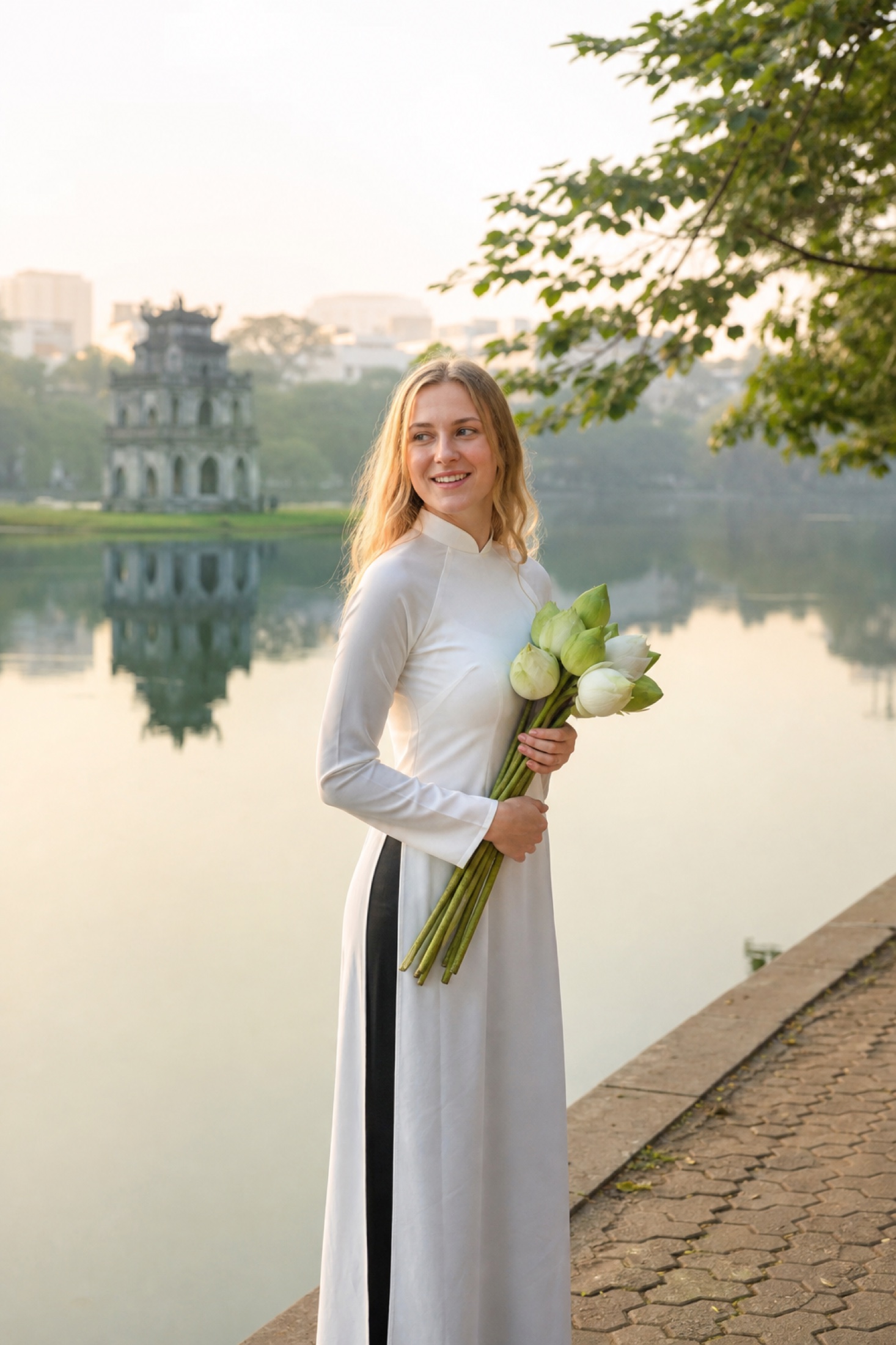
- Hoan Kiem Lake (Hanoi): Tree-lined paths, reflections, cultural significance.
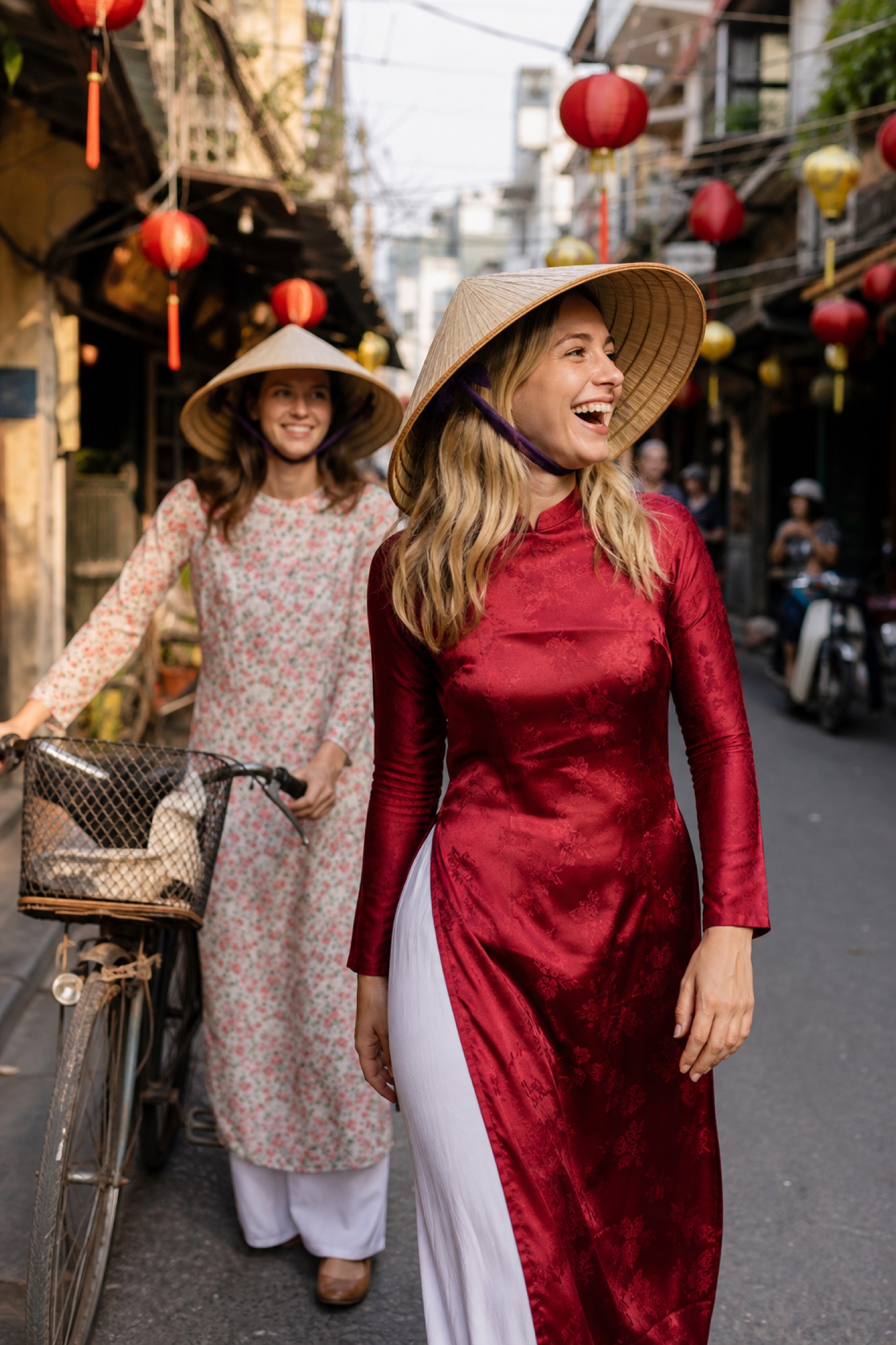
- Old Quarter streets (Hanoi): Colonial architecture, narrow lanes, morning light.
- Saigon Cathedral or Central Post Office (Ho Chi Minh City): Iconic backdrops.
- Hoi An Ancient Town: Lantern-lit streets (best at dusk); riverside reflections.
- One Pillar Pagoda or Jade Mountain Temple (Hanoi): Spiritual symbolism.
Cáo Studio – Makeup & Photoshoot offers sessions in Hanoi, Ho Chi Minh City (Saigon), and Hoi An—ask on WhatsApp for Hoi An dates. Teams travel to locations; you don't need to visit a studio. Makeup and hair are done on-location or at your hotel via our hotel makeup & hair service.
What are common ordering mistakes and how do you avoid them?
| Mistake | Why it happens | How to avoid it |
|---|---|---|
| Ordering without measuring | Excitement; thinking "one size fits all" | Measure bust, waist, hip, shoulder, inseam; compare to seller's size chart |
| Not checking fabric feel before committing | Photos don't show silk quality | Ask for fabric swatch if ordering online; visit shop in person if possible |
| Underestimating embroidery quality | Cheap embroidery puckers in photos; gold thread tarnishes | Ask if embroidery is hand-done; check thread type (polyester vs. real gold) |
| Ignoring care instructions | Dry-clean costs add up; silk needs gentle handling | Ask how to store; confirm dry-clean safety before ordering |
| Booking photoshoot without hair/makeup | Hair out of place; makeup washes out under studio lights | Always book hair and makeup alongside your photoshoot |
| Renting too close to the date | Limited availability; wrong size in transit | Book rentals 2–3 weeks ahead; confirm fit 1 week before pickup |
Plan your ao dai photoshoot 2–3 weeks ahead. This gives time for dress sourcing, tailoring adjustments, and professional hair and makeup coordination.
What should you check before ordering or renting?
Before committing:
- Try on in daylight (not studio lighting). Silk ao dai look different in natural vs. artificial light.
- Check seams and hem: Hand-stitched seams hold better in photos than machine-stitched.
- Confirm embroidery is sewn, not glued. Glued details shed under movement.
- Ask about color variations. Screen photos can look different from real fabric.
- Verify alterations included. If renting, are basic hem adjustments free?
- Request a fitting session. Even rental shops offer 20–30-minute fittings to catch issues.
- Book your photoshoot and makeup after confirming your dress. Hair and makeup should complement your specific ao dai's neckline, color, and embroidery.
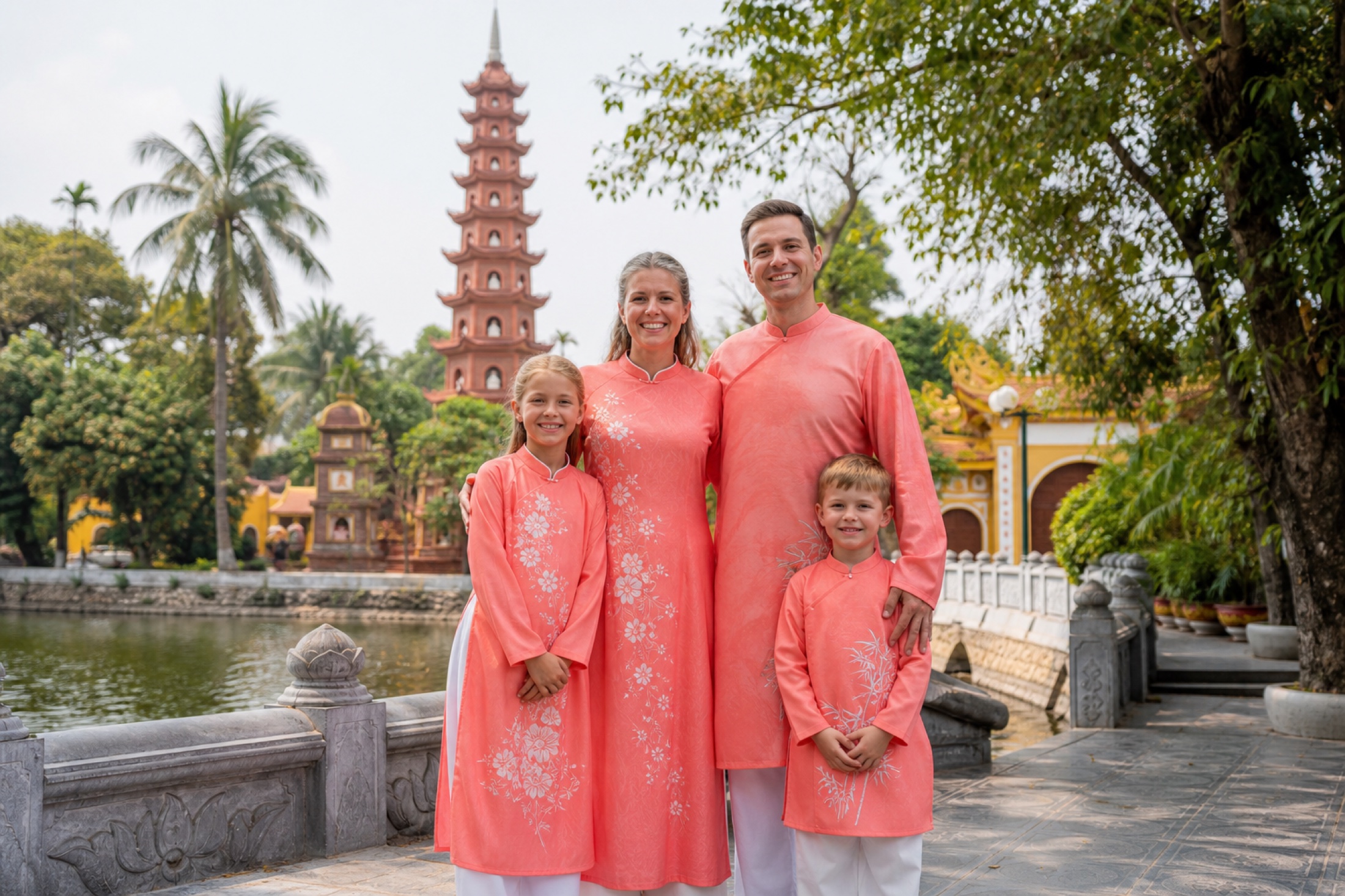
For couple and family photoshoots, coordinate outfits ahead so styling is cohesive. If your partner or family members also wear ao dai, ensure color harmony—traditionally, brides wear white or cream; grooms and relatives wear darker tones or pastels.
📸 Book on WhatsApp — ao dai photoshoot
Why book a professional photoshoot with your ao dai?
A professional photoshoot preserves the ao dai's beauty and your memory. Cáo Studio – Makeup & Photoshoot includes:
- Styling consultation (color, jewelry, flower selection).
- Professional hair and makeup that withstand outdoor conditions and camera flash.
- Location scouting (we know which temples allow photography, best light times, crowd flow).
- Touch-ups between location changes.
- Digital copies (you own the images; no copyright restriction).
Typical sessions run 2–3 hours and include 2–3 locations. Pre-wedding and elopement packages also include ao dai options if you want multiple outfit changes.
Browse our lookbook for inspiration—real client photos show ao dai in Hanoi, Ho Chi Minh City, and Hoi An light and seasons.
---
FAQ
Can I wear an ao dai as a wedding dress at a Western-style ceremony?
Yes. Many Vietnamese-American and international couples blend traditions. Wear the ao dai for a ceremony or reception entrance, then change to a Western gown—or wear it the entire day. It photographs beautifully and honors heritage. Professional makeup and hair (especially if you're outdoor-photographed) keep the look polished. Book a photoshoot to document it formally.
What's the difference between an áo dài and an áo dài cưới (wedding ao dai)?
An áo dài is the general tunic; an áo dài cưới is a formal, embellished version with bridal-quality silk and embroidery. Wedding versions have heavier embellishment (gold thread, beadwork, hand-painting), sit higher on the waist, and feature longer back panels for drama. They're typically cream, white, pink, or red—never casual cotton prints.
How much does a wedding ao dai cost in Vietnam?
Rentals run $20–50 USD per day. Ready-made purchases from local shops range $150–400 USD. Custom commissions start $250 and go up to $600+ USD depending on embroidery complexity and tailor reputation. International online orders vary widely; many fall in the $200–500 USD range. Get quotes on WhatsApp for photoshoot packages.
What color should my ao dai be, and does it matter for photos?
White and cream are traditional bridal colors—they photograph beautifully in daylight and stand out against green temple settings. Soft pastels (blush pink, pale yellow) work for less formal sessions. Avoid black or dark colors unless you're part of a coordinated couple shoot. Color choice affects hair and makeup: white calls for neutral or gold makeup; pastels allow warmer or cooler tones. Discuss with your hair and makeup artist when booking.
Can I rent an ao dai in Hanoi or Hoi An for just one day?
Yes. Most rental shops in Hanoi's Old Quarter and Hoi An Ancient Town rent daily. Book 1–2 weeks ahead for peak seasons (October–November, February–March). Same-day rentals are possible if stock allows, but fit adjustments are rushed. Cáo Studio works with your rented ao dai—just confirm rental return timing before your photoshoot.
What should I wear under my ao dai during a photoshoot?
Always wear the fitted white or cream trousers provided with the ao dai. Undergarments should be seamless and flesh-toned to avoid visible lines. The trousers are fitted and ankle-length—no shoes show. Wear a simple bra (no padding; no underwire if possible) so shoulders lie flat under the tunic. Your hair and makeup artist can advise on undergarment choices for your specific ao dai and body type.
Soalan lazim
Can I wear an ao dai as a wedding dress at a Western-style ceremony?
Yes. Many Vietnamese-American and international couples blend traditions. Wear the ao dai for a ceremony or reception entrance, then change to a Western gown—or wear it the entire day. It photographs beautifully and honors heritage. Professional makeup and hair (especially if you're outdoor-photographed) keep the look polished. [Book a photoshoot](/ms/services/ao-dai-photoshoot) to document it formally.
What's the difference between an áo dài and an áo dài cưới (wedding ao dai)?
An áo dài is the general tunic; an áo dài cưới is a formal, embellished version with bridal-quality silk and embroidery. Wedding versions have heavier embellishment (gold thread, beadwork, hand-painting), sit higher on the waist, and feature longer back panels for drama. They're typically cream, white, pink, or red—never casual cotton prints.
How much does a wedding ao dai cost in Vietnam?
Rentals run $20–50 USD per day. Ready-made purchases from local shops range $150–400 USD. Custom commissions start $250 and go up to $600+ USD depending on embroidery complexity and tailor reputation. International online orders vary widely; many fall in the $200–500 USD range. Get quotes on WhatsApp for photoshoot packages.
What color should my ao dai be, and does it matter for photos?
White and cream are traditional bridal colors—they photograph beautifully in daylight and stand out against green temple settings. Soft pastels (blush pink, pale yellow) work for less formal sessions. Avoid black or dark colors unless you're part of a coordinated couple shoot. Color choice affects hair and makeup: white calls for neutral or gold makeup; pastels allow warmer or cooler tones. Discuss with [your hair and makeup artist](/ms/services/makeup-and-hair) when booking.
Can I rent an ao dai in Hanoi or Hoi An for just one day?
Yes. Most rental shops in Hanoi's Old Quarter and Hoi An Ancient Town rent daily. Book 1–2 weeks ahead for peak seasons (October–November, February–March). Same-day rentals are possible if stock allows, but fit adjustments are rushed. [Cáo Studio works with your rented ao dai](/ms/services/ao-dai-photoshoot)—just confirm rental return timing before your photoshoot.
What should I wear under my ao dai during a photoshoot?
Always wear the fitted white or cream trousers provided with the ao dai. Undergarments should be seamless and flesh-toned to avoid visible lines. The trousers are fitted and ankle-length—no shoes show. Wear a simple bra (no padding; no underwire if possible) so shoulders lie flat under the tunic. Your [hair and makeup artist](/ms/services/makeup-and-hair) can advise on undergarment choices for your specific ao dai and body type.