/proposal-and-anniversary
Anniversary photoshoot at Ganh Dau Cape: guide & booking
Ganh Dau Cape sits at Phu Quoc's northwestern tip: a 200-meter limestone headland with raw seascape light, minimal crowds mid-morning, and natural rock frames. Shoots run 2–3 hours (including travel from accommodation). The dry season (November–April) gives calm seas, clear skies, and golden hour light angled across the cliff face. Cáo Studio does not operate in Phu Quoc; you'll work with a local Phu Quoc photographer or book the team for a Hanoi or Saigon anniversary session and shoot Ganh Dau on your own with a hired guide. Ganh Dau's appeal is solitude and geology—not crowds or landmarks—so timing (dawn, or 10–11 am before heat haze) and outfit (weather-resistant, movement-friendly) matter more than a city studio name. ---
Why Ganh Dau works for anniversary shoots
Ganh Dau's draw isn't Instagram framing—it's the lack of one. The cape is wind-carved limestone with no monument, no gate, no vendors. For couples marking time together, that emptiness lets light and movement speak. Dawn (before 7 am) gives soft, directional light across the rock; mid-morning (10–11 am) gives bright, even overcast or clear-sky conditions. The 40-minute drive from Duong Dong town means fewer day-trippers than Sunset Town or the Kiss Bridge. Walking the ridge path and pausing to look out over the sea creates a narrative without poses—the kind of frame that reads like a moment, not an assignment. The risk: wind gusts, uneven stone underfoot, and sun exposure on a treeless headland. Dress for movement and bring water.
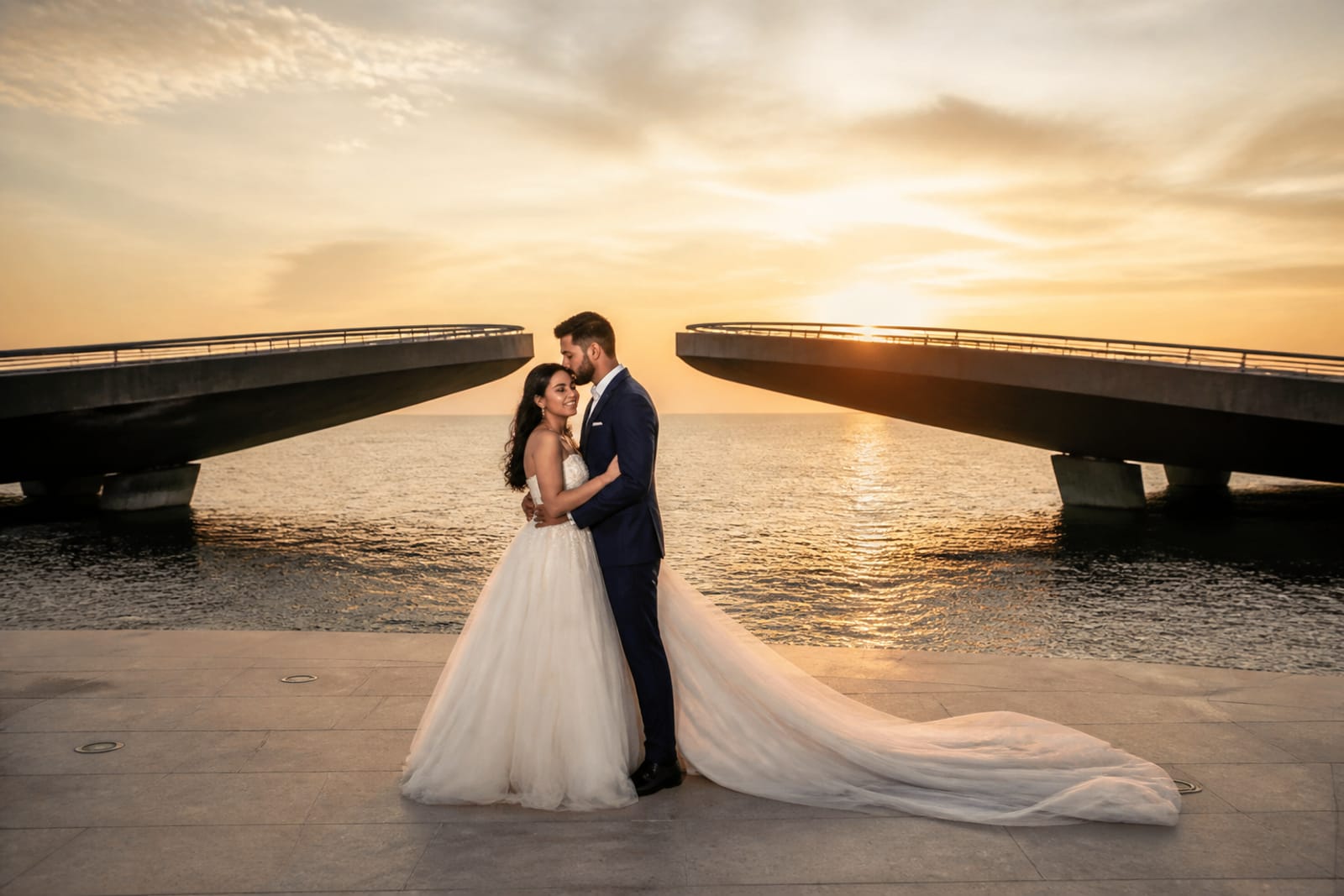
Dry season (Nov–Apr) vs. rainy season (May–Oct): which suits your timeline?
| Factor | Dry season (Nov–Apr) | Rainy season (May–Oct) |
|---|---|---|
| Sea state | Calm west coast, clear visibility | Rougher waters, afternoon squalls |
| Light quality | Consistent golden hour, no haze | Broken clouds, dramatic shafts (unpredictable) |
| Crowds | Moderate; peaks Dec–Jan | Light; cooler risk of sudden rain |
| Outfit durability | Lightweight, breathable fabrics hold | Moisture-heavy; silks cling, colors shift |
| Walking safety | Dry stone, stable footing | Slippery moss, water pooling in rock |
| Sunset clarity | Sharp horizon, repeatable timing | Cloud cover obscures color, sun angle shifts |
The dry season is the safe choice for anniversary shoots: predictable light, comfortable walking, and outfit preservation. The rainy season attracts couples seeking drama—cloud breaks and moody skies—but demands a flexible timeline and a photographer who can pivot fast. Ganh Dau's platform is exposed; rain isn't just wet, it's dangerous underfoot.
Hiring a local Phu Quoc photographer vs. booking Cáo Studio for another destination
Cáo Studio operates in Hanoi, Ho Chi Minh City, and Hoi An—not Phu Quoc. If you're committed to shooting at Ganh Dau, you'll need a local guide and photographer. Here's how to decide:
Local hire: a Phu Quoc photographer (vetted via Phu Quoc tourism boards, resort concierges, or Instagram tags like #phuquocphotographer) costs less and knows tide tables, sunrise angles, and safe paths. Ask for a portfolio filtered by "couple" and "golden hour"—not weddings or posed groups. Confirm they own editing software (not outsourcing; delays happen). Expect a 1–2 week turnaround for edited photos. Risk: no team synergy (no makeup artist, no outfit counsel, no backup if they cancel).
Cáo Studio for another destination: if you're visiting Hanoi or Saigon before or after Phu Quoc, book an anniversary photoshoot with the full team—makeup, hair, outfit, director and photographer—in one booking. The frames will be ready in 48 hours and coordinated as a story, not a collection. Then hire a local guide for Ganh Dau as a solo outing or hire a second local photographer. This splits cost but gives you one professional session elsewhere and flexibility at the cape.
Cost factors: local Phu Quoc hires range widely by experience and file count; Cáo Studio quotes come on WhatsApp based on session length and edits. Neither includes accommodation, meals, or permits—those are your own.
📸 Book on WhatsApp — proposal & anniversary | 💄 Makeup & hair at your hotel
What to wear and pack: outfit decisions for the cape
The cape's environment demands practical choices. Avoid heavy fabrics (silk ao dai will be ruined by salt spray and wind; linen creases and clings). Opt for:
- Lightweight, movement-friendly pieces: linen trousers or a simple cotton dress; breathable layers you can shed as the sun climbs.
- Footwear that grips: sandals with ankle support or flat shoes (heels slip on wet stone). Walk the paths first to check footing.
- A shawl or light jacket: wind off the sea is cold even in April. It also photographs well against the headland.
- Minimal jewelry: dangly pieces catch the wind and distract from the landscape.
Pack sunscreen, a hat (wind-proof), water (1–2 liters per person), and a small towel. If you're hiring a photographer, tell them your outfit plan in advance—they can position you so fabric reads well in movement and won't snag on rock. If you're working with a guide, ask them to point out stable footing and timing for tides (low tide gives more walkable beach at the base; high tide locks you to the upper ridge).
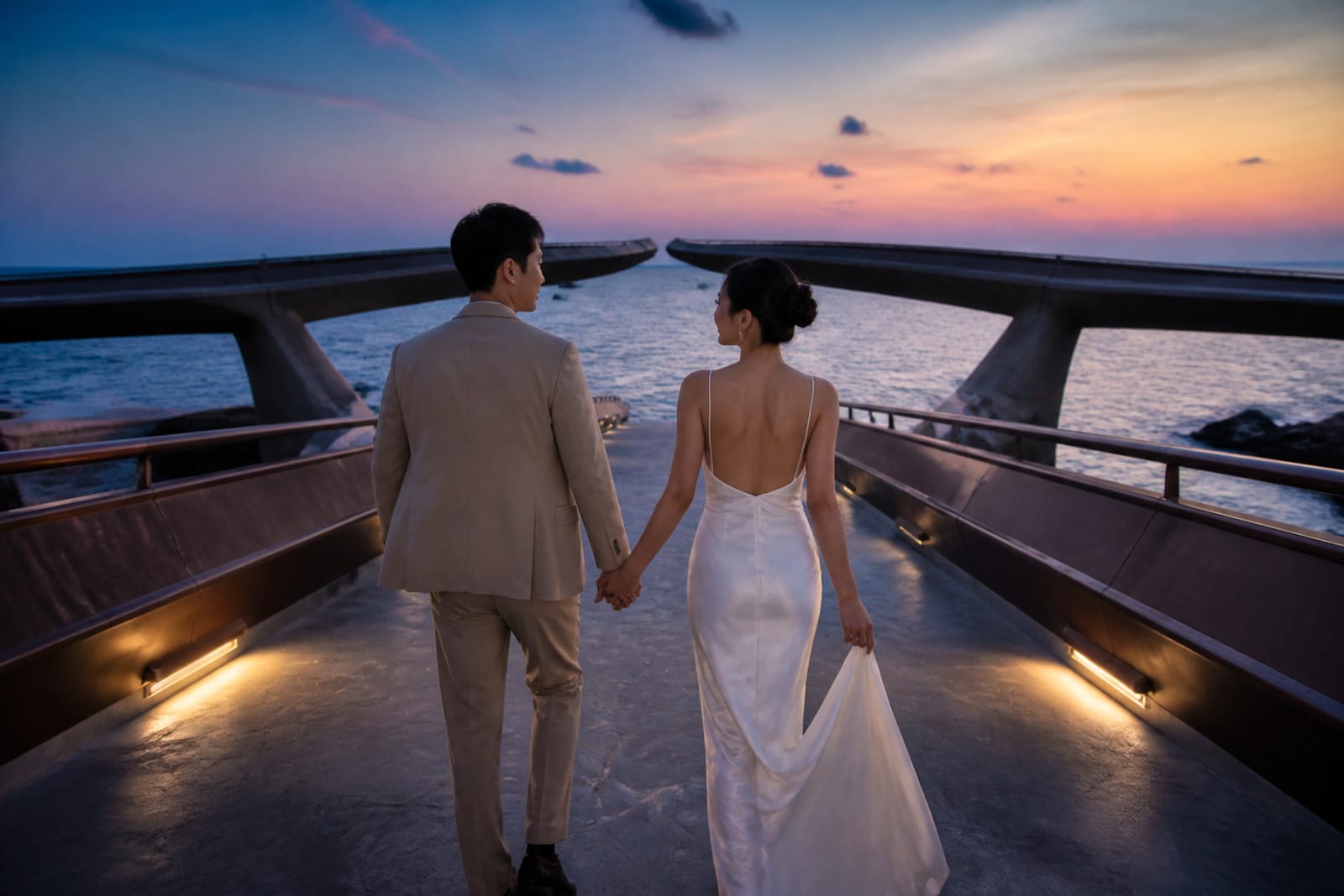
The 48-hour editing window: how Cáo Studio works for destinations outside our bases
Cáo Studio delivers edited photos within 48 hours—but only for shoots in Hanoi, Ho Chi Minh City, or Hoi An, where the team is present. If you book the couple photoshoot in Saigon before flying to Phu Quoc, you'll have your anniversary frames edited and ready before you leave Vietnam. If you insist on shooting Ganh Dau itself, a local photographer's timeline depends on their workload and file management—often 1–2 weeks, sometimes longer if they edit in batches.
This matters: an anniversary shoot should feel current, not archived. Cáo Studio's 48-hour turnaround exists because one team (director, photographer, editor) handles the whole chain in one place. A fragmented local hire, however talented, can't promise that speed unless they're a solo operator working full-time. Ask any photographer you hire: How many days until I see the first edited photos? A vague answer ("a week or two") suggests they edit after the shoot, not during the off-hours. A specific date means they've built editing time into their schedule.
What to check before you book a local guide or photographer
- Portfolio filter: ask to see 5–10 couple shoots (not weddings, not groups) from the past six months. Light should be directional and warm, not flat or overexposed.
- Sunrise/golden hour experience: if dawn is your target, ask if they've shot at Ganh Dau before at that hour. Hanoi or Saigon photographers rarely understand coastal light tables.
- Backup plan: what happens if weather turns bad or the photographer cancels? Do they reschedule free, or do you lose the deposit?
- File delivery: digital files (full resolution), edited (JPEG or RAW), and timeline. If they offer prints or albums, confirm ink and paper quality.
- Insurance and permits: some destinations require photography permits (Ganh Dau typically doesn't, but confirm with the local tourism board). Ask if the photographer carries liability insurance.
- Language: confirm they speak English fluently enough to direct you during the shoot, not just take orders.
If you're booking Cáo Studio for an anniversary session elsewhere, these checks are built in: one team, one message, no handoff.
🌸 See the lookbook | 📸 Cáo Studio Saigon
When to go: seasonal light and crowd patterns at Ganh Dau
November–January: the prime window. Sea is calm, skies are clear, and sunset is sharp. Crowds are moderate (Dec–Jan peak tourism, but Ganh Dau itself stays quiet). Light is cool and frontal in early morning; golden by evening. Pack: light jacket, water, sunscreen.
February–April: excellent light continues. Seas are still calm, but days grow hotter—afternoon heat haze can flatten images by 3 pm. Shoot early (before 11 am) and catch golden hour near sunset. Crowds thin. Wind is moderate.
May–October: rainy season. Afternoon squalls are common; morning light can be moody and dramatic if the cloud cover breaks. Seas are choppy on the west coast; footing becomes risky after rain. Fewer tourists, but the risk-to-light ratio widens.
For an anniversary shoot, November–March is the lowest-stress window. February and early March offer the same light quality as December without the holiday crowds.
---
FAQ
Does Cáo Studio photograph at Ganh Dau Cape?
No. Cáo Studio operates in Hanoi, Ho Chi Minh City, and Hoi An. Book an anniversary session in Saigon before or after Phu Quoc; hire a local photographer for Ganh Dau itself.
What's the best time of day to shoot at Ganh Dau?
Golden hour (5:30–7 am or 5–6:30 pm) gives directional, warm light. Mid-morning (10–11 am) offers even, bright conditions. Avoid noon–3 pm: harsh overhead sun and heat haze flatten the landscape.
Can I wear an ao dai to Ganh Dau?
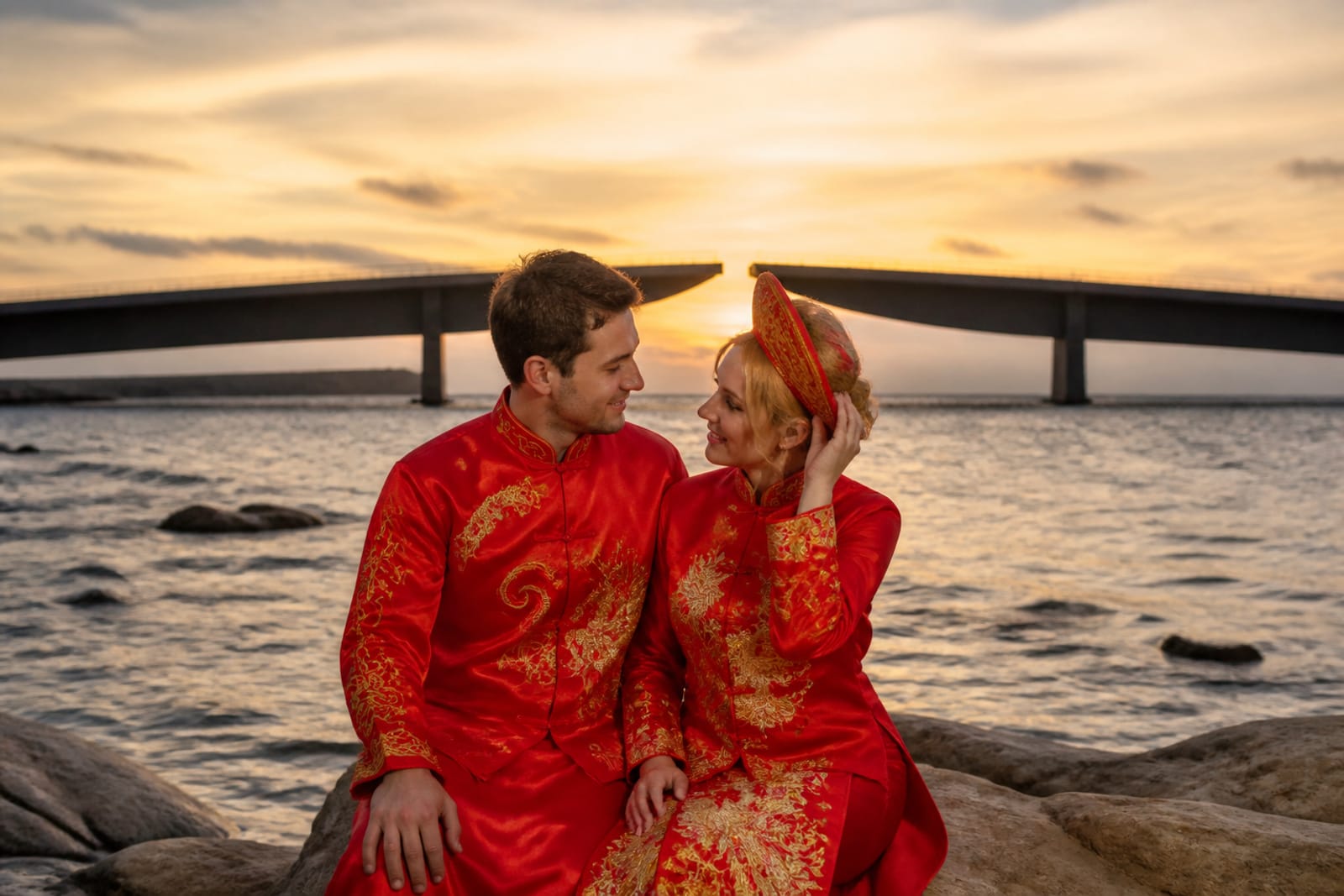
Heavy silk ao dai will be damaged by salt spray and wind. Lightweight linen works if you layer it with a shawl. Wear movement-friendly trousers or a cotton dress instead—the landscape will frame you, not the fabric.
How long should an anniversary photoshoot at Ganh Dau take?
2–3 hours with a guide and photographer, including travel time from Duong Dong town. Shoots typically run one extended golden hour or a 2-hour mid-morning session.
Do I need a permit to photograph at Ganh Dau?
Ganh Dau doesn't require a formal photography permit. Confirm locally with your resort or the Phu Quoc tourism board (rules can change). A guide will know current access and safety rules.
How do I find a trustworthy local photographer in Phu Quoc?
Ask your resort concierge for referrals, search Instagram hashtags (#phuquocphotographer, #phuquoccouple), and ask to see unfiltered portfolios. Confirm editing timeline, file delivery format, and a backup plan before booking.
FAQ
Does Cáo Studio photograph at Ganh Dau Cape?
No. Cáo Studio operates in Hanoi, Ho Chi Minh City, and Hoi An. Book an [anniversary session](/proposal-and-anniversary) in Saigon before or after Phu Quoc; hire a local photographer for Ganh Dau itself.
What's the best time of day to shoot at Ganh Dau?
Golden hour (5:30–7 am or 5–6:30 pm) gives directional, warm light. Mid-morning (10–11 am) offers even, bright conditions. Avoid noon–3 pm: harsh overhead sun and heat haze flatten the landscape.
Can I wear an ao dai to Ganh Dau?
Heavy silk ao dai will be damaged by salt spray and wind. Lightweight linen works if you layer it with a shawl. Wear movement-friendly trousers or a cotton dress instead—the landscape will frame you, not the fabric.
How long should an anniversary photoshoot at Ganh Dau take?
2–3 hours with a guide and photographer, including travel time from Duong Dong town. Shoots typically run one extended golden hour or a 2-hour mid-morning session.
Do I need a permit to photograph at Ganh Dau?
Ganh Dau doesn't require a formal photography permit. Confirm locally with your resort or the Phu Quoc tourism board (rules can change). A guide will know current access and safety rules.
How do I find a trustworthy local photographer in Phu Quoc?
Ask your resort concierge for referrals, search Instagram hashtags (#phuquocphotographer, #phuquoccouple), and ask to see unfiltered portfolios. Confirm editing timeline, file delivery format, and a backup plan before booking.
Ao dai, makeup, hair and a local photographer in Hanoi or Saigon — one WhatsApp message.