/proposal-and-anniversary
Anniversary Photoshoot at Ha Giang Buckwheat Fields: Plan Your Shoot
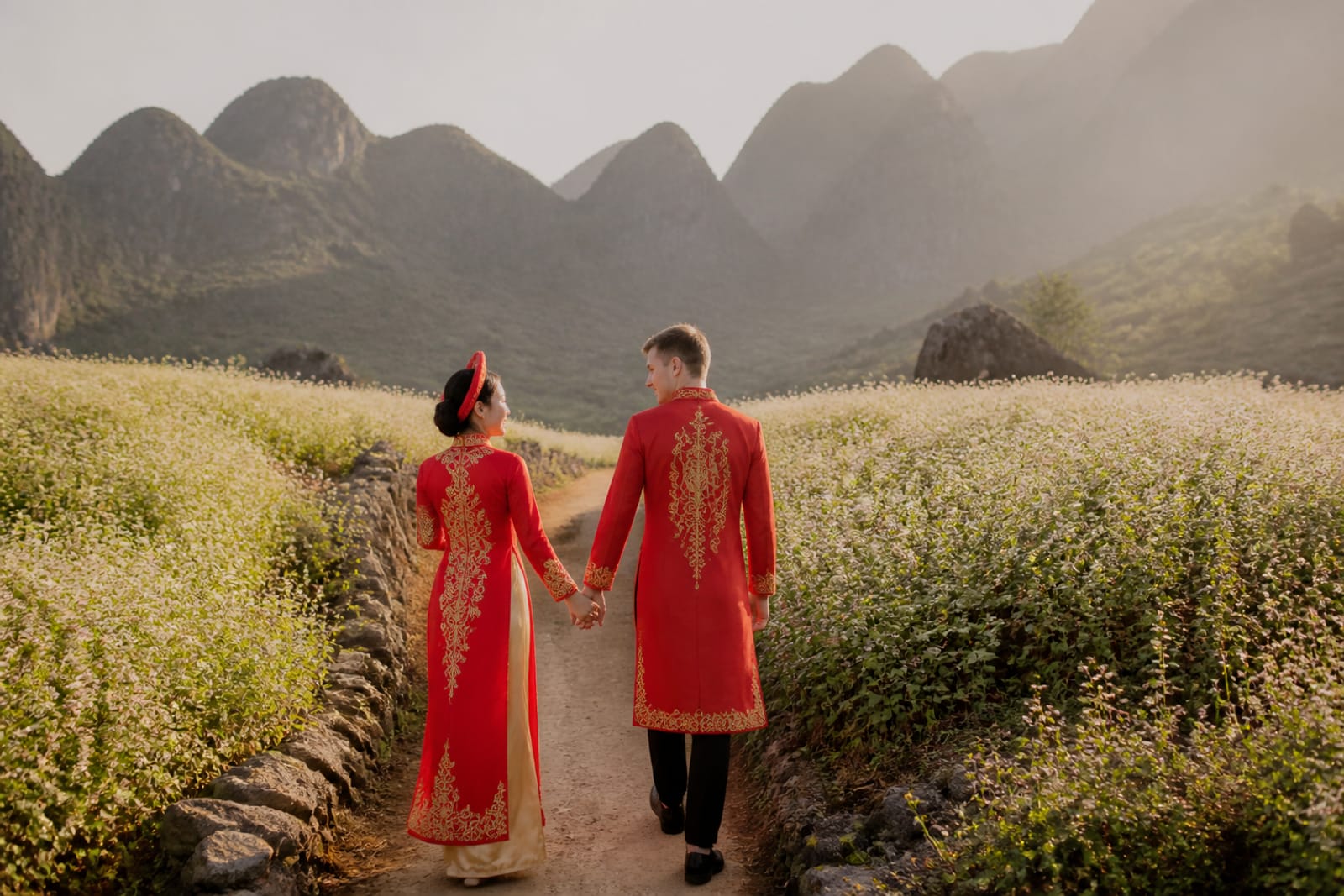
An anniversary photoshoot at Ha Giang buckwheat fields happens Oct–Nov when the flowers peak, typically in a full-day or 2-day mountain trip that includes sunrise or late-afternoon sessions in the terraces near Hoang Su Phi or Quan Ba. Cáo Studio operates in Hanoi, Ho Chi Minh City and Hoi An; Ha Giang shoots must be booked with a trusted local photographer vetted via portfolio and references. Light is soft and directional in early morning (6–7 am) before clouds roll in; afternoons offer golden side-light around 4–5 pm if clear skies hold. Pack layers (temps drop 10–15°C in the hills), waterproof gear (rain is common Oct–Nov), neutral outfits that contrast the pink-white blooms, and allow 3–5 hours on-site for multiple locations and angles. Avoid peak weekend crowds by shooting weekday early morning; budget extra for a local guide, vehicle and fuel, and confirm your photographer's experience with mountain terrain and weather pivots before committing. ---
Why Oct–Nov is the only window for buckwheat blooms
Buckwheat flowers bloom once yearly, roughly mid-October through early November, depending on rainfall and temperature. Blooms peak 2–3 weeks into October when the fields are densest and colour is most saturated; by late November, petals drop and fields turn brown. Shooting earlier (late September) risks sparse, immature flowers; shooting later (December) means bare earth. Late September and early October can still yield usable blooms if you scout ahead, but consistency is lost. This single-month window is non-negotiable—plan your anniversary trip around the bloom calendar, not the other way around.
What light actually looks like in the mountains at different times
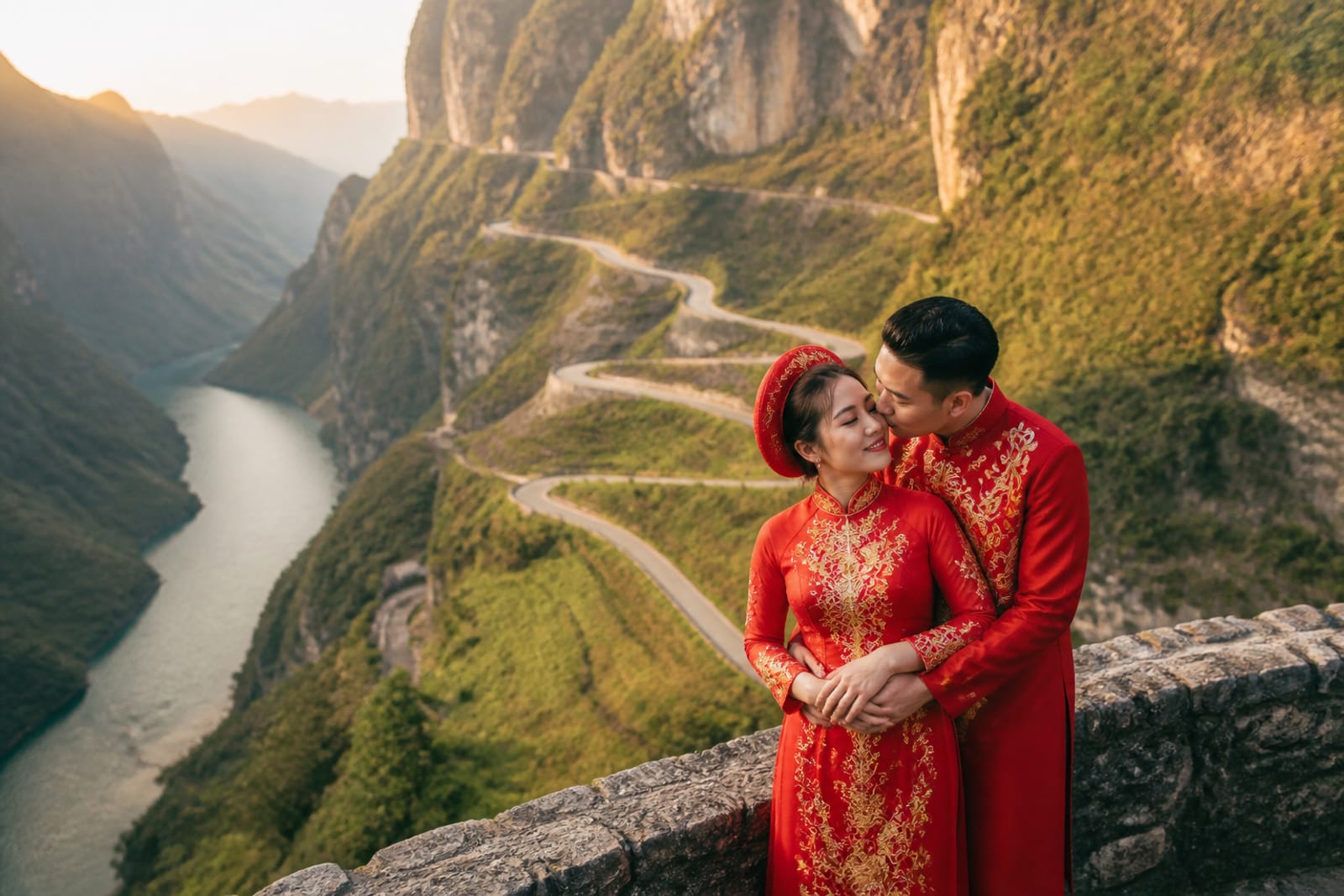
Morning light (5:30–7:30 am) is cool and directional, hitting the western terraces first while eastern slopes remain soft and shadowless—ideal for couple portraits where every detail reads without harsh contrast. By 8 am, clouds typically roll in from the valley; shooting after 9 am in October–November is unreliable unless you're at peak elevation above the cloud line. Afternoon light (3:30–5:30 pm) is warmer and lower, grazing across the terraces from the west; pink blooms glow against darker green slopes, and the couple reads warm against cool background. After 6 pm, light flattens fast and temperature drops sharply. Sunrise beats sunset for clarity, but afternoon delivers warmer skin tone and richer bloom colour—choose based on your outfit and whether you want ethereal or golden mood.
| Timing | Light quality | Clouds | Heat | Crowds | Best for |
|---|---|---|---|---|---|
| 5:30–7:30 am | Directional, cool | Rare | Cold (10–14°C) | Almost none | Detail, clarity, couple in soft edge-light |
| 8–9:30 am | Soft, diffused | Rolling in | Warming | Few locals | Wide landscape, outfit texture |
| 10 am–3 pm | Flat, overcast | Dense | Moderate | Tourists arrive | Location scouting, outfit changes, backup indoor shots |
| 3:30–5:30 pm | Golden, warm | Rare | Cooling | Peak tourists | Glow on blooms, warm skin, silhouette frames |
| After 6 pm | Low, fast-fading | Clearing | Cold | Clearing | Silhouettes only; impractical for couple detail |
Hanoi or local photographer: which makes sense for Ha Giang
Cáo Studio is based in Hanoi and Saigon, with a travel-based team for Hoi An; Ha Giang is a 4–5 hour drive north and requires multi-day coordination that isn't part of the studio's core service model. Hiring a Hanoi-based photographer to travel to Ha Giang adds cost (fuel, accommodation, time) and often means booking a secondary operator rather than the principal shooter. A vetted local Ha Giang or Bao Lac photographer knows the terrain, avoids unstable tracks, reads weather patterns daily, and can pivot quickly if blooms are patchy or weather turns. They understand the micro-seasons (early vs. late October light is visibly different) and which terraces look best on any given week.
When to use a local photographer: Your budget is fixed and you want to maximize shooting time; you're happy with 2–3 hours of focused work; you don't need full makeup/hair coordination; you trust portfolio over studio brand. Contact photographers through Instagram hashtags (#hagiang #photography #buckwheat), ask for references and portfolio breakdowns by month, and request a test shoot with an edits preview before the anniversary date. Ask for their flood/weather policy: if rain cancels your morning, do they reshoot at no extra charge? When to use a studio-based photographer: You want one team (photographer + makeup artist + stylist) so every element—outfit, hair, light, framing—is directed as one message; you're willing to travel with the team and coordinate in advance; you prefer a brand you recognize. The trade-off is lead time and coordination overhead.
For Ha Giang anniversary shoots specifically, local is usually the smarter path because weather and blooms are hyper-local variables no Hanoi studio can reliably predict without a permanent scout.
Season factors that wreck shoots (and how to avoid them)
Rain and cloud cover (Oct–Nov): Afternoon thunderstorms are common; they scatter tourists and churn up mud, turning fields into soup. Morning shoots are safer, but even 6 am can be grey. Solution: book a photographer with a 3-day flex window and plan to reshoot if the first morning is washed out. Ask for a weather-pivot plan in the contract.
Temperature and altitude: Hoang Su Phi sits around 1,000 m elevation; Oct–Nov temps drop to 8–14°C in early mornings. Couples often arrive in summer clothes and freeze. Solution: pack insulated layers, a waterproof jacket, and plan outfit changes indoors at a guesthouse between sessions. A light silk ao dai worn over thermal long-sleeves works and reads on camera.
Flower density variance: Late October blooms are thick; early November blooms are thinning. A field that photographed white-pink two weeks prior may be 40% bare by late November. Solution: scout in person or ask your photographer for recent (within 3 days) on-site photos before you book your shoot date. Don't book Oct 28 based on Oct 20 photos.
Crowd surge on weekends: Tourist groups descend Friday–Sunday, especially mid-October. Early morning (before 6:30 am) and weekday mornings are quieter. Solution: shoot Tuesday–Thursday if possible; if weekend is your only option, hire your photographer for 5:30 am start to finish before the buses arrive.
Muddy, uneven terrain: Paths between terraces are narrow, wet, and often slippery after rain. Couples in dressy footwear or heels can't move freely, and photographers struggle with stable camera angles. Solution: wear traction-soled hiking shoes during shoot and change into dressy footwear for posed shots in stable, flat spots (terraces themselves are relatively level). Ask your photographer to identify safe pathways in advance.
Anniversary outfit and prep checklist for mountain blooms
Outfit palette:
- Main outfit: contrast against pink-white blooms (deep jewel tones, burgundy, navy, cream, soft grey—avoid hot pink, orange, or nude beige that will wash out in morning light).
- Layers: thermal long-sleeve base + light wool or insulated jacket over the main piece; remove layers for shots and re-layer for walking between spots.
- Footwear: waterproof hiking shoes during setup; dressy alternatives (flats, embellished boots) for posed shots on stable, dry ground.
- One backup outfit or colour option in case the first reads poorly against the day's light or crowd reflections.
Hair and makeup:
- Start with a makeup artist who works in natural light (not studio fluorescent), because mountain blooms and sky are intense and can make traditional indoor makeup look heavy.
- Avoid bold matte lip colours that deepen in cool morning light; instead use warm neutrals or a satin finish that glows.
- Hair should be secured firmly (wind is strong on exposed hillsides) and tested in movement before the photographer starts.
- Bring blotting papers and a lip refresh kit; reapply mid-shoot after 2–3 hours.
Logistics:
- Start packing 2 weeks before; confirm weather and bloom status with your photographer 1 week prior.
- Book accommodation in Bao Lac or Hoang Su Phi town (not a day-trip from Hanoi—the drive is grueling and you'll miss golden-hour light both days).
- Arrange transport (rental car with driver, or negotiate a driver through your guesthouse).
- Eat a light breakfast before 5:30 am shoot; bring water and light snacks for between sessions.
- Schedule makeup and hair the morning of the shoot at your guesthouse (not in Hanoi); confirm your artist can work by natural window light without dependable electricity.
If you're based in Hanoi and prefer a coordinated team for another destination—or if you want makeup, hair and photography as one message—Cáo Studio's team can coordinate a pre-wedding or anniversary trip to northern regions; ask on WhatsApp for Hoi An and multi-day availability.
Checking before you book: photographer vetting framework
Before you sign a contract, confirm these six points:
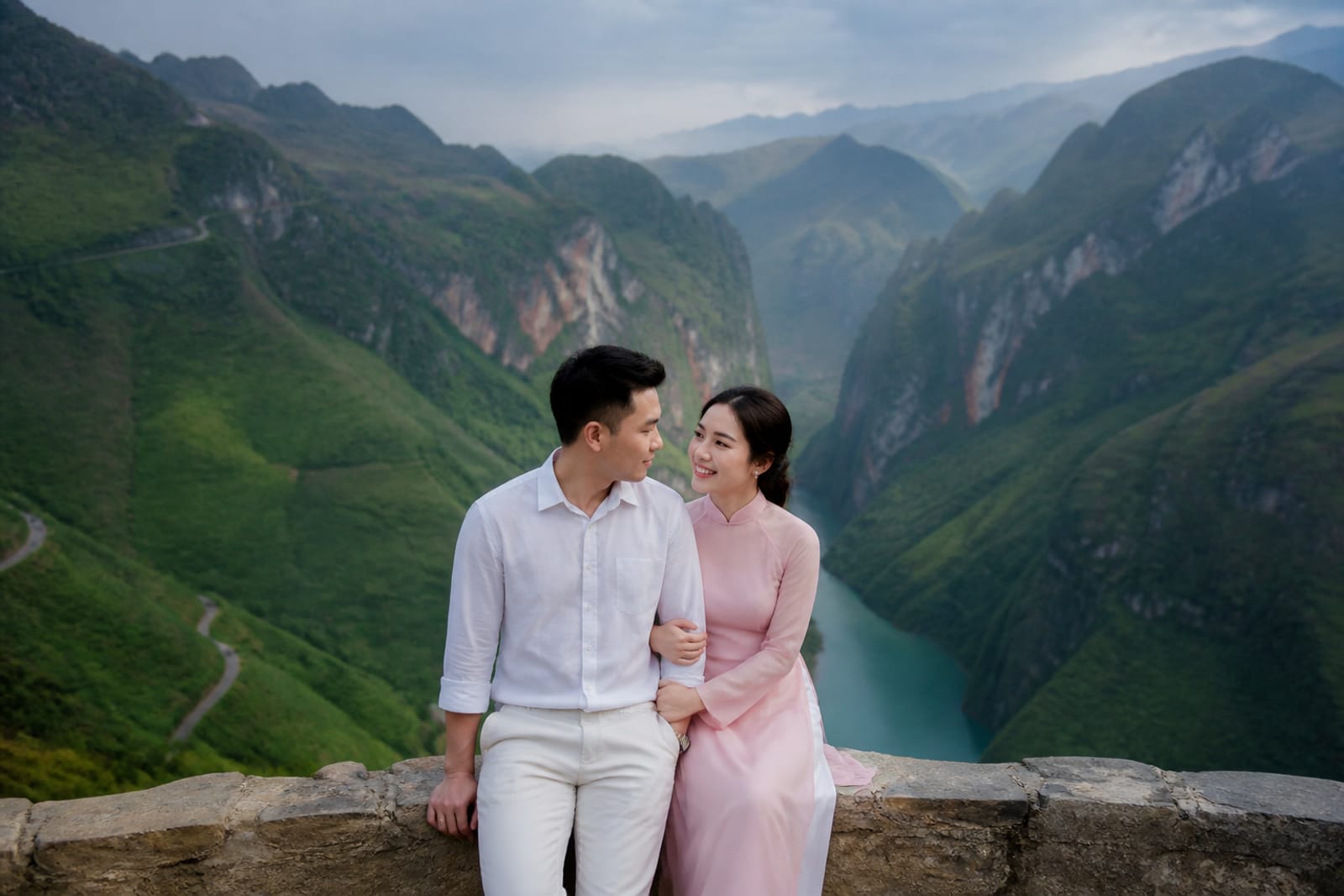
- Portfolio breakdown by month. Ask to see Oct–Nov buckwheat shoots side-by-side. If their website shows only one or two examples, ask for more on WhatsApp. A strong portfolio will show variety: early October dense blooms vs. late October sparser fields; different weather (clear vs. cloudy mornings); different couple dynamics (walking, sitting, detail shots).
- Gear and backup plan. What camera, lenses and stabilization do they use? Do they shoot dual-card backup? If one camera fails on a mountain road, can they reshoot without extra cost? This matters because losing a full day of mountain shooting is expensive to reschedule.
- Turnaround time for edits. Do they deliver selects in 48 hours, or weeks later? Ha Giang is remote; a quick turnaround matters if you need to plan a celebration or share with family before leaving Vietnam. Many local photographers deliver slower (2–4 weeks); understand the timeline before booking.
- Weather pivot policy. If rain cancels your morning, do you get a free reshoot within X days? Is the rescheduled date guaranteed or best-effort? Get this in writing.
- Rate structure and inclusions. Ask exactly what's included: hours of shooting, number of edited photos, video clips, travel fees, location permits (some sensitive cultural sites require local guide and unofficial fee). Don't assume "half-day" means the same across photographers.
- References and recent work. Ask for contact info of 2–3 couples who shot Oct–Nov in the past 2 years. Call or message them: Did the blooms look like the photos? Was the photographer organized? Did weather affect the shoot, and how did they handle it? Real references trump promises.
---
📸 Book on WhatsApp — couple photoshoot
---
Prefer a studio-backed team? Cáo Studio's couple and family photoshoots are led in Hanoi, Ho Chi Minh City and Hoi An with coordinated makeup and hair at your hotel and ao dai rental if you want a traditional element. For Ha Giang multi-day coordination, ask about availability on WhatsApp. For other anniversary ideas in Vietnam—coastal, urban, temple—explore the proposal and anniversary guide.
---
What to check before you book
- Photographer's Oct–Nov portfolio: 5+ recent shoots, clear feedback on bloom density and weather that day.
- Your backup dates: Is a 3-day window feasible in your calendar? If rain hits on day 1, day 2 and 3 should remain open.
- Accommodation and transport: Book 2–3 weeks early (Oct mid-month fills fast); confirm your guesthouse has reliable water and power for makeup/hair prep.
- Your outfit and layers: Try them on together before arrival; test footwear on uneven ground.
- Makeup artist experience: Have they shot outdoors in cool, bright light? Ask to see samples, not just studio headshots.
- Written agreement: confirm hours, locations, included edits, weather policy, and payment terms before the shoot date.
---
---
Bringing it together: A 48-hour pre-shoot timeline
T-minus 48 hours: Confirm final outfit and footwear with your photographer; request recent on-site bloom photos. Check weather forecast and ask photographer if they see a pivot coming.
T-minus 24 hours: Confirm meeting point, time and transport. Pack outfit, layers, backup shoes. Charge camera and phone batteries. Eat well and hydrate.
Evening before: Brief makeup artist on the light and blooms she'll be working with; ask her to do a test on your skin to see how morning cool light interacts with her palette. Sleep early (5:30 am starts require rest).
Morning of: Wake 90 minutes before shoot. Light breakfast, hydrate, use the toilet (there are few facilities on the mountain). Get makeup and hair done by 5:15 am. Arrive at the first location 10 minutes early so the photographer can scout light before you step into frame.
During the shoot: Trust the photographer's direction. Walk naturally; look at your partner, not the camera. Let the photographer call out the poses ("walk toward that white bloom patch, look back at each other when you're halfway"). Between locations, stay warm in your jacket; reapply makeup and hair as needed.
After the shoot: Ask for a turnaround estimate on edits. Get contact details if you want to request specific frames or have questions. Rest and celebrate—you've shot some of the most dramatic light in Vietnam.
---
---
Ha Giang shoots: the local advantage
Mountain photography in Vietnam isn't commodified the way urban studio shoots are. A trusted local photographer—one who lives in Bao Lac or nearby—has daily intel on which terrace peaked this week, where the light hits first, which paths are safest after rain, and how to time the morning window before clouds roll in. They've built relationships with guesthouses and guides; they know which tourists block which viewpoints at what time. This hyperlocal knowledge is worth more than a portfolio in October, because blooms and weather are week-to-week variables.
Use this article to ask smarter questions. When you contact a photographer, say: I read that late October blooms are densest and early November is thinner. Which week do you recommend shooting, and can you show me recent photos from that week? Ask about their morning light expertise and cloud timing. Check their weather pivot policy in writing. Get references from couples who shot in the same month you're planning. A photographer worth booking will answer clearly and prove their October–November work—not just "yes, we do buckwheat."
For anniversary shoots in Hanoi, Ho Chi Minh City or Hoi An with a coordinated team, explore the proposal and anniversary service or reach out on WhatsApp to discuss multi-day options.
---
FAQ
What if the blooms aren't dense when I arrive?
Blooms peak mid-October; by late October, some fields are 30–40% sparse. Shoot weekday mornings (fewer tourists in tight frames) and ask your photographer to include wider landscape shots that read well even with thinner flowers. A backup outfit in a contrasting colour helps if the first location feels thin. Always confirm recent on-site photos with your photographer 3–5 days before arrival.
Can I shoot Ha Giang as a day trip from Hanoi?
Technically, yes—it's a 4–5 hour drive each way. But you'll miss golden-hour light both morning and afternoon because you'll be commuting. Stay overnight in Bao Lac or Hoang Su Phi (30–60 min closer to the best fields) and book a 2-sunrise or sunrise-plus-afternoon session for the best light and a realistic pace. Day-trip shoots often feel rushed and lit poorly.
Is October or November better for the buckwheat fields?
Mid- to late October blooms are densest and most saturated; early November blooms are thinning but still photographable if you scout specific fields in advance. Light is similar both months (cool mornings, golden afternoons). Crowds increase Oct 15–31 (weekends especially); early November is quieter but blooms are patchier. Choose based on crowd tolerance vs. bloom density—no clear winner.
Should I hire a Hanoi photographer or a local Ha Giang photographer?
Local photographers know the terrain, weather patterns and micro-seasons better and avoid the overhead of multi-day travel coordination. Hire a local if your budget is fixed and you want 2–3 focused hours. Hire a studio-based photographer if you want coordinated makeup, hair and styling as one message—but this adds cost and coordination burden for a mountain destination. For Ha Giang, local is usually smarter.
What do I wear under an ao dai for a cool October morning?
Wear thermal or merino-wool long-sleeve base layer + a light insulated jacket or cardigan over the ao dai for the walk between locations. Remove layers for posed shots so the ao dai reads cleanly. Avoid bulky jumpers that bunch under the costume. Thermal base layers are tight enough not to show under the silk, and they're breathable for later in the day when the sun warms the hillsides.
How long does a Ha Giang buckwheat shoot typically take?
Most photographers offer 2–4 hours on-site. A typical day is: 5:30 am start in cool light (30–45 min), move to second location by 7 am for warmer morning light (30–45 min), break for hydration and outfit change (15 min), third location for golden-hour afternoon light (3–4 pm, 1 hour). Total on-set time is 3–4 hours with 1–2 hours of travel and setup between them. Ask your photographer for a detailed timeline so you understand the pacing and when makeup/hair touch-ups are needed.
FAQ
What if the blooms aren't dense when I arrive?
Blooms peak mid-October; by late October, some fields are 30–40% sparse. Shoot weekday mornings (fewer tourists in tight frames) and ask your photographer to include wider landscape shots that read well even with thinner flowers. A backup outfit in a contrasting colour helps if the first location feels thin. Always confirm recent on-site photos with your photographer 3–5 days before arrival.
Can I shoot Ha Giang as a day trip from Hanoi?
Technically, yes—it's a 4–5 hour drive each way. But you'll miss golden-hour light both morning and afternoon because you'll be commuting. Stay overnight in Bao Lac or Hoang Su Phi (30–60 min closer to the best fields) and book a 2-sunrise or sunrise-plus-afternoon session for the best light and a realistic pace. Day-trip shoots often feel rushed and lit poorly.
Is October or November better for the buckwheat fields?
Mid- to late October blooms are densest and most saturated; early November blooms are thinning but still photographable if you scout specific fields in advance. Light is similar both months (cool mornings, golden afternoons). Crowds increase Oct 15–31 (weekends especially); early November is quieter but blooms are patchier. Choose based on crowd tolerance vs. bloom density—no clear winner.
Should I hire a Hanoi photographer or a local Ha Giang photographer?
Local photographers know the terrain, weather patterns and micro-seasons better and avoid the overhead of multi-day travel coordination. Hire a local if your budget is fixed and you want 2–3 focused hours. Hire a studio-based photographer if you want coordinated makeup, hair and styling as one message—but this adds cost and coordination burden for a mountain destination. For Ha Giang, local is usually smarter.
What do I wear under an ao dai for a cool October morning?
Wear thermal or merino-wool long-sleeve base layer + a light insulated jacket or cardigan over the ao dai for the walk between locations. Remove layers for posed shots so the ao dai reads cleanly. Avoid bulky jumpers that bunch under the costume. Thermal base layers are tight enough not to show under the silk, and they're breathable for later in the day when the sun warms the hillsides.
How long does a Ha Giang buckwheat shoot typically take?
Most photographers offer 2–4 hours on-site. A typical day is: 5:30 am start in cool light (30–45 min), move to second location by 7 am for warmer morning light (30–45 min), break for hydration and outfit change (15 min), third location for golden-hour afternoon light (3–4 pm, 1 hour). Total on-set time is 3–4 hours with 1–2 hours of travel and setup between them. Ask your photographer for a detailed timeline so you understand the pacing and when makeup/hair touch-ups are needed.
Ao dai, makeup, hair and a local photographer in Hanoi or Saigon — one WhatsApp message.