/proposal-and-anniversary
Anniversary photoshoot at Langbiang Mountain: plan, book, avoid mistak
An anniversary photoshoot at Langbiang Mountain means a half-day or full-day session on Da Lat's highest peak (2,169m), shooting across misty pine groves, sunrise vistas, and rocky outcrops. December–April is the ideal window: clear mornings, soft light, cool air that flatters skin, and minimal afternoon rain. Cáo Studio – Makeup & Photoshoot does not operate on-site at Langbiang; instead, you either book a local Da Lat photographer (vet their portfolio for mountain light and ao dai drape) or hire Cáo Studio for a pre- or post-mountain glam session in Hanoi, Ho Chi Minh City, or Hoi An. Sessions run early (5–7 a.m. for sunrise) to catch mist and soft side-light before crowds arrive; wear layers, test your ao dai on slopes, and bring a backup outfit because wind and damp pine needle sap catch fabric. Avoid October–November (typhoon spillover, low visibility) and peak Tet week (overcrowded, studio closures). Budget for a guide (mountain navigation), transportation, and a professional who knows how to meter light through fog and handle fabric movement on steep terrain. ---
Why Langbiang Mountain matters for anniversary photos
Langbiang is Da Lat's most iconic landscape: pinewood canopy, rocky ridges, and a natural amphitheater of mist that rises and falls with the sun. Sunrise (5:30–6:30 a.m.) delivers diffuse, directional light—no harsh shadows, gentle rim-light on ao dai silk, and a cool colour palette that reads intimate rather than overstated. The elevation (2,169m) means cooler temperatures year-round; couples wearing traditional ao dai often find the chill keeps the fabric drape crisp and flatters skin tone without sweat-gloss. Most importantly: the mountain enforces solitude. You arrive before tourists, shoot for two hours, and leave before the midday foot traffic arrives. That isolation is irreplaceable for candid, focused anniversary work.
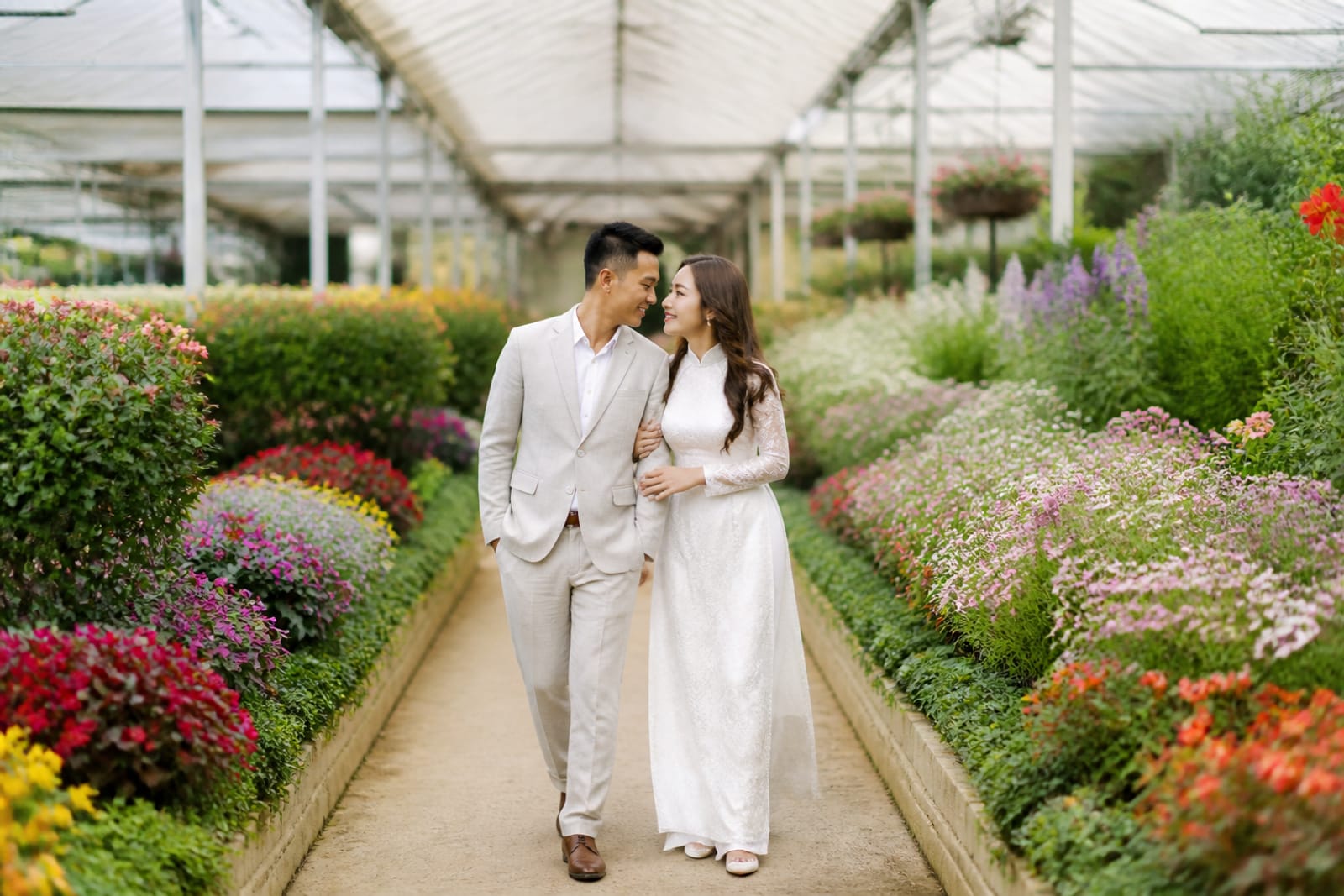
Which season works best and why?
| Season | Light quality | Weather | Ao dai fit | Why it works |
|---|---|---|---|---|
| Dec–Feb | Soft, diffuse, cool-toned | Clear mornings; afternoon mist thickens after 10 a.m. | Drapes cleanly; cool air prevents fabric cling | Peak season: best visibility, most predictable light, manageable crowds at sunrise |
| Mar–Apr | Bright, slightly harsh morning; golden hour stronger | Warming; occasional rain by noon | Good (slightly humid) | Extended daylight, wildflowers on slopes, lighter jacket outfit options |
| May–Nov | Filtered through cloud cover; flat or absent | Frequent afternoon showers; morning mist may linger all day | Clings to skin; heavy humidity | Avoid Oct–Nov (typhoon risk, low visibility); May–Sep mornings passable but unreliable |
Da Lat's highland climate (roughly 15–25°C year-round) means even "summer" (May–Sep) feels cool at 2,169m. However, the dry season (Dec–Apr) offers mist at sunrise—not rain—and the clearest vistas. Early Feb brings wild cherry blossoms on some slopes (check local guides). Morning shoots (5:30–8:30 a.m.) guarantee soft light and thin mist before the thermal layer burns off around 10 a.m., after which the mountain either clears completely (blue-sky, harsh shadows) or clouds thicken into all-day grey (poor for detail and colour).
📸 Book on WhatsApp — ao dai photoshoot | 🌸 See the lookbook
Should you hire a local photographer or book with Cáo Studio?
Cáo Studio – Makeup & Photoshoot operates in Hanoi, Ho Chi Minh City, and Hoi An only; the team does not travel to Langbiang Mountain. Your choice depends on your goals and logistics.
Local Da Lat photographer (on-site, mountain-specific expertise): Hire a photographer who has a portfolio showing ao dai on slopes, misty light metering, and fabric management on rocky terrain. Ask for samples in Dec–Feb conditions. They know the safest paths, best vantage points for each hour, and permit requirements (mountain entry tickets are required—check the current price on the official Da Lat tourism site). Cost factors include their day rate, guide fee, editing timeline, and digital file delivery. Interview at least two; ask how they handle wind gusts (fabric blow, hair), battery life at altitude, and contingency if mist doesn't clear.
Cáo Studio for glam prep or post-mountain polish: Hire makeup & hair at your hotel in Da Lat the morning of your hike—fresh skin, HD makeup, and styled hair that survives wind and mist. Then shoot on the mountain with a local photographer. Or return to Hanoi, Ho Chi Minh City, or Hoi An for a formal couple & family photoshoot or ao dai photoshoot session after your mountain adventure, using professional studio light and backdrops to complement candid mountain images. This hybrid approach gives you polished studio shots (guaranteed light, tailored ao dai, makeup touch-ups) and authentic alpine photographs (mist, terrain, raw emotion).
💄 Makeup & hair at your hotel | 🌸 See the lookbook
Practical checklist: what to prepare before you shoot
Clothing & fabric:
- Bring two ao dai: one for sunrise (thicker silk, darker tone to hide mist dampness), one backup (lighter, in case the first snags or wind tangles it).
- Wear moisture-wicking undergarments; ao dai clings to sweat if humidity is high.
- Test your ao dai on stairs or slopes at ground level before the mountain. Ensure the hem clears your feet (muddy, uneven terrain).
- Bring a thin, neutral-toned shawl or light jacket to drape over your shoulders during breaks (keeps you warm, prevents muscle chill that stiffens posture).
Logistics & safety:
- Hire a mountain guide (ask your photographer or Da Lat hotel). They navigate safely and know which ridges offer the best light angle.
- Start by 5:45 a.m. Mist burns off fast; you want 90 minutes of optimal light.
- Bring two power banks (phone, camera battery drain faster at altitude and in cold).
- Pack hand sanitizer and tissue; mist + wind = runny nose, smudged makeup.
- Wear sturdy, non-slip footwear under your ao dai or bring a separate pair for hiking; change into heels or formal shoes at your best vantage point.
Photography & post-production:
- Confirm with your photographer: delivery timeline (when you receive digital files), number of edited images, and whether they shoot raw (unprocessed) or JPEG only.
- Ask how they meter through mist (spot metering, exposure compensation strategy) and whether they use flash or reflectors (metal reflectors freeze in wind; fabric diffusers often work better).
- Request a location scout photo or video the day before; weather and mist density shift hourly.
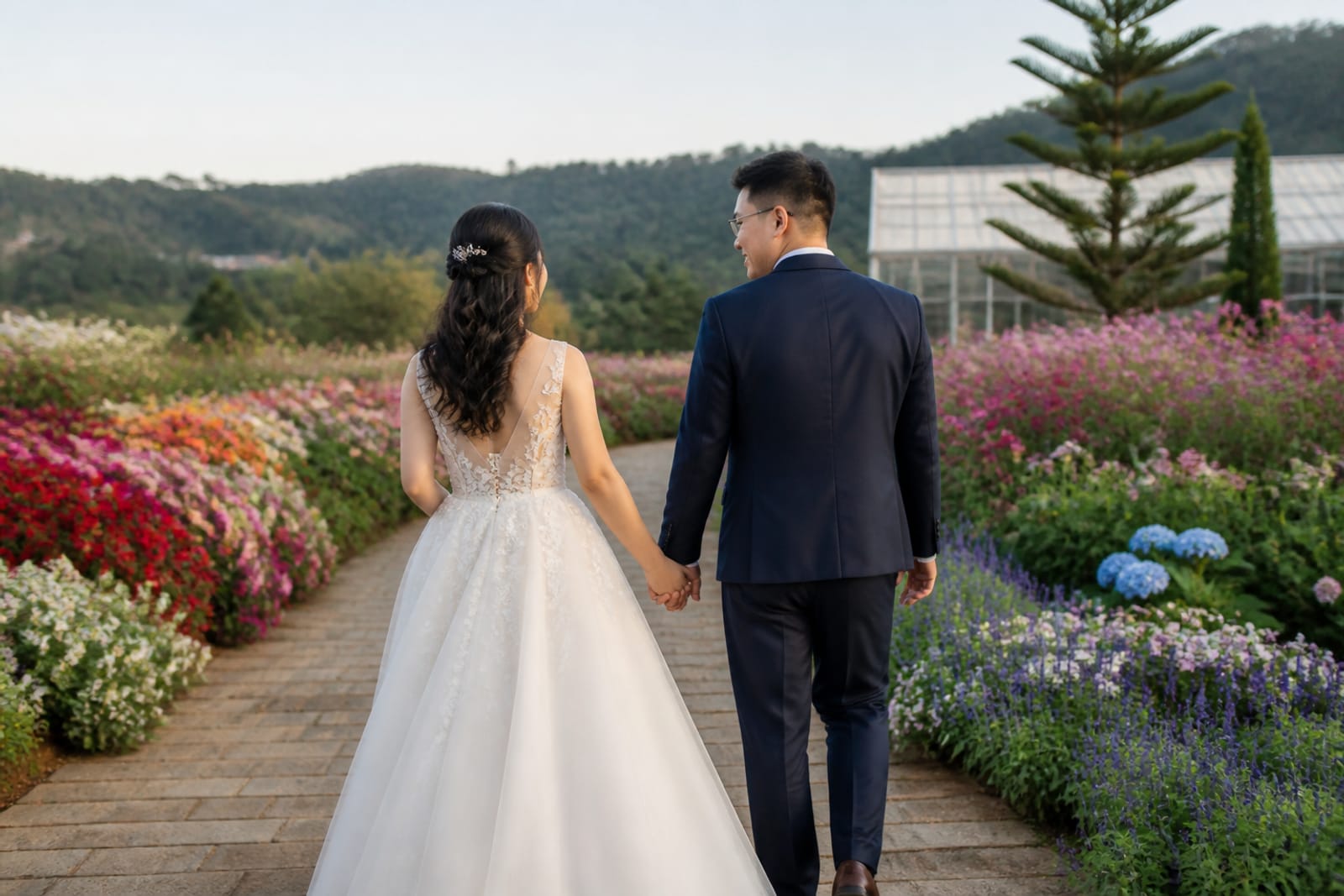
How light moves on Langbiang through the morning
Sunrise (5:30–6:00 a.m.) delivers a cool, bluish side-light as the sun crests the eastern ridge; mist is densest and acts as a giant softbox. The ao dai's silk catches this light and glows without harsh specular highlights. Skin looks even, cool-toned, and alive.
By 6:30–7:30 a.m., the sun is higher; mist starts to thin, and light becomes more direct. Shadows under eyes and cheekbones become visible—this is ideal for intimate, defined portraiture. A skilled photographer meters for your face and lets the background (pines, mist, sky) go slightly underexposed, drawing focus to you.
After 8:00 a.m., the thermal layer breaks. Either the mountain clears to bright blue-sky (harsh, unflattering shadows; you need a reflector to fill faces) or clouds thicken into grey overcast (soft but flat, less depth). Crowds also arrive; you've lost your solitude.
Light quality on Langbiang is not just about lux (brightness) but diffusion: mist acts as a scrim between the sun and your skin, erasing the need for expensive fill-flash or reflector work. This is why Dec–Feb is the season—mist is reliable. May–Nov mist is erratic (may clear at 6:45 a.m. or linger all day), making precise timing impossible.
📸 Book on WhatsApp — ao dai photoshoot
What goes wrong and how to avoid it
Mist doesn't show up: You've shot for an hour and the sky is clear-blue, making the mountain look flat and overexposed. Mitigation: hire a guide who knows the microclimate; sometimes the mist hangs at a different elevation on the ridge. Ask your photographer to adjust composition (shoot into the tree line rather than open sky) and meter for your face rather than the background.
Ao dai hem catches on rocks or pine roots: Fabric tears, hem hangs muddy. Prevention: test your outfit on rough ground beforehand. Wear the ao dai at your vantage point only; hike in separate clothing and change for photos. Bring a needle, thread, and fabric tape in your kit.
Wind gusts flatten or tangle fabric: Your ao dai billows or collapses unexpectedly, ruining the line. Solution: ask your photographer to shoot burst-mode (multiple frames per second) so you capture the moment the fabric settles between gusts. Avoid loose synthetic fabrics; silk and cotton with a smooth weave resist tangling better than silk-polyester blends.
Makeup runs or smudges from mist: Damp air and cool temperatures can shift foundation or melt eyeshadow. Book makeup & hair at your hotel in Da Lat and use a setting spray rated for humidity and altitude. Request HD makeup and long-wear formulas; your makeup artist will know what works in mountain conditions.
Batteries die from cold: Camera and phone batteries drain 40–60% faster at 2,169m in 15–20°C air. Bring three fully charged batteries or power banks and keep one warm inside your jacket pocket.
Crowds and noise ruin candid shots: Arriving after 7:30 a.m. means families with selfie sticks and tour groups overlapping your frame. Stick to your 5:45–7:45 a.m. window and have your photographer pre-compose shots to exclude crowds; position yourself on less-trafficked ridges (your guide knows these).
Booking a local photographer: what to check before you hire
- Portfolio depth: Ask for 5–10 anniversary or couple shoots on Langbiang or similar alpine terrain. Not studio work, not flattering angles in controlled light—authentic mountain photography.
- Mist-light examples: Request images shot in Dec–Feb mist at sunrise. Ask how they expose and meter. Bad mist photographers underexpose (silhouettes) or blow out the sky; good ones balance skin tone against soft background.
- Ao dai handling: Show them a photo of your ao dai and ask how they'd position you to show the embroidery, drape, and colour without tangling. A photographer unfamiliar with traditional garments may not understand how fabric moves.
- Time commitment & rate: Clarify session length, what's included (how many edited images, delivery format—digital download, USB, print), and turn-around time. Discuss cost factors: do they charge extra for a guide, permit, early start, or second location?
- Communication: Can they explain their process in clear English or Vietnamese (your choice)? Do they respond promptly to messages?
- Backup plan: Ask what happens if mist doesn't appear or weather turns rainy. Do they offer a reshoot, location swap, or partial refund?
Compare at least two photographers; ask for references from recent clients. Vet their work on social media and Google; avoid anyone who doesn't show full galleries or who heavily filters every image (you want to see true color and light rendering).
---
If you're planning an anniversary shoot in Hanoi, Ho Chi Minh City, or Hoi An and want to combine it with your Da Lat adventure, Cáo Studio – Makeup & Photoshoot offers couple & family photoshoots and ao dai rental & styling. You could shoot on Langbiang with a local photographer, then book a formal proposal & anniversary session back in the city for polished, controlled portraits. Visit the FAQ for common questions about preparation and pricing for cost factors specific to multi-day shoots.
🌸 See the lookbook | 💄 Makeup & hair at your hotel
FAQ
Is December–February really the best time to shoot on Langbiang, or can I go in spring or summer?
Dec–Feb offers mist at sunrise, cool temperatures, and minimal rain—ideal for light consistency and ao dai drape. Spring (Mar–Apr) works if you accept brighter, harsher morning light and skip the mist effect. Summer (May–Sep) is unreliable: mist may vanish by 6:30 a.m. or hang all day (flat light). Avoid Oct–Nov entirely (typhoon spillover, low visibility).
Do I need a guide, or can I just hike up on my own?
A guide is essential. Langbiang has multiple trails and ridges; without one, you'll waste time finding vantage points or take unsafe paths. Guides know which lookouts offer the best light angle at each hour and where to position yourself away from crowds. Hire through your photographer or Da Lat hotel.
My ao dai is delicate silk with hand-embroidered beading. Will it survive the mountain?
Delicate, heavily beaded ao dai risk snagging, staining, or tearing on rocky terrain. Wear a sturdy, simpler silk ao dai for Langbiang and save your heirloom piece for a formal studio session in Hanoi, Ho Chi Minh City, or Hoi An. Test any outfit on rough ground beforehand and bring a backup.
What if the mist doesn't show up on the day I'm scheduled to shoot?
Mist is most common in Dec–Feb at sunrise but not guaranteed. Ask your photographer how they'll adapt: some reschedule, others shoot in clear conditions (harsh light, you need a reflector). Confirm their contingency policy before you book; ensure it includes a reshoot option if visibility is poor.
Can Cáo Studio photograph us on Langbiang Mountain directly?
Cáo Studio operates in Hanoi, Ho Chi Minh City, and Hoi An only. The team does not travel to Langbiang. However, you can hire a local Da Lat photographer for the mountain shoot, then book Cáo Studio for makeup & hair before your hike or a formal anniversary photoshoot after your trip to complement your mountain images with studio portraits.
How long does a typical Langbiang anniversary shoot take, and what's the best time to start?
Optimal light lasts roughly 90–120 minutes (5:45–7:45 a.m.). Most sessions include a 30-minute hike to your vantage point, 60–90 minutes of posing and movement, and a 30-minute return walk. Arrive by 5:15 a.m. to scout light before shooting; this gives you the full mist window. Sessions longer than 2.5 hours miss optimal light and encounter crowds.
FAQ
Is December–February really the best time to shoot on Langbiang, or can I go in spring or summer?
Dec–Feb offers mist at sunrise, cool temperatures, and minimal rain—ideal for light consistency and ao dai drape. Spring (Mar–Apr) works if you accept brighter, harsher morning light and skip the mist effect. Summer (May–Sep) is unreliable: mist may vanish by 6:30 a.m. or hang all day (flat light). Avoid Oct–Nov entirely (typhoon spillover, low visibility).
Do I need a guide, or can I just hike up on my own?
A guide is essential. Langbiang has multiple trails and ridges; without one, you'll waste time finding vantage points or take unsafe paths. Guides know which lookouts offer the best light angle at each hour and where to position yourself away from crowds. Hire through your photographer or Da Lat hotel.
My ao dai is delicate silk with hand-embroidered beading. Will it survive the mountain?
Delicate, heavily beaded ao dai risk snagging, staining, or tearing on rocky terrain. Wear a sturdy, simpler silk ao dai for Langbiang and save your heirloom piece for a formal studio session in Hanoi, Ho Chi Minh City, or Hoi An. Test any outfit on rough ground beforehand and bring a backup.
What if the mist doesn't show up on the day I'm scheduled to shoot?
Mist is most common in Dec–Feb at sunrise but not guaranteed. Ask your photographer how they'll adapt: some reschedule, others shoot in clear conditions (harsh light, you need a reflector). Confirm their contingency policy before you book; ensure it includes a reshoot option if visibility is poor.
Can Cáo Studio photograph us on Langbiang Mountain directly?
Cáo Studio operates in Hanoi, Ho Chi Minh City, and Hoi An only. The team does not travel to Langbiang. However, you can hire a local Da Lat photographer for the mountain shoot, then book Cáo Studio for [makeup & hair](/makeup-and-hair) before your hike or a formal [anniversary photoshoot](/proposal-and-anniversary) after your trip to complement your mountain images with studio portraits.
How long does a typical Langbiang anniversary shoot take, and what's the best time to start?
Optimal light lasts roughly 90–120 minutes (5:45–7:45 a.m.). Most sessions include a 30-minute hike to your vantage point, 60–90 minutes of posing and movement, and a 30-minute return walk. Arrive by 5:15 a.m. to scout light before shooting; this gives you the full mist window. Sessions longer than 2.5 hours miss optimal light and encounter crowds.
Ao dai, makeup, hair and a local photographer in Hanoi or Saigon — one WhatsApp message.