/proposal-and-anniversary
Anniversary photoshoot at Mui Ne white sand dunes: light, season & tim
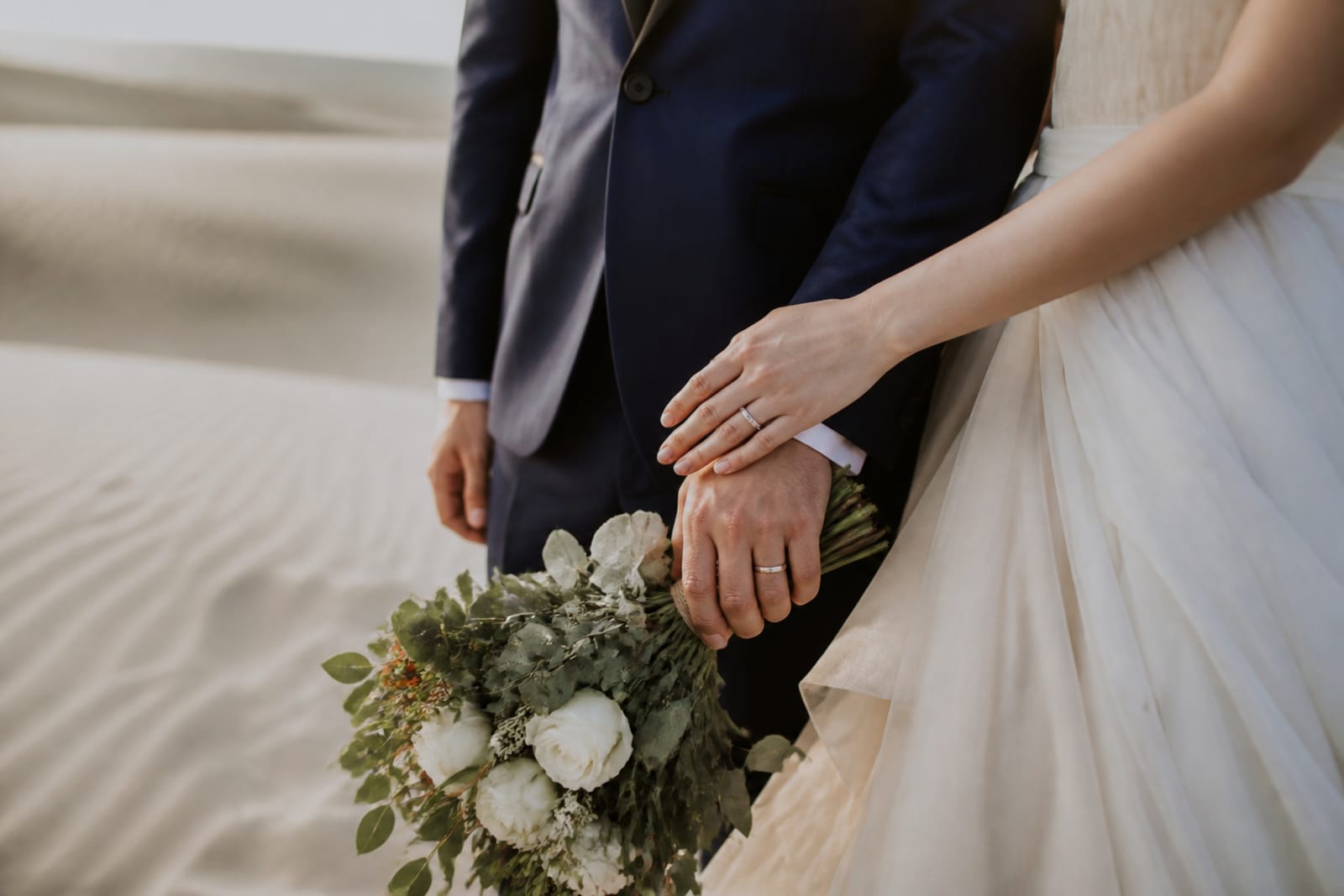
An anniversary photoshoot at Mui Ne white sand dunes works best between November and March, when the dunes are dry and wind patterns keep sand from blowing onto skin and lenses. Early morning light (5:30–7:00 am) gives soft side-light and long shadows; by 10 am, overhead sun flattens faces and outfits. Cáo Studio does not operate in Mui Ne — you'll hire a local photographer or bring your own crew from Hanoi or Saigon. Sessions run 1–2 hours depending on outfit changes (one outfit keeps the light constant; two or three mean moving between sunrise and mid-morning). Outfit choice matters: lightweight, flowing fabric reads better in wind; dark colors hold definition against pale sand; moisture wicks faster than cotton in heat. Expect sand in camera bodies, hair and shoes — pack a rocket blower, hair clips and sealed bags. The dunes close at dusk; all framing must happen before 6:00 pm.
Why Mui Ne dunes work for anniversary photos — and when they don't
Mui Ne sits in Vietnam's driest zone (Ninh Thuan Province, 250 km east of Ho Chi Minh City). Because rainfall is rare Nov–Apr, sand stays pale and loose — it doesn't cake or darken with damp. The dunes' geometry is forgiving: slopes face multiple directions, so you find backlit, sidelit, and soft-shadow frames without moving far. Crowds thin after 7:30 am, unlike Ha Long Bay or Hoi An Ancient Town. The catch: May–Oct, afternoon downpours flatten sand and humidity clouds the air by 6 am. Tet week (late Jan–mid Feb) brings Saigon day-trippers. Wind peaks Nov–Mar, lifting sand 2–3 meters — fine for drama, rough for skin and sensors.
Conclusion: Book Nov–Mar, depart Saigon by 4:30 am, shoot sunrise to 8:00 am, avoid Tet week crowds.
Which season gives you the light you want?
| Season | Best light time | Wind | Sand condition | Outfit fit | Why it works |
|---|---|---|---|---|---|
| Nov–Dec | 5:45–7:30 am | Strong (post-monsoon) | Dry, pale, loose | Flows, cools fast | Low humidity, stable light, few visitors |
| Jan–Feb | 6:00–7:45 am | Moderate–strong | Dry but packed | Flows, moisture-wicking | Crisp air, shadows sharp, Tet crowds after 10 Jan |
| Mar–Apr | 5:30–7:00 am | Easing | Dry, warming | Light layers best | Heat rises by 8 am, light shifts gold-to-yellow fast |
| May–Oct | (avoid) | Light morning, heavy pm | Wet, dark, muddy | Sticks, heavy | Rain risk daily 2–5 pm, overcast until 8 am |
Conclusion: December and January offer the fastest clothing flow and sharpest shadows; March is hotter but cleaner light.
How to choose: hire a local photographer or travel with Cáo Studio from Hanoi/Saigon?
Mui Ne has no shortage of photographers — Instagram search "Mui Ne photoshoot" shows dozens. Here's the frame: local hire (book on-site or 2 weeks ahead) costs one-third to one-half what traveling a full crew costs, and the photographer knows the dune access roads and security guards. The trade-off is communication (WhatsApp clarity matters; ask for a shot list in writing), outfit coordination (you bring your own hair and makeup), and editing speed (expect 2–3 weeks, not 48 hours). Traveling with Cáo Studio from Hanoi or Saigon means one team handles direction, makeup, hair and framing — no coordination between vendors — but adds travel time (4–5 hours from Saigon, 8+ from Hanoi) and cost factors (mileage, accommodation, meal time). Ask on WhatsApp whether Cáo Studio covers Mui Ne shoots; if not, the studio can recommend a vetted local.
Conclusion: Local hire = speed and budget; full crew = one unified vision, but requires earlier booking (4+ weeks).
What kills Mui Ne dune photos (and how to avoid it)
Sand in the camera. Sensor dust and lens fungus cost more than a session re-shoot. Bring a rocket blower, don't change lenses on the dunes, and keep bodies in sealed bags between shots. Outfit blowout. Wind gusts lift fabric unpredictably. Wear a slip or shorts under skirts; pin hair with bobby clips and a light scarf; choose fabrics with weight (silk charmeuse, not chiffon alone). Overexposure. Sand reflects 40–50% of light; meters underexpose. A skilled photographer shoots in manual mode and dials exposure +0.5 to +1.5 stops; if you're hiring locally, mention this in your shot list. Dehydration and heat sickness. The dunes have no shade; 5:30–8:00 am is cooler but still 20°C+ by March. Bring 2 liters of water per person, electrolyte powder, and a hat for between-shot breaks. Wrong outfit choice. Heavy linen or wool doesn't breathe; denim holds heat and reads stiff. Linen, ramie, or silk-blend fabrics dry sweat fast and move with wind, not against it.
Conclusion: Sealed gear, pinned fabrics, manual exposure and hydration prevent 90% of ruined dune sessions.
Timing: why 5:30–7:00 am matters more than the outfit
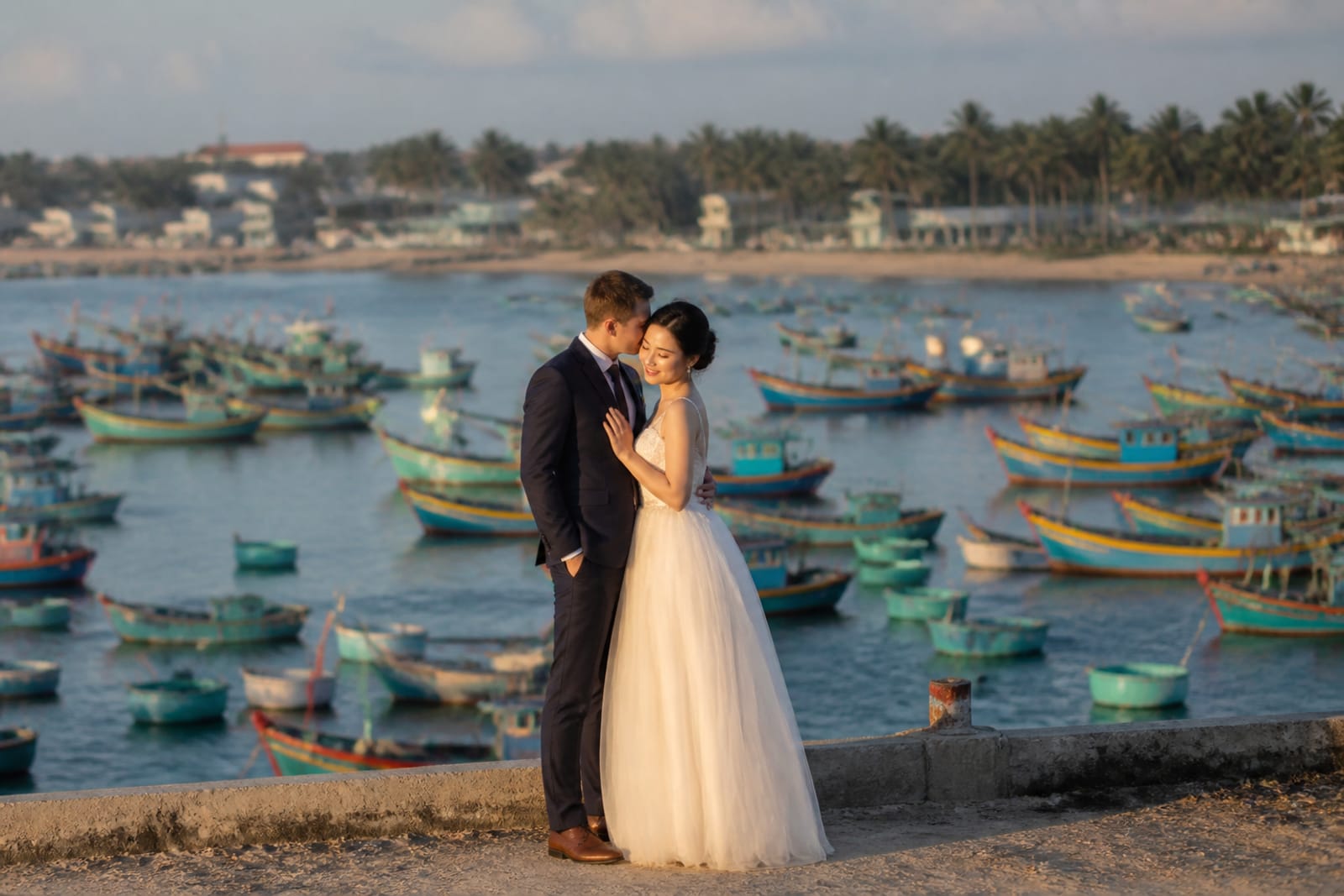
Sunrise at Mui Ne occurs 6:15–6:45 am (depending on month). Golden hour — the period when sun angles below 6° — lasts only 20–30 minutes after first light. At 5:30 am, the dunes are still purple-grey; light is soft and forgiving (a backup for cloud cover). By 6:00 am, the first warm glow hits west-facing slopes (sidelight, long shadows). By 7:00 am, light is bright and directional but no longer gold. By 8:00 am, sun is high enough to create harsh nose shadows and blow out sand texture. If you're traveling from Saigon, depart by 4:00–4:30 am; the 90-minute drive lands you at the dunes by 5:45 am. Hire a photographer who knows the entry gates (dunes open at 5:00 am, but tourism offices sometimes close them for maintenance — confirm the night before). One outfit = maximum time to find light. Two outfits split the window: 20 minutes per outfit, or shoot one at sunrise and one at 7:15 am (light shifts warmer but remains usable).
Conclusion: Arrive 5:30 am, shoot one outfit until 6:30 am, and plan a second outfit for 6:45–7:45 am if light and energy allow.
Bringing an ao dai to the dunes — fit, comfort and the wind factor
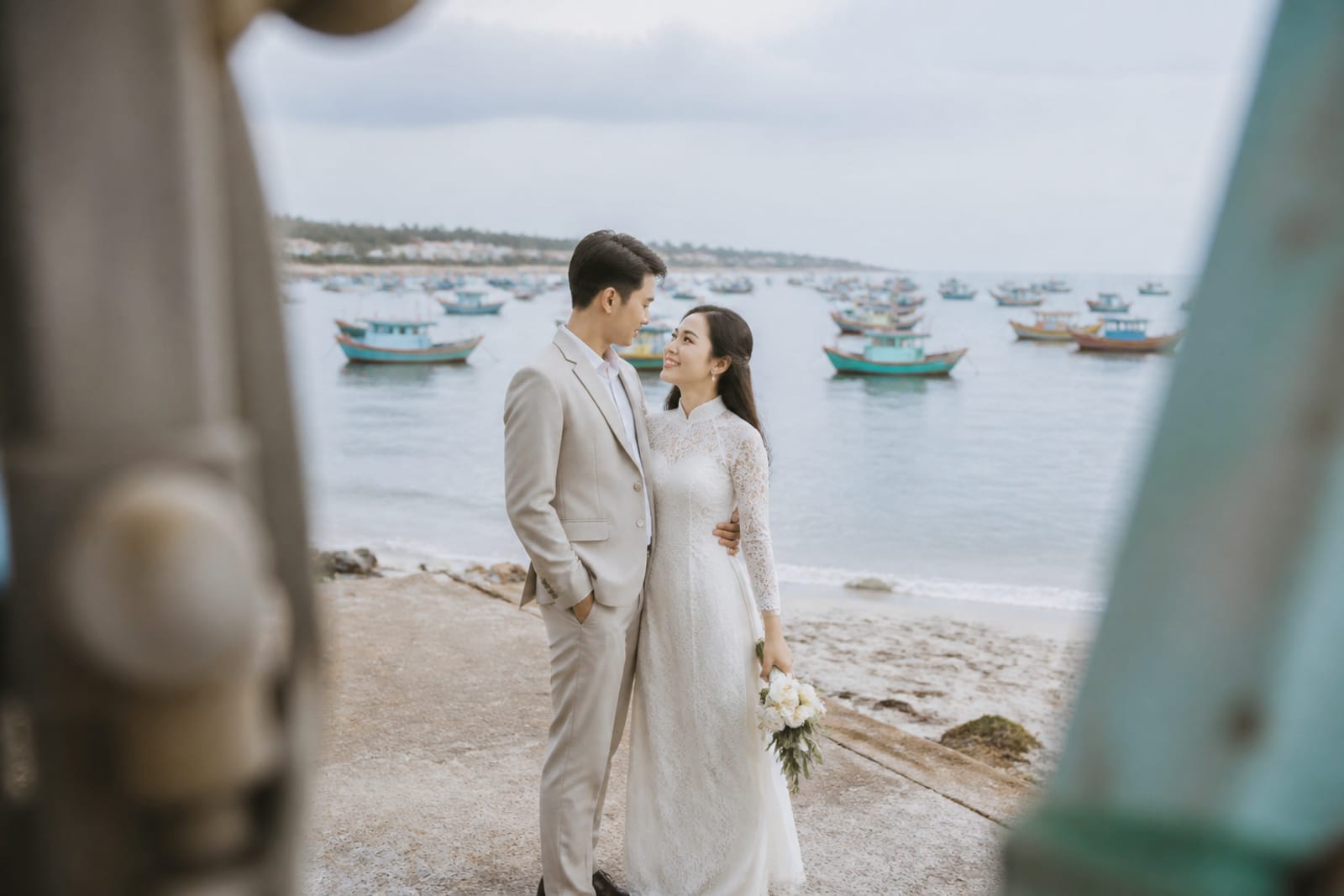
An ao dai rental or owned piece brings grace to dune framing, but the garment and the environment are at odds. Ao dai fabric is often silk or silk-blend, which flows beautifully but wrinkles easily in sand (pack a hand steamer). The tunic and pants are loose-cut, designed for still air; wind inflates them, hiding your silhouette. Ask the photographer to shoot medium (waist-up) as well as wide (full figure) so you see both the fabric drama and your posture. Wear a thin slip or fitted shorts under the pants (sand gets everywhere); the slip also prevents the tunic from clinging if you sweat. Footwear is tricky: ao dai pairs with sandals or flat shoes, but sand fills sandals fast. Shoot barefoot on dunes, then slip sandals back on for walks. If you're hiring locally, mention the ao dai in your shot list so the photographer plans for wind and fabric — they'll know whether to shoot into the wind (fabric billows toward lens) or with it (fabric flows away, showing your frame).
Conclusion: Ao dai works if you pair it with sidelit wide shots (wind becomes drama) and shoot barefoot on the dunes.
---
What to check before you book
- Photographer's dune experience. Ask to see a previous dune shoot (harsh sand light is hard to nail). Request a written shot list in advance: "wide establishing, medium couple walking, detail of hands, backlit silhouette."
- Sunrise time. Confirm the exact sunrise for your date; plan a 5:00 am pickup from your hotel to hit dunes by 5:30 am.
- Outfit swap logistics. If you're bringing two outfits (e.g., ao dai + dress), ask how the photographer handles changes: do you step behind a dune, or does the team bring a pop-up changing screen?
- Sand weather confirmation. The night before, WhatsApp your photographer: "Are the dunes open and dry tomorrow?" Rain or maintenance closures do happen.
- Editing timeline. Local photographers often deliver edited photos in 2–3 weeks. If you need prints or albums before leaving Vietnam, ask about rush delivery costs and turnaround.
- Backup plan for wind. Confirm the photographer has worked in windy conditions and knows how to frame a billowing ao dai or dress as strength, not chaos.
---
📸 Book on WhatsApp — proposal & anniversary shoot
Cáo Studio does not operate in Mui Ne. For an anniversary photoshoot in Hanoi, Ho Chi Minh City or Hoi An, book a couple photoshoot. If you're planning a Mui Ne session, ask on WhatsApp for a local photographer recommendation.
💄 Add makeup & hair to your Saigon base — before you travel
Arriving from Saigon the morning of the shoot? Arrange hotel makeup and hair at your Saigon base (5:00–6:00 am), then drive to the dunes with your look fresh.
🌸 See dune and couple frames in the lookbook
---
FAQ
Can Cáo Studio photograph my anniversary at Mui Ne?
No — Cáo Studio operates in Hanoi, Ho Chi Minh City and Hoi An. For Mui Ne, hire a local photographer or ask on WhatsApp for a vetted recommendation. If you're celebrating an anniversary in Hanoi or Saigon, book a couple photoshoot.
What's the best month to shoot Mui Ne dunes?
November to March. Dunes are driest, wind patterns are predictable, and humidity is low. Jan–Feb crowds peak during Tet; Dec and Mar are quieter. May–Oct brings rain and overcast mornings — avoid.
Do I need a permit to photograph on Mui Ne dunes?
Check with your local photographer or hotel concierge the day before. Dunes are managed by local tourism offices and occasionally close for maintenance. Access normally opens at 5:00 am.
Should I wear an ao dai on the dunes?
Yes, if the photographer understands wind-flow framing. Shoot barefoot to avoid sand in shoes, wear a slip underneath, and ask for medium and wide shots so the fabric drama reads against your silhouette. Backlit sidelight is ideal.
How early do I need to wake up for sunrise?
Sunrise is 6:15–6:45 am depending on month. Depart your Saigon hotel by 4:00–4:30 am to arrive at dunes by 5:30 am. The first 30 minutes of light (5:30–6:00 am) are the softest; golden hour peaks 6:00–6:30 am.
What if it's windy or cloudy on my shoot day?
Wind is normal Nov–Mar; a skilled photographer shoots into or with it depending on your outfit. Cloud cover in early morning is actually ideal (soft, even light). If dunes are closed due to rain or maintenance, reschedule with your photographer 24 hours ahead.
How long does a dune photoshoot take?
1–2 hours on location (5:30–7:30 am). One outfit keeps light consistent; two outfits split the golden window. Allow 2.5–3 hours including drive, outfit setup and breaks.
FAQ
Can Cáo Studio photograph my anniversary at Mui Ne?
No — Cáo Studio operates in Hanoi, Ho Chi Minh City and Hoi An. For Mui Ne, hire a local photographer or ask on WhatsApp for a vetted recommendation. If you're celebrating an anniversary in Hanoi or Saigon, [book a couple photoshoot](/couple-photoshoot).
What's the best month to shoot Mui Ne dunes?
November to March. Dunes are driest, wind patterns are predictable, and humidity is low. Jan–Feb crowds peak during Tet; Dec and Mar are quieter. May–Oct brings rain and overcast mornings — avoid.
Do I need a permit to photograph on Mui Ne dunes?
Check with your local photographer or hotel concierge the day before. Dunes are managed by local tourism offices and occasionally close for maintenance. Access normally opens at 5:00 am.
Should I wear an ao dai on the dunes?
Yes, if the photographer understands wind-flow framing. Shoot barefoot to avoid sand in shoes, wear a slip underneath, and ask for medium and wide shots so the fabric drama reads against your silhouette. Backlit sidelight is ideal.
How early do I need to wake up for sunrise?
Sunrise is 6:15–6:45 am depending on month. Depart your Saigon hotel by 4:00–4:30 am to arrive at dunes by 5:30 am. The first 30 minutes of light (5:30–6:00 am) are the softest; golden hour peaks 6:00–6:30 am.
What if it's windy or cloudy on my shoot day?
Wind is normal Nov–Mar; a skilled photographer shoots into or with it depending on your outfit. Cloud cover in early morning is actually ideal (soft, even light). If dunes are closed due to rain or maintenance, reschedule with your photographer 24 hours ahead.
How long does a dune photoshoot take?
1–2 hours on location (5:30–7:30 am). One outfit keeps light consistent; two outfits split the golden window. Allow 2.5–3 hours including drive, outfit setup and breaks.
Ao dai, makeup, hair and a local photographer in Hanoi or Saigon — one WhatsApp message.