/proposal-and-anniversary
Anniversary photoshoot at Pu Luong rice terraces
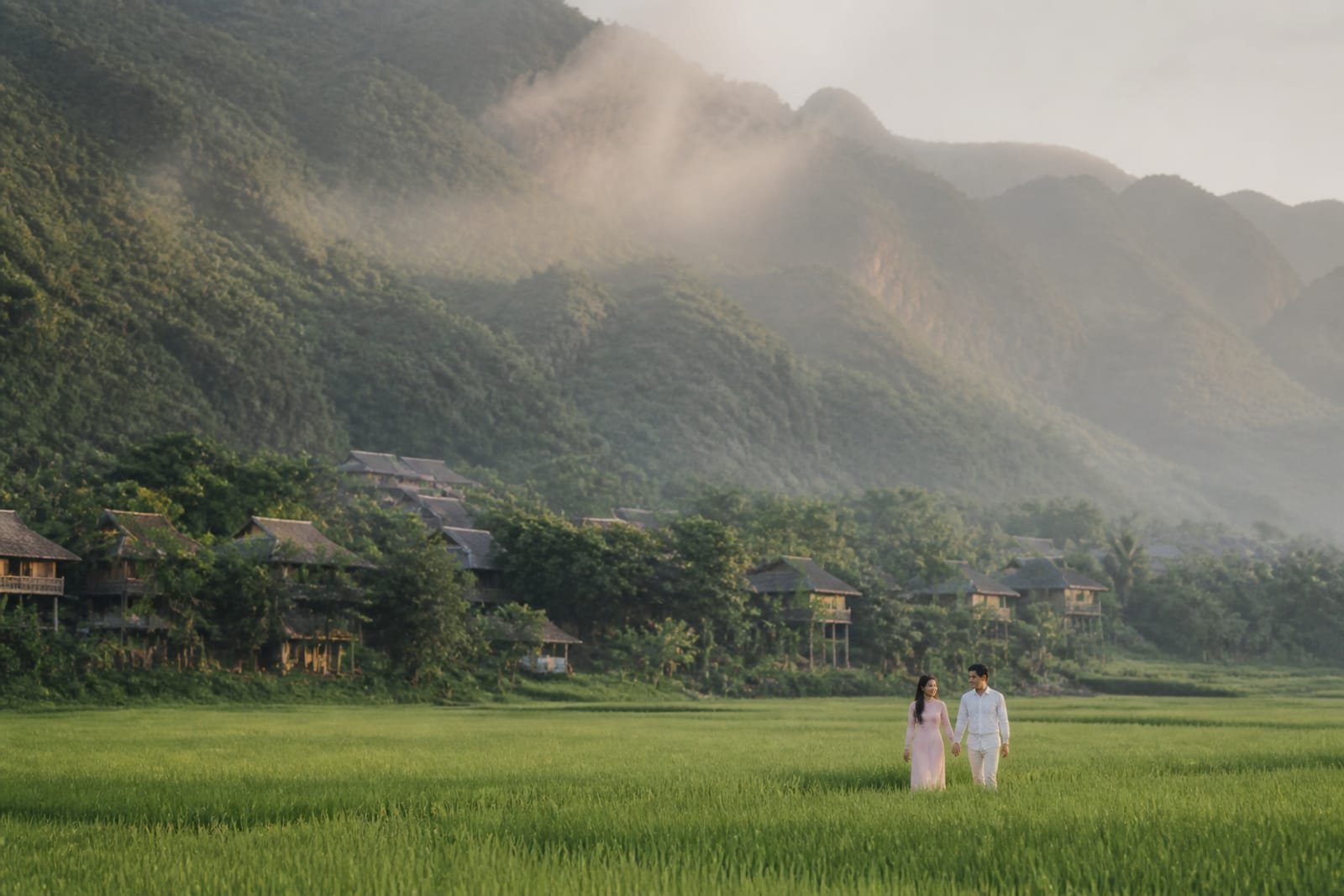
An anniversary photoshoot at Pu Luong rice terraces works best during golden rice season (late May–June, Sep–Oct) when terraces glow amber and green in soft morning light. The shoot takes 2–4 hours in the fields themselves, starting at dawn to catch side light before clouds thicken by midday. You'll walk through working terraces with a guide and photographer; no posed stiff framings—instead, the camera follows real moments of you moving through the landscape. Local accessibility means hiring a photographer based in Thanh Hoa or Ha Noi who knows farm access, water levels, and safe paths; Cáo Studio operates in Hanoi and can coordinate remote shoots there, but Pu Luong itself requires a local partner (we'll guide you through that on WhatsApp). Expect to factor in a guide fee and early travel from Ha Noi (2+ hours by car); rain in the wet season (Sep–Oct) can obscure light, but October's occasional mist also creates cinematic mood. The reward: frames no studio backdrop can match.
Why Pu Luong works better than other terraced valleys for anniversary photos
Pu Luong sits in a microclimate pocket within Thanh Hoa province where morning mist clears earlier than Sapa or Ha Giang, giving you consistent 6–8 am windows of soft, directionless light across the slopes. Unlike the rice paddies near Ha Noi (flat, fragmented by roads) or Mai Chau (more developed, busier with tour groups), Pu Luong's terraces feel remote and layered—the camera can frame you in foreground with graduated ridges of green and gold behind. The valleys are narrower, so side light from the east hits the west-facing slopes at the sweet angle photographers chase. Accessibility trade-off: it's a 2.5-hour drive from Ha Noi, and the fields themselves have no marked paths—you need a local guide and a photographer who's shot there before. If you're based in Ha Noi and want drama without the 4 am start that Sapa demands, Pu Luong is the closer option.
📸 Book on WhatsApp — proposal & anniversary
When should you shoot—golden rice or misty season?
Golden rice season (late May–June and Sep–Oct) offers visual contrast: terraces shift from flooded mirror-like silver to honey-colored grain ready for harvest. The light is warmer, shadows are longer, and the landscape feels celebratory. Misty season (Nov–Feb) brings cool grey mornings where mist clings to the valleys; this creates a moodier, more intimate aesthetic but demands a photographer comfortable shooting in flat, diffused light without strong directional shadows. The trade-off: golden season has shorter rain windows but more tourists starting to trickle in by early June and late October; misty season is quieter and more reliably cloud-covered, but the light is softer, less dramatic. For anniversary shoots, most couples choose late May or September–early October—the visual payoff is immediate. Winter (Nov–Feb) suits couples wanting a contemplative, moody tone rather than golden hour spectacle.
| Season | Light quality | Crowds | Rain risk | Outfit fit | Why it works |
|---|---|---|---|---|---|
| Late May–June | Warm, amber, side-lit | Growing | Short showers | Airy fabrics; ao dai floats | Peak harvest mood, clear mornings |
| Sep–Oct | Golden-hour amber | Moderate, picking up | Occasional, 1–2 days | Layers; linen works | Autumn glow, cooler walks |
| Nov–Feb | Cool, diffused, misty | Quiet | Low | Jackets, heavier fabrics | Moody, intimate frames; cold hands |
| Jul–Aug | Hot, harsh midday | Fewer | Daily afternoon storms | Light cotton only | Avoid: storms, midday glare, humid haze |
How does location access work, and what's different from a studio shoot?
Pu Luong has no paved roads into the terrace fields. You'll arrive by car to a parking area (30 min from the nearest town, Canh Duong), then walk 30–45 minutes uphill on narrow terraced paths to reach the best light. The photographer, you, and a local guide move together; there's no pose-and-shoot workflow. Real light is directional but fleeting—as the sun climbs, the angle changes every 15 minutes, so the crew is always repositioning. This means you're walking, looking at each other, adjusting to the terrain, not standing still. Cáo Studio's core belief is that one team (photographer + guide + light knowledge) shoots better than hiring three vendors separately (photographer + guide + stylist). However, Cáo Studio is based in Ha Noi and Saigon; Pu Luong shoots need a local Thanh Hoa photographer or a Ha Noi team that has scouted the site. If you're booking with Cáo Studio, we'll help you connect with a trusted local partner and brief them on our directing style. If you're booking independently, vet the photographer's Pu Luong portfolio and ask exactly which terraces they shoot (some are private farms with access fees; others are cooperative land with guide requirements).
What should you wear for Pu Luong, and how does it differ from city shoots?
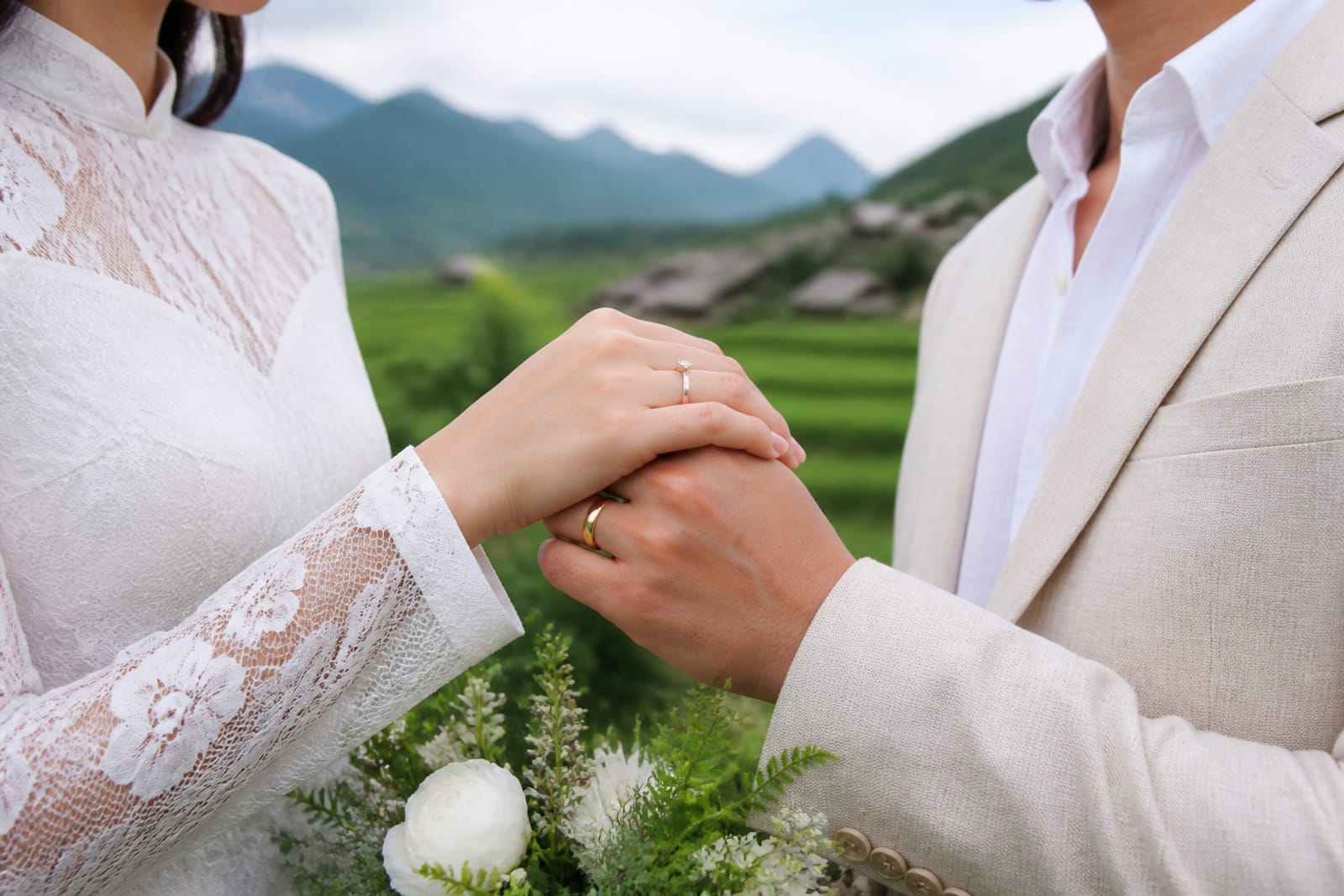
Pu Luong is working farmland. An ao dai works beautifully but demands a lighter silk or cotton blend; layers (a shirt underneath) protect you from sun and cold morning air. Avoid heavy embroidered fabrics—they'll feel stiff when walking uphill, and the weight pulls the ao dai fabric away from your body, making it harder to move naturally. For anniversaries, many couples choose matching ao dai (classic and color-coordinated) or pair an ao dai with soft linen trousers and a neutral linen shirt—the geometry of the terraces speaks louder than costume. Footwear is critical: proper hiking sandals or trail shoes, not flip-flops or formal heels. Wet terrace edges are slippery; one wrong step means a muddy ankle that takes 20 minutes to recover from. Bring a small towel and water. If you're not wearing ao dai, light, muted tones (cream, soft grey, sage green) sit better against the green and gold than bright jewel tones, which look artificial in natural landscape light. Makeup should be water-resistant; sweat and humidity will run it by 8 am.
What's the timeline and cost structure, and how do you book?
A Pu Luong anniversary shoot runs 3–4 hours on-site (4:45 am departure from your accommodation, shooting 6–9 am, back by 11 am). You'll need to overnight in or near the valley or leave Ha Noi before dawn. Costs factor in several layers: the photographer's fee, a local guide fee (required by law and safety), vehicle rental if you're not arranging your own, and a possible farm access fee if shooting on private cooperative land. Cáo Studio does not operate a Pu Luong branch; we're based in Hanoi and Saigon. If you're an international couple flying into Ha Noi and want an anniversary shoot at Pu Luong, we can coordinate makeup and hair in your hotel before you travel, brief a trusted local photographer on our directing method, and help you plan the logistics. For a complete quote—including who we recommend and what each layer costs—message us on WhatsApp. You'll also want a detailed pre-shoot call with the photographer to confirm terrace access, water levels, and exact meeting points. Most teams shoot half-day (morning only) because the afternoon light flattens and crowds begin trickling in by 10 am.
How to vet and book a local Pu Luong photographer if you're not using Cáo Studio
Search for photographers in Thanh Hoa, Ha Noi, or northern Vietnam wedding photographers with specific Pu Luong portfolios. Ask: "How many anniversary or couple shoots have you done in these terraces? Which farms do you have access to?" A good answer is specific (names of valleys, mention of standing agreements with cooperatives). Ask for before-and-after light comparisons—do they understand why 6:30 am matters more than 7 am? Ask about backup plans if weather closes the terraces (happens 2–3 times a year during typhoon season, Sep–Nov). Check references from couples shot in the same season you're booking. On the pre-shoot call, confirm: exact meeting time and place, what happens if it rains, whether they provide a guide or if you hire separately, parking details, and how many outfits are realistic (usually one main outfit plus a quick change if you're quick on the terraces). A professional photographer will have a clear logistics sheet and won't overbook (6–8 hours in the fields is the max for one team per day).
What to check before you book
- Light scouting: has the photographer shot at the exact terraces you want, at the same month and time of day? Ask for a photo taken at 6:45 am in your target month.
- Guide and access: confirm whether a guide is included or booked separately, and whether farm access fees are pre-arranged.
- Weather backup: what's the rainout policy? (Pu Luong can close due to overnight storms; rescheduling should be free.)
- Transport: who arranges the car? Is the driver local and familiar with the roads?
- Outfit advice: does the photographer understand ao dai fit and movement in terraced terrain, or will they give generic "wear whatever" advice?
- Edited timeline: how many photos and when will you see them? (Cáo Studio delivers edited photos in 48 hours; many local photographers take 2–4 weeks.)
- Video: if you want a short anniversary film, confirm separately—not every photographer offers it.
For couples looking to add professional hair and makeup before traveling to Pu Luong, Cáo Studio's hotel makeup service works from Ha Noi accommodations. Otherwise, do your makeup in your room or at a local salon the morning of the shoot; mountain humidity will undo anything complex by 7:30 am.
---
Why Cáo Studio's approach works (and where we fit)
Cáo Studio's model—one team handling photography, styling, and directing—means the photographer is not splitting attention between you and logistics. At Pu Luong, your local guide handles terrain and access; the photographer brings light knowledge and framing; you move naturally through the landscape. If you're based in Ha Noi or flying in, we can coordinate your pre-shoot day with makeup and hair, send you a detailed brief for your Pu Luong photographer, and be your point of contact for any questions about directing style or outfit fit. We've worked with couples planning Pu Luong shoots and can match you with photographers we trust. For shoots in Ha Noi itself—couple photoshoots, ao dai portraits, or even pre-wedding sessions in the city—we handle everything start to finish.
📸 Book on WhatsApp — couple photoshoot
FAQ
Can Cáo Studio shoot my anniversary at Pu Luong?
Cáo Studio is based in Ha Noi and Saigon. Pu Luong requires a local guide and on-the-ground access knowledge we source separately. We coordinate makeup, pre-shoot briefs, and connect you with trusted photographers. Message us on WhatsApp for a referral and full planning call.
What's the best month to shoot Pu Luong terraces?
Late May–June and September–early October offer golden rice and clear morning light. October can include mist and occasional rain but feels more intimate. Avoid July–August (heat, daily storms) and book 4–6 weeks ahead.
Do I need an ao dai, or can I wear Western clothes?
An ao dai floats beautifully in landscape photos. Western clothes work if they're muted, layered, and movement-friendly (linen, cotton). Avoid bright colors and heavy fabrics; prioritize hiking footwear over style.
How early do I have to wake up?
Expect a 4:45 am pickup from your accommodation to arrive by 6 am and shoot until 8:30–9 am. Morning light is crucial; later starts lose the dramatic side-light that makes Pu Luong special.
What if it rains the day of the shoot?
Rain is possible Sep–Oct; ask your photographer's rainout policy before booking. Most reschedule free if heavy rain closes the terraces. Light drizzle often works—bring a towel and stay in communication.
How many edited photos will I get?
This depends on your photographer. Ask before booking. Cáo Studio delivers 48-hour turnaround on our own shoots; local Pu Luong photographers typically deliver 2–4 weeks.
FAQ
Can Cáo Studio shoot my anniversary at Pu Luong?
Cáo Studio is based in Ha Noi and Saigon. Pu Luong requires a local guide and on-the-ground access knowledge we source separately. We coordinate makeup, pre-shoot briefs, and connect you with trusted photographers. Message us on WhatsApp for a referral and full planning call.
What's the best month to shoot Pu Luong terraces?
Late May–June and September–early October offer golden rice and clear morning light. October can include mist and occasional rain but feels more intimate. Avoid July–August (heat, daily storms) and book 4–6 weeks ahead.
Do I need an ao dai, or can I wear Western clothes?
An ao dai floats beautifully in landscape photos. Western clothes work if they're muted, layered, and movement-friendly (linen, cotton). Avoid bright colors and heavy fabrics; prioritize hiking footwear over style.
How early do I have to wake up?
Expect a 4:45 am pickup from your accommodation to arrive by 6 am and shoot until 8:30–9 am. Morning light is crucial; later starts lose the dramatic side-light that makes Pu Luong special.
What if it rains the day of the shoot?
Rain is possible Sep–Oct; ask your photographer's rainout policy before booking. Most reschedule free if heavy rain closes the terraces. Light drizzle often works—bring a towel and stay in communication.
How many edited photos will I get?
This depends on your photographer. Ask before booking. Cáo Studio delivers [48-hour turnaround](/faq) on our own shoots; local Pu Luong photographers typically deliver 2–4 weeks.
Ao dai, makeup, hair and a local photographer in Hanoi or Saigon — one WhatsApp message.