/proposal-and-anniversary
Anniversary Photoshoot at Son Tra Peninsula & Linh Ung Pagoda Da Nang
An anniversary photoshoot at Son Tra Peninsula and Linh Ung Pagoda combines coastal cliffs, temple architecture, and golden-hour light in Da Nang's central coast. The peninsula sits north of the city; the pagoda crowns its ridge overlooking the sea. Sessions run 2–4 hours with travel time included. Best light: sunrise (6–7 a.m.) or sunset (5–6 p.m., depending on season). Wear lightweight, breathable clothing—heat and humidity are high May–August; bring a shawl or light layer for pagoda visits (shoulders and knees covered indoors). February–August is dry; avoid September–December (rainy, typhoon risk, low visibility). Cáo Studio – Makeup & Photoshoot does not operate in Da Nang; hire a local photographer experienced with pagoda etiquette and coastal light.
Why does timing matter so much at Linh Ung Pagoda?
Linh Ung Pagoda sits at roughly 700 meters elevation on Son Tra Peninsula's ridgeline, often shrouded in mist or cloud cover mid-morning through afternoon. Sunrise (before 7 a.m.) offers clear skies and soft backlight from the sea; sunset (5–6 p.m. depending on season) delivers warm, directional light across the stone pathways and the sea view behind you. Midday—10 a.m. to 3 p.m.—produces harsh shadows, blown-out sky, and crowds from tour groups. Arrive at your photographer's recommended start time; allow 15–20 minutes for the cable car or hiking the access road, depending on your fitness and chosen route. Pagoda access closes at dusk for safety; confirm closing time locally before booking.
📸 Book on WhatsApp — proposal & anniversary sessions | 💄 Makeup & hair at your hotel | 🌸 See the lookbook
What should you wear under an áo dài on the peninsula?
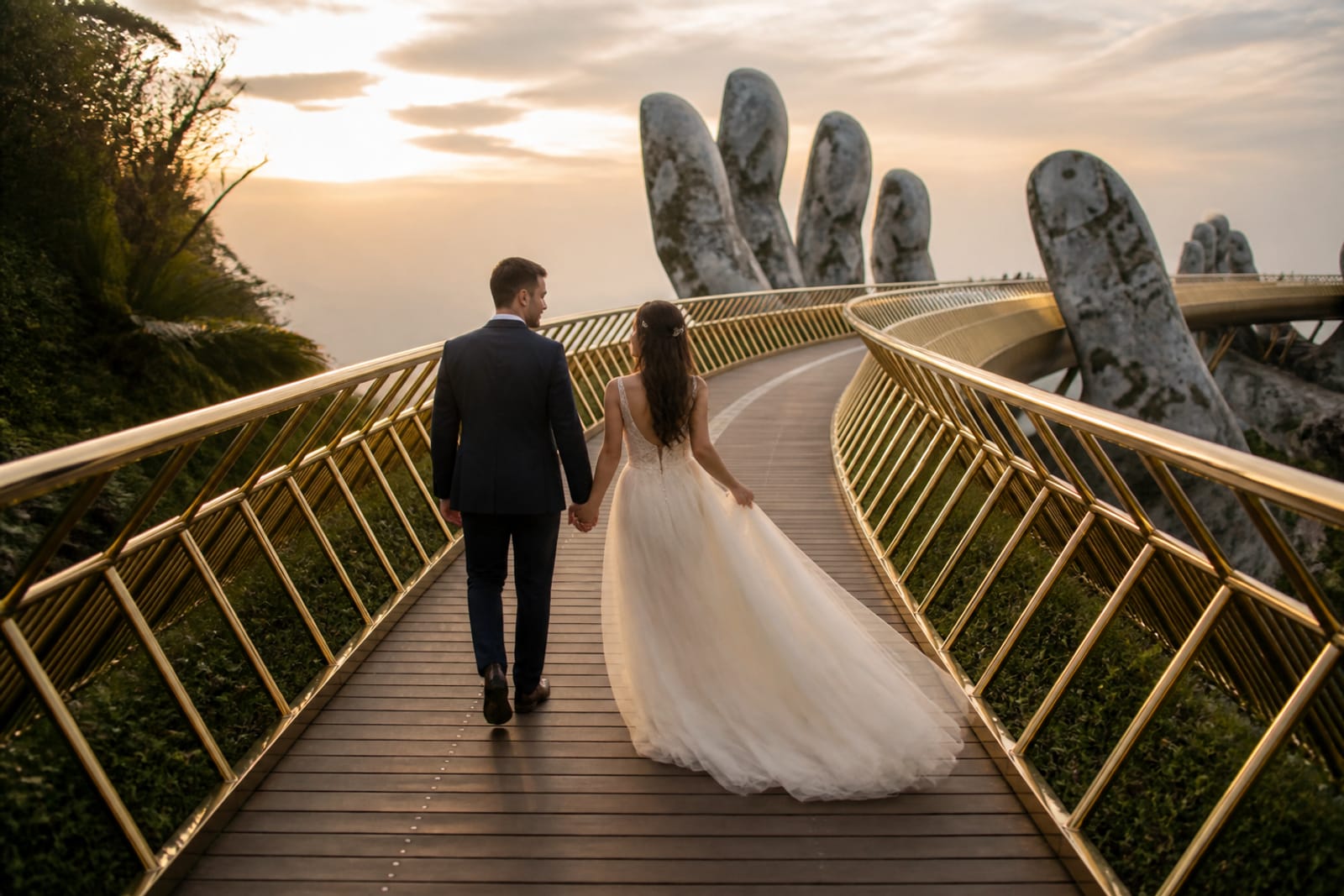
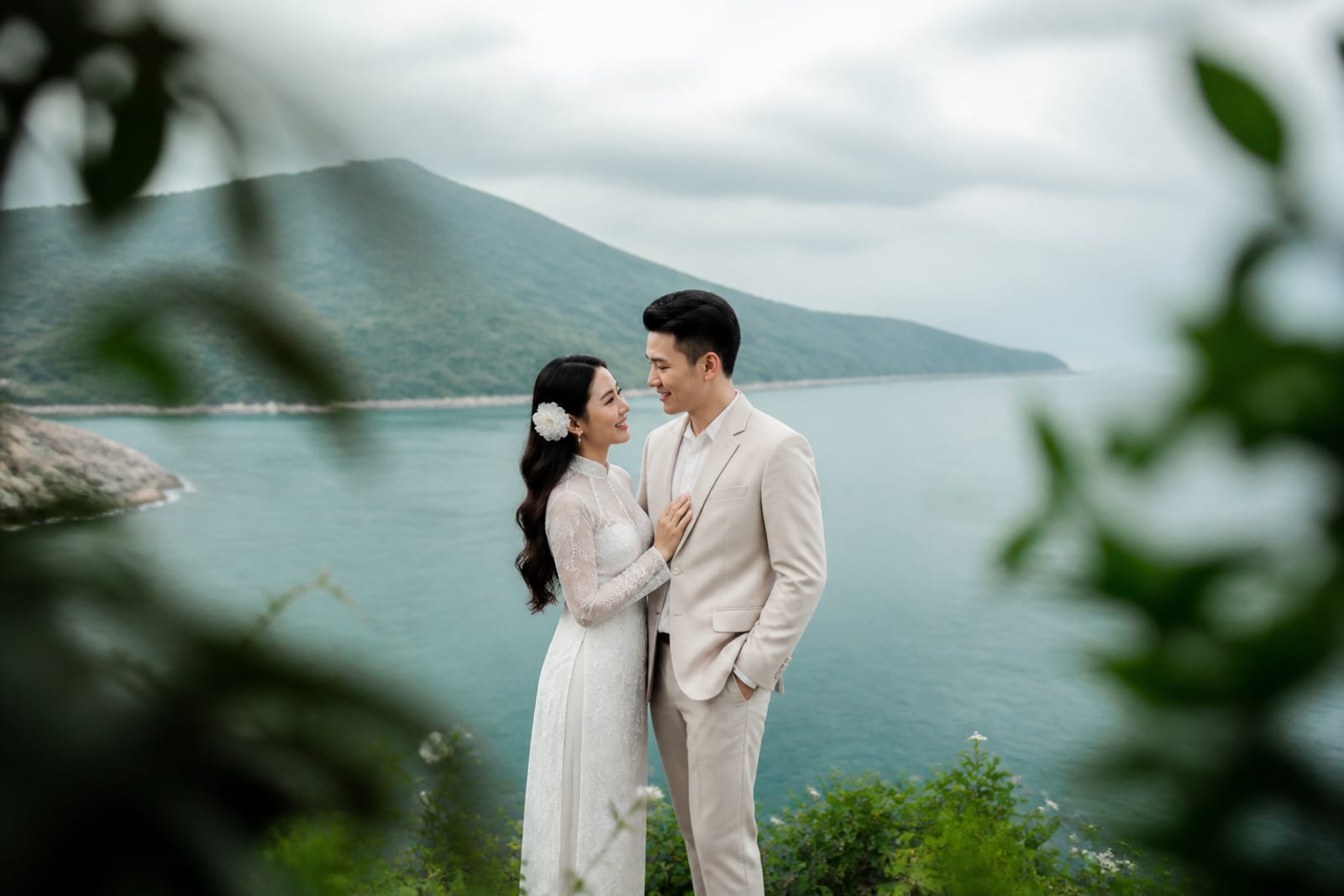
Lightweight layers work best: a cotton slip or underdress (knee-length) beneath an áo dài reduces visible sweat and offers coverage for temple visits. Avoid strapless or sleeveless underlayers—temples require shoulders covered indoors, and the pagoda's interior is cool even when coastal air is warm. If wearing Western dress instead, choose linen or cotton breathable fabrics; long pants or a midi skirt respect pagoda etiquette. Bring a shawl or scarf (silk wraps well in wind and photographs beautifully). Footwear: wear slip-on shoes—the pagoda's entrance requires footwear removal indoors, so avoid laces. Jewelry should be simple; heavy pieces photograph as distracting shadows. Consider renting an áo dài in Da Nang from a local studio if this is your first time; fit and fabric matter for how you move in photographs.
How do light and season affect anniversary photo quality here?
| Season | Light character | Best for | What to avoid |
|---|---|---|---|
| Feb–Apr | Clear, warm, low-angle | Golden hour drama; pagoda interiors bright | Occasional coastal haze mid-morning |
| May–Aug | Hot, direct, overhead harsh mid-day | Sunrise shots; late-afternoon coastal glow | Midday glare; high heat exhaustion risk |
| Sep–Dec | Rainy, typhoon risk, frequent cloud cover | Not ideal; low visibility, unpredictable showers | Typhoon season worst Oct–Nov; reschedule |
Da Nang's central coast climate runs dry and warm February through August, with peak heat (35+°C) May through July. This makes sunrise sessions essential in summer—you'll have clear light and cooler air for the climb or cable-car ride. Sunset works year-round if skies are clear, but bring sunscreen and water. September through December brings rain, tropical storms, and typhoon risk (worst October–November); visibility drops and rescheduling becomes frequent. If your anniversary falls in monsoon season, plan flexibility into your booking contract with your photographer.
🌸 Pre-wedding & anniversary photoshoot options
Which locations on Son Tra work best for different photo styles?
Linh Ung Pagoda interior: Spiritual, intimate tone—cool stone, dappled temple light. Requires respectful dress (covered shoulders, knees) and quiet demeanor. No flash photography indoors; work with natural light only. Sessions run 20–30 minutes to respect worship spaces.
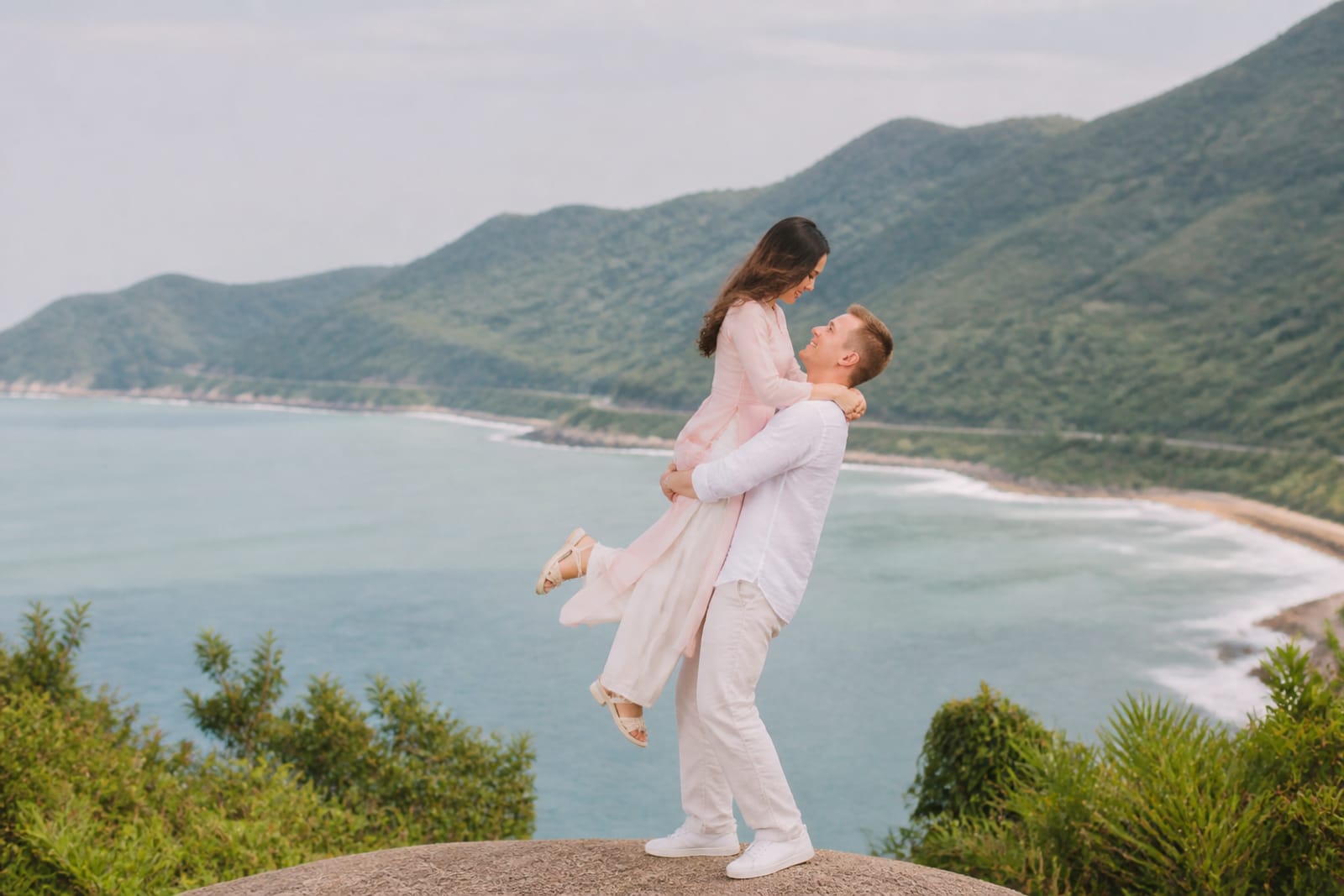
Pagoda exterior and viewpoint: Golden-hour backlight, sea and sky framing. Most dramatic at sunrise and sunset. Crowds thin after 8 a.m. and before 5 p.m. Wind can be strong; hold lightweight fabrics (áo dài sleeves, shawl) carefully.
Coastal paths and cliff edges: Open-air, high-contrast light. Best February–April when skies stay clear. Paths are uneven; wear stable shoes. Move slowly near cliff edges for safety and photograph stability.
Cable-car stations and forest paths: Sheltered, dappled light through canopy. Useful backup during unexpectedly bright mid-day sessions. Paths are narrow; single-file movement limits dynamic posing.
Each zone has a different energy. Work with your photographer to plan a shot list that uses multiple backdrops across a 3–4 hour session, moving with the sun.
How do you find and vet a local photographer for this shoot?
Ask potential photographers three questions before booking:
- Experience at Linh Ung Pagoda: Have they shot there? Do they know pagoda etiquette, hours, light windows, and cable-car timing? Ask for a portfolio showing interior temple light and exterior sunset/sunrise sequences.
- Seasonal and weather flexibility: Do their contracts include rescheduling clauses for rain or poor visibility? September–December requires backup dates. Confirm their cancellation policy in writing.
- Technical skill in high-contrast light: Coastal cliffs and sea views create extreme exposure challenges—sky blows out, subjects go dark. Ask how they meter and expose for backlit scenes. Request samples showing balanced sky and subject detail.
Check their social media portfolio for sharpness, color accuracy, and consistent style across many sessions (not just their best three). Read independent reviews on Google Maps or local Da Nang photography networks. Ask for references from two couples who booked the same location—call them if possible. Agree on deliverables (number of edited images, file format, delivery timeline) in a signed contract before the session date.
---
What to check before you book an anniversary shoot here
- Season and light window: Confirm your date falls within February–August (dry season). If September–December, ask about rescheduling terms.
- Cable car or hiking access: Is the pagoda accessible by cable car, or must you hike? Discuss fitness level and timing with your photographer.
- Dress code and rental: If wearing an áo dài, rent locally (fit day-of is risky). Confirm pagoda rules on shoulder and knee coverage.
- Travel time and session length: Allow 30 minutes to reach the peninsula from downtown Da Nang. Confirm session length includes travel or runs only on-site.
- Contract and reschedule terms: Tropical weather is unpredictable. Ensure your photographer offers at least one free rescheduling date.
- Makeup and hair on-site: If you need touch-ups after arrival, confirm your photographer can work with a local makeup artist or if you should arrange one separately.
💄 Cáo Studio coordination in Hanoi, Ho Chi Minh City, and Hoi An
---
If your anniversary falls during Cáo Studio's operating seasons in Hanoi, Ho Chi Minh City, or Hoi An, reach out on WhatsApp to coordinate a session nearby. For Da Nang-specific shoots, use the vetting framework above to hire a local photographer who knows Son Tra Peninsula and Linh Ung Pagoda intimately.
FAQ
Do I need a permit to photograph at Linh Ung Pagoda?
No formal permit is required for personal photography. Commercial shoots may need prior approval from pagoda management—check directly or ask your photographer to arrange permission.
What happens if typhoon season clouds ruin my shoot date?
Ask your photographer if their contract includes one free rescheduling date (common practice). September–December carries high rain risk; budget flexibility or plan a backup date in dry season.
Can I wear a wedding dress instead of an áo dài?
Yes. Confirm dress code with the pagoda (shoulders and knees covered for interior access). Linen or breathable fabrics work better in May–August heat. Bring slip-on shoes for indoor removal.
How early should I arrive for a sunrise session?
Arrive 30–45 minutes before sunrise (roughly 5:15–5:30 a.m. February–April, later May–August) to allow cable-car or hiking time and permit makeup touch-ups in natural light.
What's the best time of year for an anniversary shoot here?
February through April: clear skies, warm (not extreme) heat, reliable golden hour. May–August works if you book sunrise sessions and manage heat. Avoid September–December (rainy, typhoon, low visibility).
How many outfit changes work in a 3-hour session?
Typically 2–3 outfits: pagoda interior (respectful, covered), exterior pagoda (áo dài or formal wear), and coastal cliffs (light, breezy layers). Each requires 15–20 minutes to change and relocate.
FAQ
Do I need a permit to photograph at Linh Ung Pagoda?
No formal permit is required for personal photography. Commercial shoots may need prior approval from pagoda management—check directly or ask your photographer to arrange permission.
What happens if typhoon season clouds ruin my shoot date?
Ask your photographer if their contract includes one free rescheduling date (common practice). September–December carries high rain risk; budget flexibility or plan a backup date in dry season.
Can I wear a wedding dress instead of an áo dài?
Yes. Confirm dress code with the pagoda (shoulders and knees covered for interior access). Linen or breathable fabrics work better in May–August heat. Bring slip-on shoes for indoor removal.
How early should I arrive for a sunrise session?
Arrive 30–45 minutes before sunrise (roughly 5:15–5:30 a.m. February–April, later May–August) to allow cable-car or hiking time and permit makeup touch-ups in natural light.
What's the best time of year for an anniversary shoot here?
February through April: clear skies, warm (not extreme) heat, reliable golden hour. May–August works if you book sunrise sessions and manage heat. Avoid September–December (rainy, typhoon, low visibility).
How many outfit changes work in a 3-hour session?
Typically 2–3 outfits: pagoda interior (respectful, covered), exterior pagoda (áo dài or formal wear), and coastal cliffs (light, breezy layers). Each requires 15–20 minutes to change and relocate.
Ao dai, makeup, hair and a local photographer in Hanoi or Saigon — one WhatsApp message.