services/ao-dai-photoshoot
Ao Dai Fabrics Explained: Silk, Chiffon, Velvet—Which to Choose
Ao dai fabrics range from gossamer chiffon to lustrous silk and rich velvet. Each behaves differently on camera, wears differently daily, and costs differently—understanding the trade-offs helps you pick right.
When you order an ao dai for a photoshoot or wear, you're choosing how the garment will move, how long you'll stay comfortable, and how much maintenance it will need. Fabric choice affects everything: how it catches light, how quickly it wrinkles, how it breathes in Hanoi's heat, and whether you can wear it again without professional cleaning.
This guide compares silk, chiffon, and velvet so you choose the material that matches your body, your shoot style, and your budget.
What's the difference between silk and chiffon for ao dai?
Silk is woven from fibers spun by silkworms; chiffon is a lighter weave of silk or synthetic fibers. Silk feels heavier, smoother, and holds structure; chiffon floats and moves with air, creating flowing lines in photographs. Silk breathes well but resists wrinkles less than chiffon's sheer weave. For a full-day photoshoot, silk suits outdoor sessions where you'll stand still; chiffon suits shorter sessions (2–3 hours) where movement and airflow matter more.
📸 Book on WhatsApp — ao dai photoshoot
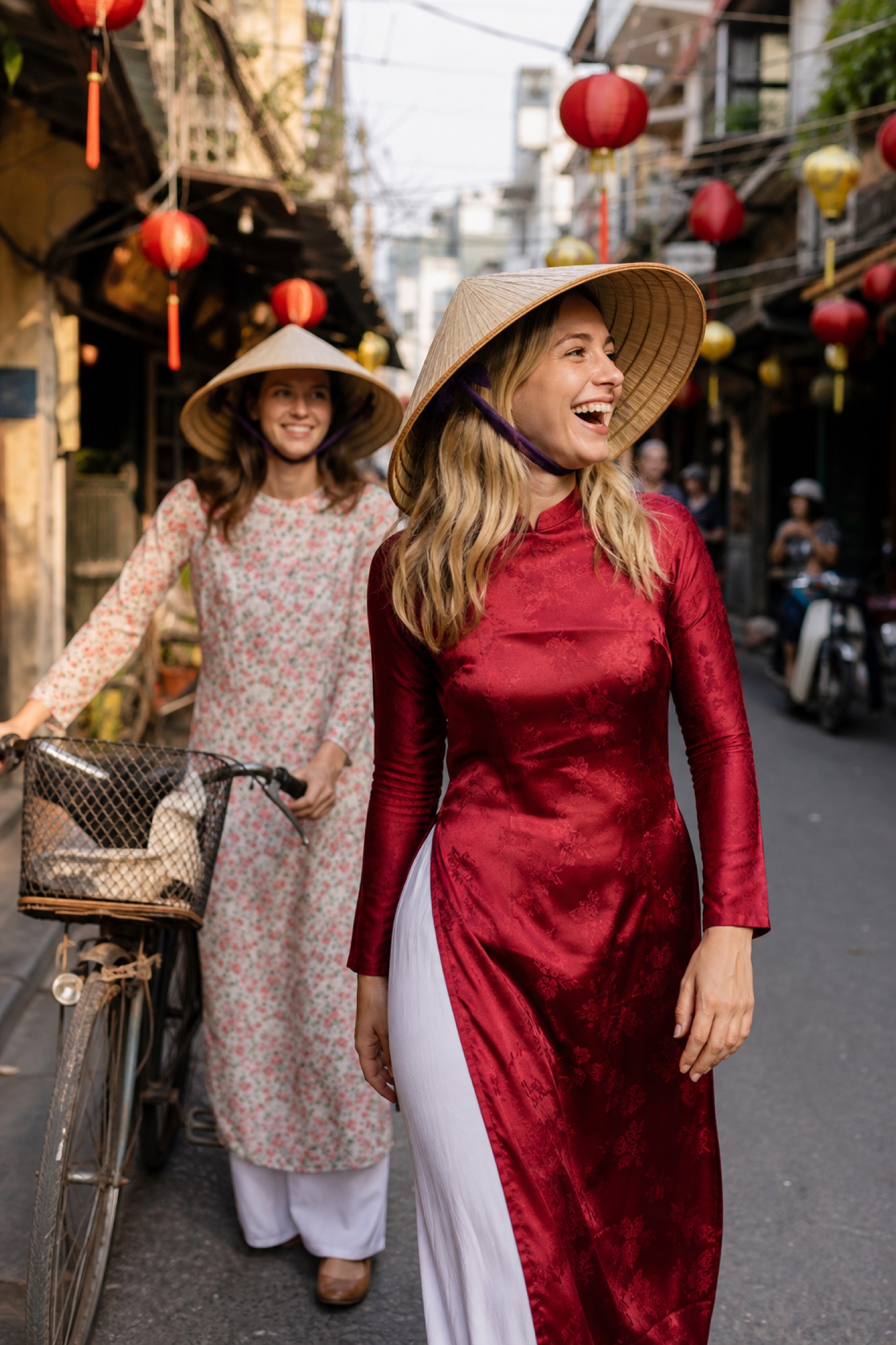
Why does velvet work for formal ao dai shoots?
Velvet is a dense, pile-faced fabric that absorbs light instead of reflecting it—the effect is jewel-like on camera. It drapes stiffly and requires support (structured undergarments or inner framing), making it harder to wear for long sessions. Velvet is warm; reserve it for winter photoshoots (November–February in Hanoi) or evening proposal shoots. It shows dust, pet hair, and lint; if you own velvet, store it in sealed plastic and brush gently with a soft-bristled clothes brush before wear.
How do these fabrics compare in real wear and care?
| Fabric | Best for | Care level | Wrinkles? | Comfort (3+ hours) | Cost relative |
|---|---|---|---|---|---|
| Silk | Outdoor, all-day wear | Medium (gentle wash, iron on low) | Yes, visible | Good, breathes well | Standard |
| Chiffon | Short sessions, movement | Low (hang dry, minimal ironing) | No, forgiving | Excellent, very light | Standard |
| Velvet | Evening, winter, formal | High (brush only, no wash) | No, pile hides creases | Poor (heavy, warm) | Higher |
Silk wrinkles visibly during wear but looks crisp after pressing. Chiffon is forgiving—it hides creases and dries quickly if you hand-wash. Velvet cannot be machine-washed; dry cleaning is mandatory, and improper storage causes permanent crushing.
For travel to Vietnam and a same-day makeup & hair session, chiffon is lowest-maintenance. If you're packing one ao dai for a week of events, choose silk.
Which fabric photographs best under different light?
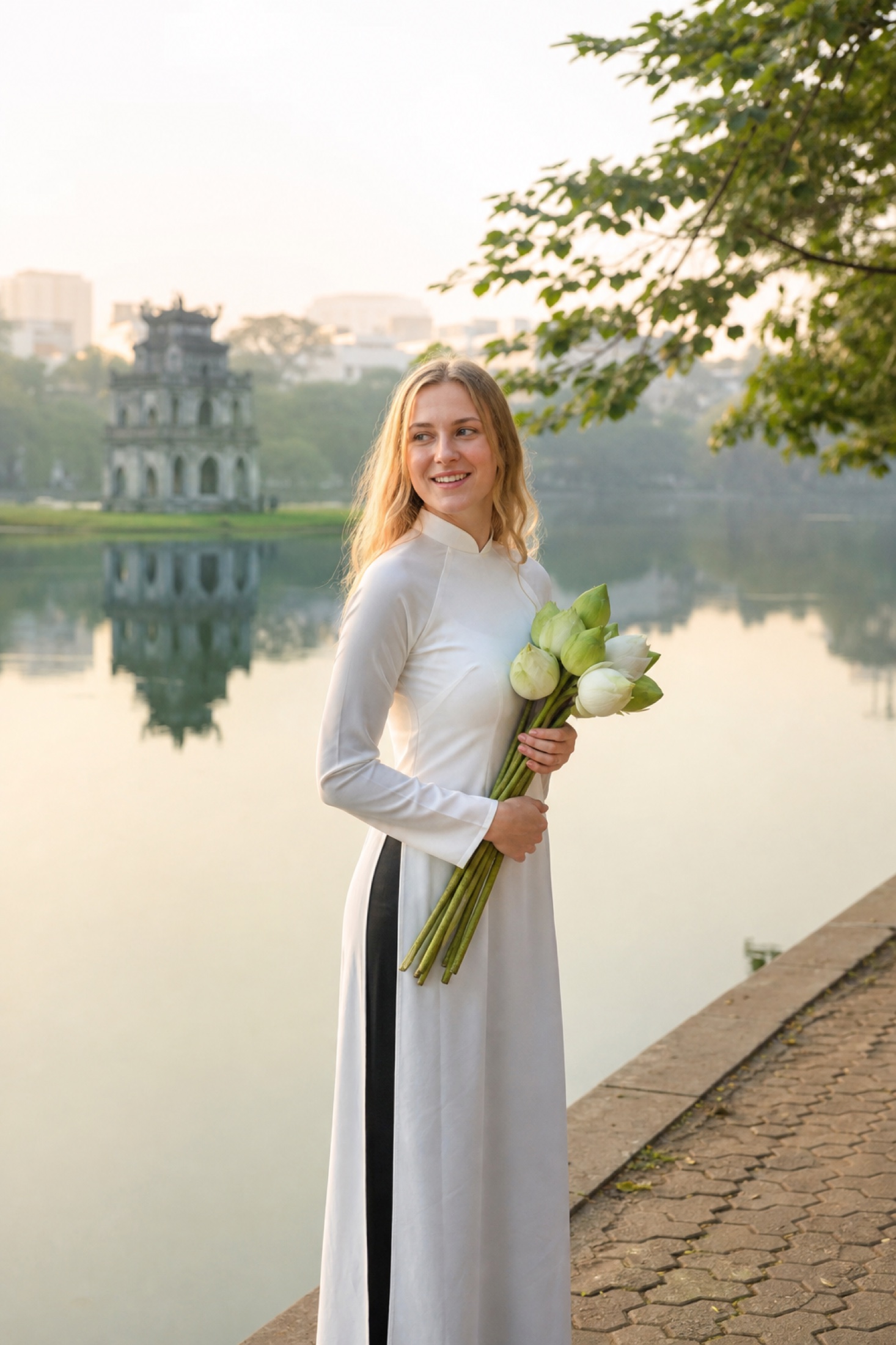
Silk catches light smoothly, reflecting it evenly across the garment—ideal for midday outdoor shoots (10 a.m.–2 p.m.) in Hanoi or Hoi An. The sheen flattens under harsh sun but glows beautifully in soft morning or late-afternoon light.
Chiffon scatters light; it photographs well in all conditions because its translucence creates depth. Under backlight (golden hour, 4–6 p.m.), chiffon seems luminous and ethereal—favored for couple photoshoots and romantic settings.
Velvet absorbs light, creating rich, saturated color. It photographs best indoors or under overcast skies where strong directional light creates modeling. In bright outdoor sun, velvet can look flat; in controlled studio light or evening shoots, it dominates the frame.
If you're booking a pre-wedding shoot in Hanoi across multiple locations and times of day, chiffon adapts to all light conditions. For a single proposal session at sunset, velvet or silk shines.
What should you check before ordering ao dai fabric?
Before purchasing or custom-ordering an ao dai, confirm:
- Fiber content: Pure silk (100% mulberry), silk-chiffon blend, or polyester chiffon? Pure silk costs more but breathes better. Polyester chiffon is durable and washable.
- Weight: Ask for GSM (grams per square meter) or "weight description." 75–90 GSM = light chiffon. 120–140 GSM = medium silk. 180+ GSM = velvet.
- Lining: Does it have a cotton or silk slip beneath? Velvet must have a slip to prevent snagging.
- Dye lot: If ordering multiples, confirm all pieces come from the same batch to avoid color drift.
- Sample or image: Request a fabric sample or high-resolution photo in natural light before full order.
- Washing instructions: Ask whether it's hand-wash only, dry-clean only, or machine-washable. Velvet and pure silk are usually dry-clean only.
A local ao dai maker or the Cáo Studio team can inspect fabric in person and advise. If ordering online, contact the seller on WhatsApp with your specifics (session length, season, movement needs) to get a fabric recommendation matched to your body and shoot.
Budget and real-world choices
Silk and quality chiffon ao dai typically sit in a similar price tier. Velvet costs 15–25% more due to production and care complexity. If this is your first ao dai or you're traveling for a short photoshoot, chiffon is the safest choice: affordable, forgiving, and instantly photogenic.
If you wear ao dai regularly or plan multiple photoshoots, invest in silk—it ages beautifully and works across seasons. Save velvet for a signature formal piece or a proposal session where you'll treasure it as a keepsake.
---
Quick decision checklist:
- Shooting outdoors, daytime, summer? → Chiffon.
- Wearing for 4+ hours in heat? → Silk.
- Evening, winter, or formal event? → Velvet.
- First ao dai, unsure of fit or style? → Chiffon (lowest risk).
- Rephotographing for portfolio or keepsake? → Silk (durability + timelessness).
Ready to book your ao dai photoshoot? The Cáo Studio team in Hanoi, Saigon, or Hoi An helps you select fabric and styling in consultation. See our lookbook for fabric inspiration, or reach out on WhatsApp to discuss your shoot.
FAQ
Can I wear silk ao dai in summer humidity in Hanoi?
Yes—silk breathes well and suits heat better than velvet. However, expect visible wrinkles by hour 4–5 in 90°F+ humidity. Hand-wash gently after wear, hang dry, and steam or press lightly before the next session.
Is chiffon ao dai see-through without a slip?
Yes, lightweight chiffon is translucent. Always wear a fitted cotton or silk slip beneath. Quality ao dai come with a lining; confirm this before ordering.
Can I machine-wash velvet ao dai?
No. Velvet must be dry-cleaned or hand-rinsed in cool water only (never in a machine or dryer). Machine washing crushes the pile permanently. If velvet is damp, hang it to air-dry; never wring or twist.
How long does an ao dai photoshoot take, and which fabric is most comfortable?
Sessions typically run 2–3 hours. Chiffon is most comfortable for this duration—it's light and breathable. Silk is comfortable for 4–6 hours. Velvet becomes tiring after 2 hours due to weight and heat retention.
What's the difference between a silk ao dai and a silk-polyester blend?
100% silk is breathable, lustrous, and wrinkles visibly; it costs more and requires dry cleaning. Silk-poly blends are wrinkle-resistant, washable, and cheaper but less breathable and duller. For photoshoots, pure silk photographs richer; for travel and repeated wear, silk-poly is practical.
FAQ
Can I wear silk ao dai in summer humidity in Hanoi?
Yes—silk breathes well and suits heat better than velvet. However, expect visible wrinkles by hour 4–5 in 90°F+ humidity. Hand-wash gently after wear, hang dry, and steam or press lightly before the next session.
Is chiffon ao dai see-through without a slip?
Yes, lightweight chiffon is translucent. Always wear a fitted cotton or silk slip beneath. Quality ao dai come with a lining; confirm this before ordering.
Can I machine-wash velvet ao dai?
No. Velvet must be dry-cleaned or hand-rinsed in cool water only (never in a machine or dryer). Machine washing crushes the pile permanently. If velvet is damp, hang it to air-dry; never wring or twist.
How long does an ao dai photoshoot take, and which fabric is most comfortable?
Sessions typically run 2–3 hours. Chiffon is most comfortable for this duration—it's light and breathable. Silk is comfortable for 4–6 hours. Velvet becomes tiring after 2 hours due to weight and heat retention.
What's the difference between a silk ao dai and a silk-polyester blend?
100% silk is breathable, lustrous, and wrinkles visibly; it costs more and requires dry cleaning. Silk-poly blends are wrinkle-resistant, washable, and cheaper but less breathable and duller. For photoshoots, pure silk photographs richer; for travel and repeated wear, silk-poly is practical.
Ao dai, makeup, hair and a local photographer in Hanoi or Saigon — one WhatsApp message.