/ao-dai-rental
Ao dai for wedding photos in Mai Chau and Pu Luong: rent, fit, style
Renting an ao dai for a Mai Chau or Pu Luong photoshoot means choosing between travel-ready rentals (lightweight silk that packs small, easier for remote locations) and full tailored fits (bespoke comfort, but heavier to transport). Cáo Studio sources ao dai for Hanoi shoots and coordinates fits at your hotel or our base; for Mai Chau and Pu Luong sessions, you rent locally or bring your own because the villages lie 2–4 hours outside Hanoi. The best approach: confirm your shoot date and outfit plan on WhatsApp, rent a week before to allow fitting adjustments, choose lightweight fabrics (silk dupioni, cotton blends) that move with you on narrow terrace paths, and pick colours that don't fade into the landscape (jewel tones, pastels, and whites read sharply against gold rice or misty hills). Avoid heavy brocade or stiff damask in humid fields; test walk in your ao dai before the shoot day to know how the hem and sleeves move when climbing.
Mai Chau and Pu Luong sit in the northern hills where rice paddies dominate the light and mood. An ao dai here reads completely differently than one on a Hanoi street: the green and gold of the landscape compete with your outfit, humidity wilts stiff fabrics, and narrow paths mean tight sleeves matter. Renting locally or choosing travel-friendly pieces changes how comfortable you'll be and how your photos will look.
Why renting locally in Mai Chau or Pu Luong beats shipping an ao dai from Hanoi
You have roughly 3–4 hours from Hanoi to the villages, and unpaved roads mean any outfit needs fitting checks you can't do in transit. Local rental shops in Mai Chau town and the Pu Luong base villages have ao dai sized for rural customers and used to humid weather; they know which fabrics hold colour in bright fields and which wilts. Shipping an ao dai from Hanoi or abroad means customs delays, no time for emergency fitting, and dead weight if the fabric shrinks in mountain humidity. Rent on-site 5–7 days before your shoot so alterations (hem, sleeve, bust seams) happen while you're still in the area. Ask the rental shop owner which colours they'd choose for "rice terraces in [your season]"—they shoot guests there constantly. If you're booking a Cáo Studio photoshoot in Hanoi and planning a separate Mai Chau trip, coordinate on WhatsApp; we'll advise on what to rent locally and what to pack.
📸 Book on WhatsApp — ao dai photoshoot
How to fit an ao dai in a mountain village without a professional seamstress
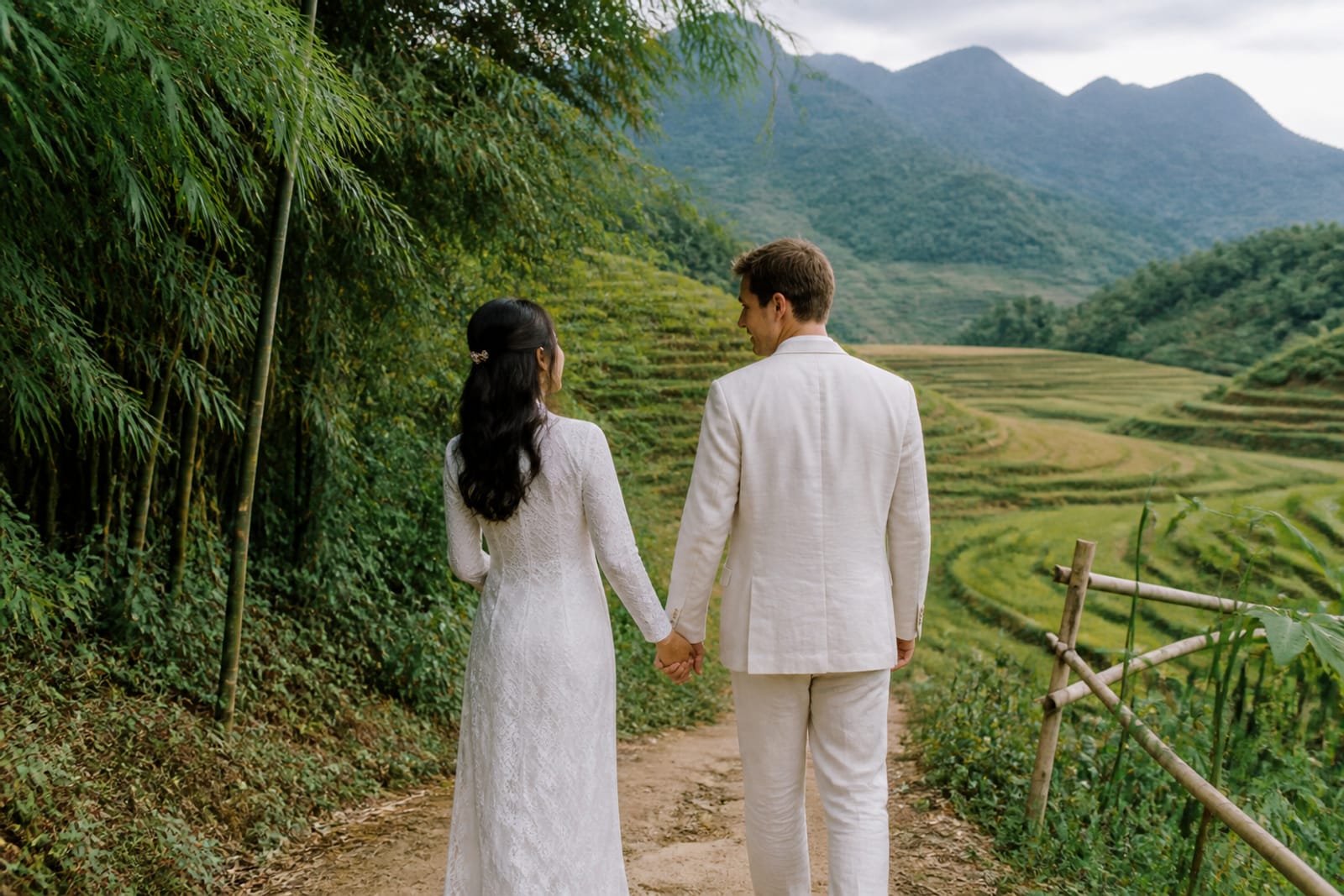
Most rental shops have a seamstress on-site or within the village; fittings take 20–30 minutes and cost a small fee—confirm this when you reserve. Bring the rental shop owner photos of how you plan to pose (sitting in rice, walking, standing by water) and ask which parts of the ao dai will catch on rocks or drag. The key measurements: bust (tightest across your chest), waist (narrowest part, where the side seam falls), and length (should not touch the ground when you stand straight, and hems must clear your ankle by 1 inch for walking uneven terrain). Most rental ao dai come pre-altered for standard heights; if you're under 5'2" or over 5'9", book your fit appointment in person at the shop and allow 3–4 days for seam adjustments. Humidity in the hills swells cotton and some silk blends, so try the ao dai in the rental shop's humid storage (not a dry room) to see how the fabric will move on shoot day. Ask the seamstress about the undergarment (trousers should be cotton, not polyester, which clings when you sweat in the heat). Don't assume "one size fits all"—a loose front panel reads as unflattering against the intimate backdrop of terrace paths, and a tight chest restricts breathing when you're climbing.
What colours and fabrics work best in rice fields and misty highlands
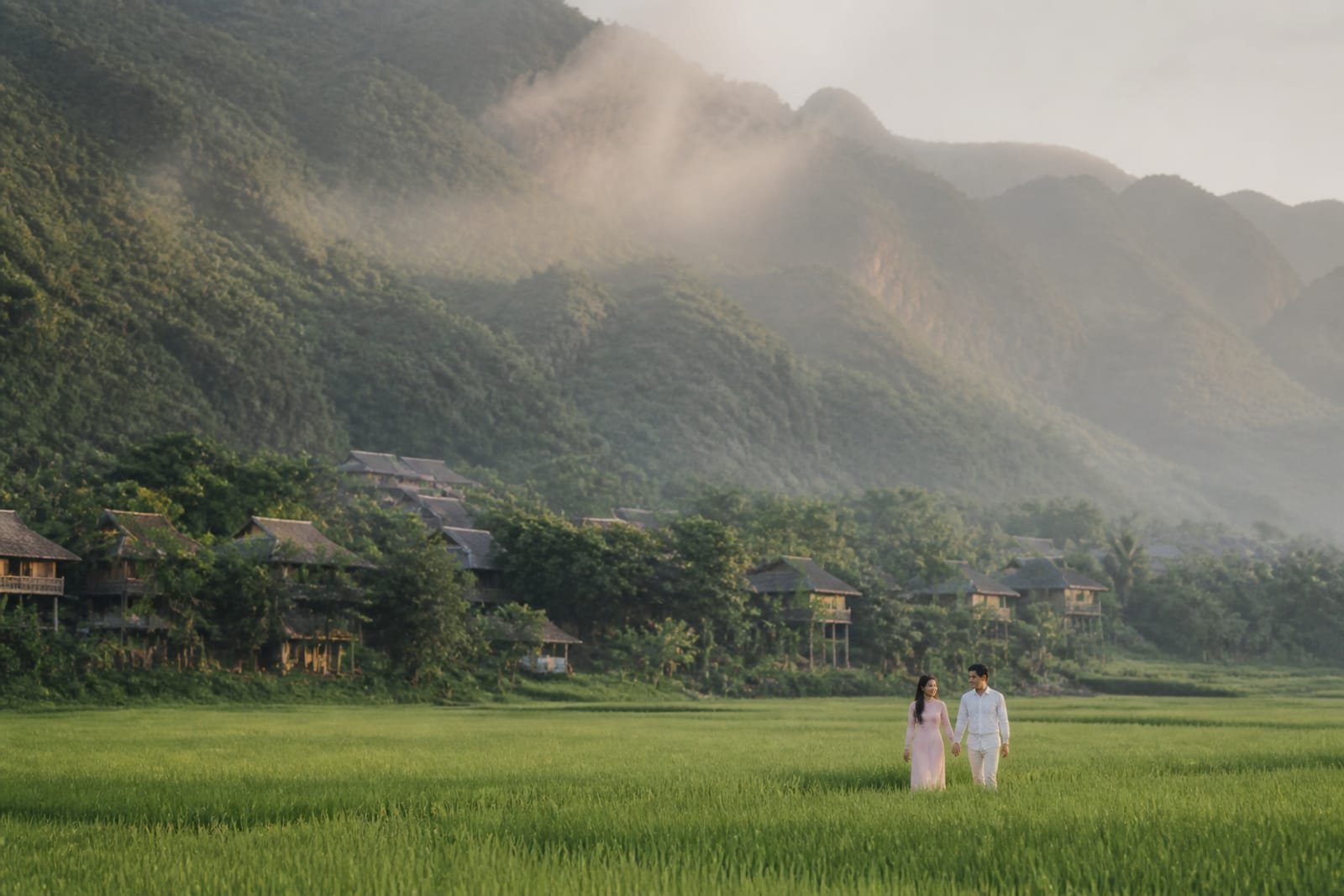
The season you shoot in determines which colours read. Golden rice (late May–June, Sep–Oct) flatters jewel tones (emerald, sapphire, plum) and warm neutrals (cream, champagne, taupe); whites and pale pinks disappear into the straw. Misty, cool seasons (Nov–Feb) call for white, ivory, soft pink, or pale blue to glow against grey cloud and dark water. Avoid black and very dark navy—they read as a hole in the frame against bright rice and tend to silhouette rather than integrate into the landscape. Florals and dense brocade patterns distract from faces in busy terrain; solid colours or subtle jacquard let your expression and the landscape share the frame equally.
Fabric choice matters as much as colour. Silk (heavy weighted or dupioni) holds its drape and colour but wrinkles if packed; cotton silk blends breathe and pack smaller without creasing badly. Avoid stiff damask (brocade-backed satin) because it stiffens in humid heat and the back seam can dig into shoulders on uneven paths. Linen blends soften beautifully and dry quickly if caught in a hill fog mist, but they wrinkle visibly—only choose linen if your photographer embraces texture as part of the aesthetic. Ask the rental shop whether the ao dai is pre-shrunk; if not, expect a small contraction in humid days before the shoot, which can tighten the bust. Light, unlined ao dai (no inner fabric panel) breathe best in 70°F+ heat; lined pieces keep you warm but feel claustrophobic climbing hills.
Comparing rental, tailored, and bring-your-own ao dai for Mai Chau and Pu Luong shoots
| Option | Best for | Fit & comfort | Light & season | Cost factor | Logistics |
|---|---|---|---|---|---|
| Local rental | First-time visitors; tight timeline | Shop seamstress adjusts; expects body variation | Knows local lighting; pieces tested in regional humidity | Lowest upfront | Book 5–7 days early; no shipping |
| Tailored (bespoke) | Returning visitors; specific vision | Perfect fit; custom seams; long delivery | Tailor picks fabrics; bespoke dyes match your brief | Highest upfront | Needs 4–6 weeks; ship or courier to village |
| Your own ao dai | You own one already; confident fit | Already know comfort; no fitting wait | Colours/fabric already chosen; you control style | None | Pack carefully; test mobility on site |
Rental works fastest and is most forgiving if the ao dai doesn't fit perfectly after travel. Tailored ao dai feel best and photograph clearest because every seam aligns with your body; order one if you're visiting Mai Chau or Pu Luong more than once. Bring your own if you own an ao dai you love and the fit is proven on walks; just allow a packing test the day before to confirm seams don't twist after travel.
How to style an ao dai for rice terraces: undergarments, jewellery, and hair
The ao dai's silhouette depends entirely on what you wear under it. Cotton trousers (áo dài pants, usually white or black) should fit snug through the hip so the outer gown drapes cleanly; loose undergarments bunch and make the line sloppy. Ask the rental shop whether trousers are included; if not, buy lightweight cotton trousers a size down from your usual (they're inexpensive locally and you can pack them). Undergarments matter: a smooth slip or light bodysuit under the ao dai eliminates visible panty lines and lets the fabric skim your body rather than cling. Many rental shops include a basic slip; if not, wear a nude cotton slip or thin shaping layer.
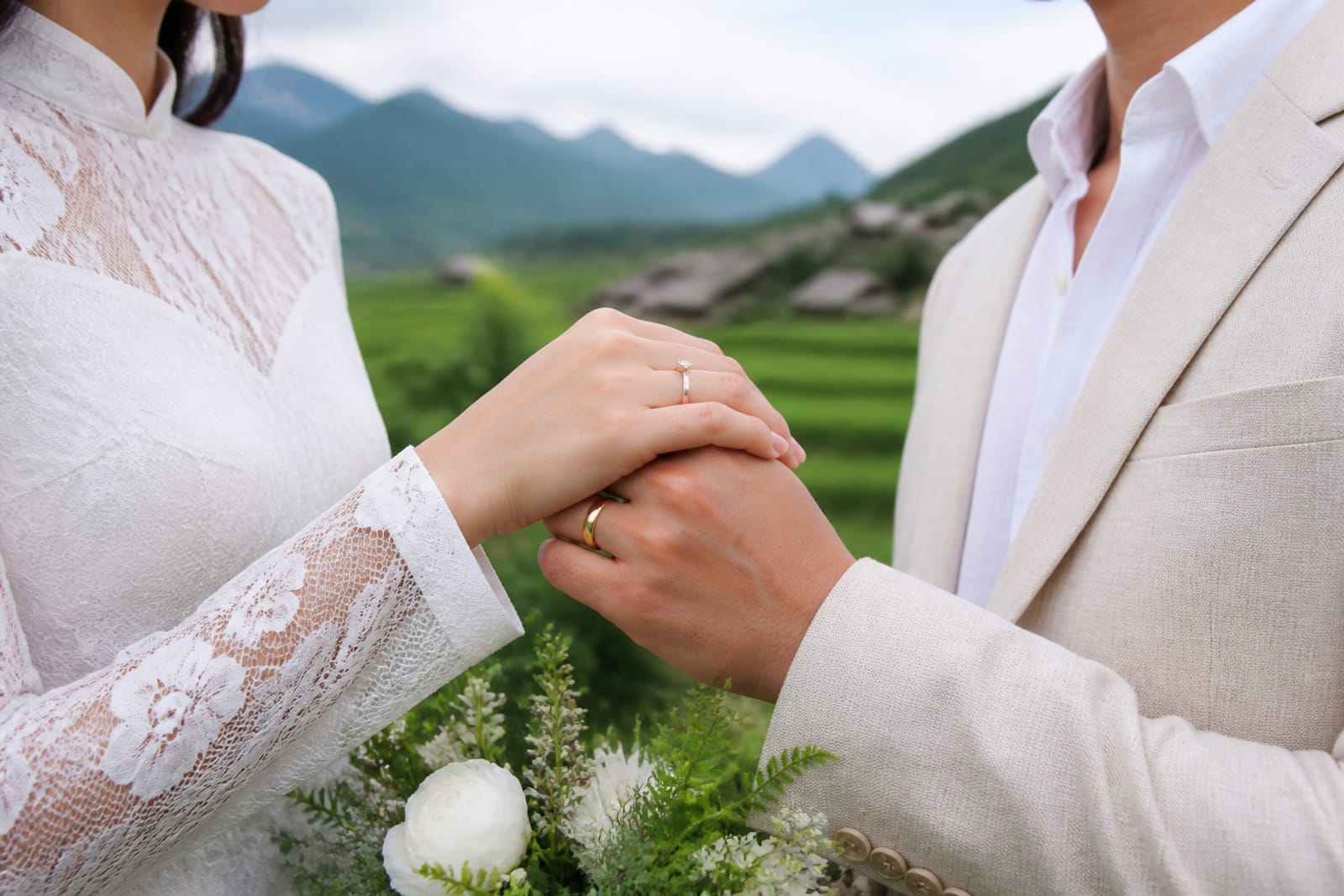
Jewellery in rice fields reads smaller and fainter—delicate pieces disappear. Choose statement earrings (chandelier or button studs, not hoops, which catch light awkwardly) and one bracelet or none. Rings work; necklaces often get hidden by the high, structured neckline of the ao dai. Hair should be off your face or loosely pinned so wind and humidity don't obscure your expression; elaborate updos can feel stiff against the casual intimacy of terraces. A simple side-swept wave, low bun, or half-up style with soft framing pieces photographs best and allows you to move freely on uneven ground. Avoid heavy braids with ornaments—they catch on ao dai sleeves and can weigh down your neck in heat.
What to check before you book your Mai Chau or Pu Luong shoot with an ao dai
Before committing to a shoot date and rental, confirm these details on WhatsApp:
- Your exact shoot date and season. Ask whether the rental shop has ao dai in your chosen colours for that season (spring rentals differ from autumn when terraces are golden).
- Your height, bust, and waist measurements. Provide these when you reserve; the shop can pre-select two or three options and have them fitted on your arrival day.
- Whether you need makeup and hair styling. If yes, ask whether a local artist can meet you at the rental shop or your accommodation, or coordinate with Cáo Studio's makeup and hair service at your hotel if you're based in Hanoi or Ho Chi Minh City before heading to the hills.
- Transport and timing. Confirm whether the rental shop is walking distance from your accommodation or if a tuk-tuk is needed. Rent at least 5–7 days before the shoot so fittings don't rush.
- What's included. Ask whether the rental price covers the ao dai, trousers, undergarment slip, and fitting; clarify any extras (hairpin, jewellery, shoes).
- Cancellation and damage policy. Understand what happens if weather forces a reschedule or if the ao dai tears on a rock (usually a small fee covers minor wear).
For a fully coordinated experience—ao dai, styling, photography, and a short film—ask about Cáo Studio's services: we coordinate pre-wedding and elopement shoots across northern regions and can advise on ao dai choices for your specific light and landscape. Reach out on WhatsApp to discuss your Mai Chau or Pu Luong vision and how to set it up.
📸 Book on WhatsApp — ao dai photoshoot
Seasonal timing: when rice gold reads best and humidity peaks
Mai Chau and Pu Luong rice terraces peak in two seasons:
Late May–June: Rice is newly flooded and glowing green; hills are misty and cool in early mornings. Humidity is rising but not yet oppressive. Fabrics: pale or jewel-toned ao dai read well; avoid heavy pieces because 75–80°F heat builds by midday.
September–October: Rice is ripening to gold; mornings are clearer and golden light lasts longer. Humidity is lower than summer but afternoon showers are possible. Fabrics: warm tones (champagne, cream, rust) and jewel tones (emerald, sapphire) photograph richest against gold fields.
November–February: Hills are cool and often misty; no rain but poor light on cloudy days. Rice is harvested (brown stubble or replanted green). White and pale ao dai glow against cool tones; misty light is soft and forgiving but moody. This is the best season for comfort but not for bright, cheerful photos.
Avoid March–April (hot, dry pre-monsoon; rice is stubble; light is harsh) and July–August (peak humidity and afternoon downpours can halt shoots).
---
FAQ
Can I rent an ao dai in Mai Chau or Pu Luong if I arrive without booking ahead?
Local rental shops exist in Mai Chau town and Pu Luong base villages and usually have stock, but fitting takes time and popular colours may be taken during peak seasons (Sep–Oct, May–June). Book your rental 5–7 days in advance to guarantee fit and choice. If you're coordinating a photoshoot with Cáo Studio, we'll advise on the best shop on WhatsApp.
What if the ao dai I rent doesn't fit after I arrive in the village?
Most rental shops include a fitting appointment with a seamstress within 20–30 minutes. Allow 2–3 days for minor adjustments (hem, side seams, bust). If major alterations are needed, book your fitting the day you arrive so the seamstress has time. Always try the ao dai in the shop's humid storage room (not a dry fitting area) to see how the fabric behaves.
Should I bring my own ao dai from abroad or rent locally?
Rent locally if this is your first visit—no customs delays, guaranteed fit adjustments, and no luggage weight. Bring your own if you own an ao dai you've worn before and the fit is proven. If you're planning multiple trips to northern villages, invest in a tailored ao dai (4–6 week lead time) and coordinate fitting with Cáo Studio on WhatsApp.
Can Cáo Studio provide makeup and hair styling for my ao dai shoot in Mai Chau or Pu Luong?
Cáo Studio is based in Hanoi and Ho Chi Minh City; for Mai Chau and Pu Luong shoots, coordinate on WhatsApp and we'll recommend local makeup artists or advise you to arrange styling in Hanoi before you travel. We can also arrange makeup and hair at your hotel if you're based in the city before the trip.
What colours photograph best against rice terraces in different seasons?
Jewel tones (emerald, sapphire, plum) and warm neutrals (cream, champagne, taupe) read richly against golden rice (May–Jun, Sep–Oct). White and pale pastels glow against misty cool seasons (Nov–Feb) but fade into straw. Avoid black, very dark navy, and dark florals—they silhouette rather than integrate into the landscape. Ask your local rental shop owner for their top colour picks for your shoot date.
How should I pack an ao dai for a 3–4 hour journey to the hills?
Don't pack the ao dai into a small suitcase—roll it loosely in a garment bag or large duffel with tissue paper between folds to prevent creasing. Lightweight silk blends and cotton-silk wrinkle less than pure cotton or heavy brocade. Once you arrive, hang the ao dai in an air-conditioned room overnight to relax any travel creases. Avoid packing it damp; ensure it's completely dry before folding.
FAQ
Can I rent an ao dai in Mai Chau or Pu Luong if I arrive without booking ahead?
Local rental shops exist in Mai Chau town and Pu Luong base villages and usually have stock, but fitting takes time and popular colours may be taken during peak seasons (Sep–Oct, May–June). Book your rental 5–7 days in advance to guarantee fit and choice. If you're coordinating a photoshoot with Cáo Studio, we'll advise on the best shop on WhatsApp.
What if the ao dai I rent doesn't fit after I arrive in the village?
Most rental shops include a fitting appointment with a seamstress within 20–30 minutes. Allow 2–3 days for minor adjustments (hem, side seams, bust). If major alterations are needed, book your fitting the day you arrive so the seamstress has time. Always try the ao dai in the shop's humid storage room (not a dry fitting area) to see how the fabric behaves.
Should I bring my own ao dai from abroad or rent locally?
Rent locally if this is your first visit—no customs delays, guaranteed fit adjustments, and no luggage weight. Bring your own if you own an ao dai you've worn before and the fit is proven. If you're planning multiple trips to northern villages, invest in a tailored ao dai (4–6 week lead time) and coordinate fitting with Cáo Studio on WhatsApp.
Can Cáo Studio provide makeup and hair styling for my ao dai shoot in Mai Chau or Pu Luong?
Cáo Studio is based in Hanoi and Ho Chi Minh City; for Mai Chau and Pu Luong shoots, coordinate on WhatsApp and we'll recommend local makeup artists or advise you to arrange styling in Hanoi before you travel. We can also arrange [makeup and hair at your hotel](/makeup-and-hair) if you're based in the city before the trip.
What colours photograph best against rice terraces in different seasons?
Jewel tones (emerald, sapphire, plum) and warm neutrals (cream, champagne, taupe) read richly against golden rice (May–Jun, Sep–Oct). White and pale pastels glow against misty cool seasons (Nov–Feb) but fade into straw. Avoid black, very dark navy, and dark florals—they silhouette rather than integrate into the landscape. Ask your local rental shop owner for their top colour picks for your shoot date.
How should I pack an ao dai for a 3–4 hour journey to the hills?
Don't pack the ao dai into a small suitcase—roll it loosely in a garment bag or large duffel with tissue paper between folds to prevent creasing. Lightweight silk blends and cotton-silk wrinkle less than pure cotton or heavy brocade. Once you arrive, hang the ao dai in an air-conditioned room overnight to relax any travel creases. Avoid packing it damp; ensure it's completely dry before folding.
Ao dai, makeup, hair and a local photographer in Hanoi or Saigon — one WhatsApp message.