/ao-dai-rental
Ao dai for wedding photos in Mui Ne: rent, fit, and shoot
Mui Ne has no dedicated ao dai rental shops; most couples rent in Ho Chi Minh City (2.5 hours drive) or book a local tailor for a custom-made piece. Fittings take 1–2 weeks and require 2–3 visits. Alternatively, rent in Saigon before traveling and bring the ao dai with you in a garment bag—this avoids fitting delays and gives the photographer a polished, familiar piece to work with. Cáo Studio shoots ao dai photoshoots in Hanoi and Ho Chi Minh City; for Mui Ne sessions, ask us on WhatsApp about connecting with a local team. Key factors: season (Nov–Apr is dry and best for shooting; strong winds Nov–Mar affect fabric flow), outfit fit (practice walking and turning before the shoot), and hair/makeup applied after arrival to avoid creasing the collar. 📸 Book on WhatsApp — ao dai photoshoot ---
Why rent vs. buy an ao dai for a Mui Ne wedding shoot?
Buying a custom ao dai costs more upfront and commits you to a single color and fabric. Renting offers flexibility—you can choose two or three designs, fabrics, and colors across your shoot without the storage or care burden afterward. A silk ao dai with embroidery rents for a fraction of its purchase price; after a salt-water and sand wedding shoot in Mui Ne, professional cleaning is essential, which adds cost. Renting also means if the fit is slightly off, the rental shop adjusts it for free—you own zero liability. For a one-time Mui Ne destination wedding photo session, renting is faster and lower-risk than buying.
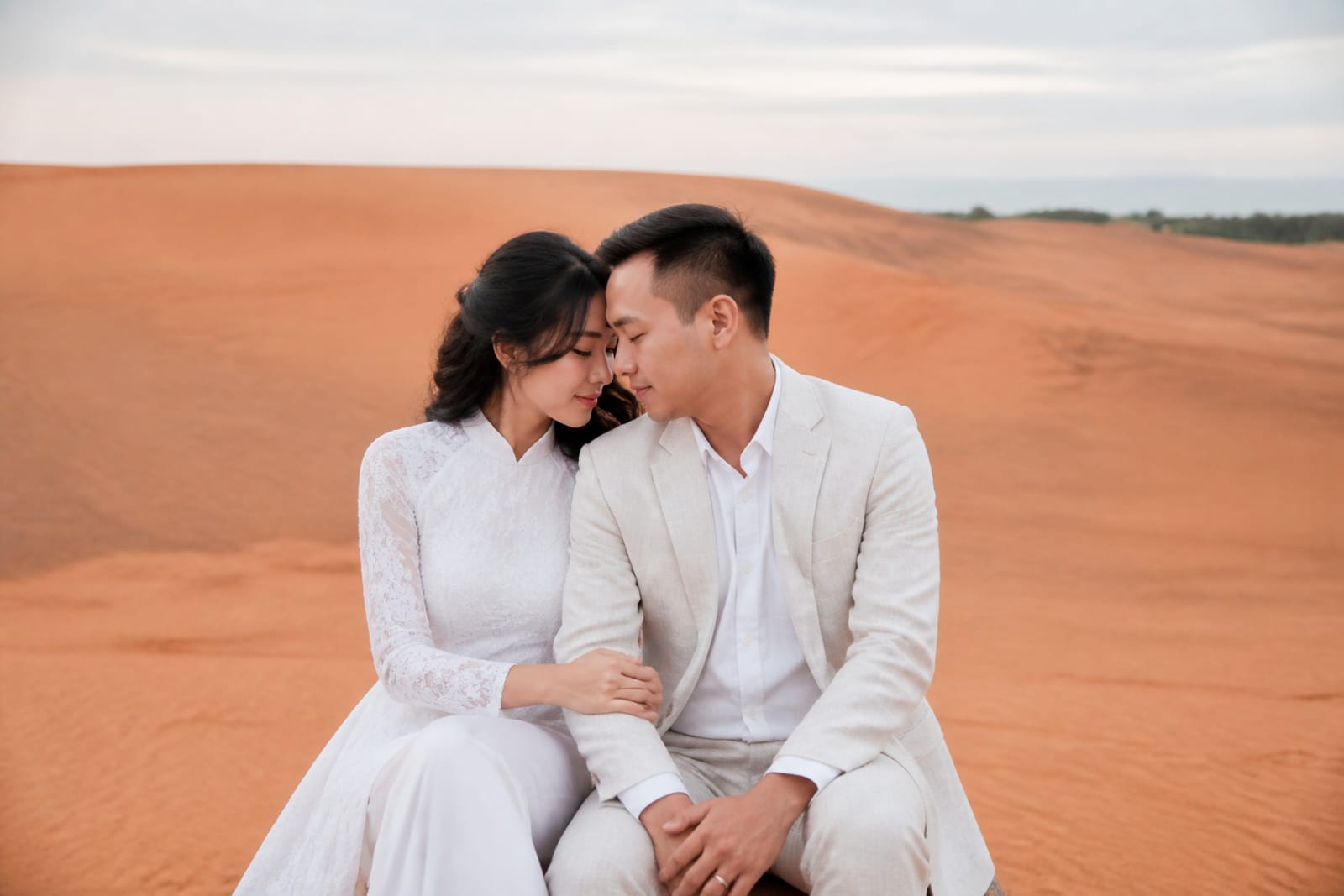
Where can you rent an ao dai if you're shooting in Mui Ne?
Mui Ne has one or two small tailoring shops that rent áo dài, but stock is limited to basic colors and they often need 1–2 weeks notice. Your best options are: (1) rent in Ho Chi Minh City before arriving—major cities have rental shops with daily availability, dozens of designs, and fittings within days; (2) order a custom-made ao dai from a Saigon tailor and have it shipped to your hotel 5–7 days before your shoot; (3) book with Cáo Studio in Ho Chi Minh City if your wedding photoshoot is there first, then travel to Mui Ne with the outfit already fitted. Travel time from Saigon to Mui Ne is 2.5–3 hours by car—bring the ao dai in a padded garment bag and have your hotel press it the morning of the shoot.
How far in advance should you plan an ao dai rental for Mui Ne?
Book your rental or tailor in Ho Chi Minh City 3–4 weeks before your shoot. This allows time for a first fitting (1 week lead time), adjustments (3–5 days), and a second fitting to confirm the hem, sleeve length, and collar fit—critical for a polished photoshoot. If you're arriving in Mui Ne less than 3 weeks out, order online from a Saigon rental shop with express shipping, or contact us on WhatsApp to discuss fitting alternatives. Last-minute rentals (under 7 days) force you into whatever stock is available—no size adjustments, no custom color choice. A rushed fit shows in photos: wrinkled seams, a collar that gapes, sleeves that bunch at the wrist. The two-week buffer is not optional; it's the difference between frames you keep and frames you crop.
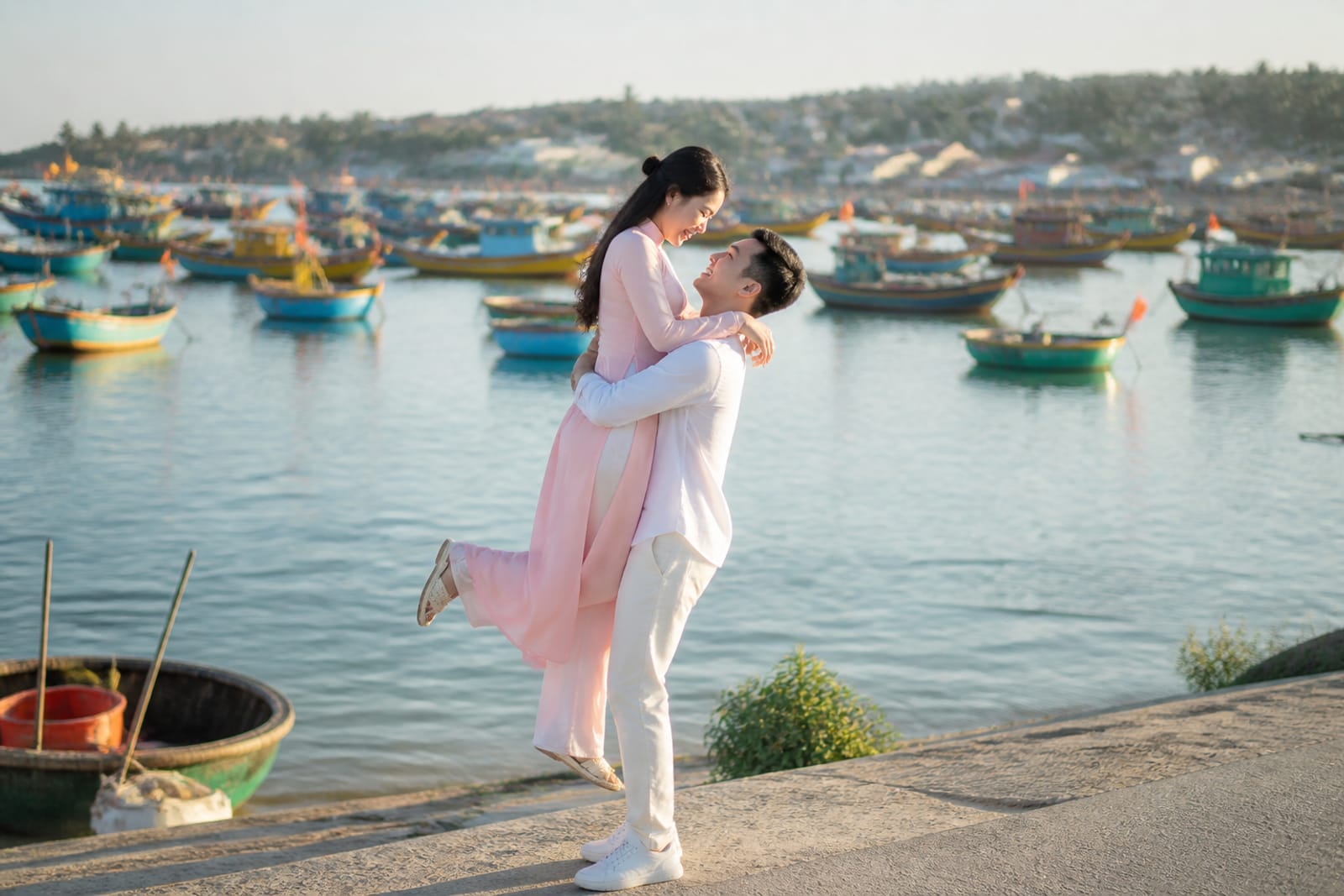
What styling details matter for an ao dai photoshoot on the Mui Ne coast?
The ao dai's silk-like fabric catches wind differently than cotton; strong coastal breezes (common Nov–Mar) make the skirt flow beautifully but unpredictably. Pair your ao dai with: a low, side-swept hair bun or loose waves—avoid styles that block the shoulder embroidery; minimal jewelry (one pendant or statement earrings, not both); and no visible undergarments—wear a smooth, neutral slip that matches the ao dai color. For a beach or dune shoot at sunrise (best light 6–6:45 am, when wind is gentler), ask your photographer to shoot both candid moments (walking, laughing, looking out to sea) and composed portraits—the movement of the fabric tells the story better than static poses. If your shoot is scheduled midday (11 am–2 pm), the ao dai's color may bleach in harsh sunlight; ask the photographer about reflectors or shooting in the shade of palm trees. Makeup should be waterproof if you're near water; Mui Ne's salt spray and wind dry your face quickly, so a matte lip lasts longer than gloss.
| Styling choice | Best for | Why it works |
|---|---|---|
| Loose waves, side-swept | Candid walking shots, wind movement | Hair moves with fabric; photographer captures motion |
| Low bun + minimal jewelry | Portraits, close-ups, collar/embroidery detail | Keeps focus on the ao dai and your face |
| Waterproof makeup | Beach/dune sessions, morning light | Salt spray and wind don't cause running liner or patchy base |
| Neutral slip under ao dai | All sessions, all light | Eliminates visible undergarment lines; fabric drapes cleanly |
How do you vet a local Mui Ne photographer if Cáo Studio isn't shooting?
Since Cáo Studio operates in Hanoi, Ho Chi Minh City, and Hoi An by appointment, Mui Ne requires a local photographer. Ask these questions: (1) Have you shot ao dai wedding sessions before? (Request 3–4 samples showing the fit, fabric, and movement across different times of day.) (2) Do you understand sunrise and golden-hour light? (Mui Ne's dunes are best shot 5:45–7 am or 4:30–5:30 pm; harsh mid-day sun is unforgiving.) (3) What's your edit style—natural color or filtered? (Watch their portfolio; Cáo Studio shoots directed frames with real light, not posed stiffness—look for movement, genuine moments, and clean editing.) (4) Do you work with a makeup artist, or do we hire separately? (One coordinated team delivers better continuity than three vendors meeting for the first time on shoot day.)
Check their Instagram or website; if all their wedding photos are stiff couple poses in front of monuments, they may not understand the art of documentary-style movement that makes ao dai frames sing. Ask for a pre-shoot consultation by phone or video to confirm they've directed similar sessions and understand your vision. A photographer worth booking has specific ideas about timing, light, and framing—not just "we'll get nice pictures."
---
What to check before you book
- Rental fit window: Order 3–4 weeks ahead; two-week buffer is minimum for sizing and adjustments.
- Fabric & color in harsh light: See rental samples in natural light, not indoor shop lighting. Bright white áo dài can blow out in midday sun; soft pastels and jewel tones photograph better.
- Hair & makeup team: Confirm whether your photoshoot package includes hair and makeup (contact us on WhatsApp). If not, hire locally and do a test run—collar fit changes when hair volume increases.
- Photographer's ao dai experience: Request 3+ samples of their directed ao dai work. Avoid portfolios that show only posed stiffness.
- Season & wind: Nov–Mar brings cool, dry weather (ideal for shooting) but also strong winds. Ask the photographer how they frame shots when the ao dai is in motion—good artists use wind to add energy, not fight it.
- Salt spray & storage: If shooting near the ocean, ask about a freshwater rinse after the session. Don't leave the ao dai in a damp hotel closet overnight—hang it in an air-conditioned room.
---
For a full wedding photoshoot experience that handles ao dai, makeup, and photography as one team, book with Cáo Studio in Ho Chi Minh City—we can coordinate fittings and prep before you travel to Mui Ne. If your Mui Ne shoot is standalone, use this guide to rent locally and vet a photographer who understands light and movement, not just poses.
Ask us on WhatsApp for guidance on connecting with local teams, or to discuss how a Saigon session can pair with your Mui Ne destination frames.
FAQ
Can I rent an ao dai directly in Mui Ne on arrival?
Most Mui Ne tailors require 1–2 weeks notice. Renting on arrival risks only basic colors and fits. Book in Ho Chi Minh City 3–4 weeks ahead, or order online with express delivery.
Does Cáo Studio shoot ao dai photoshoots in Mui Ne?
Cáo Studio operates in Hanoi, Ho Chi Minh City, and Hoi An. For Mui Ne, we provide planning guides and WhatsApp consultation to help you find and vet a local photographer. Ask us on WhatsApp for photographer referrals.
How do I keep the ao dai clean during a beach photoshoot?
Avoid sand by shooting on hard-packed dunes or paths, not loose sand near the water. After the session, rinse in freshwater (not ocean water) to remove salt, and hang in an air-conditioned room to dry. Never leave a damp ao dai in a bag overnight.
Should I buy or rent the ao dai for a Mui Ne wedding shoot?
Rent if it's a one-time session—lower cost, no storage, professional cleaning handled by the rental shop. Buy if you plan multiple wears or want to keep it as a keepsake. Custom tailoring takes 3–4 weeks; ready-made rentals are faster.
What time of day is best for ao dai photos in Mui Ne?
Sunrise (5:45–7 am) and golden hour (4:30–5:30 pm) offer soft, directional light that brings out fabric texture and color. Midday (11 am–2 pm) creates harsh shadows on the face and can bleach bright colors. Strong winds are gentler at sunrise.
FAQ
Can I rent an ao dai directly in Mui Ne on arrival?
Most Mui Ne tailors require 1–2 weeks notice. Renting on arrival risks only basic colors and fits. Book in Ho Chi Minh City 3–4 weeks ahead, or order online with express delivery.
Does Cáo Studio shoot ao dai photoshoots in Mui Ne?
Cáo Studio operates in Hanoi, Ho Chi Minh City, and Hoi An. For Mui Ne, we provide planning guides and WhatsApp consultation to help you find and vet a local photographer. Ask us on WhatsApp for photographer referrals.
How do I keep the ao dai clean during a beach photoshoot?
Avoid sand by shooting on hard-packed dunes or paths, not loose sand near the water. After the session, rinse in freshwater (not ocean water) to remove salt, and hang in an air-conditioned room to dry. Never leave a damp ao dai in a bag overnight.
Should I buy or rent the ao dai for a Mui Ne wedding shoot?
Rent if it's a one-time session—lower cost, no storage, professional cleaning handled by the rental shop. Buy if you plan multiple wears or want to keep it as a keepsake. Custom tailoring takes 3–4 weeks; ready-made rentals are faster.
What time of day is best for ao dai photos in Mui Ne?
Sunrise (5:45–7 am) and golden hour (4:30–5:30 pm) offer soft, directional light that brings out fabric texture and color. Midday (11 am–2 pm) creates harsh shadows on the face and can bleach bright colors. Strong winds are gentler at sunrise.
Ao dai, makeup, hair and a local photographer in Hanoi or Saigon — one WhatsApp message.