/ao-dai-rental
Ao dai for wedding photos in Quy Nhon: renting, fitting and styling
Quy Nhon's driest light runs February through August—when rocky coves and turquoise water frame an ao dai best. Rent locally (Quy Nhon has small tailors and rental shops, though options are fewer than Hanoi or Ho Chi Minh City) or bring your own and have a local fitter adjust the fit for coastal wind and movement. The ao dai's loose silk sleeves and floor-length skirt demand calm morning or late-afternoon shoots to avoid harsh midday glare and wind; aim for 6–7 am or 4–5 pm. Cáo Studio does not operate in Quy Nhon, but the studio's Saigon team can advise on local photographers and styling. Confirm fabric weight (heavier silk holds shape in coastal breeze), shoe choice (flat shoes or ankle straps for rocky terrain), and whether hair and makeup are booked separately or with your photographer. 📸 Book on WhatsApp — ao dai photoshoot ---
Can you rent an ao dai in Quy Nhon, or should you bring your own?
Quy Nhon has a small tailoring community, but rental stock is limited compared to Hanoi or Ho Chi Minh City. Local tailors can rent or stitch an ao dai in 1–2 weeks if you contact them ahead; quality and style range widely. Bringing your own gives you control over fit, color, and fabric—but Quy Nhon's coastal humidity and salt air require careful packing and post-shoot care. If you rent, inspect the ao dai for loose seams, faded silk, or stains before the shoot. If you bring your own, pack a protective garment bag and plan to have it cleaned after coastal shoots (salt and wind residue settle on silk). Ask a local tailor to do a final hem and fit check once you arrive—Quy Nhon tailors typically charge modest rates for rush adjustments. Choose rental if you want to travel light; choose bringing your own if you have a specific color or design in mind and trust your packing discipline.
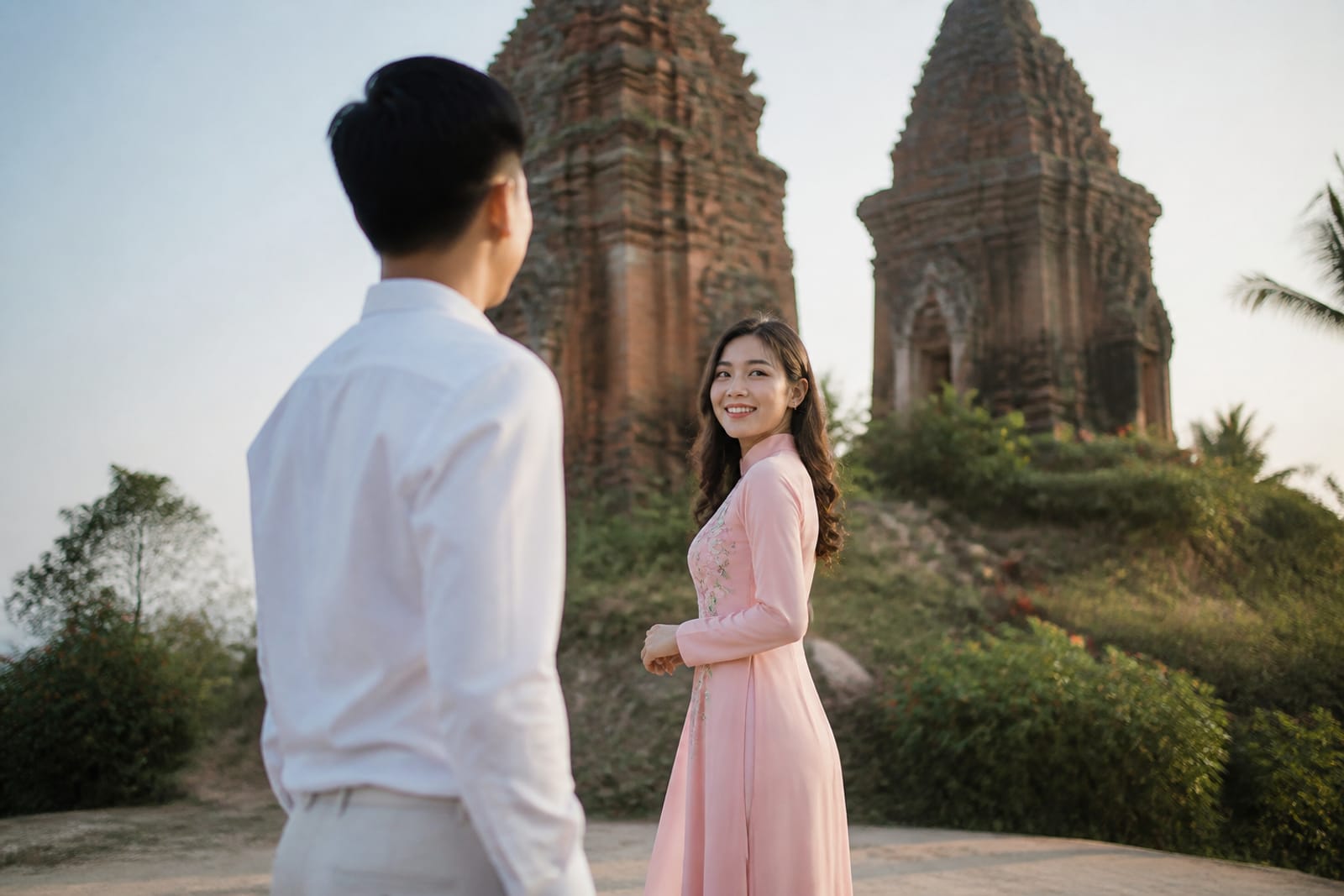
What season has the best light for ao dai photos in Quy Nhon?
Quy Nhon sits on the central coast's driest, most stable light band: February through August. Rain is rare, humidity lower, and the sun angles are soft in early morning (6–7 am) and late afternoon (4–5 pm). September through December brings the rainy season and typhoon risk; October and November are the wettest and most unpredictable for outdoor shoots. During dry-season shoots, aim for shoreline spots (Ghiem Phu rock formations, Bai Xep fishing village, Quy Nhon Harbor) where water reflects and softens light. The ao dai's vertical pleats and flowing sleeves catch morning side light beautifully; avoid noon, when glare flattens fabric texture and silk glare makes eyes squint. Book shoots early in the February–August window if possible—crowds are lighter, and you'll have calm water for reflections. Late August sees rising humidity; late February can still feel brisk. Wind picks up along the coast, especially on exposed rocks—a heavier silk ao dai (not the thinnest chiffon) holds its shape better for movement and framing.
How should you style an ao dai for Quy Nhon's coastal light and terrain?
Coastal shoots demand practical styling that balances beauty with movement and durability. Choose earth or ocean tones (cream, pale blue, soft green, deep teal) over bright saturates, which lose detail in harsh midday glare and clash with turquoise water. Pair the ao dai with a lightweight undershirt or cami (required under the top layer for modesty and to prevent transparency in coastal breeze). Footwear matters: flat sandals or ankle-strap shoes grip rocky terrain better than heeled boots; metallic sandals or woven slip-ons photograph well without bulk. Hair should be loose, in a braid, or in a low updo to avoid wind tangle and to show the ao dai's neckline. Makeup should be waterproof (coastal humidity and spray) and warm-toned (cooler reds look harsh against turquoise water); natural bronze, terracotta, or gold suits the light. Skip heavy contouring—soft, diffused coastal light shows every line. Bring a silk scarf or pashmina to drape over shoulders during breaks; it protects the ao dai, prevents sun damage, and adds a styling layer for close-up frames. Jewelry should be minimal and secure (no dangles that catch wind or fabric).
| Styling choice | Best for | Quy Nhon light | Why it works |
|---|---|---|---|
| Cream or pale blue ao dai | Morning shoots, reflective water | 6–7 am, early Feb–Apr | Soft backlight reads detail; cool tones harmonise with water |
| Deep teal or green ao dai | Late afternoon, rocky cliffs | 4–5 pm, May–Aug | Warm golden hour flatters jewel tones; silhouette reads against rocks |
| Loose, undone hair | Movement and flow shots | Any morning/afternoon | Wind at coast is feature, not flaw; hair catches light naturally |
| Waterproof makeup, warm tones | Closeups and water reflections | Early morning or sunset | Prevents smudging; bronze and terracotta echo water warmth |
| Flat sandals, ankle-strap shoes | Rocky terrain and walking shots | Ghiem Phu, Bai Xep villages | Grip prevents slips; minimal visual weight keeps ao dai the frame centre |
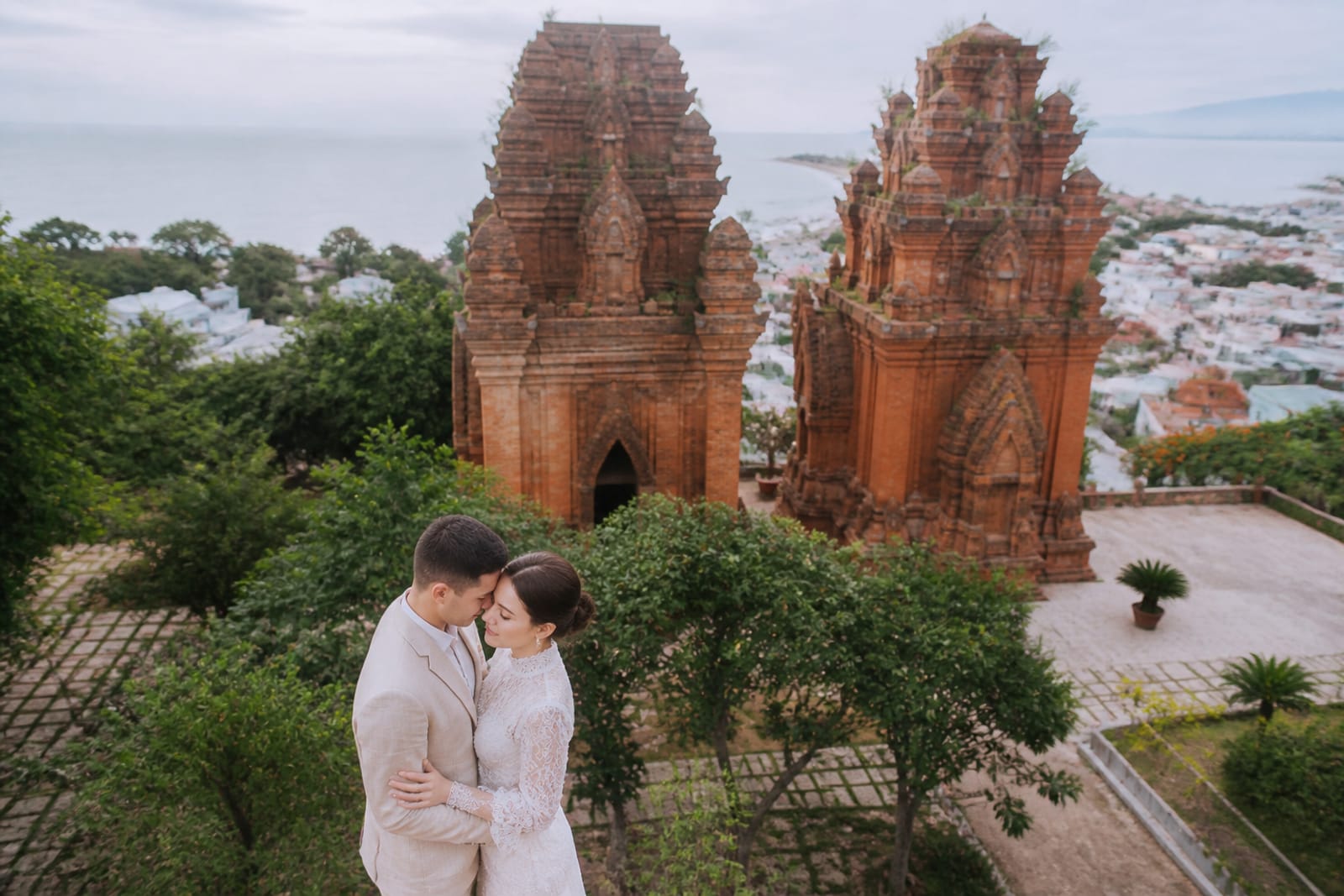
What should you check before booking a photographer and ao dai rental in Quy Nhon?
Before you commit, confirm these specifics with your photographer and rental provider:
- Photographer's coastal experience. Ask for past ao dai or wedding work shot at Quy Nhon or similar rocky coastlines. Coastal shoots demand knowledge of salt spray, glare, and wind—inexperienced photographers often shoot mid-day when light is worst. Request a sample gallery focused on water and dramatic light, not just posed portraits.
- Ao dai rental condition and fit. If renting, request photos of the exact ao dai you'll wear (not just a style category). Check for loose beads, faded panels, or stains. Confirm the tailor offers a fitting appointment on arrival, not just off-the-rack sizing.
- Hair and makeup inclusion. Ask whether the photographer coordinates hair and makeup or if you book separately. Quy Nhon has fewer hotel-based makeup artists than Hanoi; if your photographer doesn't include a team, plan to hire a makeup artist from nearby Da Nang or train a local beforehand. Cáo Studio's makeup and hair service operates in Hanoi and Ho Chi Minh City, but the Saigon team can recommend trusted Da Nang artists.
- Backup plan for weather. Confirm what happens if rain or typhoon winds arrive on shoot day. Do you reschedule at no charge, move to an indoor venue, or lose the booking fee? Central coast weather can shift fast September–December.
- Editing timeline. Ask when edited photos arrive (aim for 5–7 days) and how many shots are included. Coastal shoots often produce high keeper rates because water and rocks give natural framing, so confirm a reasonable count before signing.
- Travel and setup logistics. Confirm the photographer handles transport to your chosen spot (Ghiem Phu rocks, Bai Xep harbor, Quy Nhon coastline) or if you arrange it yourself. Coastal terrain requires early arrival (before crowds and light shifts), so ask about start times.
Cáo Studio does not operate in Quy Nhon, but its Saigon base can connect you with vetted local photographers and advise on ao dai rental quality if you're exploring options.
How does the ao dai photoshoot process work in Quy Nhon if you're booking a local photographer?
A typical coastal ao dai session runs 2–3 hours and includes outfit changes, makeup touch-ups, and movement through 2–3 locations. Here's what to expect:
- Pre-shoot consultation (1–2 weeks before). Share your ao dai color, style preference, and location ideas with the photographer. Discuss the best time of day for your chosen spot (early morning for calm water and soft light, late afternoon for golden-hour silhouettes).
- Arrival and setup (30 min before shoot). Meet the photographer and makeup artist (if booked separately) at a central hotel or landmark. Confirm ao dai fit, touch up makeup, and walk to the first location.
- First location, wide framing (30–40 min). Photographer shoots wide frames that show the ao dai against water, rocks, or sky. You'll walk, pause, look at the water or toward the light—not stiff poses. Coastal wind is part of the shot; the ao dai's movement becomes rhythm.
- Second location, medium and detail (40–60 min). Move to a second spot (often a quieter fishing village or rock formation). Photographer captures medium shots (torso, face, ao dai detail) and close-ups (jewelry, fabric, expression). Makeup may be touched up here.
- Optional outfit or styling change (20–30 min). If shooting two ao dais or swapping accessories, this happens midway. Saves travel time and keeps momentum.
- Final location or return (20–30 min). A quick final location for golden-hour backlight or silhouette, or return to base if the schedule is tight.
- Editing and delivery (5–7 days). Photographer edits and sends digital files (number varies by package; confirm beforehand). Coastal shoots often require slight color correction for water saturation and glare, so allow the full week.
Cáo Studio's pre-wedding and elopement package uses a similar structured approach in Hanoi and Ho Chi Minh City; if you're flexible on location, the Saigon team offers direction-led shoots with included styling and hair.
📸 Book on WhatsApp — ao dai photoshoot
---
What should you do before you book a session?
Check the photographer's portfolio for coastal work. Quy Nhon's turquoise water and rocky terrain are forgiving, but only if the photographer knows how to expose for glare and frame movement against rocks. Request at least two samples of past ao dai or wedding shoots on water.
Confirm ao dai logistics. Decide whether to rent locally (allow 2 weeks lead time and a fitting appointment on arrival) or bring your own (pack protectively and budget a post-shoot cleaning). Either way, ask your photographer to recommend a trusted tailor for last-minute fit checks.
Lock in hair and makeup. Coastal humidity demands waterproof makeup and wind-resistant styling. If your photographer doesn't include a makeup artist, hire one from Da Nang (a 1–2 hour drive) or ask the photographer for a local referral. Confirm the makeup artist has experience with waterproof products and coastal shoots.
Pick your shoot time. Early morning (6–7 am) gives calm water and soft side light; late afternoon (4–5 pm) offers golden-hour warmth and fewer crowds. Avoid noon and the rainy season (Sep–Dec). Book at least 4–6 weeks ahead to secure both photographer and rental slots.
Verify the backup plan. Central coast weather can shift fast. Confirm rescheduling terms, indoor backup locations (a colonial villa or beachfront cafe), and editing timelines if the shoot is delayed.
---
FAQ
Can I rent an ao dai in Quy Nhon if I'm arriving just before the photoshoot?
Quy Nhon rental stock is limited. Contact local tailors 2–3 weeks ahead; most need time to prepare or adjust a rental. If you arrive last-minute, rent from Da Nang (1–2 hours away) or bring your own. A same-day fit check is possible, but avoid rush-day surprises—confirm the tailor's schedule first.
What's the best time of day to shoot an ao dai in Quy Nhon?
Early morning (6–7 am) or late afternoon (4–5 pm) are ideal. Morning light is soft and sideways, perfect for fabric texture and water reflection. Afternoon light warms the ao dai and creates silhouettes against rocks. Avoid noon, when glare flattens the silk and squints eyes.
Should I book a photographer who includes hair and makeup, or hire them separately?
If the photographer includes a team, you save coordination time and ensure they all understand coastal conditions. If separate, hire a makeup artist with waterproof, humidity-resistant experience. Da Nang-based artists often work Quy Nhon gigs; confirm this with your photographer weeks ahead.
What if it rains or wind gets too strong on my shoot day?
Confirm the photographer's backup plan when booking: rescheduling at no charge, moving indoors (cafe, villa), or splitting the shoot across two days. Quy Nhon's dry season (Feb–Aug) is most reliable; rainy season (Sep–Dec) carries risk—book flexibility into your booking.
How many days should I allow for edited photos after the shoot?
Expect 5–7 days. Coastal shoots often require glare correction and water saturation adjustments. Ask the photographer upfront how many edited images are included and when delivery happens. Rush turnaround (2–3 days) may cost more; confirm the timeline before booking.
Can Cáo Studio shoot my ao dai photoshoot in Quy Nhon?
Cáo Studio operates in Hanoi, Ho Chi Minh City, and Hoi An. The team does not travel regularly to Quy Nhon, but the Saigon base can recommend vetted local photographers and advise on ao dai styling for coastal light. Contact us on WhatsApp for referrals and consultation.
FAQ
Can I rent an ao dai in Quy Nhon if I'm arriving just before the photoshoot?
Quy Nhon rental stock is limited. Contact local tailors 2–3 weeks ahead; most need time to prepare or adjust a rental. If you arrive last-minute, rent from Da Nang (1–2 hours away) or bring your own. A same-day fit check is possible, but avoid rush-day surprises—confirm the tailor's schedule first.
What's the best time of day to shoot an ao dai in Quy Nhon?
Early morning (6–7 am) or late afternoon (4–5 pm) are ideal. Morning light is soft and sideways, perfect for fabric texture and water reflection. Afternoon light warms the ao dai and creates silhouettes against rocks. Avoid noon, when glare flattens the silk and squints eyes.
Should I book a photographer who includes hair and makeup, or hire them separately?
If the photographer includes a team, you save coordination time and ensure they all understand coastal conditions. If separate, hire a makeup artist with waterproof, humidity-resistant experience. Da Nang-based artists often work Quy Nhon gigs; confirm this with your photographer weeks ahead.
What if it rains or wind gets too strong on my shoot day?
Confirm the photographer's backup plan when booking: rescheduling at no charge, moving indoors (cafe, villa), or splitting the shoot across two days. Quy Nhon's dry season (Feb–Aug) is most reliable; rainy season (Sep–Dec) carries risk—book flexibility into your booking.
How many days should I allow for edited photos after the shoot?
Expect 5–7 days. Coastal shoots often require glare correction and water saturation adjustments. Ask the photographer upfront how many edited images are included and when delivery happens. Rush turnaround (2–3 days) may cost more; confirm the timeline before booking.
Can Cáo Studio shoot my ao dai photoshoot in Quy Nhon?
Cáo Studio operates in Hanoi, Ho Chi Minh City, and Hoi An. The team does not travel regularly to Quy Nhon, but the [Saigon base](/saigon) can recommend vetted local photographers and advise on ao dai styling for coastal light. Contact us on WhatsApp for referrals and consultation.
Ao dai, makeup, hair and a local photographer in Hanoi or Saigon — one WhatsApp message.