services/ao-dai-photoshoot
Ao Dai History for Travelers: What to Wear & How to Shoot
The ao dai is Vietnam's most iconic garment—a symbol worn at celebrations, weddings, and formal events for nearly three centuries. For international travelers, wearing one during a photoshoot offers both a cultural immersion and a keepsake photograph that captures the essence of Vietnam. Understanding its history, construction, and cultural context ensures your session is respectful, comfortable, and visually striking.
What Is an Ao Dai and When Did It Become Vietnam's National Dress?
The ao dai evolved from 18th-century court robes influenced by Chinese fashion during the Nguyen Dynasty. By the 1950s, after French colonial rule ended, the Vietnamese government declared it the official national dress. Today, schoolgirls wear white ao dai uniforms; women choose silk versions for Tet, weddings, and formal occasions.
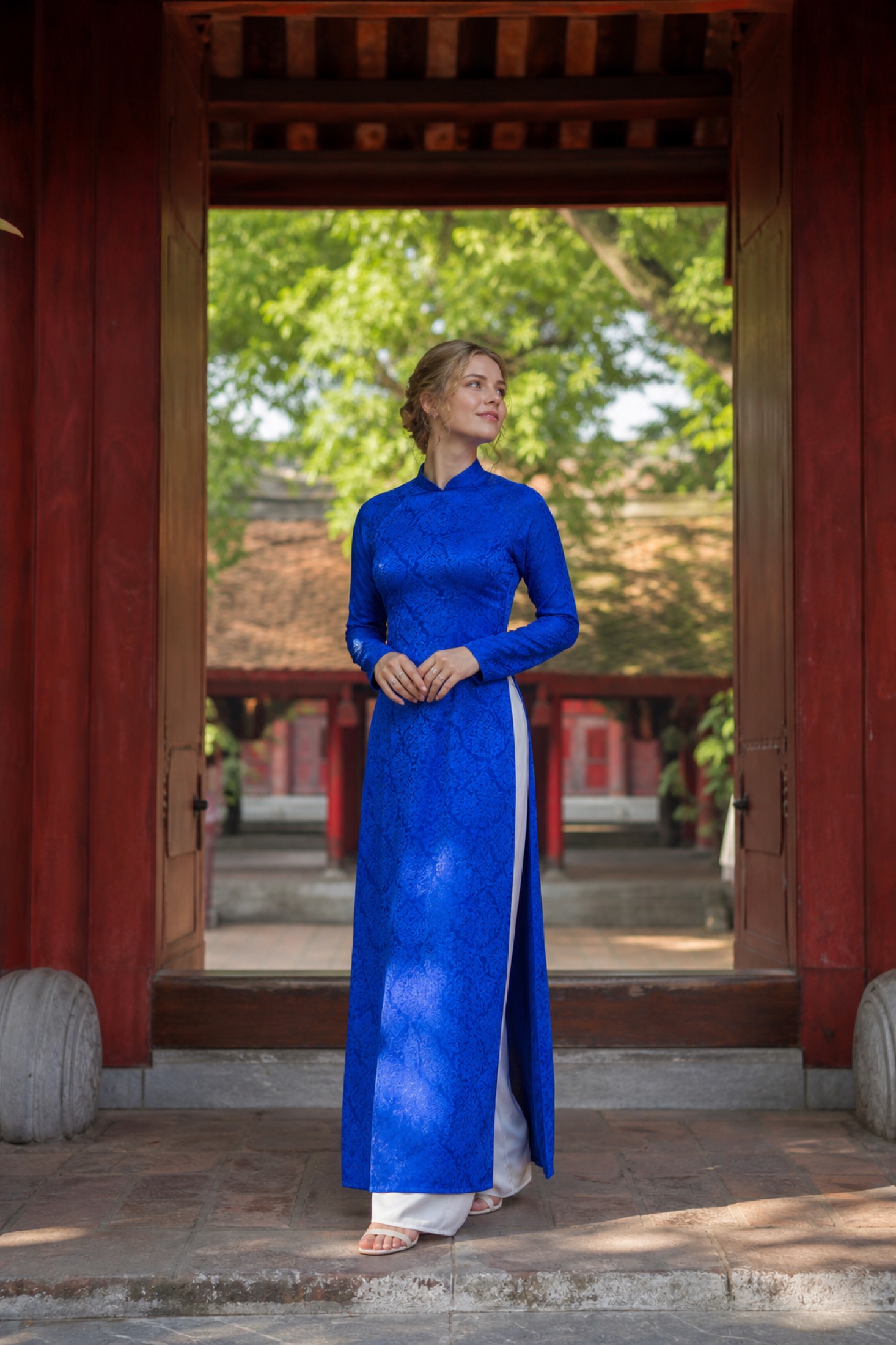
The modern ao dai consists of two pieces: a long, high-collared tunic with side slits reaching the hip, worn over fitted trousers. The tunic's graceful drape creates an hourglass silhouette. Most travelers encounter it for the first time during their Vietnam visit—and a professional photoshoot is the perfect moment to wear one properly.
📸 Book on WhatsApp — ao dai photoshoot
How Does Ao Dai Fit Differ from Western Clothing?
Ao dai tailoring is precise and body-specific. The tunic must hug your torso and hips without bunching; the collar sits high on the neck; sleeves end at the wrist; side slits expose the trousers when you move. Unlike Western dresses, there is no "one size fits all." A skilled tailor takes 10–15 measurements and may require 2–3 fittings.
Travelers often make one mistake: ordering ao dai online without fitting. The tunic won't drape correctly, photos look stiff, and movement is restricted. If you don't have time for a custom tailor before arrival, book a rental from a Hanoi or Ho Chi Minh City shop—they stock standard sizes and can adjust waistbands. Ask Cáo Studio's makeup and hair service which trusted rental partners we recommend; they've worked with many travelers.
Should You Buy a Custom Ao Dai or Rent One for Your Photoshoot?
| Option | Who It's For | Timeline | Why It Works |
|---|---|---|---|
| Custom tailor | Travelers staying 2+ weeks; those planning multiple wears | 5–7 days | Perfect fit, keeps as souvenir, feels authentic |
| Rental | Short-stay visitors; budget-conscious travelers | Same-day available | No fitting stress, multiple colors, lower cost |
| Pre-made from shop | Travelers wanting quick purchase; standard sizes 0–10 | 1 day | Takes home a dress, fits well if you're average height/build |
Most travelers we photograph choose rental. It removes the pressure to fit into a borrowed tunic and ensures the drape photographs beautifully. Hanoi's Old Quarter and District 1 in Ho Chi Minh City have rental shops charging 300,000–800,000 VND (approximately $12–32 USD) per day. Rental includes alterations and steaming before your shoot.
If you want to own an ao dai, budget 3–5 million VND (approximately $120–200 USD) for custom silk; 1–2 million VND for cotton or polyester blends. Tailors in Hoi An are famous for speed and affordability; visit during a pre-wedding or elopement session to commission one.
What Fabric, Color, and Etiquette Should Travelers Know?
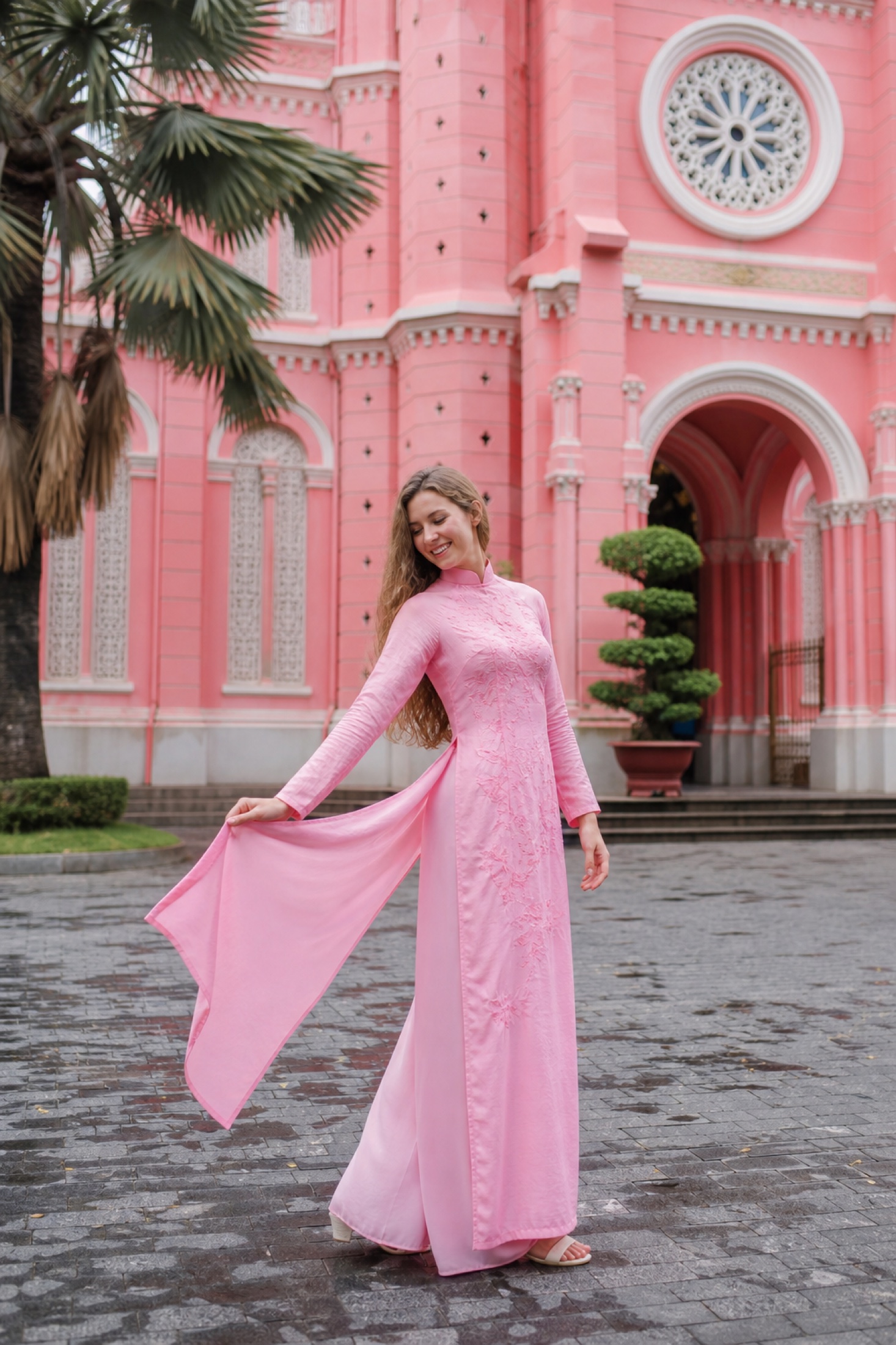
Silk is traditional for formal wear and photographs best—it catches light and drapes with movement. For daytime photoshoots, ivory, pastel pink, or soft blue are flattering and photograph well in golden-hour light. Avoid black (reserved for mourning) and neon colors (not respectful for cultural wear).
Etiquette matters. Wear an ao dai when visiting temples only if invited by locals or if it's a cultural performance context; don't wear it as casual clothing around town. If posing in front of religious sites, keep your tunic buttoned and avoid leaning against holy objects. At couple and family photoshoots, ask your photographer (like our team at Cáo Studio) where poses are appropriate.
Hair and makeup should be modest. Traditional styling includes a high bun or soft waves; makeup is neutral to warm-toned, never heavy. Our hotel makeup and hair service specializes in ao dai styling—our artists understand the neckline shape and help you choose colors that complement the dress fabric.
How to Plan an Ao Dai Photoshoot: What to Check Before You Book
Before booking, ask yourself:
- How many days are you in Vietnam? (Allows time for rental or tailoring.)
- Do you have a specific ao dai color in mind, or will you try rentals on-site?
- Will you shoot in temples, gardens, or studio? (Etiquette and light differ.)
- Are you traveling solo, with a partner, or as a family? (Couple and family photoshoot options vary.)
- Do you need makeup and hair done, or are you handling it yourself?
Visit Cáo Studio's lookbook to see ao dai sessions in different seasons and settings. Our Hanoi studio has three locations; we also travel to Hoi An by appointment (ask on WhatsApp for Hoi An dates). Ho Chi Minh City's branch handles sessions in the southern heat—we adjust lighting and choose breathable fabrics.
When you contact us via WhatsApp, share:
- Your arrival date and session date.
- Your height and usual dress/shirt size (for rental shop matching).
- The mood you want (romantic, bold, cultural, family).
- Any temple or temple-adjacent locations you love.
Our team will propose a rental shop, confirm etiquette for your chosen backdrop, and coordinate makeup and hair timing. Most travelers book 2–4 hours; sessions include multiple outfit changes, location scouting, and 100+ edited images.
Weather, Seasons, and Timing for Your Best Ao Dai Photoshoot
Ao dai photography depends on season.
Hanoi (March–May and September–November): Warm, dry, minimal rain. Silk ao dai flows beautifully; golden-hour light (6–7 am or 5–6 pm) is ideal. Avoid midday heat—it causes visible sweat and fabric cling.
Ho Chi Minh City (December–February): Dry season, cooler. Light cotton ao dai works well. Mid-morning light (8–10 am) is flattering before humidity peaks.
Hoi An (year-round): Ancient town light is softer. Early morning shoots (6–7 am) avoid crowds and catch the lantern-lit harbor glow. Avoid September–October (typhoon season).
Bring a lightweight shawl or pashmina if shooting in temples—air conditioning makes thin silk chilly, and covered shoulders are respectful inside.
---
What Makes a Great Ao Dai Photo?
Technical checklist:
- Lighting: Golden hour (within 1 hour of sunrise/sunset) flatters skin and silk texture.
- Pose: Stand with one foot slightly forward to create asymmetry; let the tunic's side slit open naturally.
- Movement: Walk slowly toward the camera or sit with legs extended to show the tunic's line.
- Background: Muted walls, doorways, gardens, or water. Busy streets distract from the dress.
- Makeup & hair: Warm, soft tones; hair secured high to frame the neckline.
At Cáo Studio's Hanoi, Saigon, and Hoi An locations, our photographers position you to flatter your silhouette and the ao dai's lines. We know where morning light hits temples in Hanoi's Old Quarter, where evening reflections work in Ho Chi Minh City's parks, and how to use Hoi An's yellow-painted colonial buildings as a backdrop.
📸 Book on WhatsApp — ao dai photoshoot
---
Comparing Your Photoshoot Package Options
If you're torn between a standalone ao dai shoot, a couple and family photoshoot, or adding makeup and hair service, consider:
- Standalone ao dai: You in one or two dresses, 2–3 hours, solo focus. Best if you want luxury close-ups and personal storytelling.
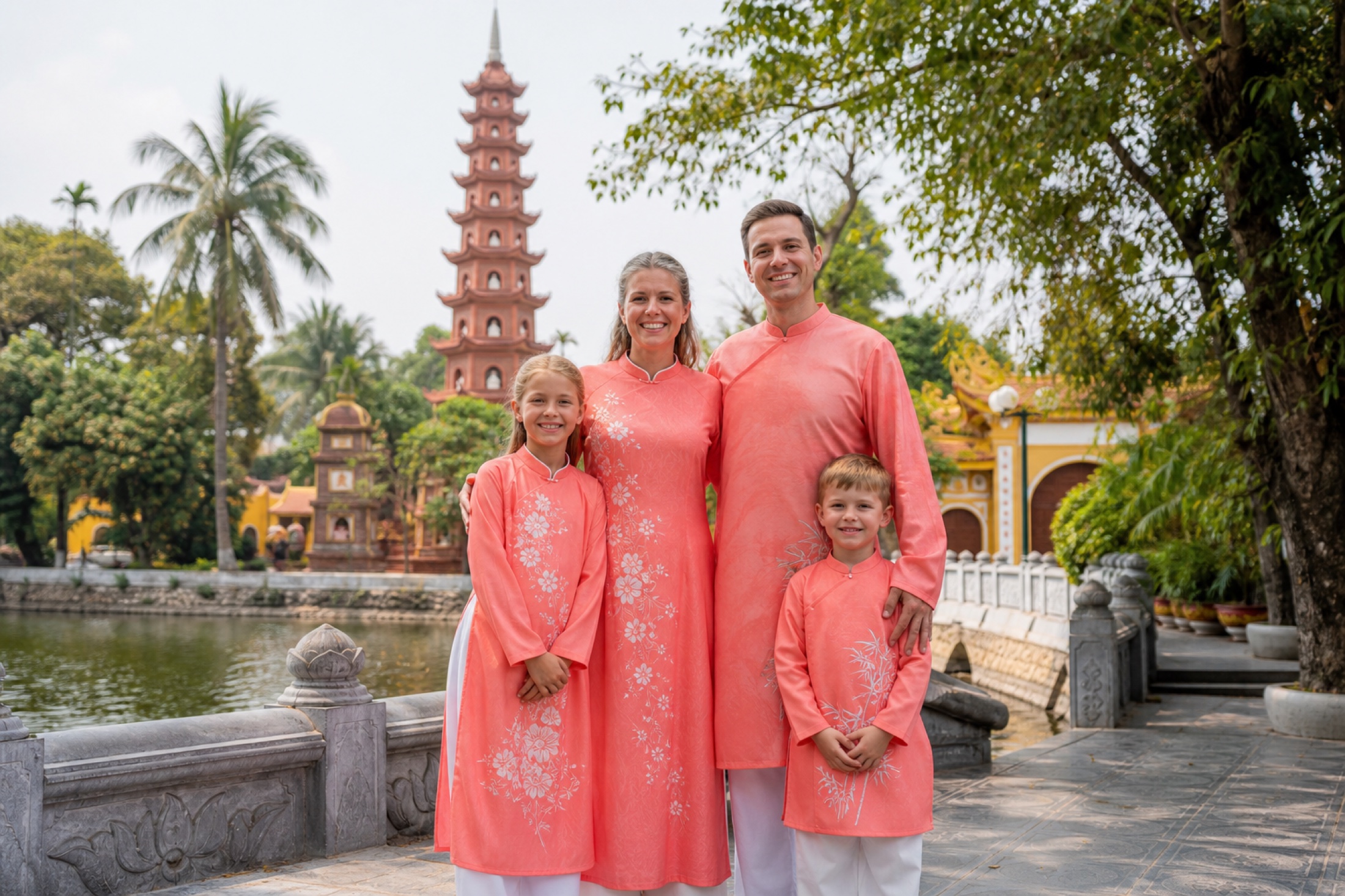
- Couple session: You and a partner (spouse, friend, family member) in matching or coordinated ao dai. Longer session, more wardrobe variety, romantic or familial narrative.
- Family photoshoot: Multiple people; you in ao dai, family in casual or coordinated dress. Great for multi-generational moments and cultural memory-making.
- Add makeup and hair: Professional Vietnamese makeup artist arrives at your hotel 60 minutes before shoot. Removes stress, ensures photographer's vision aligns with your look.
For details on inclusions and timeline, check our FAQ and pricing guide.
---
Why Choose Cáo Studio for Your Ao Dai Photoshoot?
We are a working studio—not a rental shop or tourist service. Our team has shot hundreds of ao dai sessions for international travelers. We know which rental shops deliver the best fits, which temples allow photography with respect, and how to style ao dai for your body type and vision. We also offer proposal and anniversary packages if you're celebrating a milestone in your ao dai.
Our Hanoi and Ho Chi Minh City studios coordinate everything: rental coordination, makeup and hair timing, location scouting, and editing. For Hoi An, we travel by appointment—ask on WhatsApp about dates.
Start with our lookbook to see ao dai sessions that match your vibe. Then reach out on WhatsApp to discuss your dates, rental needs, and vision.
FAQ
Can I wear an ao dai to a temple if I've never visited Vietnam before?
Temples welcome visitors respectfully dressed. Wear an ao dai if it's tailored/rented (not costume-like), keep buttons closed, remove shoes at entrances, and ask your guide before photographing at altars. It's cultural appreciation, not appropriation, when done thoughtfully.
How do I know if a rental shop's ao dai will fit me before the shoot?
Ask for a fitting appointment 1–2 days before your session. Rental shops keep standard sizes XS–XL and adjust waistbands, shoulder seams, and hemlines same-day. Bring a snug-fitting dress or shirt to match your size. Our team can recommend trusted Hanoi and Ho Chi Minh City shops.
What if I'm not a small or average size—will an ao dai suit me?
Yes. Ao dai's high-waisted, flowing cut flatters most bodies. Larger sizes (XL, 2XL) are available; customization emphasizes your proportions beautifully. Ask rental or tailor shops about extended sizing, and share your height and measurements when booking with us.
Should I style my hair up or down for an ao dai photoshoot?
Traditional is high bun or soft updo—it frames the neckline and shows the dress's silhouette. Down hair works for romantic, modern vibes but requires more wind control outdoors. Our makeup and hair service offers both; we'll style based on your session's mood and backdrop.
How much should I budget for an ao dai photoshoot with custom tailoring, makeup, and photography?
Rental (300,000–800,000 VND), professional makeup and hair (add-on service), and photoshoot fees vary. Contact us via WhatsApp for a personalized quote. A full package (rental, hair, makeup, 3-hour shoot, edited images) typically costs less than a studio session in Western countries.
Can I book an ao dai shoot if I'm arriving the day before my session?
Yes, if you choose a rental dress (same-day fitting available). Custom tailoring needs 5–7 days minimum. Message us your arrival date; we'll reserve rental availability and schedule a fitting 24 hours before your shoot.
FAQ
Can I wear an ao dai to a temple if I've never visited Vietnam before?
Temples welcome visitors respectfully dressed. Wear an ao dai if it's tailored/rented (not costume-like), keep buttons closed, remove shoes at entrances, and ask your guide before photographing at altars. It's cultural appreciation, not appropriation, when done thoughtfully.
How do I know if a rental shop's ao dai will fit me before the shoot?
Ask for a fitting appointment 1–2 days before your session. Rental shops keep standard sizes XS–XL and adjust waistbands, shoulder seams, and hemlines same-day. Bring a snug-fitting dress or shirt to match your size. Our team can recommend trusted Hanoi and Ho Chi Minh City shops.
What if I'm not a small or average size—will an ao dai suit me?
Yes. Ao dai's high-waisted, flowing cut flatters most bodies. Larger sizes (XL, 2XL) are available; customization emphasizes your proportions beautifully. Ask rental or tailor shops about extended sizing, and share your height and measurements when booking with us.
Should I style my hair up or down for an ao dai photoshoot?
Traditional is high bun or soft updo—it frames the neckline and shows the dress's silhouette. Down hair works for romantic, modern vibes but requires more wind control outdoors. Our [makeup and hair service](/services/makeup-and-hair) offers both; we'll style based on your session's mood and backdrop.
How much should I budget for an ao dai photoshoot with custom tailoring, makeup, and photography?
Rental (300,000–800,000 VND), professional makeup and hair (add-on service), and photoshoot fees vary. Contact us via WhatsApp for a personalized quote. A full package (rental, hair, makeup, 3-hour shoot, edited images) typically costs less than a studio session in Western countries.
Can I book an ao dai shoot if I'm arriving the day before my session?
Yes, if you choose a rental dress (same-day fitting available). Custom tailoring needs 5–7 days minimum. Message us your arrival date; we'll reserve rental availability and schedule a fitting 24 hours before your shoot.
Ao dai, makeup, hair and a local photographer in Hanoi or Saigon — one WhatsApp message.