services/ao-dai-photoshoot
Ao Dai Photos at Hanoi Train Street: How to Shoot There
Hanoi Train Street (Phố Đường Tàu, near the Old Quarter) has become a signature backdrop for ao dai photography. The narrow lane, built in the 1900s, frames the traditional silk garment against weathered walls, shuttered storefronts, and railway ties. If you're planning an ao dai shoot there, understanding light, timing, permits, and outfit logistics separates a polished session from a risky amateur attempt.
Is Train Street actually safe for ao dai photo shoots?
Yes, but only during low-traffic windows and with awareness of active trains. The railway still operates; trains pass 4–6 times daily, usually 7:45 a.m., 12:00 p.m., 3:30 p.m., 6:15 p.m., and occasionally at night. Shoots happen 6:30–7:30 a.m. before trains and peak tourism. Never stand on or cross tracks during a session. A professional photographer (or studio) knows current schedules and keeps you safely on the street side. Local authorities tolerate early-morning photoshoots; large groups or commercial filming need informal permits via neighborhood guides.
📸 Book on WhatsApp — ao dai photoshoot
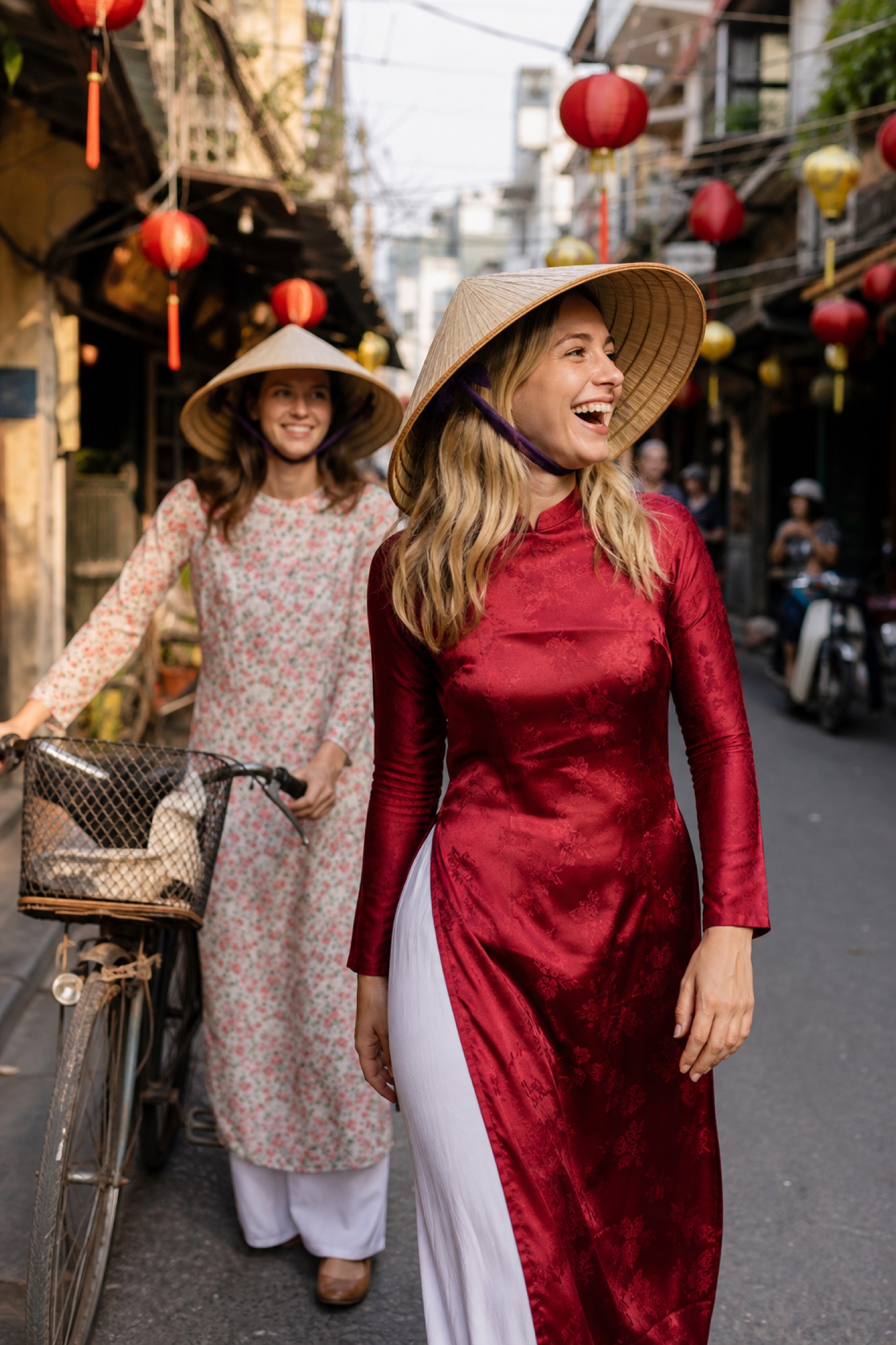
What time of day gives the best light for Train Street ao dai photos?
6:30–7:30 a.m. is the only true golden hour at Train Street. East-facing walls catch soft, warm light without harsh shadows. By 8:00 a.m., foot traffic and tour groups flood the lane; light hardens. Afternoon (2:00–4:00 p.m.) offers sidelit drama if you position yourself on the west-facing side, but crowds peak. Overcast mornings (frequent October–March) work well—diffused light is flattering for skin and fabric detail. Avoid midday (11:00 a.m.–1:00 p.m.) entirely; direct sun creates blown-out skies and unflattering face shadows.
What should you wear under or with an ao dai for Train Street shoots?
An ao dai consists of a fitted silk tunic over flowing trousers. For Train Street, choose:
- Neutral silk trousers (white, cream, or pale pink). Darker bottoms date photos and absorb heat.
- Fitted tunic in jewel tones (emerald, sapphire, burgundy) or pastels (blush, lavender). Saturated colors pop against aged brick.
- Minimal undergarments: lightweight cotton camisole and briefs prevent visible panty lines and allow the tunic's drape to show.
- Flat or low-heel shoes (ballet flats, embroidered slippers). Train Street's cobblestones are uneven; heels look unnatural in photos and cause tripping on tracks.
- One statement accessory: traditional silk scarf, beaded clutch, or fresh flower crown. Too many layers fight the minimalist lane backdrop.
If you're unsure about fit or fabric, book makeup & hair at your hotel beforehand; stylists can steam the ao dai and ensure proper posture and tucking.
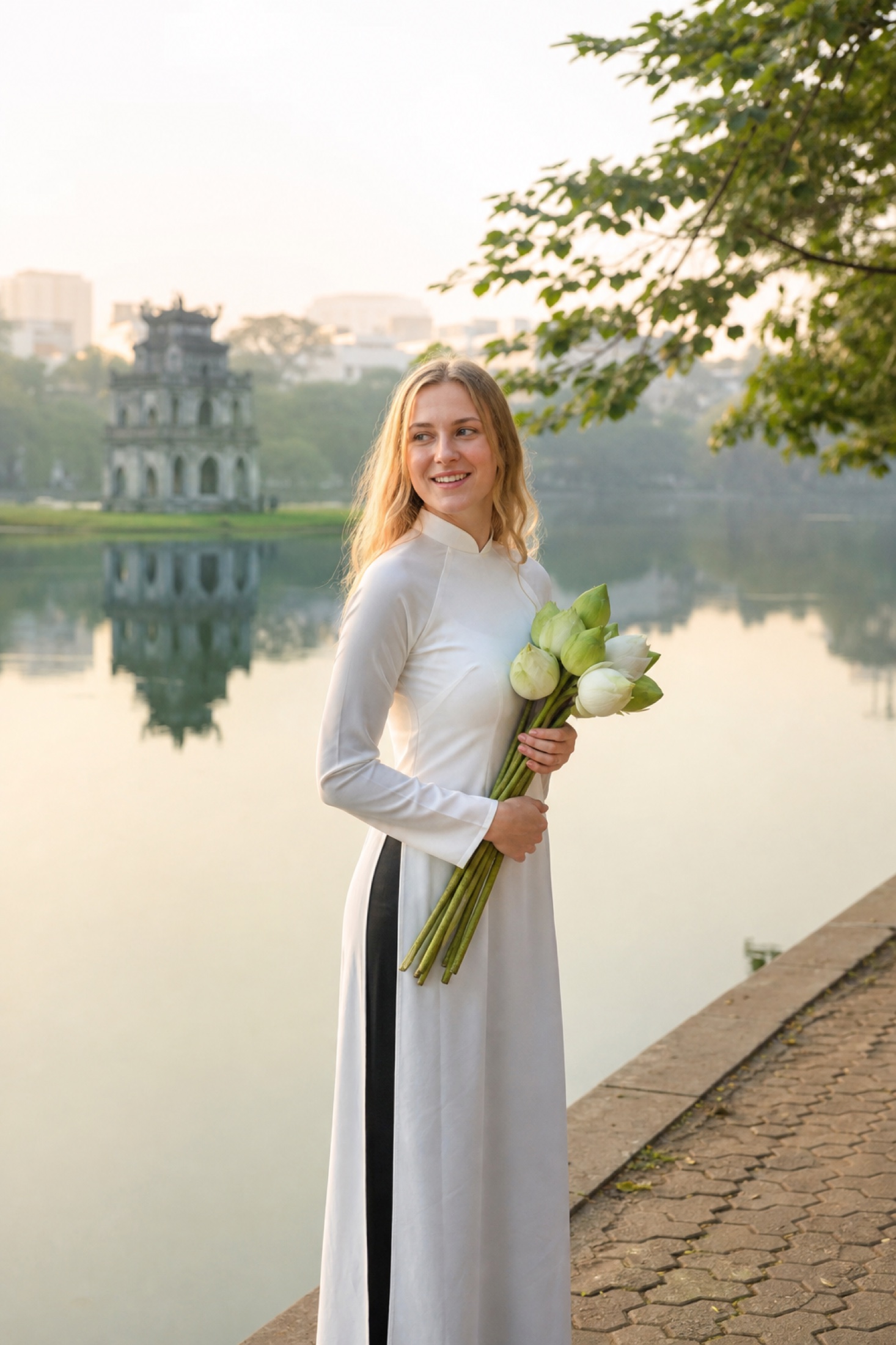
Should you book Cáo Studio or hire a local photographer on the street?
| Approach | Best for | Logistics | What to check |
|---|---|---|---|
| Cáo Studio – Makeup & Photoshoot | Travelers wanting full service (makeup, outfit prep, editing) | Booking via WhatsApp; team meets you at Train Street or studio beforehand; 1–2 hours; digital files in 7–10 days | Confirm session date matches train schedule; ask about outfit loan if needed; clarify photo count and editing style |
| Solo local photographer (hired on-site) | Budget-conscious; want spontaneity; fluent in Vietnamese or comfortable negotiating | Hire via local Facebook groups or walking up; rates $15–40/hour; cash only; no contract | Portfolio proof beforehand; confirm file delivery format (USB, email); ask about backup if they cancel; no recourse if files lost |
| Tour operator's bundled shoot | Groups of 3+; prefer structured itinerary; need transportation included | Book 1–2 days ahead through your hotel; team arrives; 30–45 min at Train Street; prints often included | Check whether makeup is included; ask edits timeline; verify if photographer has Train Street shooting experience |
Cáo Studio's advantage: pre-shoot consultations confirm your ao dai fits and photographs well, and edited files include color grading suited to brick tones. The trade-off is booking in advance—no walk-up option.
What does a professional ao dai session at Train Street look like step-by-step?
| Step | What happens | Time | Notes |
|---|---|---|---|
| 1. Booking & briefing | Confirm date, time, outfit details, editing style via WhatsApp | 2–3 days before | Ask Cáo Studio about train schedule that day |
| 2. Makeup & styling (optional) | Hair, makeup, ao dai fitting at studio or hotel; steaming if needed | 45–60 min | Reduces on-location time; ensures camera-ready look |
| 3. Arrival & safety check | Photographer scopes lane, confirms no imminent trains, positions you safely | 5 min | Keep phone on silent; stay off tracks |
| 4. Posing & shooting | Walking shots, static poses, detail frames (hands, fabric, face); 30–80 frames | 25–40 min | Bring water; rest between poses; wear deodorant |
| 5. Backup location | Pivot to nearby alley or Old Quarter street if trains arrive early | 10 min | Professional photographers have contingencies |
| 6. File handoff & editing | Photographer sends RAW or light-edited preview; full edits within 7–10 days | Post-session | Confirm delivery method (WeTransfer, Google Drive, USB) |
Cáo Studio sessions typically run 2–3 hours total (including hair/makeup and location time). Solo photographers compress to 30–45 minutes on-site.
What should you check before booking an ao dai photo session at Train Street?
Before you commit:
- Confirm the photographer's Train Street experience. Ask for previous ao dai shots from that location; colors, poses, and framing should match your style.
- Verify train schedule that day. Stations post daily schedules; an early deviation can derail a 6:30 a.m. shoot.
- Check weather 3 days before. Rain turns cobblestones slippery and darkens brick. Clouds are ideal; cancel only if downpour forecast.
- Confirm ao dai fit at home or studio. Arrive with the outfit tried on; wrinkled fabric or loose tunic wastes shooting time.
- Ask about editing turnaround and style. Do you want warm, saturated colors (brick tones pop) or cool, matte finishes (contemporary look)? Agree before shooting.
- Bring cash if paying on-site. Most local photographers don't accept card.
- Wear sunscreen and deodorant. Early sun reflects off brick; even cool air makes you perspire under silk.
For travelers pairing Train Street with other Hanoi photoshoots, Cáo Studio's couple photoshoots and pre-wedding sessions often include multiple locations. Check the main ao dai photoshoot service page and pricing for package details. First-time visitors should also review FAQ for common prep questions.
📸 Book on WhatsApp — ao dai photoshoot
FAQ
Can I book an ao dai shoot at Train Street if I don't own an ao dai?
Yes. Cáo Studio offers rental ao dai in dozens of colors and sizes; confirm availability during booking. Local boutiques (Tanly, Kathy Silk) near the Old Quarter rent for $10–25/day. Bring measurements (bust, waist, inseam) and arrive 30 min early for fitting.
What if a train passes during my session?
Professional photographers pause and reposition you safely away from tracks until it passes (2–3 min). Morning trains rarely arrive before 7:45 a.m. if you book 6:30–7:15 a.m. slots. Confirm exact schedule with your photographer beforehand.
Do I need a permit to shoot at Train Street?
No formal permit is required for personal or small professional shoots. Groups larger than 10 or commercial filming should hire a local guide to notify the railway authority informally; cost is minimal ($5–10). Cáo Studio handles this if needed.
How many edited photos will I receive?
Cáo Studio typically delivers 30–50 edited digital files from a 1–2 hour ao dai session. Solo photographers often deliver 15–25. Confirm the exact count and whether you receive RAW files before booking.
What's the best season for Train Street ao dai photos?
October–March (cool, dry weather; soft morning light; fewer tourists at 6:30 a.m.). April–September is hot and humid; early starts are more crucial, and heat affects outfit comfort. Avoid Tet (late January–early February) when the lane is closed for renovations.
FAQ
Can I book an ao dai shoot at Train Street if I don't own an ao dai?
Yes. Cáo Studio offers rental ao dai in dozens of colors and sizes; confirm availability during booking. Local boutiques (Tanly, Kathy Silk) near the Old Quarter rent for $10–25/day. Bring measurements (bust, waist, inseam) and arrive 30 min early for fitting.
What if a train passes during my session?
Professional photographers pause and reposition you safely away from tracks until it passes (2–3 min). Morning trains rarely arrive before 7:45 a.m. if you book 6:30–7:15 a.m. slots. Confirm exact schedule with your photographer beforehand.
Do I need a permit to shoot at Train Street?
No formal permit is required for personal or small professional shoots. Groups larger than 10 or commercial filming should hire a local guide to notify the railway authority informally; cost is minimal ($5–10). Cáo Studio handles this if needed.
How many edited photos will I receive?
Cáo Studio typically delivers 30–50 edited digital files from a 1–2 hour ao dai session. Solo photographers often deliver 15–25. Confirm the exact count and whether you receive RAW files before booking.
What's the best season for Train Street ao dai photos?
October–March (cool, dry weather; soft morning light; fewer tourists at 6:30 a.m.). April–September is hot and humid; early starts are more crucial, and heat affects outfit comfort. Avoid Tet (late January–early February) when the lane is closed for renovations.
Ao dai, makeup, hair and a local photographer in Hanoi or Saigon — one WhatsApp message.