services/ao-dai-photoshoot
Ao Dai Photos at Hoi An Rice Fields by Bicycle
Hoi An's rice fields are one of Vietnam's most photogenic cycling routes, and an ao dai intensifies that beauty—but the shoot succeeds only when timing, outfit choice, and logistics align. This guide walks through the exact decisions you need to make before pedaling out.
What's the best season and time of day for rice field ao dai photos?
August through October captures harvest season: golden-green paddies, water reflections, and dramatic cloud cover. Light peaks two hours before sunset when the sun sits low and warm over the fields. Early morning (6:00–7:30 a.m.) offers soft, diffused light but fewer color contrasts. Monsoon rain (May–July) floods the fields; dry season (December–February) leaves them brown. Overcast days flatten color; clear skies with a few clouds create depth. Midday (10 a.m.–3 p.m.) produces harsh shadows—avoid it. Time your session for golden hour and plan for 2–3 hours on the bike.
📸 Book on WhatsApp — ao dai photoshoot
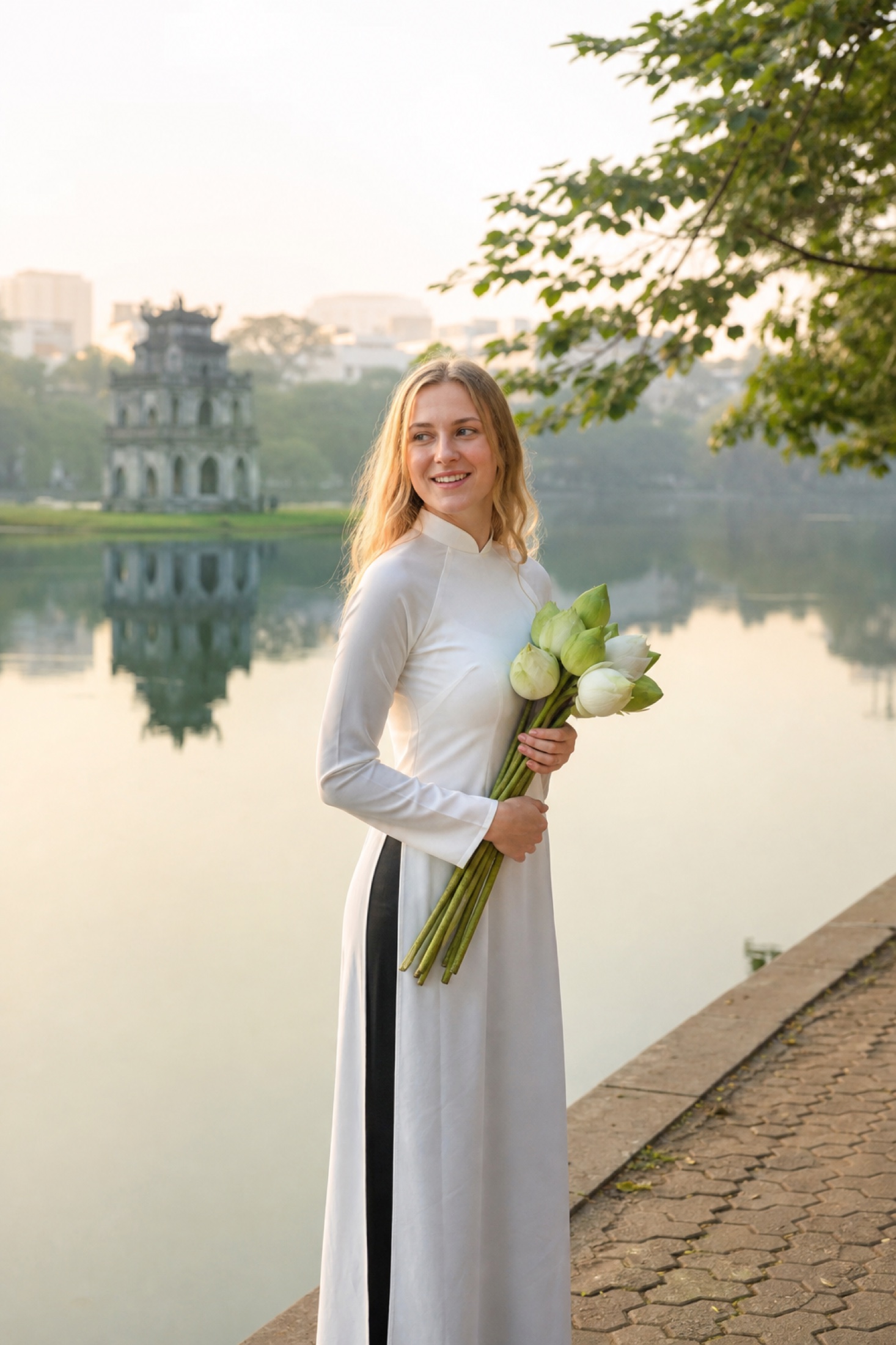
How do you cycle comfortably in an ao dai for a full photoshoot session?
An ao dai's front panels split to the waist, designed for walking, not pedaling. Wear fitted bicycle shorts or a slip underneath—not loose underwear, which shows through silk. A cotton or silk slip ($8–25, available from ao dai tailors in Hoi An's Old Town) prevents chafing and keeps the garment's line clean in photos. Avoid heavy jewelry; delicate earrings and a single bracelet photograph better and won't bounce. Fasten the back panels loosely so your legs have room to move. Bring a small backpack (left at a café or carried by a guide); let your photographer know you'll stop frequently to adjust and pose. Test your cycling posture before the shoot day—many first-time riders find the garment binds at the knees after 30 minutes.
Should you book Cáo Studio or a local Hoi An photographer?
| Photographer Type | Who It's For | Travel to Hoi An | Editing Style | Logistics |
|---|---|---|---|---|
| Cáo Studio (Hanoi/Saigon) | Clients wanting studio continuity, guaranteed English, refined editing | Yes, by appointment | Clean, color-graded, studio-standard | WhatsApp coordination; team travels |
| Local Hoi An–based photographer | Budget-conscious; prefer walking-up booking; want local knowledge | Based in Hoi An | Varies; often documentary, candid | Walk-in or referral; may not speak fluent English |
| Independent guide + smartphone | Ultra-budget; comfortable directing yourself | No upfront booking | Variable quality; limited retouching | DIY; no professional backup if light fails |
Cáo Studio handles travel to Hoi An by appointment (ask dates on WhatsApp). A local photographer costs less ($40–80 for 2–3 hours) but offers no guarantee of studio-level editing or post-production consistency. If you're already booking ao dai photoshoots in Hanoi or Saigon with Cáo Studio, extending to Hoi An keeps your whole trip cohesive.
What do you wear under and over the ao dai for rice field cycling?
The ao dai itself: Rent locally in Hoi An's Old Town ($3–8/day) or bring your own. Silk ao dais ($40–150 retail) photograph luxuriously but wrinkle and stain easily on dusty paths. Cotton blends ($25–60) are practical; they're forgiving in humidity and hide mud better. Classic colors (white, pastels, navy, emerald) stand out in green fields. Patterns (floral, geometric) work if they don't clash with field textures.
Underneath: A fitted slip in white, cream, or nude (4–8-hour wear); cotton for humidity, silk for elegance. Bicycle shorts in black or nude (won't show under splits). Skip thick jeggings or denim.
On top: A lightweight cotton scarf or light shawl for wind-exposure shots and to drape over your back while standing still. The photographer uses this for dynamic poses.
Footwear: Flat sandals with ankle straps (easier to clip out of pedals than flip-flops). Carry them; many cyclists walk sections to avoid mud. Cloth slip-ons ($5–12) dry faster than leather if you cross a shallow stream.
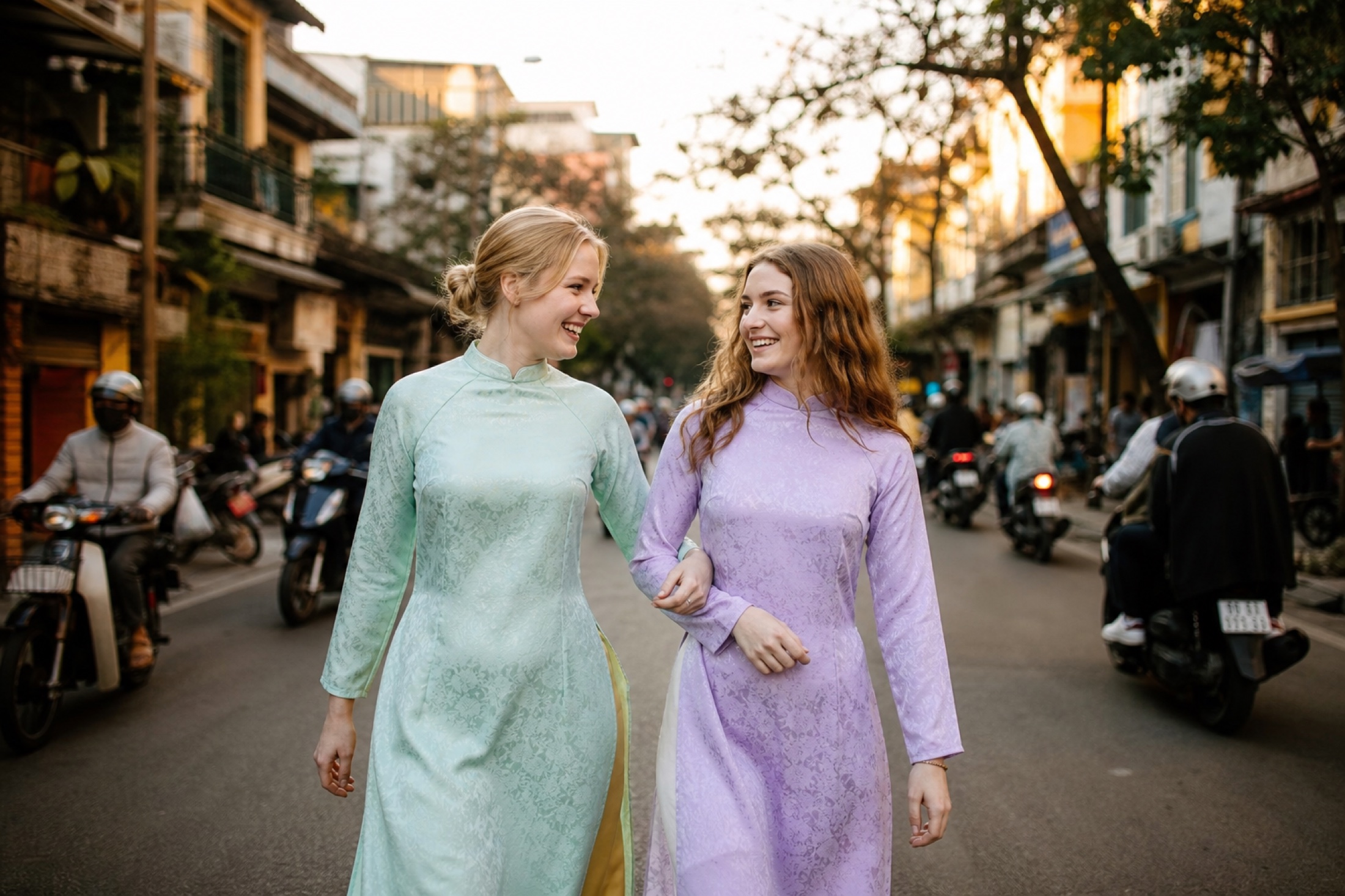
What happens when you cycle through mud, water, and uneven paths?
Rice paths in wet season have ruts, standing water, and slippery clay. Mud stains silk irreversibly. Here's how to prevent problems:
- Scout the route beforehand: Ask your photographer or a local guide which paths are passable in current conditions.
- Wear protective booties: Cheap rain covers ($2–3) slip over sandals during muddy sections.
- Bring cleaning supplies: A small towel and a spray bottle of water (to rinse footwear before re-entering the ao dai).
- Plan shoot stops away from water: Position yourself on drier banks or at the field's edge for standing shots.
- Rent sturdy bikes: A borrowed or rented local bicycle ($2–5/day) has wider tires and better mud clearance than a road bike.
- Schedule a late wash: Rinse the ao dai within 4 hours of the shoot in cool water; hang dry, never wring.
If renting an ao dai, confirm the rental shop's return policy for minor stains—most accept light mud if you rinse gently.
What's your step-by-step plan for booking and executing the shoot?
1. Check weather and book photographer (2–4 weeks prior) Look at Hoi An's forecast and past October/September precipitation. Message Cáo Studio on WhatsApp with your dates; confirm availability and ask about Hoi An session dates. Agree on session length (2–3 hours), start time (4:00–5:00 p.m. for golden hour), and location (specific rice terrace cluster).
2. Rent or source an ao dai (1 week prior) Reserve a rental from an Old Town tailor (ask your hotel concierge). Confirm fit, color, and return logistics. If bringing your own, pack it flat or roll it gently; hang to air out the night before.
3. Prepare undergarments and footwear (3 days prior) Purchase a slip and clip-on bicycle shorts. Try cycling in them at your hotel for 15 minutes. Pack sandals, socks, and a small towel.
4. Coordinate logistics day-of (morning of shoot) Text your photographer your meeting location (usually a central café in Hoi An). Confirm start time and weather contingency (e.g., if monsoon rain hits, reschedule). Eat a light meal; bring water. Pick up the ao dai 1 hour before the shoot.
5. The shoot (2–3 hours) Arrive on time. The photographer directs poses: standing by field edges, cycling slowly down paths, sitting on the bike frame (no pedaling), and close-up portraits. You'll stop every 10 minutes to adjust the ao dai and breathe. Bring a phone tripod if you want candid BTS (behind-the-scenes) shots.
6. Post-shoot care Change out of the ao dai within 1 hour. Rinse gently in cool water and hang dry. If rented, return within 24 hours; a day-late fee ($5–10) usually applies.
---
What to Check Before You Book
- Photographer's experience with ao dai shoots: Ask for a lookbook or past Hoi An session samples. Cáo Studio's lookbook shows their ao dai photoshoot style.
- Your fitness for 2–3 hours cycling: If you're not a regular cyclist, ride a rental bike around Hoi An town the day before to test comfort.
- Rain contingency: Confirm your photographer's policy if weather turns; most offer a reschedule within 7 days.
- Ao dai rental condition: Inspect seams and hems for loose stitching. Test the fit sitting on a bicycle seat before committing.
- Light timing: Golden hour moves 10–15 minutes earlier each week as autumn progresses. Your photographer should adjust the meet time accordingly.
- Return time for rentals: Confirm the shop's closing time; late returns incur fees.
---
For travelers combining Hoi An with Hanoi or Saigon visits, Cáo Studio coordinates seamless sessions across all three cities. Their makeup and hair team can also prep you at your Hoi An hotel before the cycling shoot—book here. First-time ao dai wearers often also book a couple or family photoshoot in Hanoi to practice comfort and posing before the rice field session.
FAQ
Can I cycle in an ao dai without wearing shorts underneath?
No. The front panels split to the waist; without shorts, your legs show when pedaling. A fitted slip and bicycle shorts prevent chafing and keep the garment modest in photos. Both are essential for 2+ hours of cycling.
What if I rent an ao dai and it gets muddy during the shoot?
Most rental shops expect minor staining and factor it into their terms. Rinse gently in cool water within 4 hours and hang dry—don't wring or use heat. Return it as soon as possible; confirm the shop's stain policy before renting. A small cleaning fee ($3–5) may apply for heavy soiling.
Is harvest season (August–October) the only good time to shoot in rice fields?
It's the best for golden color and water reflections, but shooting is possible year-round. Dry season (December–February) offers brown, textured paddies and clear light; monsoon (May–July) adds drama but muddy paths. Plan your timing around weather and color preference, not just harvest.
Do I need a local guide if I'm cycling with a photographer?
No. A Cáo Studio photographer or experienced local shooter knows the terrain and can navigate muddy sections. You'll need a guide only if cycling unsupervised or if the photographer isn't familiar with Hoi An's layout.
How far in advance should I book a Cáo Studio Hoi An shoot?
Ask on WhatsApp with your dates. The team coordinates travel to Hoi An by appointment, so 2–4 weeks' notice is ideal. Peak season (September–October) books faster; allow extra lead time if you have rigid date requirements.
What's the difference between a Cáo Studio ao dai shoot and a local Hoi An photographer?
Cáo Studio provides studio-standard editing, English-fluent coordination, and consistency across cities. Local photographers cost less ($40–80) but vary in editing style and may have limited English. Choose Cáo Studio if you want professional finishing; choose local if you're on a tight budget and comfortable with documentary-style results.
FAQ
Can I cycle in an ao dai without wearing shorts underneath?
No. The front panels split to the waist; without shorts, your legs show when pedaling. A fitted slip and bicycle shorts prevent chafing and keep the garment modest in photos. Both are essential for 2+ hours of cycling.
What if I rent an ao dai and it gets muddy during the shoot?
Most rental shops expect minor staining and factor it into their terms. Rinse gently in cool water within 4 hours and hang dry—don't wring or use heat. Return it as soon as possible; confirm the shop's stain policy before renting. A small cleaning fee ($3–5) may apply for heavy soiling.
Is harvest season (August–October) the only good time to shoot in rice fields?
It's the best for golden color and water reflections, but shooting is possible year-round. Dry season (December–February) offers brown, textured paddies and clear light; monsoon (May–July) adds drama but muddy paths. Plan your timing around weather and color preference, not just harvest.
Do I need a local guide if I'm cycling with a photographer?
No. A Cáo Studio photographer or experienced local shooter knows the terrain and can navigate muddy sections. You'll need a guide only if cycling unsupervised or if the photographer isn't familiar with Hoi An's layout.
How far in advance should I book a Cáo Studio Hoi An shoot?
Ask on WhatsApp with your dates. The team coordinates travel to Hoi An by appointment, so 2–4 weeks' notice is ideal. Peak season (September–October) books faster; allow extra lead time if you have rigid date requirements.
What's the difference between a Cáo Studio ao dai shoot and a local Hoi An photographer?
Cáo Studio provides studio-standard editing, English-fluent coordination, and consistency across cities. Local photographers cost less ($40–80) but vary in editing style and may have limited English. Choose Cáo Studio if you want professional finishing; choose local if you're on a tight budget and comfortable with documentary-style results.
Ao dai, makeup, hair and a local photographer in Hanoi or Saigon — one WhatsApp message.