services/ao-dai-photoshoot
Ao Dai Photos in the Rain: When to Shoot, How to Prep
Rain ao dai photoshoots work best during Vietnam's cooler, lighter drizzle seasons (Dec–Feb in the north, Feb–Aug in central regions) rather than the heavy downpours of May–Sep. The ao dai's silk or cotton drapes differently when damp; fabric stays visible against wet pavement and reflections. A one-team shoot (photographer, hair, makeup, stylist) adapts faster to sudden showers than separate vendors. Cáo Studio books rain sessions by confirming the fabric weight, checking the forecast 24 hours before, and having a covered backup location—typically a covered market, temple entrance, or hotel lobby with good window light. Expect muted, cinematic tones and longer setup time. Avoid heavy monsoon downpours (Oct–Nov nationwide); opt for misty mornings instead. ---
What happens to an ao dai when it gets wet?
The fabric's drape changes instantly. A lighter silk feels heavier and clings; a structured brocade softens and shows seams. The hem absorbs water faster than the torso, so the proportions shift. On film, wet fabric reads as richer texture and deeper color—reds and blues intensify, blacks go matte. The tunic's side slits open wider when damp, revealing the trousers underneath more. This can work beautifully if it's intentional; it reads as vulnerable, real, less staged. Choose a fabric weight that suits wet conditions: avoid ultra-sheer silk (too clingy, shows undergarments), and test heavier brocades at home first.
📸 Book on WhatsApp — ao dai photoshoot
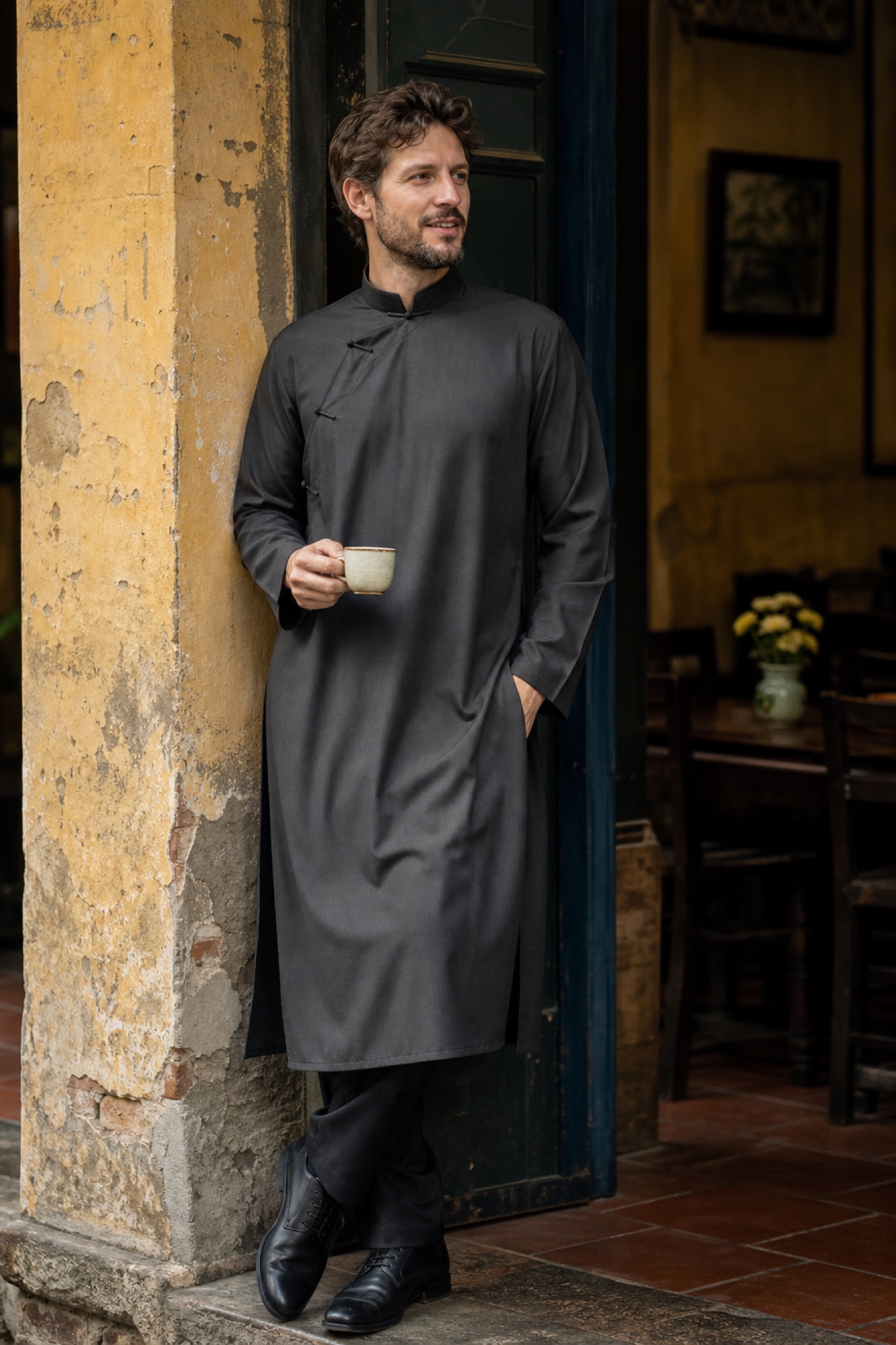
Which Vietnam regions have rain you can actually shoot in?
North (Hanoi, Ninh Binh, Sapa): Dec–Feb brings cool drizzle and grey skies—ideal for moody, diffused light. Showers are brief and mild. Mist sits over Trang An boats and rice terraces, softening distance and creating depth.
Central coast (Hoi An, Da Nang, Hue, Quy Nhon): Feb–Aug is driest, but Feb–Mar can have light morning mist—beautiful for lantern-lit Hoi An shots. Sep–Dec is typhoon season; avoid Oct–Nov.
South (Ho Chi Minh City, Mekong Delta, Vung Tau): May–Nov is wet; brief afternoon downpours cool the air but don't stop shoots if you plan covered locations (hotel interiors, market arcades, temple porches). Dec–Apr is dry but very humid.
For Hoi An shoots, ask us on WhatsApp for seasonal windows and team availability.
Misty mornings beat heavy rain. Book in Dec–Feb (north) or Feb–Mar (central) for soft, cool light that flatters the ao dai without drenching it.
Can you reschedule if the weather forecast changes?
Yes, but timing matters. If rain is forecasted within 24 hours of your shoot, confirm with Cáo Studio whether to proceed or shift dates. A one-team studio (photographer, hair, makeup) can pivot faster than booking separate vendors—everyone moves together to a backup location or reschedules as one unit. Moving a shoot costs less in logistics than coordinating three separate vendors on a new day.
Always ask about the reschedule policy before booking. Tropical downpours (May–Sep) are less predictable; if you're booking then, expect a longer forecast window and plan flexibility into your travel dates. Misty drizzle (Dec–Mar) rarely cancels; heavy, wind-driven rain does.
What do you wear under an ao dai for a wet-weather shoot?
Wet fabric clings, so foundation layers matter. Wear a thin, fitted tank or bra top—nothing loose that will show through or bunch when the tunic gets damp. Cotton or microfiber dries slower than silk linings, so choose breathable, quick-dry material if you're shooting in genuine rain. The trousers should fit smoothly at the waist (wet fabric shifts) and be long enough that they don't ride up when water adds weight at the hem.
Avoid heavy jewelry that might rust or tarnish. Makeup should be waterproof—not just "long-wear." Ask your hair and makeup artist (or Cáo Studio, if you're booking their makeup & hair service) to use waterproof concealer, brows and mascara. Wet hair needs extra grip in pins; mist-proof bobby pins and heavier-hold products work better than light mousses.
Ao dai rain shoots: how do they compare to clear-weather sessions?
| Condition | Best for | Light & mood | Prep & pacing | When to book |
|---|---|---|---|---|
| Light drizzle / mist | Moody, intimate, film-like frames | Soft diffusion, no harsh shadows, muted colours deepen | 15–20 min longer; backup covered spot; waterproof makeup | Dec–Feb (north), Feb–Mar (central) |
| Clear, bright sun | High-contrast, crisp detail, saturated ao dai colour | Sharp shadows, sun flare, golden hour glow | Standard pacing; open-air freedom; simpler touch-ups | Year-round, avoid midday UV |
| Overcast (no rain) | Balanced, editorial light | Even, cool tones, no glare | Fast setup; minimal shadow management | Any season with grey skies |
| Heavy rain / typhoon | Very risky; avoid | Soaked fabric, unsafe footing, fast makeup melt, crew safety | Cancellation likely; rescheduling costs | Oct–Nov (south & central); May–Sep (avoid if possible) |
Light drizzle suits storytelling—walking, turning, interacting—because soft light rewards motion. Clear sun rewards stillness and dramatic framing. Overcast is fastest; rain demands patience and covered fallback.
What to check before booking a rain-season ao dai shoot
- Fabric choice: Ask Cáo Studio which ao dai weights work in damp conditions. Confirm it's been tested (not new, not untried on film).
- Forecast window: Book with a studio that checks 24 hours out, not a week ahead. Weather swings in Vietnam; a 7-day forecast is speculation.
- Covered locations included: Confirm backup spots are scouted and ready—hotel lobbies, temple porches, market arcades. Visit them beforehand if you can.
- Makeup durability: Ask if the makeup artist uses waterproof products and how touch-ups work mid-shoot (faster in covered spots, slower in open rain).
- One-team model: A single crew (photographer, makeup, hair, stylist) reschedules or adapts as one. Three separate vendors = three separate cancellation conversations.
- Hair pinning: Rain and mist loosen formal updos. Confirm the artist will use heavier-hold products and extra pins.
- Timing flexibility: Book with buffer days if rain is forecast. Avoid booking rain-season shoots on your last day in Vietnam.
- Reschedule terms: Read or ask about the policy before money is committed. Know what "weather cancellation" means (full reschedule, partial credit, etc.).
---
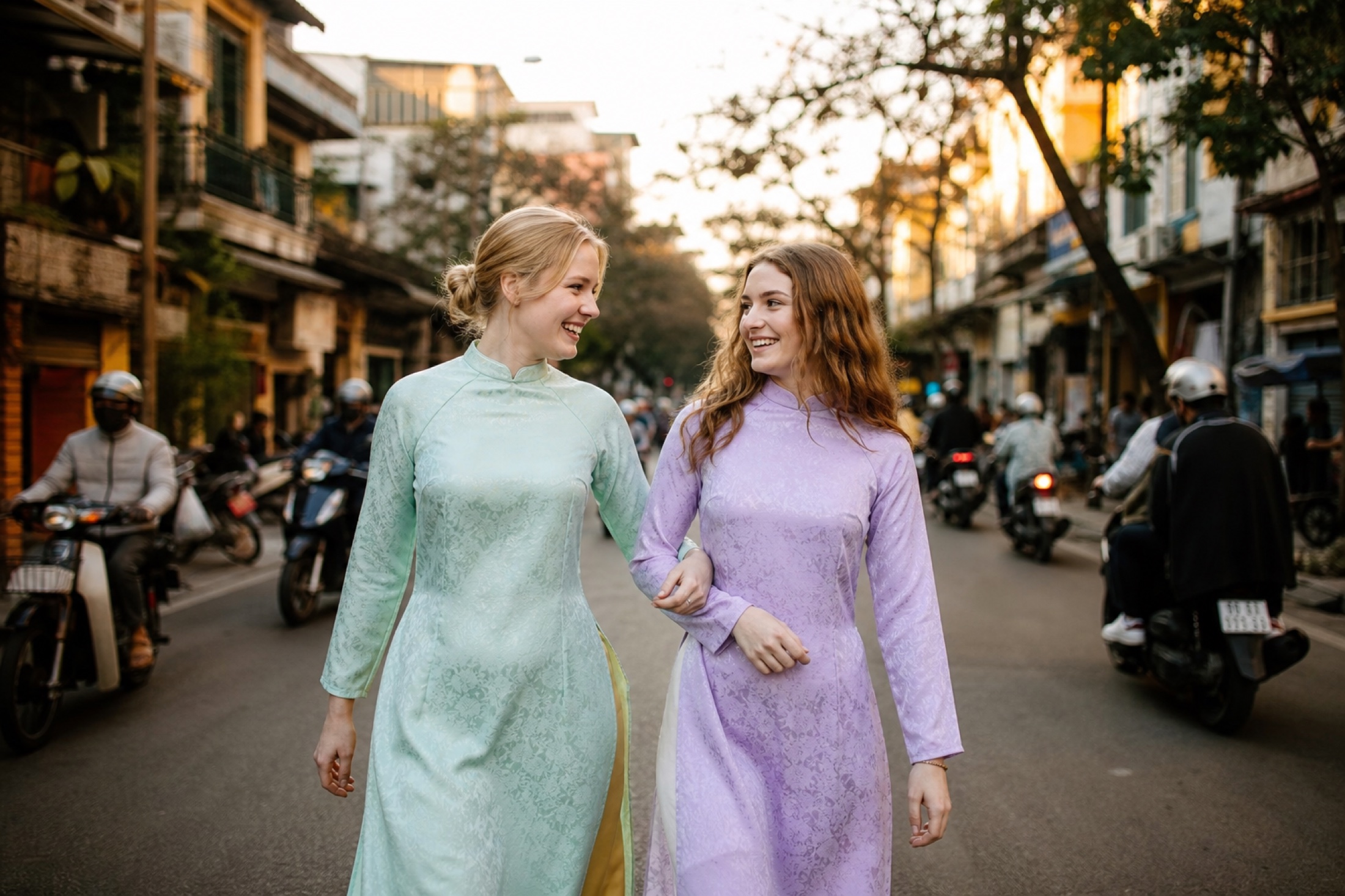
Why shoot ao dai in rain at all?
Wet fabric photographs richer. The ao dai's silk, brocade or cotton reads deeper in colour, finer in texture when damp light hits it. Rain removes the "perfect sunny day" cliché and invites genuine, quiet moments—looking at each other, walking out of frame, pausing under an eave—instead of smiling-at-camera poses. Misty mornings in Hanoi's Old Quarter or central Vietnam's lantern towns feel like you've stepped into the frame, not posed in front of a backdrop. For travellers seeking frames that feel lived-in rather than performed, rain is often the mood.
---
How does Cáo Studio run a rain-day ao dai shoot?
Confirmation happens 24 hours before. If forecast is ≤drizzle, the shoot proceeds as planned with a covered secondary location scouted (a temple entrance in Hoi An, a hotel lobby in Hanoi, a market arcade in Saigon). If heavy rain is predicted, the team offers a reschedule to the next clear-weather window within your travel window. Hair and makeup happen indoors (at your hotel or the studio's makeup & hair service offers this). The photographer arrives with the stylist and one ao dai (or two, if you're changing outfits); they shoot first in covered light, then move outdoors if drizzle permits. Wet shots are captured last, so makeup is fresher. Editing emphasizes the film-like, diffused tones—no heavy brightness correction that flattens the mood.
All photos are delivered edited within 48 hours, plus a short vertical film reel. Fabric and framing adapt; the one-team structure keeps logistics simple.
---
Where to shoot ao dai in rain across Vietnam
Hanoi: Huc Bridge at 6 am, before crowds and when mist rises off the water—soft side light, no glare. Red River embankments in drizzle. Old Quarter temple courtyards (covered entry, open courtyard beyond). Lake shores for reflections.
Ho Chi Minh City: Ben Thanh Market exterior in early morning light. Nguyen Hue Walking Street when wet (reflections amplify neon). Jade Emperor Pagoda's covered halls and courtyards. Saigon River embankments (Bitexco area) in mist.
Hoi An (by appointment): Japanese Covered Bridge in soft morning light, water beneath. Lantern-lit streets after dawn rain (puddles hold reflections). Assembly Hall courtyards. Riverside paths. Ask on WhatsApp for Hoi An dates and travel logistics.
Learn more about our Hanoi shoots, Saigon sessions, and Hoi An by appointment.
---
Real logistics: what actually slows down a rain shoot
Setup: Moisture on the ao dai hem and trousers means longer drying time between outfit changes. A light microfiber cloth is always in the crew's bag.
Makeup touch-ups: Waterproof products don't guarantee zero melt; humidity still affects powder. Allow 5 min more for mid-shoot retouches than a dry-day shoot.
Footwear: Wet pavement is slippery in sandals or heels. Cáo Studio books rain shoots knowing this; covered, textured-ground locations are prioritized. Walk, don't run.
Hair grip: Humidity loosens pins. Pin-setting happens just before the shoot, not hours before.
Crew comfort: A light rain jacket for the photographer keeps hands dry and camera safe. The ao dai isn't weatherproofed, so drizzle is the limit; downpour = reschedule.
Light window: Overcast and rain don't last long in dry-season mornings (Feb–Mar, Dec). Shoot early, finish by 9 am if possible.
---
How to decide: rain shoot, or wait for clear skies?
Choose a rain shoot if:
- You want moody, intimate frames over crisp, high-contrast ones.
- Your travel dates are fixed and rain-season timing is unavoidable.
- You prefer film-like, diffused aesthetics and quiet moments.
- You're booking with a one-team studio (faster adaptation, one rescheduling conversation).
Wait for clear skies if:
- You want saturated ao dai colours and sharp detail.
- You're flexible on dates and can wait 2–3 days for a weather window.
- You're booking separate vendors (harder to coordinate reschedules across teams).
- You're uncomfortable with wet fabric and makeup durability unknowns.
Book with Cáo Studio if you're unsure: The team scouts conditions 24 hours before and will recommend proceed or reschedule. One conversation, one decision, one crew.
📸 Book on WhatsApp — ao dai photoshoot
---
FAQ
Will my ao dai be ruined if it gets rained on during a photoshoot?
No. Light rain and mist don't damage silk or brocade. Fabric dries within hours if hung flat. Dye doesn't bleed in traditional Vietnamese ao dai (colour-fast). Heavy downpours can over-saturate seams; avoid Oct–Nov typhoon season. Confirm fabric quality with Cáo Studio before booking.
Do I need waterproof makeup for a rain shoot, or just "long-wear"?
Waterproof is essential. "Long-wear" fails in mist and humidity. Ask your makeup artist (or Cáo Studio's makeup & hair service) to use waterproof mascara, concealer, and brow product. Test at home first if you have sensitive skin; waterproof formulas can be drying.
What's the best time of year to book an ao dai rain shoot in Vietnam?
Dec–Feb in Hanoi (cool drizzle, soft mist), Feb–Aug in central coast (light morning rain, driest season overall), avoid Oct–Nov nationwide (heavy typhoons). Book 3–4 weeks ahead and confirm the forecast 24 hours before.
If it rains heavily on my shoot day, can I reschedule for free?
Ask Cáo Studio about reschedule policy before booking. Most studios allow one free reschedule if heavy rain forces cancellation. Light drizzle doesn't cancel; downpour does. Confirm what counts as "cancellation weather" in your booking conversation on WhatsApp.
Can I wear my own ao dai for a rain shoot, or should I rent one?
You can wear your own if it's fit-tested and fabric is known (not new). Renting guarantees the studio has pre-tested fabrics for wet conditions. Cáo Studio offers ao dai rental; ask about rain-ready fabrics when you inquire.
How long does a rain shoot take compared to a clear-day session?
Rain adds 15–20 minutes for drying fabric, makeup touch-ups, and covered-location transitions. Total time depends on your package; ask Cáo Studio on WhatsApp for exact timing and how many outfits fit within your session.
Do I need a permit or permission to shoot ao dai in temples or covered markets during rain?
Temple courtyards may require entry fees (check the site locally). Covered markets are public; no permit needed. Cáo Studio scouts locations beforehand and handles permission logistics. Confirm which locations are included in your shoot plan. ===
FAQ
Will my ao dai be ruined if it gets rained on during a photoshoot?
No. Light rain and mist don't damage silk or brocade. Fabric dries within hours if hung flat. Dye doesn't bleed in traditional Vietnamese ao dai (colour-fast). Heavy downpours can over-saturate seams; avoid Oct–Nov typhoon season. Confirm fabric quality with Cáo Studio before booking.
Do I need waterproof makeup for a rain shoot, or just "long-wear"?
Waterproof is essential. "Long-wear" fails in mist and humidity. Ask your makeup artist (or Cáo Studio's [makeup & hair service](/makeup-and-hair)) to use waterproof mascara, concealer, and brow product. Test at home first if you have sensitive skin; waterproof formulas can be drying.
What's the best time of year to book an ao dai rain shoot in Vietnam?
Dec–Feb in Hanoi (cool drizzle, soft mist), Feb–Aug in central coast (light morning rain, driest season overall), avoid Oct–Nov nationwide (heavy typhoons). Book 3–4 weeks ahead and confirm the forecast 24 hours before.
If it rains heavily on my shoot day, can I reschedule for free?
Ask Cáo Studio about reschedule policy before booking. Most studios allow one free reschedule if heavy rain forces cancellation. Light drizzle doesn't cancel; downpour does. Confirm what counts as "cancellation weather" in your booking conversation on WhatsApp.
Can I wear my own ao dai for a rain shoot, or should I rent one?
You can wear your own if it's fit-tested and fabric is known (not new). Renting guarantees the studio has pre-tested fabrics for wet conditions. Cáo Studio offers [ao dai rental](/ao-dai-rental); ask about rain-ready fabrics when you inquire.
How long does a rain shoot take compared to a clear-day session?
Rain adds 15–20 minutes for drying fabric, makeup touch-ups, and covered-location transitions. Total time depends on your package; ask Cáo Studio on WhatsApp for exact timing and how many outfits fit within your session.
Do I need a permit or permission to shoot ao dai in temples or covered markets during rain?
Temple courtyards may require entry fees (check the site locally). Covered markets are public; no permit needed. Cáo Studio scouts locations beforehand and handles permission logistics. Confirm which locations are included in your shoot plan. ===
Ao dai, makeup, hair and a local photographer in Hanoi or Saigon — one WhatsApp message.