services/ao-dai-photoshoot
Ao Dai Poses for Beginners: What Actually Works on Camera
Why Pose Practice Beats "Just Be Natural" in Ao Dai
Most beginners freeze because ao dai is formal—it demands intentional posture. "Just be natural" leaves you stiff, slouched, or unsure where your hands go. Practiced poses train your body memory. When the camera fires, you're not thinking; you're channeling a framework you've rehearsed. Cáo Studio's lookbook shows real clients, not models. Notice how every pose follows one rule: spine elongated, shoulders relaxed, chin micro-tilted down. That's it. Master that, and every angle works.
📸 Book on WhatsApp — ao dai photoshoot
Which Pose Type Matches Your Body and Comfort Level?
Ao dai poses aren't one-size-fit-all. Your build, confidence, and the session's mood shape what works.
| Pose Type | Best For | Comfort Level | Why It Works |
|---|---|---|---|
| Seated (chair/stool) | Petite frames, broad shoulders, first-timers | Easiest—legs supported, core engaged | Hides thighs, elongates neck, relaxes face |
| Seated (floor/cushion) | Hourglass, pear shapes, romantic mood | Medium—requires core strength | Shows ao dai's flow, intimate framing |
| Standing still (three-quarter) | Apple, rectangle shapes, confident posers | Medium—balance and posture key | Most versatile, works for all angles |
| Standing still (profile) | All shapes, showcasing ao dai detail | Medium—hip placement crucial | Highlights embroidery, silhouette elegance |
| Walking/movement | Athletic builds, outdoor sessions | Hardest—timing + stride sync | Creates storytelling, natural energy |
Start with seated. If you love the session, try standing. Walking poses are a bonus, not a must. See how Cáo Studio's team guides beginners through each phase.
The 7 Poses Every Beginner Should Know (And Practice)
Seated Poses (3)
Pose 1: The Angled Sit Sit on a low stool or chair. Turn your torso 45° away from the camera. Rest one hand on your lap, the other on your opposite knee. Chin forward, not down. This angle elongates your neck and hides arm width.
Pose 2: The Cross-Legged Floor Sit Kneel or sit cross-legged on a cushion. Straighten your spine. Rest hands palms-down on your thighs. Lean slightly forward—this engages your core and softens your face. Perfect for intimate shots, temple grounds, or couple sessions.
Pose 3: The Lean-and-Gaze Sit facing the camera. Lean slightly back, rest weight on your hands behind you. Gaze down or sideways. This pose opens the chest and makes ao dai fabric drape naturally. Vulnerable-looking but photogenic.
Standing Poses (3)
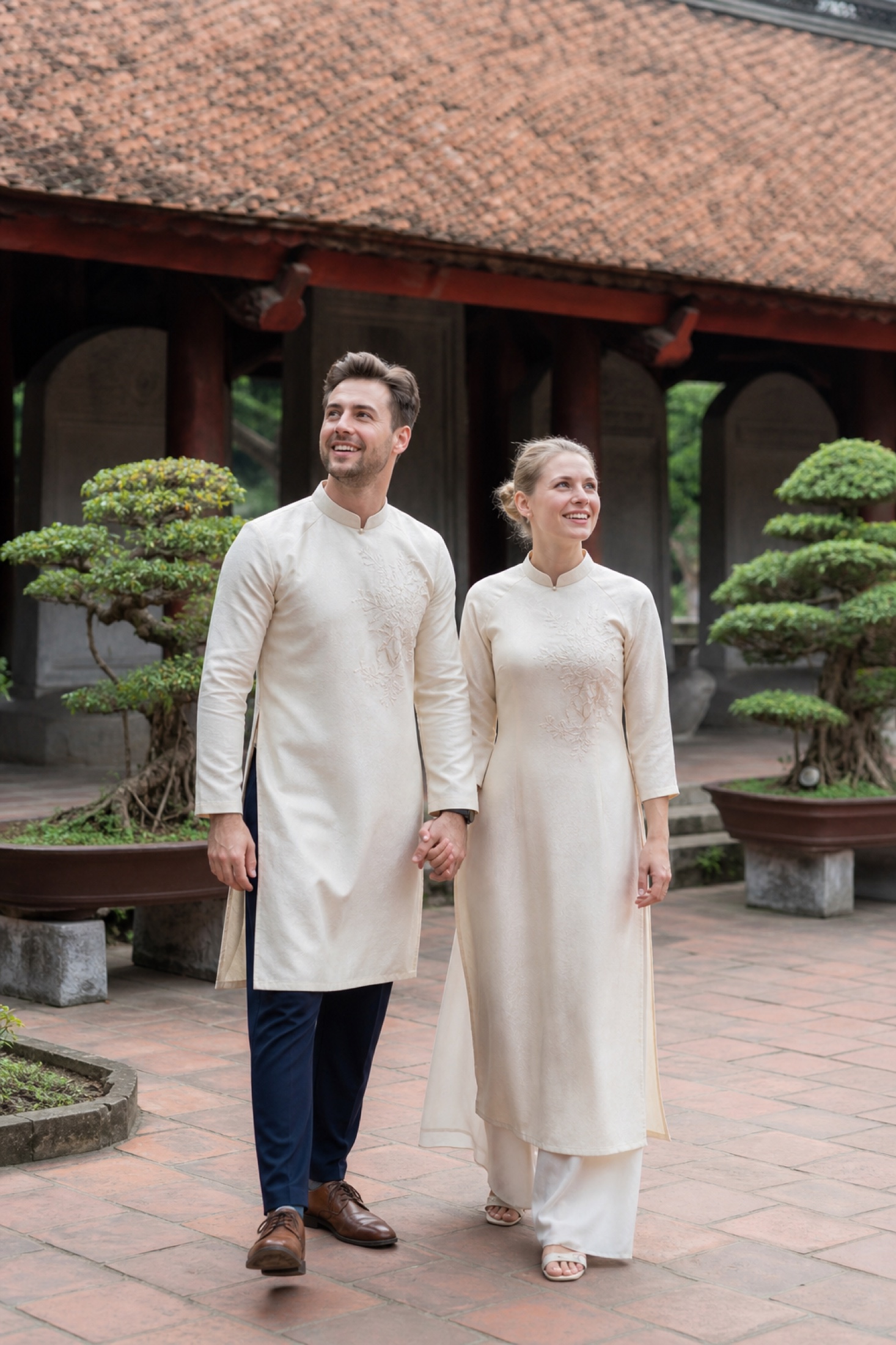
Pose 4: The Three-Quarter Stand (Beginner's Anchor) Feet hip-width apart. Shift weight to one leg; let the other knee bend slightly. Rotate hips 45° from camera. One hand rests on your hip or thigh; the other hangs naturally. This is the safest standing pose. It works at 90° or 45° angles.
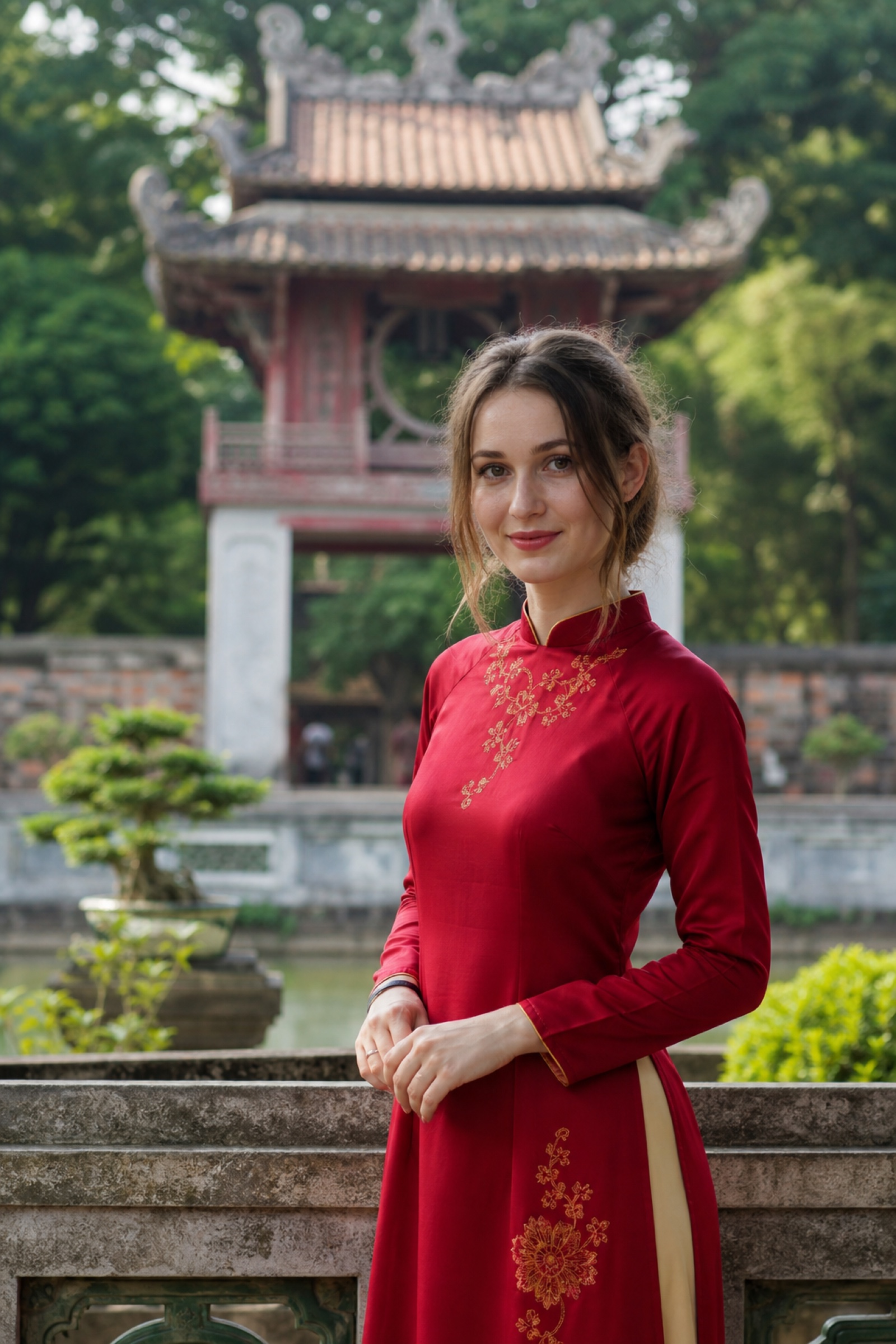
Pose 5: The Profile Glance Stand sideways to camera. Feet staggered (one forward). Shoulders back. Turn your head slightly toward camera or let it face sideways completely. This pose showcases embroidery detail and creates editorial polish. Requires confidence but delivers impact.
Pose 6: The Asymmetrical Stand Stand facing the camera. Feet together or staggered. Shift weight fully to one leg. Tilt your pelvis; let the non-weight-bearing hip drop slightly. One arm angles across your body; the other hangs. This pose works for outdoor sessions and adds visual interest.
Movement Poses (1)
Pose 7: The Slow Walk Walk toward or away from camera at 50% speed. Focus on your walking posture, not the camera. Heel-to-toe, arms swinging naturally. Photographers shoot in bursts; one frame will be perfect. Save this for your second or third shoot when you're warmed up.
What to Practice in Your Mirror Before the Session
Spend 10 minutes at home doing this:
- Walk in ao dai (borrow one or wear a long skirt). Notice your stride. Does your knee lift too high? Do your elbows swing? Adjust.
- Sit and reset your posture. Spine straight, shoulders down, chin parallel to ground. Feel the difference between slouching and engaging.
- Practice the shoulder roll. Lift shoulders to ears, roll them back and down. Do this twice before each pose—it resets tension.
- Check your hands. In a mirror, see where your hands naturally fall in each pose. Awkward placement kills photos. Adjust before the session.
- Test your angles. Take a selfie from three angles—straight-on, 45°, profile. Notice which feels most like "you." Share these references with your photographer.
Your photographer will direct you during the shoot, but familiarity breeds confidence. A client who's practiced walks in 30% more relaxed than one who wings it.
How Session Length Affects Pose Variety and Your Outcome
Pose variety depends on session duration. Here's what to expect:
- 30-minute session: 1–2 poses, one location. Best for solo ao dai shots or couple portraits. You won't feel rushed, but there's no time to warm up into movement.
- 60-minute session: 3–4 poses, two locations, possible walking shots. This is where beginners thrive. You have time to build confidence, and your photographer can guide you through seated, standing, and one movement phase.
- 90-minute+ session: All 7 poses, three+ locations, multiple outfit changes. Gives you editorial-style variety. Your body becomes camera-aware. Best if you're doing couple sessions, pre-wedding shoots, or multiple ao dai colors.
Cáo Studio's booking options start at 30 minutes. If you're unsure, choose 60; it's the sweet spot for beginners. Ask on WhatsApp which session length your photographer recommends for your body type and goals.
Common Pose Mistakes Beginners Make (And How to Avoid Them)
Mistake 1: Tensing your shoulders. Fix: Before every pose, drop your shoulders twice. Breathe.
Mistake 2: Staring at the camera. Fix: Look past it, down, or sideways. Your gaze matters more than your stare.
Mistake 3: Keeping your hands stiff or small. Fix: Make deliberate hand placements (lap, hip, thigh, across body). Small hands look tense.
Mistake 4: Forgetting about your back. Fix: Imagine a string pulling your head toward the ceiling. This elongates your neck and spine.
Mistake 5: Sitting on your full glute. Fix: Perch 70% on your sit bones. Lean forward slightly. This engages your core and sharpens your jawline.
Mistake 6: Choosing awkward locations. Fix: Flat, neutral backgrounds suit beginners. Busy textures distract. Cáo Studio shoots in studios (controlled light, clean backdrops) or curated outdoor sites. Ask your photographer which location matches your comfort level.
What to Check Before You Book: A Beginner's Pre-Shoot Checklist
Before you commit, confirm these details:
- Do I need my own ao dai, or can I rent? Most sessions assume you own one. Cáo Studio can recommend local ao dai makers or tailors (ask on WhatsApp). Budget 4–6 weeks if custom-made; 1–2 weeks if renting locally.
- Does the session include makeup and hair? Base packages usually don't. Add makeup & hair at your hotel separately, or book a full service. Pro tip: professional makeup costs less than it looks and lifts every photo.
- What's the cancellation policy? Check your booking confirmation. Weather happens. Know your options.
- Will the photographer give me direction or expect me to "know" poses? Cáo Studio's photographers guide you every step. Confirm this with your photographer before the session.
- How many edited photos do I get? Ask your booking coordinator. Typical packages: 20–50 edited images, delivered within 5–10 days (online gallery + USB or cloud link).
- What's the payment and booking process? Cáo Studio operates via WhatsApp quotes and coordination. No upfront payment until you confirm. Transparent pricing—ask anything.
Don't overthink booking. A good photographer makes beginners feel safe. If your photographer listens to your vision and answers questions, you're in good hands.
Ready to Pose? Book Your Ao Dai Session
Now you know the poses. The next step is practice and a photographer who gets it. Cáo Studio – Makeup & Photoshoot specializes in coaching beginners through every angle. We operate in Hanoi, Saigon, and Hoi An (by appointment—ask on WhatsApp for Hoi An dates).
Your first ao dai photo should feel like you, not like you're performing. That happens when you're prepared, supported, and shooting with someone who knows how to light and frame an ao dai beautifully. Choose your session length, pick a date, and message us on WhatsApp.
📸 Book on WhatsApp — ao dai photoshoot
FAQ
Do I need to know poses before I book, or does the photographer teach me?
Your photographer will guide you on the day. But 10 minutes of mirror practice at home (as above) halves your on-camera anxiety and gives you 30% better results. It's optional but powerful.
What if I'm shy or uncomfortable in front of the camera?
Seated poses and close-ups are your friends. Seated feels less exposed. Ask your photographer to shoot at 85mm or longer focal lengths (these are more flattering). Many beginners request no full-body standing shots for their first session. That's totally fine. Cáo Studio adapts to your comfort.
Can I wear a modern (non-traditional) ao dai, or does it have to be classic?
Both work beautifully. Modern, minimalist ao dai photograph differently than embroidered traditional ones—more editorial, less romantic. Choose what feels like you. Your photographer will pose and light it accordingly.
How many poses should I do in a 60-minute session?
Typically 3–4 distinct poses across two locations. But "pose" can mean one setup with 20 frames shot. You might sit once, stand once, and walk once—that's three poses, 50+ images, all worth editing and printing.
What if I hate how I look in the previews?
Speak up immediately. Your photographer can reshoot or adjust the next session's approach. Most "bad" photos are fixable in editing or by tweaking posture/angle. Cáo Studio offers feedback sessions—see the photos together and refine what works for your body.
Should I book a couple session or solo ao dai session if I'm bringing a partner?
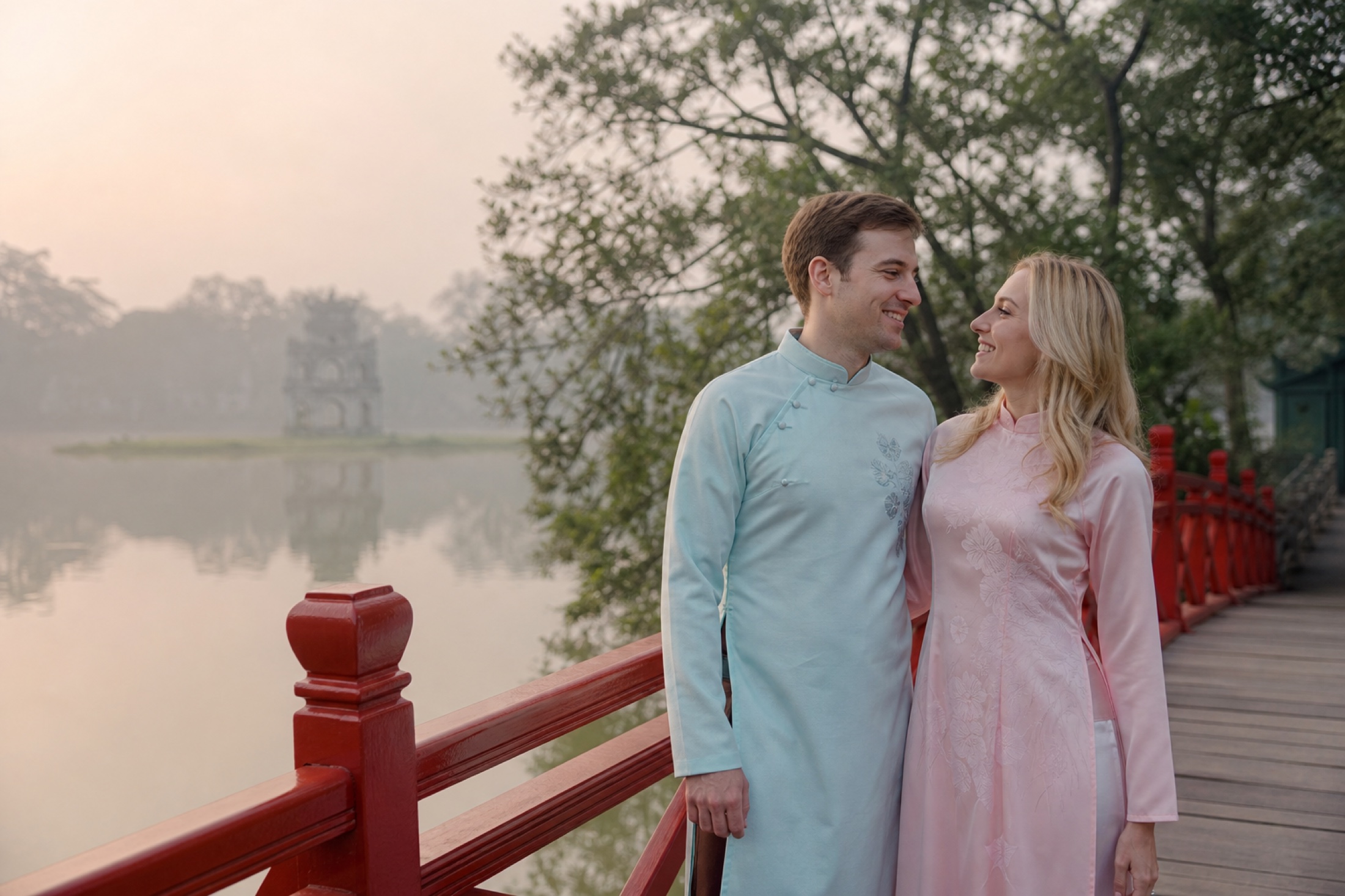
Different goals. Solo sessions (this article's focus) center you and your posing. Couple sessions blend two people's poses and energy. If you both want to be featured equally, book a couple session. If one person wears ao dai and the other supports, a 90-minute combo works—solo poses first, then couple shots.
FAQ
Do I need to know poses before I book, or does the photographer teach me?
Your photographer will guide you on the day. But 10 minutes of mirror practice at home (as above) halves your on-camera anxiety and gives you 30% better results. It's optional but powerful.
What if I'm shy or uncomfortable in front of the camera?
Seated poses and close-ups are your friends. Seated feels less exposed. Ask your photographer to shoot at 85mm or longer focal lengths (these are more flattering). Many beginners request no full-body standing shots for their first session. That's totally fine. Cáo Studio adapts to your comfort.
Can I wear a modern (non-traditional) ao dai, or does it have to be classic?
Both work beautifully. Modern, minimalist ao dai photograph differently than embroidered traditional ones—more editorial, less romantic. Choose what feels like you. Your photographer will pose and light it accordingly.
How many poses should I do in a 60-minute session?
Typically 3–4 distinct poses across two locations. But "pose" can mean one setup with 20 frames shot. You might sit once, stand once, and walk once—that's three poses, 50+ images, all worth editing and printing.
What if I hate how I look in the previews?
Speak up immediately. Your photographer can reshoot or adjust the next session's approach. Most "bad" photos are fixable in editing or by tweaking posture/angle. Cáo Studio offers feedback sessions—see the photos together and refine what works for your body.
Should I book a couple session or solo ao dai session if I'm bringing a partner?
Different goals. Solo sessions (this article's focus) center *you* and your posing. [Couple sessions](/services/couple-photoshoot) blend two people's poses and energy. If you both want to be featured equally, book a couple session. If one person wears ao dai and the other supports, a 90-minute combo works—solo poses first, then couple shots.
Ao dai, makeup, hair and a local photographer in Hanoi or Saigon — one WhatsApp message.