/ao-dai-photoshoot
Ao Dai Wedding Photos at Ba Na Hills French Village
Ba Na Hills French Village sits 1,400 meters above Da Nang in central Vietnam's cool, misty climate—ideal for ao dai's flowing silk but challenging for light and crowds. Morning shoots (first cable car up, ideally before 8 a.m.) capture softer, fog-filtered light and fewer tourists; afternoons bring thick clouds and 300+ daily visitors. A session typically runs 2–3 hours including travel from Da Nang (40 minutes by car each way), outfit changes, and makeup touch-ups. Cáo Studio – Makeup & Photoshoot does not operate at Ba Na Hills—it's based in Hanoi, Ho Chi Minh City, and Hoi An—but this guide helps you find and vet a local Da Nang photographer, plan light windows, and choose outfits that read well in mist. Cable-car fees and entrance tickets are required; check the official Ba Na Hills website for current prices. 📸 Book on WhatsApp — ao dai photoshoot ---
What makes Ba Na Hills special for ao dai photography?
Ba Na Hills' narrow stone lanes, yellow-and-cream colonial villas, and French ironwork create a distinctly European backdrop—unusual in Vietnam and visually striking against traditional red ao dai or neutral silk tones. The mountain's constant cloud cover diffuses harsh midday sun, meaning your skin and fabric texture read clearly in photos without blown highlights. However, that same fog obscures distant views and compresses depth, so compositions must rely on architectural framing and close detail work (embroidery, jewelry, fabric folds) rather than sweeping landscape vistas. Most couples choose Ba Na for the intimate scale and romantic European aesthetic; fewer pursue it for expansive scenery. The trade-off: you're paying cable-car and entrance fees for a compact 2–3 km walkable area, and you share that space with 200–400 tourists daily, especially 9 a.m.–5 p.m.
---
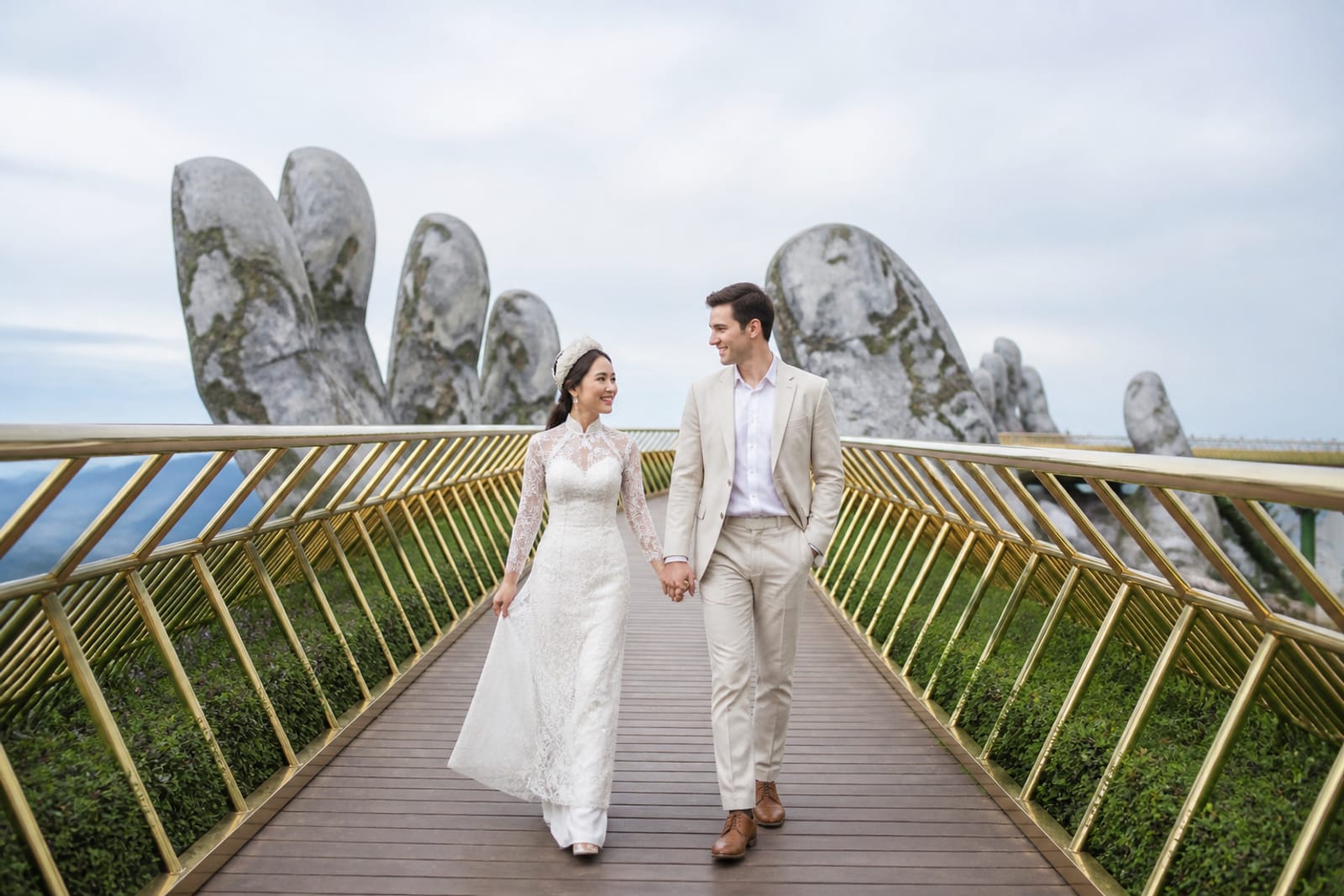
When is the best time of day to shoot at Ba Na Hills?
First cable car (ideally 7:30 or 8 a.m. opening) through 10 a.m.: Light is softest, fog is often thin and atmospheric rather than opaque, and you'll see fewer than 50 tourists. This is the golden window—go here. After 10 a.m., fog thickens, crowds swell, and selfie-stick tourists fill every lane. Sunset (late afternoon) can work if you're still on-site, but mountain clouds often obscure the sun by 4 p.m., leaving flat, grey light unsuitable for detail. Your photographer must coordinate transport and cable-car tickets in advance; late arrivals forfeit the best 2-hour window. If you're traveling from Ho Chi Minh City or beyond, book a dawn pickup from your hotel and expect 2+ hours of driving before you step off the cable car.
---
How do you choose between a local Da Nang photographer and traveling to Hanoi or Hoi An?
| Option | Best for | Light & season | Why it works |
|---|---|---|---|
| Local Da Nang photographer (freelance or studio) | Tight budget, morning-only session, minimal travel | Feb–Aug; early morning only (before 10 a.m.) | Knows terrain, no travel delays, handles cable-car logistics locally. Find via Instagram hashtags #danangphotographer or local wedding forums; request portfolio samples at Ba Na specifically. |
| Cáo Studio Hoi An team (30 km south, appointment-based) | Couples who want styled prep, makeup, and extended session | Feb–Aug; full-day option with hotel pickup | Studio handles transport, makeup touch-ups on-site, and backup indoor locations in Hoi An's Ancient Town if weather closes Ba Na (rare but possible in Oct–Nov). Ask on WhatsApp for Hoi An dates and Ba Na Hills add-on feasibility. |
| Hanoi-based studio (4+ hours driving) | Couples seeking premium styling and video | Feb–Aug | Travel time is steep; only justified if you're bundling Ba Na with other Da Nang locations (My Khe beach, Hoi An). |
Local Da Nang photographers are fastest and cheapest; Cáo Studio's Hoi An team (30 km away) offers styling and backup venues. Neither option includes post-session makeup or custom albums—confirm those separately.
---
What should you wear under your ao dai at Ba Na Hills?
Ba Na's 1,400-meter altitude means 8–12°C cooler than Da Nang city—often 15–20°C even in summer. Wear thin, stretchy leggings under your ao dai (lightweight cotton or seamless); avoid thick thermal wear, which bulges visibly. If you're in a traditional split-front ao dai, nude or black slip shorts prevent wardrobe mishaps on narrow stone stairs. Bring a lightweight shawl or thin cardigan for non-shoot moments (cable-car queues, walking between locations); fog doesn't require heavy outerwear. Footwear matters: stone paths are wet and uneven; choose flat, gripped soles (not heels or slippery satin). If you're doing a couple photoshoot with your partner in a groom's suit or second outfit, he'll also appreciate that the cool air reduces sweating under formal layers. Pack a small towel or blotting papers for makeup resets between outfits.
---
How do you avoid crowds and still capture architectural detail?
Arrive at first cable-car opening (7:30–8 a.m.) and shoot the main landmarks (yellow villas, French church, central square) by 9:30 a.m. After that, crowds multiply and consistent framing becomes difficult. Request your photographer prioritize detail shots (your ao dai's embroidery against stone walls, jewelry in window light, close fabric textures) during the first hour; save full-length, wider shots for the less-crowded 9–10 a.m. window. Many photographers rush wide shots first, then scramble for detail photos as crowds peak—reverse this order. If your session runs 3 hours and includes travel, you'll spend ~45 minutes on cable car and driving, leaving ~2.5 hours on-site: 90 minutes in the first-light window, 60 minutes in the secondary (9:30–10:30 a.m.) window. Discuss this timeline with your photographer before booking; vague session descriptions ("3 hours at Ba Na Hills") often mean chaotic, crowd-dodging photography. Ask for a shot list and confirm cable-car departure time in writing.
---
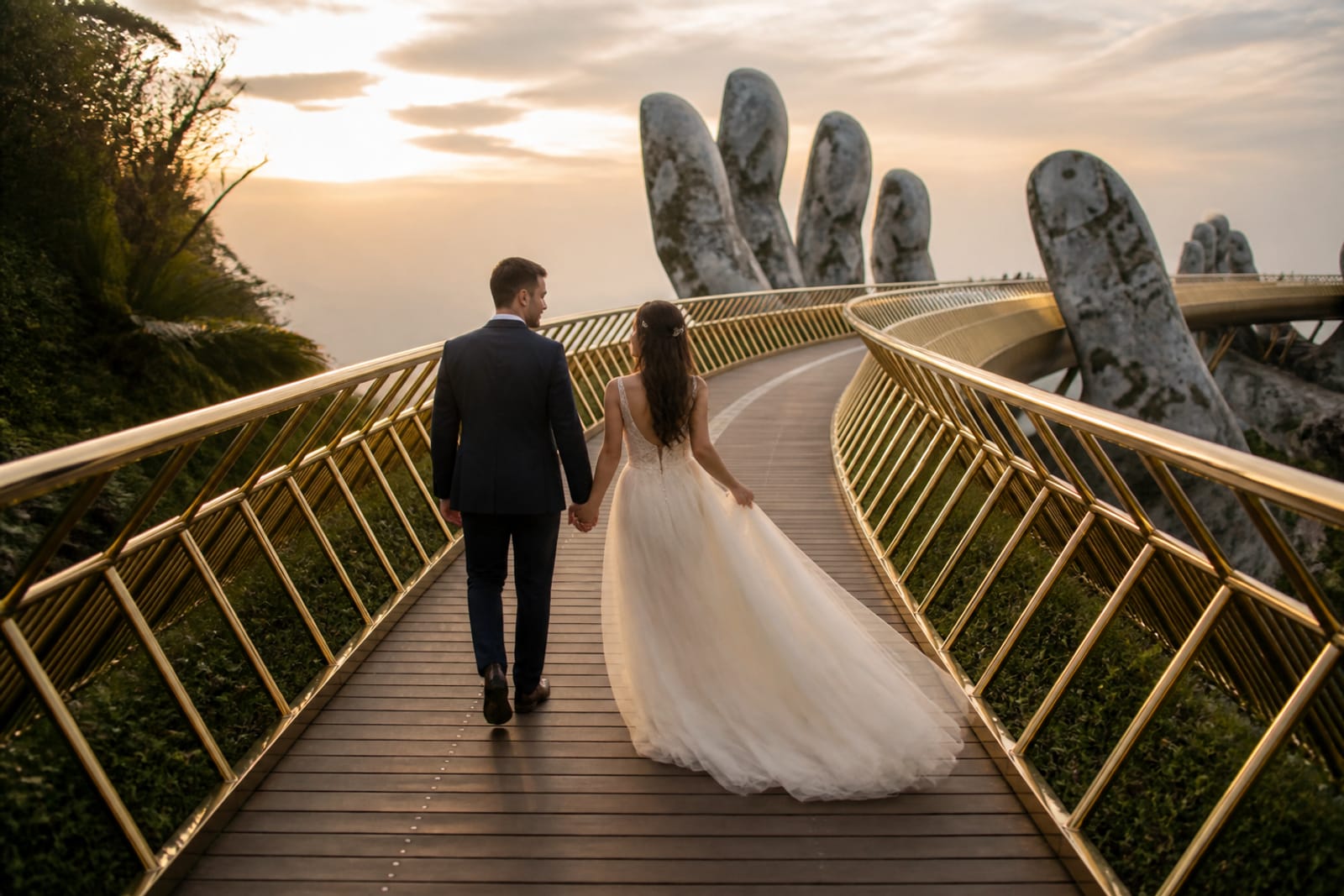
What's the cost framework for a Ba Na Hills ao dai session?
Session cost depends on: travel time (local Da Nang photographer = lower, Hoi An studio = moderate), timing (dawn sessions cost more due to early logistics), number of outfits (extra ao dai = longer on-site duration = longer-booking tier), makeup & hair (on-site artist adds cost and travel), and post-production (edited images, albums, prints). Cable-car and entrance tickets are separate and non-refundable; check the official Ba Na Hills website for current prices. A local Da Nang freelancer may quote lower day rates than a studio, but may lack backup equipment or off-site editing. Cáo Studio quotations account for the travel factor and include styled prep; ask on WhatsApp for a specific Hoi An + Ba Na Hills proposal. Never choose by price alone—request portfolio work from Ba Na specifically; many portfolios show indoor studio or beach photos, not mountain fog or colonial architecture.
---
What if weather cancels or postpones your session?
Ba Na Hills often closes due to extreme wind or landslide risk in the rainy season (Sep–Dec, worst Oct–Nov); the central coast (Da Nang, Hoi An, Quy Nhon) experiences typhoons and flooding during this window. Shoot Feb–Aug for reliable access. If fog thickens unexpectedly on your session day, you can't reschedule cable cars on the spot; most photographers pivot to detail shots, close-up poses, and secondary indoor locations (the church, French-style mansion interiors). Ask your photographer in advance: "If weather forces short on-site time, do we get a reshoot day included?" Some studios offer one free reshoot within 90 days if weather cut your original session short; others charge rescheduling as a new booking. Get this in writing before you book. If you're traveling internationally and only have one week in Da Nang, build in a buffer day or book a backup indoor location (hotel suite, Hoi An Ancient Town) with your photographer so you're not stranded if Ba Na Hills closes. Cáo Studio's Hoi An team can recommend covered backup venues—ask on WhatsApp.
---
What should you bring on shoot day?
- Identification & cable-car tickets: Confirm entry requirements with Ba Na Hills in advance (valid passport often required for foreign nationals at mountain attractions; process can be slow).
- Touch-up kit: Blotting papers, compact powder, lip color, a small mirror. Fog doesn't cause as much sweat as beaches, but sitting in cable-car warmth then stepping into cool air can cause condensation on skin.
- Backup footwear: Flat shoes for walking between locations; heels for posed shots if desired (photographer can help you change between poses).
- Layers: Lightweight cardigan or shawl—essential for cable-car queues and non-shoot waiting time.
- Phone & charger: Your photographer may request to sync images or communicate with assistants; low battery compromises flexibility.
- Backup ao dai or second outfit: If your budget includes two outfits (as in many couple photoshoots or pre-wedding sessions), pack both in a garment bag in your transport vehicle.
- Snacks & water: You're walking stone paths at altitude on an early start; keep hydrated and energized.
---
What to check before you book
- Portfolio specificity: Ask the photographer to show 5+ samples shot at Ba Na Hills (not other locations). Fog, colonial architecture, and crowds are distinct lighting and compositional challenges; a beautiful beach portfolio doesn't predict Ba Na competence.
- Cable-car & permit knowledge: Confirm your photographer has booked Ba Na Hills entrance many times and knows the cable-car opening times and queuing logistics. Vague answers suggest they wing it, risking delays.
- Backup plan: Get the written policy on rescheduling or makeup sessions if weather closes Ba Na Hills. Verbal promises mean nothing in a dispute.
- Timeline breakdown: Request an hour-by-hour itinerary (e.g., 7:30 a.m. hotel pickup, 8 a.m. cable car, 8:30–10:30 a.m. shoot, 10:30 a.m. cable car down, 11:30 a.m. back at hotel). Vague session descriptions = chaotic execution.
- Outfit & makeup: Clarify what's included—does your quote cover hair & makeup touch-ups on-site, or do you source a separate makeup artist? If you're doing a couple or family shoot, confirm both partners' outfit changes and styling are factored in.
- Number of edited images: Ask how many final, edited images you receive. Many photographers deliver contact sheets with 50+ selects but only edit 15–20; confirm the exact deliverable.
- Delivery timeline & format: When do you receive images (within 1 week, 2 weeks, 30 days)? Digital only, or printed album included? If you want a wedding photo album or photo prints & frames, order these as separate add-ons and confirm lead times.
---
📸 Book on WhatsApp — ao dai photoshoot
If you're in Hanoi or Ho Chi Minh City and want an ao dai shoot with a full studio team, check out Cáo Studio's offerings. For Ba Na Hills specifically, a local Da Nang photographer or Cáo Studio's Hoi An team (appointment-based) are your best options. Contact us on WhatsApp to discuss your vision and timeline.
---
FAQ
Is Ba Na Hills better for ao dai photos than Hoi An Ancient Town?
Ba Na Hills offers French colonial architecture and cool, misty light—unique in Vietnam. Hoi An Ancient Town has warmer, golden-hour light and more authentic Vietnamese architecture. Ba Na suits romantic, European aesthetics; Hoi An suits traditional Vietnamese heritage. Both require early mornings to avoid crowds. Choose Ba Na if you want drama and fog; choose Hoi An for cultural authenticity.
Can I shoot Ba Na Hills and Hoi An in one day?
Yes, if you're based in Da Nang or Hoi An. Ba Na Hills requires a 40-minute drive from Da Nang; Hoi An is 30 km south of Da Nang. A typical itinerary: dawn cable car at Ba Na (7:30–10:30 a.m.), lunch in Da Nang (1 hour), then Hoi An Ancient Town sunset shots (4–6:30 p.m.). You'll need a full-day booking (5–7 hours) and coordinated transport. Ask your photographer if they offer multi-location packages.
What if my ao dai gets wrinkled or muddy on the stone paths?
Bring a steamer or garment steamer in your transport vehicle—most photographers' assistants can refresh fabric between locations. For mud: wear protective shoe covers on walking paths and change into clean shoes for posed shots. Moisture-resistant fabrics (silk blends, poly-silk) wrinkle less than 100% silk. If you're hiring makeup & hair at your hotel before your session, confirm the stylist provides garment steaming as part of the service.
Do I need a permit or visa to visit Ba Na Hills if I'm a foreigner?
You need a valid passport for entry (per Ba Na Hills' current policy). No additional permit required for tourists. Check the official Ba Na Hills website or contact them directly for current requirements, as policies change seasonally. Your photographer should handle this information, but verify independently before your trip.
What's the ideal ao dai color for Ba Na Hills' grey, misty light?
Deep, saturated colors read best in fog: wine red, navy, emerald, rich pink, or cream. Pale pastels (light pink, pale yellow) disappear in grey light and fog. If you're wearing traditional red (most popular for weddings), ensure it's a true, rich red—not coral or salmon. Test colors in overcast daylight before booking. See the lookbook for ao dai styles that photograph well in mountain light.
FAQ
Is Ba Na Hills better for ao dai photos than Hoi An Ancient Town?
Ba Na Hills offers French colonial architecture and cool, misty light—unique in Vietnam. Hoi An Ancient Town has warmer, golden-hour light and more authentic Vietnamese architecture. Ba Na suits romantic, European aesthetics; Hoi An suits traditional Vietnamese heritage. Both require early mornings to avoid crowds. Choose Ba Na if you want drama and fog; choose Hoi An for cultural authenticity.
Can I shoot Ba Na Hills and Hoi An in one day?
Yes, if you're based in Da Nang or Hoi An. Ba Na Hills requires a 40-minute drive from Da Nang; Hoi An is 30 km south of Da Nang. A typical itinerary: dawn cable car at Ba Na (7:30–10:30 a.m.), lunch in Da Nang (1 hour), then Hoi An Ancient Town sunset shots (4–6:30 p.m.). You'll need a full-day booking (5–7 hours) and coordinated transport. Ask your photographer if they offer multi-location packages.
What if my ao dai gets wrinkled or muddy on the stone paths?
Bring a steamer or garment steamer in your transport vehicle—most photographers' assistants can refresh fabric between locations. For mud: wear protective shoe covers on walking paths and change into clean shoes for posed shots. Moisture-resistant fabrics (silk blends, poly-silk) wrinkle less than 100% silk. If you're hiring [makeup & hair at your hotel](/makeup-and-hair) before your session, confirm the stylist provides garment steaming as part of the service.
Do I need a permit or visa to visit Ba Na Hills if I'm a foreigner?
You need a valid passport for entry (per Ba Na Hills' current policy). No additional permit required for tourists. Check the official Ba Na Hills website or contact them directly for current requirements, as policies change seasonally. Your photographer should handle this information, but verify independently before your trip.
What's the ideal ao dai color for Ba Na Hills' grey, misty light?
Deep, saturated colors read best in fog: wine red, navy, emerald, rich pink, or cream. Pale pastels (light pink, pale yellow) disappear in grey light and fog. If you're wearing traditional red (most popular for weddings), ensure it's a true, rich red—not coral or salmon. Test colors in overcast daylight before booking. [See the lookbook](/lookbook) for ao dai styles that photograph well in mountain light.
Ao dai, makeup, hair and a local photographer in Hanoi or Saigon — one WhatsApp message.