/ao-dai-photoshoot
Ao Dai Wedding Photos at Cau Dat Tea Hills: Complete Guide
Cau Dat tea hills, a working estate 1,200 metres above sea level near Da Lat, is a popular destination for ao dai wedding and pre-wedding shoots because of its cool highland climate, mist-covered terraces, and natural colour contrast between traditional dress and tea plantations. Sessions are best Dec–Apr (dry season, clear light at dawn). The site requires a pre-dawn start (4:00–5:00 a.m. travel from Da Lat town) to capture mist and soft directional light before crowds arrive. An ao dai photoshoot here typically involves 3–4 hours on-site with multiple outfit and location changes across the estate's steeper sections. Cáo Studio – Makeup & Photoshoot does not operate a Da Lat branch; you will need to arrange a local Da Lat photographer in advance, plan transport (hire a car with driver or book a tour operator), confirm estate access and any local guide requirements, and prepare for physical terrain — tea rows involve uneven footing and steep gradients. Weather is the biggest variable: morning mist can vanish by 7:00 a.m., afternoon clouds roll in quickly, and rain (even brief showers in the shoulder season) can disrupt schedules. ---
Why is Cau Dat the top choice for ao dai wedding photography?
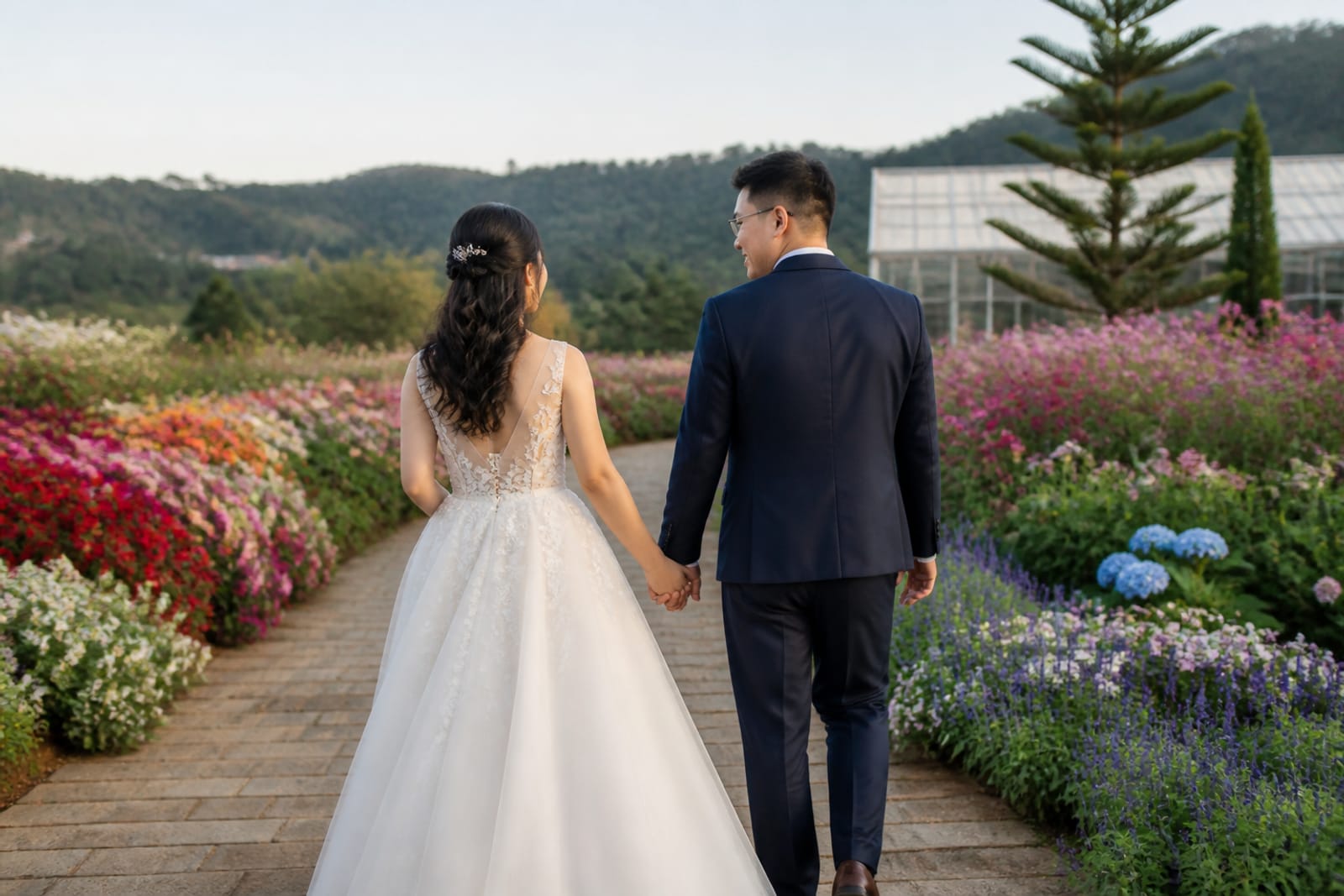
The tea estate's visual appeal lies in its geography and the contrast between the ao dai's vivid silk and the natural palette of mist, green vegetation, and mountain air. Unlike lower-altitude Hanoi or Ho Chi Minh City locations, Cau Dat offers a cooler microclimate (typically 15–18°C at dawn in winter), which means the wearer stays comfortable in the heavy fabric during long sessions. The estate's rows run perpendicular to the slope, creating depth and leading lines in portraits. Morning mist (common Dec–Feb) diffuses harsh sunlight and adds ethereal quality to images — no reflectors or diffusers needed. The site is working, not a manicured garden: tea pickers sometimes appear in frames, adding cultural authenticity that appeals to couples wanting documentary-style wedding imagery.
📸 Book on WhatsApp — ao dai photoshoot
What is the best season and time of day for shooting here?
Cau Dat's dry season (Dec–Apr) offers the most predictable light and mist. December through February brings the coolest temperatures and thickest morning fog; by March–April, mist thins but skies remain clearer. Morning (5:00–7:30 a.m.) is non-negotiable: mist burns off by mid-morning, and afternoon light becomes flat or hidden by clouds. The golden window is 90 minutes after sunrise. Rainy season (May–Nov) is risky — afternoon downpours are frequent, and morning mist may not appear. If you must shoot May–Sep, plan for shorter sessions and indoor or sheltered backup locations in Da Lat. Avoid Tet (late January–mid February) when the estate may see tour groups and staffing is reduced.
How does an ao dai fit and move on sloped terrain?
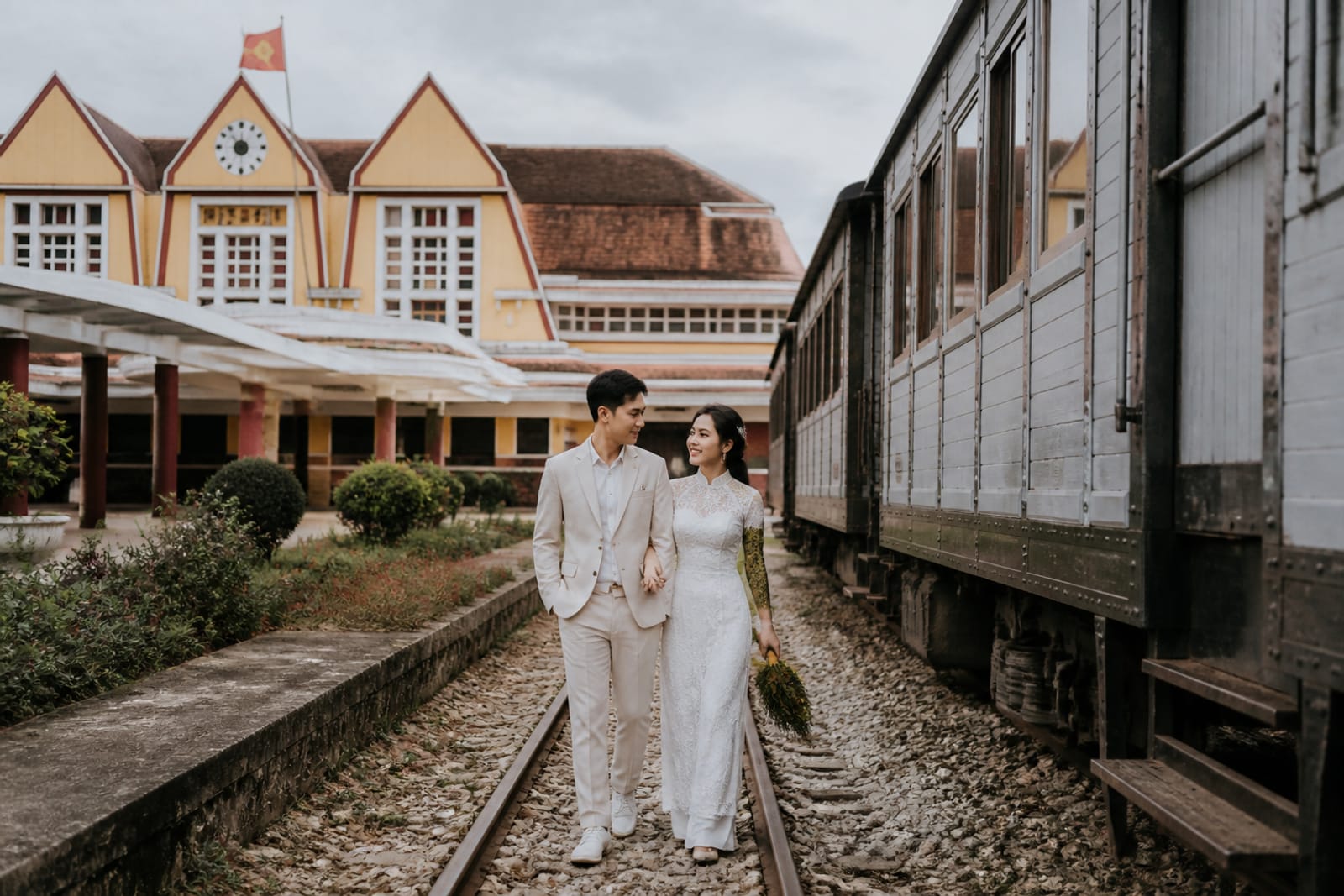
An ao dai is a floor-length tunic split to the waist, worn over fitted trousers. On Cau Dat's steep tea rows, the long front and back panels catch on tea plants and tangle if the wearer steps carelessly. The garment's weight (typically 800 grams for silk) pulls downward on sloped ground, creating posture strain during long shoots. Practical tips: choose a fitted, not oversized, ao dai so panels don't drag on damp foliage; wear flat, closed-toe shoes (not sandals) with grip — tea rows are muddy after rain; request that the photographer and any assistants hold the back panels or panels up while you walk between shots; avoid white or very light colours if the estate has just been wet or sprayed (tea plantations use irrigation); bring a spare tunic or have one pressed on-site, as creases from sitting or bending persist through afternoon. If you hire a local Da Lat photographer, confirm in advance that they have experience dressing and posing clients in ao dai on uneven ground.
What logistical steps must you handle before arriving?
Cau Dat estate is accessed via a narrow road from Da Lat town centre, roughly 20–30 kilometres depending on your entry point. You cannot reach it by public transport; hire a car and driver or book a tour operator shuttle the day before to confirm the route and parking. Contact the estate directly (through your Da Lat hotel concierge or a local fixer) to ask about access fees, photography permits, and whether you need a guide — policies vary. Arrange makeup and hair either at your Da Lat hotel the morning of the shoot (arrive by 3:00–3:30 a.m. to finish and travel by 4:00 a.m.) or hire a makeup artist from a local Da Lat salon in advance. Bring the ao dai dry-cleaned and pressed, packed flat in a garment bag; do not pack it wrinkled. Pre-book a local Da Lat photographer weeks ahead, not days — the best shooters have limited availability and may require a deposit. Check their portfolio for evidence of ao dai work and altitude/terrain experience. Confirm backup plans if weather forces postponement (is the date flexible, or do you have a rain-date allowance?).
| Logistics Element | Best approach | Why it matters |
|---|---|---|
| Transport | Hire private car night before; confirm 4:00 a.m. pickup | Public buses don't run pre-dawn; delays strand you in town as mist clears |
| Photographer | Book local Da Lat shooter 4+ weeks prior | Limited availability; Cáo Studio doesn't operate in Da Lat |
| Makeup & hair | Arrange at hotel morning-of or hire salon artist advance | Pre-dawn styling in a moving car risks damage to hair and makeup |
| Ao dai fit | Rent or bring pressed; confirm tailor access for quick fixes | Wrinkles set in packed fabric; no last-minute seamstress at the estate |
| Weather contingency | Agree re-shoot date with photographer before booking | Rain, cloud cover, or high mist can erase light in under 1 hour |
How do you compare Cau Dat to other ao dai wedding locations?
Cau Dat suits couples wanting landscape-driven imagery and a cooler, more exclusive setting than urban or coastal alternatives. Hanoi's temples and lakes (see Hanoi photoshoots) offer cultural depth and morning light Oct–Mar but involve crowds, traffic, and heat Apr–Sep. Hoi An's Ancient Town (photoshoots in Hoi An) provides iconic lantern-lit streets but requires mid-morning starts (6:00–7:00 a.m.) when tourist groups appear, and the terrain is flat and narrow — less dynamic for landscape composition. Ho Chi Minh City's parks and rooftops (Saigon shoots) are busy year-round and lack the natural mist and cool climate Cau Dat offers. Coastal alternatives like Quy Nhon or Mui Ne are ideal if you're pursuing beach and sunset frames but sacrifice the misty, ethereal mood specific to highlands. Cau Dat's trade-off: remote, requires early logistics, weather-dependent, and you must hire locally rather than book a studio with a fixed team like Cáo Studio. If you prefer a managed, all-in-one ao dai photoshoot with professional makeup and styling included, Cáo Studio's Hanoi, Ho Chi Minh City, and Hoi An services avoid the logistical complexity of a remote estate.
---
What to check before you book a local Da Lat photographer
- Portfolio: Request 5+ images from previous ao dai shoots at Cau Dat or similar terrain (not studio or flat park work). Look for sharpness, colour grading consistency, and natural posing.
- Ao dai experience: Ask directly: "Have you shot ao dai on steep terrain? Do you know how to dress and pose the wearer safely?" Inexperienced shooters often underestimate the garment's handling.
- Backup weather plan: Confirm in writing whether your booking includes a free re-shoot date if weather is poor, or whether you forfeit the deposit. Define "poor" (e.g., heavy rain, zero visibility mist).
- Delivered files: Ask how many edited images you receive, timeline for delivery, and in what format (RAW, JPEG, or both). Request a sample of their editing style.
- Transport & timing: Confirm the photographer will meet you at your hotel or the estate gate, what time they arrive, and how they handle overtime if the session runs long.
- Makeup coordination: If the photographer offers to source a makeup artist, request their contact so you can vet them independently and agree on arrival time and cost.
---
Book on WhatsApp +84 338 762 340 to inquire about pre-wedding photoshoots in Hanoi, Ho Chi Minh City, or Hoi An, where Cáo Studio manages all styling, makeup, and logistics. For Da Lat's Cau Dat estate, you'll need to coordinate a local photographer, but ask us for referrals or advice on vetting.
FAQ
Can Cáo Studio shoot ao dai at Cau Dat tea hills?
No. Cáo Studio operates in Hanoi, Ho Chi Minh City, and Hoi An only. For Cau Dat, hire a local Da Lat photographer. Contact us on WhatsApp for photographer referrals or guidance on vetting local shooters.
What time must we arrive at the estate to catch the best mist?
Start the journey from Da Lat town by 4:00–4:30 a.m. to be on-site by 5:00–5:30 a.m. Mist typically peaks 5:30–6:30 a.m., then thins rapidly. Aim to shoot by 7:00 a.m. at the latest.
Is the ao dai comfortable to wear on steep tea rows for 3–4 hours?
The weight and long panels are cumbersome on slopes. Wear closed-toe grip shoes, choose a fitted (not loose) ao dai, and have your photographer or assistant hold panels while you walk between locations. Cool highland air (Dec–Apr) helps prevent overheating.
What if weather ruins the shoot?
Rain and sudden cloud cover are common, especially May–Nov. Agree with your photographer on a re-shoot date (ideally within 2 weeks) before you book. Confirm whether the deposit is refunded, credited, or forfeit if you postpone.
Do I need a permit or guide to shoot at the estate?
Contact Cau Dat directly (via your Da Lat hotel) to confirm current access rules, photography permits, and whether a guide is required. Policies may change seasonally. Plan this step 2–3 weeks in advance.
Should I rent or bring an ao dai?
Bring a pressed, dry-cleaned ao dai (pack flat) if you own one or have it tailored. Renting locally risks fit delays or poor condition. If renting in Da Lat, confirm the salon can deliver or fit it 24 hours before the shoot.
FAQ
Can Cáo Studio shoot ao dai at Cau Dat tea hills?
No. Cáo Studio operates in Hanoi, Ho Chi Minh City, and Hoi An only. For Cau Dat, hire a local Da Lat photographer. Contact us on WhatsApp for photographer referrals or guidance on vetting local shooters.
What time must we arrive at the estate to catch the best mist?
Start the journey from Da Lat town by 4:00–4:30 a.m. to be on-site by 5:00–5:30 a.m. Mist typically peaks 5:30–6:30 a.m., then thins rapidly. Aim to shoot by 7:00 a.m. at the latest.
Is the ao dai comfortable to wear on steep tea rows for 3–4 hours?
The weight and long panels are cumbersome on slopes. Wear closed-toe grip shoes, choose a fitted (not loose) ao dai, and have your photographer or assistant hold panels while you walk between locations. Cool highland air (Dec–Apr) helps prevent overheating.
What if weather ruins the shoot?
Rain and sudden cloud cover are common, especially May–Nov. Agree with your photographer on a re-shoot date (ideally within 2 weeks) before you book. Confirm whether the deposit is refunded, credited, or forfeit if you postpone.
Do I need a permit or guide to shoot at the estate?
Contact Cau Dat directly (via your Da Lat hotel) to confirm current access rules, photography permits, and whether a guide is required. Policies may change seasonally. Plan this step 2–3 weeks in advance.
Should I rent or bring an ao dai?
Bring a pressed, dry-cleaned ao dai (pack flat) if you own one or have it tailored. Renting locally risks fit delays or poor condition. If renting in Da Lat, confirm the salon can deliver or fit it 24 hours before the shoot.
Ao dai, makeup, hair and a local photographer in Hanoi or Saigon — one WhatsApp message.