/ao-dai-photoshoot
Ao Dai Wedding Photos at Da Lat Flower Gardens: Guide
Ao dai wedding photos at Da Lat flower gardens work best December through April, when highland mist softens early light and garden blooms are fullest. Da Lat sits 1,500 metres above sea level; its cool 15–25°C climate means stable light and fewer midday shadows than lowland Vietnam. Sessions typically run 2–4 hours, moving between garden patches as light shifts. Hire a local Da Lat photographer familiar with garden permits and flower cycles, or ask Cáo Studio – Makeup & Photoshoot (Hanoi, Saigon, Hoi An) whether your date suits a travel shoot; travel sessions cost more but bring your studio's styling and retouching. Avoid rainy season May–November: afternoon downpours damage makeup and flatten colours. Check garden opening hours and flower calendars with venues before booking; some require permits or limit group sizes. ---
Can you shoot ao dai wedding photos year-round in Da Lat?
No. Da Lat's dry season (December–April) delivers cool mornings with soft mist, full garden blooms, and predictable light—ideal for 3–4 hour sessions. Rainy season (May–November) brings afternoon showers that ruin makeup, close garden sections, and reduce flower density. Even morning shoots risk sudden downpours. If your wedding date falls May–November, book earlier in the day, have a backup indoor venue (hotel, restaurant), and confirm with gardens whether they're open that week.
Which Da Lat flower gardens work best for ao dai shoots?
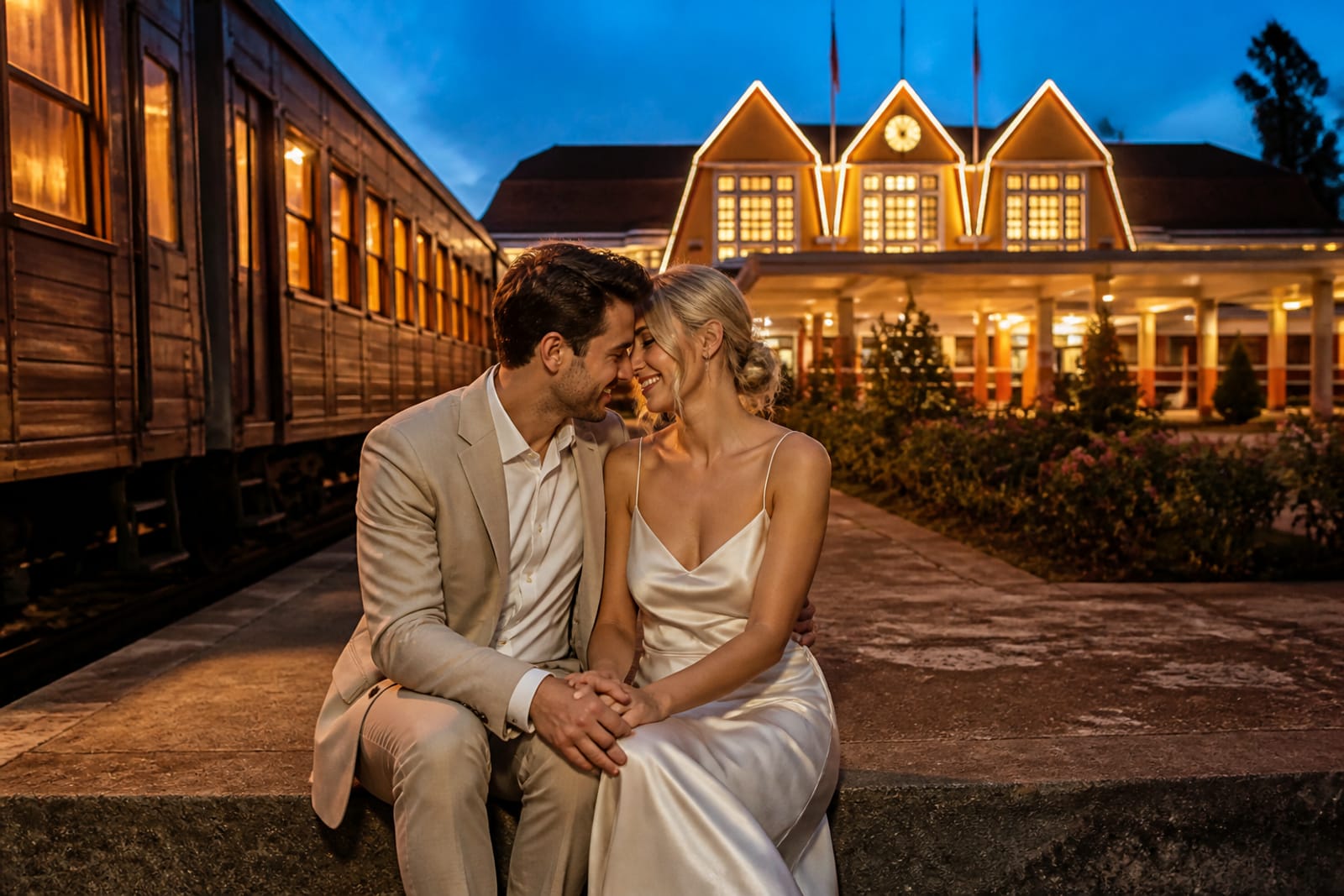
Da Lat has at least five major gardens open to visitors, each with distinct light and mood. Dalat Flower Gardens (central location, mixed perennials, open 7am–5pm year-round) suits full-day shoots because you can move between sections. Thien Vuong Flower Garden (hillside, wilder plantings, morning mist at sunrise) works for couples seeking moody, romantic frames—but paths are steep; allow extra time and wear stable shoes under your ao dai. Flower Park (newer, designed layouts, afternoon shade near pine groves) suits makeup freshness because light stays soft 10am–3pm. Coffee gardens on the southern outskirts (fewer tourists, natural undergrowth) appeal to couples wanting intimacy, but roads are rougher and you'll need a local guide who knows access. Visit before booking: light direction, crowd timing, and ground conditions (wet grass in misty season) shape your shoot plan and outfit choice.
How does light work in the mountains compared to Hanoi or Saigon shoots?
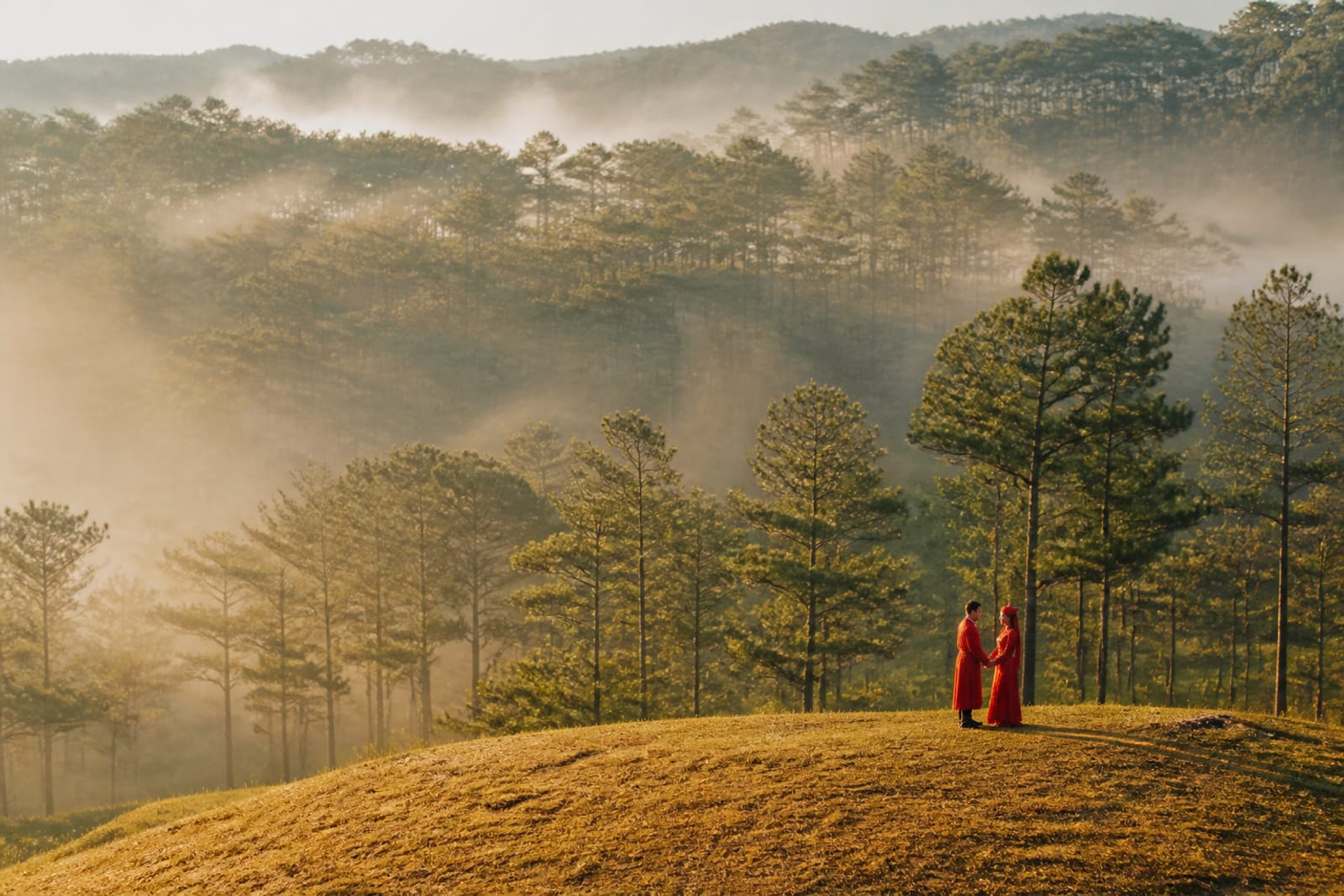
Highland light differs fundamentally. At 1,500 metres, direct sun is harsher earlier in the day, but mist and cloud cover settle thick until 9–10am, creating diffused, flattering light for 30–90 minutes after sunrise. By noon, sun angle steepens; shadows deepen. Late afternoon (3–5pm in winter, 4–6pm in summer) brings directional side light that flatters skin and ao dai silk, but flower colours flatten. In Hanoi or Saigon, you chase shade or overcast; in Da Lat, you chase mist and cloud rhythm. Plan your garden sections by timing: mist gardens for 7–9am frames, open flower beds for 10am–2pm colour saturation, tree-lined paths for 3–5pm silhouettes. A local photographer knows this rhythm; a studio team visiting from the lowlands may not. This is your first decision factor: do you want local expertise tuned to Da Lat's micro-climate, or studio consistency and retouching from a Hanoi/Saigon team?
What should I wear under my ao dai in cool mountain weather?
Da Lat's 15–25°C temperature range (cooler in mist mornings, warmer noon–3pm) requires layering strategy. Wear a fitted thermal long-sleeve shirt (merino or synthetic, not cotton—dries faster if mist dampens it) under your ao dai. Pair it with full-length underlining pants in the same neutral tone as your ao dai's under-layer; silhouette remains sharp in frames, and you can sit on wet garden benches without worry. Mist often wets your ao dai hem and sleeve cuffs by 9am; bring microfibre towels (absorb water, pack small). If you're doing makeup at a Hanoi or Saigon studio before travelling, ask them to use long-wear foundation and powder adapted to humidity and cool air—humidity at altitude differs from lowland. Footwear: gardens are muddy after rain and dewy in mist; wear flat shoes or subtle heels you can clean between takes. Some couples change outfits mid-shoot (ao dai for gardens, wedding dress for villa interiors)—plan outfit order by location and light timing.
📸 Book on WhatsApp — ao dai photoshoot
How do you compare hiring a local Da Lat photographer vs. asking a Hanoi studio to travel?
| Option | Best for | Light & Season | Why it works |
|---|---|---|---|
| Local Da Lat photographer | Budget-conscious couples, flexible dates, intimate 2–4 hour sessions | Year-round familiarity with mist cycles, microclimate, garden permits | Knows exact flower blooms, avoids closures, no travel overhead; retouching varies by freelancer |
| Hanoi/Saigon studio team (Cáo Studio travel shoot) | Couples wanting consistent styling, professional retouching, same team as engagement shoot | Best dry season (Dec–Apr); travel adds logistics but brings studio light management | Unified aesthetic, makeup continuity, guaranteed editing; cost reflects travel, accommodation, studio standards |
| Hybrid: local for shoot, studio for retouching | Couples prioritizing editing quality and local expertise equally | Dry season; local guides light timing, studio team edits afterwards | Split cost, local knowledge + professional polish; requires trust and clear file handover |
Local photographers cost less and know Da Lat's rhythm; vet them via Instagram portfolios, recent ao dai shoots, and references from your hotel or vendor network. Studio travel shoots (like Cáo Studio's pre-wedding option) bring consistency if you've already done engagement photos with them, and makeup coordination is seamless; cost factors include travel time (Hanoi ↔ Da Lat ~12 hours by road or flight), accommodation, and team size. Ask on WhatsApp whether Cáo Studio can travel to Da Lat for your date and season; they'll confirm timing and logistics.
When should I book, and what conditions should I check before paying?
Book 3–4 months ahead for dry season (December–April); slots fill early. For off-season (May–November), 6 weeks ahead suffices, but weather is riskier. Before committing, confirm:
- Flower calendar: Contact gardens directly. Sunflowers (da quy) peak November; roses and dahlias peak January–February; some perennials decline June–August.
- Garden access: Are they open the week of your shoot? Do they require group permits? Will they allow professional photography (some charge extra or restrict crews)?
- Light timing: Ask your photographer for a site visit at your proposed time of day in the same season. Mist timing varies weekly.
- Makeup logistics: If using a studio team, confirm they arrive the morning of your shoot or the evening before. Da Lat's cool, misty air can swell hair and affect makeup set; ask how they adapt.
- Backup plan: Identify an indoor venue (hotel ballroom, villa, restaurant) in case of heavy rain. Agree on what triggers a reschedule vs. a move.
- Outfit fit: If renting an ao dai locally, try it on 1 week before, not the morning of. Cool, humid air affects fabric drape.
If booking a local freelancer, get a written agreement (WhatsApp message is fine) covering session duration, number of edited images, and revision rounds. If booking Cáo Studio travel, ask on WhatsApp for exact inclusions, delivery timeline, and any Da Lat–specific adjustments to their standard package.
---
Decision Framework: Choose Your Path
| Your Priority | Choose Local | Choose Studio Travel |
|---|---|---|
| Budget is primary | ✓ Lower cost, no travel fees | ✗ Higher; studio margin + logistics |
| Makeup & styling continuity matter | ✗ Varies by freelancer | ✓ Makeup & hair coordination built in |
| You want guaranteed retouching quality | ✗ Depends on photographer skill | ✓ Studio standard applies |
| You love the adventure of discovery | ✓ Find hidden gardens, local vendors | ✗ Studio team has a plan, less exploration |
| You've already shot engagement photos with a studio | ✓ Local brings freshness | ✓ Aesthetic continuity strengthens the album |
---
What to Check Before You Book
- Garden hours & permits: Email or call the garden directly (not the photographer). Confirm they're open your date and allow professional crews. Some require a permit or notification.
- Flower forecast: Check the garden's social media or call 1 week before. Are blooms full, fading, or past peak?
- Weather history: Check historical weather for your month. Dec–Feb can be cool and misty (ideal); Jan–Feb occasionally sees frost damage on tender flowers.
- Photographer references: If local, ask for 3–5 couples you can contact. If studio, review their lookbook and ask for Da Lat–specific examples.
- Makeup trial: If using a local makeup artist, do a trial session 2 weeks before. Cool, humid air behaves differently than your home city.
- Backup date: Agree on one free reschedule if weather turns severe. Confirm this in writing.
- File delivery: How long for edits? Where are files stored? Can you download or do you get physical prints? Agree upfront.
📸 Book on WhatsApp — ao dai photoshoot
---
For couple photoshoots or pre-wedding shoots combining Da Lat flower gardens with Hanoi or Ho Chi Minh City sessions, contact Cáo Studio to discuss travel dates and package options. Local freelancers are a viable alternative; vet them carefully and expect to handle logistics yourself. Either way, book early in dry season for the best light, flowers, and availability.
FAQ
Does Cáo Studio shoot in Da Lat?
Cáo Studio operates in Hanoi, Ho Chi Minh City, and Hoi An. Da Lat shoots are possible as travel sessions; ask on WhatsApp whether your date suits travel logistics. For a Da Lat–based shoot, hire a local photographer or book Cáo Studio to travel if they confirm availability.
What month has the best ao dai garden photos in Da Lat?
December–February. Cool mornings have soft mist, flowers are fullest (roses, dahlias, wild sunflowers), and rain is rare. January–February especially: mist lifts by 10am, light is flattering 7am–4pm, and crowds are manageable before Tet rush.
Can I shoot during rainy season?
Yes, but with risk. May–November brings afternoon downpours that damage makeup, flood garden paths, and reduce flower colour. Early-morning shoots (7–9am) before showers can work; have a covered backup venue ready. Avoid October–November (typhoon season, heaviest rain).
How long does a typical ao dai wedding garden shoot take?
2–4 hours, depending on outfit changes and garden size. One ao dai: 2–2.5 hours. Two outfits: 3–4 hours. Mist gardens and flower changes add time; plan accordingly and book your photographer for the full duration.
Should I rent my ao dai locally in Da Lat or bring one from Hanoi?
If you have a custom ao dai, bring it. If renting, book locally 2–3 weeks ahead to allow a fitting and confirm sizing. Cool, misty air can affect fabric, and local tailors know how to adjust for Da Lat climate. Ask your studio or photographer for vendor referrals.
What's the difference between hiring a freelancer in Da Lat and booking Cáo Studio to travel?
Local freelancers know Da Lat's light, gardens, and permits; cost is lower. Cáo Studio travel brings professional makeup, consistent styling (if you've shot with them before), and guaranteed retouching; cost is higher due to team logistics. Choose local for budget and adventure; choose studio for polish and continuity.
FAQ
Does Cáo Studio shoot in Da Lat?
Cáo Studio operates in Hanoi, Ho Chi Minh City, and Hoi An. Da Lat shoots are possible as travel sessions; ask on WhatsApp whether your date suits travel logistics. For a Da Lat–based shoot, hire a local photographer or book Cáo Studio to travel if they confirm availability.
What month has the best ao dai garden photos in Da Lat?
December–February. Cool mornings have soft mist, flowers are fullest (roses, dahlias, wild sunflowers), and rain is rare. January–February especially: mist lifts by 10am, light is flattering 7am–4pm, and crowds are manageable before Tet rush.
Can I shoot during rainy season?
Yes, but with risk. May–November brings afternoon downpours that damage makeup, flood garden paths, and reduce flower colour. Early-morning shoots (7–9am) before showers can work; have a covered backup venue ready. Avoid October–November (typhoon season, heaviest rain).
How long does a typical ao dai wedding garden shoot take?
2–4 hours, depending on outfit changes and garden size. One ao dai: 2–2.5 hours. Two outfits: 3–4 hours. Mist gardens and flower changes add time; plan accordingly and book your photographer for the full duration.
Should I rent my ao dai locally in Da Lat or bring one from Hanoi?
If you have a custom ao dai, bring it. If renting, book locally 2–3 weeks ahead to allow a fitting and confirm sizing. Cool, misty air can affect fabric, and local tailors know how to adjust for Da Lat climate. Ask your studio or photographer for vendor referrals.
What's the difference between hiring a freelancer in Da Lat and booking Cáo Studio to travel?
Local freelancers know Da Lat's light, gardens, and permits; cost is lower. Cáo Studio travel brings professional makeup, consistent styling (if you've shot with them before), and guaranteed retouching; cost is higher due to team logistics. Choose local for budget and adventure; choose studio for polish and continuity.
Ao dai, makeup, hair and a local photographer in Hanoi or Saigon — one WhatsApp message.