/ao-dai-photoshoot
Ao Dai Wedding Photos at Da Lat Pine Forests
Da Lat wedding ao dai shoots thrive in dry season (December–April), when dawn breaks over pine forests with soft, low-angle light ideal for tunic detail and skin tone. The highland climate keeps temperatures cool—no sweat damage to makeup or silk—and the mist clears by mid-morning, giving you golden window light without harsh shadows. Sessions run 3–4 hours on trails or lakeside; a local guide and photographer familiar with terrain saves time and safety risk. Cáo Studio – Makeup & Photoshoot, based in Hanoi and Saigon, does not operate a Da Lat branch but coordinates custom trips on request via WhatsApp; otherwise, hire a Hanoi or Saigon team to travel with you, or vet a local Da Lat photographer by portfolio, terrain knowledge, and ao dai experience before booking. ---
When is the light best for ao dai shoots in Da Lat's forests?
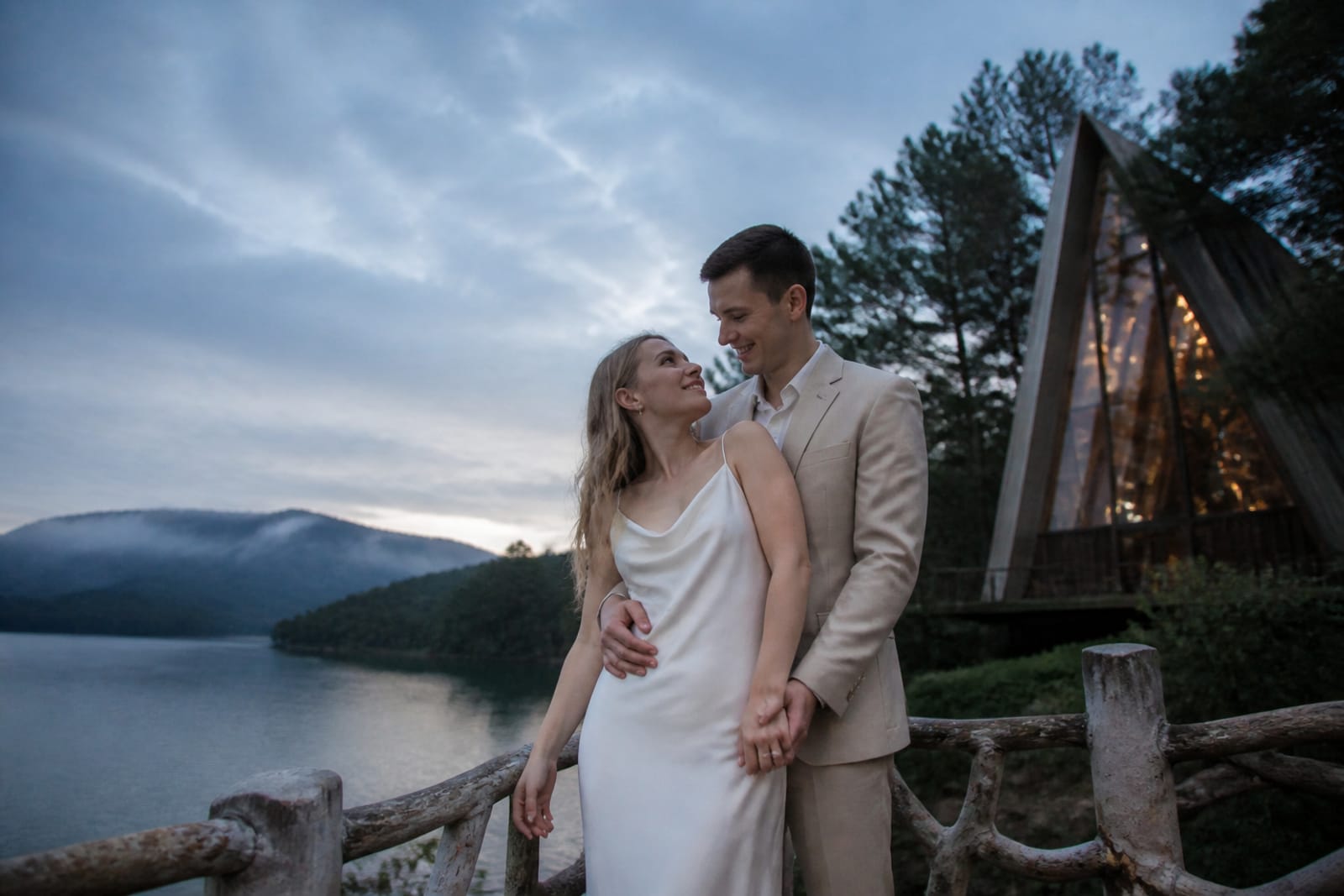
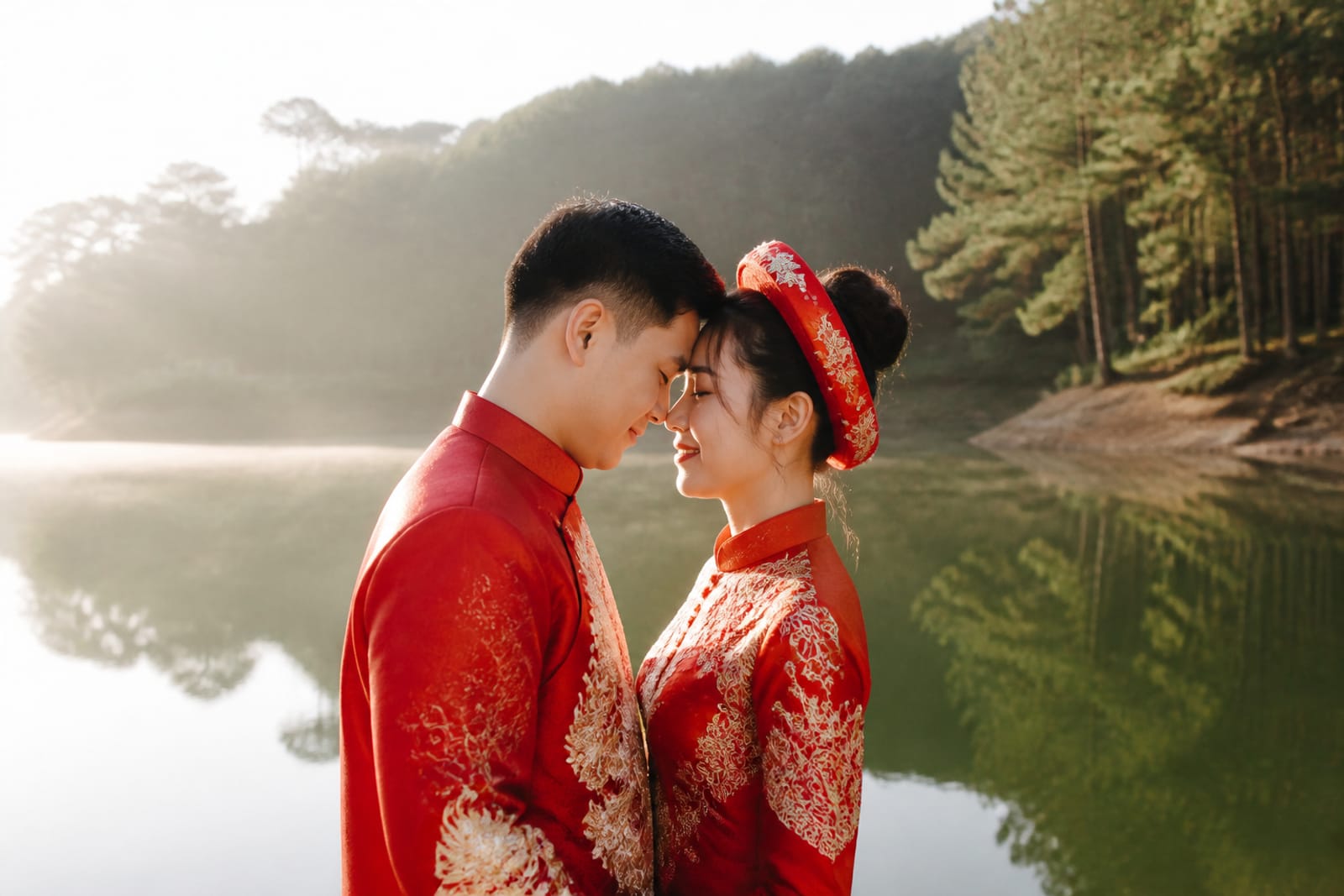
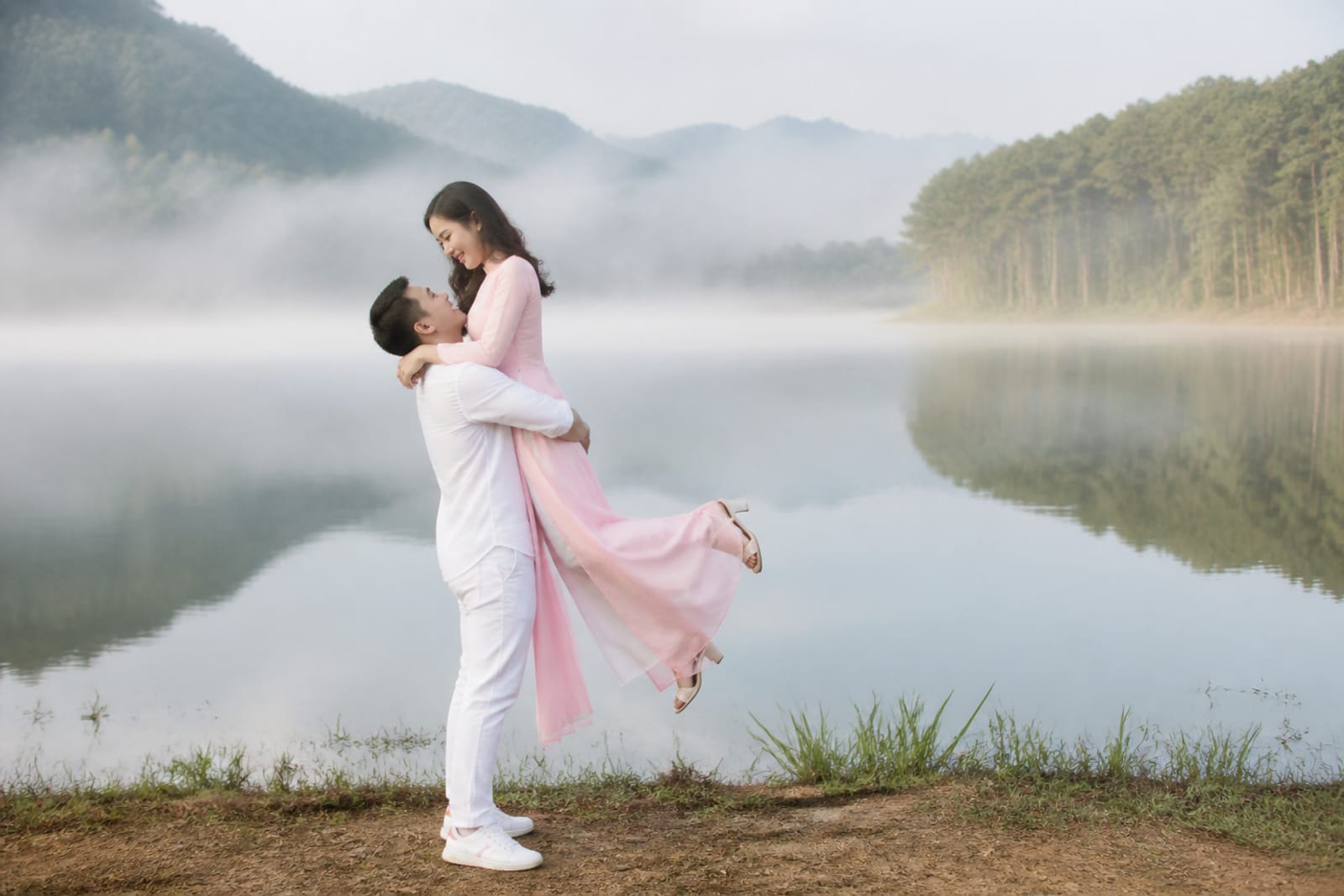
Sunrise (06:30–08:00) and the hour after (08:00–09:00) deliver the finest light for ao dai on pine trails. Low sun angles rake across the tunic's embroidery and fabric texture without washing out the face. Mist lingers at eye level, framing subjects in soft diffusion—no fill flash needed, no reflectors. After 10:00, sun climbs higher, shadows sharpen, and the mist burns off; you lose the ethereal quality that makes Da Lat iconic.
Why this matters for ao dai: The tunic's silk and beading photograph best with directional, warm light. Midday overhead sun flattens detail and forces squinting; golden-hour sidelight sculpts the fabric and reveals embroidery texture that flat light erases. A photographer unfamiliar with early timing will miss the window.
---
What season suits Da Lat ao dai wedding photo sessions?
| Season | Light | Mist | Rain risk | Best time of day |
|---|---|---|---|---|
| Dec–Jan | Golden, stable | Heavy morning | Rare | 06:30–09:30 |
| Feb–Mar | Bright, warm | Lighter, thinner | Rare | 06:30–08:30 |
| Apr | Warm, clearer | Minimal | Occasional | 06:30–08:00 |
| May–Nov | Soft overcast | Few | Frequent afternoon showers | 06:00–08:30 (plan early) |
Dec–Feb is peak: cool temperatures (15–20°C), stable dry conditions, dense morning mist that photographers plan around. Feb occasionally brings wild cherry blossoms near Hang Nga or Dalat Flower Gardens, adding natural framing—confirm bloom dates locally before booking.
Apr is viable: mist thins and light sharpens, but the season transitions; afternoon showers begin. Book a dawn session and finish by 10:00. May–Nov is risky: afternoon downpours are frequent (worst Oct–Nov), and you'll chase weather windows. Morning light is still good, but mist is sparse and humidity damages silk fast.
Conclusion: book December through March for reliability; April works if you move early and accept less mist.
---
What do you wear under an ao dai for a wedding photoshoot in cool highlands?
Wear fitted trousers (white silk or tailored cotton) in your exact inseam length; they anchor the tunic's silhouette and prevent bunching. Undergarments should be seamless and flesh-toned to avoid visible lines under the tunic. Avoid heavy jewelry under the ao dai—wear it only over the shoulder (traditional gold chains or beaded strands). Shoes matter: white ballet flats or embroidered silk slippers work on level trails; avoid heels on forest paths (unsafe, slow, marks the soil).
Practical detail: bring two pairs of trousers—one for damp morning grass, one clean for later shots. Dew clings to fabric until 10:00; wet hems distract from the tunic. A light cotton stole or silk wrap layers over the ao dai for wind and chill—it photographs well and lets you adjust coverage between frames.
For humid or rainy days: request your photographer plan indoor shoots (temple interiors, heritage buildings) as backup; an ao dai in heavy rain clings and loses shape, and makeup runs.
Conclusion: fit and layers matter as much as the tunic itself; test the outfit in advance.
---
How do you find and book a local Da Lat photographer who knows ao dai shoots?
Start with Instagram and Google: search photographer Da Lat ao dai wedding and review portfolios for:
- At least 3 wedding ao dai shoots (not just casual touristy photos).
- Pine forest or mist-setting work (proof they scout locations).
- Soft, warm light in early morning (not noon or afternoon).
- Skin tone and fabric detail in the final images (not blown highlights or muddy shadows).
Vet by conversation: Ask the photographer:
- "How many dawn shoots have you led?" (They should cite 10+, not "I'm flexible.")
- "Do you own backup lighting or a reflector?" (Yes = professional; "I'll use natural light only" = risky for cloudy mornings.)
- "What's your editing style for ao dai?" (Request a sample unedited raw image from a session you like—proof of their skill, not just filters.)
- "Can you secure location access?" (Sacred sites and private grounds require permits; a local knows the rules.)
Cost factors to discuss: season (Dec–Feb costs more than April), group size, number of outfits, travel time to trailheads, and whether makeup/hair is included. Never negotiate by cutting session hours—book a shorter session at full rate rather than a long session rushed. Ask for a written summary of inclusions on WhatsApp before paying.
Alternative: If you book with Cáo Studio – Makeup & Photoshoot in Hanoi or Saigon, confirm on WhatsApp whether they coordinate Da Lat travel. If yes, the studio handles permits, scouting, and styling consistency. If no, hire a Hanoi or Saigon team to travel with you (cost = fees + travel time); or hire locally and invest time in portfolio review above.
Conclusion: portfolio and early-morning proof matter more than reputation; local knowledge beats price.
---
What equipment and logistics make or break a Da Lat ao dai shoot?
A professional photographer arrives with:
- A full-frame or APS-C camera + 35mm and 50mm prime lenses (sharp for detail, shallow depth-of-field for mist blur).
- A tripod (wind is real on exposed trails; movement ruins tunic symmetry).
- Backup batteries (cold drains them fast; 4+ charged sets = 8+ hours of shooting).
- Neutral-density and circular polarizer filters (cuts glare on misty water, controls sky tone without HDR).
- Backup memory cards and a portable hard drive (single-card failure loses a session).
On-site logistics:
- Arrive 30 minutes before sunrise to test light, scout framing, and manage mist timing.
- A driver or guide is essential (forest trails are unmarked; a wrong turn costs 45 minutes).
- Bring a small gazebo or reflector frame to shelter the ao dai and makeup during transitions (mist soaks fabric).
- Water, snacks, and a first-aid kit (minor cuts from underbrush are common; hydration keeps energy steady).
Common failures and fixes:
- Mud on hem: Wear the outer trousers to the site; change at the location.
- Mist gone by 08:30: Weather apps predict mist; if gone, pivot to open viewpoints (Thien Vien Truc Lam monastery, Love Valley overlook) where backlit mist still reads in images.
- Cold hands = blurry detail shots: Hand warmers in pockets; keep the photographer warm, not rushed.
Makeup and hair resilience: Mist and early morning humidity wreak havoc on loose styles and powdered skin. Book makeup/hair with the photographer or hire someone who understands highland climate; waterproof makeup and tightly pinned styles are non-negotiable. Cáo Studio's makeup & hair service preps you for outdoor humidity; confirm with WhatsApp whether they travel to Da Lat with you.
Conclusion: equipment and site prep prevent expensive reshoot delays.
---
Should you hire Cáo Studio to travel to Da Lat, or book a local photographer?
| Option | Best for | Coordination | Cost factors |
|---|---|---|---|
| Cáo Studio Hanoi/Saigon travels with you | Consistency in style, makeup quality, language ease (English-fluent team) | Studio handles scouting, location permits, shot list; you confirm dates on WhatsApp | Travel time, accommodation, team size (single shooter vs. makeup + hair + assistant) |
| Local Da Lat photographer | Budget flexibility, quick booking, trail familiarity | You vet portfolio, confirm inclusions in writing, manage day-of logistics | Photographer skill varies; language barrier possible; no backup if photographer cancels |
| Hybrid: book Cáo Studio for makeup/hair prep in Hanoi, then hire local photographer in Da Lat | Control makeup style, then leverage local scouting | Studio styles you in Hanoi 1–2 days before; you meet photographer in Da Lat | Two separate bookings, more coordination, but reduced travel cost for the studio team |
Why Cáo Studio works for this: the team understands ao dai fit, international expectations, and how mist and cool light affect skin tone and fabric color in post-processing. Hanoi base means they've shot cool-season ao dai shoots in many highlands settings; they bring that reference. Drawback: studio fees + travel time cost more than hiring a local-only photographer.
Why local photographers work: they know exact trail access, sunrise timing, and mist patterns for this year; they're available on short notice; cost is lower. Drawback: portfolio review takes time; language and style may differ from expectations.
Hybrid approach: Ask Cáo Studio on WhatsApp if they offer makeup/hair prep in Hanoi before a Da Lat trip, then travel independently with a local photographer. This splits the workload and often reduces the studio's travel cost.
Conclusion: choose based on how much you value consistency vs. budget and familiarity with local terrain.
---
What should you check before booking an ao dai wedding shoot in Da Lat?
Before you commit:
- Confirm the photographer's early-start readiness. Ask: "Do you shoot sunrise sessions routinely?" Get a before-08:00 sample from their portfolio, not noon or afternoon work.
- Verify location access. Sacred sites (Hang Nga, Thien Vien Truc Lam) require permits; photographer should confirm or advise you to apply (check with Da Lat tourism office for current rules).
- Get inclusions in writing. WhatsApp the photographer: "Does this session include makeup and hair? Edited files or RAWs? How many final images? Delivery date?" Do not assume; verbal agreements fail on the day.
- Test makeup and outfit at home. If the ao dai is rented, try it on indoors—ensure the fit under the bust and the trousers length are perfect. Request tailoring or exchanges before the shoot day.
- Book a weather backup date or indoor fallback. "If it rains, do we reschedule or shoot indoors?" Know this before signing.
- Ask for a shot list. Request the photographer email you 5–10 key poses/scenes in advance (e.g., "walking on trail at sunrise, lakeside reflection, temple gate framing"). A prepared photographer confirms this; an unprepared one says "I'll improvise."
---
📸 Book on WhatsApp — ao dai photoshoot
---
Why shoot an ao dai wedding session in Da Lat instead of a studio or city street?
Da Lat's misty pine forest is a natural studio that flatters the ao dai's silhouette and embroidery. Urban shoots (Hanoi Old Quarter, Saigon markets) compete with vehicles, crowds, and harsh midday sun; the ao dai gets lost in chaos. Da Lat's isolation and cool air slow you down—no sweat, no humidity damage, no crowd interruptions. The mist and golden light make the tunic glow without artificial enhancement. Most couples in Southeast Asia shoot ao dai in their hometown; Da Lat becomes the standout, cinematic alternative—it's a destination shoot, not a local session, so the effort and planning register as intentional and romantic.
For wedding albums and anniversary viewing: images from misty pine forests age better than city streets (timeless, less dated by trends or traffic), and the ao dai detail reads crisply across prints and albums.
Conclusion: if you value uniqueness, light quality, and preservation, Da Lat justifies the travel and planning.
---
---
What happens after the shoot—editing, prints, and keepsakes?
After your session, the photographer delivers edited images (standard turnaround is 2–4 weeks; confirm dates before booking). Ask:
- "Do I get RAW files or only JPEGs?" (RAW files are unedited; JPEGs are the final, styled version. Some photographers include both; others only JPEGs.)
- "Can I order prints and albums?" (A professional photographer partners with a lab or offers albums themselves.)
- "Is there a rush fee for faster delivery?" (Yes, typically, but verify before you need it.)
Once you have images, invest in a wedding photo album or prints and frames to display the ao dai and Da Lat setting. A hardbound album with matte or lustre finish shows off the mist and texture better than digital-only storage. Consider a smaller keepsake format as a gift to parents.
Cáo Studio post-session: If the studio coordinates your Da Lat shoot, confirm whether they deliver edits in-house or refer you to a partner lab. Ask on WhatsApp for their turnaround and album options—this avoids surprises after the shoot.
---
---
FAQ
Can I wear a rented ao dai to a Da Lat photoshoot, or should I buy one?
Rented works if fitted perfectly (test indoors first). Buying gives you a keepsake and guarantees fit, but costs more. Either way, confirm the rental or purchase at least two weeks before the shoot so tailoring can be done.
What if it rains during an early-morning Da Lat session?
Mist and light rain are normal Dec–Feb; your photographer should have an indoor backup (temple, heritage building). Heavy rain is rare Dec–Apr; confirm your photographer's contingency plan before booking.
Do I need a permit to shoot on Da Lat trails or near temples?
Yes, some sites require it (e.g., Thien Vien Truc Lam). Your photographer should know local rules; ask them to confirm or contact Da Lat tourism office in advance.
How many hours should I book for an ao dai wedding shoot in Da Lat?
3–4 hours (sunrise through mid-morning, capturing mist and golden light). Longer sessions in early seasons exhaust you; shorter sessions miss the light window. Confirm exact duration and inclusions with your photographer on WhatsApp.
Should I book Cáo Studio to travel to Da Lat, or a local photographer?
Cáo Studio works if you value consistency in makeup, English communication, and ao dai expertise; local photographers work if budget and terrain familiarity matter more. Ask Cáo Studio on WhatsApp whether they coordinate Da Lat trips—if yes, compare costs and inclusions side-by-side.
Can I combine a Da Lat ao dai shoot with pre-wedding photos in Hanoi or Saigon?
Yes. Book Cáo Studio in Hanoi or Saigon for one session, then hire a local photographer in Da Lat, or ask Cáo Studio if they coordinate multi-city trips. Link the shoots thematically (e.g., Hanoi urban couple shots, Da Lat ao dai solo/romantic) for a complete album.
FAQ
Can I wear a rented ao dai to a Da Lat photoshoot, or should I buy one?
Rented works if fitted perfectly (test indoors first). Buying gives you a keepsake and guarantees fit, but costs more. Either way, confirm the rental or purchase at least two weeks before the shoot so tailoring can be done.
What if it rains during an early-morning Da Lat session?
Mist and light rain are normal Dec–Feb; your photographer should have an indoor backup (temple, heritage building). Heavy rain is rare Dec–Apr; confirm your photographer's contingency plan before booking.
Do I need a permit to shoot on Da Lat trails or near temples?
Yes, some sites require it (e.g., Thien Vien Truc Lam). Your photographer should know local rules; ask them to confirm or contact Da Lat tourism office in advance.
How many hours should I book for an ao dai wedding shoot in Da Lat?
3–4 hours (sunrise through mid-morning, capturing mist and golden light). Longer sessions in early seasons exhaust you; shorter sessions miss the light window. Confirm exact duration and inclusions with your photographer on WhatsApp.
Should I book Cáo Studio to travel to Da Lat, or a local photographer?
Cáo Studio works if you value consistency in makeup, English communication, and ao dai expertise; local photographers work if budget and terrain familiarity matter more. Ask Cáo Studio on WhatsApp whether they coordinate Da Lat trips—if yes, compare costs and inclusions side-by-side.
Can I combine a Da Lat ao dai shoot with pre-wedding photos in Hanoi or Saigon?
Yes. Book Cáo Studio in Hanoi or Saigon for one session, then hire a local photographer in Da Lat, or ask Cáo Studio if they coordinate multi-city trips. Link the shoots thematically (e.g., Hanoi urban couple shots, Da Lat ao dai solo/romantic) for a complete album.
Ao dai, makeup, hair and a local photographer in Hanoi or Saigon — one WhatsApp message.