/ao-dai-photoshoot
Ao dai wedding photos at Datanla waterfall: seasons, spots & booking g
Datanla waterfall sits 15 minutes south of Da Lat township, a 40-meter cascade surrounded by pine forest and moss-covered rocks—ideal for ao dai couples seeking moody, romantic light. The dry season (December–April) delivers clear morning mist and soft directional light; rainy season (May–November) brings afternoon cloud cover that flattens colours. Sessions run 2–3 hours on-site; budget walking time on slippery stone steps and frequent wardrobe changes near water spray. Cáo Studio – Makeup & Photoshoot does not operate a Da Lat branch, so hire a local Da Lat photographer experienced with wet rock footing, ao dai fabric care, and morning mist timing. Check entry requirements and guide fees before booking; confirm your team can manage water proximity and steep paths.
📸 Book on WhatsApp — ao dai photoshoot | 🌸 See the lookbook
Datanla waterfall draws ao dai couples for one reason: the landscape looks nothing like Hanoi or Saigon. Sheer rock faces, plunging water and pine-thick cliffs create drama that feels cinematic even on a grey day. But that beauty comes with logistics most studio teams (including Cáo Studio's main locations—Hanoi, Ho Chi Minh City, and Hoi An) don't routinely handle. This guide covers what works, what doesn't, and how to plan a shoot that doesn't leave your ao dai muddy.
Why does Datanla work better in dry season (Dec–Apr)?
Clear morning light cuts through mist without creating blown-out reflections on wet rock. Winter temperatures (around 15–20°C) keep you and the fabric comfortable during long static poses. Humidity is lower, so makeup lasts longer and the ao dai dries faster if water splashes it. Rain season (May–November) dumps afternoon downpours; morning shoots may work, but clouds flatten highlights and you lose the golden-hour glow reflected off water. The best shoots happen before 11 a.m., when mist still clings to the upper basin and sunlight rakes across the falls at a low angle. Conclusion: book December through early April for predictable light; plan a backup indoor shoot in Da Lat town if weather turns.
What makes Datanla different from river or temple photoshoots?
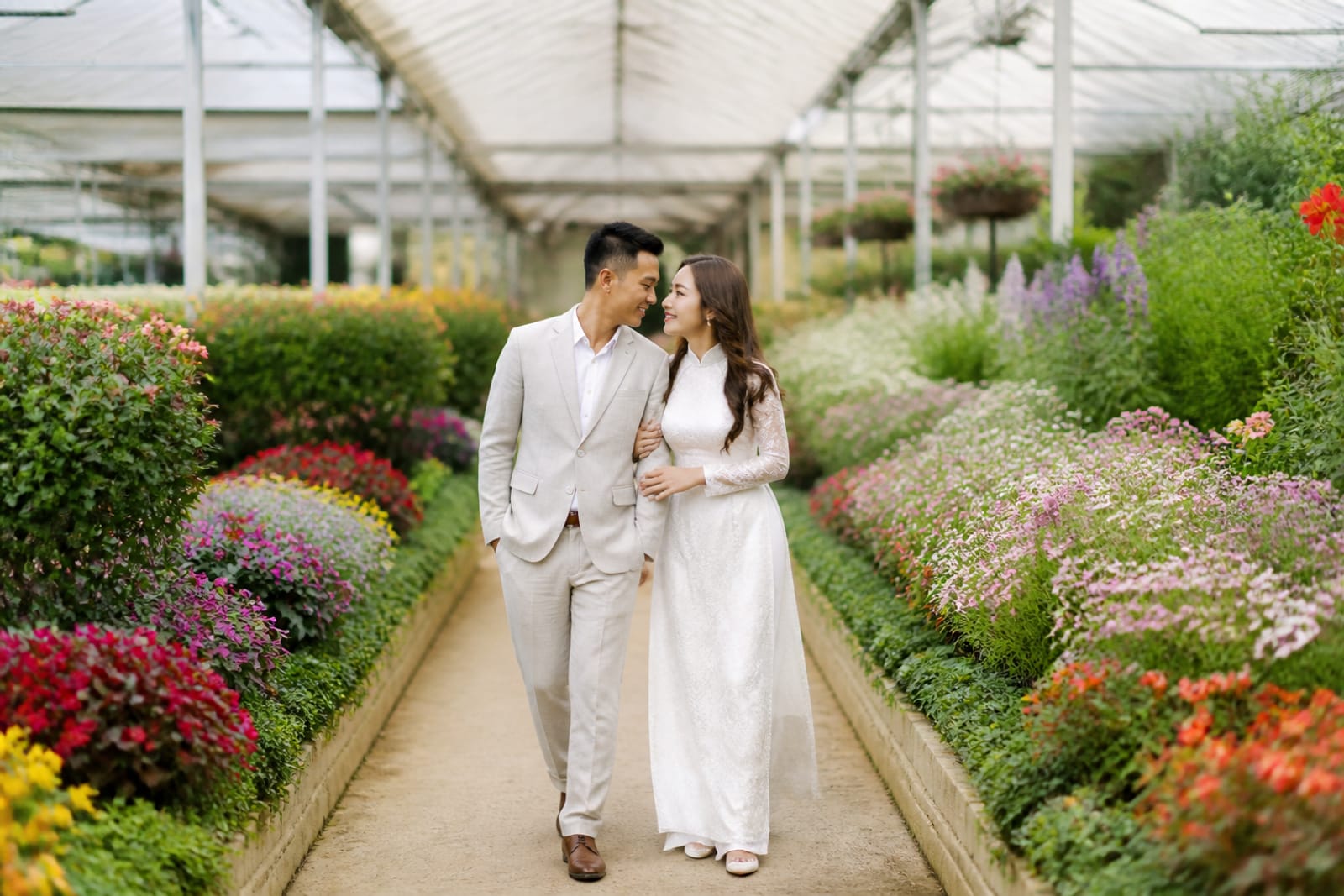
Rivers and temples sit at water level or on flat stone; Datanla requires climbing 300+ uneven steps, some slick with algae. Your photographer and makeup artist must carry heavy gear (camera, backup lenses, light reflectors, makeup kit) up and down. Ao dai hems drag on damp ground—plan two or three outfit changes and bring a garment bag and dry towel. Temple shoots rely on architecture and symmetry; waterfalls demand you work with the cascade's asymmetry and use mist as a third subject. Light angles are steep and directional; a photographer unfamiliar with backlit water spray will blow your exposure. Most Hanoi or Saigon teams rarely shoot here; Cáo Studio's Hoi An team (ask on WhatsApp for Da Lat dates if you want our full support) is more comfortable with mountain terrain, but a local Da Lat freelancer often makes sense. Conclusion: this shoot suits couples willing to hike, change outfits, and accept water as part of the frame.
💄 Makeup & hair at your hotel | 📸 Book on WhatsApp — ao dai photoshoot
How do you protect your ao dai from water and mud?
| Strategy | Best for | Timing | Why it works |
|---|---|---|---|
| Rent a backup ao dai locally | Both heritage & wet shoots | 2 outfits on-site | If first gets soaked, shoot second dry; return both same day |
| Bring a fitted garment bag | Owned ao dai you're moving | Carry between poses | Keeps folds crisp; protects from rain on the hike |
| Wear cycle shorts or leggings under | All shoots near water | Before stepping near spray | Prevents transparency if fabric clings; lets you sit on wet rock |
| Appoint a crew member as "hem keeper" | Multi-hour sessions | Throughout | Someone walks behind, keeps skirt off ground, arranges train for each shot |
| Spray waterproof fabric protectant 24 hrs prior | Owned silk ao dai | Night before | Reduces staining from iron oxide in water; doesn't stop soaking but speeds drying |
Datanla water is iron-rich and rust-coloured in parts; even light splashing can leave marks. If your ao dai is silk (most traditional ones are), a professional dry-cleaner in Da Lat should remove oxide stains, but it costs money and takes days. Renting locally—through a Da Lat ao dai shop near the town square—lets you wear white or pale pastels without fear. Bring a second pair of shoes (waterproof sneakers for climbing, heels for portraits) and a small backpack with a dry cloth, bobby pins, and powder to touch up makeup after humidity and mist. Conclusion: water-proof your outfit plan as much as your photograph plan.
Which time of day and weather window gives the best light?
Golden hour at waterfalls is not dawn or dusk—it's mid-morning (8–11 a.m.), when sun hits the falls from the east and mist still floats above the basin. Backlighting (sun behind the falls, you facing it) creates a halo effect and separates your ao dai from the background; a reflector held by an assistant bounces fill light onto your face. Overcast mornings work too—soft, shadowless light is flattering for skin—but the waterfall itself loses luminosity and looks grey rather than white. Afternoon light comes from behind you, flattening the cascade and creating harsh shadows on your face; skies often cloud over by 2 p.m. anyway. Typhoon season (October–November) brings unpredictable downpours and dangerous water levels; avoid entirely. Conclusion: aim for 8–10:30 a.m. on a clear dry-season morning, or a grey 7–9 a.m. if clouds are forecast.
How do you choose between a Hanoi team, a local Da Lat photographer, or a compromise hybrid?
Cáo Studio – Makeup & Photoshoot operates in Hanoi, Saigon and Hoi An—not Da Lat. If you want our team, you'd need to hire us for makeup and hair in your Da Lat hotel the morning of the shoot, then book a local photographer who knows the waterfall terrain. That costs more but gives you our aesthetic and styling. A pure local option (a Da Lat freelancer or small studio) costs less, knows the site intimately, and moves fast—ideal if budget and timeline are tight. The hybrid approach suits couples who value makeup artistry and curated ao dai styling but want local photo expertise. Ask a shortlist of local photographers: How many waterfall shoots have you done? Do you carry backup batteries for wet conditions? Can you work with an external makeup artist? Do you know safe footing and water-level timing? Their answers reveal whether they're generalists or specialists. Conclusion: budget and aesthetic preference determine the choice; there is no single best option.
What should you check before booking a Datanla ao dai shoot?
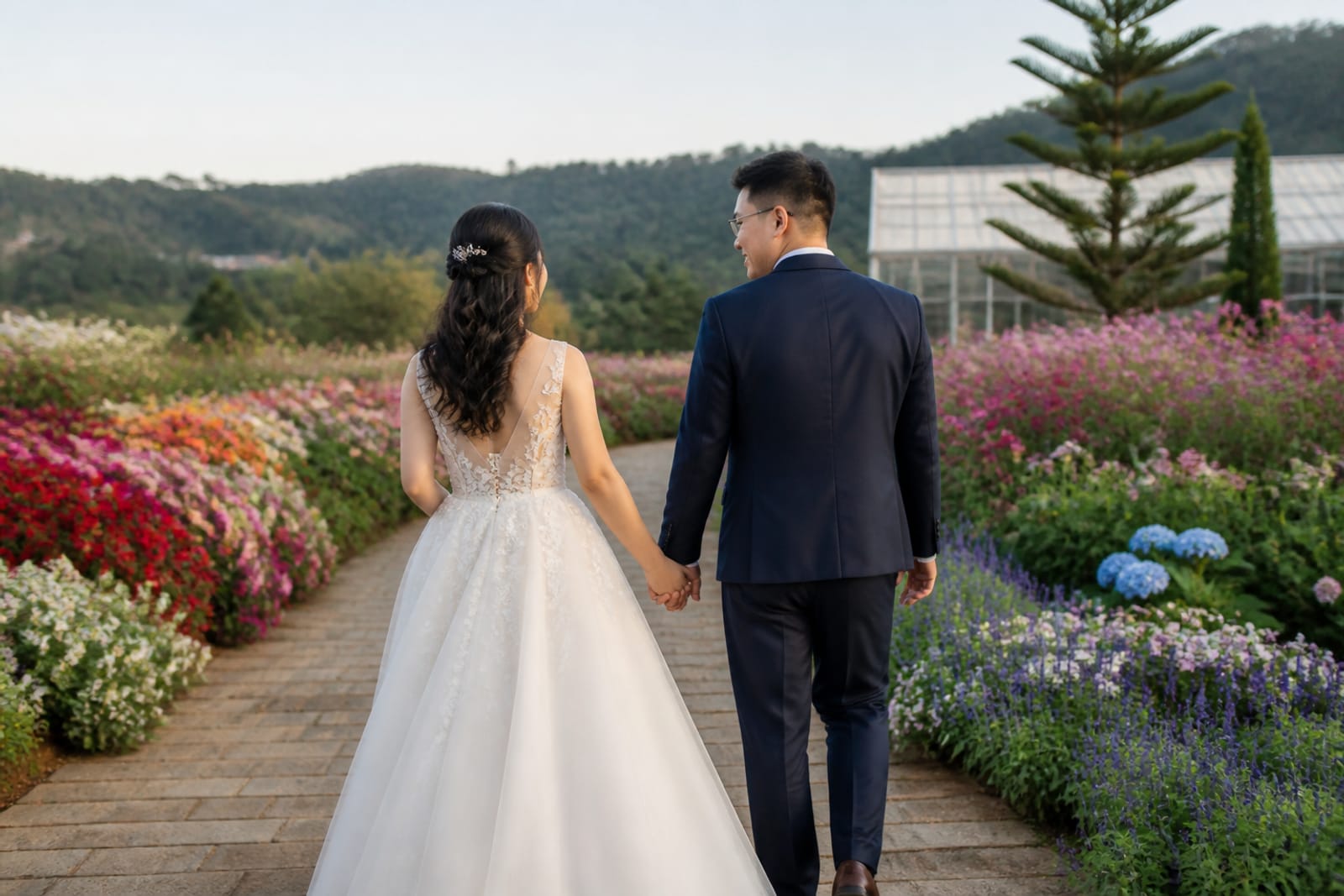
Entry and permissions: Check Da Lat's official tourism site for current entry fees, guided-tour requirements, and photography permits. Many sites require a guide; confirm whether your photographer can act as guide or if you need a separate person.
Team fitness and gear: Ask your photographer if they've shot at Datanla before. Confirm they can carry full kit up 300+ steps without assistants. If they cannot, budget for a gear porter—a local guide who carries lights and reflectors.
Ao dai fit and water resistance: If renting in Da Lat, try it on 24 hours before the shoot. Check for loose buttons, transparent panels and hem length (long trains catch on wet stone). If you own your ao dai, test any spray-on water protectant on a hidden seam first.
Weather backup: Agree on a rain policy with your photographer before booking. Do you reschedule, do a shorter session, or shoot indoors in Da Lat town? Get it in writing.
Makeup timing and durability: Waterfall mist and humidity break down makeup faster than usual. Confirm your makeup artist brings long-wear primer, waterproof mascara and powder for touch-ups. Budget 20–30 minutes for touch-ups between location moves.
Post-shoot logistics: Plan how you'll dry and change out of wet clothes. Most Da Lat hotels offer shower facilities; confirm yours does. Arrange dry clothing and undergarments in your hotel room, not at the waterfall.
---
How does a Datanla shoot differ from other ao dai photoshoots?
Temple and street shoots in Hanoi or Hoi An rely on symmetry, heritage architecture and foot traffic as backdrop. Datanla is pure landscape—you are the subject, the waterfall is the co-star. Posing must work with asymmetrical rock formations and strong directional light rather than against a flat wall. You cannot control the light (it comes from the sky and reflects off water), so flexibility and patience replace precision. A session here takes longer because of hiking, outfit changes and water management; expect 3–4 hours on-site versus 2 hours for a temple shoot. Cost factors differ too: entry fees, local guide fees, higher wear on equipment (water spray, algae, mud) and the need for an experienced local photographer add up. If you're comparing Datanla to pre-wedding shoots in urban Hanoi or Saigon, expect a more adventurous, physically demanding day with a higher emotional payoff for couples who love nature. Conclusion: Datanla suits couples prioritizing landscape drama over architectural elegance.
---
Where should you stand for the best ao dai silhouette?
The main viewing platform (closest to the falls' base) puts you below the waterfall—good for backlighting but subjects often look small. Mid-level platforms offer the most versatile angles: sun to your side or behind, water visible as a white ribbon, mist framing your shoulders. Upper platforms near the top give you height and drama but require more hiking. Work with your photographer to map 3–4 positions before the shoot: one backlit with mist, one side-lit with full cascade visible, one against a moss-covered rock wall (no water in frame, intimate and moody). Each requires different footing, so change shoes accordingly. Conclusion: scout platforms with your photographer; plan moves that minimise outfit changes between distant locations.
---
Does a couple photoshoot at Datanla need two outfits or can you share one ao dai?
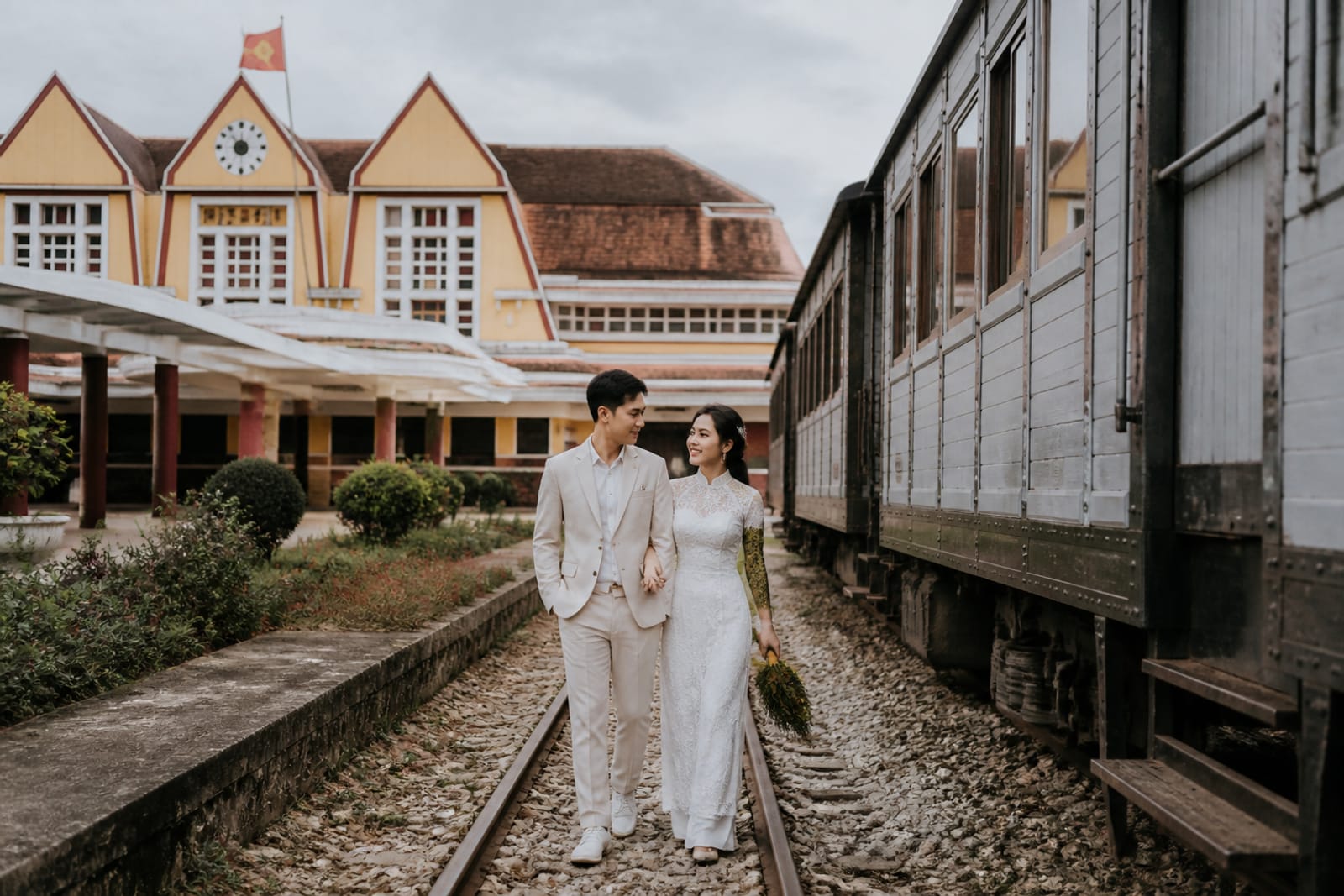
If both partners wear ao dai, plan two separate outfits (bride in white or pastels, groom in a complementary shade or dark traditional style). Sharing one creates awkward transitions and limits poses. If one partner wears Western formal wear, the other in ao dai works visually—the ao dai stands out. Water management matters: if both are in silk ao dai, you're managing two wet garments and two wet hair/makeup states. Budget accordingly—either rent both locally or bring both from Hanoi. A hybrid approach (one full ao dai, one ao dai-inspired elements like a traditional sash over a suit) balances tradition and practicality. Conclusion: two separate outfits (rented or brought) simplifies logistics and gives you more creative variation.
FAQ
Can Cáo Studio – Makeup & Photoshoot shoot my Datanla waterfall ao dai session directly?
No. Cáo Studio operates in Hanoi, Ho Chi Minh City and Hoi An only. For a Datanla session, hire a local Da Lat photographer. You may book Cáo Studio for hotel makeup and hair in Da Lat the morning of your shoot, coordinated via WhatsApp +84 338 762 340.
Is December or January better for light at Datanla?
Both are excellent—cool, dry and clear. January has slightly more stable weather; December can have early-morning cloud. Book the earliest available morning slot (7–8 a.m.) to catch mist and low-angle sun before clouds build.
What happens if it rains on the day of my booking?
Confirm a rain policy (reschedule, shortened session, or indoor Da Lat backup shoot) with your photographer before paying. Most local teams reschedule for the next clear day if paid a deposit; read your contract closely.
Should I wear waterproof shoes or go barefoot on the rocks?
Waterproof hiking shoes with good grip are essential—rocks are slick with algae and water, and bare feet risk serious injury. Bring heels or formal shoes in a dry bag for portrait-only segments away from the cascade.
How long does a typical Datanla ao dai shoot take from start to finish?
3–4 hours on-site: 30 min hike up, 20 min setup, 90–120 min shooting across 3–4 locations, 20 min outfit changes, 30 min hike down. Add travel time from your hotel (15 min) and makeup prep (45 min–1 hour beforehand).
Can I rent an ao dai in Da Lat or should I bring one from Hanoi?
Renting locally is practical—lower cost, no transport risk, and you can exchange it same-day if the fit is wrong. Da Lat town has small ao dai rental shops near Xuan Huong Lake. Bringing your own gives you exact fit and personal style but requires careful packing and water-protection planning.
Do I need a guide to enter Datanla, or can my photographer lead the way?
Most visitors hire an official guide; confirm current requirements on Da Lat's tourism website. Your photographer may not be permitted to act as a substitute guide. Budget for a separate guide fee or ask your photographer if they've arranged exemptions previously.
FAQ
Can Cáo Studio – Makeup & Photoshoot shoot my Datanla waterfall ao dai session directly?
No. Cáo Studio operates in [Hanoi](/hanoi), [Ho Chi Minh City](/saigon) and [Hoi An](/hoi-an) only. For a Datanla session, hire a local Da Lat photographer. You may book Cáo Studio for [hotel makeup and hair](/makeup-and-hair) in Da Lat the morning of your shoot, coordinated via WhatsApp +84 338 762 340.
Is December or January better for light at Datanla?
Both are excellent—cool, dry and clear. January has slightly more stable weather; December can have early-morning cloud. Book the earliest available morning slot (7–8 a.m.) to catch mist and low-angle sun before clouds build.
What happens if it rains on the day of my booking?
Confirm a rain policy (reschedule, shortened session, or indoor Da Lat backup shoot) with your photographer before paying. Most local teams reschedule for the next clear day if paid a deposit; read your contract closely.
Should I wear waterproof shoes or go barefoot on the rocks?
Waterproof hiking shoes with good grip are essential—rocks are slick with algae and water, and bare feet risk serious injury. Bring heels or formal shoes in a dry bag for portrait-only segments away from the cascade.
How long does a typical Datanla ao dai shoot take from start to finish?
3–4 hours on-site: 30 min hike up, 20 min setup, 90–120 min shooting across 3–4 locations, 20 min outfit changes, 30 min hike down. Add travel time from your hotel (15 min) and makeup prep (45 min–1 hour beforehand).
Can I rent an ao dai in Da Lat or should I bring one from Hanoi?
Renting locally is practical—lower cost, no transport risk, and you can exchange it same-day if the fit is wrong. Da Lat town has small ao dai rental shops near Xuan Huong Lake. Bringing your own gives you exact fit and personal style but requires careful packing and water-protection planning.
Do I need a guide to enter Datanla, or can my photographer lead the way?
Most visitors hire an official guide; confirm current requirements on Da Lat's tourism website. Your photographer may not be permitted to act as a substitute guide. Budget for a separate guide fee or ask your photographer if they've arranged exemptions previously.
Ao dai, makeup, hair and a local photographer in Hanoi or Saigon — one WhatsApp message.