/ao-dai-photoshoot
Ao Dai Wedding Photos at Dong Van Karst Plateau
Dong Van Karst Plateau, in Ha Giang province (far north Vietnam), is known for towering limestone formations, terraced rice, and clear cool light. A photoshoot there takes a full day minimum because access involves a 3–4 hour drive from Hanoi through winding mountain roads. Best seasons are September to November (golden terraces, cooler air, stable light) and December to February (crisp, sharp light but colder). Cáo Studio does not operate in Ha Giang — the studio shoots in Hanoi, Ho Chi Minh City and Hoi An. For a Dong Van session, you'll need to hire a local photographer who knows the terrain, roads, permits and how to work with ao dai in mountain weather. This guide covers location scouting, light timing, outfit choices and how to vet a local team so your ao dai frames match the scale of the landscape. ---
Where exactly are the best photo spots at Dong Van?
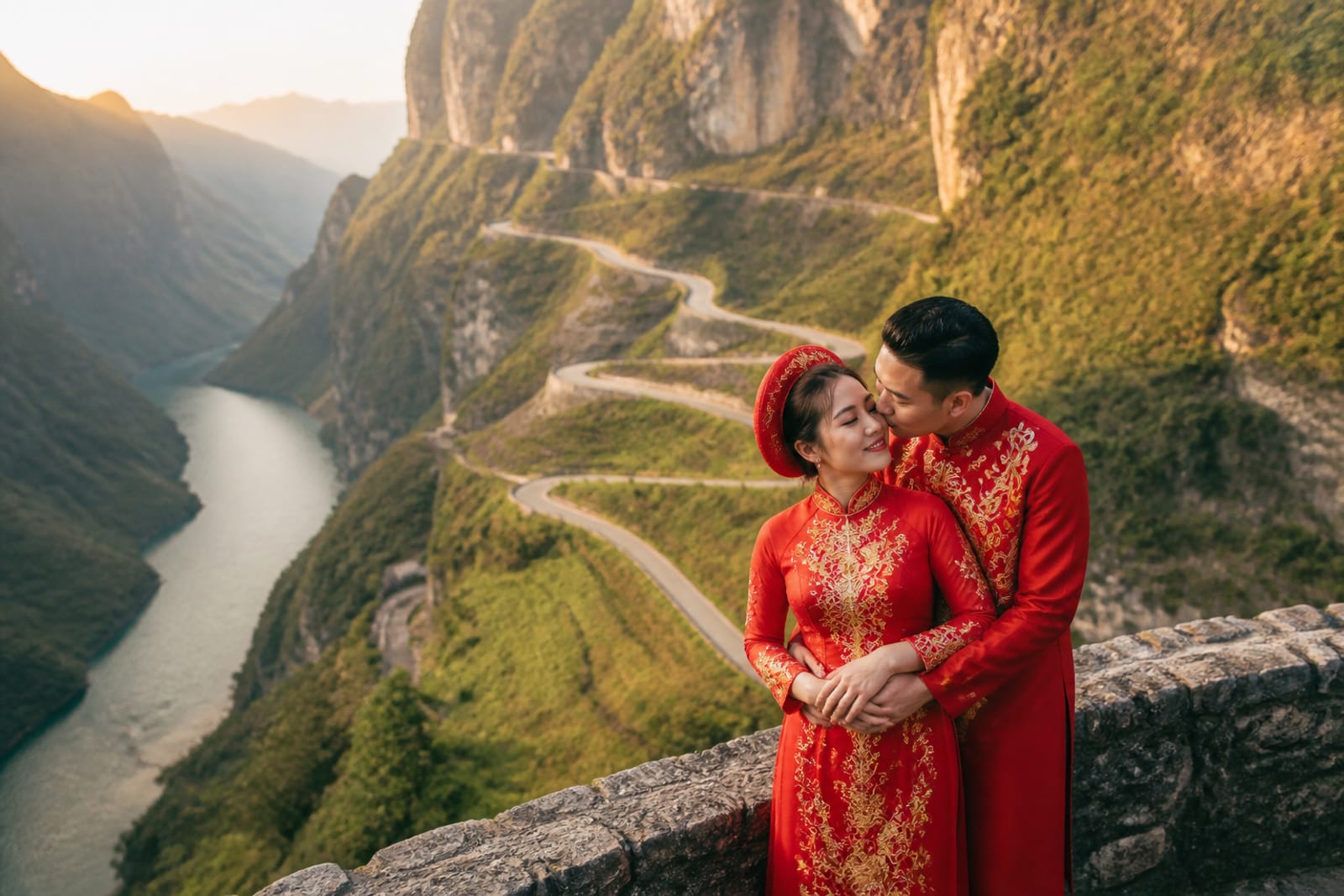
Dong Van Karst Plateau spans roughly 2,400 square kilometers; the most photographed zones are the "Dong Van loop" villages (Dong Van town, Meo Vac, Yen Minh) and the high-altitude limestone formations along the roads. Key frameable locations include Lung Cu flag tower (the northernmost point), Tham Mung cave valley, rice terraces around Hoang Su Phi, and the plateau's red-dirt ridges. Each requires a separate stop and 20–40 minute drives over unpaved or narrow roads between them. The best frames are not at the main monuments but in the transition zones: walking between parked vans, terraces lit side-on by morning sun, or the red earth paths where ao dai color reads against stone. A local guide who knows which road turns unpaved and which terraces are accessible in season saves hours of dead time.
📸 Book on WhatsApp — ao dai photoshoot
Why is light timing so critical on the plateau?
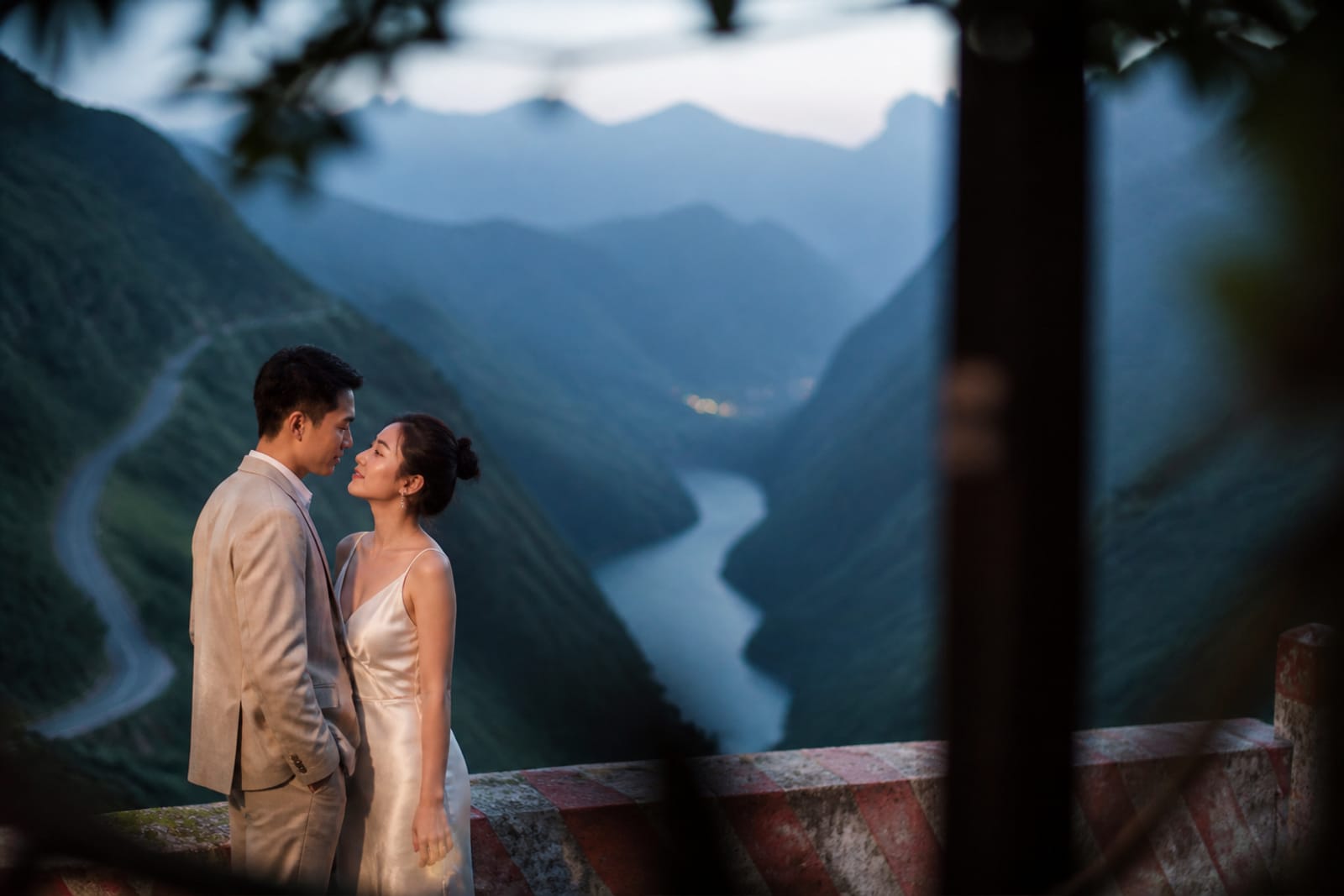
Mountain light at high altitude (1,200–1,600 meters) is clearer and more directional than lowland Vietnam, but the plateau is exposed and cold wind moves cloud cover fast. Early morning (6–7 am) brings soft, side-lit light across terraces before sun glare flattens the limestone walls; by 10 am, direct overhead light bleaches out the ao dai color and washes the landscape. Late afternoon (4–5 pm) returns side light and warm tones, but haze from valley humidity and a 30–40 minute drive back to town before dark creates time pressure. A photographer who has shot there in season knows which 90-minute window works best that day and plans the shoot route (higher altitudes first, terraces on the descent) to chase that light window. Rushing from spot to spot or shooting midday against flat light wastes the journey and the ao dai's fabric shimmer.
Which months offer the best weather and visibility?
| Season | Terrain Light | Why It Works | Why It Doesn't |
|---|---|---|---|
| Sep–Nov | Golden terraces, cool air, sharp shadows | Rice harvest, clear skies, comfortable walking | Early Sep still humid; late Nov gets cold; roads occasionally rain-slick |
| Dec–Feb | Crisp, low-angle morning light, stable clouds | Driest, coldest; ao dai color pops; longest shadows | Very cold at dawn (0–5°C); fewer terraces harvested; fewer travelers = fewer locals in frames |
| Mar–Apr | Warm, growing season, green terraces | Pleasant midday temps | Haze from lowland dust; light becomes flat by 9 am; fewer color contrasts |
| May–Sep | Wet season with afternoon storms | Occasional dramatic skies after rain | Landslide risk on mountain roads; heavy afternoon downpours; humidity softens light; roads muddy and slow |
September to November is the practical choice: terraces are harvested gold, light is sharp enough to hold detail in both ao dai and stone, and weather is dry enough for a full day outdoors. December to February offers the crispest light but requires extra warm layers and willingness to shoot in single-digit-Celsius temperatures at dawn.
Should you book with a local Ha Giang photographer or travel from Hanoi?
Cáo Studio operates in Hanoi, Ho Chi Minh City and Hoi An — not Ha Giang. If you're based in Hanoi and want a Dong Van shoot, you have two paths.
Option 1: Hire a local Ha Giang photographer. They know the terrain, road closures, village access, and weather patterns. They can shoot on short notice and don't charge for travel time. The trade-off is you'll need to vet their portfolio for ao dai work specifically — not all landscape photographers understand how fabric moves, light on embroidery, or the timing needed for couple frames on a steep path. Red flag: portfolios with only stiff posing or no movement frames; green flag: frames that show the subject walking, interacting with the landscape, and ao dai in side or backlighting.
Option 2: Book a Hanoi-based team for a day trip. Cáo Studio in Hanoi could theoretically coordinate makeup, hair and photographer for a Dong Van outing, but it would be a 10+ hour round journey with minimal shooting time. Ask on WhatsApp (+84 338 762 340) whether this fits their model; it's not a standard offering.
For most travelers, a skilled local Ha Giang photographer paired with self-arranged makeup/hair at your hotel in Hanoi the morning before travel is the practical choice.
How do you choose between Dong Van and other northern ao dai locations?
| Location | Light Quality | Remoteness | Outfit Fit | Best For |
|---|---|---|---|---|
| Dong Van Karst Plateau | Sharp, directional; fast cloud cover | 3–4 hours by car; unpaved roads; limited facilities | Ao dai reads against stone; cool temps suit layers | Dramatic geological framing; willing to travel far |
| Ninh Binh (Tam Coc, Trang An) | Soft, diffused over water | 1.5 hours by car; paved roads; boat access | Water reflection, fabric shimmer | Couple frames; less physical demand; easier logistics |
| Red River Delta (near Hanoi) | Warm, hazy; best at golden hour | 30–60 min by car | Ao dai color pops against green; accessible | Time-limited travelers; same-day turnaround |
| Sapa (if accessible) | Misty mornings, cool; high variability | 5–6 hours by car; remote | Ao dai layering works; fabric moves in wind | Fog-frame aesthetic; high-altitude experience |
Dong Van is the choice if you want geological drama and are willing to dedicate a full day with logistics complexity. Other ao dai photoshoots in Hanoi or Ninh Binh couple sessions offer less travel time and more predictable light.
What to check before booking a Dong Van ao dai shoot
Photographer experience with ao dai: Ask for frames shot in ao dai on a mountain or plateau location. Generic landscape portfolios don't prove they understand how fabric moves, sits on stairs, or reads against shadow and sky. Request at least three frames showing movement (walking, turning, interacting).
Knowledge of seasonal logistics: Confirm the photographer has shot in that month before. Roads close or become treacherous in heavy rain (May–September); early autumn can have flash floods; February mornings are near freezing. A photographer who says "we can shoot any month" is gambling with your time and outfit.
Ao dai sourcing and fit: Confirm whether the photographer can source an ao dai in your size or whether you bring one. Mountain terrain is unforgiving on loose hems; a poor fit wastes frames on adjustments. Clarify whether makeup and hair are included or contracted separately.
Round-trip timing and backup plan: Confirm pickup time from your Hanoi hotel, driving schedule (with buffer for road conditions), and what happens if weather closes the route that day. A real plan names alternative locations or a rain date, not just "we'll figure it out."
Editing and delivery: Confirm turnaround time (how many days until edited frames), whether you get raw files or JPEG-only, and how you receive them (USB, drive link, print). Budget extra days — remote shoots often involve longer editing because lighting is variable.
Cost factors (never quoted here, ask on WhatsApp): Round-trip fuel, driver, parking at landmarks, entry fees for some sites, meals, and time spent. A Dong Van shoot is more expensive than a Hanoi city shoot because of distance and road risk. Ask your photographer to itemize what's included so you're not surprised.
---
Real logistics: what goes wrong and how to avoid it
Road delays: Mountain roads can lose 30–60 minutes to livestock, weather deterioration or a stalled vehicle ahead. Leave 2 hours earlier than the GPS estimate and plan your shoot window 30 minutes later than you calculated.
Weather shifts: Cloud cover or sudden cold wind can kill your light window. A photographer who has a backup shot list (secondary location, different framing style) keeps the day productive instead of rushing.
Ao dai handling: Long hems catch on uneven terrain; embroidery can snag on rough stone. A photographer who brings pins, tape and a steamer (or knows which village homestay has one) saves wardrobe continuity.
Fuel and meals: Dong Van towns have limited restaurants and no consistent provision shops. Eat before the shoot or bring snacks. Confirm your vehicle has enough fuel and the driver knows where to refill.
Cold at dawn: December–February mornings are 0–5°C at altitude. Bring a heavy shawl or jacket to wear off-frame before the shoot. Ao dai alone won't keep you warm; layers under it are essential.
---
How to vet a local photographer: a quick checklist
- [ ] Portfolio includes ≥3 ao dai frames on terrain (not studio or streets)
- [ ] Can name specific months they've shot there and describe weather that day
- [ ] Offers a backup location if primary spot is inaccessible
- [ ] Provides a written itinerary with times and includes makeup/hair or names contractor
- [ ] Specifies editing format, file type and delivery date in writing
- [ ] Answers questions about cold, road conditions and what to bring
- [ ] Has worked with international clients and speaks English clearly
- [ ] Provides contact from a previous ao dai client (not just landscape)
---
FAQ
Is Dong Van worth the travel time from Hanoi?
If you want geological drama and can dedicate a full day, yes. Limestone scale and golden rice terraces create frames unique to the plateau. If you're in Hanoi for <3 days or want a quick shoot, Ninh Binh or the Red River Delta suit better logistics.
Can I shoot ao dai in Ha Giang without hiring a photographer?
Not safely on your own. Roads are steep and unpaved; terraces have uneven edges; weather shifts fast. A local guide keeps you on safe paths and knows the light windows. Self-guided photos often miss focus and framing because you're navigating terrain, not composing.
Does Cáo Studio shoot in Dong Van?
No. Cáo Studio operates in Hanoi, Ho Chi Minh City and Hoi An. For Dong Van, you'll need a local Ha Giang photographer. Contact us on WhatsApp (+84 338 762 340) if you want to explore a Hanoi shoot instead or need referral suggestions.
What temperature should I expect in December at Dong Van?
Mornings are 0–5°C; midday reaches 8–12°C. Ao dai alone is not enough. Wear thermal layers underneath and bring a heavy cardigan or jacket to remove before framing. Your photographer should have a heater in the vehicle.
How long does a Dong Van shoot take from Hanoi?
10–12 hours total: 3–4 hours driving each way, 3–4 hours on-location. Expect to leave Hanoi at 5–6 am and return by 6–7 pm. A shorter itinerary (fewer locations, single hour of shooting) saves time but reduces frame variety.
Can I wear a regular ao dai or do I need a special one?
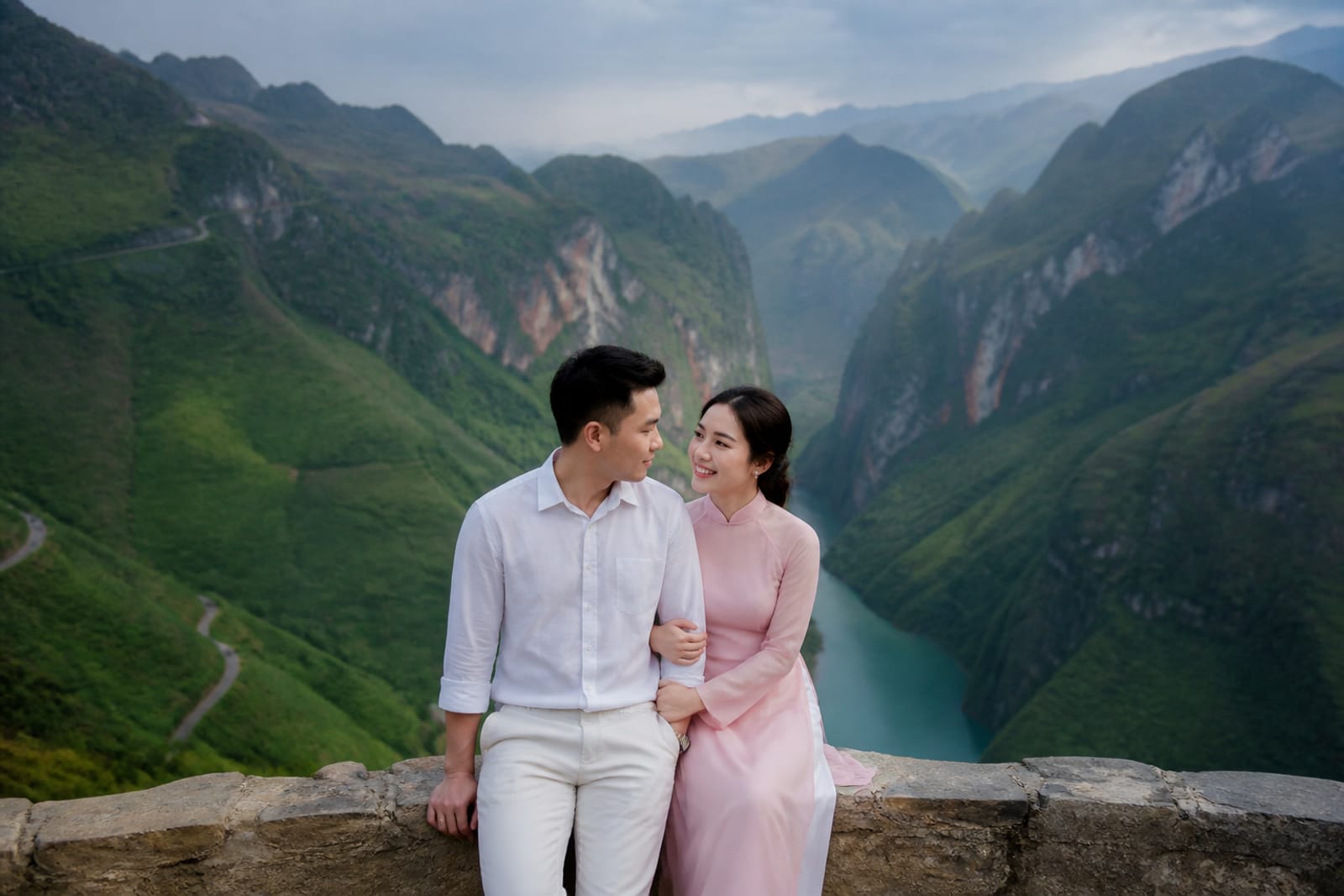
A well-fitted ao dai in solid color or subtle pattern works best on terrain because it reads against stone and landscape without competing. Heavily embroidered or loose-fitting ao dai can snag on paths or blur in movement frames. Ask your photographer for fit and fabric recommendations before you source or rent one. --- 📸 Book on WhatsApp — ao dai photoshoot Shoot ao dai where it belongs — against a landscape that matches its scale. Dong Van demands planning, but the frames will reflect that journey.
FAQ
Is Dong Van worth the travel time from Hanoi?
If you want geological drama and can dedicate a full day, yes. Limestone scale and golden rice terraces create frames unique to the plateau. If you're in Hanoi for <3 days or want a quick shoot, Ninh Binh or the Red River Delta suit better logistics.
Can I shoot ao dai in Ha Giang without hiring a photographer?
Not safely on your own. Roads are steep and unpaved; terraces have uneven edges; weather shifts fast. A local guide keeps you on safe paths and knows the light windows. Self-guided photos often miss focus and framing because you're navigating terrain, not composing.
Does Cáo Studio shoot in Dong Van?
No. Cáo Studio operates in [Hanoi](/hanoi), [Ho Chi Minh City](/saigon) and [Hoi An](/hoi-an). For Dong Van, you'll need a local Ha Giang photographer. Contact us on WhatsApp (+84 338 762 340) if you want to explore a Hanoi shoot instead or need referral suggestions.
What temperature should I expect in December at Dong Van?
Mornings are 0–5°C; midday reaches 8–12°C. Ao dai alone is not enough. Wear thermal layers underneath and bring a heavy cardigan or jacket to remove before framing. Your photographer should have a heater in the vehicle.
How long does a Dong Van shoot take from Hanoi?
10–12 hours total: 3–4 hours driving each way, 3–4 hours on-location. Expect to leave Hanoi at 5–6 am and return by 6–7 pm. A shorter itinerary (fewer locations, single hour of shooting) saves time but reduces frame variety.
Can I wear a regular ao dai or do I need a special one?
A well-fitted ao dai in solid color or subtle pattern works best on terrain because it reads against stone and landscape without competing. Heavily embroidered or loose-fitting ao dai can snag on paths or blur in movement frames. Ask your photographer for fit and fabric recommendations before you source or rent one. --- [📸 Book on WhatsApp — ao dai photoshoot](/book) Shoot ao dai where it belongs — against a landscape that matches its scale. Dong Van demands planning, but the frames will reflect that journey.
Ao dai, makeup, hair and a local photographer in Hanoi or Saigon — one WhatsApp message.