/ao-dai-photoshoot
Ao Dai Wedding Photos at Fairy Stream: Light, Season & Logistics
Fairy Stream is a small creek in Mui Ne (southern coast, Vietnam) where turquoise water cuts through red cliffs, offering intimate, natural framing without crowds. Sessions run 1–2 hours (arrive early to beat foot traffic). The dry season (November–April) is best; strong winds November–March stir up sand, so mid-season (January–March) balances light and wind. Water depth varies; wear slip-on shoes and bring a second outfit if you'll wade. Cáo Studio does not operate in Mui Ne, so you'll need to hire a local photographer familiar with the creek's shifting light, water level and tides. One coordinated team (photographer + hair/makeup artist + stylist) shoots better than booking separately, because timing in tight spaces matters—you move once, light moves constantly, and resetting takes minutes you don't have.
Why does Fairy Stream suit ao dai more than other Mui Ne spots?
Fairy Stream's narrow creek walls and overhanging palms create frame-within-frame composition—the ao dai's silk catches side light without harsh overhead glare. The red sand cliffs and jade water offer natural colour contrast (especially in the blue-grey ao dai shades). Unlike wide beaches or sand dunes, Fairy Stream forces movement—walking across rocks, stepping through shallow water, adjusting to light—which produces candid frames instead of static poses. The creek is shallow enough to wade safely in most months, but deep enough to reflect sky and cliff. Most Western photographers shoot it wide first (full body, the water, the cliffs), then tighter on the dress detail and face. This works because the location does half the storytelling; your team only needs to frame it and light your face.
📸 Book on WhatsApp — ao dai photoshoot
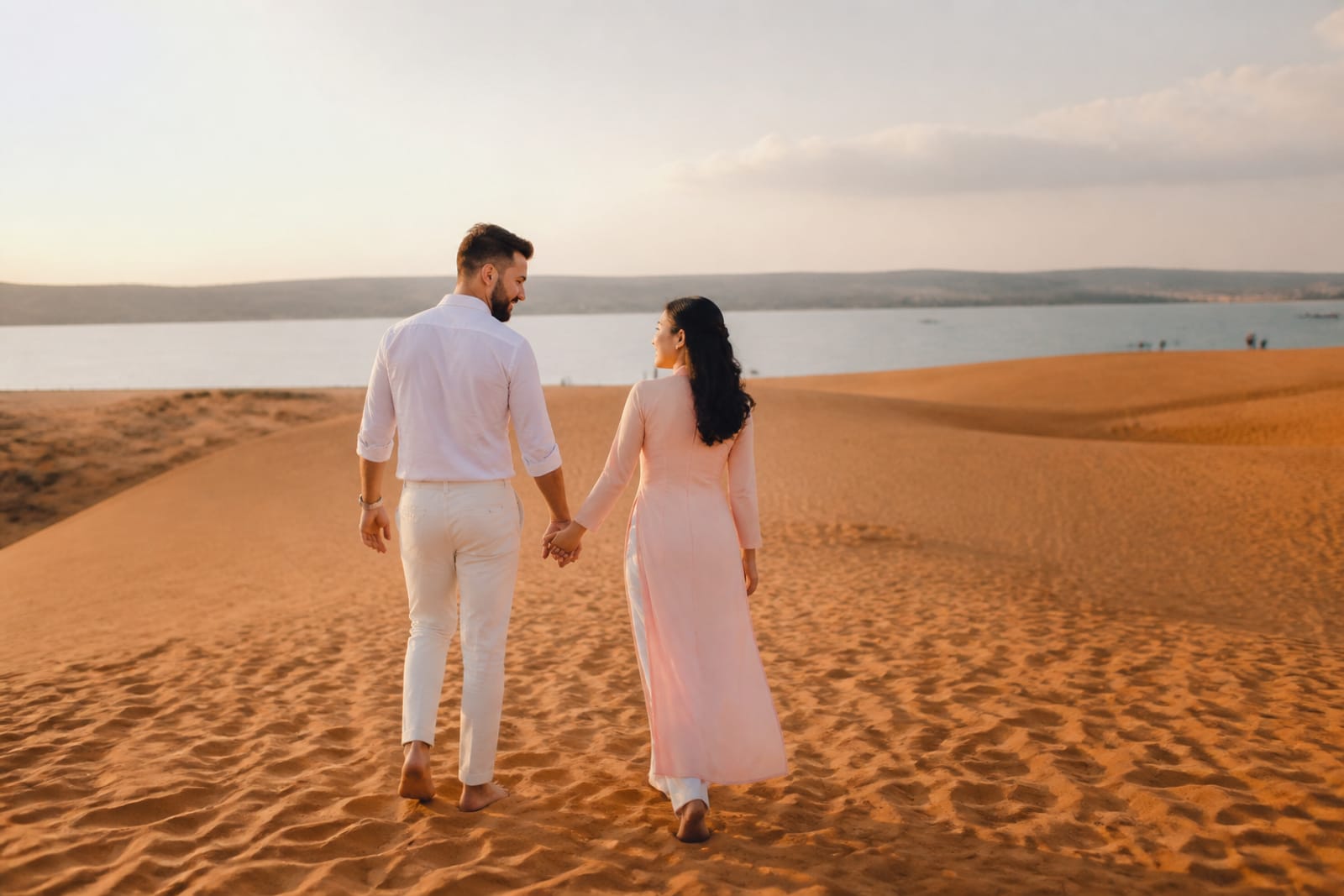
What month and time of day gives the best light at Fairy Stream?
Best light runs October–April, but October–November is rainy and unpredictable on the central coast; November–March is clearest. Dry season peaks December–March, but strong winds November–March blow sand into the creek and your hair. Mid-January to late February balances wind, rain and light—though late January to mid-February (Tet period) brings crowds and closed local services. Time of day: sunrise (5:45–6:15 am) offers soft, directional side light without shadows, and the creek is empty. By 8 am foot traffic picks up; midday (10 am–2 pm) sun is overhead and harsh on the ao dai's embroidery. Late afternoon (3–5 pm) gives golden side light but requires 2+ hours of shoot time to catch it. Most Cáo Studio couples pick early morning; local Mui Ne photographers often start later (6–7 am) to avoid the coldest air. Check local tide times before booking—high tide floods the walking paths, low tide exposes muddy banks and cuts light reflection off the water.
How does one team (photo + hair + makeup + styling) beat three separate vendors at Fairy Stream?
Fairy Stream's narrow paths and shifting light mean timing compounds—the sun moves 15° every 30 minutes at this latitude. If your photographer arrives alone and hair/makeup set up elsewhere, you lose the golden hour resetting clothes, shoes and strands. One team works because: the stylist dresses you correctly (ao dai length, undershirt fit, no wrinkles) before leaving the vehicle; the makeup artist knows how light reads on camera and applies matte finishes to avoid glare off water mist; the photographer pre-scouts light and directs movement together. If something goes wrong—a strap tears, makeup needs a touch-up, the water is colder than expected—three vendors blame each other; one team pivots. Cáo Studio books outfit, hair, makeup and photographer as one session, so everyone is invested in the same frame. Local Mui Ne photographers often partner with hair and makeup artists independently; ask if they've shot together before and how they handle timing on location.
What outfit and undergarment choices prevent discomfort at Fairy Stream's water and narrow rocks?
Wear an ao dai in silk (cotton creases and clings when wet; silk dries faster and moves better in video). Underneath: fitted pants or shorts (not loose, which billows in water and looks bulky in frames), a light tank or slip to prevent the ao dai showing your real clothing. Avoid heavy embroidery or beading that weighs down when wet; keep it to the back panel or sleeves. Bring a second ao dai in a different colour (rich jewel tones—deep blue, emerald, burgundy—pop against red cliffs and jade water). Shoes: wear slip-on sandals or water shoes you don't mind losing to the creek; remove them for frames where the ao dai skims the water, and carry them in a dry bag. Hair: loose waves or a half-up, half-down style lets light and movement show the silk movement; tight buns work but limit the storytelling. Avoid heavy hairspray in humid, salt-air climates—it hardens under moisture. If you're wading deeply, ask your photographer to shoot wide first (full body), then step out, wring the hem, and shoot medium/close frames dry. Mui Ne's dry season is hot; bring water and electrolyte sachets—dehydration and heat stress show in your face after two hours.
| Outfit Option | Best For | Water Depth | Why |
|---|---|---|---|
| Silk ao dai + slip, shorts underneath | All-water shots, movement | Knee-deep, wading | Silk moves in video; shorts prevent transparency; slip hides undergarment |
| Two-ao-dai shoot (colour swap) | Variety, video editing | Shallow (ankle-deep) | More frames, different moods; less resetting if one gets heavy |
| Ao dai rental (local Mui Ne) | Budget-conscious, one-off | Shallow to knee-deep | Local artisans know fit for Vietnamese frame; check damage policy before booking |
| Couple ao dai (bride + groom silhouette) | Couple or pre-wedding frames | Ankle to knee-deep | Symmetry in narrow creek; groom's tunic moves differently; both need water shoes |
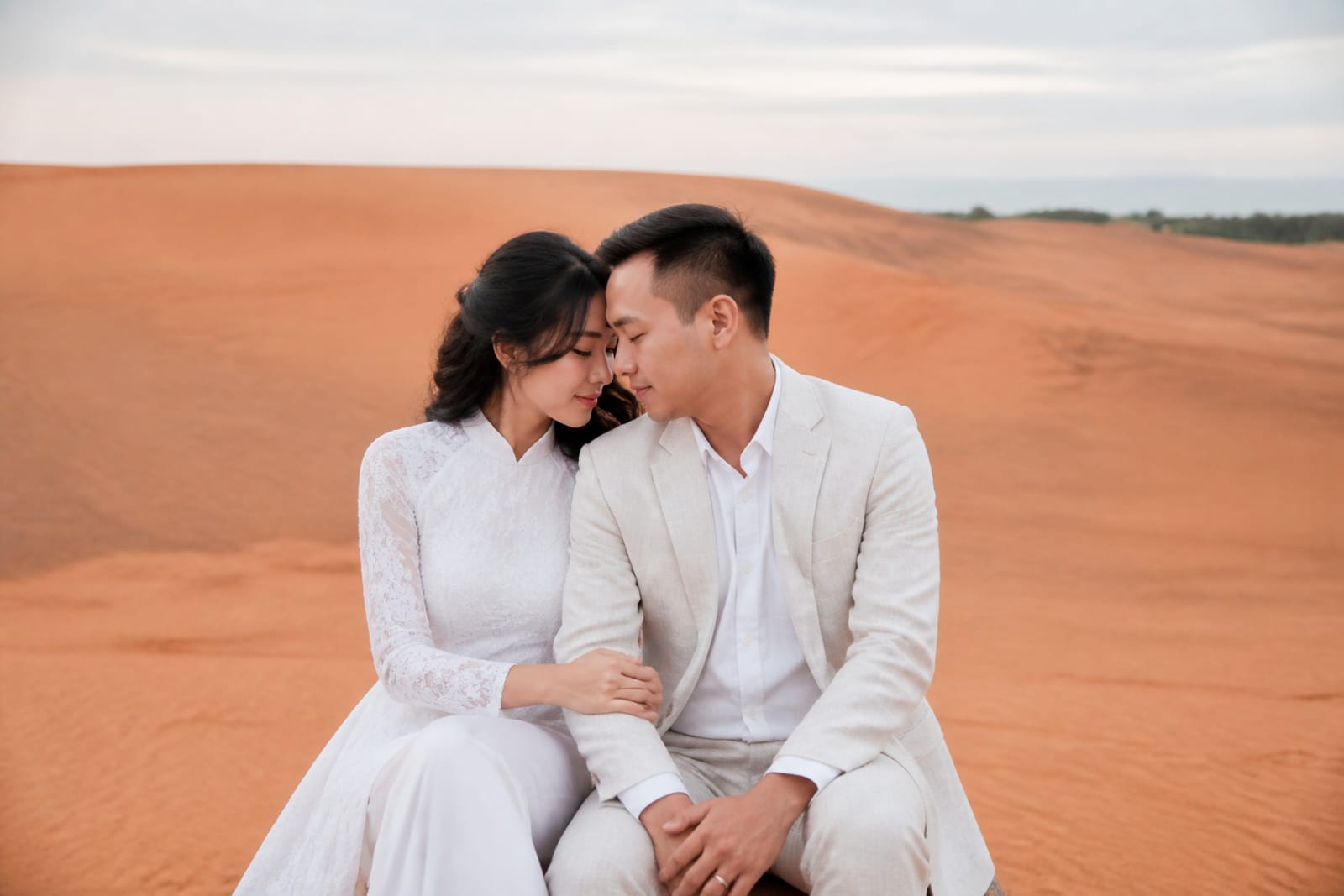
Who should you book as your Fairy Stream photographer, and what questions to ask before committing?
Cáo Studio does not shoot in Mui Ne, so hire a local photographer experienced with Fairy Stream's light, tides and foot traffic. When vetting, ask: (1) Do you have a first-light (5:45–6:30 am) availability? If not, they're used to midday shoots and won't navigate early-morning side light. (2) Have you shot ao dai at Fairy Stream before? Ask to see a portfolio with dates—if all frames are wide and static, they don't understand movement-based storytelling. (3) Do you work with a makeup artist and stylist? If yes, have you shot together at Fairy Stream? If no, they'll lose time coordinating on location. (4) What's your backup plan if it rains or the water level rises? Mui Ne's dry season is unpredictable; ask if they'll reschedule or offer a second date. (5) How many edited photos do you deliver, and in what timeline? Cáo Studio delivers edited frames within 48 hours; local photographers vary widely (ask for a written timeline). (6) Do you shoot video or stills only? Fairy Stream's movement (water, palms, silk) suits short vertical video; ask if they'll deliver a 30-second reel in addition to photos.
What logistics and costs factor into a Fairy Stream ao dai shoot?
Cáo Studio does not operate in Mui Ne, so you'll arrange transport, parking and timing locally. Costs depend on: (1) Photographer experience—a local independent photographer costs less than a full-service studio in Ho Chi Minh City, but travel time from Saigon is 4+ hours one-way; factor in whether they charge travel time. (2) Hair and makeup—if booked separately, add service fees for each vendor; one coordinated team (if available) bundles costs. (3) Ao dai rental—Mui Ne's local rental shops offer cheaper rates than Hanoi or Saigon studios, but fit and quality vary; check reviews and damage policies. (4) Time of booking—peak season (December–February) requires booking 2–4 weeks ahead; off-peak (May–October) is easier to arrange. (5) Additional outfits—a second ao dai or groom suit means higher rental or styling fees. (6) Transport to Fairy Stream—arrange a driver or hire a taxi/motorbike; ask your photographer if they provide transport recommendations. Mui Ne is a small town; many photographers know reliable drivers who wait during shoots.
If you're based in Hanoi or Ho Chi Minh City and want a comprehensive photoshoot in Vietnam, Cáo Studio operates in Hanoi, Ho Chi Minh City and Hoi An with one coordinated team (photographer, hair, makeup, styling). For Fairy Stream specifically, budget time for scouting a local team and clear written agreements on timing, outfit changes and delivery.
---
What to check before you book a Fairy Stream shoot
- Portfolio with dates: Ask for photos and video from the last three Fairy Stream shoots. Are frames varied (wide, medium, close), or repetitive? Do you see movement and interaction, or static poses?
- Crew coordination: Confirm the photographer, makeup artist and stylist have shot together at Fairy Stream at least once. Ask who's responsible if timing goes wrong.
- Backup plan in writing: Confirm rescheduling policy if water level rises, rain hits, or wind exceeds 20 km/h (ask them to define their weather threshold).
- Edited delivery timeline: Get a written promise of edit delivery date. Cáo Studio delivers within 48 hours; ask your local photographer what's realistic.
- Outfit and damage policy: If renting ao dai locally, clarify: Does the fee include minor wrinkling and salt water stains? What counts as damage? Can you request a second outfit if the first gets too wet?
- Early start logistics: Confirm the photographer will pick you up or meet you before sunrise. Late starts waste the best light.
📸 Book on WhatsApp — ao dai photoshoot
For more on ao dai photoshoots elsewhere in Vietnam, see the main ao dai guide. If you're planning a couple photoshoot in Hanoi, Ho Chi Minh City or Hoi An, Cáo Studio can coordinate everything in one booking.
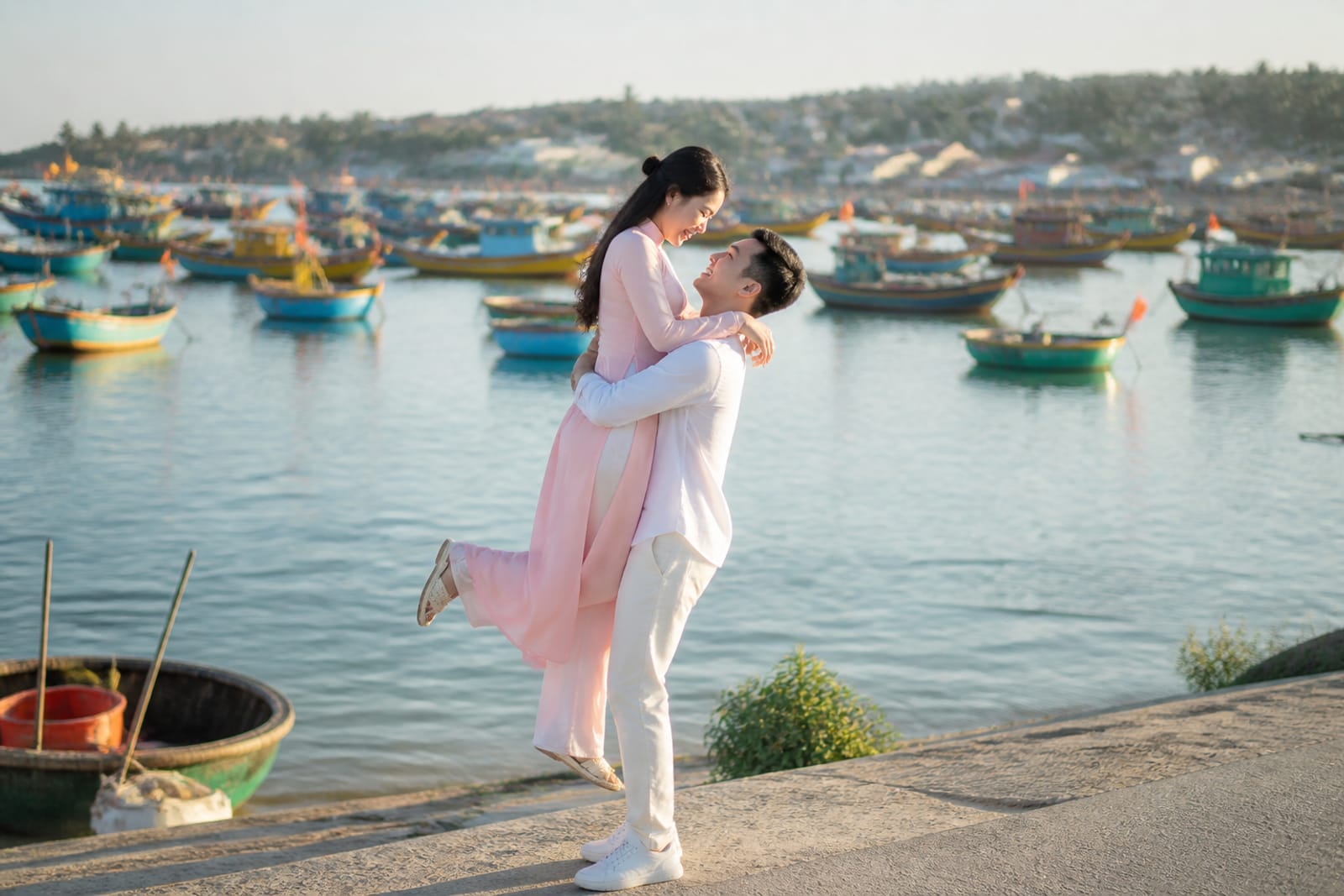
FAQ
Does Cáo Studio shoot at Fairy Stream, Mui Ne?
No. Cáo Studio operates in Hanoi, Ho Chi Minh City and Hoi An only. We've written this guide to help you plan a Fairy Stream session and find a local photographer. For a comprehensive ao dai shoot in our service areas, contact us on WhatsApp.
What's the best month to shoot ao dai at Fairy Stream?
January–February balances dry weather, clear light and lower winds. Avoid October–November (rainy), December (crowds and holiday closures), and May–September (hot, wet, typhoon risk). Book 2–4 weeks ahead in peak season.
Can I wade in an ao dai at Fairy Stream without ruining it?
Yes, if you wear silk (dries faster than cotton), keep embroidery minimal or backside-only, and wear a slip underneath. Bring water shoes or sandals, a dry bag, and a second ao dai to change into after wading scenes. Avoid heavy beading and hairspray in the humid air.
How long does a Fairy Stream ao dai shoot take?
Allow 1–2 hours, depending on outfit changes and walking pace. Arrive 30 minutes early to scout light and test the water depth. Early-morning shoots (5:45–7:30 am) capture the best light and avoid foot traffic.
What questions should I ask a local Mui Ne photographer before booking?
Ask if they shoot first-light (5:45 am), have previous Fairy Stream portfolios with dates, work regularly with a makeup artist and stylist, offer a backup date if weather fails, guarantee a written edit timeline, and provide transport or driver recommendations.
How does booking one photographer + makeup + hair together beat booking them separately at Fairy Stream?
A coordinated team arrives ready (no resetting clothes, shoes or makeup between vendor arrivals), pivots if light shifts or water rises, and finishes on time because everyone's invested in the same frame. Separate vendors mean waiting, miscommunication and lost golden-hour time.
FAQ
Does Cáo Studio shoot at Fairy Stream, Mui Ne?
No. Cáo Studio operates in Hanoi, Ho Chi Minh City and Hoi An only. We've written this guide to help you plan a Fairy Stream session and find a local photographer. For a comprehensive ao dai shoot in our service areas, contact us on WhatsApp.
What's the best month to shoot ao dai at Fairy Stream?
January–February balances dry weather, clear light and lower winds. Avoid October–November (rainy), December (crowds and holiday closures), and May–September (hot, wet, typhoon risk). Book 2–4 weeks ahead in peak season.
Can I wade in an ao dai at Fairy Stream without ruining it?
Yes, if you wear silk (dries faster than cotton), keep embroidery minimal or backside-only, and wear a slip underneath. Bring water shoes or sandals, a dry bag, and a second ao dai to change into after wading scenes. Avoid heavy beading and hairspray in the humid air.
How long does a Fairy Stream ao dai shoot take?
Allow 1–2 hours, depending on outfit changes and walking pace. Arrive 30 minutes early to scout light and test the water depth. Early-morning shoots (5:45–7:30 am) capture the best light and avoid foot traffic.
What questions should I ask a local Mui Ne photographer before booking?
Ask if they shoot first-light (5:45 am), have previous Fairy Stream portfolios with dates, work regularly with a makeup artist and stylist, offer a backup date if weather fails, guarantee a written edit timeline, and provide transport or driver recommendations.
How does booking one photographer + makeup + hair together beat booking them separately at Fairy Stream?
A coordinated team arrives ready (no resetting clothes, shoes or makeup between vendor arrivals), pivots if light shifts or water rises, and finishes on time because everyone's invested in the same frame. Separate vendors mean waiting, miscommunication and lost golden-hour time.
Ao dai, makeup, hair and a local photographer in Hanoi or Saigon — one WhatsApp message.