/ao-dai-photoshoot
Ao Dai Wedding Photos at Ghenh Rang: Light, Timing & Booking
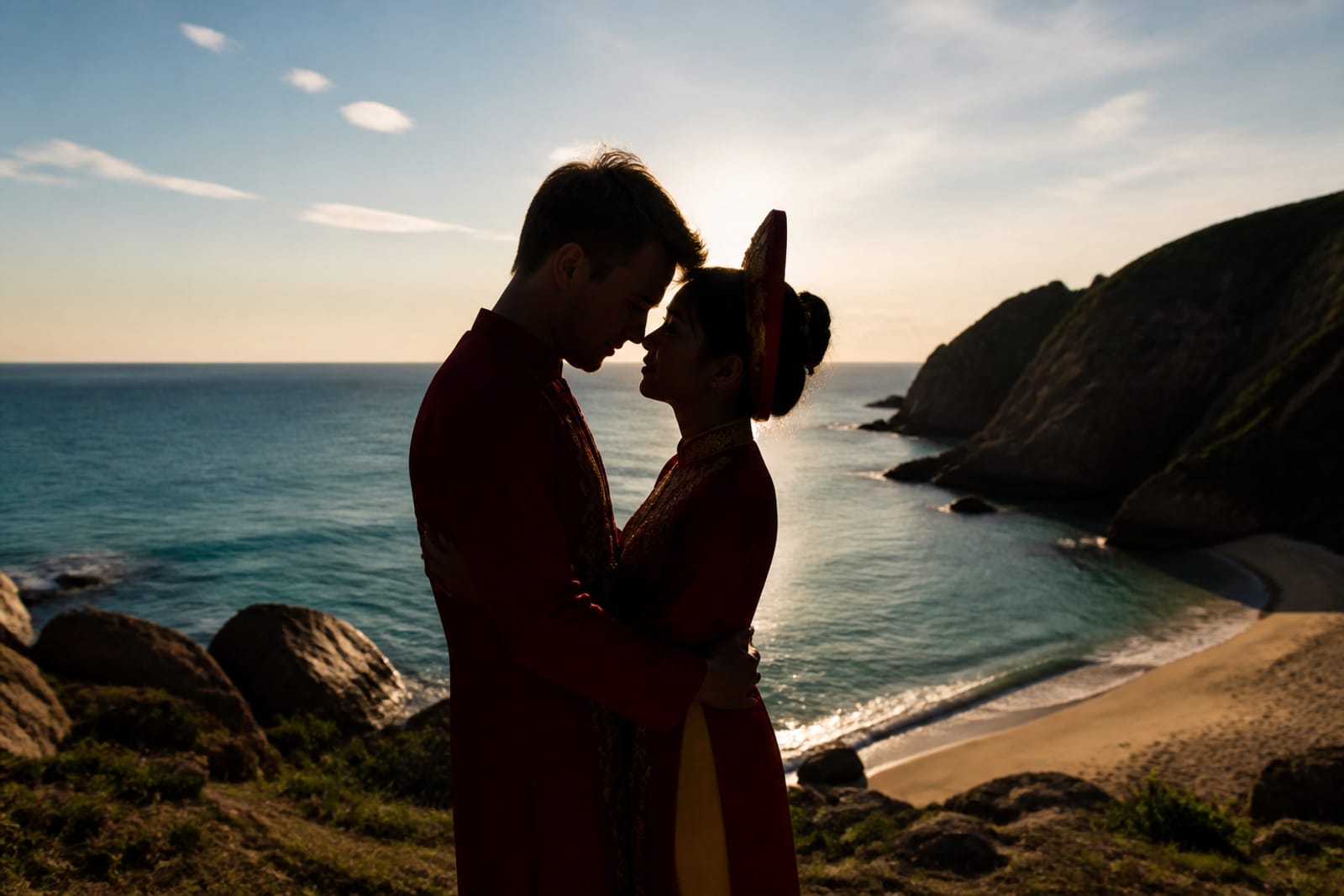
Ghenh Rang, a rocky cove near Quy Nhon, is a Quy Nhon destination for ao dai wedding photos: turquoise water, limestone cliffs, and soft golden light Feb–Aug. A typical shoot runs 2–3 hours, starting 1–2 hours before sunset to catch side light on water and fabric. Bring a director (not just a tripod) to time tides, frame wide first, then medium and close-ups as light shifts. Cáo Studio does not operate in Quy Nhon, but we can guide you on location scouting and recommend finding a local photographer who understands tidal access and ao dai movement. Check season (avoid Sep–Dec rain and typhoon risk), confirm parking and tide times with locals, and allow extra setup time on rocky terrain. ---
Is Ghenh Rang the right spot for an ao dai shoot?
Ghenh Rang works if you want water, rocks, and isolation—not if you need easy access or a crowd-free timeline. The cove is tidal: low tide exposes flat rocks and tide pools (great for walking shots), high tide deepens turquoise water but narrows the shore. Start your shoot 1–2 hours before sunset, when side light hits the cliffs gold and the ao dai fabric glows. Expect 15–20 minutes hiking on uneven rocks; wear grip shoes, not heels. If mobility is a concern or you prefer urban backdrops, Quy Nhon Old Town or the seafront promenade offer easier access and equally strong light. Compare by asking: Do I want isolation and natural texture, or ease of movement and a tighter timeline?
📸 Book on WhatsApp — ao dai photoshoot
When is light best at Ghenh Rang?
Golden hour (1–2 hours before sunset) is the only window worth timing. Before 4 pm, light is harsh and shadows deepen the rocky terrain—avoid it. At 4:30–5:30 pm (season-dependent), side light wraps the cliffs and fabric in warm colour; water reflects without glare. After 6 pm, light fades fast—you lose depth in 10 minutes. Cloudy days flatten texture but kill colour; clear days give contrast but risk blown highlights on white ao dai. A director watches light in real time, repositioning you as the sun dips—a tripod or preset angles miss these shifts. Book during Feb–Aug (dry season, consistent light) and confirm sunset time locally before arrival.
Which season avoids rain and delivers colour?
February through August is dry season along Quy Nhon's coast. Feb–Apr sees cool morning air and stable light; May–Aug stays warm but afternoon humidity can soft-focus distant hills. Sep–Dec is typhoon and flood risk—heavy rain is common Oct–Nov, and water turns grey-brown. If you must shoot outside dry season, plan an indoor backup (ao dai on a balcony, hotel hallway, or nearby cafe). Season affects not just weather but outfit choice: lightweight ao dai work better May–Aug, while structured silk reads better in cool Feb–Apr light. Compare season choice by asking: Am I prioritising colour and clear water, or willing to soften the image with haze?
What does an ao dai need to move on rocky terrain?
Ao dai is long, split front and back, worn over trousers—the split is your movement asset. On rocks, the tunic fabric drags; wear trousers (silk or cotton) that grip and don't catch. Choose ao dai in cotton or linen (lighter, less tangling) over heavy brocade—weight adds risk on uneven ground. Undergarments matter: a slip under the tunic prevents transparency in backlit frames; wear neutral briefs to avoid VPL (visible panty line). Avoid ao dai so fitted the front seam restricts your stride; a director frames walking, not standing, so ease of movement directly affects your frames. Request your ao dai rental shop confirm fabric weight and fit for outdoor wear before delivery.
How do I vet and book a local photographer for Ghenh Rang?
Cáo Studio does not shoot in Quy Nhon, but here is how to find a local team. Ask your hotel for three referrals; check their Instagram for ao dai work, not just couples or events. Ask directly: "Do you know Ghenh Rang's tides and access?" and "Do you shoot movement and light, or pose-heavy?" A one-person photographer is faster to book but slower to react to light shifts; a two-person team (photographer + director or hair touch-up) can reframe as light changes. Request a 2–3 hour session, not a full day—golden hour is short. Confirm all inclusions (edited photos, delivery time, outfit styling if any) in writing. Ask for a quote including travel time to Quy Nhon and any location fees; many photographers charge separately for coastal shoots. Check that they've shot ao dai wet fabric (spray from ocean rocks is real)—not all are prepared.
What outfit and styling makes ao dai work at the beach?
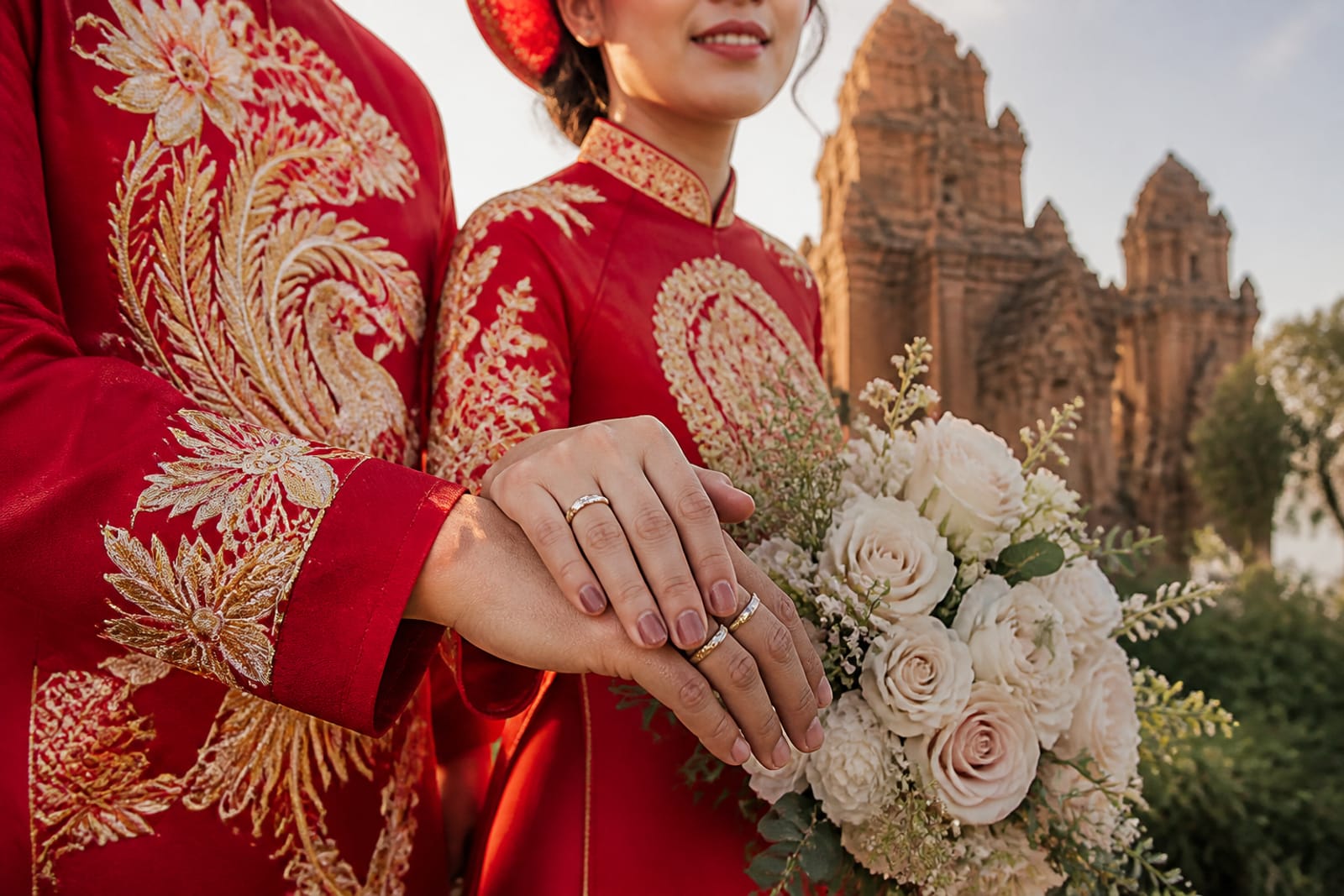
Lightweight, unstructured ao dai in silk or cotton photograph better in sea light than brocade. Pastels (cream, blush, sage, lavender) read softer; jewel tones (navy, emerald, burgundy) pop against turquoise water. Avoid pure white—it can blow out in bright sun and salt spray dulls it. Hair: loose waves or a low bun with a few face-framing pieces move naturally in wind; tight styles look tense on camera. Makeup: waterproof everything (foundation, brows, mascara)—sea spray and sweat test durability. Skip heavy contouring; warm, glowing skin reads better in golden light. Accessories: minimal jewellery (one statement piece or none), no hat unless it anchors an intentional frame. If you're hiring a makeup artist, book them at your hotel 1.5 hours before shoot time and request they spec waterproof products and a light hand (less is more in natural light).
---
Comparison: Ghenh Rang vs. Quy Nhon urban backdrops
| Option | Best for | Light & Terrain | Effort |
|---|---|---|---|
| Ghenh Rang cove | Isolation, turquoise water, texture | Golden hour only (4:30–5:30 pm); rocky, tidal | 15–20 min hike, uneven footing |
| Quy Nhon Old Town | Street colour, lanterns, local life | Soft side light 3–5 pm; flat, easy walking | 5–10 min walking, all accessible |
| Seafront promenade | Wide water views, calm pace | Longer golden window (3–6 pm); smooth path | 2–3 min walk, pram/wheelchair friendly |
Ghenh Rang works if you accept terrain and tight timing for dramatic texture. Old Town works if you want colour and ease. Promenade is a middle ground. Pick by asking: What matters more—isolation and drama, or comfort and extended light?
---
What to check before you book an ao dai shoot at Ghenh Rang
- Tide time: Confirm low-tide time for your date (ask your hotel or a local guide). Low tide gives flat rocks and wider walking space; high tide is riskier.
- Sunset time: Local sunset shifts ±20 minutes by month. Ask your hotel or check a tide/sun app.
- Parking & access: Ghenh Rang has limited parking. Confirm your photographer knows the route and can advise on vehicle access.
- Ao dai fit & fabric: Request a fitting 2–3 days before the shoot. Check for snags, tears, or hems that drag on rock.
- Weather backup: Rain cancels the shoot or moves it indoors. Agree on a rain date or indoor alternative (hotel room, cafe) in writing.
- Photo & video: Clarify: edited photos only, or a short vertical video clip too? Delivery time? Number of final frames?
- Makeup & hair touch-up: If your photographer doesn't include this, hire a makeup artist at your hotel to arrive before shoot time.
- Permit or fees: Some Quy Nhon locations may require a shoot permit or local guide. Ask your hotel.
---
Why Cáo Studio doesn't shoot Quy Nhon (and what that means for you)
Cáo Studio is based in Hanoi, with a Saigon outpost. Quy Nhon is too far for our team to travel for single-session shoots. We recommend ao dai photoshoots in Hanoi (Red River, French Quarter, Old Town) or Saigon (Bitexco, Tao Đàn Park, riverside temples) where our team can direct light, styling and movement in real time. If Quy Nhon is where your trip is, follow the vetting steps above to find a local director-led team. If you're flexible, consider timing a Hanoi or Saigon ao dai shoot during your Vietnam trip—we handle outfit, hair, makeup and photography as one message, edited in 48 hours. Chat us on WhatsApp to explore Hanoi or Saigon dates.
---
How Cáo Studio approaches ao dai elsewhere (the principle)
We believe one team (photographer, director, hair, makeup) shoots better than three vendors stitched together. For Quy Nhon, find a local team with the same belief: a director who times light and repositions you as the sun moves, not a photographer who poses you at landmarks. Look for Instagram portfolios showing movement (walking, looking at each other, real interaction), not stiff frontal shots. Ask if they've shot ao dai in water and can advise on fabric care after salt spray. Read our approach to ao dai shoots here.
---
FAQ
Can I shoot ao dai at Ghenh Rang any month?
Feb–Aug is dry and safe; Sep–Dec risks typhoon, rain and grey light. If your trip is Sep–Dec, book an urban backup (Old Town or promenade) and confirm a rain plan with your photographer in writing.
How long does a Ghenh Rang shoot take?
2–3 hours total (setup 30 min, golden-hour shoot 1.5–2 hours). Golden hour itself lasts only 1 hour, so you're racing light and tide together.
Do I need waterproof makeup for Ghenh Rang?
Yes. Sea spray and sweat test durability; waterproof foundation, brows and mascara are non-negotiable. Request your makeup artist spec products and test durability on your skin before shoot day.
What shoes work on the rocks?
Grip-soled shoes (trainer, sport sandal, water shoe) or barefoot. Avoid heels, leather soles or flip-flops—you risk a fall. Walk the rocks once before your shoot time to test your footing.
Should I hire a local photographer or wait for Cáo Studio?
If your trip is Quy Nhon-only, hire local and use the vetting checklist above. If you're visiting Hanoi or Saigon, book Cáo Studio—we handle ao dai, styling, makeup and photography as one team. If you're flexible, Hanoi and Saigon have urban ao dai spots with easier light and terrain.
How much does an ao dai shoot cost?
Costs depend on photographer experience, travel time, session length and outfit rentals. Ask your local photographer for a quote; many charge separately for coastal shoots or permits. For Hanoi or Saigon rates, chat us on WhatsApp.
FAQ
Can I shoot ao dai at Ghenh Rang any month?
Feb–Aug is dry and safe; Sep–Dec risks typhoon, rain and grey light. If your trip is Sep–Dec, book an urban backup (Old Town or promenade) and confirm a rain plan with your photographer in writing.
How long does a Ghenh Rang shoot take?
2–3 hours total (setup 30 min, golden-hour shoot 1.5–2 hours). Golden hour itself lasts only 1 hour, so you're racing light and tide together.
Do I need waterproof makeup for Ghenh Rang?
Yes. Sea spray and sweat test durability; waterproof foundation, brows and mascara are non-negotiable. Request your makeup artist spec products and test durability on your skin before shoot day.
What shoes work on the rocks?
Grip-soled shoes (trainer, sport sandal, water shoe) or barefoot. Avoid heels, leather soles or flip-flops—you risk a fall. Walk the rocks once before your shoot time to test your footing.
Should I hire a local photographer or wait for Cáo Studio?
If your trip is Quy Nhon-only, hire local and use the vetting checklist above. If you're visiting Hanoi or Saigon, [book Cáo Studio](/book)—we handle ao dai, styling, makeup and photography as one team. If you're flexible, Hanoi and Saigon have urban ao dai spots with easier light and terrain.
How much does an ao dai shoot cost?
Costs depend on photographer experience, travel time, session length and outfit rentals. Ask your local photographer for a quote; many charge separately for coastal shoots or permits. [For Hanoi or Saigon rates, chat us on WhatsApp.](/book)
Ao dai, makeup, hair and a local photographer in Hanoi or Saigon — one WhatsApp message.