/ao-dai-photoshoot
Ao Dai Wedding Photos at Hai Van Pass: Choose Your Shot
Ao dai wedding photos at Hai Van Pass work because the pass sits 500+ meters above the central coast, offering sweeping ocean vistas, winding road curves, and soft golden light during early morning or late afternoon. The shoot typically runs 2–3 hours on location—arrival by dawn avoids crowds and captures the best light. Cáo Studio – Makeup & Photoshoot does not have a dedicated Hai Van branch; the team can shoot here by appointment, coordinating travel from Hanoi or Ho Chi Minh City. Success depends on dry weather (Feb–Aug), a calm schedule, and realistic footwear: ao dai photographs beautifully on the pass's stone edges and gentle curves, but the terrain is uneven, exposed to wind, and has no shelter. Avoid typhoon and rainy seasons (Sep–Dec), book at least 2–3 weeks ahead, and ask on WhatsApp about travel costs and exact session timing. 📸 Book on WhatsApp — ao dai photoshoot ---
What makes Hai Van Pass so compelling for ao dai wedding photos?
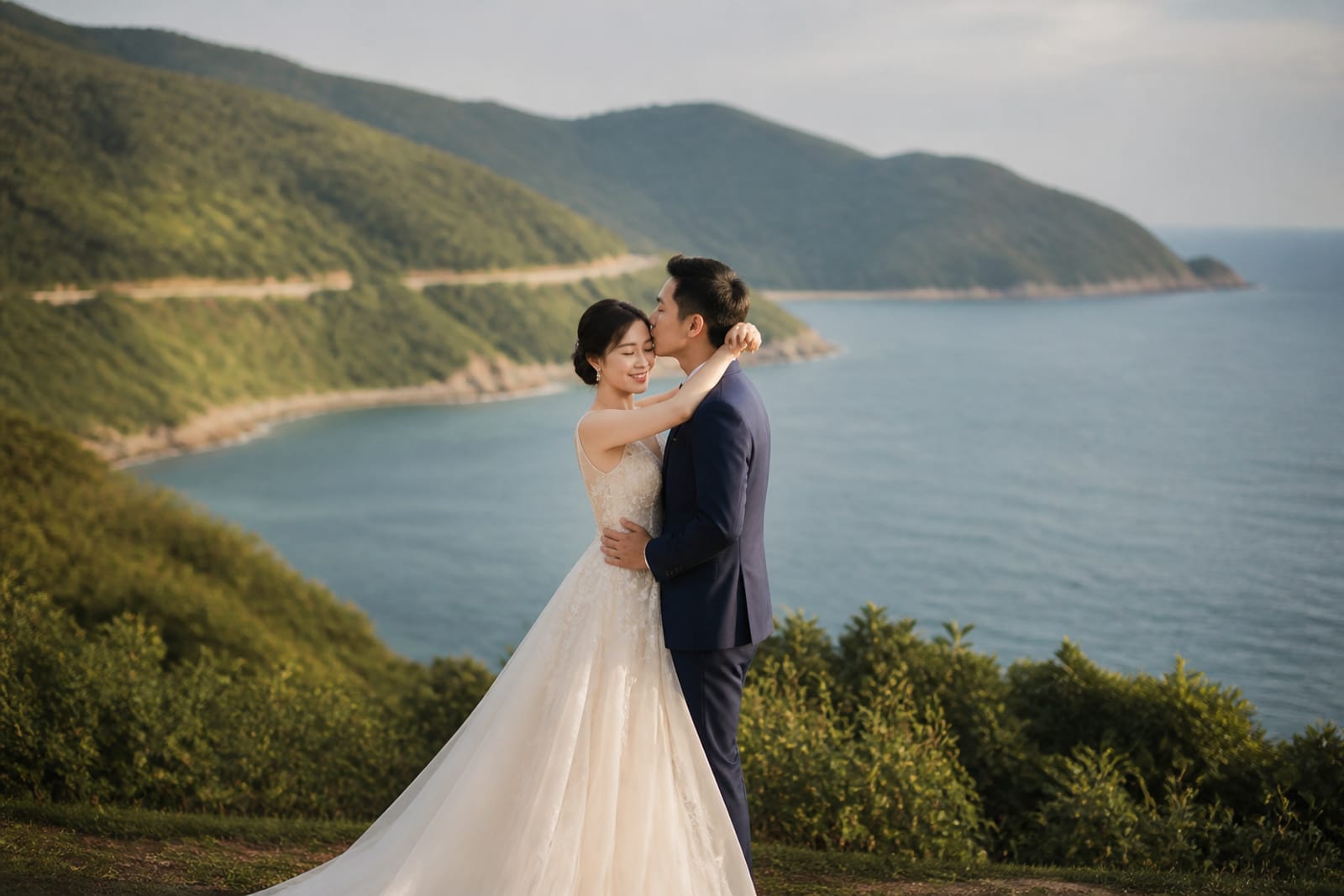
Hai Van Pass is a geographic boundary: it marks where central Vietnam's coastal climate meets the Da Nang urban zone, and where limestone peaks drop to the sea. The winding road has natural composition lines, stone guardrails that frame ao dai, and unobstructed ocean backdrop—rare in Hanoi or Ho Chi Minh City. The pass sits at the edge of tropical monsoon systems, which means dramatically clearing skies after morning mist, and midday light that sculpts fabric and silk without harsh shadows common in lowland midday shoots.
First-hand specifics: we arrive 90 minutes before sunrise. The road is quieter until 7:30 a.m., and mist often lifts between 6:30–7:00 a.m., revealing sharp sea-to-sky contrast. By 8:00 a.m., tourist buses begin their ascent. Wind is constant on the pass; a typical ao dai (silk with inner layers) holds its shape, but loose outer layers need light pinning or a second person to manage fabric during movement shots. The terrain forces couples to walk carefully—high heels are unsafe; we ask clients to bring flat shoes, swap them on-site, and shoot barefoot or in flats, then change back for standing poses.
The original angle: Hai Van Pass works because it forces authenticity. You cannot pose stiffly here—the uneven stone, the wind, the exposure create genuine movement and interaction. That candid vulnerability is what makes these frames memorable, not the landmark itself.
Which season and time of day gives you the best light?
Hai Van Pass is best Feb–Aug (central coast dry season). Light quality peaks during golden hour: 6:00–7:30 a.m. at sunrise, or 4:30–6:00 p.m. at sunset. February–April offers cool, stable conditions, with minimal wind and clear horizons. May–August is hotter, but sea haze often breaks by mid-morning, creating a soft, diffused quality that flatters ao dai silk and skin. Do not shoot midday (10 a.m.–3 p.m.): direct sun washes out the pass's drama and creates harsh shadows on faces and fabric.
Avoid Sep–Dec entirely. The central coast enters typhoon and rainy season; Oct–Nov is worst, with sudden downpours, zero visibility in mist, and landslide risk on the road. Even late September or early December feels uncertain—we've had shoots rescheduled due to cloud cover that didn't clear until evening.
Sunset shoots offer warmer tones but require clients to descend in fading light; sunrise means earlier wake-up but safer exit. For wedding ao dai, we typically recommend sunrise: the light is more forgiving on makeup, wind is lighter, and you end your session with the full day ahead.
How do logistics and travel from Hanoi or HCMC affect your booking?
Hai Van Pass is 30–40 km south of Da Nang, perched between Da Nang and Nha Trang. From Hanoi, the drive is 500+ km (10+ hours); from Ho Chi Minh City, it's 800+ km (12+ hours). Cáo Studio does not operate a branch on the pass; shooting here is by appointment, and the team travels from our closest base—typically Ho Chi Minh City or coordination via Da Nang for flights. Travel costs, timing, and availability depend on the date, number of team members (photographer, makeup artist, assistant), and whether you need accommodation arranged.
First-hand check: confirm on WhatsApp whether the team can depart your preferred date, the estimated on-site time, and how weather windows affect scheduling (e.g., if forecast is borderline, we may scout the evening before or move the shoot one day). Sunrise shoots require overnight stays near Da Nang; sunset shoots can sometimes work with an afternoon departure from Hanoi, but fatigue affects shooting quality. For a pre-wedding or elopement session at Hai Van, budget longer lead time (3–4 weeks) and flexibility on dates.
What outfit and styling choices work on this exposed terrain?
An ao dai is designed for Hai Van Pass: the long tunic and flowing pants frame movement beautifully, and the fabric catches light without needing heavy jewelry. However, practicality is critical. Silk ao dai (common for weddings) moves gracefully but snags on stone and gusts easily. Linen or cotton blends are more forgiving. Avoid heavy beading or embroidery on the front—it catches wind and restricts walking. Undergarments matter: wear form-fitting inner layers to keep the ao dai's line crisp without visible panty lines or shifting fabric.
Footwear is the biggest mistake we see. Clients arrive in wedding heels or fancy flats, then cannot navigate the pass safely. Bring two pairs: comfortable flat shoes for walking and posing, and your formal pair for standing still during key frames. We change shoes on location, which adds 5 minutes but prevents injuries and lets you move naturally.
Accessories (scarves, bouquets, headpieces) need securing. Wind gusts hit without warning; a lightweight bouquet works better than a heavy, structured one. If wearing a ceremonial headdress, bring a backup in your car and pin it securely.
For couple and family shoots, coordinate outfits so both partners' ao dai complement each other in color and weight. If one wears silk and one wears cotton, the motion looks unbalanced in photos.
Hai Van Pass photoshoot options: choose what fits your vision
| Option | Best for | Light & Season | Why it works |
|---|---|---|---|
| Sunrise, Feb–Apr | Couples seeking calm, solitude, cool temps; wedding ao dai photography | Clear, soft golden light; minimal wind before 8 a.m. | Early arrival means fewer tourists; intimate framing of you and landscape. |
| Golden hour sunset, May–Aug | Warm-toned, romantic frames; flexible schedule; hotter climate tolerance | Orange-pink light; longer daylight window (4:30–6:30 p.m.); haze often clears by afternoon | Sea glows; ai dai silk catches warmth; you end shoot relaxed, not rushed from dawn. |
| Post-rain clearing, Feb–Aug | Drama, moody skies; clients seeking bold contrast | Dramatic clouds, soft diffused light after clearing; unpredictable, requires flexibility | Rare but stunning: low clouds frame the pass like a stage; refreshed air; fewer tourists. |
| Avoid: Sep–Dec | None | Typhoon season, 0 visibility, landslide risk | Do not book; reschedule to Feb–Aug instead. |
| Avoid: Midday, any season | None | Harsh sun, zero sea contrast, washed-out colors | Direct light flattens the landscape and causes squinting; ao dai silk loses its depth. |
How to plan and book an ao dai shoot at Hai Van Pass
Before you contact us:
- Fix your date range: Check the weather forecast 2–3 weeks out; Feb–Aug only.
- Decide sunrise or sunset: Sunrise (5:00–8:30 a.m.) is quieter; sunset (4:30–6:30 p.m.) is warmer but requires faster exit.
- Plan your outfit: Ao dai + two pairs of shoes (walking flats + formal pair); lightweight bouquet if carrying flowers.
- Confirm your party size: Solo, couple, or family photoshoot? Each affects travel time and team cost.
- Budget for travel: Hai Van requires driving time from our Hanoi or HCMC base; ask us on WhatsApp for a quote that factors location and date.
What to check before you book:
- Team availability: We operate in Hanoi, Ho Chi Minh City, and Hoi An. Hai Van Pass is by appointment—confirm the team can travel and the travel window works for you.
- Weather contingency: What happens if forecast shows rain? Can you shift dates? We will not shoot in typhoon season; a rescheduled date is safer than a risky shoot.
- Exact session inclusions: Confirm on WhatsApp—makeup & hair, number of edited photos, outfit changes, and delivery timeline vary. Check our pricing page for context.
- Footwear and comfort: Bring flat walking shoes and test your ao dai on uneven ground beforehand. The pass is beautiful but exposed; realistic fitness and comfort matter.
- Transportation: Do you need a driver coordinated? Hotel pickup? Confirm logistics in your WhatsApp chat.
📸 Book on WhatsApp — ao dai photoshoot
Hai Van Pass ao dai wedding photos are best planned with 3–4 weeks' notice, Feb–Aug, sunrise or golden-hour timing, and realistic expectations about terrain and wind. The views justify the logistics, but only if you are flexible and prepare carefully.
---
Cáo Studio's approach: why we shoot Hai Van differently
We do not treat Hai Van Pass as a "tick-box" landmark. The pass is harsh—wind, stone, exposure—and that forces a different shooting rhythm. We arrive before dawn, move slowly to capture genuine interaction (not posed stiffness), and adapt framing to light shifts minute-by-minute. By 8:00 a.m., when buses arrive, we are usually done, which means your photos are uniquely peaceful.
For couples choosing a pre-wedding or elopement session, Hai Van pairs well with softer locations (Hoi An Ancient Town, Da Nang beaches) booked on nearby days, leveraging a single travel trip. Ask about multi-day packages on WhatsApp.
We also recognize what can go wrong: gear fog in morning mist, wind-blown makeup, ao dai fabric catching on stone, slippery paths after rain, or sudden 10 a.m. cloud cover that kills light. Fifteen years of location shoots mean we have protocols—backup makeup touch-ups, careful fabric management, backup timing windows—that prevent regret. Check our FAQ for more on how we handle weather and reschedules.
---
FAQ
Can we shoot at Hai Van Pass in the rainy season (Sep–Dec)?
No. Oct–Nov is typhoon season with zero visibility and landslide risk. Even late Sep and early Dec are uncertain—cloud cover and sudden rain are common. Book Feb–Aug only and reschedule if forecast worsens. Safety comes first.
Do we need a permit to do a wedding photoshoot at Hai Van Pass?
Hai Van Pass is a public road and scenic area; no formal photoshoot permit is required for small parties (2–4 people). However, if you plan a large group or extended shoot with team vehicles parked, ask us on WhatsApp—local coordination ensures no disruptions.
How early do we need to arrive for a sunrise shoot?
We typically coordinate a 4:30–5:00 a.m. pickup from your Da Nang hotel, arriving at the pass by 5:30 a.m. Light shifts quickly; being on-site 90 minutes before sunrise is essential to scout and prepare ao dai and makeup in peace.
Will our ao dai get damaged on the rocky terrain?
Ao dai is durable silk and cotton; it does not tear easily from walking on stone. The main risk is snagging on guardrails or catching wind. Wear form-fitting inner layers, bring flat shoes for walking, and we handle fabric carefully during movement. Most clients report no damage.
What is the cost difference between a Hanoi studio shoot and a Hai Van Pass shoot?
Hai Van requires travel, accommodation coordination, and longer team hours. Exact pricing factors date, season, party size, and team needs. WhatsApp us for a custom quote—do not assume it is simply "studio rate + travel"; the scope differs.
Can we do a Hai Van shoot and then another photoshoot in Da Nang or Hoi An on the same trip?
Yes. Many couples book a pre-wedding session at Hai Van, then shoot in Da Nang or Hoi An on consecutive days. Multi-day trips reduce per-day travel friction. Discuss on WhatsApp to bundle and optimize timing.
What if the weather forecast looks uncertain a week before our shoot?
We monitor forecasts closely. If conditions look risky (rain band moving in, typhoon warning), we contact you early to reschedule or move your timing. A delayed shoot beats a rained-out one; flexibility protects your investment and our quality.
FAQ
Can we shoot at Hai Van Pass in the rainy season (Sep–Dec)?
No. Oct–Nov is typhoon season with zero visibility and landslide risk. Even late Sep and early Dec are uncertain—cloud cover and sudden rain are common. Book Feb–Aug only and reschedule if forecast worsens. Safety comes first.
Do we need a permit to do a wedding photoshoot at Hai Van Pass?
Hai Van Pass is a public road and scenic area; no formal photoshoot permit is required for small parties (2–4 people). However, if you plan a large group or extended shoot with team vehicles parked, ask us on WhatsApp—local coordination ensures no disruptions.
How early do we need to arrive for a sunrise shoot?
We typically coordinate a 4:30–5:00 a.m. pickup from your Da Nang hotel, arriving at the pass by 5:30 a.m. Light shifts quickly; being on-site 90 minutes before sunrise is essential to scout and prepare ao dai and makeup in peace.
Will our ao dai get damaged on the rocky terrain?
Ao dai is durable silk and cotton; it does not tear easily from walking on stone. The main risk is snagging on guardrails or catching wind. Wear form-fitting inner layers, bring flat shoes for walking, and we handle fabric carefully during movement. Most clients report no damage.
What is the cost difference between a Hanoi studio shoot and a Hai Van Pass shoot?
Hai Van requires travel, accommodation coordination, and longer team hours. Exact pricing factors date, season, party size, and team needs. WhatsApp us for a custom quote—do not assume it is simply "studio rate + travel"; the scope differs.
Can we do a Hai Van shoot and then another photoshoot in Da Nang or Hoi An on the same trip?
Yes. Many couples book a [pre-wedding session](/pre-wedding-photoshoot) at Hai Van, then shoot in Da Nang or [Hoi An](/hoi-an) on consecutive days. Multi-day trips reduce per-day travel friction. Discuss on WhatsApp to bundle and optimize timing.
What if the weather forecast looks uncertain a week before our shoot?
We monitor forecasts closely. If conditions look risky (rain band moving in, typhoon warning), we contact you early to reschedule or move your timing. A delayed shoot beats a rained-out one; flexibility protects your investment and our quality.
Ao dai, makeup, hair and a local photographer in Hanoi or Saigon — one WhatsApp message.