/ao-dai-photoshoot
Ao dai wedding photos at Hang Mua viewpoint: guide & booking tips
Ao dai wedding photos at Hang Mua—Ninh Binh's dramatic clifftop viewpoint with 500 steps and valley panoramas—work best in dry, cooler months (Sep–Nov, Mar–May) with manageable crowds and soft light. Sessions typically run 2–3 hours; you'll need sturdy shoes, water and a photographer experienced with mountain logistics. Local Ninh Binh photographers know the light timing and crowds; Cáo Studio – Makeup & Photoshoot operates in Hanoi, Ho Chi Minh City and Hoi An, not Ninh Binh, so booking a vetted local team is essential. Expect to climb several times for different angles, plan outfit changes carefully (ao dai trains catch on steps), and bring hair-and-makeup touch-up supplies. October–November is peak season—book early to avoid weekend crowds and secure a morning slot when light is softest. 📸 Book on WhatsApp — ao dai photoshoot
Why is Hang Mua the top choice for ao dai wedding photos?
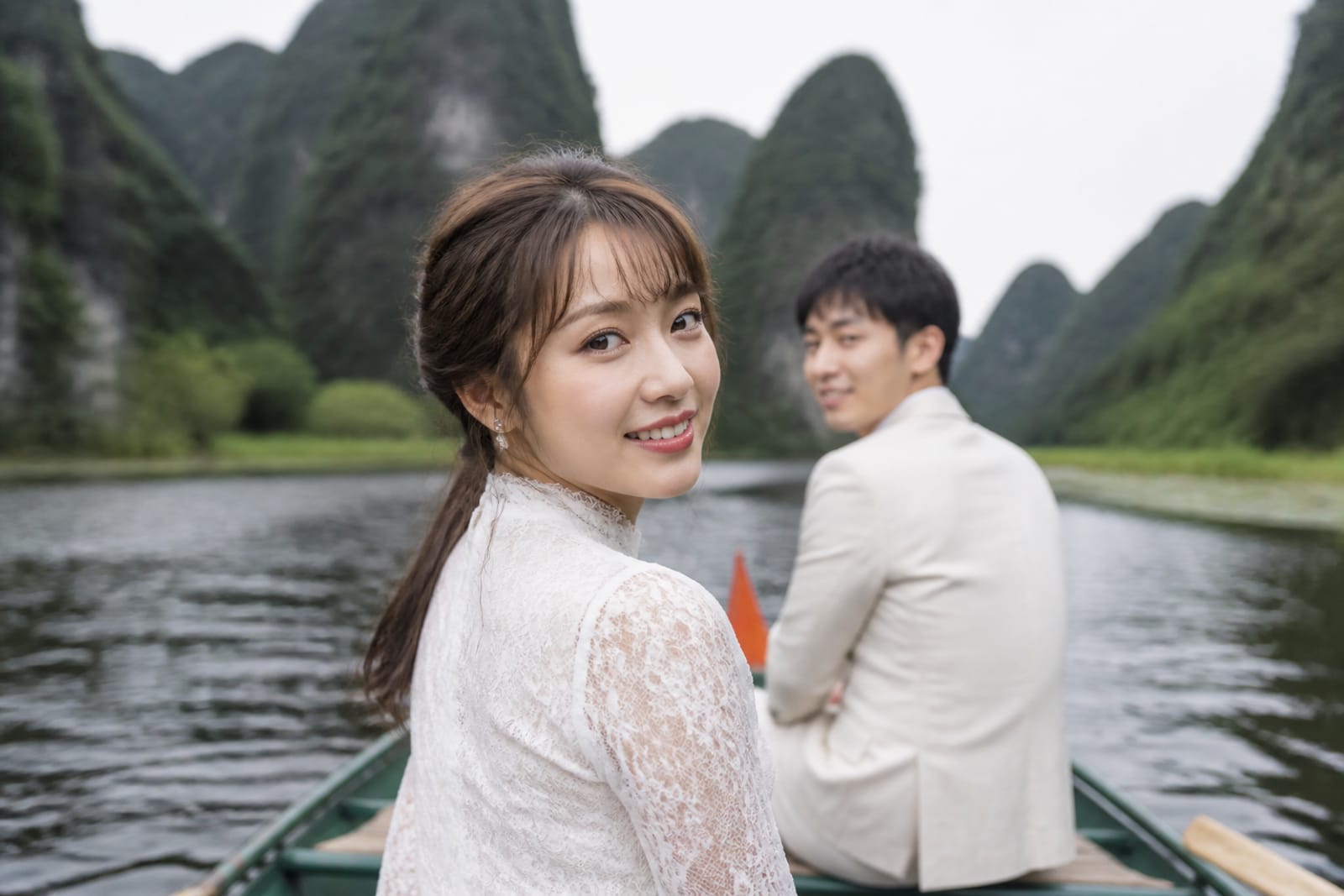
Hang Mua's limestone karsts rise 652 metres above rice fields, and the viewpoint commands a 360-degree panorama across Ha Long-like formations. The 500-step stone ascent is steep and worn, which creates drama in photos: ao dai silk against stone, sky and valley create tonal layers. Few backdrops in Vietnam combine scale, cultural authenticity and accessible beauty—rice terraces below anchor the ao dai's meaning in place. The climb itself filters casual visitors, so morning shoots (7–9 a.m.) yield fewer crowds and cooler air. However, the steps are uneven and narrow; trains, wide sleeves and trailing fabric snag on rough edges, so outfit planning and pacing matter hugely.
Which season delivers the best light and weather for shooting there?
| Season | Light quality | Weather | Crowds | Best for | Why |
|---|---|---|---|---|---|
| Mar–May | Soft morning, hazy midday | Cool, dry, occasional rain | Moderate | Ao dai in pastels | Warm tones, green rice, predictable light |
| Jun–Aug | Intense, harsh shadows | Hot, humid, daily storms | Low | Early morning only | Brief windows; suit brief, bold colours |
| Sep–Nov | Golden (morning), clear skies | Dry, cool, stable | Peak | All-day shoots, any colour | Best light, least weather risk; book ahead |
| Dec–Feb | Flat, grey, cool | Cool, dry, misty | Moderate | Moody tones, long sleeves | Mist softens faces; grey skies suit jewel tones |
Sep–Nov is the golden window—weather is stable, light turns golden mid-morning and late afternoon, and temperatures stay below 28°C, so climbing stays comfortable. Mar–May ranks second; rice fields green and cool air returns by late March, though haze builds mid-May into June. Jun–Aug shoots demand 6 a.m. starts to beat heat and afternoon storms. Dec–Feb works if you like mist and moody drama; misty mornings soften harsh midday light, so face shots improve, but golden-hour colour fades by 5 p.m.
How do you plan clothing and outfit changes on 500 steps?
Carry lightweight ao dai (silk, breathable lining) and secure the train with clips or ties—unclipped trains tangle on stone and wear at seams. Avoid heavy brocade or beaded versions; weight accelerates fatigue on the climb. Change locations strategically: shoot at rest points (benches, landings) every 100–150 steps to avoid exhaustion and allow makeup retouching in shade. Bring a small backpack with water, blotting papers, lipstick and powder; have the photographer's assistant or a second person carry it. Underskirts and slip-shorts prevent slipping on smooth stone and chafing on the long climb; check that the ao dai fits loosely over these layers so movement stays fluid. Flat, grip-soled shoes (ballet flats, soft-soled sandals) work better than heels; many couples leave formal footwear at the base and climb in practical shoes, changing for specific shots. Plan 3–4 outfit stops maximum; more climbs waste light and energy.
How do you find and vet a local photographer in Ninh Binh?
Cáo Studio – Makeup & Photoshoot shoots in Hanoi, Ho Chi Minh City and Hoi An; for Ninh Binh, you'll book a local photographer. Start by checking Instagram hashtags (#ninhbinhphotography, #hangmuaphotoshoot) and filter by engagement (real comments, not bot follows). Look for portfolios showing actual Hang Mua ao dai shoots—not one generic landscape photo, but multiple angles, different seasons, ao dai in motion. Message 3–5 photographers; ask about: experience with ao dai trains on steps, morning light knowledge, whether they've shot there in your chosen season, how many edited photos you receive, and turnaround time. Request a reference from a couple who shot there in the past 6 months. Agree in writing on timing, number of locations, outfit changes, and whether they'll shoot raw or only edited. Ask if they recommend a makeup artist for the early start (mountain air and climbing cause sweat; a local MUA knows humidity tricks). A Ninh Binh photographer typically costs less than Hanoi studios, so compare quotas against delivery speed and portfolio quality, not price alone.
What are the most photogenic spots on and around Hang Mua?
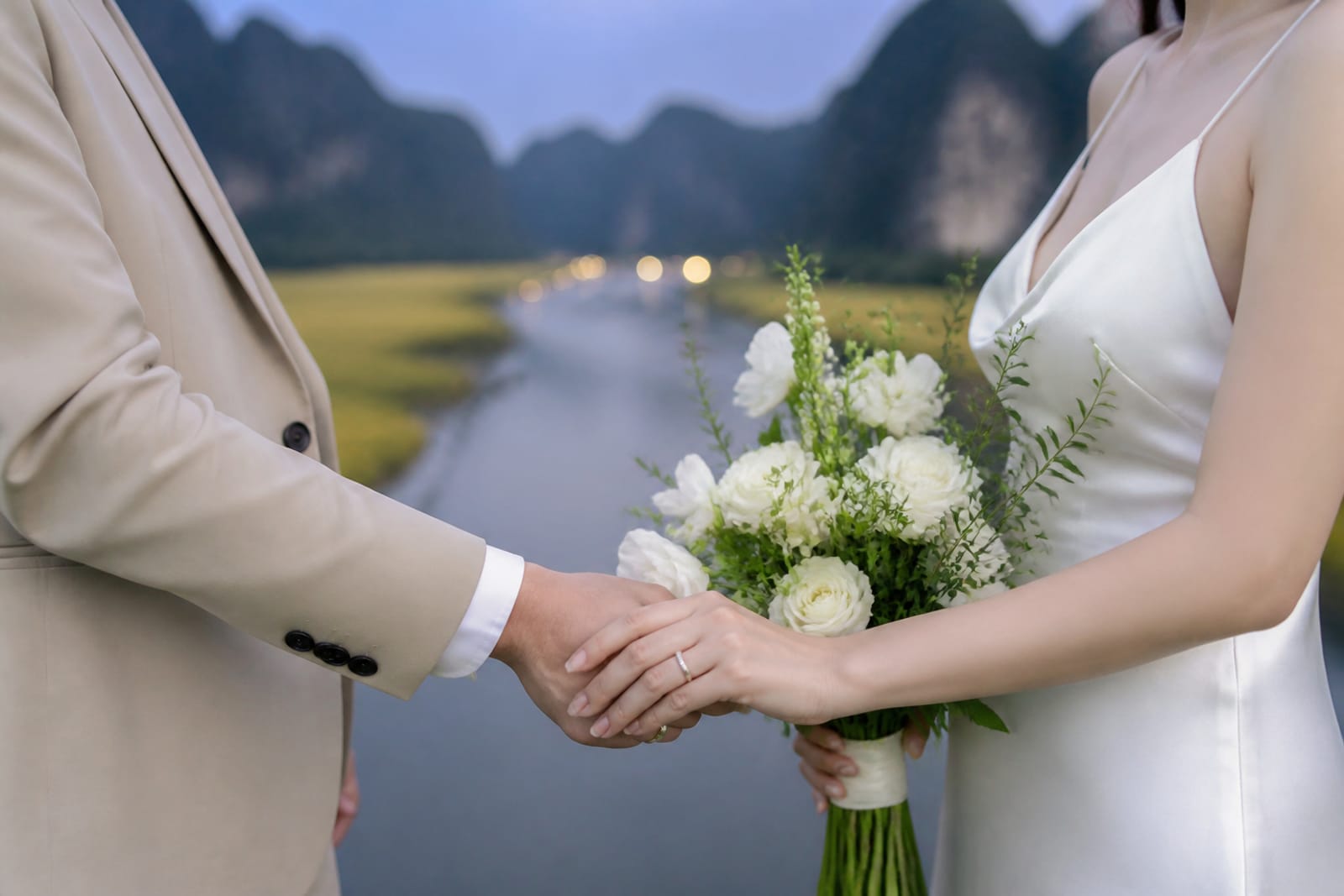
The viewpoint's peak offers the panorama—stand at the edge rails with valley backdrop and light from the side for dimensional ao dai. The mid-climb stone balcony (around step 250) captures a tighter frame of karsts and sky; this spot has shade and works well for close-ups and couple poses. The descent path, with worn stone and moss, adds texture and moodiness if light is soft (early morning, late afternoon). The surrounding rice fields (accessible by path from the base) offer horizontal lines and green contrast; shoot here at golden hour (6:30–7:30 a.m. or 4:30–5:30 p.m.) for warm light. The Hang Mua cave entrance (base level) provides intimate framing with stone arches; ideal for makeup detail shots before climbing. Avoid shooting directly downward steps (slippery footing) or at midday when shadows flatten the face; always scout light and footing with the photographer before committing to a pose.
What should you check before booking a Hang Mua ao dai photo session?
Booking checklist:
- Photographer's Hang Mua experience: ask to see 3+ full sessions (not single shots) from the past year.
- Permit requirements: confirm whether a permit is needed for commercial shoots; some Vietnam venues require permission (check locally or ask the photographer).
- Start time and weather backup: agree on departure time, weather-delay policy, and rescheduling terms before paying.
- Outfit logistics: confirm the photographer can accommodate outfit changes, has a secure space to store items, and knows ao dai care (no stepping on trains, no wet stone contact).
- Makeup and hair: ask if a local makeup artist is included or if you arrange separately; mountain humidity demands touch-up skills.
- Edited photos and timeline: get a written number of edited images, delivery date, and format (digital, prints, album); avoid vague promises.
- Payment terms: agree on deposit, final payment date, and cancellation policy before booking.
- Insurance or liability: check whether the photographer carries liability insurance for accidents on the stairs.
For ao dai photoshoots in Hanoi, Ho Chi Minh City or Hoi An, Cáo Studio – Makeup & Photoshoot manages all logistics; contact us on WhatsApp to discuss your vision and seasonal preferences.
---
Looking for alternatives or additions?
If Hang Mua's physical demands concern you, consider other Ninh Binh backdrops: Tam Coc's boat scenery (gentler, water reflections), Trang An's cave grottoes (intimate, less crowded) or rice-field paths (flat, accessible, golden-hour magic). Many couples combine a Hang Mua morning shoot with an evening boat session. If you're already in the north, pre-wedding photoshoots in Hanoi let you split sessions across multiple days and locations—less physical strain, more outfit variety. For a co-ordinated approach with professional makeup and hair services, Cáo Studio's Hanoi team can advise on seasonal timing and help you plan multi-day trips to Ninh Binh.
---
📸 Book on WhatsApp — ao dai photoshoot
FAQ
Can I wear a traditional ao dai in bright colours (red, gold) to Hang Mua, or should I choose pastels?
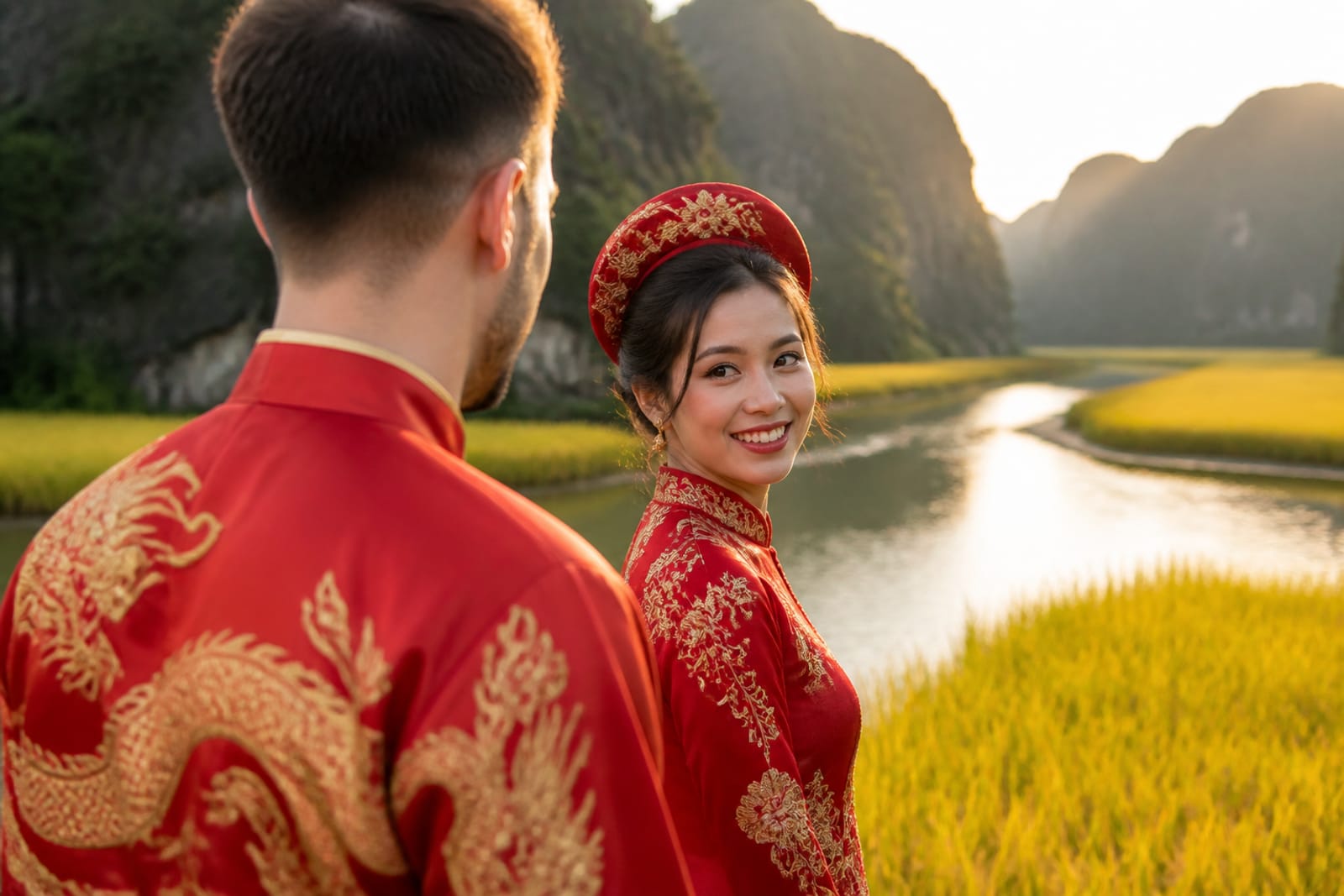
Bright colours (red, gold, emerald) photograph powerfully against grey stone and green fields—they're not wrong. Pastels suit soft, misty light (Dec–Feb, early morning); jewel tones pop in golden or harsh sunlight. Neither is better; match your colour to the season and light you're shooting in. Ask your photographer which suits the time of day.
How long does a typical Hang Mua ao dai shoot take, and how many outfit changes are realistic?
Most sessions run 2.5–3.5 hours door-to-door. Plan 3–4 outfit changes maximum, accounting for climb time, light movement and rest stops. More changes exhaust you, waste light and rush the climb. Each stop (pose, light adjustment, outfit change) takes 20–30 minutes; calculate backwards from your end time.
Is it safe to climb Hang Mua's steps in an ao dai train and heels?
Heels are unsafe on uneven, worn stone—wear flat grip-soled shoes for climbing and change into formal footwear for specific poses. Ao dai trains tangle and wear; clip or tie the train up, or change into a simpler ao dai without a long train for the climb. Many couples photograph in practical shoes, then pose in formal ones at rest points.
What happens if the weather turns bad mid-shoot on the mountain?
Agree on a weather-delay or rescheduling policy with your photographer in writing before booking. Light rain can enhance photos (dramatic sky, mist), but lightning or heavy downpour will stop the shoot. Ask whether the session can move to a lower, sheltered spot or reschedule to the next clear day.
Do I need a permit to shoot professionally at Hang Mua, or is it free for visitors?
Entry to Hang Mua is free for visitors; commercial photography permits vary by location and change annually. Ask your photographer whether they've secured or will secure the permit, or check locally before booking. Include permit costs in your overall budget discussion.
Should I hire a local Ninh Binh makeup artist, or can I do makeup myself for a mountain climb?
Mountain air, humidity and climbing cause sweat and shine; a local makeup artist knows Ninh Binh's humidity patterns and carries waterproof, long-wear products. Budget for an MUA if you're climbing for 2+ hours. If you do your own makeup, bring blotting papers, powder and long-wear setting spray; retouch frequently at rest points.
FAQ
Can I wear a traditional ao dai in bright colours (red, gold) to Hang Mua, or should I choose pastels?
Bright colours (red, gold, emerald) photograph powerfully against grey stone and green fields—they're not wrong. Pastels suit soft, misty light (Dec–Feb, early morning); jewel tones pop in golden or harsh sunlight. Neither is better; match your colour to the season and light you're shooting in. Ask your photographer which suits the time of day.
How long does a typical Hang Mua ao dai shoot take, and how many outfit changes are realistic?
Most sessions run 2.5–3.5 hours door-to-door. Plan 3–4 outfit changes maximum, accounting for climb time, light movement and rest stops. More changes exhaust you, waste light and rush the climb. Each stop (pose, light adjustment, outfit change) takes 20–30 minutes; calculate backwards from your end time.
Is it safe to climb Hang Mua's steps in an ao dai train and heels?
Heels are unsafe on uneven, worn stone—wear flat grip-soled shoes for climbing and change into formal footwear for specific poses. Ao dai trains tangle and wear; clip or tie the train up, or change into a simpler ao dai without a long train for the climb. Many couples photograph in practical shoes, then pose in formal ones at rest points.
What happens if the weather turns bad mid-shoot on the mountain?
Agree on a weather-delay or rescheduling policy with your photographer in writing before booking. Light rain can enhance photos (dramatic sky, mist), but lightning or heavy downpour will stop the shoot. Ask whether the session can move to a lower, sheltered spot or reschedule to the next clear day.
Do I need a permit to shoot professionally at Hang Mua, or is it free for visitors?
Entry to Hang Mua is free for visitors; commercial photography permits vary by location and change annually. Ask your photographer whether they've secured or will secure the permit, or check locally before booking. Include permit costs in your overall budget discussion.
Should I hire a local Ninh Binh makeup artist, or can I do makeup myself for a mountain climb?
Mountain air, humidity and climbing cause sweat and shine; a local makeup artist knows Ninh Binh's humidity patterns and carries waterproof, long-wear products. Budget for an MUA if you're climbing for 2+ hours. If you do your own makeup, bring blotting papers, powder and long-wear setting spray; retouch frequently at rest points.
Ao dai, makeup, hair and a local photographer in Hanoi or Saigon — one WhatsApp message.