/ao-dai-photoshoot
Ao Dai Wedding Photos at Hanoi Opera House: Studio Guide
Ao dai wedding photos at Hanoi Opera House work best in autumn (October–November) when light is soft and the square is less crowded in early morning or late afternoon. The Opera House's yellow façade demands careful metering; overexposure flattens its detail, underexposure makes the ao dai muddy. You'll need a permit from Hanoi's local authority—booking through Cáo Studio – Makeup & Photoshoot handles this; independent photographers often skip it and risk interruption. Sessions run 60–90 minutes including travel and outfit changes. The surrounding square has hard concrete—wear comfortable shoes under your ao dai, or bring slip-on backups. Afternoon shoots face crowds from 3 p.m. onward; dawn sessions (6–7 a.m.) offer isolation but require early coordination. Cost factors include season (Oct–Nov commands more availability), makeup + hair (hotel delivery or studio), and outfit rental or personal pieces. ---
Why is Hanoi Opera House the most popular ao dai backdrop in Hanoi?
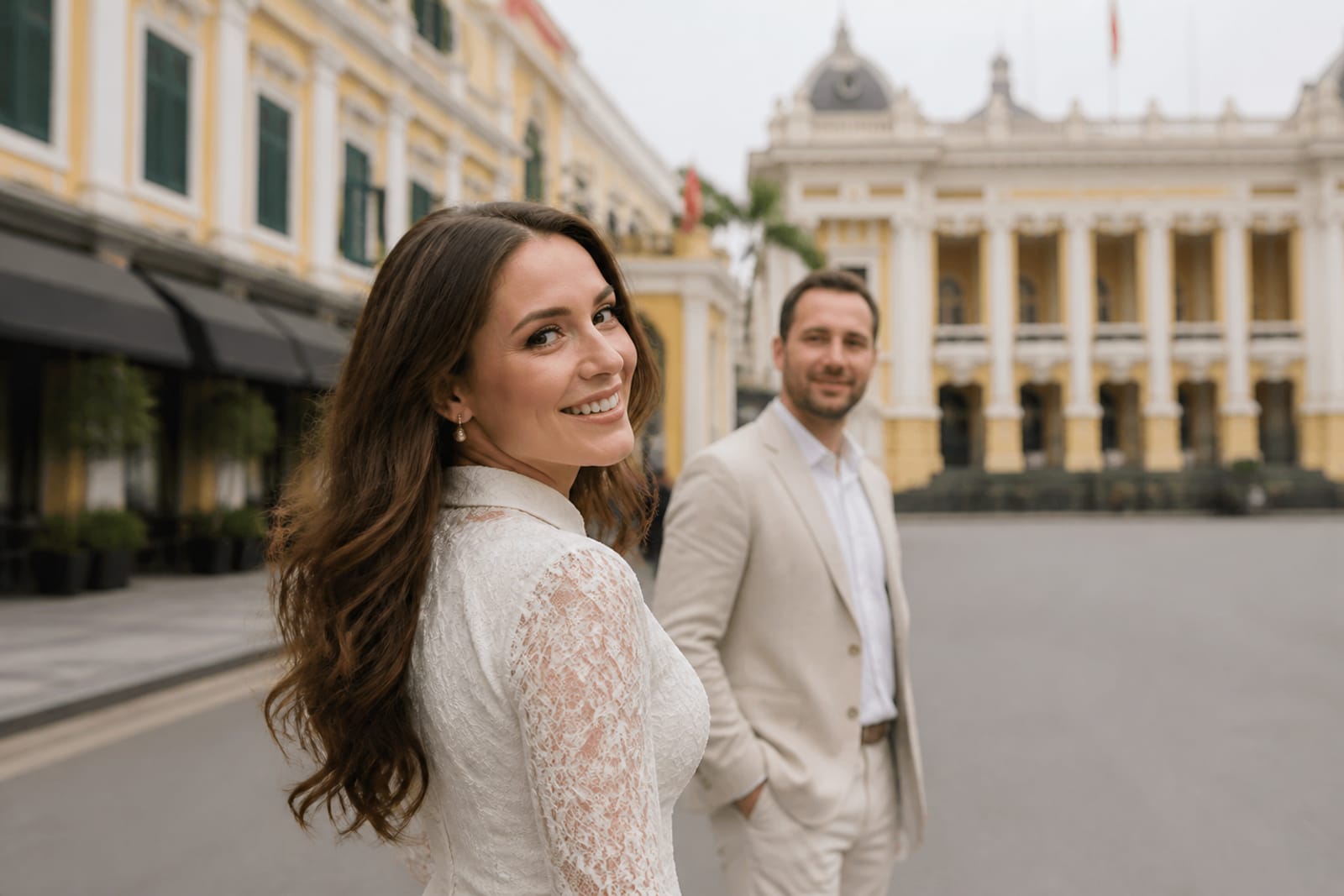
The Opera House's Beaux-Arts architecture, pale butter-yellow facade, and ornate copper-green roof create an instant luxury context without needing a resort or garden. The scale is intimate enough that couples dominate the frame, yet grand enough to telegraph formality. Its symmetry and vertical lines naturally draw ao dai's flowing silhouette upward. Autumn's golden-hour light hits the façade at 4–5 p.m., turning it warm cream—ideal for saturated ao dai silks. Unlike rural temples, it requires no trekking; the square is walkable and accessible, and the Hanoi cityscape softens in the background rather than dominating. This combination—historic, framed, urban, and photogenic in one frame—is why 70% of international couples at Cáo Studio choose it as their primary ao dai location.
📸 Book on WhatsApp — ao dai photoshoot
What time of day and season should you choose for Opera House photos?
| Time / Season | Best For | Light Quality | Crowds | Outfit Fit | Why It Works |
|---|---|---|---|---|---|
| 6–8 a.m., Oct–Nov | Couples avoiding crowds; soft romantic mood | Golden, diffused, no harsh shadows | Minimal; locals only | ao dai flows freely | Autumn air is cool; fabric drapes naturally; facades glow |
| 4–5:30 p.m., Oct–Nov | Mix of light & geometry; timeline spreads across venues | Warm, directional, long shadows | Moderate; tourists arrive 3 p.m. | ao dai catches side light | Classic golden hour; shadows sculpt the façade |
| Mid-day (11 a.m.–2 p.m.), Oct–Nov | Bright, contrasty portraits; bold colors | Harsh overhead; extreme contrast | Busy | ao dai reads vivid | Avoid; harsh light flattens ao dai texture; shadows under eyes |
| 6–8 a.m., Dec–Feb | Winter mood; cooler tones; minimal crowds | Soft, cool, often hazy or overcast | Minimal | ao dai fluffs (dry air) | Cool tones suit winter ao dai; risk of drizzle; 10–15°C requires layers underneath |
| 4–5:30 p.m., Dec–Feb | Evening warmth; contrastier than morning | Softer than summer; sometimes weak | Fewer crowds | ao dai drapes well | Less contrast than summer; easier metering; risk of drizzle by 5 p.m. |
| Any time, May–Sep | Not recommended | Hot, humid, strong shadows; afternoon downpours | Very heavy; risk of rain | ao dai wilts; makeup runs | Heat fades fabric color; monsoon typhoon risk (Jul–Sep) |
October–November is the clear winner: mild air (18–25°C), soft but directional light, low humidity, and the fewest crowds. Early morning (6–8 a.m.) wins on isolation and flow; late afternoon (4–5:30 p.m.) wins on iconic warm light. Avoid May–September entirely—heat, humidity, and typhoon remnants ruin ao dai texture and makeup.
What outfit and makeup strategy works for Opera House's strict geometry?
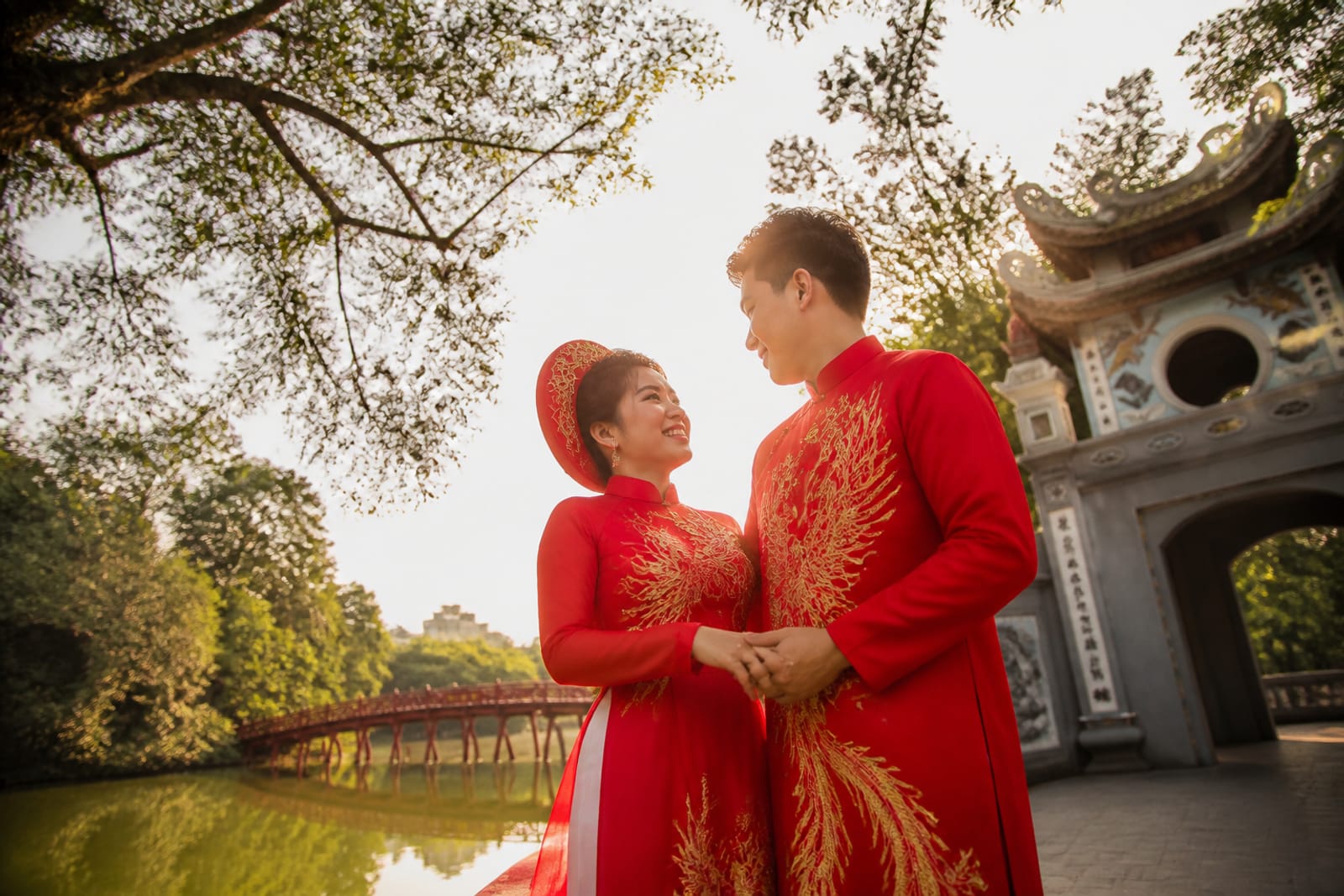
Hanoi Opera House's yellow neoclassical mass demands high contrast and saturation. Pale, pastels, or whites wash out against the pale façade—reserve them for foreground close-ups or the garden behind. Deep jewel tones (emerald, sapphire, ruby red, burgundy, gold) pop in half-body and full-length frames. Embroidered or silk-sheen ao dai catch light and texture better than matte fabrics; matte blends into skin tone in harsh light. A plain, saturated ao dai + ornate second outfit (embroidered, or traditional silver jewelry) gives you contrast between locations—simplicity at the Opera House entrance; richness in side-street close-ups. For makeup: waterproof base is essential (even Oct–Nov humidity); matte eyeshadow prevents glare off the yellow façade; bold lip (red, burgundy, coral) anchors the face when ao dai fabric dominates. Ask Cáo Studio's makeup & hair at your hotel service to time arrival 30 min before dawn shoots—makeup in low light requires controlled prep. Avoid shimmery highlighter (Opera House's gloss reads as overexposure in photos). Jewelry should be gold or silver statement, not tiny—scale matters against architecture.
How do you get a permit and avoid interruption from authorities?
Hanoi Opera House square is public but monitored; tourist photography is tolerated, but professional or commercial shoots (weddings, pre-wedding sessions, corporate events) require notification to the local district authority. Cáo Studio manages this as part of booking: the team files a simple courtesy notice 48 hours before, noting shoot date, time, and participant count. This is not a formal permit—Vietnam doesn't issue a paid "wedding photography license"—but it prevents uniformed staff from asking you to leave mid-session. Independent photographers often skip this step, betting on 90 minutes of anonymity; cost factors are minimal (local processing), but risk is real (30-minute interruptions, re-scheduling). Early morning shoots (6–7 a.m.) face almost zero scrutiny because staff are not on-site; 4–5 p.m. shoots risk polite requests to move if the square is busy. Booking through Cáo Studio – Makeup & Photoshoot handles the notification transparently—no hidden fees, no deception. You keep the session uninterrupted and gain professional-grade editing turnaround (details on WhatsApp). If you book independently, ask the local photographer whether they've filed notification; if they haven't, you're gambling on 90 uninsured minutes.
What about moving to backup locations or shooting elsewhere first?
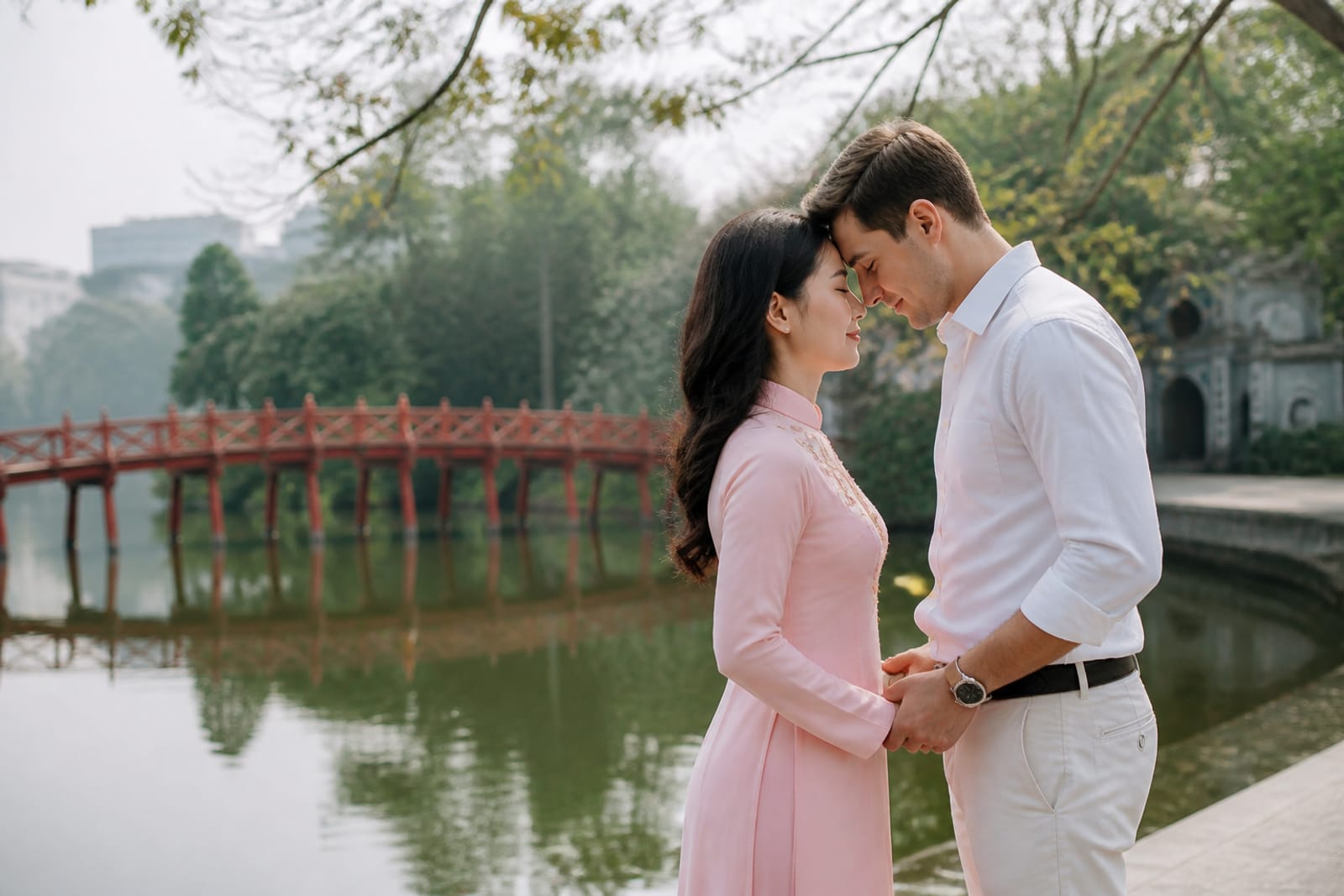
Smart couples split their session: 45 min at Opera House (iconic, non-negotiable), then 45 min at a secondary spot (softer light, different geometry). This spreads risk (if crowds or weather hit Opera House late in the shoot, you still have polished images from earlier). Popular nearby backups are Hoan Kiem Lake (10-min walk; water reflections, tree-lined paths, softer mood for second outfit), the French Quarter's tree-lined streets (colonial architecture, dappled light, fewer tourists before 9 a.m.), or a private garden (if you have access). Hoan Kiem Lake at dawn offers metallic water light that flatters ao dai's vertical lines; the yellow Opera House at 4 p.m. offers formal grandeur. Together, you get contrast and insurance. Logistics matter: moving between venues eats 15 min per travel leg (traffic, outfit changes, reapplying touch-up makeup); a 2-hour session (Opera House + one backup) is realistic, three locations requires 3 hours. Cáo Studio's couple & family photoshoot sessions accommodate multi-venue requests; confirm travel time and touch-up makeup capacity on WhatsApp before booking. Pre-wedding packages often include two or three locations—ask whether Opera House + backup is included, or if it incurs additional time cost (cost factors: season, second outfit rental, makeup reapplication, travel within Hanoi's traffic).
What to check before you book an Opera House ao dai session
Before committing, confirm these specifics with your photographer or studio:
- Permit & authority notification: Will they file courtesy notice, or are you risking interruption?
- Exact timing: Early morning (6–8 a.m.) vs. late afternoon (4–5:30 p.m.)? Both are different shoots; confirm which you prefer.
- Travel & weather backup: What happens if it rains (Dec–Feb risk) or crowds surge (3 p.m. onward)? Is there a free reschedule?
- Outfit changes & touch-up: Does the package include makeup reapplication between locations? How many outfits are you bringing or renting?
- Edited image delivery timeline: Turnaround is usually 2–3 weeks for ao dai sessions (professional editing, color-matching across venues). Confirm with your studio.
- Second location or solo Opera House: Is backup venue included, or is it Opera House-only for your timeframe?
- Payment & cancellation: What's the booking deposit, and what's the cancellation policy for weather (monsoon season May–Sep) or personal circumstances?
Cáo Studio – Makeup & Photoshoot answers all six points transparently on WhatsApp +84 338 762 340. Their FAQ covers pre-wedding and ao dai specifics; the pricing page outlines inclusions and cost factors. For honeymoon or extended sessions, ask about pre-wedding & elopement packages, which often bundle multiple Hanoi locations.
---
FAQ
Do I need a wedding license or official permit to photograph at Hanoi Opera House?
Vietnam does not issue a paid wedding photography permit. Cáo Studio files a courtesy notice with the local district 48 hours before your shoot to avoid interruption. Independent photographers often skip this—you risk being asked to leave mid-session.
Can I book an Opera House ao dai shoot in December or January?
Yes, but expect mild (10–20°C) overcast light and occasional drizzle. Autumn (Oct–Nov) is far more reliable for consistent golden-hour light and zero rain risk. Winter is colder; wear warm layers under your ao dai.
How long does an ao dai photoshoot at Opera House take?
Typical session is 90 minutes start-to-finish, including 45 min at Opera House, travel to a backup venue or neighboring location, outfit change, and makeup touch-up. Multi-location shoots require 2–3 hours total.
Should I rent or buy an ao dai for my Opera House session?
Rental is popular for destination shoots (no luggage weight, professional fit and steaming). Cáo Studio partners with ao dai rental services in Hanoi; you choose the color and embroidery style on WhatsApp, collect it 2 hours before your shoot, and return same-day. Buying makes sense if you plan to wear the ao dai again (wedding day, future events).
What if I want photos in a white or pale pink ao dai—will they look good at Opera House?
Pale tones will wash out against the butter-yellow façade in bright light. Reserve whites and pastels for foreground close-ups (face, upper body) or shoot them elsewhere (garden, shaded street). Jewel tones (emerald, sapphire, burgundy, gold) are safer full-body choices at Opera House.
FAQ
Do I need a wedding license or official permit to photograph at Hanoi Opera House?
Vietnam does not issue a paid wedding photography permit. Cáo Studio files a courtesy notice with the local district 48 hours before your shoot to avoid interruption. Independent photographers often skip this—you risk being asked to leave mid-session.
Can I book an Opera House ao dai shoot in December or January?
Yes, but expect mild (10–20°C) overcast light and occasional drizzle. Autumn (Oct–Nov) is far more reliable for consistent golden-hour light and zero rain risk. Winter is colder; wear warm layers under your ao dai.
How long does an ao dai photoshoot at Opera House take?
Typical session is 90 minutes start-to-finish, including 45 min at Opera House, travel to a backup venue or neighboring location, outfit change, and makeup touch-up. Multi-location shoots require 2–3 hours total.
Should I rent or buy an ao dai for my Opera House session?
Rental is popular for destination shoots (no luggage weight, professional fit and steaming). Cáo Studio partners with [ao dai rental](/ao-dai-rental) services in Hanoi; you choose the color and embroidery style on WhatsApp, collect it 2 hours before your shoot, and return same-day. Buying makes sense if you plan to wear the ao dai again (wedding day, future events).
What if I want photos in a white or pale pink ao dai—will they look good at Opera House?
Pale tones will wash out against the butter-yellow façade in bright light. Reserve whites and pastels for foreground close-ups (face, upper body) or shoot them elsewhere (garden, shaded street). Jewel tones (emerald, sapphire, burgundy, gold) are safer full-body choices at Opera House.
Ao dai, makeup, hair and a local photographer in Hanoi or Saigon — one WhatsApp message.