/ao-dai-photoshoot
Ao dai wedding photos at Hoa Lu ancient capital: a planner's guide
Ao dai wedding photos at Hoa Lu mean shooting inside 11th-century temples (Mua and Tran temples), on narrow stone stairs carved into limestone cliffs, and in palace courtyards—all requiring permits, local guides and sensitivity to active worship. Best seasons are March–May and September–November when light is soft and weather cool. Shoots typically run 2–3 hours (temple access closes mid-afternoon). Cáo Studio – Makeup & Photoshoot does not operate in Hoa Lu; you'll book a Hanoi-based or Ninh Binh local photographer. Plan outfits that fit narrow stairs, hire a guide who knows temple etiquette, and confirm permit costs with locals before arriving. Avoid Tet (late January–mid February) when temples close and tourist crowds peak. ---
Why is Hoa Lu a wedding ao dai choice?
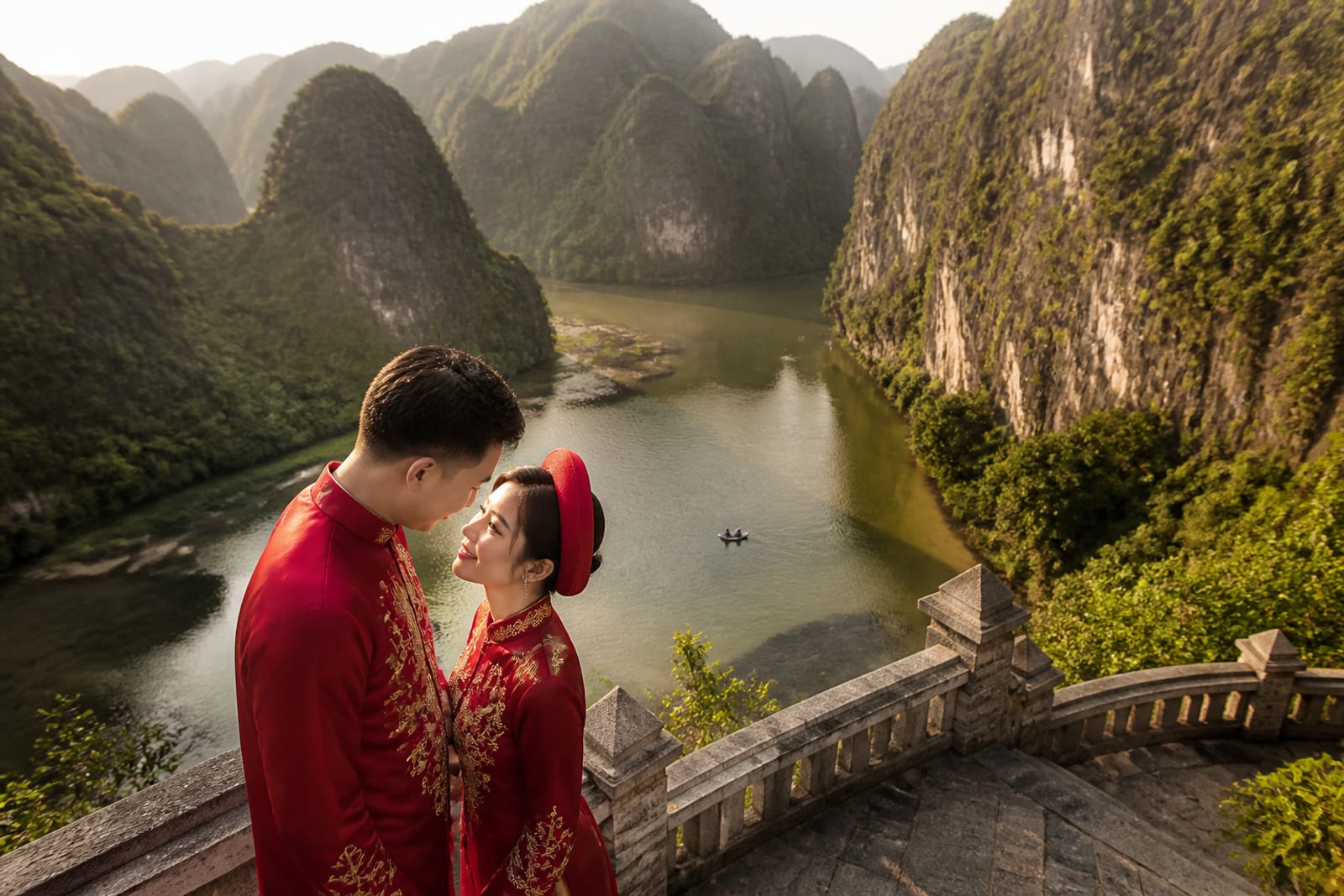
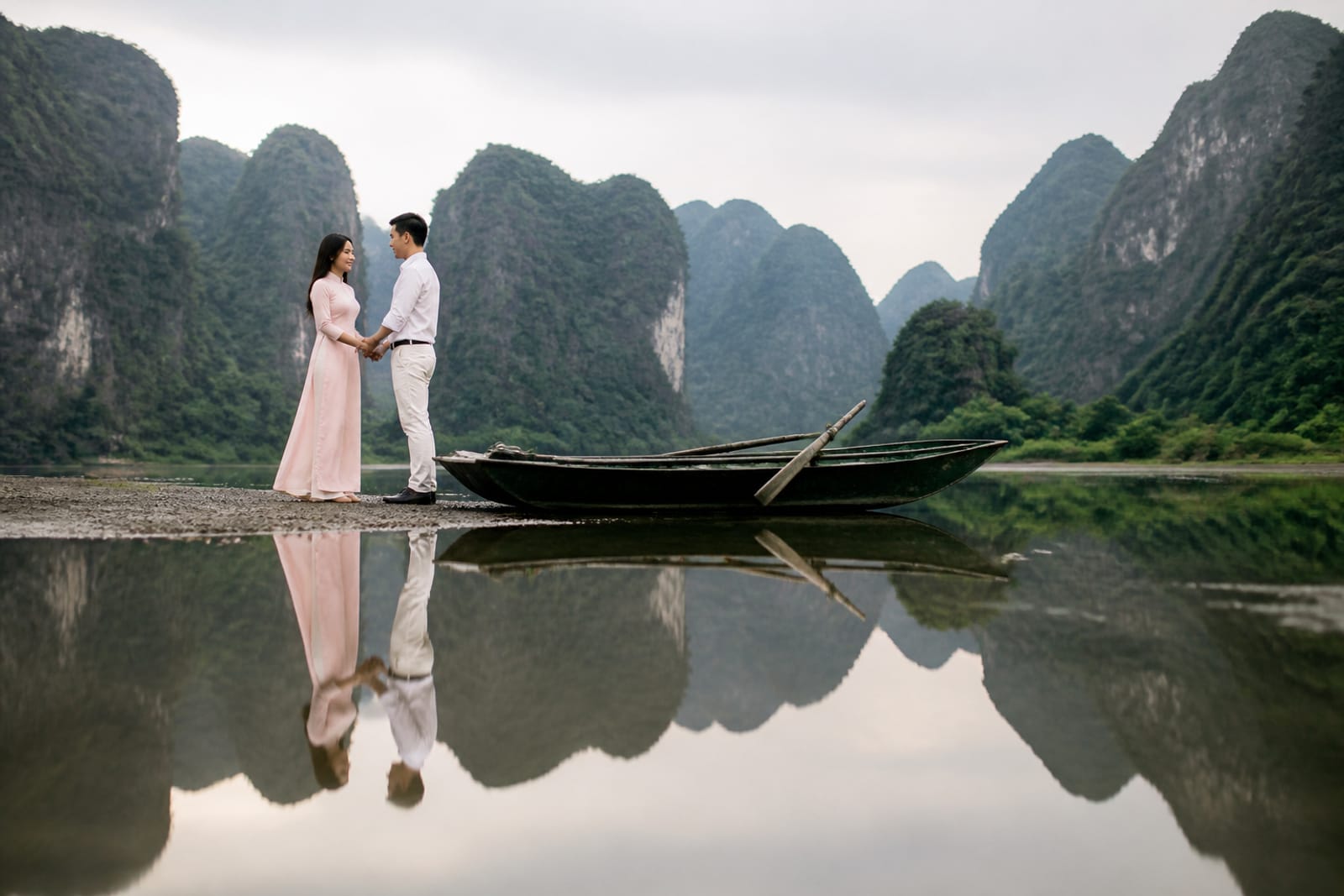
Hoa Lu's two 11th-century temples—Mua (for King Dinh Bo Linh) and Tran (for King Le Hoan)—sit inside a limestone valley near the Red River delta. The setting combines spiritual weight (active worship, incense, carved stone altars) with dramatic landscape: stepped courtyards, shadowed alcoves, red-tiled roofs framed by 200-meter cliffs. An ao dai worn in these courtyards gains visual depth—the fabric reflects stone and shadow differently than studio or garden settings. The temples' narrow passages and steep stairs demand careful planning: slippery surfaces, low light, and the need to move respectfully through worshippers create real logistical challenges that separate intentional shoots from rushed ones.
📸 Book on WhatsApp — ao dai photoshoot
What season gives you the best light and weather?
March–May and September–November are optimal. During these windows, mornings stay cool (15–22°C), temple courtyards receive soft, diffused light filtered by limestone overhangs, and humidity is lower—ao dai fabric hangs cleanly without clinging. June–August brings 35°C heat, afternoon storms and harsh overhead sun that washes out temple shadows. December–February is cooler but grey and misty; light becomes flat, and the Tet closure (late January–mid February) closes temples for several days and draws peak crowds just before. Plan shoots for 7–10 a.m. or 3–5 p.m. to avoid noon glare on stone and the midday temple rush.
How do outfits differ when you're climbing 500 stone steps?
Hoa Lu's Hang Mua viewpoint involves approximately 500 steep, uneven stone steps—slippery when damp, narrow in places. A traditional ao dai worn over loose pants works well if the áo is tailored snug at the chest and shoulders (loose áos snag on handrails and flap dangerously). Many couples shoot only in the temple courtyards below to avoid the climb; others split the session (court photos in full áo, then change into fitted áo or modern dress for stairs). Closed-toe shoes with grip are non-negotiable—heels damage stone and risk slips. Bring a second outfit: one áo for temple stillness, one for movement-heavy sequences. Test your áo fit by sitting, climbing stairs at home, and checking that hems clear your feet when you step up.
| Outfit choice | Best for | Light window | Effort & risk |
|---|---|---|---|
| Traditional áo dai (court only) | Intimate temple altar shots, detail close-ups | Early morning or late afternoon | Low; no climbing; requires permit to enter worship areas |
| Fitted áo dai (stairs + court) | Dramatic cliff-backdrop shots, movement sequences | Mid-morning (7–9 a.m.) | High; 500 steps, balance, fabric management |
| Áo dai + modern dress split | Variety across heritage and contemporary looks | Two sessions, peak morning + late afternoon | Medium; extra outfit changes, longer booking |
| Complementary groom suit (court only) | Formal altar portraits, symmetrical framing | Soft morning light | Low; traditional dress etiquette respected, no climbing strain |
How do you find and vet a photographer for Hoa Lu?
Cáo Studio – Makeup & Photoshoot operates from Hanoi, Ho Chi Minh City and Hoi An—not Hoa Lu—so you'll hire a local Ninh Binh-based photographer or ask your Hanoi studio to arrange logistics. Vet candidates by: (1) requesting a portfolio with dated Hoa Lu shoots (not generic temple photos); (2) asking how many times they've shot there and whether they know current permit rules; (3) checking if they've worked inside temples during worship (different from outdoor site photography); (4) confirming they provide a local guide (required for interior temple access and etiquette). Ask for references from couples who shot before/after your target season. Avoid photographers who promise unrestricted access or claim permits are "not necessary"—Hoa Lu temples enforce visitor rules and photography fees. Request a consultation call to discuss your áo choice, stair comfort and shot list before committing.
What permits and costs should you expect?
Hoa Lu temples charge visitor entry fees—check the official Hoa Lu Heritage Site website for current ticket prices. Photography permits (if required for professional shoots) must be confirmed locally; some temples allow personal portraits, others restrict commercial photography. Your photographer should clarify this before booking and handle any on-site permissions. Guides (recommended for temple navigation and etiquette) are typically booked through tourism operators in Ninh Binh town, a 15-minute drive from Hoa Lu. Transport from Hanoi to Ninh Binh (90 km south, ~2 hours by car) is a cost factor—many photographers build this into their day rate or offer a separate transport surcharge. Factor in early morning pickup (to catch 7–8 a.m. light) and a 6–7 hour round trip. Confirm all permit, guide and transport costs with your photographer in writing before the shoot date.
What's the step-by-step checklist before booking?
- Confirm season fit: Check March–May or September–November availability in your travel dates.
- Decide location scope: Temple courtyards only, or courtyards + stairs? This changes outfit, photographer selection and time.
- Vet your photographer: Request dated Hoa Lu portfolio, ask about permit knowledge and guide relationships.
- Request a consultation: Discuss áo fit, stair comfort, shot list, makeup touch-ups needed and whether you want climbing sequences.
- Confirm inclusions in writing: How many hours, edited photos, outfit changes, guide/transport costs, and refund policy if weather or temple closure occurs.
- Book makeup separately: If you're flying from Hanoi, consider makeup & hair at your hotel the night before or morning of the shoot to avoid travel stress.
- Get a weather window plan: Ask what happens if rain or mist is forecast—rescheduling policy and backup indoor temple spots.
- Obtain written directions & timing: Confirm pickup time, temple opening hours (usually 7:30 a.m.–5 p.m.) and where you'll meet your guide.
---
What to check before you book
Photographer credentials: Verify they've shot Hoa Lu at least 3 times; ask for temple-specific portfolio images (not marketing photos). Request a reference from a couple who shot in your target season.
Permit clarity: Confirm in writing whether professional photography permits are included in your photographer's fee or if they're extra. Some temples restrict interior shots during worship hours; your photographer should know these limits.
Outfit consultation: Schedule a video call to review your áo dai fit, stair mobility and any custom tailoring needed. Bring photos of your dress and test a walk-through on a staircase.
Weather backup: Get a written rescheduling or refund clause if mist, rain or unexpected temple closure occurs. Hoa Lu's limestone valley can fog unexpectedly Sep–Nov.
Transport & timing: Confirm departure time from Hanoi (usually 5–6 a.m. for a 7:30 a.m. temple arrival), whether transport is included, and the full day duration so you can plan recovery time and evening commitments.
Guide & etiquette: Ask if your photographer partners with a local guide. Temples require visitors to dress modestly (shoulders and knees covered) and avoid flash photography in worship areas; your guide enforces these.
---
Comparing your ao dai photoshoot options
If you're considering a Hanoi base, Cáo Studio – Makeup & Photoshoot arranges pre-wedding and couple photoshoots in Hanoi's temples and heritage zones. For Hoa Lu, you'd hire a local photographer but could combine your shoot with a Hanoi session before or after your Ninh Binh trip. Many couples do a formal studio or hotel makeup & hair session in Hanoi, then drive to Hoa Lu for heritage outdoor shots. This splits the day into two distinct moods: polished, controlled light indoors; and dramatic, spiritual framing outdoors.
If your travel route includes Ho Chi Minh City, Cáo Studio's Saigon base can arrange makeup, pre-wedding shoots in urban temples or the Mekong delta—but not Hoa Lu. Plan Hoa Lu as a standalone northern trip or combine it with Hoi An photoshoots (a 4-hour drive southeast; Cáo Studio arranges shoots there by appointment).
---
Why timing matters at Hoa Lu
Temple courtyards fill with domestic pilgrims between 9 a.m. and noon, especially during lunar holidays. Early arrival (7–8 a.m.) gives you 30–45 minutes of calm, soft light before foot traffic peaks. Late afternoon (3:30–5 p.m.) clears crowds but light angles become oblique; if you're planning stairs-and-backdrop shots, this window is ideal for silhouette or rim-lit áo frames. Mist is common September–November mornings; it softens contrast and hides background clutter, but focus becomes critical. Discuss mist as an asset or problem with your photographer—some embrace the moody, diffused aesthetic; others prefer clear visibility. March–May mornings are typically clearest; plan any stair sequences here if clarity is your priority.
---
How to coordinate makeup and timing
Most photographers recommend arriving with minimal makeup (sunscreen, lip balm, brow definition) and having a local makeup artist meet you at your hotel in Ninh Binh town or at Hoa Lu itself (if your photographer recommends one). This avoids 2-hour travel time in full makeup, which can melt or smudge during the drive. Makeup touch-ups between temple courtyard and stair sequences add 10–15 minutes. If you're flying from Hanoi and want to leave early (5–6 a.m.), do full makeup in Hanoi and bring a compact kit for touch-ups. Alternatively, book hotel makeup & hair in Ninh Binh the evening before—some makeup artists travel from Hanoi or work locally.
📸 Book on WhatsApp — ao dai photoshoot
---
FAQ
Can we shoot inside the temples during active worship?
Yes, but with restrictions. You'll need to dress modestly (shoulders, knees covered—your áo dai meets this), avoid flash photography in altar areas, and respect worshippers' prayer times. A local guide will navigate you to photography-friendly spots and timings. Ask your photographer if they know the current temple rules; rules vary between Mua and Tran temples.
How slippery are the stone stairs, and should we hire a porter or guide?
Stone stairs are very slippery when damp, especially after morning mist or rain. Closed-toe shoes with grip are essential. A guide (typically arranged by your photographer or a tourism operator) helps navigate safely, knows where to rest mid-climb, and can retrieve dropped items. A porter is optional; most couples manage 500 steps with water breaks every 100 steps.
What if weather ruins our Hoa Lu shoot date?
Confirm a rescheduling or refund clause with your photographer in writing before booking. Mist is normal Sep–Nov and often adds atmosphere; rain and lightning require postponement. Some photographers offer indoor temple backup shots; others suggest rescheduling to the next clear day within your travel window.
How many edited photos do we typically receive for a Hoa Lu shoot?
This varies by photographer contract. Before booking, ask for the exact number of edited images, turnaround time (usually 2–4 weeks), whether you get RAW files, and what file formats are delivered. Cáo Studio – Makeup & Photoshoot confirms all inclusions on WhatsApp; for Hoa Lu, negotiate these terms directly with your local photographer.
Should we rent an áo dai or bring our own?
Bring or rent based on fit urgency. If you're in Hanoi before traveling to Hoa Lu, Cáo Studio offers áo dai rental; rent there, test the fit on stairs, and have alterations done in Hanoi if needed. Renting locally in Ninh Binh is cheaper but allows less time for tailoring. For climbing 500 steps, fit is critical—snug at the chest and shoulders, no loose fabric that catches on railings.
Can we do Hoa Lu in a single morning or do we need a full day?
A focused temple-courtyard-only shoot takes 2–2.5 hours; add stairs and you'll need 4–5 hours total (including travel from Hanoi, guide briefing, makeup touch-ups and breaks). Most couples block a full day and treat travel time as part of the experience. Leaving Hanoi at 5 a.m. gets you temple light by 7:30 a.m. and back by 4–5 p.m.
FAQ
Can we shoot inside the temples during active worship?
Yes, but with restrictions. You'll need to dress modestly (shoulders, knees covered—your áo dai meets this), avoid flash photography in altar areas, and respect worshippers' prayer times. A local guide will navigate you to photography-friendly spots and timings. Ask your photographer if they know the current temple rules; rules vary between Mua and Tran temples.
How slippery are the stone stairs, and should we hire a porter or guide?
Stone stairs are very slippery when damp, especially after morning mist or rain. Closed-toe shoes with grip are essential. A guide (typically arranged by your photographer or a tourism operator) helps navigate safely, knows where to rest mid-climb, and can retrieve dropped items. A porter is optional; most couples manage 500 steps with water breaks every 100 steps.
What if weather ruins our Hoa Lu shoot date?
Confirm a rescheduling or refund clause with your photographer in writing before booking. Mist is normal Sep–Nov and often adds atmosphere; rain and lightning require postponement. Some photographers offer indoor temple backup shots; others suggest rescheduling to the next clear day within your travel window.
How many edited photos do we typically receive for a Hoa Lu shoot?
This varies by photographer contract. Before booking, ask for the exact number of edited images, turnaround time (usually 2–4 weeks), whether you get RAW files, and what file formats are delivered. Cáo Studio – Makeup & Photoshoot confirms all inclusions on WhatsApp; for Hoa Lu, negotiate these terms directly with your local photographer.
Should we rent an áo dai or bring our own?
Bring or rent based on fit urgency. If you're in Hanoi before traveling to Hoa Lu, [Cáo Studio offers áo dai rental](/ao-dai-rental); rent there, test the fit on stairs, and have alterations done in Hanoi if needed. Renting locally in Ninh Binh is cheaper but allows less time for tailoring. For climbing 500 steps, fit is critical—snug at the chest and shoulders, no loose fabric that catches on railings.
Can we do Hoa Lu in a single morning or do we need a full day?
A focused temple-courtyard-only shoot takes 2–2.5 hours; add stairs and you'll need 4–5 hours total (including travel from Hanoi, guide briefing, makeup touch-ups and breaks). Most couples block a full day and treat travel time as part of the experience. Leaving Hanoi at 5 a.m. gets you temple light by 7:30 a.m. and back by 4–5 p.m.
Ao dai, makeup, hair and a local photographer in Hanoi or Saigon — one WhatsApp message.