/ao-dai-photoshoot
Ao dai wedding photos at Hon Kho island: real logistics & light
Hon Kho island, off Quy Nhon in central Vietnam, suits ao dai wedding photos because its turquoise coves and limestone cliffs read cinematic in stills. The catch: you arrive by boat (roughly 30–40 minutes from shore), light peaks in a 90-minute window before noon, and salt air damages fabric and hair. Cáo Studio does not operate on Hon Kho — the team shoots from Hanoi, Ho Chi Minh City and Hoi An bases. If you're set on Hon Kho, hire a local Quy Nhon photographer who knows tides, boat operators, and which coves hold soft light longest. Brief them on ao dai fit (loose around the hips, heavy silk catches wind), hair-pinning strategy in salt spray, and a backup indoor or sheltered shot in case noon sun hardens fast. Factor in island permits, boat rental, and a makeup artist willing to work in close quarters. The payoff: frames no city shoot can match.
Why Hon Kho reads different from a city shoot
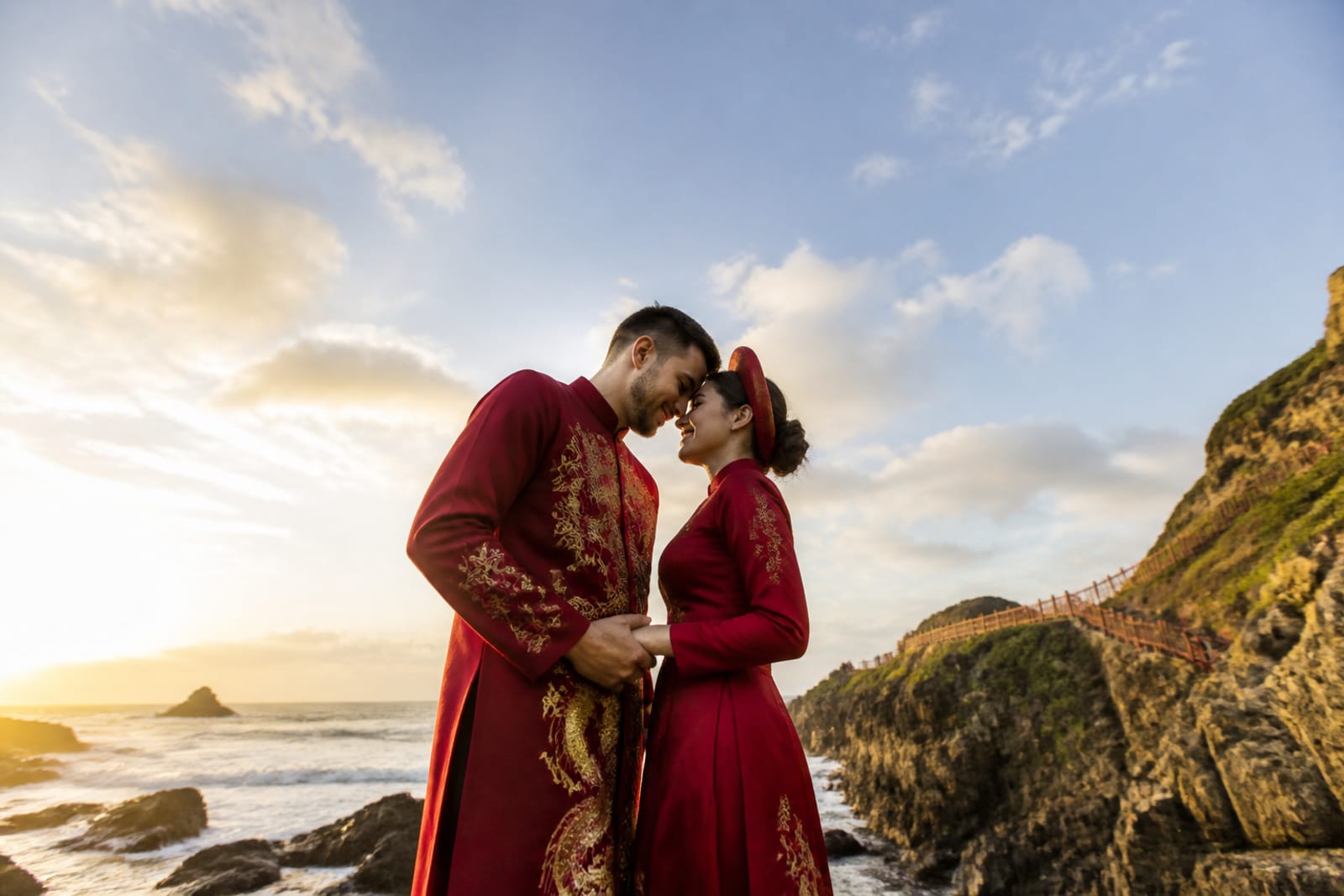
Hon Kho's rock formations and turquoise water create depth city backdrops rarely offer. The limestone creates natural frames; the coves break up monotony. But this beauty demands a director who understands how salt spray, boat schedules and tidal access reshape a shoot. City sessions in Hanoi, Ho Chi Minh City or Hoi An stay on schedule; island shoots don't. Expect delays, route changes, and less time than you budgeted.
📸 Book on WhatsApp — ao dai photoshoot
What season and time of day actually matter on Hon Kho
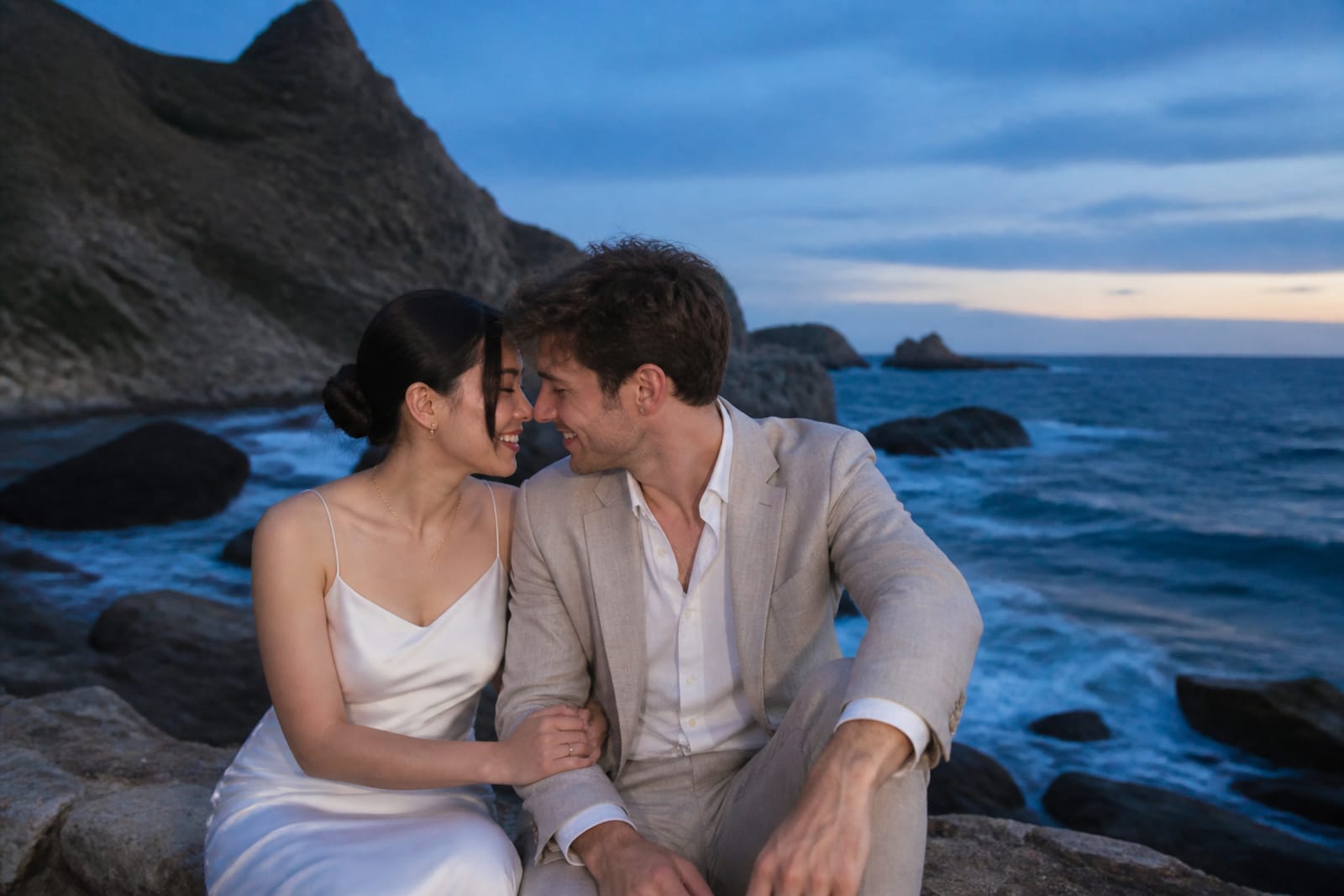
Quy Nhon's dry season (February–August) offers calm seas and clear skies; the rainy season (September–December) brings choppy water, cloud cover and typhoon risk — worst in October–November. Within a clear day, Hon Kho's light is only workable from sunrise to 9 a.m. By mid-morning, sun is directly overhead, turning ao dai silk flat and faces shadowed. Dawn shoots mean a 5 a.m. boat departure and a rushed makeup session on the island or in a boat cabin. Afternoons are too harsh; the golden hour happens over deep water, not the coves where you can stand. If you commit to Hon Kho, commit to an early start and a compressed shooting window.
Single-location vs. multi-location island sessions: what each demands
| Approach | Best for | Light window | Why it works |
|---|---|---|---|
| One cove, one outfit | Elopements, timeless frames | Sunrise–9 a.m. | Director can nail light and positioning without moving crew; backup light in rocky alcoves |
| Two coves, two outfits | Couples, ao dai + casual | Sunrise–10 a.m. | Requires boat to relocate; second cove often has harsher light; risk of rushed final shots |
| Boat-during-golden-hour only | Instagram cinematic shots | 6–7 p.m. | Boat rocks; ao dai moves unpredictably; makeup smudges; hard to direct poses; payoff is one or two usable frames |
Stick to one cove and one outfit if this is your first island shoot. The temptation to "see more" costs you focused frames.
How to brief a local Quy Nhon photographer (Cáo Studio doesn't shoot here)
Cáo Studio operates in Hanoi, Ho Chi Minh City and Hoi An — not Quy Nhon or Hon Kho. If you're determined to shoot on the island, here's what to communicate to a local photographer upfront:
- Ao dai fit and movement: The fabric is heavy and catches wind. Brief the photographer on undergarments (typically thin, nude slip); ask them to recognize when wind lifts the hem and to direct you to reposition, not to shoot mid-flutter unless that's intentional.
- Hair and salt spray: A local stylist knows how to pin an updo against ocean air better than someone trained inland. Confirm they've done island shoots before.
- Boat logistics: Ask the photographer if they've worked with your boat operator before. Tides, landing sites, and crew mood all affect timing. A photographer who knows the captain gets better access to sheltered coves.
- Light scouting: Request they scout the coves 1–2 days before to locate the softest morning light and identify emergency shelter (caves, rock overhangs) in case midday sun peaks early.
- Backup plan: Confirm where the indoor fallback shot happens — a boat cabin, a beachside hut, or a return to shore. Don't assume you can improvise on the day.
Ask the photographer for references from previous island shoots; look for consistent soft light and sharp focus on faces (not blown-out water).
What goes wrong on island shoots and how to prevent it
Salt spray and silk damage: Ao dai fabric absorbs salt and starts to stiffen after 30 minutes in ocean air. Pack fresh water and a microfiber cloth. Ask your photographer or stylist to spray the hem every 15 minutes if wind is strong.
Uneven skin tone from reflection: Water and rocks bounce light upward, creating unflattering shadows under eyes and cheekbones. A skilled director positions you so light hits your face from the front-left, not below. Poor photographers shoot you straight-on into the reflection and blame "harsh island light."
Hair falling in 90 minutes: Humidity, salt and wind undo most updos by 9 a.m. Use a strong gel or pomade; pin twice as many bobby pins as you'd use on land. Confirm the stylist has done this before.
Boat delay or cancellation: Rough seas or engine trouble can push your shoot back 1–2 hours or cancel it entirely. Book the photographer for a two-day trip if possible; confirm a full reschedule clause before you pay.
Rushed final outfit change: If you're doing two outfits, the second change often happens in a rocky cove with no privacy and no mirror. Wear the second outfit under the first, or pack a zip-up cover-up you can wear while changing. Bring a small mirror and wet wipes.
Color cast from reflected water: Turquoise water casts a cool, blue tint on skin. A photographer who understands white balance can correct this; many don't. Ask to see their island work and check if faces look warm or blue.
Cost factors unique to island shoots (not amounts — ask via WhatsApp)
Island sessions are typically pricier than land-based shoots because of boat rental, fuel, permits, and extended crew time. The factors that affect cost:
- Boat rental and fuel: A private longtail boat for 3–4 hours costs more than a van for city driving.
- Crew accommodation: If your photographer travels from Hanoi or Ho Chi Minh City, they may stay overnight in Quy Nhon. Budget for their lodging.
- Permits and landing fees: Some coves require permits or informal fees to local boat captains. Ask your photographer to handle this and confirm the cost.
- Backup indoor location: If you want a second shooting location on the island (a beachside resort, a cave, a hut), that adds to the photographer's time and the boat captain's waiting time.
- Makeup and hair services: Styling on an island is harder than in a studio. A makeup artist who travels to the boat may charge more; confirm before booking.
For a transparent quote, ask on WhatsApp what's included and what's extra.
What to check before you book an island photoshoot
- Does the photographer have verifiable island work? Request 3–5 previous sessions from Hon Kho or similar rocky-cove locations. Look for consistent soft light on faces and sharp focus on fabric detail.
- Who handles the boat and permits? Confirm the photographer or a local guide coordinates the boat, landing times, and any required permits. Don't assume you'll figure it out on arrival.
- What's the backup plan if weather turns? A two-day booking or a guaranteed reschedule clause is standard. Read the contract carefully.
- Is the stylist experienced with ao dai in salt air? Call or message them directly. Ask if they've pinned updos on a boat before.
- What's included in the session? Confirm number of outfits, coves, edited files, and delivery time. Different photographers offer different scopes — get it in writing.
- Do you need a second outfit on land? If your shoot runs into harsh midday light, a sheltered or indoor backup location ensures you leave with strong frames. Confirm this exists before the day.
- What's the weather guarantee? If seas are too rough to land, what happens to your payment? Confirm the rescheduling policy in advance.
---
Ready to book an ao dai session?
Cáo Studio shoots ao dai photoshoots in Hanoi, Ho Chi Minh City and Hoi An — not on Hon Kho. For a city session, the team handles everything (outfit, hair, makeup, photography) in one booking, edited frames in 48 hours. For Hon Kho or Quy Nhon, hire a local photographer who knows the island and brief them thoroughly.
📸 Book on WhatsApp — ao dai photoshoot
Want to compare ao dai shoots with couple photoshoots or explore pre-wedding options? Message on WhatsApp for a consultation.
FAQ
Can Cáo Studio shoot my ao dai wedding on Hon Kho island?
No. Cáo Studio operates in Hanoi, Ho Chi Minh City and Hoi An. For Hon Kho or Quy Nhon, you'll need a local photographer experienced with island shoots, boat logistics and ao dai styling in salt spray.
What's the best time of year to shoot on Hon Kho?
February–August offers calm seas and clear skies; October–November is typhoon season and risky. Plan for sunrise–9 a.m. to capture soft light before the sun hardens.
How long does a boat ride to Hon Kho take?
Roughly 30–40 minutes from Quy Nhon shore, depending on the operator and sea state. Factor in 10–15 minutes to board and leave. Rough seas can delay departure.
Will salt water ruin my ao dai?
Salt spray stiffens silk and can cause spotting over time. Fresh water rinses and microfiber cloth drying during the shoot help. Ask your stylist to freshen the hem every 15 minutes if wind is strong.
Should I do one outfit or two on an island shoot?
One outfit in one cove keeps light consistent and lets the director focus on posing and expression. Two outfits means a rushed second change in a cramped or exposed space and likely harsher light in the second location.
What happens if the boat can't land due to weather?
Confirm the photographer's rescheduling clause and payment refund policy before you book. Island shoots depend on sea state; a two-day booking or guaranteed reschedule is standard protection.
FAQ
Can Cáo Studio shoot my ao dai wedding on Hon Kho island?
No. Cáo Studio operates in Hanoi, Ho Chi Minh City and Hoi An. For Hon Kho or Quy Nhon, you'll need a local photographer experienced with island shoots, boat logistics and ao dai styling in salt spray.
What's the best time of year to shoot on Hon Kho?
February–August offers calm seas and clear skies; October–November is typhoon season and risky. Plan for sunrise–9 a.m. to capture soft light before the sun hardens.
How long does a boat ride to Hon Kho take?
Roughly 30–40 minutes from Quy Nhon shore, depending on the operator and sea state. Factor in 10–15 minutes to board and leave. Rough seas can delay departure.
Will salt water ruin my ao dai?
Salt spray stiffens silk and can cause spotting over time. Fresh water rinses and microfiber cloth drying during the shoot help. Ask your stylist to freshen the hem every 15 minutes if wind is strong.
Should I do one outfit or two on an island shoot?
One outfit in one cove keeps light consistent and lets the director focus on posing and expression. Two outfits means a rushed second change in a cramped or exposed space and likely harsher light in the second location.
What happens if the boat can't land due to weather?
Confirm the photographer's rescheduling clause and payment refund policy before you book. Island shoots depend on sea state; a two-day booking or guaranteed reschedule is standard protection.
Ao dai, makeup, hair and a local photographer in Hanoi or Saigon — one WhatsApp message.