/ao-dai-photoshoot
Ao Dai Wedding Photos at Long Bien Bridge: Hanoi's Industrial Icon
Long Bien Bridge—the iconic 1902 iron span crossing the Red River—is a top choice for ao dai wedding and pre-wedding portraits in Hanoi because its geometric steel geometry and historical weight create drama that flatters traditional silk. Sessions run early morning (before 8 a.m.) or late afternoon (after 4 p.m.) to dodge peak river traffic, commuters and tourist crowds; midday light is harsh and the bridge becomes chaotic. Autumn (October–November) delivers the softest, most flattering light and clear skies; winter (December–February) is cool and grey, which suits moody tones but requires longer exposures. The bridge walkway narrows, so movement is limited—plan outfits, poses and camera angles in advance. Cáo Studio – Makeup & Photoshoot coordinates early-access timing with local authorities, manages traffic safety and knows which sections frame the ao dai's silhouette best. Cost factors: season (autumn is most popular), session length, number of outfit changes, and whether makeup is applied on-site or at your hotel. ---
Why Long Bien Bridge Works for Ao Dai Portraits
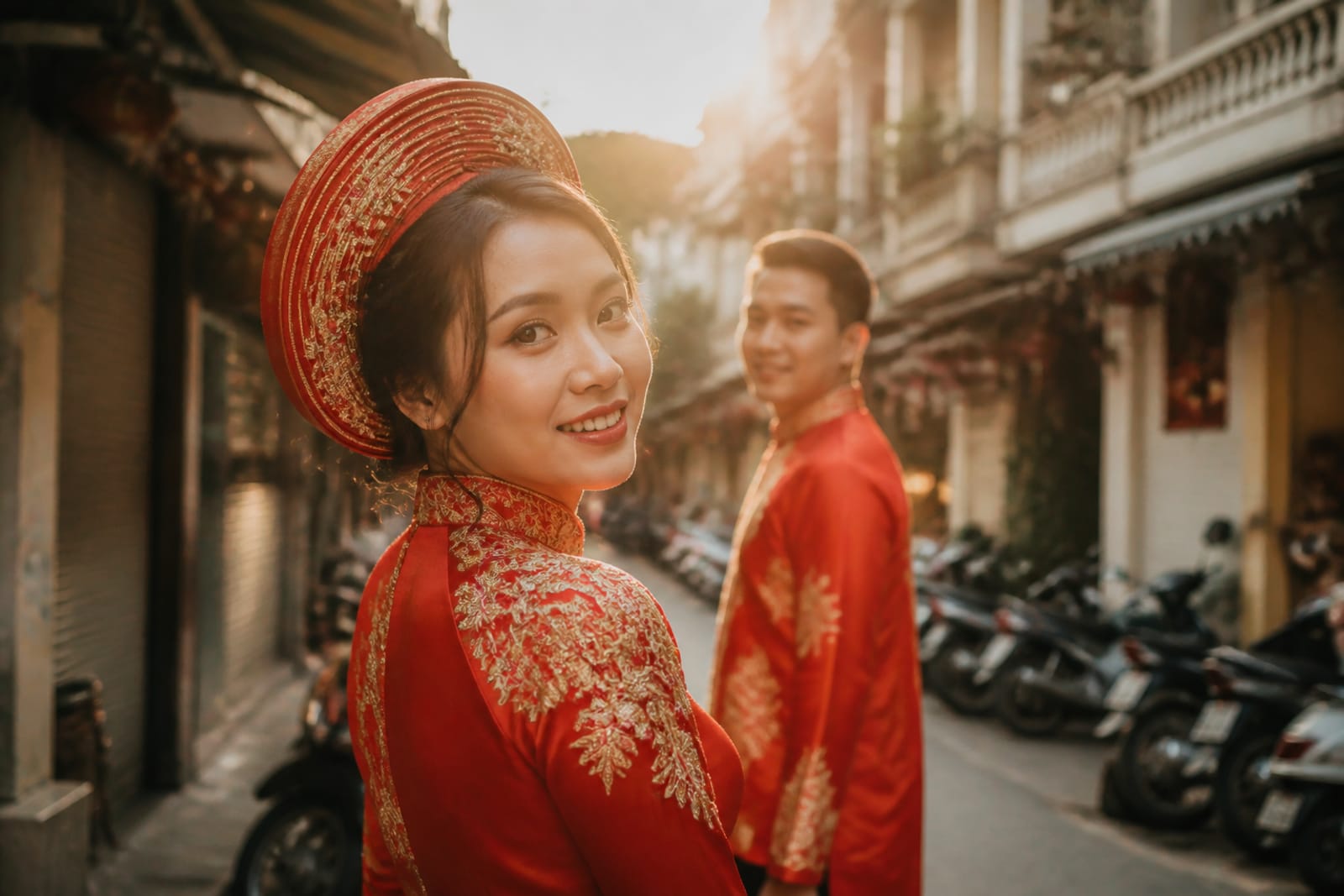
Long Bien Bridge's appeal lies in its narrative power: the weathered steel, the river below, and the ao dai's flowing silk create a visual tension that feels both timeless and dramatic. Unlike manicured gardens, the bridge anchors the silk in real Hanoi—industrial, lived-in, authentic. The structure's horizontal and diagonal lines frame the wearer's posture and the fabric's movement. Early-morning and late-afternoon light rakes across the riveted steel, casting soft shadows that don't flatten the ao dai's embroidery or pleats. Winter light (December–February) is diffused and cool, suiting jewel-toned silks; autumn light is golden and directional, flattering reds and crimsons.
The bridge's historical weight—it survived French colonial rule, the 1954 war and the American bombing campaigns—resonates with couples seeking a backdrop that speaks to heritage and permanence. For Hanoi-based and visiting couples, it signals both Vietnamese identity and international sophistication.
📸 Book on WhatsApp — ao dai photoshoot
What Season and Time of Day Suit the Best Shots?
Hanoi's climate shapes light quality, access and comfort on the bridge. Autumn (October–November) is the gold standard: mild air (20–28°C), low humidity, clear skies and warm, directional light that models the ao dai's folds and embroidery without glare. The bridge is busiest at weekends, so weekday early morning or late afternoon yields fewer pedestrians and better light angles.
Winter (December–February) brings cool, overcast conditions (10–20°C)—ideal for moody, intimate portraits, but the grey sky flattens midday light and makes the ao dai's colors appear muted. Afternoon sessions after 4 p.m. catch what low sun filters through cloud cover. Spring (March–April) is mild but frequently drizzly and hazy; summer (May–September) is hot (often 35°C+), humid and prone to sudden downpours. Midday sessions year-round are poor: the sun is high, shadows are harsh under the chin and across the ao dai, and the bridge fills with cyclo tours and commuters.
Early morning (6:30–7:30 a.m.) on weekdays offers the clearest access and softest light. Late afternoon (5:00–6:30 p.m.) is busier but captures golden hour. Avoid weekends and Tet season (late January–mid-February) when the bridge hosts festivals and crowds swell.
Bridge Access, Safety and What You Can and Cannot Do
Long Bien Bridge is a working pedestrian and vehicle thoroughfare—not a closed film set. Access is free, but local authorities restrict group photo sessions at peak hours and may redirect large parties. The walkway is narrow (roughly 3 meters wide in places), with uneven cobblestones and gaps where you can see the river below. Tripods, drones and commercial equipment require informal coordination with local police; Cáo Studio – Makeup & Photoshoot navigates this logistics before your booking.
Do not shoot during rush hours (7–9 a.m., 5–7 p.m., weekends). Do wear safe footwear (the ao dai's hem is long; comfortable shoes under it are essential—no heels on the cobblestones). Motorbikes and trucks pass frequently; the team watches traffic and positions you safely. Do not lean against railings or sit on the edge (the bridge has no safety barriers in some spots). Sunset sessions are photogenic but end quickly—light fades by 6:30 p.m. in winter. Do expect to share the space with early commuters, joggers and other tourists.
Long Bien vs. Other Iconic Hanoi Ao Dai Spots: How They Compare
| Location | Best for | Light & Season | Why It Works / When to Skip |
|---|---|---|---|
| Long Bien Bridge | Couples, pre-wedding, editorial | Autumn early morning; winter afternoon | Drama, historical weight, urban backdrop. Crowded weekends; narrow walkway limits poses. |
| Hoan Kiem Lake (Jade Island) | Couples, family, cultural shoots | Autumn all day; spring morning | Serene, traditional, lush. Pedestrian-only weekends (5 p.m. onwards); haze in spring. |
| Tran Quoc Pagoda | Spiritual, pre-wedding, cultural | Early morning any season | Oldest temple, river views, peaceful. Busy 8–10 a.m.; no footwear on temple grounds. |
| Phan Dinh Phung Street | Romantic, pre-wedding, couples | Autumn (tree canopy golden) | Tree-lined, soft dappled light. Best mid-morning; spring haze obscures canopy. |
| Old Quarter (French colonial lanes) | Fashion, editorial, solo | Spring, autumn all day | Narrow streets, colonial architecture, vibrant. Very crowded; uneven surfaces; limited movement. |
| Ninh Binh (Trang An, Mua Cave) | Adventure, destination, pre-wedding | Feb–Aug (dry season) | Karst landscape, water, dramatic. 1.5 hours from Hanoi; ao dai impractical on boat or climbing. |
Long Bien suits couples seeking urban grit and historical resonance. Hoan Kiem works better for intimate, peaceful tones. Tran Quoc Pagoda feels spiritual and ceremonial. Choose based on your ao dai's color (jewel tones pop against Long Bien's steel; pastels suit Hoan Kiem's water), mood (moody and bold vs. serene and soft) and energy (you want movement and drama vs. stillness and contemplation).
What to Wear Under the Ao Dai and How the Shoot Runs
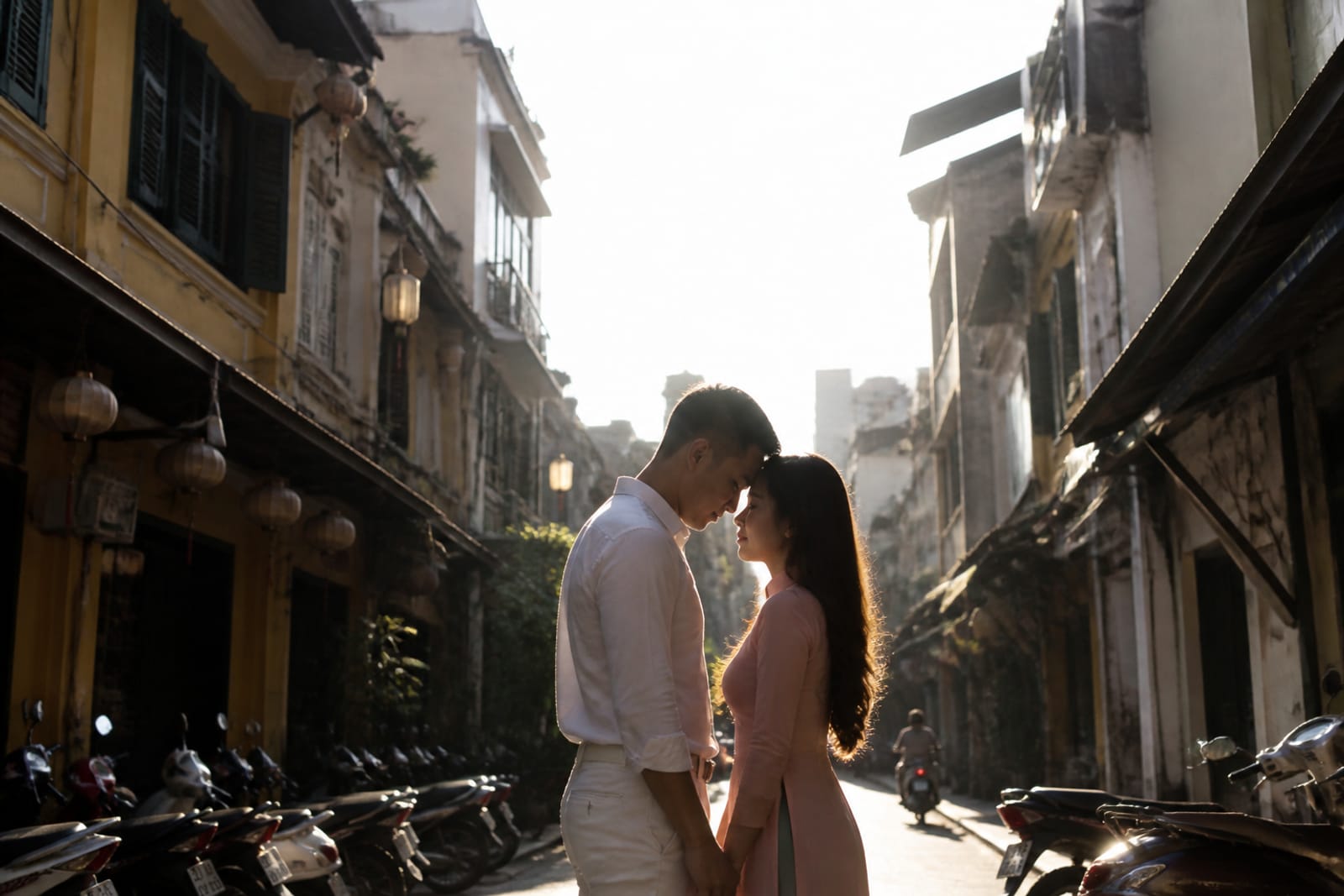
The ao dai is a two-piece: a long, fitted tunic with a high slit on each side, worn over wide white trousers. For Long Bien's narrow walkway, wear comfortable, flat shoes under the trousers—no heels. Many couples wear white silk lining shorts (not visible) to allow freedom of movement over the slit without chafing. A strapless or thin-strap undergarment (white or nude) keeps visible lines minimal if the ao dai has a low back or sleeveless design.
A typical session runs 60–90 minutes. You arrive in regular clothes; the team applies makeup and hair at your hotel or on-site if you've booked makeup & hair at your hotel. Outfit changes happen in a private nearby location (a homestay, café or hotel lobby). The photographer scouts the bridge for light and foot traffic, positions you for 5–10 shots per pose, then moves to a new section. Walking between poses is part of the shoot—the ao dai moves beautifully in motion, so candidly captured steps are often the strongest frames.
Bring water, a phone for communication and any accessories (jewelry, bouquet). Do not over-schedule: after Long Bien, going to another location in the same ao dai tires the fabric and your posture. Sessions are built for one landmark or a close pair (e.g., bridge + riverside café).
How to Book and What to Check Before You Commit
Cáo Studio – Makeup & Photoshoot works exclusively via WhatsApp for bookings. Send your preferred date, season, number of outfits and whether you want makeup included. The team confirms availability, timing and cost factors (season, length, makeup, editing), then sends a quote. Cost varies by season (autumn is peak), session length, number of outfit changes and whether makeup and hair are included—never a flat price. Editing turnaround, file formats and album options are confirmed in the same conversation.
Before you book, verify three things:
- Check the date. Confirm your preferred month and day; ask whether it's a weekday (quieter, better access) or weekend (busier, later sunset). Ask the team whether local authorities have restricted bridge access that week.
- Ask about the backup plan. What happens if the weather turns on your shoot day? Does the studio reschedule, or do you have a second location (e.g., Old Quarter, Hoan Kiem Lake)?
- Clarify outfit changes. Does the quote include makeup for each outfit, or just the first? Where do you change—a nearby café, homestay or hotel? This affects how many outfits feel realistic in your session time.
Book 2–4 weeks ahead during off-peak (December–February, May–September) and 6–8 weeks ahead for autumn (October–November). The team travels from Hanoi branches for Long Bien shoots; if you're also interested in other cities, see Saigon and Hoi An options.
For a complete ao dai photoshoot guide, explore the main ao dai photoshoot page. If you're planning a full pre-wedding story, the pre-wedding & elopement service includes multiple locations and a custom timeline.
---
What to Check Before You Book
- Date & timing: Confirm your preferred date is a weekday or weekend; ask the team whether local access is open that week.
- Makeup & timing: Is makeup included at your hotel or on-site? Does the session length (60 vs. 90 minutes) affect outfit changes?
- Weather backup: What happens if it rains? Is there a reschedule option or a secondary indoor/covered location?
- File delivery: How many edited files do you receive? When are they delivered? What format (digital, prints, album)?
- Outfit logistics: How many outfit changes feel realistic? Where do you change—does the studio arrange the location?
---
FAQ
Is Long Bien Bridge free to visit for a photoshoot?
Yes, the bridge is a public pedestrian walkway. No entry fee applies. Large organized group sessions may require informal coordination with local authorities—Cáo Studio handles this before your booking.
What if it rains on my ao dai photoshoot day?
Most sessions reschedule to the next available clear day or move to a covered location (Old Quarter alleyways, café interiors, or nearby pagoda interiors). Confirm the studio's rain policy in your WhatsApp conversation.
Can we bring a second outfit in a bag, or do we need a separate location to change?
A light second outfit (or just a jacket or sash accessory) can travel in a bag. Full ao dai changes require privacy—the team can suggest a nearby café, guesthouse or hotel lobby. Mention outfit count when booking.
How early should we arrive before a sunrise or early-morning session?
Arrive 20–30 minutes before your scheduled shoot time. This allows for final makeup touch-ups, outfit checks and a calm start before the photographer scouts and positions you.
Is the bridge safe for ao dai? Will the slit and trousers catch on cobblestones?
Yes; thousands of couples have shot there safely. Wear smooth, flat shoes under the trousers and avoid heels. The slit is designed to sit over the outer thigh—it won't catch if you walk naturally. The team guides your posture.
Do we need to book a time slot, or can we just show up?
Always book in advance via WhatsApp. This reserves the photographer, confirms timing, allows the team to coordinate with local authorities and gives you a professional crew who knows the best light and safest angles.
FAQ
Is Long Bien Bridge free to visit for a photoshoot?
Yes, the bridge is a public pedestrian walkway. No entry fee applies. Large organized group sessions may require informal coordination with local authorities—Cáo Studio handles this before your booking.
What if it rains on my ao dai photoshoot day?
Most sessions reschedule to the next available clear day or move to a covered location (Old Quarter alleyways, café interiors, or nearby pagoda interiors). Confirm the studio's rain policy in your WhatsApp conversation.
Can we bring a second outfit in a bag, or do we need a separate location to change?
A light second outfit (or just a jacket or sash accessory) can travel in a bag. Full ao dai changes require privacy—the team can suggest a nearby café, guesthouse or hotel lobby. Mention outfit count when booking.
How early should we arrive before a sunrise or early-morning session?
Arrive 20–30 minutes before your scheduled shoot time. This allows for final makeup touch-ups, outfit checks and a calm start before the photographer scouts and positions you.
Is the bridge safe for ao dai? Will the slit and trousers catch on cobblestones?
Yes; thousands of couples have shot there safely. Wear smooth, flat shoes under the trousers and avoid heels. The slit is designed to sit over the outer thigh—it won't catch if you walk naturally. The team guides your posture.
Do we need to book a time slot, or can we just show up?
Always book in advance via WhatsApp. This reserves the photographer, confirms timing, allows the team to coordinate with local authorities and gives you a professional crew who knows the best light and safest angles.
Ao dai, makeup, hair and a local photographer in Hanoi or Saigon — one WhatsApp message.