/ao-dai-photoshoot
Ao dai wedding photos at Moc Chau plum blossom valleys
Ao dai wedding photos at Moc Chau's plum blossom valleys work best from February through mid-March, when white and pink blooms peak across the valley floors. The location sits 1000m above sea level in Son La province, a 3.5-hour drive northwest of Hanoi; winter mist and soft morning light create the cinematic quality ao dai demands. A full session (styling, makeup, photography, edited photos and a short film) takes 4–6 hours on location. Success hinges on booking a photographer who understands ao dai movement, has shot in Moc Chau's specific microclimates (misty mornings vs. bright midday), and can direct you to walk and interact rather than pose stiffly. Cáo Studio coordinates shoots in Hanoi and can advise on local photographers and logistics; because Moc Chau is beyond our regular service area, we write planning guides and recommend vetted local teams. Check weather and blossom updates 2–3 weeks before your date, and confirm the photographer's experience with ao dai and valleys—not all portrait photographers understand how fabric and wind work at elevation. 📸 Book on WhatsApp — ao dai photoshoot ---
Why Moc Chau plum blossoms suit ao dai, not all seasons?
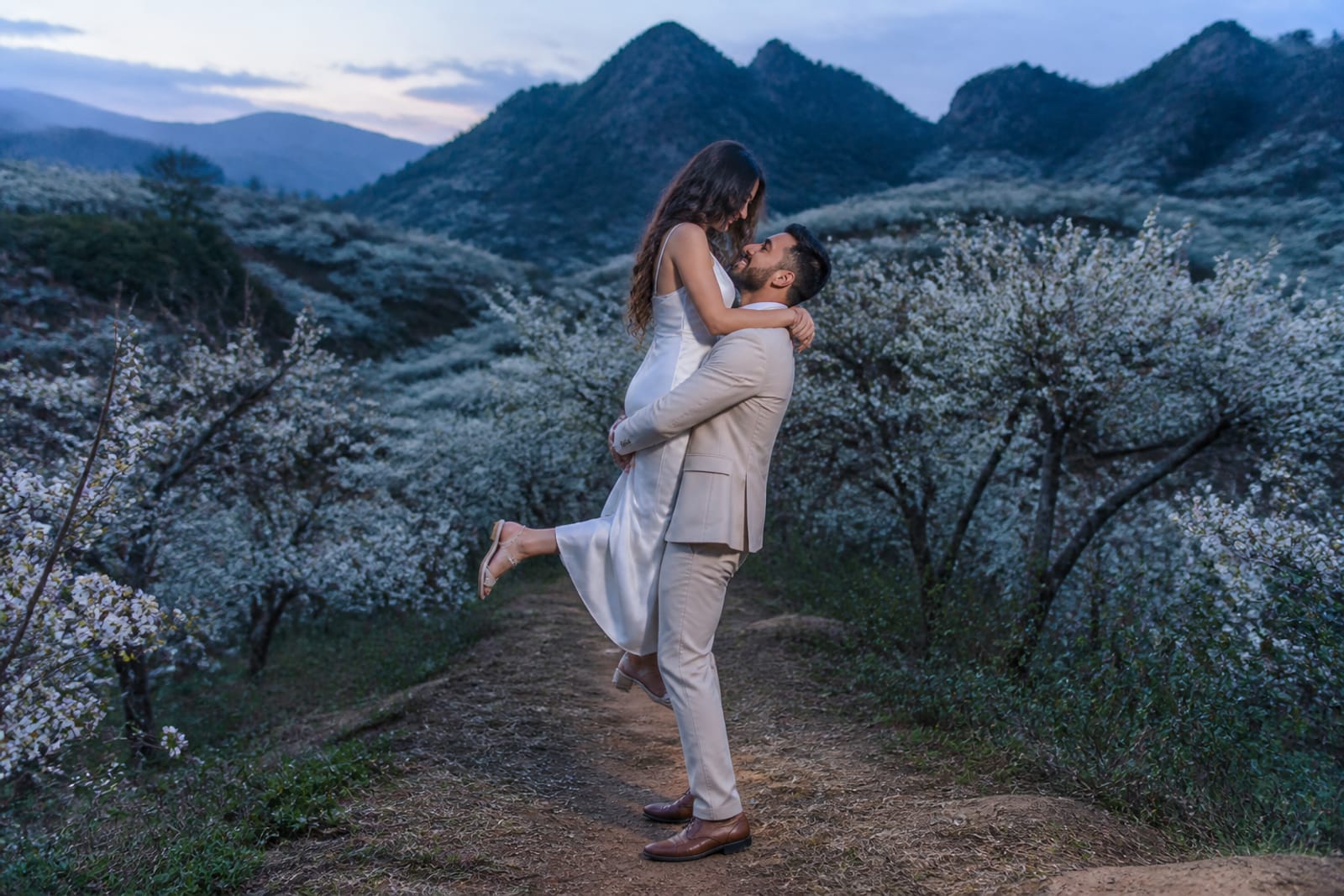
Plum blossoms are the one seasonal asset Moc Chau offers for fashion photography. Peak bloom runs Feb–mid-Mar; outside this window, the valleys are green tea hills without the floral drama. Early February can still show buds; late March sees petals drop. The soft, overcast light of Moc Chau's cool season—caused by high altitude and northern latitude—flatters ao dai's drape and embroidery without harsh shadows. By April, the sun intensifies, mist clears, and the landscape loses the dreamy quality couples seek. Summer (May–Sep) brings rain, humid heat, and a different aesthetic entirely. This narrow seasonal window means booking 2–3 months ahead during peak season (Jan–Feb) is not optional—local photographers fill quickly. If you miss February, consider ao dai shoots in Hanoi's temples and ancient towns year-round, where light and location variety don't depend on a single bloom cycle.
How does Moc Chau's light change during the day?
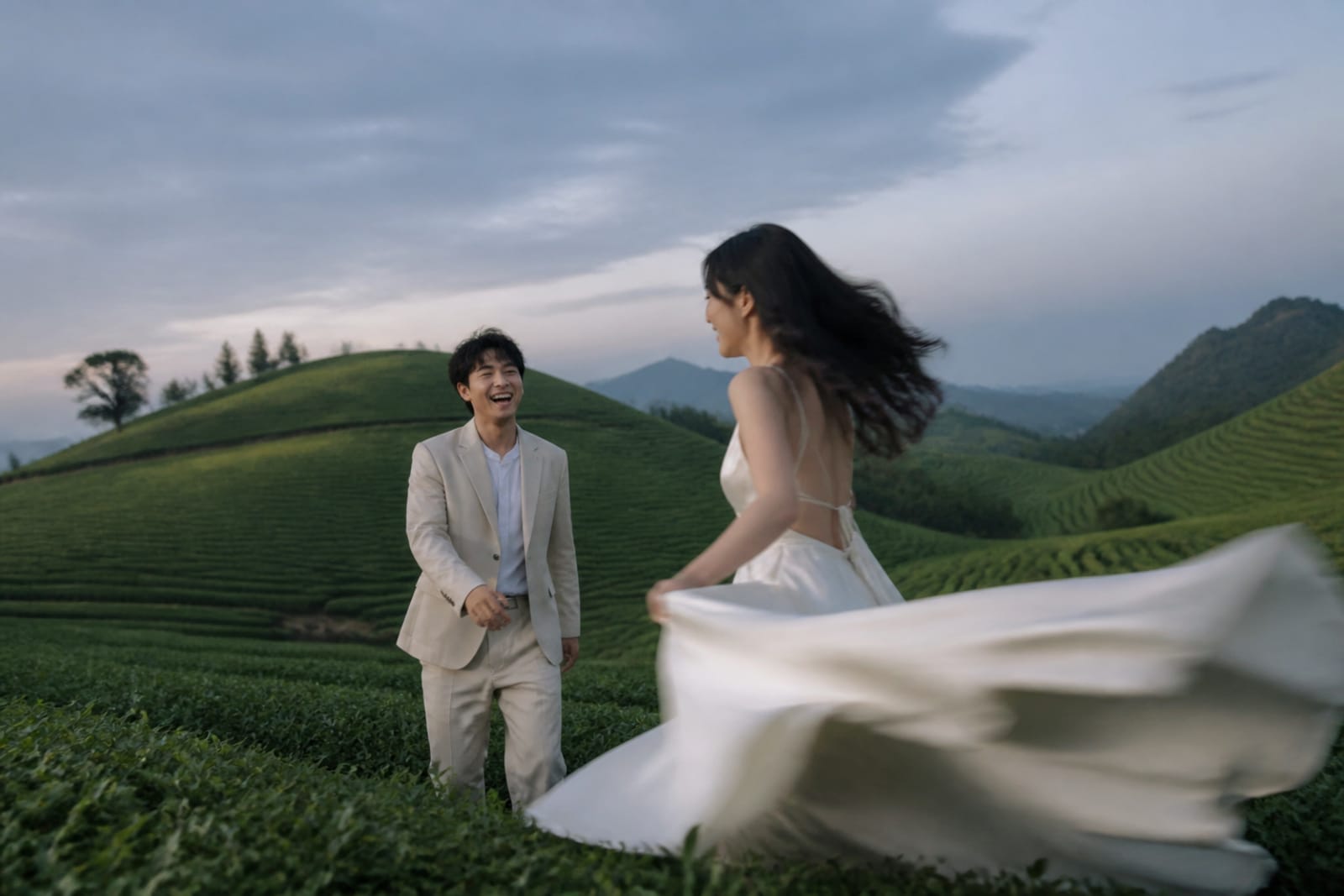
Morning (6–9 am) offers soft, directional side light that sculptors the valley and silhouettes the blooms; mist hangs in hollows and clings to trees, creating depth. By 10 am, haze begins to burn off, and light flattens. Midday (11 am–2 pm) is bright, even, and shadowless—technically correct exposure but visually flat for ao dai. Late afternoon (3–5 pm) can work if clouds roll in and recreate that morning diffusion, but it's unpredictable. Pro photographers at Moc Chau schedule 5–7 am starts to catch that golden window; you'll be on location before dawn, dressed and ready to shoot within an hour. Bring layers: valleys are cold and damp at sunrise. By late morning, temperature rises, but the magic light is already fading. One session typically captures the best light in 3–4 hours; a second outfit can be done in the same morning if logistcs allow, but quality drops once the sun climbs.
Should you hire a Hanoi photographer or find someone local to Moc Chau?
Both have trade-offs. Hanoi-based teams like Cáo Studio understand ao dai movement, styling, and narrative but must travel, adding coordination complexity and carbon cost. A local Moc Chau or Son La photographer avoids travel time, knows the exact valley layout, microclimate patterns, and local contacts (florists, local guides, cafes for wardrobe changes). However, not all local photographers have shot ao dai—many specialize in portraits or events and may pose you stiffly or not understand how ao dai reads in motion. The vetting question: ask for a portfolio of ao dai work in natural landscapes, not studio or event shoots. If a Hanoi photographer travels, confirm they've shot at Moc Chau before and have backup light plans for cloudy days (valleys fog fast). If you choose local, ask specifically about their experience directing movement, framing for ao dai's width and train, and their workflow (how long for edits, what format files are you getting, are behind-the-scenes images included?). Cáo Studio can advise on vetting and introduce you to trusted local photographers via WhatsApp; our role is guidance, not direct service, since we operate in Hanoi, Ho Chi Minh City, and Hoi An only.
| Photographer choice | Best for | Light predictability | Hidden costs | Vetting priority |
|---|---|---|---|---|
| Hanoi team (multi-day trip) | Comprehensive styling + ao dai expertise | High—they know valley seasons | Travel, accommodation, coordination | Portfolio of ao dai in valleys + previous Moc Chau work |
| Local (Son La/Moc Chau-based) | Logistics speed + local knowledge | Medium—weather still unpredictable | Hidden travel time, possible language gap, unclear editing timeline | Ao dai portfolio + directing-motion examples (not studio) |
| Freelance (friend with camera) | Budget-friendly, personal connection | Low—amateur lighting knowledge | Poor ao dai framing, limited retouching, no film included | Willingness to scout + trial shot in similar light |
What outfit and preparation suit Moc Chau's light and landscape?
Ao dai in solid jewel tones (emerald, sapphire, burgundy, plum) read better than pastels in overcast morning light; they don't wash out and complement the white and pink blooms. White or cream ao dai can work if you want contrast, but it requires precise metering to avoid blown highlights. Lightweight ao dai (silk blend, not cotton) moves better in valley breezes and photo more fluidly than structured versions. Bring two outfits if your budget and time allow—a traditional ao dai for the valley floor (where blooms are dense) and a second option for scenic-view shots on hillsides (where you're framed against the distant landscape). Underneath, wear form-fitting undergarments; ao dai silhouette depends on a smooth line, and visible panty lines or bunched fabric undermine the drape. Avoid shorts or jeans under the ao dai; they bunch at the knees. Shoes: flat sandals or embroidered slippers that grip uneven valley ground. Hair should be pinned or loose (not half-up, which reads awkward in motion shots); makeup should be matte and warm-toned to suit cool, grey light. Arrive 2–3 days early to acclimate and scout; altitude can cause fatigue, and rushed preparation leads to rushed photos.
How do you direct movement in a valley to avoid stiff poses?
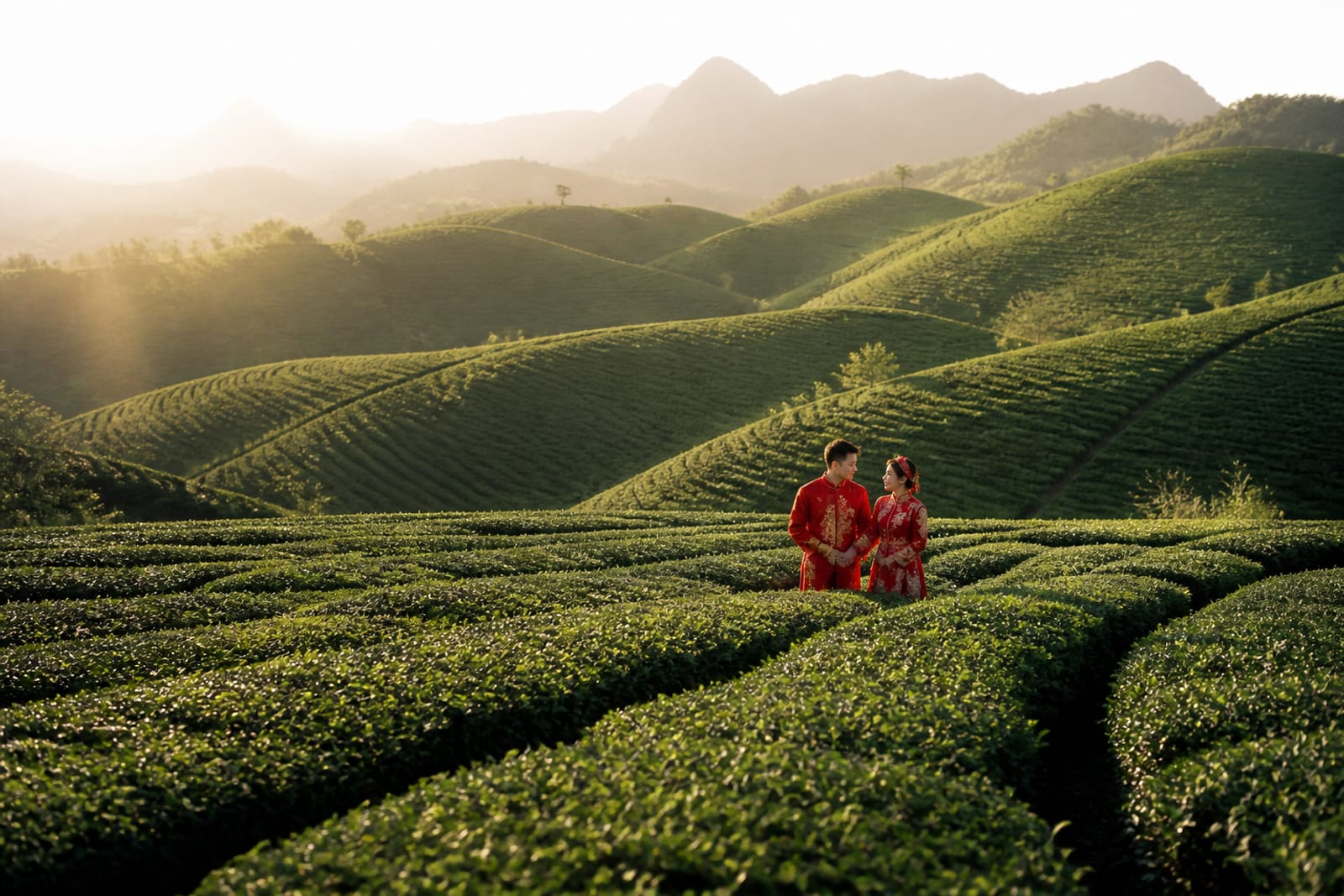
The cardinal rule: walk, don't stand. Valley photography works when the couple walks through the blooms, toward or away from the camera, interacting with each other rather than the lens. A photographer's direction might sound like: "Walk down that path toward the older trees, let the ao dai fabric flow, don't look at the camera yet—just talk to each other." The camera captures 5–10 frames as you walk, catching natural arm swings, ao dai movement, and genuine expression. Then stop, adjust the ao dai folds, and walk again. Shots taken mid-stride look alive; static poses (hand on hip, facing the camera, feet planted) read staged. Mistakes happen when photographers ask couples to "look natural" while standing still, hoping candid expression makes up for frozen posture. It doesn't. A director-led session (like Cáo Studio's approach of shooting wide first, then medium, then detail) starts with you walking through the landscape, then narrows to two-shots and detail frames of the ao dai and flowers. This rhythm—movement, then pause, then movement again—keeps energy high and avoids the couple's faces showing fatigue. Plan for lots of walking; that's the real work. Wear comfortable shoes, bring water, and expect to revisit beautiful sections of the valley 2–3 times with different angles.
What to check before you book a Moc Chau ao dai photographer?
Before committing, ask these questions:
- Portfolio proof: Do they have 3+ full ao dai sessions shot in natural valleys or gardens, not studio or wedding-day events? Open-frame shots showing movement and ao dai drape?
- Seasonal experience: Have they shot Moc Chau plum blossoms before? If not, ask about other valley or orchard work—do they understand high-altitude light and fog patterns?
- Editing turnaround: How long for edited photos and film? Is a short video included, or is it extra? What file format and quantity (number of final edited images)?
- Weather backup: What happens if it rains or fog is too thick on shoot day? Do they reschedule free, or is there a fee? Can you shoot in drizzle or overcast (sometimes better than clear sun)?
- Outfit and styling: Do they provide hair and makeup, or do you hire separately? If separate, do they coordinate timing? Miscommunication here causes rushed mornings and stressed photos.
- Travel and accommodation: If hiring a Hanoi team, who covers their travel cost? Is it included in the quote or separate? How early do they arrive to scout?
- Language and communication: If the photographer doesn't speak English fluently, is a translator available? Miscommunication during shooting is costly.
Once you've narrowed down 2–3 candidates, ask for references (not just review sites, but names of couples you can email). A real photographer welcomes this. Cáo Studio can advise on red flags during this vetting process—WhatsApp us with photographer portfolios and questions, and we'll give honest feedback before you commit.
---
Moc Chau logistics: travel, timing, accommodation
Getting there: 3.5 hours by car from Hanoi; hire a private driver or join a tour (affects timing and flexibility). Leave Hanoi 4–5 am to arrive by 8 am, giving time for wardrobe change and location scout before shooting.
Season confirmation: Plum blossoms peak Feb–mid-Mar. Check blossom forecasts on local tourism sites and ask your photographer's recent visitors 1–2 weeks before your date—blooms are unpredictable and can be ahead or behind schedule.
Stay overnight or day trip: Many couples stay one night in Moc Chau town to avoid a predawn drive from Hanoi and shoot at dawn without fatigue. This adds cost but improves photo quality (you're less tired, makeup is fresher). If day-tripping, wake at 3–4 am.
Altitude: Moc Chau sits at 1000m. If you're not acclimated, mild headache or shortness of breath can occur on your first morning. Hydrate well the evening before, avoid alcohol, and move slowly during the shoot. Most people adjust within an hour.
For full ao dai photoshoot planning, see our Hanoi guide—much of the styling and logistics apply even when you're working with a local photographer. If you're considering an alternative to Moc Chau or want a guaranteed creative team, Cáo Studio offers ao dai sessions in Hanoi temples and riverside locations year-round; light and composition are controlled, and you avoid the seasonal-weather gamble.
---
FAQ
Can I wear a rented ao dai from a local shop, or should I bring my own?
Local rental shops in Moc Chau and Son La exist but stock is often limited and quality varies. Renting from a Hanoi specialist (e.g., Cáo Studio's ao dai rental partners) before you travel ensures fit and quality; request delivery to your Moc Chau hotel or arrange it shipped. Many couples bring their own heirloom or custom ao dai for this reason—it's personal and guaranteed to fit.
What if the weather is cloudy or rainy on the day of the shoot?
Overcast is actually ideal for ao dai and plum blossoms—soft, even light without harsh shadows. Light rain can work too, adding mood, though heavy downpour cancels the session. Confirm with your photographer their weather policy: do they reschedule free, or apply a fee? Most professionals build flexibility into their contract.
Do I need a permit to photograph in Moc Chau valleys?
No formal permit is required for personal or small-group photography in public valley areas. However, check locally closer to your date—regulations can change. Some tea plantations or private garden areas may require permission from the owner. Your photographer should know local sensitivities and get permission if needed.
How many hours should I budget for a full ao dai session at Moc Chau?
Expect 4–6 hours on location: 1 hour for setup, wardrobe and makeup touch-ups; 3–4 hours shooting (two outfits); 1 hour for wardrobe changes and breaks. Arrive on location by 6 am if you want to catch the best light from dawn.
Can Cáo Studio shoot my ao dai session at Moc Chau?
Cáo Studio operates in Hanoi, Ho Chi Minh City, and Hoi An; Moc Chau is outside our regular service area. We can advise you on vetting local photographers, share logistics tips, and recommend trusted teams via WhatsApp. Contact us if you'd like guidance before you book locally, or consider booking an ao dai shoot with us in Hanoi instead—same creative direction, no seasonal risk. ===INTERNAL LINKS (verification)=== ✓ ao dai photoshoot — pillar (mentioned 3×) ✓ Cáo Studio Hanoi — service page (mentioned 2×) ✓ makeup & hair at your hotel — service page (CTA + logistics) ✓ photo-album or wedding photo album — keepsake recommendation (considered, not used—table and wardrobe focus sufficient) ✓ lookbook — inspiration (CTA) ✓ ao dai rental — outfit logistics (FAQ & outfit section)
FAQ
Can I wear a rented ao dai from a local shop, or should I bring my own?
Local rental shops in Moc Chau and Son La exist but stock is often limited and quality varies. Renting from a Hanoi specialist (e.g., [Cáo Studio's ao dai rental partners](/ao-dai-rental)) before you travel ensures fit and quality; request delivery to your Moc Chau hotel or arrange it shipped. Many couples bring their own heirloom or custom ao dai for this reason—it's personal and guaranteed to fit.
What if the weather is cloudy or rainy on the day of the shoot?
Overcast is actually ideal for ao dai and plum blossoms—soft, even light without harsh shadows. Light rain can work too, adding mood, though heavy downpour cancels the session. Confirm with your photographer their weather policy: do they reschedule free, or apply a fee? Most professionals build flexibility into their contract.
Do I need a permit to photograph in Moc Chau valleys?
No formal permit is required for personal or small-group photography in public valley areas. However, check locally closer to your date—regulations can change. Some tea plantations or private garden areas may require permission from the owner. Your photographer should know local sensitivities and get permission if needed.
How many hours should I budget for a full ao dai session at Moc Chau?
Expect 4–6 hours on location: 1 hour for setup, wardrobe and makeup touch-ups; 3–4 hours shooting (two outfits); 1 hour for wardrobe changes and breaks. Arrive on location by 6 am if you want to catch the best light from dawn.
Can Cáo Studio shoot my ao dai session at Moc Chau?
Cáo Studio operates in Hanoi, Ho Chi Minh City, and Hoi An; Moc Chau is outside our regular service area. We can advise you on vetting local photographers, share logistics tips, and recommend trusted teams via WhatsApp. Contact us if you'd like guidance before you book locally, or consider booking an ao dai shoot with us in Hanoi instead—same creative direction, no seasonal risk. ===INTERNAL LINKS (verification)=== ✓ [ao dai photoshoot](/ao-dai-photoshoot) — pillar (mentioned 3×) ✓ [Cáo Studio Hanoi](/hanoi) — service page (mentioned 2×) ✓ [makeup & hair at your hotel](/makeup-and-hair) — service page (CTA + logistics) ✓ [photo-album or wedding photo album](/photo-album) — keepsake recommendation (considered, not used—table and wardrobe focus sufficient) ✓ [lookbook](/lookbook) — inspiration (CTA) ✓ [ao dai rental](/ao-dai-rental) — outfit logistics (FAQ & outfit section)
Ao dai, makeup, hair and a local photographer in Hanoi or Saigon — one WhatsApp message.