/ao-dai-photoshoot
Ao dai wedding photos at Mui Ne red sand dunes
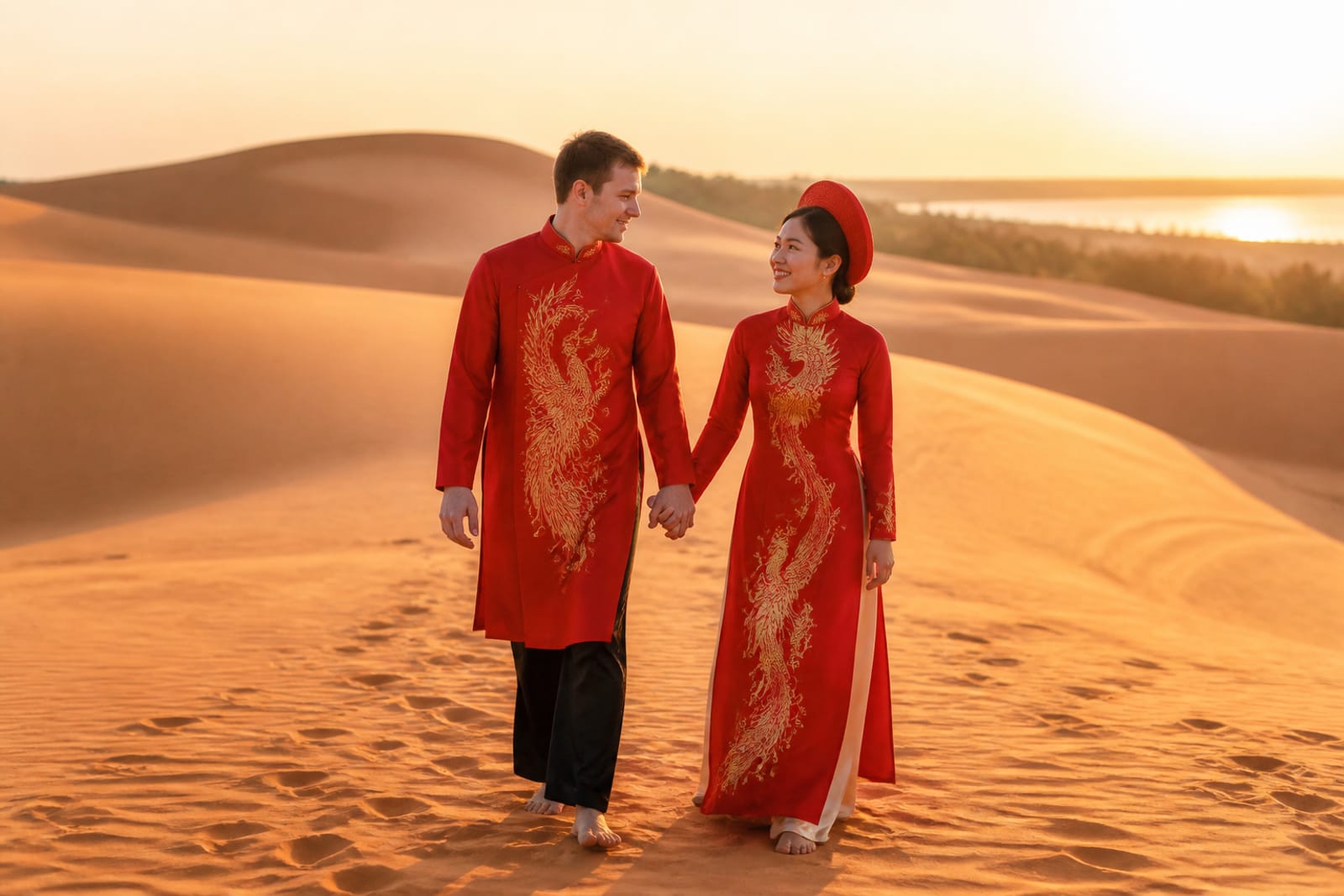
Mui Ne's red sand dunes—a two-hour drive south of Ho Chi Minh City—are Vietnam's most photogenic desert landscape for ao dai wedding shoots. Shoot between November and April (dry season, coolest light); arrive before 6:30 a.m. to capture side-lit sand texture before heat and tourist crowds arrive. Ao dai fabric catches wind beautifully on dunes, but sand clings to silk—wear a slip under the tunic, bring spare socks, and plan to rinse gear afterward. A full session (outfit changes, couple or family poses, edited selects) takes 2–3 hours on-site. Cáo Studio does not operate in Mui Ne; hire a local photographer (vet their dune portfolio and sunrise shoot experience) or book Cáo Studio for an ao dai session in Hanoi, Ho Chi Minh City, or Hoi An instead. 📸 Book on WhatsApp — ao dai photoshoot ---
Why are the red dunes Mui Ne's best-kept wedding photo location?
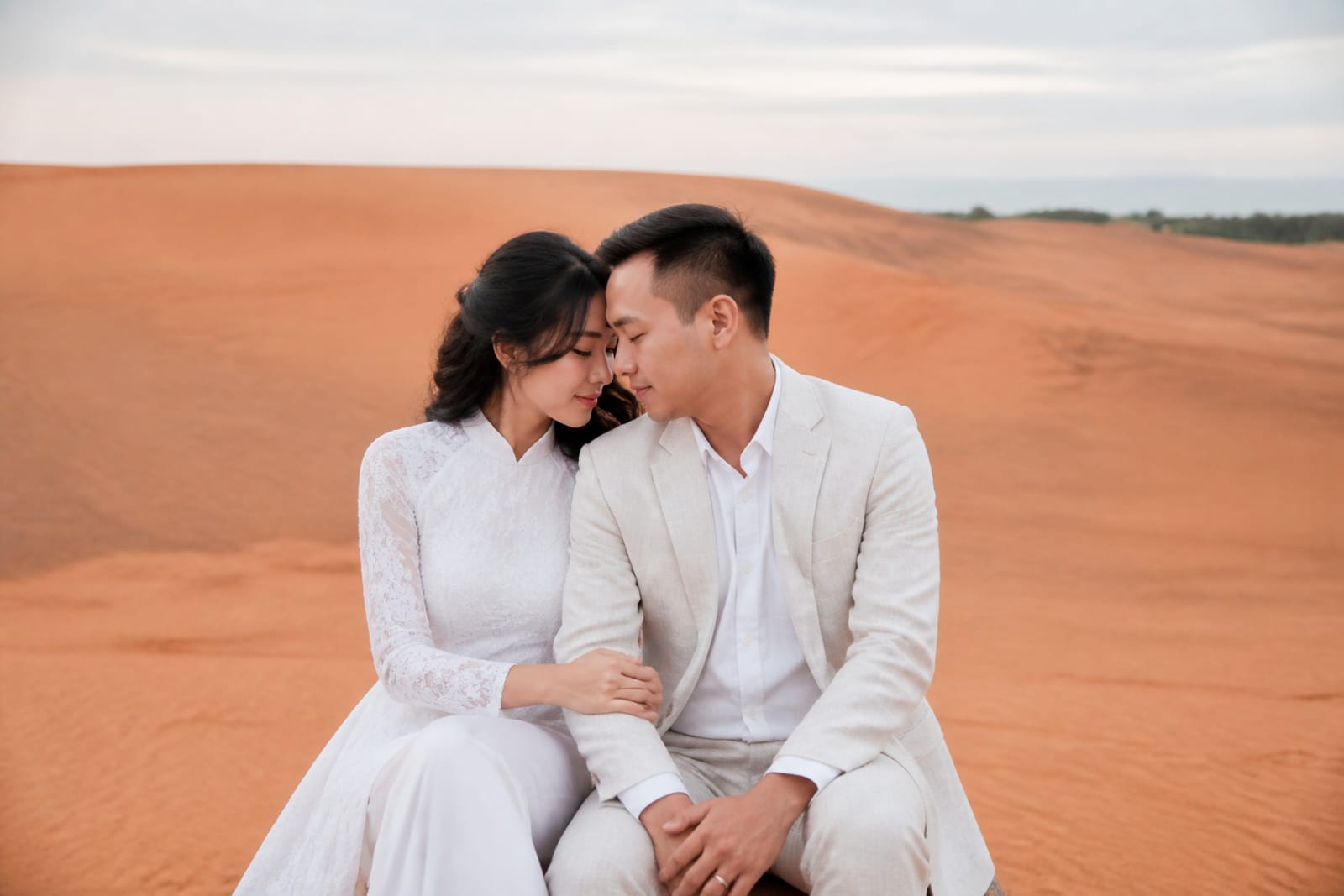
The dunes' russet and ochre sand absorb and reflect early morning light in ways flat beaches cannot. Pre-dawn side-light sculpts ripple texture; shadows carve the dunes' curves. By 7 a.m., harsh overhead sun washes color and depth. The dunes sit inland, away from coastal humidity and salt spray, so fabric and skin stay clearer longer. A photographer who understands directional light—shooting your silhouette into the sun, then turning to catch rim-lit ao dai fabric—makes the same dunes yield three distinct moods in one session.
When is the right season to shoot ao dai on Mui Ne dunes?
Mui Ne is one of Vietnam's driest areas; November through April offers the most predictable mornings. November to March brings strong northeasterly winds that blow sand across the dunes (avoid mid-morning shoots when sand gusts peak). December to February is coolest, ideal for extended outdoor work without heat exhaustion. March to April warms up but remains dry; fewer tourists and wind soften by early morning. May onwards is wet season with short afternoon downpours; morning dew can cling to fabric. Choose November–February if you want coolest conditions and lowest crowd density; March–April if you need a later booking and can tolerate heat.
How does sand damage an ao dai, and what's the real solution?
Silk and silk-blend ao dai trap sand in seams, hems, and pleats; salt particles scratch embroidery. Many brides wear only the outer tunic; sand reaches undergarments and skin. Wear a plain cotton slip or tube under the tunic—it acts as a barrier and slides off easily after the shoot. Bring two pairs of thin socks (sand fills shoes; change between outfit swaps). Pack a damp microfiber cloth to wipe ao dai hems between poses. Accept that some sand will cling: rinse the garment in cool water, let it air-dry flat, then gently brush seams. If the ao dai is rented, inform the rental shop of the dune shoot beforehand so they know to inspect for sand damage—do not hide it. If you own the tunic, the minor sand residue is part of the memory; professional dry-cleaning removes it afterward.
| Outfit choice | Best for | Sand risk | Why it matters |
|---|---|---|---|
| Rental ao dai + new slip underneath | Budget-conscious couples, first-time wearers | Low (slip protects tunic) | Rental terms often exclude damage; slip costs nothing but saves disputes. |
| Owned ao dai + full undergarment set | Heirloom or custom pieces, keepsake-focused shoots | Medium (seams still catch particles) | You own the risk; post-shoot cleaning is your decision. |
| Ao dai + shorts/pants visible below | Casual, blended-style shoots (trendy) | Low (less fabric surface to trap sand) | Modern alternative; less traditional but easier logistics. |
| Lightweight linen or cotton blend | Comfort-first, long morning sessions | Low (breathable, dries quickly if wet) | Rarer; most Vietnamese ao dai are silk; seek specialty rentals in HCMC. |
What should a photographer's dune portfolio reveal before you book?
A credible dune photographer's lookbook should show at least three shoots on the red dunes with consistent, directional light—not generic sunrise shots, but frames where ao dai fabric and skin are sculpted by side or rim light. Look for variety in framing: wide landscape shots of couples walking into dune valleys, medium two-shots, and close-up detail of embroidery or jewelry. Check whether sand and wind are managed visually—fabric should move with intention (blown mid-stride looks dynamic; blown across the face looks sloppy). Ask the photographer what time they shot (sunrise hour listed in the image metadata or caption) and how many shots they took to deliver edited selects (fewer than 30 keepers from a 2-hour session suggests either short coverage or weak editing).

What are the hidden logistics of a Mui Ne dune shoot day?
Transport: Mui Ne town is 30 km from the dunes; allow 45–60 minutes from your hotel. A private driver familiar with dune-access roads (not all roads are marked; guides navigate by landmarks) is essential—ride-share apps do not serve dune parking. Timing: Arrive 5:30–6 a.m. to scout light and position before clients appear; sand is cool and textured. By 7:30 a.m., light flattens; by 8 a.m., tourists and ATV groups flood the main dunes. Wardrobe changes: Bring a privacy screen or use the car/van as a changing room; dunes have no facilities. Makeup touch-ups: Sand grits easily into powder and mascara; a makeup artist on-site can re-blend between outfit swaps (if you use hotel makeup & hair, arrange a morning pickup before the dune drive). Water and shade: Dunes offer no shelter; bring SPF, water bottles, and a compact pop-up tent if possible. Footwear for the team: The photographer needs shoes with grip (sand slopes are steep and shift underfoot); an assistant or stylist should wear closed-toe shoes to avoid sand abrasion during long takes.
Cáo Studio or a local Mui Ne photographer: which suits you?
Cáo Studio operates in Hanoi, Ho Chi Minh City, and Hoi An—not Mui Ne. If Mui Ne is your only destination and the dunes are your priority, hire a local photographer who knows the terrain, sunrise windows, and crowd patterns. If you want an ao dai shoot in Ho Chi Minh City before or after a Mui Ne visit, book Cáo Studio to handle one directed session with makeup, hair, and photography as one team—then pair it with a separate dune session by a local shooter. A local Mui Ne photographer costs less than flying Cáo Studio's team down and offers faster turnaround; Cáo Studio's value is if you book couple or family sessions across multiple Vietnam cities or want pre-wedding coverage with consistent direction and style. Cost factors (not amounts—ask on WhatsApp for Cáo Studio quotes or check local rates in Mui Ne directly): local photographers are usually cheaper; Cáo Studio's single-team model (no separate makeup artist, stylist, photographer) reduces coordination overhead if you book multiple sessions over weeks.
---
What to check before you book an Mui Ne dune session
- Photographer's dune portfolio: at least 3 sunrise shoots on red dunes with directional light, varied framing, and visible ao dai detail.
- Sunrise shoot time: confirm they shoot 5:45–6:45 a.m. (peak dune light); later starts miss the window.
- Sand-damage clarity: ask how they protect rental ao dai (slip, waterproof cover, rinsing protocol) and what the rental shop's damage policy is.
- Transport & logistics: do they arrange or advise on parking, driver familiarity, and weather backup?
- Edited deliverables: clarify number of final selects, editing style (color grading, retouching), and delivery timeline (48 hours typical for Cáo Studio; local photographers vary).
- Contract & cancellation: confirm what happens if sunrise is rained out (rescheduling window, partial refund, weather definitions).
---
FAQ
Can I wear a traditional ao dai with modern shoes or accessories on the dunes?
Yes. Pair silk ao dai with leather sandals (easier to remove for sand photos) or minimal jewelry. Wind often catches traditional metal earrings or dangling necklaces awkwardly; consider gold studs or no jewelry for dynamic shots. The ao dai's elegance stands alone.
What if sunrise is cloudy or rainy—will the dunes still photograph well?
Overcast light softens shadows but flattens color; the dunes lose russet glow. Light rain makes sand darker and more textured (moody, not romantic). Ask your photographer how they adapt: shoot tighter frames to emphasize fabric detail rather than landscape, or reschedule if weather is forecast severe. Confirm weather backup options before booking.
How many outfit changes fit into a 2–3 hour dune session?
Two ao dai or one ao dai plus one Western wedding dress is typical. Each outfit swap takes 10–15 minutes (changing, makeup touch-up, repositioning). Three outfits is possible but exhausting in heat and sand; prioritize quality over quantity—one perfect ao dai session beats rushed changes.
Should I book a Mui Ne local photographer or ask Cáo Studio for a recommendation?
Cáo Studio does not operate in Mui Ne, so they cannot refer locals reliably. Research dune photographers directly: ask your hotel, check Instagram hashtags (#MuiNephotography, #duneshooting), and vet portfolios for consistent sunrise light and ao dai detail. If you want an ao dai session in HCMC before/after, book Cáo Studio; combine it with a local dune shoot for best results.
What's the difference between shooting ao dai on Mui Ne dunes versus a beach?
Dunes offer sand texture, shadow depth, and varied elevation that beaches lack. Beaches have water and horizon (romantic but common); dunes have otherworldly ripples and wind-carved curves (dramatic, editorial). Dunes suit ao dai's flowing fabric; beach sand is wetter, clinging more to silk. Dunes are inland (calmer wind patterns than coastline); beaches face salt spray that corrodes jewelry and frizzes hair.
If Cáo Studio doesn't shoot in Mui Ne, can I book them for makeup & hair before my dune session?
Cáo Studio's makeup & hair service operates at your hotel in major cities (HCMC, Hanoi, Hoi An). If your hotel is in HCMC or nearby, book hair and makeup the morning of your dune shoot, then travel to Mui Ne afterward; otherwise, arrange makeup locally in Mui Ne. Contact Cáo Studio on WhatsApp to confirm availability and timing for your hotel location.
FAQ
Can I wear a traditional ao dai with modern shoes or accessories on the dunes?
Yes. Pair silk ao dai with leather sandals (easier to remove for sand photos) or minimal jewelry. Wind often catches traditional metal earrings or dangling necklaces awkwardly; consider gold studs or no jewelry for dynamic shots. The ao dai's elegance stands alone.
What if sunrise is cloudy or rainy—will the dunes still photograph well?
Overcast light softens shadows but flattens color; the dunes lose russet glow. Light rain makes sand darker and more textured (moody, not romantic). Ask your photographer how they adapt: shoot tighter frames to emphasize fabric detail rather than landscape, or reschedule if weather is forecast severe. Confirm weather backup options before booking.
How many outfit changes fit into a 2–3 hour dune session?
Two ao dai or one ao dai plus one Western wedding dress is typical. Each outfit swap takes 10–15 minutes (changing, makeup touch-up, repositioning). Three outfits is possible but exhausting in heat and sand; prioritize quality over quantity—one perfect ao dai session beats rushed changes.
Should I book a Mui Ne local photographer or ask Cáo Studio for a recommendation?
Cáo Studio does not operate in Mui Ne, so they cannot refer locals reliably. Research dune photographers directly: ask your hotel, check Instagram hashtags (#MuiNephotography, #duneshooting), and vet portfolios for consistent sunrise light and ao dai detail. If you want an ao dai session in HCMC before/after, book Cáo Studio; combine it with a local dune shoot for best results.
What's the difference between shooting ao dai on Mui Ne dunes versus a beach?
Dunes offer sand texture, shadow depth, and varied elevation that beaches lack. Beaches have water and horizon (romantic but common); dunes have otherworldly ripples and wind-carved curves (dramatic, editorial). Dunes suit ao dai's flowing fabric; beach sand is wetter, clinging more to silk. Dunes are inland (calmer wind patterns than coastline); beaches face salt spray that corrodes jewelry and frizzes hair.
If Cáo Studio doesn't shoot in Mui Ne, can I book them for makeup & hair before my dune session?
Cáo Studio's [makeup & hair service](/makeup-and-hair) operates at your hotel in major cities (HCMC, Hanoi, Hoi An). If your hotel is in HCMC or nearby, book hair and makeup the morning of your dune shoot, then travel to Mui Ne afterward; otherwise, arrange makeup locally in Mui Ne. Contact Cáo Studio on WhatsApp to confirm availability and timing for your hotel location.
Ao dai, makeup, hair and a local photographer in Hanoi or Saigon — one WhatsApp message.