/ao-dai-photoshoot
Ao dai wedding photos at Muong Hoa valley rice terraces
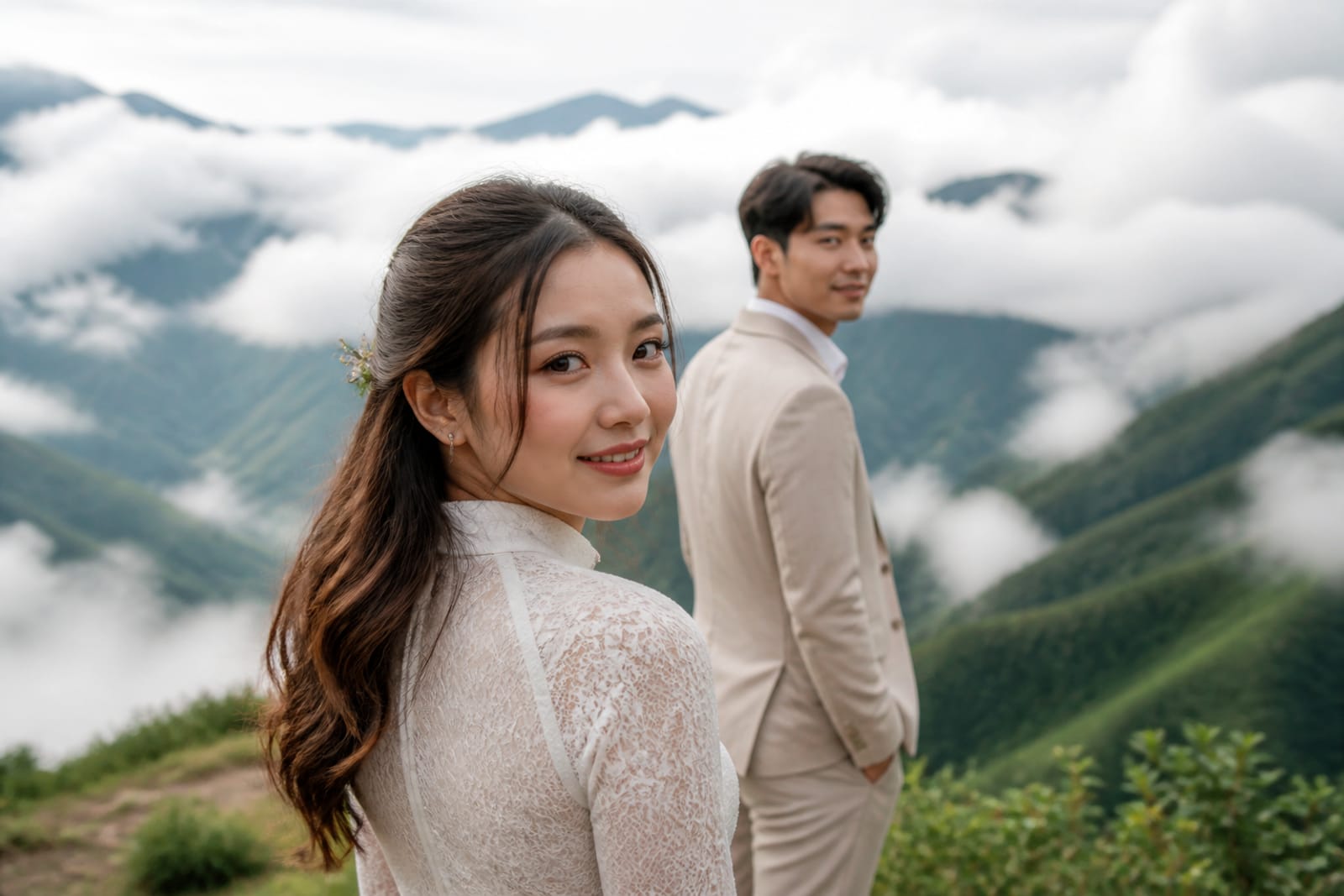
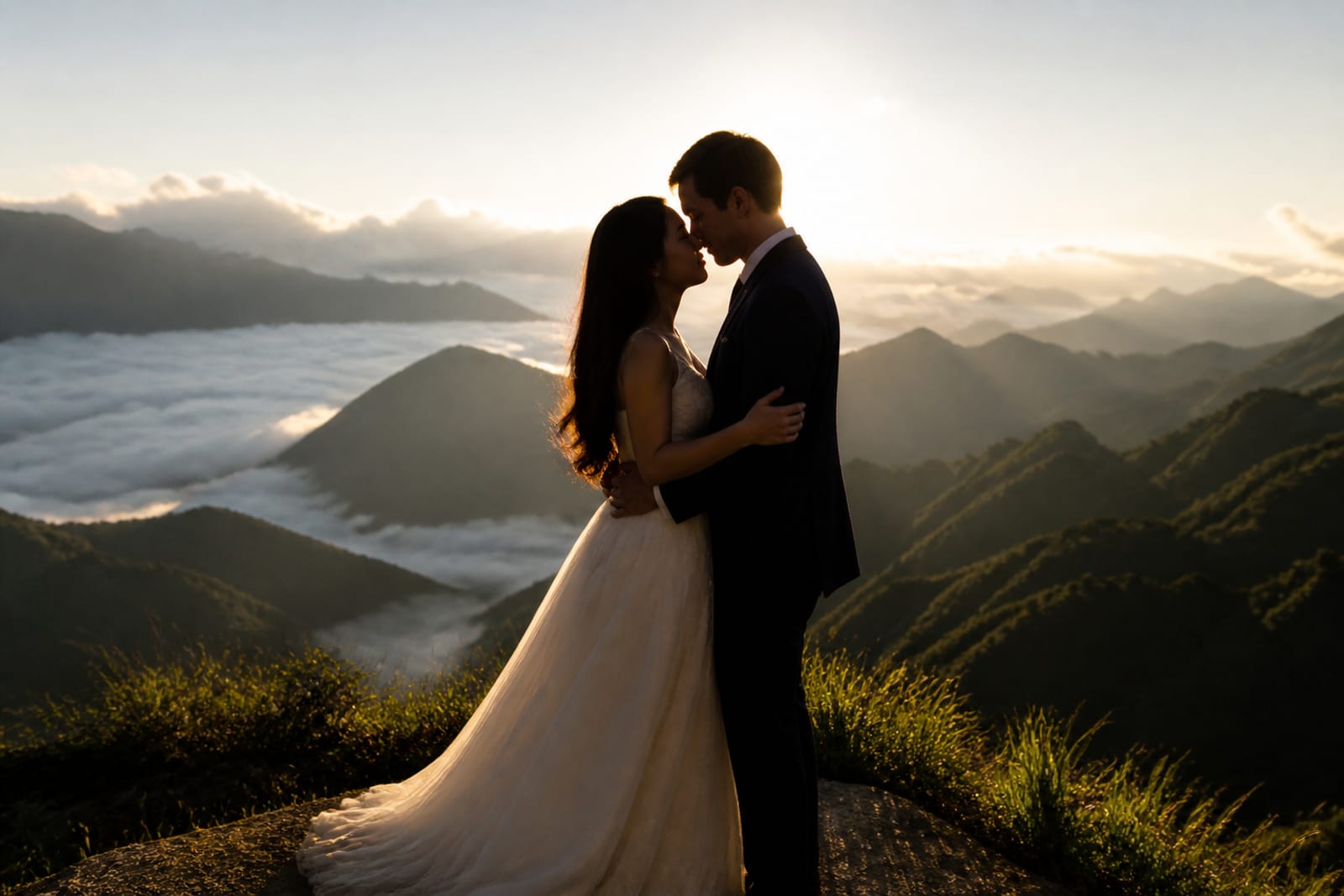
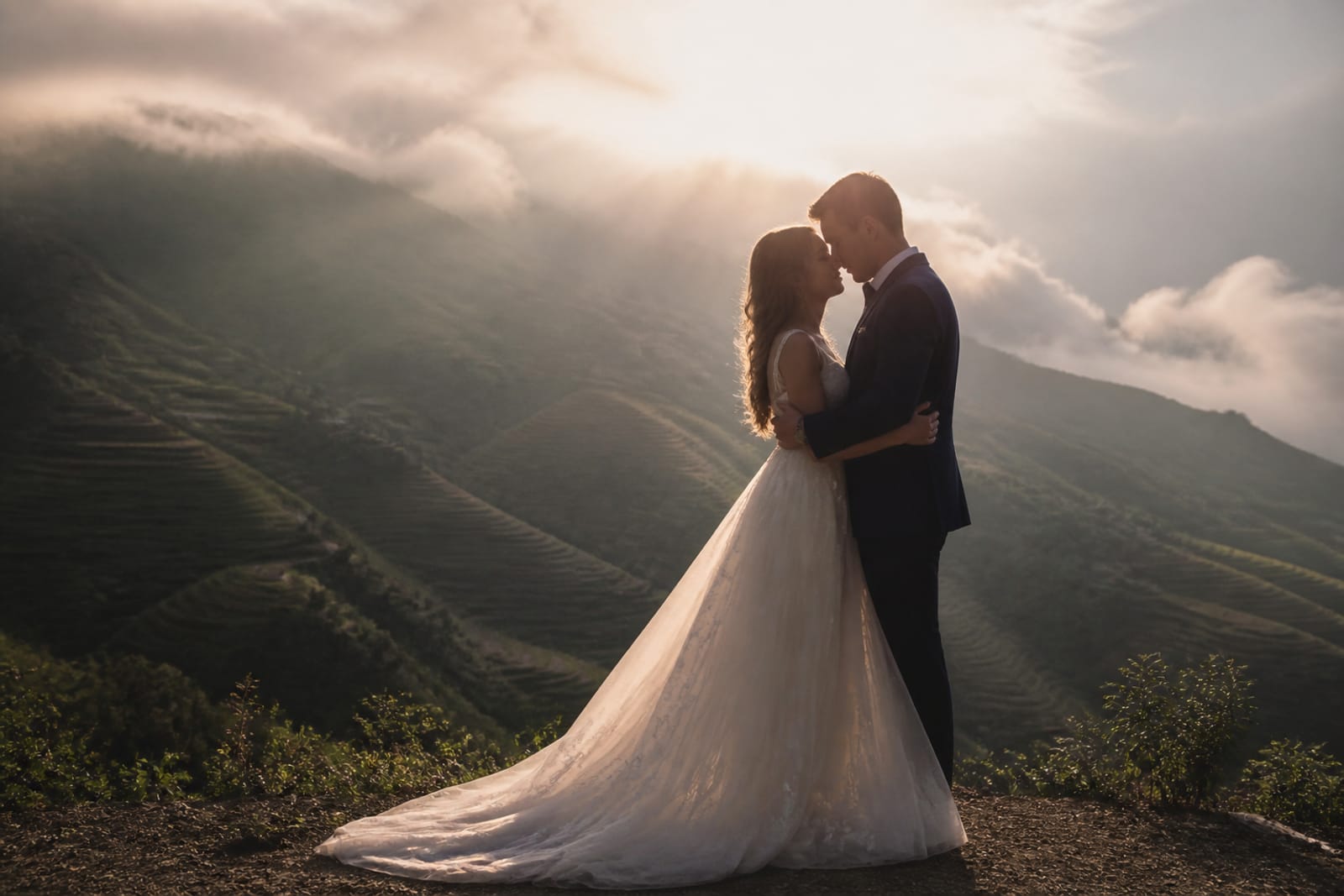
Muong Hoa valley rice terraces near Sapa, northern Vietnam, are a iconic destination for ao dai shoots: the terraces run in horizontal bands across steep slopes, creating depth and scale that flatters the ao dai's silhouette and embroidery. Sessions work best mid-May through early October (terraces green or golden) and in March–April (clear skies, lower crowds). Early morning (5:30–7:00 am) captures soft side light without harsh shadows; afternoon (4:00–5:30 pm) works if clouds are high. Because Sapa lies at 1,600 meters and is remote, you'll need to hire a local photographer and guide on-site — Cáo Studio operates in Hanoi, Ho Chi Minh City and Hoi An, not Sapa, so scout photographers in Sapa town directly or ask your hotel concierge. Budget extra time (terrain is steep, photos take 2–4 hours), bring water and sturdy shoes, and confirm weather 3 days ahead; October–November brings typhoon risk and high cloud cover.
Why is Muong Hoa valley so popular for ao dai shoots — and where does it sit?
Muong Hoa valley lies in the foothills just outside Sapa town, accessible by a steep 45-minute trek downhill or via a local guide. The terraces cascade in a single wide valley, offering unobstructed sightlines: you can position an ao dai subject against layers of green (May–August) or gold (mid-September to early October), with a horizon that doesn't interrupt the frame. Unlike closer rice fields near Hanoi or Hoi An, Muong Hoa's depth and scale create a landscape so immersive that a still ao dai silhouette reads as heroic, not small. The valley is quieter than Sapa town itself, which means fewer tourists blocking light and fewer photo-bombers in the background. This isolation is both the draw and the cost: access is on foot only, no vehicles go into the valley, and you'll be climbing on terraces (muddy in wet season, sun-baked in dry season) in what you're wearing.
📸 Book on WhatsApp — ao dai photoshoot
What time of year shows the best light and terrace color?
| Season | Terrace color | Best light hours | Why choose this window | Key risks |
|---|---|---|---|---|
| Mar–Apr | Golden-brown to green sprouts | 6:00–7:30 am, 4:00–5:00 pm | Clear skies, low humidity, terraces begin to fill with water | Cold mornings (10–14°C), thin new growth, fewer layers of color |
| May–Aug | Bright green (most lush) | 5:30–7:00 am, 4:30–5:30 pm | Tallest rice plants, dense color contrast, softest morning light | Afternoon rain (3–5 pm daily), steep mud, high humidity, mosquitoes |
| Sep–Oct | Golden-yellow (harvest) | 5:30–6:30 am | Dramatic warm tones, clarity, full terraces with ripe crop | Typhoons (Oct–Nov worst), afternoon rain, some terraces cut bare after harvest |
| Nov–Feb | Sparse, brown, or replanted | 6:00–7:00 am | Clear skies, no rain, cool air | Low color contrast, bare terraces, cold (near 0°C in Dec–Jan), mist |
The golden-harvest window (mid-September to early October) is most sought-after by photographers: the ao dai's jewel tones (burgundy, sapphire, emerald) pop against warm-toned terraces, and the light is softer than summer. Reserve months ahead if you're targeting this 3-week span. Green season (May–August) delivers maximum visual density but demands an early 5:30 am start and tolerance for afternoon rain showers; if it rains at 2:00 pm, you'll need to pause or reschedule the next morning. Winter (Nov–Feb) is safest for weather but offers the least color; March–April is a good compromise if you can't book autumn.
How do you get there, and what does a session look like on the ground?
Access starts in Sapa town (reachable by overnight train from Hanoi or a 5-hour bus). From Sapa, hire a guide at your hotel or contact a local photo-guide service the week before; guides know the safest paths and the best terrace spots. The trek down takes 45 minutes to an hour on a steep, uneven trail (loose gravel, tree roots, muddy sections in wet season). Once in the valley, you'll position yourself on the terrace banks — narrow earthen edges between paddies — where the ground is narrow and the slope is steep. A good local photographer will scout the location the morning before to gauge light angle and terrace water levels; rice terraces are living land, not monuments, so the exact layout shifts yearly. Sessions typically run 2.5 to 4 hours (early-morning sessions from 5:30–9:00 am, or afternoon from 3:30–6:00 pm) because moving between terraces and changing position takes time. Most photographers aim for one outfit (the ao dai) across multiple spots rather than outfit changes, since you're carrying everything on foot. Bring water, sunscreen, insect repellent, and sturdy hiking shoes (wear them under the ao dai or change into them at the trailhead). The photographer will likely ask you to walk along the terrace edge, look at a companion or the landscape, or sit briefly on the bank — not stiff poses in front of the rice.
Should you book a Sapa photographer or travel with a studio from Hanoi or Ho Chi Minh City?
| Option | Best for | Cost factors | Logistics | Trade-offs |
|---|---|---|---|---|
| Local Sapa guide/photographer | Budget-conscious, flexible itinerary, want minimal logistics | Lower day-rate, no travel fee, local expertise | Hire on-site or 1 week prior via hotel; photographer owns editing timeline | Editing may take 1–2 weeks, limited portfolio proof, language barrier possible, no makeup/hair coordination |
| Sapa photo-tour operator (group or private) | Groups (4+), want guided experience with accommodation bundled | Per-person cost is low if group splits cost; premium for private group | Book 3–4 weeks ahead; operator coordinates guide, hotel, meals, transport | Less personalized framing, shared guide attention, group pace slower, fewer outfit options |
| Photographer from Hanoi (traveling to Sapa) | Want a named photographer, one-team experience (hair, makeup, camera), edited photos in 48 hours | Travel cost (transport, hotel 1–2 nights for photographer), premium day-rate | Book 6+ weeks ahead; photographer travels to Sapa, coordinates guide on arrival | Higher cost than local-hire, less flexibility on reshoot dates, but stronger portfolio and guaranteed editing timeline |
| Cáo Studio from Hanoi | Want complete styling (ao dai rental, makeup, hair, directed shoot) + full-team coordination + fast turnaround | Travel cost for team, premium day-rate, no additional vendor booking needed | Book 8+ weeks ahead for September–October; Cáo Studio does NOT operate in Sapa — only in Hanoi, Ho Chi Minh City, and Hoi An by appointment | Cáo Studio does not travel to Sapa; instead, Cáo Studio shoots ao dai in Hanoi locations or can coordinate a Hoi An session; consider a Sapa shoot with a local guide, then a second session in Hanoi for guaranteed turnaround |
The key decision: If Sapa is a one-time visit as part of a longer Vietnam trip, hire a local Sapa photographer to avoid coordinating a team 1,600 meters up a mountain. If you're planning a full pre-wedding or anniversary series across Vietnam, consider pairing a Sapa session (local photographer) with a second shoot in Hanoi or Hoi An with a studio that offers makeup, hair and fast editing.
What should you confirm with a local photographer before booking?
Ask these questions 2–3 weeks before your session:
- Editing timeline: When will you receive edited photos? (expect 1–3 weeks for a small local operation; ask for a promised date in writing.)
- Backup plan: If it rains or weather is unsafe, can you reschedule the next morning at no extra cost?
- Outfit changes: Are you bringing multiple ao dai, or will the photographer advise on one outfit that works across the valley's light?
- File format: Will you get digital files (JPEGs, RAW, or both)? Will there be any restriction on use (social media, prints)?
- Guide cost: Is the local guide included in the photographer's fee, or is that a separate cost with the hotel or a guide service?
- Accessibility: Ask the photographer or guide about current trail conditions; if you have mobility concerns, ask if there are higher-altitude terrace spots that require less climbing.
- Weather contingency: Confirm the photographer has a backup indoor location or is willing to shoot on a rescheduled date if weather blocks the valley in the morning.
How does a Sapa shoot compare to ao dai sessions in Hanoi or Hoi An?
If you're choosing between a Sapa trek and a shoot closer to the city, here's what changes: Ao dai photoshoots in Hanoi use urban landmarks (Huc Bridge, Old Quarter, temples) with controlled timing and no hiking; light is softer in early morning or dusk, sessions run 2–3 hours on flat ground, and you can book makeup and hair at your hotel the same morning. Hoi An's ancient town and riverside offers lanterns, water reflections, and yellow-walled streets — equally iconic but with easier access and fewer seasonal constraints. Sapa terraces deliver unmatched landscape scale and a more "adventure" feel, but the cost of time, fitness, and weather risk is higher. Choose Sapa if:
- You're in Sapa already (multi-day trek or Fansipan climb itinerary).
- You want a solo or couple's adventure shoot with dramatic natural backdrop.
- The ao dai aesthetic matters more than convenience.
- You have 3–4 hours to spend hiking and are flexible on weather dates.
Choose Hanoi or Hoi An if:
- You want makeup, hair and photography coordinated as one team.
- You need edited photos within 48 hours.
- You prefer urban or cultural landmarks (temples, bridges, lanterns) over landscapes.
- You want a named photographer with a portfolio you can review.
Cáo Studio operates only in Hanoi, Ho Chi Minh City, and Hoi An, not Sapa. For a Sapa shoot, hire a local photographer. For a pre-wedding or anniversary series that includes Sapa plus other locations, combine a local Sapa guide with a second session in Hanoi or Hoi An with Cáo Studio.
What to check before you book a Sapa photographer
- Portfolio: Ask to see 10–15 recent ao dai or wedding shoots from the same valley; check light quality, composition depth, and ao dai detail (embroidery, fabric texture visible?).
- Communication: Confirm the photographer responds to WhatsApp or email within 24 hours. If there's a language barrier, ask your hotel concierge to mediate the contract and shot list.
- Payment terms: Agree on a deposit (often 30–50% upfront) and a final-payment date (usually on delivery of edited files). Get a receipt.
- Contract or written agreement: Even a simple WhatsApp message confirming date, time, outfit, number of locations, and delivery date is better than a verbal booking.
- Backup photographer: Ask if your chosen photographer has a backup in case of illness; confirm a substitute's contact and portfolio.
FAQ
Can Cáo Studio shoot my ao dai session in Muong Hoa valley, Sapa?
No. Cáo Studio operates in Hanoi, Ho Chi Minh City, and Hoi An only. Sapa requires booking a local photographer on-site. However, if you're planning a multi-location Vietnam trip, Cáo Studio can shoot ao dai or [pre-wedding sessions in Hanoi or Hoi An with full makeup, hair and 48-hour turnaround, then add a Sapa session with a local guide separately.
What time of year should I avoid Muong Hoa valley?
Avoid October–November (typhoon season, afternoon rain, high cloud cover) and December–February (bare terraces, cold, mist). March–April and September–early October are best. May–August works but expect daily afternoon rain and very steep, muddy terrain. Check the 7-day forecast 3 days before your session.
Do I need to be fit to hike Muong Hoa valley for a photo shoot?
Yes. The trek down is steep (45 minutes on uneven, rooty ground) and the return is uphill. You'll be climbing on terrace banks (narrow, sloped edges) in whatever shoes you wear. Tell your photographer about any mobility concerns; some guides can suggest higher-altitude spots with less climbing. Wear sturdy hiking shoes and bring water.
How long does a Sapa ao dai shoot take, and how many outfits can I wear?
Sessions run 2.5–4 hours. Most photographers recommend one ao dai outfit across multiple terrace spots because carrying and changing outfits on a steep hike is impractical. If you want two outfits, confirm the photographer can accommodate extra time and weight; this may add hours to the session.
How much should I expect to pay a local Sapa photographer, and when do I get my photos?
Cáo Studio does not set pricing for other businesses. Contact local Sapa photographers or photo-guide services directly for quotes. Expect a longer editing timeline (1–3 weeks) than a Hanoi studio. Get a written delivery date before you book.
Should I rent an ao dai in Sapa, or bring my own?
Most visitors bring their own or rent in Hanoi and bring it with them. Sapa has limited ao dai rental shops, and sizes/quality are inconsistent. Ao dai rental in Hanoi offers a wider choice; rent there and pack it in your suitcase. Confirm with your photographer whether they can provide styling advice on which ao dai colors work best against the terrace colors you'll shoot.
FAQ
Can Cáo Studio shoot my ao dai session in Muong Hoa valley, Sapa?
No. Cáo Studio operates in Hanoi, Ho Chi Minh City, and Hoi An only. Sapa requires booking a local photographer on-site. However, if you're planning a multi-location Vietnam trip, Cáo Studio can shoot [ao dai or [pre-wedding sessions](/pre-wedding-photoshoot) in Hanoi or Hoi An with full makeup, hair and 48-hour turnaround, then add a Sapa session with a local guide separately.
What time of year should I avoid Muong Hoa valley?
Avoid October–November (typhoon season, afternoon rain, high cloud cover) and December–February (bare terraces, cold, mist). March–April and September–early October are best. May–August works but expect daily afternoon rain and very steep, muddy terrain. Check the 7-day forecast 3 days before your session.
Do I need to be fit to hike Muong Hoa valley for a photo shoot?
Yes. The trek down is steep (45 minutes on uneven, rooty ground) and the return is uphill. You'll be climbing on terrace banks (narrow, sloped edges) in whatever shoes you wear. Tell your photographer about any mobility concerns; some guides can suggest higher-altitude spots with less climbing. Wear sturdy hiking shoes and bring water.
How long does a Sapa ao dai shoot take, and how many outfits can I wear?
Sessions run 2.5–4 hours. Most photographers recommend one ao dai outfit across multiple terrace spots because carrying and changing outfits on a steep hike is impractical. If you want two outfits, confirm the photographer can accommodate extra time and weight; this may add hours to the session.
How much should I expect to pay a local Sapa photographer, and when do I get my photos?
Cáo Studio does not set pricing for other businesses. Contact local Sapa photographers or photo-guide services directly for quotes. Expect a longer editing timeline (1–3 weeks) than a Hanoi studio. Get a written delivery date before you book.
Should I rent an ao dai in Sapa, or bring my own?
Most visitors bring their own or rent in Hanoi and bring it with them. Sapa has limited ao dai rental shops, and sizes/quality are inconsistent. [Ao dai rental in Hanoi](/ao-dai-rental) offers a wider choice; rent there and pack it in your suitcase. Confirm with your photographer whether they can provide styling advice on which ao dai colors work best against the terrace colors you'll shoot.
Ao dai, makeup, hair and a local photographer in Hanoi or Saigon — one WhatsApp message.