/ao-dai-photoshoot
Ao Dai Wedding Photos at O Quy Ho Pass: Light, Season & Booking Guide
O Quy Ho Pass — a 1,600-meter pass in northern Vietnam between Ha Giang and Cao Bang provinces — offers steep terraces, misty valleys, and directional morning light that suits ao dai portraits. The best window is March to May and September to November, when skies clear and the pass isn't shrouded in fog. A single-team approach (one booking handles ao dai, hair, makeup, and photography) works better than hiring separate vendors on a mountain road: the stylist knows the light direction, the makeup artist avoids heavy products that run, the photographer plans outfit changes around energy, not vendor schedules. Expect 4–5 hours total; most couples shoot near sunrise (05:30–07:00) when light is soft and sideways, then move to mid-morning or late-afternoon spots. Weather changes fast — rain, fog, or wind can close the pass or kill light in 30 minutes, so flexibility and a backup plan are essential. 📸 Book on WhatsApp — ao dai photoshoot ---
Why O Quy Ho Pass Works for Ao Dai, and When It Doesn't
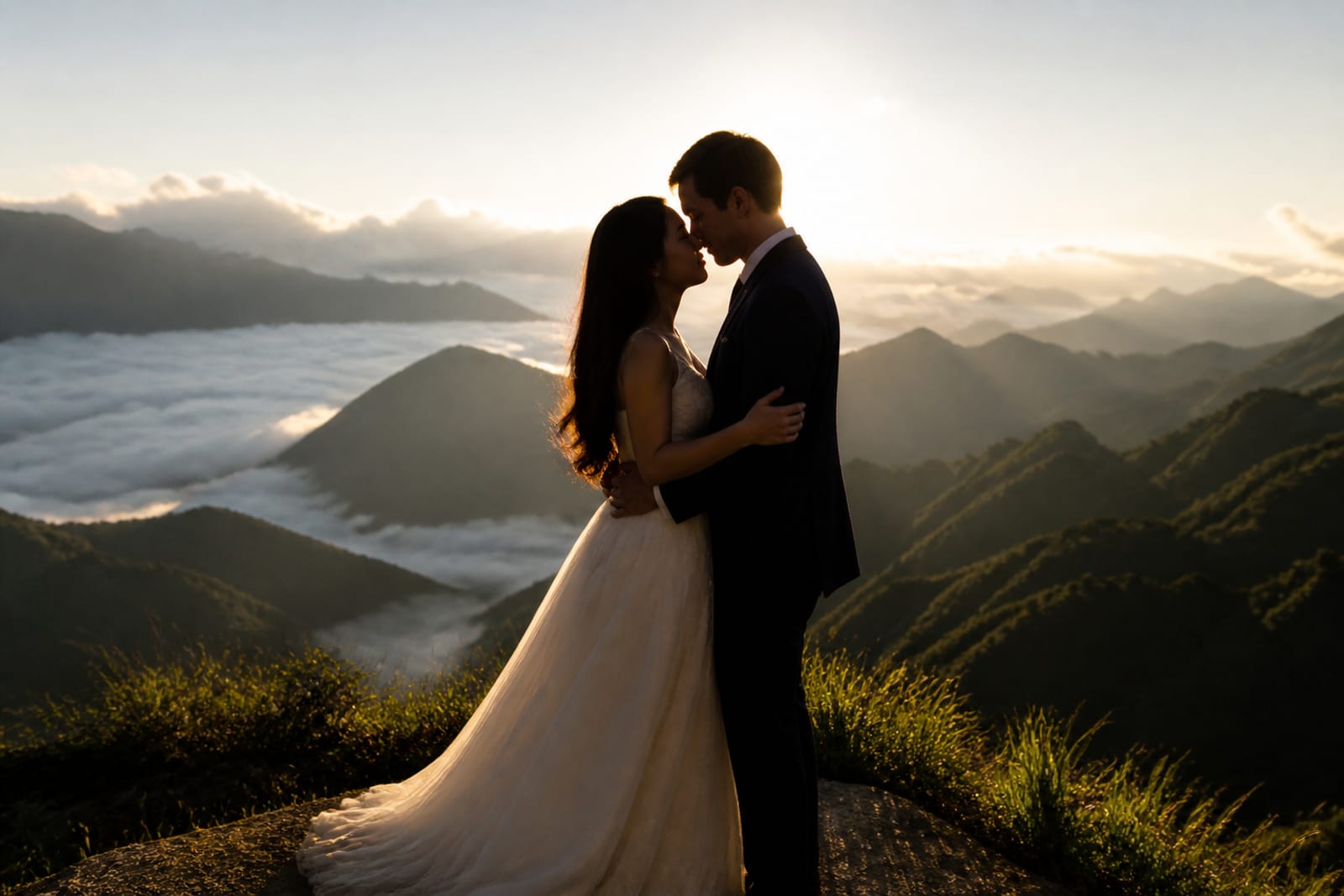
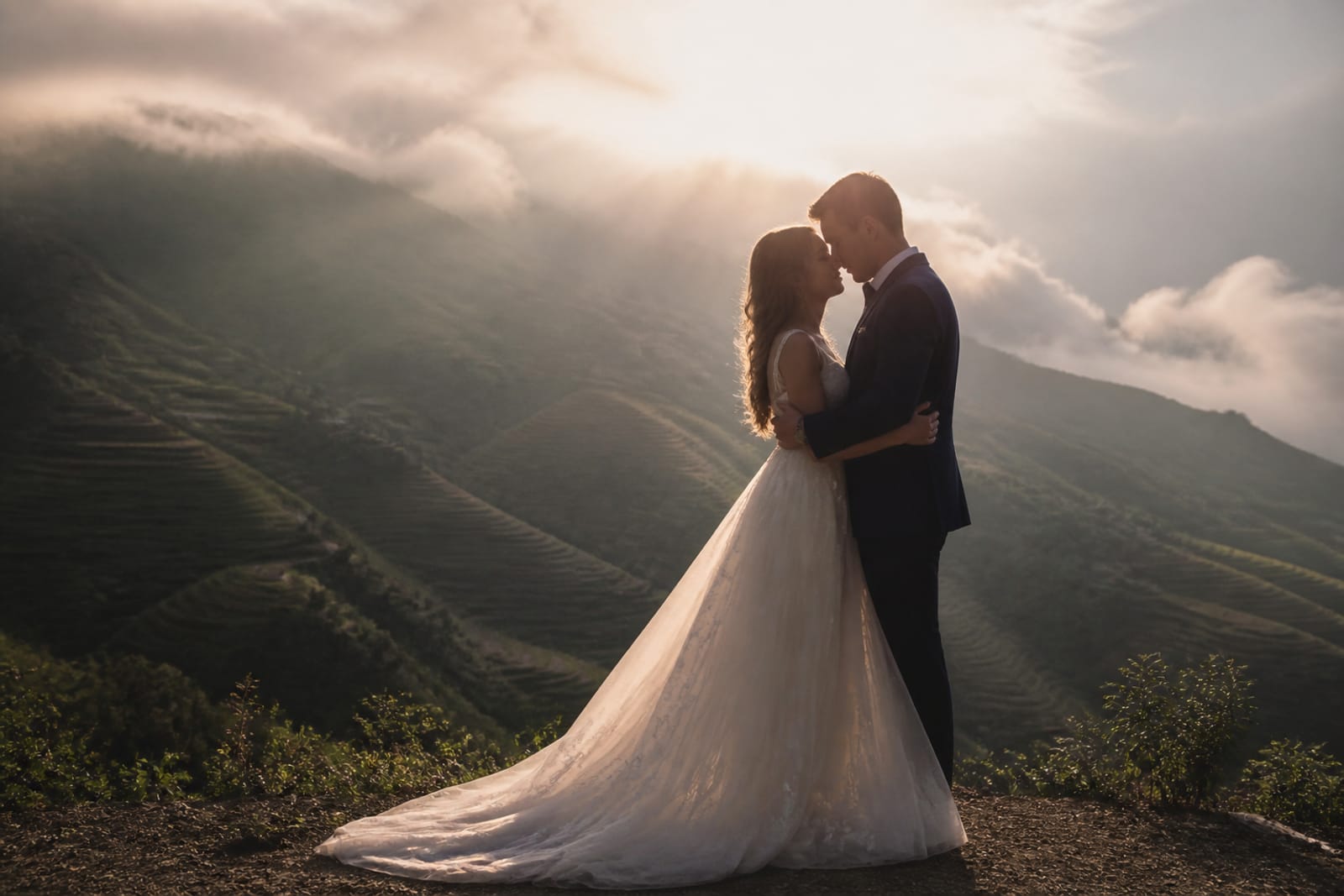
O Quy Ho Pass's strength lies in elevation light — the sun hits the valley and terraces from a low angle, creating shadow and depth that flatters the ao dai's drape and embroidery. The pass sits at high altitude, so clouds are often below you, giving a sky that reads clean rather than grey. Hanoi and Saigon studios use this pass because the geometry is non-negotiable: steep terrain, wide vistas, and a road that runs east–west let you backlight the ao dai against the valley. However, the pass fails entirely in December through February, when fog settles for days and the light becomes flat and cold. June through August, summer rain and heat are unpredictable — showers can sweep through in 20 minutes, and humidity makes makeup melt. The best-case scenario is a clear morning in April or October; the worst is a drive up, 30 minutes of grey mist, and a wasted 4 hours.
Honest comparison: O Quy Ho is dramatic but high-risk. Safer alternatives with good light are Hoi An's backroads and rice fields (coastal, stable season Feb–Aug) or Hanoi's lake roads and old-town streets (lower altitude, quicker to shoot, easier backup spots).
How Season and Weather Shape Your Shoot Day
O Quy Ho Pass weather is not a flat forecast — it changes by the hour and altitude. The pass sits 1,600 meters high; the base (Ha Giang town) is 200 meters lower and often 3–5 degrees warmer. Sunrise at the pass is 30 minutes later than in the valley. Morning fog burns off by 08:00–09:00 in the dry season (March–May, September–November), but on a damp day, it lingers until midday. If you're booking a shoot in April, expect clear skies 70% of the time (based on climate patterns for northern Vietnam's spring window); in October, clearing is similar but can be delayed by lingering typhoon moisture. Rain is rare in April–May and September–October, but wind at altitude can be intense — the ao dai catches wind like a sail, and makeup artists have to anchor hair and work fast.
What this means for your booking: Arrive a day early to acclimatize and let the team scout light. If the forecast shows rain in the morning, shift to a late-afternoon slot or a lower-altitude backup location. A single team (Cáo Studio's model) can pivot quickly; three separate vendors usually can't.
| Season | Best for O Quy Ho | Light & Conditions | Why This Works |
|---|---|---|---|
| March–May | Yes | Clear dawn, soft side-light, low wind | Ideal dry season; sunrise frames perfect |
| June–August | No | Humid, afternoon storms, flat midday light | Summer rain closes the pass 2+ days a month |
| September–November | Yes | Crisp mornings, golden hour depth, stable | Post-monsoon clarity; October prime |
| December–February | No | Fog until 10:00 am or all-day grey, cold wind | Winter inversion traps clouds at altitude; short daylight |
What to Wear Under the Ao Dai and How to Prepare
The ao dai is a fitted tunic over wide trousers — the silhouette is everything. Underneath, wear a plain white or nude slip or thin long-sleeve shirt (to prevent the ao dai from clinging to bra straps), and flat white or neutral undergarments that won't show through. On a mountain, the wind will lift the ao dai, so the trousers should fit snugly at the waist and ankles. Cold at O Quy Ho can drop to 10–12°C early morning, even in May; many couples wear a light shawl or jacket over the ao dai during setup, then remove it for frames.
Footwear matters: avoid heels on uneven terrace ground — the team will suggest flats or soft shoes for walking to spots, then switch to dressy sandals or heels for the actual frames. Makeup and hair should be planned for wind and 4+ hours of outdoor time; heavy foundation melts, so a light mineral base with a setting spray is standard. The makeup artist will coordinate with the photographer on what catches light — strong brows and lips read better in mountain shade than heavy eye makeup.
Bring a small touchup kit (lip balm, powder, bobby pins) and a water bottle. The altitude can dehydrate you quickly, and the team will take a 10-minute rest halfway through to rehydrate and check the light.
One Team vs. Three Vendors: Why It Matters on a Mountain
A standard wedding-day approach splits tasks: one makeup artist, one hair stylist, one photographer, all booked separately. On O Quy Ho Pass, this creates friction. The photographer spots perfect light on the eastern terrace at 06:30 but needs to move the couple now because clouds are rolling in; the makeup artist is still finishing brows; the stylist is adjusting the ao dai hem. By the time all three are ready, the light is flat.
Cáo Studio operates as a single directed team: the photographer, makeup artist, and stylist move as one unit, communicating in real time. The photographer says "We have 15 minutes of side-light here — let's move to the wide shot, then detail of the embroidery." The makeup artist knows the next location will be backlit, so she avoids reflective highlighter. The stylist adjusts the trousers' drape based on the slope of the ground. The result is frames that feel like one story, not three separate vendors' interpretations.
Cost factor: a single team on a mountain removes the markup for vendor coordination and prevents time loss; ask for a quote on WhatsApp to see how this affects your budget compared to hiring three freelancers. A one-team model also reduces stress — the couple is talking to one director, not fielding calls from three vendors during the shoot.
How to Book and What to Confirm Before You Arrive
Ao dai photoshoots at O Quy Ho Pass are appointment-only; the location is remote, and weather is unpredictable, so Cáo Studio doesn't list a fixed schedule. Start by messaging on WhatsApp with your travel dates, couple or family size, and whether you already own an ao dai or want to rent one (rental available here). Mention if O Quy Ho is your dream spot — the team will confirm if the season suits, what the weather forecast looks like, and whether a backup location is wise.
Before you book, confirm:
- Which dates in your trip window have the clearest forecast (the team can help read seasonal patterns)
- Whether the pass is open (rare closures happen; ask directly)
- If makeup and hair are included, or booked separately
- How the edited photos and film are delivered (standard is 48 hours; ask for exact files and format)
- Backup location and how changes are handled (flexibility clause)
- Whether transport to the pass is your responsibility or included
📸 Book on WhatsApp — ao dai photoshoot
Pricing depends on the session length, number of outfits, and whether makeup/hair are included; ask on WhatsApp for a quote. Once booked, the team will send you a prep checklist: what to pack, how to prepare the ao dai, acclimatization tips, and a shot list. You'll get a parking and timing plan so you're at the best light window without guessing.
Real Talk: What Goes Wrong and How to Avoid It
Fog delays or erases the shoot. The pass can be socked in until 10:00 am or all day. Solution: book in the March–May or September–October window (clearer), arrive a day early to scout, and have a backup location (lower altitude, closer to town) ready. A single team can shift locations faster than three vendors.
Wind ruins hair and makeup. At altitude, gusts are common. Solution: coordinate with the makeup artist on a windproof setup (setting spray, long-wearing products, pinned styles); the photographer will adjust positioning to use wind for movement rather than fight it.
The ao dai doesn't fit as expected. Rentals vary; thinner ao dai show every bulge, thick silk hides shape. Solution: confirm the rental fit at least one week before the shoot; if it doesn't suit, swap it out or bring your own.
The couple tires after 2 hours. Mountain altitude, long travel, and standing for frames is exhausting. Solution: plan 4–5 hours total, including a real break (15 minutes, food, sitting). The team will pace energy, not push.
Light is flat despite the forecast. Clouds roll in unexpectedly, or high clouds diffuse the sun. Solution: the director pivots — moving to shade for soft fill light, or waiting 30 minutes for a cloud break. This is why a single creative team (not three vendors checking watches) is an asset.
---
What to Check Before You Book
- Confirm your travel dates fall in a stable season (March–May, September–November). Ask the team if the forecast looks good before committing.
- Decide on ao dai ownership: rent on-site, rent ahead, or bring your own. Rentals take 1–2 weeks' notice.
- Confirm backup plans in writing: if weather closes the pass, where do you shoot instead?
- Ask whether makeup and hair are included or booked separately. Single-team model includes coordination; verify exact inclusions on WhatsApp.
- Check file delivery: how many edited photos, format (JPG/RAW), and how the short film is sent (video codec, resolution).
- Discuss energy and pacing: tell the team if this is a low-key session (fewer outfits, shorter time) or a full day.
---
More Ao Dai Shoots and Comparisons
If O Quy Ho Pass doesn't fit your timeline or weather, consider these ao dai photoshoot options:
- Hoi An's ancient town and rice terraces: coastal climate, Feb–Aug dry, easier travel, lower altitude, town-to-countryside flow.
- Hanoi's lake roads and French-colonial streets: stable light, year-round option, no altitude, quick backup spots.
- Saigon's colonial villas and gardens: tropical, Dec–Apr dry, indoor/outdoor flexibility.
For pre-wedding or elopement shoots that combine multiple locations or days, the same one-team model scales — outfit changes, hair touch-ups, and photo direction stay cohesive.
---
FAQ
Is O Quy Ho Pass safe for a couple in formal ao dai?
Yes, but the terrain is steep and uneven. The team scouts spots and guides your footing. Wear flat shoes for walking, switch to heels only for the actual frames. The area is remote but stable; locals use it daily.
What if fog doesn't clear on shoot day?
The team will wait (patience often pays), shift to a lower-altitude spot nearby, or reschedule. Always confirm a backup location in your booking agreement.
Can I wear my own ao dai, or should I rent?
Either works. Owned ao dai gives creative freedom; rentals are convenient and professionally pressed. Confirm fit and delivery one week ahead.
How much editing time until I get the photos?
Standard turnaround is 48 hours for edited JPGs and a short vertical film. Ask on WhatsApp for exact deliverables and format options.
Do I need an early wake-up for the best light?
Yes, typically 05:00–06:00 start for sunrise shots. Morning light is strongest; if you prefer afternoon, confirm with the team that the forecast still works.
FAQ
Is O Quy Ho Pass safe for a couple in formal ao dai?
Yes, but the terrain is steep and uneven. The team scouts spots and guides your footing. Wear flat shoes for walking, switch to heels only for the actual frames. The area is remote but stable; locals use it daily.
What if fog doesn't clear on shoot day?
The team will wait (patience often pays), shift to a lower-altitude spot nearby, or reschedule. Always confirm a backup location in your booking agreement.
Can I wear my own ao dai, or should I rent?
Either works. Owned ao dai gives creative freedom; rentals are convenient and professionally pressed. Confirm fit and delivery one week ahead.
How much editing time until I get the photos?
Standard turnaround is 48 hours for edited JPGs and a short vertical film. Ask on WhatsApp for exact deliverables and format options.
Do I need an early wake-up for the best light?
Yes, typically 05:00–06:00 start for sunrise shots. Morning light is strongest; if you prefer afternoon, confirm with the team that the forecast still works.
Ao dai, makeup, hair and a local photographer in Hanoi or Saigon — one WhatsApp message.