/ao-dai-photoshoot
Ao Dai Wedding Photos at Ta Phin Village: Light, Season & Booking Guid
Ta Phin village, a 30-minute drive south of Sapa town, draws couples for its working rice terraces and quiet homestay setting. The best window is March–May (cool, clear mornings) or September–early October (harvest-gold fields). Shoot at sunrise (6–7 am) when side light hits the slopes; afternoon backlight after 4 pm works if clouds are soft. Wear a slip or thin cotton under your ao dai to move freely on uneven paths; bring flats for walking between frames. Cáo Studio does not operate in Sapa, so book a vetted local photographer who understands ao dai movement and can direct you both through real light, not poses. A session runs 2–3 hours; plan transport, homestay breakfast timing, and ask about terrain difficulty before booking.
Why Ta Phin works for ao dai—and when it doesn't
Ta Phin's appeal is its scale: terraced slopes fall away in layers, framing the couple against living landscape rather than a monument. The homestays offer intimate backdrops (wooden doors, flower pots, stone walls). However, the season matters enormously. Rain (May–Sep, worst Jun–Aug) turns paths to mud and dims light for hours. December–February brings fog that obscures the view and can drop near 0°C, making outdoor ao dai shoots uncomfortable. March–May and late September–early October are the only reliable windows; even then, check the forecast 48 hours before.
The terrain is steep and uneven. Ao dai are long, narrow, and designed for flat surfaces; walking uphill in one requires slow deliberation. If you want movement (a real frame, not a pause), you need a photographer who can direct your pace and position the camera below, not above. Bad choices: crowds (homestays get tour groups 10–11 am and 2–3 pm), harsh midday sun (9 am–3 pm washes out faces), and rushing the session to fit a schedule.
📸 Book on WhatsApp — ao dai photoshoot
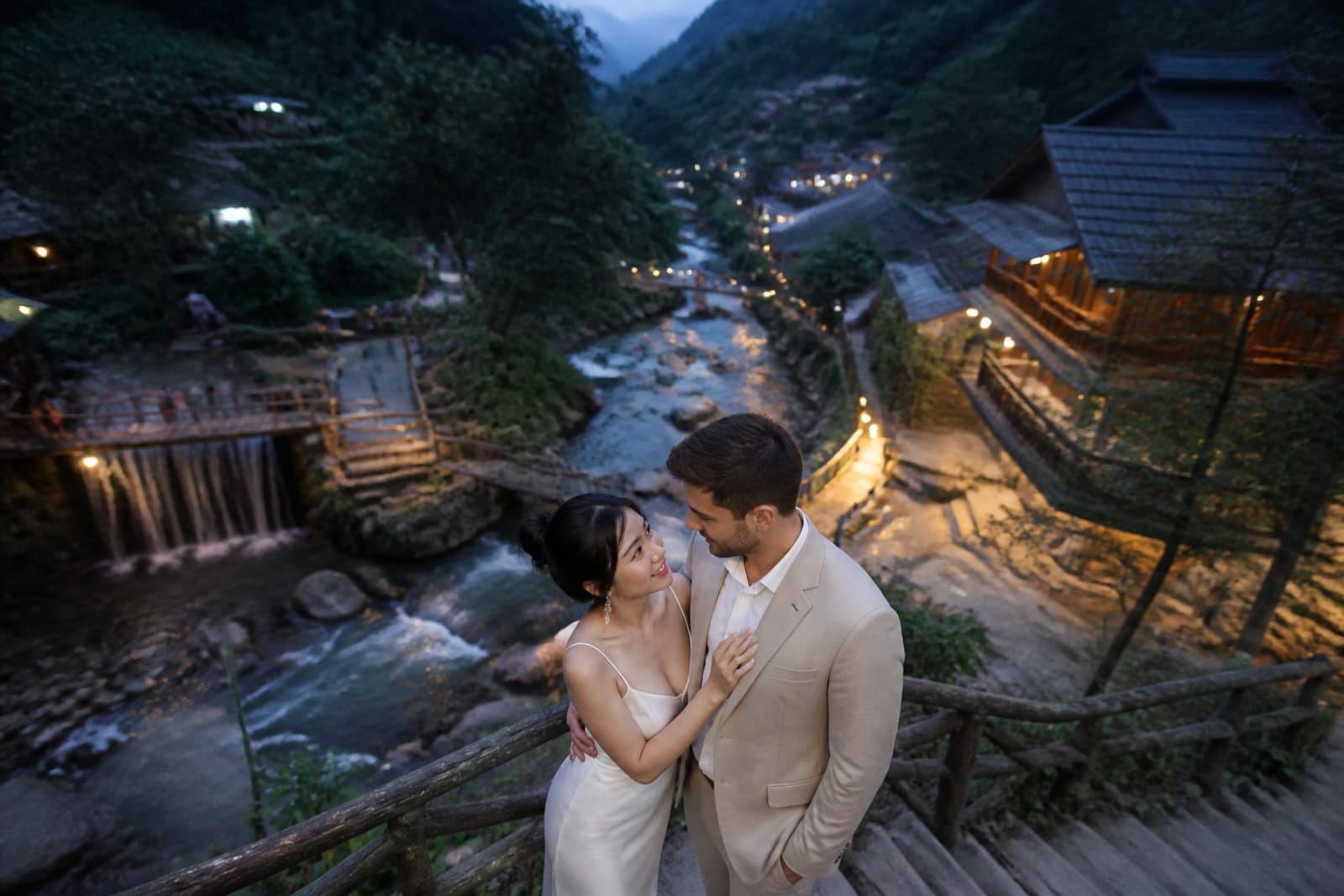
What light hours actually work at Ta Phin
Sunrise (6–7 am) delivers soft side light that sculpts the terraces and catches the ao dai's silk without glare. The sky is usually clear if you booked in the right season. Couples walk uphill slowly, heads slightly turned to each other, while the photographer shoots wide first (the landscape), then medium (the couple in context), then detail (the embroidery, the light in their eyes). This takes 45 minutes to an hour and exhausts most pairs.
Late afternoon (4–6 pm) works if clouds roll in by 4 pm. The backlight (sun low behind the hills) can rim the ao dai in gold and create depth. Avoid 9 am–3 pm entirely: the sun sits too high, shadows flatten faces, and the light is too bright for the ao dai's subtle tones.
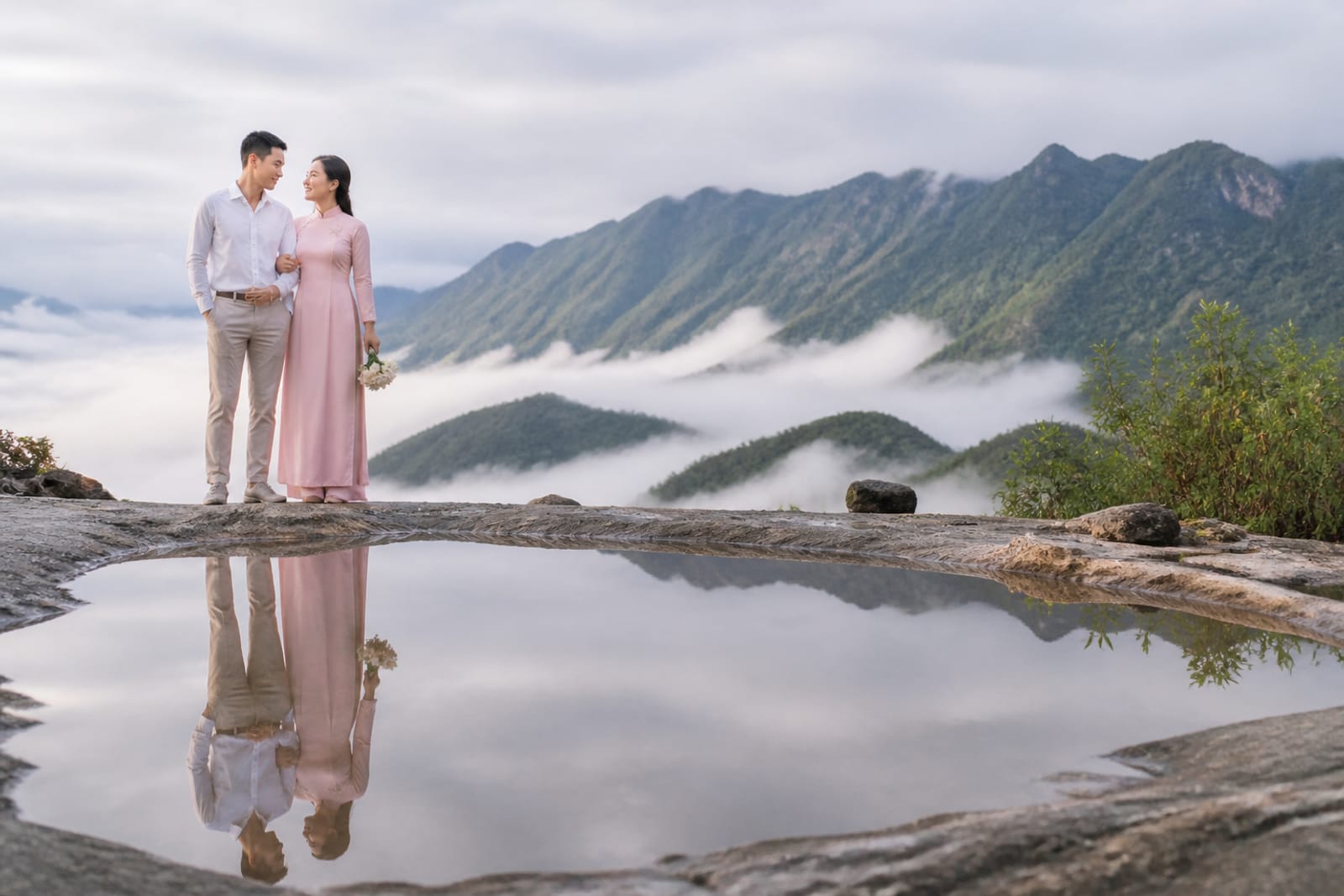
Overcast mornings (common in May and September) are neutral—not dramatic, but forgiving for skin and fabric. If you're booking in the shoulder season and clouds are forecast, don't cancel; a soft, even light is better than harsh sun.
Choosing the right outfit: ao dai, slip, shoes
A traditional silk ao dai (the loose panel, or áo) is about 1.5 meters long. Walking on terrain, it catches on stones and gets wet from dew. Wear a fitted slip or thin cotton undershirt beneath: it anchors the ao dai so it moves as one piece and lets you stride without pinching or tripping. Bring flats—soft leather sandals or ballet flats—that grip uneven stone. Heels are impossible; even slight slopes will turn an ankle.
If you're renting or bringing a pre-wedding ao dai from /ao-dai-rental, confirm the length and fit at the hip. Homestays sometimes offer loaner áo; check the condition and color against Ta Phin's greens and browns (pastels and whites photograph better on overcast mornings, jewel tones on clear days). Groom in linen shirt or simple tunic; if he's in a suit, request lightweight fabric and confirm he can sit or walk without overheating.
Plan 30 minutes before the shoot for hair and makeup touch-up at your homestay. If you're booking makeup & hair at your hotel in Sapa town, allow travel time back to Ta Phin (20–30 minutes, depending on traffic and road condition).
Photographer choice: local guide vs. directed team
Sapa has homestay "photographers" (often owners with a phone camera) and a handful of semi-professional shooters. A directed photoshoot—where one person handles posing, framing and light—always beats three vendors (photographer, hair, makeup) arriving separately and working without a shared vision. If Cáo Studio operated in Sapa, we would bring the entire team together; since we don't, vet locally.
Find a local photographer by asking:
- Do they own a full-frame DSLR or mirrorless camera? (Phone-only won't capture the ao dai's texture.)
- Can they shoot in manual mode and adjust for overcast light?
- Do they direct movement (walk here, look at each other, walk out of frame) or ask you to pose for the camera?
- Will they deliver edited photos in 48 hours? (Homestays often take weeks.)
- Do they understand ao dai? (Ask for ao dai photoshoot examples, not just tourist portraits.)
A session with a good local photographer runs 2–3 hours (including walking between spots), costs less than a Hanoi session but requires you to handle outfit changes and timing. Budget 3–4 hours total from arrival to departure.
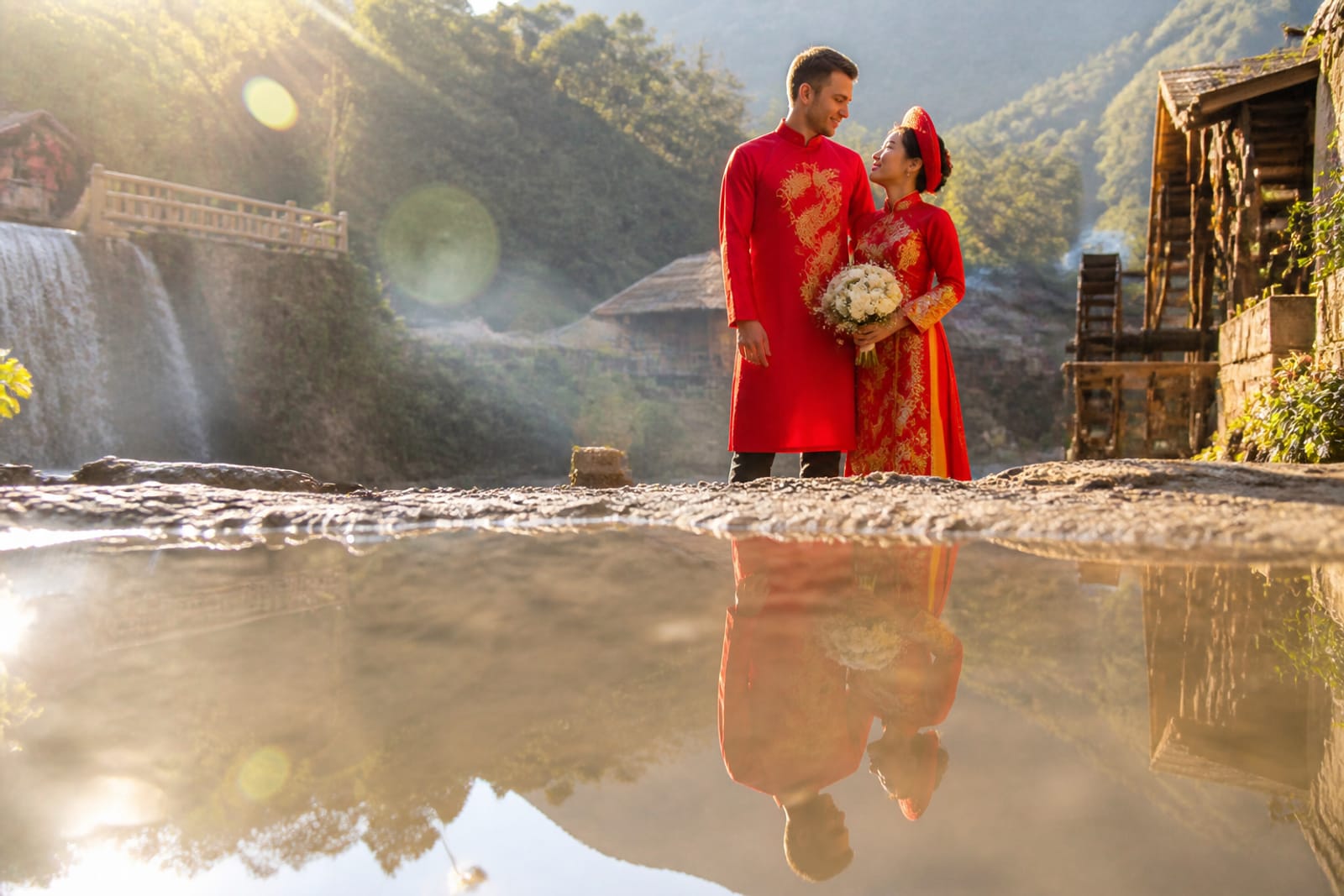
Season, weather and terraces: a comparison
| Aspect | March–May | Sept–Oct | June–August | Dec–Feb |
|---|---|---|---|---|
| Terrace color | Green (planted) | Golden (harvest) | Very green (wet) | Bare or wet |
| Light quality | Clear mornings, some haze | Clear dawn, crisp | Overcast often | Foggy, poor visibility |
| Weather risk | Low | Low | Rain 50%+ | Fog, cold (0°C), rare frost |
| Crowd level | Moderate | Moderate | Light (rain) | Light (cold) |
| Why book this window | Cool, stable light | Landscape drama, fewer tourists | Soft light but flooding risk | Cold makes outdoor shoots hard |
March–May and late September–early October are the only reliable windows. If the forecast shows rain, ask the photographer if they'll reschedule free or take a different nearby spot (like a terrace closer to shelter). Early bookers in these windows often lock dates; confirm 48 hours before departure.
From booking to delivery: what to check before you book
- Photographer response time. Do they confirm dates within 24 hours? A slow reply often means they handle bookings casually.
- Backup plan. If weather turns foul, can you reschedule to the next clear morning, or do you lose the fee?
- Outfit sourcing. Are you renting an ao dai (ask Sapa town shops in advance) or bringing your own? If renting, reserve 1–2 weeks ahead; quality varies.
- Editing timeline. Ask if they deliver raw files, JPEGs, or edited with a specific style. "Edited in 48 hours" is rare locally; 5–7 days is more typical.
- Hidden costs. Confirm whether transport (from town to Ta Phin), homestay breakfast, or guide fees are included or separate.
- Backup outfit. Bring a second ao dai or different color if possible; if the first gets wet or muddy, you can shift the aesthetic.
If you're based in Hanoi or Ho Chi Minh City and want a pre-wedding photoshoot with full team control, Cáo Studio can coordinate a Sapa trip for you—ask on WhatsApp.
Real logistics: timing, travel and physical demands
Arrive at Ta Phin at 5:30 am if shooting sunrise. Most homestays serve breakfast at 6 or 7 am; eat early or bring snacks. The walk between terraces is 10–20 minutes depending on spots; the paths are stone, often slippery after dew. Wear non-slip-soled shoes and allow time for the ao dai to dry if it gets wet. The photographer will shoot for 45–90 minutes, depending on energy and light quality. By 7:30–8 am, the sun is higher and the best light is gone. Avoid booking a second session in the afternoon unless you're doing a complete outfit change and hair/makeup refresh (plan 90 minutes).
Transport to Ta Phin: hire a driver from Sapa town (confirm the pickup time night before). A motorbike taxi costs less but offers no shelter if rain starts; a private car is safer for ao dai. The drive is 30 minutes on winding road; expect 15–20 minutes of bouncing if the road is wet.
Physical demands: steep terrain, 1–2 hours of walking in ao dai, cool early morning, damp grass. If you or your partner have knee or ankle concerns, tell the photographer beforehand; they can shorten walks or focus on homestay spots (less dramatic but achievable).
Comparison: Ta Phin vs. other ao dai photoshoot locations
Ta Phin suits couples who want a working landscape and rural authenticity. If you want a more controlled setting with less walking, consider:
- Hanoi's Old Quarter or West Lake: Flat ground, manageable crowds if you shoot early, heritage backdrops. Book with Cáo Studio in Hanoi.
- Hoi An Ancient Town: Lanterns, river, yellow walls, fewer terraces. Hoi An shoots available by appointment.
- Ho Chi Minh City parks (Tao Đàn, Thảo Điền): Flat, green, close to the city, no mountain travel. Book with Cáo Studio in Saigon.
Ta Phin requires the most planning (season, altitude, terrain, early wake-up) but delivers the most distinct landscape. Book it only if the season window aligns and terrain doesn't concern you.
---
FAQ
Is Ta Phin suitable for an ao dai shoot if I've never worn one before?
Yes, but plan a 30-minute fitting and walk around your homestay the evening before. The slip underneath is key; ask the rental shop or homestay owner to help you adjust the fit. Walk slowly on your first morning—the photographer will direct your pace.
What if it rains the morning of my shoot?
Ask your photographer's rain policy when booking. Some reschedule free if visibility is poor; others offer a nearby sheltered spot (homestay doorway, covered terrace edge). Confirm this in writing before paying a deposit.
Do I need to book makeup and hair in Sapa town or at my homestay?
Homestay owners can do basic ao dai touch-ups, but for polished makeup and hair that lasts through walking, book a professional in Sapa town the night before or at 5 am. Allow 30 minutes travel time back to Ta Phin.
Can we do a couple's shoot and a family photo on the same morning?
Possibly, but not recommended. A couple's ao dai shoot takes 2–3 hours and uses the best light window (sunrise to 8 am). A family session needs different framing and poses. Book two separate mornings if feasible, or ask your photographer for a combined session compressed into 4–5 hours.
What's the typical cost and what's included?
Quote variations depend on photographer, session length, outfit rentals, and transport. Ask your photographer for a full breakdown of fees. Cáo Studio doesn't operate in Sapa, so request specifics from your local contact; on WhatsApp, we can guide you toward reputable Sapa photographers if you need a referral.
Should we book a hotel in Sapa town or stay at a Ta Phin homestay?
A Ta Phin homestay (near the shoot location) saves 30 minutes of travel and lets you wake naturally before dawn. Sapa town has more amenities and dining. Either works; the homestay option is simpler logistically.
FAQ
Is Ta Phin suitable for an ao dai shoot if I've never worn one before?
Yes, but plan a 30-minute fitting and walk around your homestay the evening before. The slip underneath is key; ask the rental shop or homestay owner to help you adjust the fit. Walk slowly on your first morning—the photographer will direct your pace.
What if it rains the morning of my shoot?
Ask your photographer's rain policy when booking. Some reschedule free if visibility is poor; others offer a nearby sheltered spot (homestay doorway, covered terrace edge). Confirm this in writing before paying a deposit.
Do I need to book [makeup and hair](/makeup-and-hair) in Sapa town or at my homestay?
Homestay owners can do basic ao dai touch-ups, but for polished makeup and hair that lasts through walking, book a professional in Sapa town the night before or at 5 am. Allow 30 minutes travel time back to Ta Phin.
Can we do a couple's shoot and a family photo on the same morning?
Possibly, but not recommended. A couple's ao dai shoot takes 2–3 hours and uses the best light window (sunrise to 8 am). A family session needs different framing and poses. Book two separate mornings if feasible, or ask your photographer for a combined session compressed into 4–5 hours.
What's the typical cost and what's included?
Quote variations depend on photographer, session length, outfit rentals, and transport. Ask your photographer for a full breakdown of fees. Cáo Studio doesn't operate in Sapa, so request specifics from your local contact; on WhatsApp, we can guide you toward reputable Sapa photographers if you need a referral.
Should we book a hotel in Sapa town or stay at a Ta Phin homestay?
A Ta Phin homestay (near the shoot location) saves 30 minutes of travel and lets you wake naturally before dawn. Sapa town has more amenities and dining. Either works; the homestay option is simpler logistically.
Ao dai, makeup, hair and a local photographer in Hanoi or Saigon — one WhatsApp message.