/ao-dai-photoshoot
Ao Dai Wedding Photos at Thap Doi Cham Towers
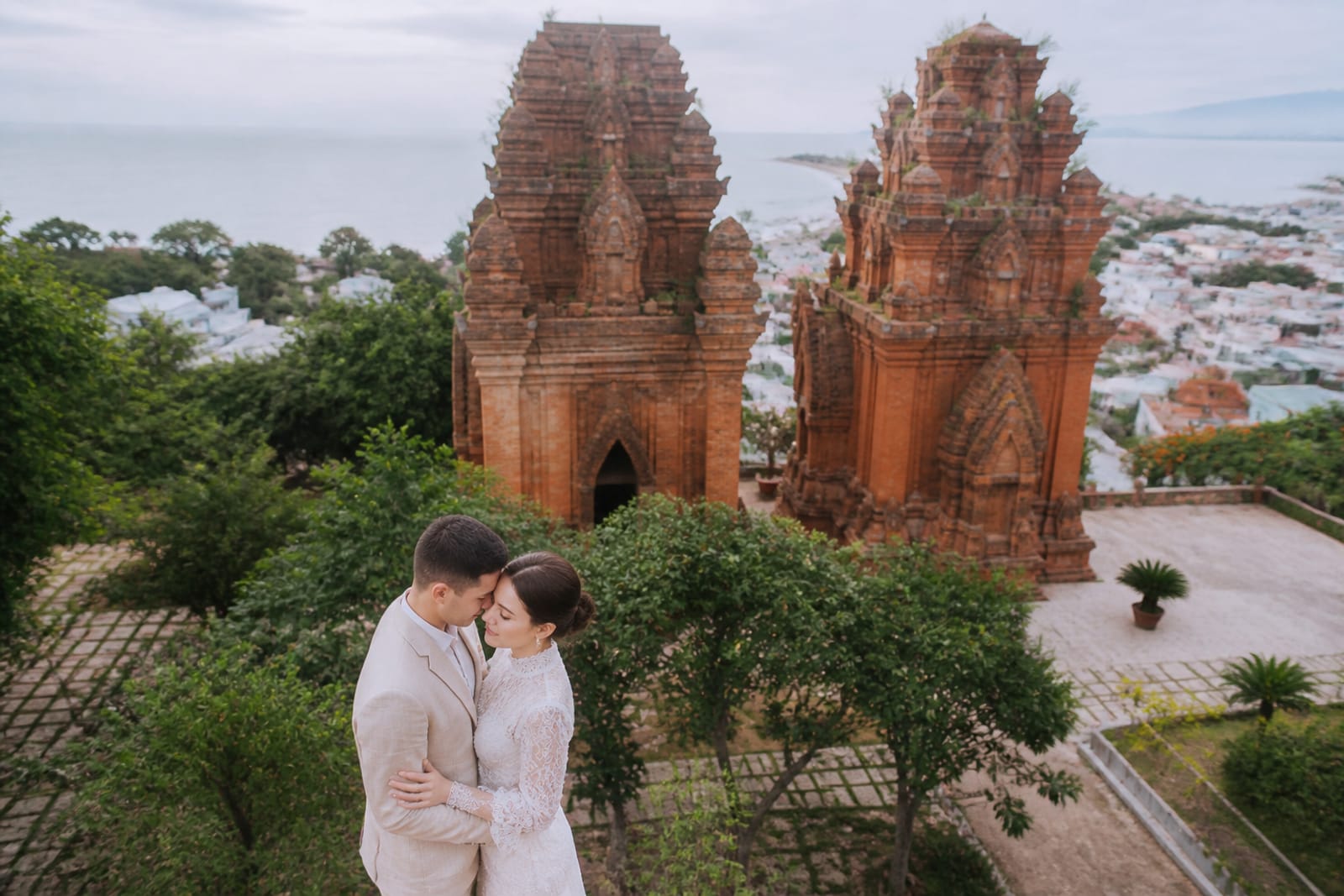
Thap Doi Cham towers are twin 11th-century Champa structures near Ben Thanh Market in Ho Chi Minh City—a protected heritage site where ao dai photography works because the stone absorbs and softens early light (best 6–7 am, before crowds and heat). A Cáo Studio session here runs two hours of directed movement: you walk between the towers, pause at side angles where light sculpts the fabric, and interact naturally while we frame wide, medium, then detail. The site is open to the public; no special permit required, but arrive before 8 am to avoid tourist groups. Wear the ao dai over comfortable undergarments (cotton slip, supportive bra) so you can move freely. What to avoid: midday sun (harsh shadows on faces), weekends after 9 am (crowded), or stiff poses—we guide you to walk, look at each other, adjust your ao dai as you step.
Is Thap Doi Cham really a good ao dai photoshoot location?
Yes, if you book early light and understand what the site offers. The Twin Towers sit in a compact urban plaza; the stone itself is weathered terracotta-grey, which photographs warm against ao dai silk. The surrounding walls channel soft side light in the hour after sunrise. You won't get wide landscape vistas—this is a tight, intimate framing—but that intensifies couple connection and garment detail. The trade-off: the site is sacred to Champa heritage, so crowds arrive mid-morning and reverence matters (no climbing, no irreverent posing). Cáo Studio has shot here dozens of times; we know the exact angles and the light window.
📸 Book on WhatsApp — ao dai photoshoot
What time and season deliver the best light at the towers?
Thap Doi Cham's light is directional and brief. Shoot between 6–7 am when the eastern sun grazes the tower faces and the plaza is empty. By 8 am, light flattens and tourists arrive. Winter (December–February) brings cooler air and lower-angle sun, which sculpts deeper shadows on the stone—ideal for drama. Summer (May–September) is humid and the sun climbs faster, narrowing your window. Avoid October–November if possible; the central and southern coast faces rainy-season risk, and afternoon cloud cover kills side light. Spring (February–April) is a second-best window: warm but not oppressive, and light is still low enough to flatter the towers and fabric.
How does Cáo Studio direct you through a session here?
We arrive 30 minutes early to scout the exact light position and clear any early risers. You begin by walking into the plaza from the south entrance—we shoot you wide as you step into the light, so the towers frame your motion, not the reverse. Then we move you to the eastern side wall where light hits the ao dai's left panel; here, we guide you to pause, turn toward your partner, and adjust the fabric as you move. Finally, we shoot detail: hands, embroidery, the way light sits on silk. The whole arc takes 90–120 minutes because we pause between frames to let light shift and your energy reset. You're never "posing"—you're walking, pausing, looking, adjusting—and we frame what's real. A short vertical film captures the session's best moments and is delivered with edited stills within 48 hours.
What should you wear under an ao dai for this shoot?
Comfort and support matter because you'll walk and adjust fabric for two hours. Wear a cotton slip (neutral colour, knee-length minimum) to prevent light showing through silk. A supportive bra in skin tone or white keeps the ao dai's neckline clean; avoid underwire if it creates visible lines. Flat or low-heel shoes grip the stone plaza safely—sandals risk slipping on morning dew. If you're renting an ao dai, confirm the fit day-of with our team; we carry a steamer to release wrinkles and a sewing kit for last-minute adjustments. Skip heavy jewellery; the towers' stone detail already dominates the frame. A lightweight shawl or second ao dai layer can be added mid-session if the light shifts or energy changes.
Should you book Thap Doi Cham as a couple, family, or solo session?
| Session Type | Best For | Light / Crowd Factor | Why It Works |
|---|---|---|---|
| Couple ao dai | Engagement, anniversary, pre-wedding | 6–7 am ideal; minimal foot traffic | Towers frame connection; intimate framing suits two people |
| Family (3–4) | Multi-generational ao dai memory | 6:30–7:30 am; wider plaza needed | Towers create natural depth; more subjects require earlier start |
| Solo ao dai | Personal keepsake, travel photoshoot | 6–7 am or 4–5 pm (golden hour, fewer tourists) | Stone backdrop highlights garment and poise; no partner dynamics |
| Pre-wedding | Alternate to iconic Hanoi sites | Early light essential; book mid-week | Underrated location signals insider knowledge; unique in Ho Chi Minh City |
Couples and solo travellers benefit most from Thap Doi Cham's tight framing and early-light magic. Family sessions work but require more coordination and earlier arrival. Pre-wedding couples often pair Thap Doi Cham with a second location (such as the couple photoshoot guide) in a full-day session.
How does Thap Doi Cham compare to other Ho Chi Minh City ao dai locations?
Thap Doi Cham is distinct because it's a heritage stone structure, not a colonial building or river backdrop. Ben Thanh Market is louder, more touristic, and the light is harsher. The Bitexco Financial Tower and modern districts have neutral glass and steel—they flatten ao dai in comparison. Saigon River walk is longer and offers variety, but Thap Doi Cham's compact plaza means every frame is intentional; there's no room for filler or wandering. If you want a single, focused location where light and architecture align, the Twin Towers win. If you want variety and landscape, a full-day session combining Thap Doi Cham with a second site (ask us on WhatsApp for pairings) is smarter.
The Cáo Studio difference: we direct from real light, not posed moments. At Thap Doi Cham, that means we know the exact hour the sun hits the east wall, we frame you walking and adjusting fabric rather than standing still, and we shoot wide first (you entering the plaza), then medium (pausing by the towers), then detail (your hands, the ao dai's hem). That sequence feels natural because it mirrors how a moment unfolds, not how a monument is traditionally photographed.
What to check before you book an ao dai photoshoot at Thap Doi Cham
Permission and etiquette. The site is open to the public but remains a sacred Champa heritage location. No climbing, no disrespectful posing, and modest behaviour keeps the local community and site managers at ease. Cáo Studio books sessions with awareness of this; we brief you on approach.
Early arrival is non-negotiable. Booking a 6 am start means you meet us at 5:45 am. If punctuality is uncertain, reschedule; late arrival loses the light window and crowds compound stress.
Ao dai fit and ownership. Confirm your ao dai before the session—either rent from us (ask on WhatsApp for current options and fit timing) or bring your own, freshly pressed. A wrinkled ao dai reads flat in photographs; we can steam on-site, but arriving prepared is smoother.
Weather and flexibility. December–February is safest; May–September carries humidity and cloud risk. If rain threatens the night before, we'll contact you with reschedule options at least 12 hours prior. Slight overcast is acceptable (soft, directional light); heavy overcast or downpour cancels.
Photo delivery timeline. Edited stills plus vertical film are delivered within 48 hours. If you need prints or albums, discuss this on WhatsApp; custom products (framed prints, keepsake albums) are ordered separately and take additional time.
Cost factors, not prices. Travel time (you sourcing transport to the site), ao dai rental or fit (if not your own), makeup and hair (optional—can be booked at your hotel separately), and any additional locations affect session scope. Exact costs are quoted on WhatsApp based on your specifics.
---
For a pre-wedding photoshoot or full-day ao dai session, Thap Doi Cham pairs well with a second location. Cáo Studio is based in Hanoi and Ho Chi Minh City; for Hoi An dates, ask on WhatsApp. Check the Saigon studio page for Ho Chi Minh City availability, or explore the ao dai photoshoot pillar for all options.
FAQ
Do I need a permit or guide to shoot at Thap Doi Cham?
No permit is required for personal or commercial photography, but the site is a heritage location—respect posted notices and don't climb the towers. Cáo Studio books sessions respectfully; local staff are familiar with us.
Can I wear my own ao dai, or should I rent?
You can wear your own if it's pressed and fits comfortably for two hours of walking. Rental is available; ask on WhatsApp for current styles and sizing. We confirm fit the day before the shoot.
What if the weather is bad on the morning of my session?
We monitor forecasts and contact you at least 12 hours before if rain or heavy cloud threatens the light. You can reschedule to the next available date; we don't refund, but rebooking is flexible.
How long does a Thap Doi Cham session take, and how many edited photos do I receive?
Sessions typically run 90–120 minutes. Exact inclusions (number of edited files, delivery format, video clips) are confirmed on WhatsApp when you book, as packages vary.
Can I combine Thap Doi Cham with another location in one day?
Yes. Thap Doi Cham works as a morning-only (6–7 am) or as the first part of a multi-location day. Pairing with the riverside or a second heritage site doubles your variety. Discuss options on WhatsApp when you inquire.
Is Thap Doi Cham crowded on weekends?
Yes. Tourist foot traffic increases after 9 am and peaks weekends. Book a weekday 6 am start for the quietest, best-light window. Early arrival is essential.
FAQ
Do I need a permit or guide to shoot at Thap Doi Cham?
No permit is required for personal or commercial photography, but the site is a heritage location—respect posted notices and don't climb the towers. Cáo Studio books sessions respectfully; local staff are familiar with us.
Can I wear my own ao dai, or should I rent?
You can wear your own if it's pressed and fits comfortably for two hours of walking. Rental is available; ask on WhatsApp for current styles and sizing. We confirm fit the day before the shoot.
What if the weather is bad on the morning of my session?
We monitor forecasts and contact you at least 12 hours before if rain or heavy cloud threatens the light. You can reschedule to the next available date; we don't refund, but rebooking is flexible.
How long does a Thap Doi Cham session take, and how many edited photos do I receive?
Sessions typically run 90–120 minutes. Exact inclusions (number of edited files, delivery format, video clips) are confirmed on WhatsApp when you book, as packages vary.
Can I combine Thap Doi Cham with another location in one day?
Yes. Thap Doi Cham works as a morning-only (6–7 am) or as the first part of a multi-location day. Pairing with the riverside or a second heritage site doubles your variety. Discuss options on WhatsApp when you inquire.
Is Thap Doi Cham crowded on weekends?
Yes. Tourist foot traffic increases after 9 am and peaks weekends. Book a weekday 6 am start for the quietest, best-light window. Early arrival is essential.
Ao dai, makeup, hair and a local photographer in Hanoi or Saigon — one WhatsApp message.