/ao-dai-photoshoot
Ao Dai Wedding Photos at Tran Quoc Pagoda: Hanoi Shoot Guide
Tran Quoc Pagoda—Hanoi's oldest temple, perched on a narrow peninsula in Hoan Kiem Lake—creates intimate ao dai wedding photos without the crowds of central landmarks. Morning sessions (7–10 a.m.) catch soft golden light on red pillars and stone pathways before tourist foot traffic peaks. Cáo Studio – Makeup & Photoshoot books sessions here by appointment, handling temple etiquette, access timing, and natural light angles to frame your ao dai against water and architecture. Early autumn (October–November) delivers the clearest light and coolest comfort; winter mornings are crisp but often grey and drizzly. Bring a plain slip or undergarment matching your ao dai tone (the dress is lightweight and semi-transparent in sunlight). Plan 60–90 minutes on-site, plus 30 minutes travel from central Hanoi. Avoid Tet week and weekend evenings when crowds peak. ---
Why Tran Quoc Pagoda Suits Ao Dai Wedding Photos
Tran Quoc Pagoda works beautifully for ao dai because the setting feels exclusive without being staged. The temple sits on water, framed by trees and stone walls—every angle includes a sense of place, not a generic backdrop. Red wooden pillars and grey stone contrasts the vivid colors of ao dai silk. Unlike crowded Old Quarter streets, the pagoda allows intimate posing without constant tourist interruptions. The narrow access road also means you're already separated from casual foot traffic, so photos feel intentional and timeless. Morning light here—hitting the pillars and reflecting off water—is softer and warmer than midday sun, which flattens fabric folds and creates harsh shadows under the ao dai's high collar.
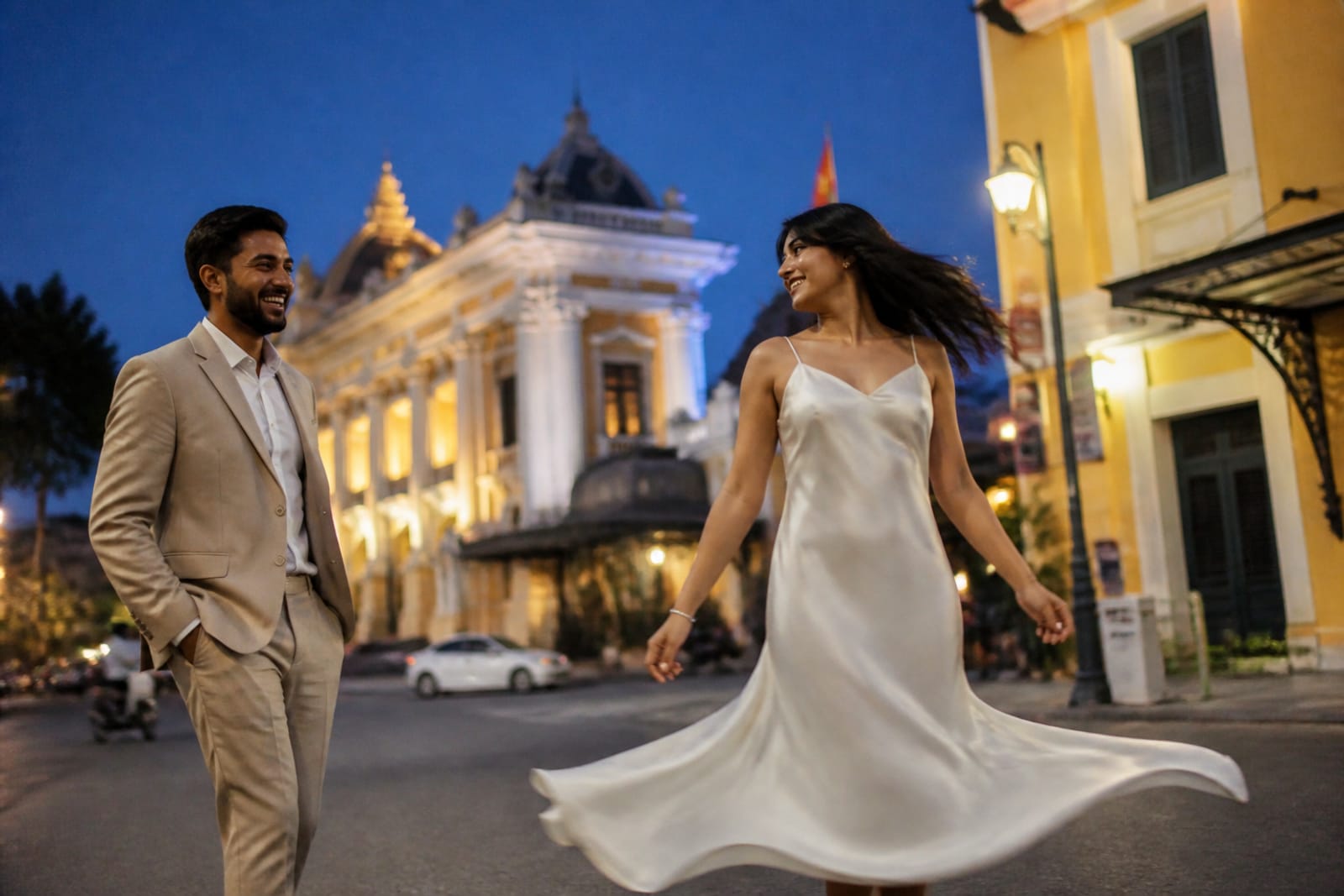
What Light and Season Work Best at Tran Quoc Pagoda?
Early morning (7–10 a.m.) gives you golden side-light that brings out silk texture and the depth of embroidered ao dai details. By 11 a.m., sun climbs high and begins bleaching color from fabric and stone. Afternoon (2–5 p.m.) is backlit and dramatic but risks overexposure if the dress is lighter; reflector work becomes necessary. Autumn (October–November) is Hanoi's gold standard for wedding photos: dry air, mild 20–25°C temperatures, and consistent soft light. Winter (December–February) is cool (10–20°C) and often overcast or drizzly—grey skies flatten colors, but some couples prefer the moody, intimate mood. Spring (March–April) is humid and prone to haze; May–September heat reaches 35°C+ with sudden downpours, and the pagoda's exposure to water makes wind unpredictable. Avoid Tet (late January–mid-February) entirely; the temple is crowded and many local services close.
| Season | Light Character | Best For | Why It Works |
|---|---|---|---|
| Oct–Nov | Soft, golden, consistent | Classic ao dai beauty | Clear air, ideal temperature, no rain risk |
| Dec–Feb | Overcast, cool, drizzly | Moody, intimate mood | Fewer tourists; grey light suits deep colors |
| Mar–Apr | Hazy, humid, variable | Budget-conscious shoots | Mild but less predictable light; haze diffuses harshly |
| May–Sep | Hot, humid, noon-peak glare | Risk factor—avoid | Intense heat, sudden storms, unpredictable wind |
How Do You Prepare Your Ao Dai and Body for Pagoda Light?
Ao dai is semi-transparent to light, so wear an underskirt or slip that matches your dress tone—white, cream, or the same color as the outer silk. This prevents the dress from appearing translucent in sunlight, especially in close-up portraits. Choose fabrics that hold shape; heavy silk or silk-cotton blends photograph better than lightweight rayon, which clings and wrinkles in humidity. If your ao dai has a long tunic, consider wearing comfortable flat shoes (not heels) because the pagoda's stone pathways are uneven and narrow—heels risk catching between stones or turning on the peninsula's slope. Undergarments matter: a smooth slip prevents visible panty lines and keeps the dress's clean silhouette intact when sitting on temple steps or posing near water. Bring a lightweight shawl or mesh overlay if you're concerned about temple etiquette; although Tran Quoc is used to visitors in formal dress, covering shoulders shows respect. Plan 20–30 minutes before your session start for makeup touch-ups and final dress adjustments on-site.
📸 Book on WhatsApp — ao dai photoshoot
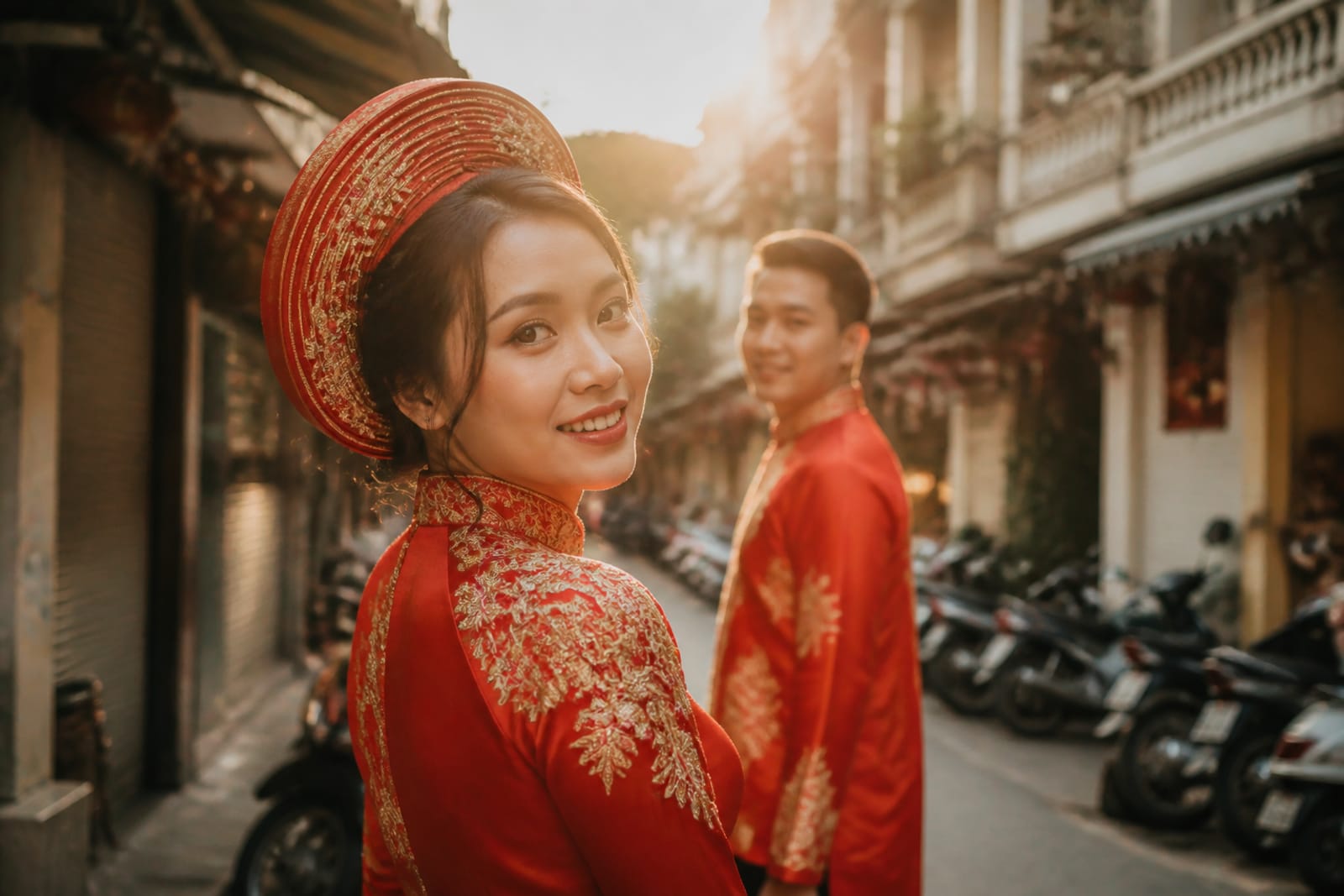
What Are the Logistics and Access Timing at Tran Quoc Pagoda?
Tran Quoc Pagoda is located on a narrow peninsula accessible by foot from Thanh Nien Road (the western shore of Hoan Kiem Lake). There is no vehicle access to the pagoda itself; you park on Thanh Nien and walk 150–200 meters down a tree-lined path. Morning sessions (before 10 a.m.) mean fewer tourists and monks conducting fewer ceremonies, so you can move freely. By 11 a.m., day-trippers and local tourists begin arriving; crowds build until late afternoon. Temple etiquette requires removing shoes before entering the main hall—plan a session that avoids the inner sanctum, or work entirely on the exterior pathways, courtyard, and water's edge where shoes stay on. The pagoda is open year-round, but during Tet week (typically 3–7 days around Lunar New Year) access is restricted for private ceremonies. Cáo Studio books morning slots by appointment to secure the best light and minimal interference; confirm your date and time on WhatsApp to avoid clashes with temple schedules.
Comparing Tran Quoc Pagoda to Other Hanoi Ao Dai Shoot Locations
| Location | Best For | Light Peak | Crowds | Walking Effort | When to Avoid |
|---|---|---|---|---|---|
| Tran Quoc Pagoda | Intimate, water backdrop, temple mood | 7–10 a.m. | Low before 11 a.m. | Moderate (uneven paths) | Tet, midday, rainy days |
| Phan Dinh Phung Street | Tree-lined, romantic urban frame | Oct–Nov afternoon | Moderate year-round | Easy (flat, wide) | Summer heat, haze |
| Hoan Kiem Lake perimeter | Open water, central Hanoi context | 6–8 a.m. (sunrise) | High after 9 a.m. | Easy | Weekends, Tet |
| Temple of Literature | Traditional courtyard, red gates | 7–9 a.m. | Moderate, group tours from 10 a.m. | Moderate (multi-level) | Tet, midday sun |
| Old Quarter silk alleyways | Narrow, textured, layered depth | 8–10 a.m. | Very high; constant foot traffic | Difficult (congested) | Always crowded; not ideal |
Tran Quoc's water and isolation make it unique for an intimate, serene mood—if you want fewer people and a quieter emotional tone, it's your best choice. Phan Dinh Phung Street offers easier access and romantic framing but trades solitude for classic Hanoi aesthetics. Hoan Kiem Lake gives you open water and iconic city context but requires earlier starts to beat crowds.
What to Check Before Booking Your Ao Dai Shoot at Tran Quoc Pagoda
Temple access: Confirm the pagoda's current access rules on WhatsApp or call ahead; occasional ceremonies or renovations may restrict certain areas or times.
Your ao dai fit: Ensure the tunic length and sleeve fit allow comfortable movement on uneven stone pathways. A too-tight tunic will strain when you sit or pose near water.
Undergarment tone: Bring the slip or underskirt with you to your fitting or pre-shoot consultation so the photographer can assess how light reads through the fabric.
Weather and light forecast: October–November are safest; if you're shooting Dec–Feb, expect overcast light and dress appropriately for cool mornings (bring a jacket to remove just before shooting).
Makeup longevity: Morning shoots in cool weather mean makeup holds longer, but if humidity is high (spring, summer), plan for touch-up supplies on-site. Cáo Studio's makeup & hair service includes on-location touch-ups for hotel-based prep or final adjustments at the temple.
Time and crew size: Confirm how long the session runs and whether you want a videographer or second photographer. Narrow pathways mean crew size affects movement; fewer people means more intimate framing but fewer angles captured.
Access timing: Ask whether your session includes early-arrival buffer time to scout light and adjust poses before the actual shooting starts.
---
Cáo Studio – Makeup & Photoshoot handles all logistics, temple etiquette, and light positioning for ao dai wedding photos at Tran Quoc Pagoda. Reach out on WhatsApp with your preferred date, season, and mood—the team will confirm availability, run through outfit and makeup planning, and guide you through preparation steps before you arrive.
For broader ao dai photoshoot planning across Hanoi, visit the ao dai photoshoot pillar page. If you're combining this session with other wedding days—such as pre-wedding or elopement shoots or couple sessions—the studio can build a multi-location itinerary. Hanoi-based sessions are managed via Cáo Studio Hanoi; if you're traveling to Ho Chi Minh City or Hoi An, check availability there too.
---
FAQ
Do I need to remove my ao dai before entering Tran Quoc Pagoda's main hall?
No—you remove your shoes. Ao dai is formal dress and accepted inside. However, most wedding photo sessions work on the exterior pathways and courtyard to avoid interfering with monk routines and maintain freedom to pose near water and pillars.
What time should I arrive for a morning shoot?
Arrive 15–20 minutes before your booked session start. This allows dress adjustments, final makeup touch-ups in natural light, and a walk-through of the space with your photographer to scout angles and light before the session officially begins.
Can I bring a friend or family member to watch the shoot?
Yes, and it often helps. Keep your group small (1–2 people) because narrow pathways mean extra people affect framing and may appear in backgrounds. Let Cáo Studio know in advance so the team can plan movement and positioning accordingly.
Is the pagoda accessible by car, or do I need to walk the whole way?
You drive to Thanh Nien Road and park on the street; then walk about 150–200 meters through a tree-lined path to the pagoda entrance. Wear comfortable shoes for this walk, and plan 10 minutes for parking and the approach.
What happens if the weather turns bad on my shoot day?
Grey or drizzly skies soften light (good for moody ao dai shots) but reduce color saturation. Heavy rain or storms mean postponement—discuss rescheduling options and your cancellation policy with Cáo Studio on WhatsApp before you book. October–November shoots carry lower weather risk than Dec–Feb.
Should I have my makeup done before arriving, or can Cáo Studio handle it on-site?
Cáo Studio offers makeup & hair services at your hotel or on-location; confirm this when booking your shoot. Hotel-based prep is often easier because the team has a full makeup station and can make adjustments in controlled light before you travel to the pagoda.
FAQ
Do I need to remove my ao dai before entering Tran Quoc Pagoda's main hall?
No—you remove your shoes. Ao dai is formal dress and accepted inside. However, most wedding photo sessions work on the exterior pathways and courtyard to avoid interfering with monk routines and maintain freedom to pose near water and pillars.
What time should I arrive for a morning shoot?
Arrive 15–20 minutes before your booked session start. This allows dress adjustments, final makeup touch-ups in natural light, and a walk-through of the space with your photographer to scout angles and light before the session officially begins.
Can I bring a friend or family member to watch the shoot?
Yes, and it often helps. Keep your group small (1–2 people) because narrow pathways mean extra people affect framing and may appear in backgrounds. Let Cáo Studio know in advance so the team can plan movement and positioning accordingly.
Is the pagoda accessible by car, or do I need to walk the whole way?
You drive to Thanh Nien Road and park on the street; then walk about 150–200 meters through a tree-lined path to the pagoda entrance. Wear comfortable shoes for this walk, and plan 10 minutes for parking and the approach.
What happens if the weather turns bad on my shoot day?
Grey or drizzly skies soften light (good for moody ao dai shots) but reduce color saturation. Heavy rain or storms mean postponement—discuss rescheduling options and your cancellation policy with Cáo Studio on WhatsApp before you book. October–November shoots carry lower weather risk than Dec–Feb.
Should I have my makeup done before arriving, or can Cáo Studio handle it on-site?
Cáo Studio offers [makeup & hair services](/makeup-and-hair) at your hotel or on-location; confirm this when booking your shoot. Hotel-based prep is often easier because the team has a full makeup station and can make adjustments in controlled light before you travel to the pagoda.
Ao dai, makeup, hair and a local photographer in Hanoi or Saigon — one WhatsApp message.