/ao-dai-photoshoot
Ao Dai Wedding Photos at Tu Duc Tomb Hue: Plan & Book
Tu Duc Tomb, built in the 19th century in Hue's central coast, is a destination for ao dai wedding and pre-wedding photography because its winding paths, ornate pavilions, tiered lakes, and moss-covered stone walls offer natural framing that feels intimate and regal at once. Sessions typically run 2–4 hours (light permitting), starting early morning (6:00–7:30 a.m.) or late afternoon (3:30–5:00 p.m.) to catch soft, directional light across the garden's varied elevations. Photographer logistics include entry tickets (purchased on-site), restricted zones (some pavilions forbid tripods or professional flash—check at the gate), and narrow stone stairs that require sturdy footwear and careful ao dai hem management. Cáo Studio – Makeup & Photoshoot does not operate at Tu Duc Tomb; this article guides you to hire a local Hue photographer or travel to Hanoi, Ho Chi Minh City, or Hoi An to book our team. Plan for February–April (cool, dry light) or avoid September–December (typhoon season, waterlogging on lower paths). 📸 Book on WhatsApp — ao dai photoshoot --- #
Tu Duc Tomb in Hue is one of Vietnam's most poetic backdrops for ao dai wedding photography. Its serene gardens, lake, and palatial ruins create layers of depth and light that make every frame feel cinematic.
Why is Tu Duc Tomb so favored for ao dai wedding portraits?
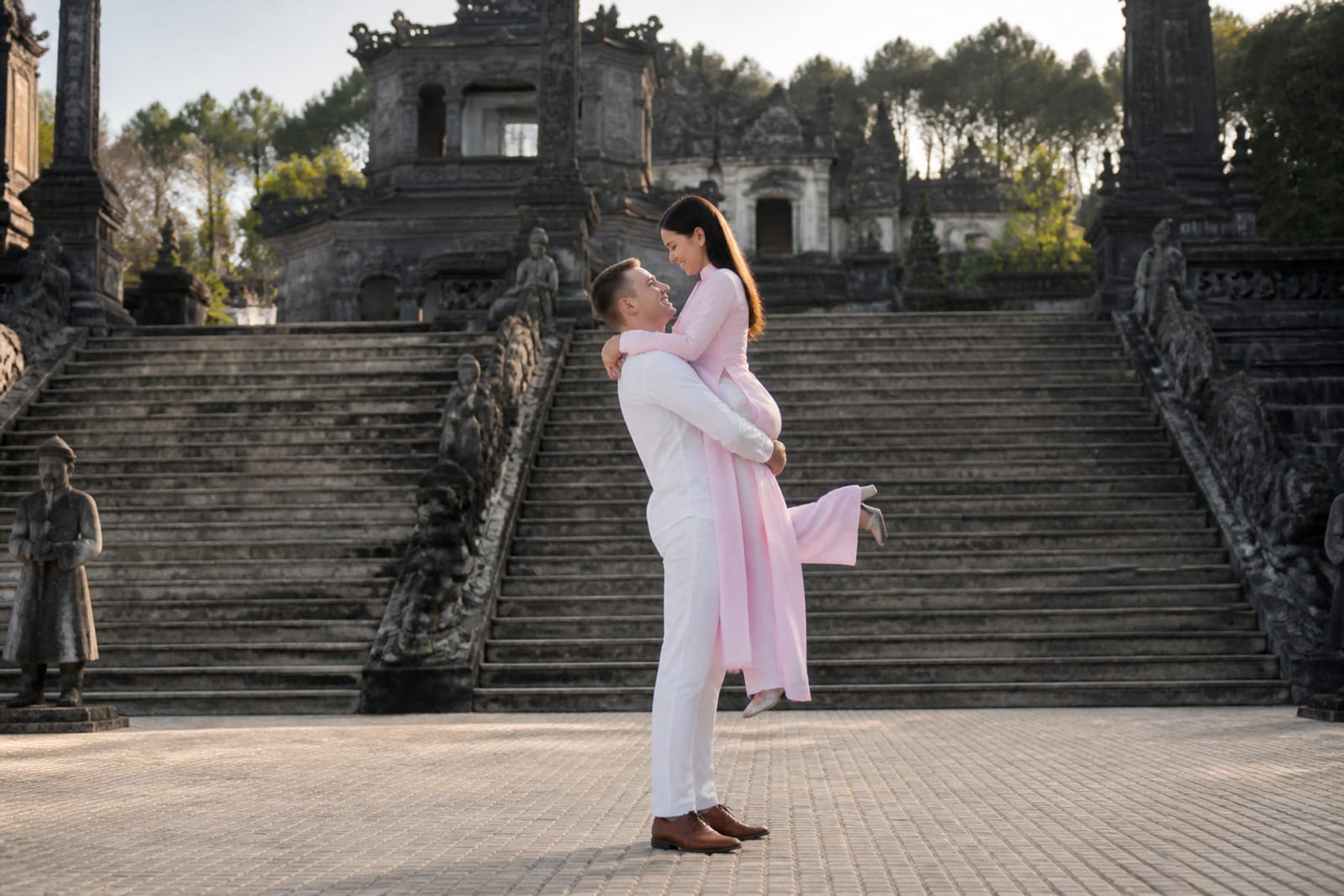
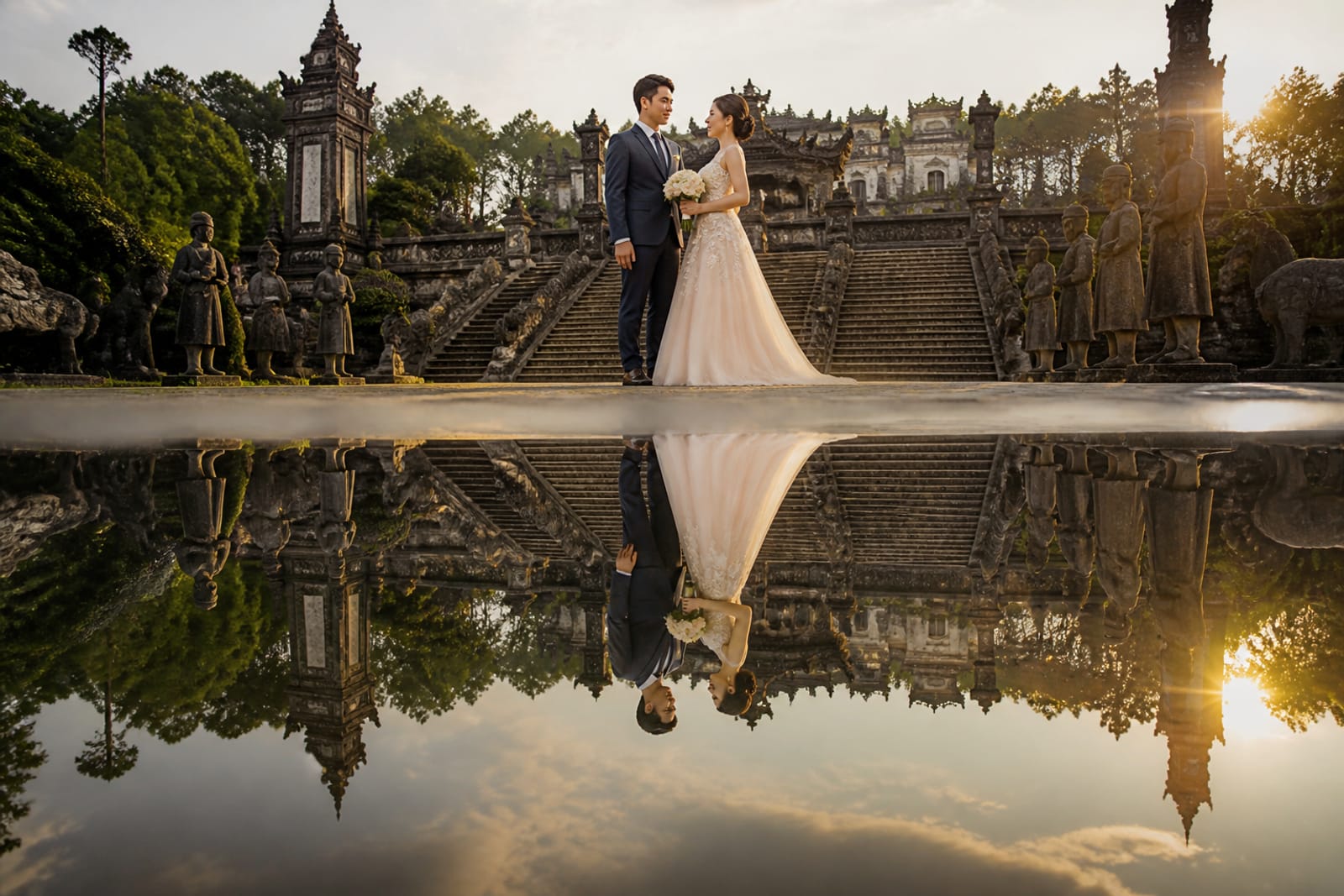
Tu Duc Tomb's appeal lies in its layered landscape: the main courtyard offers symmetrical stone geometry; the inner garden hides intimate lake scenes; the royal pavilions frame subjects against carved wooden screens and weathered brick arches. The site's uneven terrain—stairs, ramparts, garden alcoves—lets photographers create depth and separation from foreground to background, a fundamental principle in portrait lighting. Morning light rakes across the stone at low angles, sculpting the ao dai's silk folds; afternoon light softens through cypress trees overhanging the lake. The tomb's density of architectural detail means you can shoot five completely different "locations" within a two-hour walk, minimizing repetition and travel fatigue. This vertical, multi-layered layout suits ao dai photography because the tunic's length and pleated skirt gain dimension when framed against steps, railings, and recessed doorways.
What are the best light and season windows for Tu Duc Tomb shoots?
Tu Duc Tomb sits in Hue's central-coast climate, which is wetter and less predictable than Hanoi or Ho Chi Minh City. February–April (cool, low humidity, stable morning sun) is the ideal window. May–August brings intense midday heat and hazy light; afternoon sessions are risky because clouds thicken by 3:00 p.m. September–December is typhoon and flood season—the worst months are October–November when paths muddy, light turns flat and gray, and sudden downpours halt shoots with no cover nearby. Sunrise sessions (6:30–8:00 a.m.) from February–April yield the clearest, most directional light; you'll avoid crowds and heat. Late afternoon (3:30–5:00 p.m.) works only if you start early enough to finish before 5:30 p.m., when gates approach closing time. Choose February–April and start before 7:00 a.m. for the most reliable soft, raking light and fewest weather interruptions.
| Season | Light Quality | Humidity & Heat | Typhoon/Rain Risk | Crowds | Best Session Times |
|---|---|---|---|---|---|
| Feb–Apr | Soft, directional, raking early; stable | Low; cool mornings | None | Moderate (post-Tet onward) | 6:30–8:30 a.m. or 4:00–5:15 p.m. |
| May–Aug | Harsh midday; flat afternoon | High; 35°C+ by noon | Low—but haze | Lower (fewer domestic tourists) | Before 8:00 a.m. only; avoid noon–4 p.m. |
| Sep–Dec | Gray, diffuse; frequent overcast | High; afternoon showers | Oct–Nov: severe flooding/typhoon | Moderate | Unreliable; avoid Oct–Nov |
How do you manage the ao dai fabric and footwear on Tu Duc Tomb's terrain?
Tu Duc Tomb has narrow stone stairs, uneven pavers, lake-bordering paths, and a few raised wooden walkways. Ao dai fabric—especially heavier silk or cotton blends—snags on rough edges, soaks moisture from dewy grass, and drags through mud on lower paths. Wear flat, closed-toe shoes with grip (rubber-soled flats or embroidered silk shoes—not heels; heels catch between paving stones and invite slips). Before each outfit change, inspect the hem for debris; bring a small dry cloth and safety pins to tuck up the tunic front during stair navigation. Walk with a slight hold-up of the áo's front panel, not to look stiff but to protect it from dewy garden vegetation. The lake areas glisten with algae and are unforgiving; position yourself away from edges on sloped banks. Wear sturdy flat shoes, carry a hem cloth, and tuck the front panel when ascending—this prevents snags, stains, and dangerous slips on wet stone.
💄 Makeup & hair at your hotel | 🌸 See the lookbook
How does booking and logistics work if you hire a local Hue photographer versus traveling to Cáo Studio?
Tu Duc Tomb requires entry tickets purchased at the gate on arrival; staff may ask whether you're carrying professional equipment (tripods, reflectors, larger camera rigs). Some pavilions restrict flash or tripod use—confirm this in writing before booking, as enforcement is spotty but real. A local Hue photographer will know the current restrictions and have relationships with tomb staff, often securing better access and fewer delays. They'll also handle weather pivots more fluidly (same-day reschedule, alternative venues if rain arrives). Cáo Studio – Makeup & Photoshoot does not shoot at Tu Duc Tomb; however, if you'd prefer a team with international experience shooting Vietnamese wedding traditions, consider booking a pre-wedding session at our Hanoi, Ho Chi Minh City, or Hoi An locations instead, or hire a vetted local photographer in Hue through online reviews (check portfolios for ao dai work, not just generic wedding photos). Ask a shortlisted photographer: "Can you show me 8–10 recent Tu Duc Tomb ao dai sessions?" A credible reply includes actual client names (anonymized) or permission to contact references. Hiring local means faster problem-solving; hiring Cáo Studio means a team accustomed to traveling international clients, but you'll shoot elsewhere in Vietnam.
What should you check before booking a Tu Duc Tomb ao dai photoshoot?
Before committing, confirm these five points with your chosen photographer (local or travel-based):
- Entrance and permit restrictions: Ask if they've booked Tu Duc Tomb within the last two months; confirm the current gate policy on professional tripods and flash. Request a written note of restrictions.
- Session timing and stair capacity: Do they account for climbing +40 minutes of stairs? Will they adjust framing or outfit changes if your fitness or ao dai comfort needs a slower pace?
- Backup weather plan: If rain hits mid-session, do they reschedule at no extra cost or pivot to covered pavilions? This matters in May–August and especially Sep–Dec.
- Outfit and styling logistics: Can they arrange on-site ao dai rental, or do you bring your own? If renting, who manages fittings beforehand—the photographer or a separate vendor? If you're bringing ao dai, pack it in a garment bag and avoid compression.
- Delivery timeline and file format: How many edited images? When do you receive them—1 week, 2 weeks? Do you get RAW files, high-resolution JPEGs, or a preset-edited gallery? Costs vary by inclusions; ask for a written quote.
What to check before you book
- Confirm Tu Duc Tomb access: Visit the official site or call ahead (+84 …—your photographer should have the contact) to verify entry fees, professional equipment policies, and current gate hours.
- Review portfolio depth: Shortlisted photographer should show 8+ Tu Duc Tomb ao dai sessions, not just one or two. Assess consistency of light, composition, and ao dai styling across seasons.
- Get a signed quote: Include session length, number of edits, delivery timeline, weather reschedule terms, and cancellation policy. WhatsApp or email confirmation is binding.
- Test communication: Do they respond within 24 hours? Are they fluent in your preferred language (English, French, etc.)? Unclear communication on-site stalls your session.
- Ask about contingency: Typhoon or flood forecast? What's their pivot plan—alternative date, indoor venue, or refund?
📸 Book on WhatsApp — ao dai photoshoot
---
If you'd prefer shooting with a team experienced in traveling for international clients, Cáo Studio – Makeup & Photoshoot operates in Hanoi, Ho Chi Minh City, and Hoi An. We specialize in ao dai photoshoots, pre-wedding sessions, and couple & family portraits. While Tu Duc Tomb is outside our service area, we've shot countless ao dai stories across Vietnam and can guide you on styling, makeup, and logistics for any destination shoot. If you'd like makeup and hair services in Hue beforehand or prefer a curated experience at one of our locations, contact us on WhatsApp.
📸 Book on WhatsApp — ao dai photoshoot | 💄 Makeup & hair at your hotel | 🌸 See the lookbook
---
#
FAQ
Do I need a permit or professional license to photograph at Tu Duc Tomb?
No formal permit for personal or wedding photography, but entrance tickets are required. Professional tripods, flash, or reflectors may be restricted in certain pavilions—check with gate staff on arrival or contact the site beforehand. Your photographer should know current rules.
What ao dai color and fabric work best for Tu Duc Tomb's light and setting?
Jewel tones (emerald, sapphire, burgundy) and pastels (cream, pale pink, lavender) photograph well against the tomb's weathered gray stone and moss-green landscape. Silk or silk-cotton blends drape gracefully and move beautifully in wind. Heavier, stiff fabrics photograph flat. Avoid pure white—it can blow out in morning sun or look dingy against damp moss.
What is the best time of day to shoot at Tu Duc Tomb?
6:30–8:00 a.m. (soft, low-angle light raking across stone) or 4:00–5:15 p.m. (warm, diffuse light filtering through cypress trees). Noon–3:00 p.m. produces harsh shadows on faces and washes out ao dai colors. Shoot before 5:30 p.m. (gate closing approaches).
Can I reschedule if weather turns bad mid-session?
Most local photographers include one free weather reschedule in their terms. Confirm this in writing before booking. Typhoon season (Oct–Nov) is high-risk; booking Feb–Apr gives you stable weather odds and lower reschedule stress.
How much walking and stair climbing is involved?
Expect 1.5–2 hours of continuous gentle hiking, plus 50+ stairs across the site (many short flights, not one long staircase). Paths are uneven and occasionally muddy. Wear flat, grippy shoes and inform your photographer if you have mobility concerns; they can adapt the route to favor accessible pavilions.
Should I book a Hue photographer or travel to a Cáo Studio location?
Hire a local Hue photographer for Tu Duc Tomb—they know access, restrictions, and weather pivots faster and cheaper. Book Cáo Studio if you want to combine your shoot with makeup and hair services at your hotel in Hanoi, Ho Chi Minh City, or Hoi An, or if you prefer a team accustomed to international clients and want a pre-wedding experience at one of our main locations instead.
FAQ
Do I need a permit or professional license to photograph at Tu Duc Tomb?
No formal permit for personal or wedding photography, but entrance tickets are required. Professional tripods, flash, or reflectors may be restricted in certain pavilions—check with gate staff on arrival or contact the site beforehand. Your photographer should know current rules.
What ao dai color and fabric work best for Tu Duc Tomb's light and setting?
Jewel tones (emerald, sapphire, burgundy) and pastels (cream, pale pink, lavender) photograph well against the tomb's weathered gray stone and moss-green landscape. Silk or silk-cotton blends drape gracefully and move beautifully in wind. Heavier, stiff fabrics photograph flat. Avoid pure white—it can blow out in morning sun or look dingy against damp moss.
What is the best time of day to shoot at Tu Duc Tomb?
6:30–8:00 a.m. (soft, low-angle light raking across stone) or 4:00–5:15 p.m. (warm, diffuse light filtering through cypress trees). Noon–3:00 p.m. produces harsh shadows on faces and washes out ao dai colors. Shoot before 5:30 p.m. (gate closing approaches).
Can I reschedule if weather turns bad mid-session?
Most local photographers include one free weather reschedule in their terms. Confirm this in writing before booking. Typhoon season (Oct–Nov) is high-risk; booking Feb–Apr gives you stable weather odds and lower reschedule stress.
How much walking and stair climbing is involved?
Expect 1.5–2 hours of continuous gentle hiking, plus 50+ stairs across the site (many short flights, not one long staircase). Paths are uneven and occasionally muddy. Wear flat, grippy shoes and inform your photographer if you have mobility concerns; they can adapt the route to favor accessible pavilions.
Should I book a Hue photographer or travel to a Cáo Studio location?
Hire a local Hue photographer for Tu Duc Tomb—they know access, restrictions, and weather pivots faster and cheaper. Book Cáo Studio if you want to combine your shoot with [makeup and hair services](/makeup-and-hair) at your hotel in Hanoi, Ho Chi Minh City, or Hoi An, or if you prefer a team accustomed to international clients and want a [pre-wedding experience](/pre-wedding-photoshoot) at one of our main locations instead.
Ao dai, makeup, hair and a local photographer in Hanoi or Saigon — one WhatsApp message.