/ao-dai-photoshoot
Ao dai wedding photos at Vung Tau Back Beach: planning guide & local p
Vung Tau Back Beach is a 2-hour drive from Ho Chi Minh City, known for gentle morning light (5:30–7:00 am) and uncrowded sand before tourist crowds arrive. An ao dai photoshoot here works best in the dry season (December–April), when overhead sun is less harsh and the water reflects gold tones. A local photographer can guide you through the beach's tidal flats, rock formations, and promenade backdrops in 2–3 hours. Key steps: book your photographer 2–3 weeks ahead, confirm they've shot ao dai on this beach, arrange early transport from your hotel, wear thin layers under the ao dai for comfort in sand, and check tide times to avoid waterlogged areas. If you're shooting in Ho Chi Minh City, Cáo Studio's couple photoshoot team can advise on Vung Tau logistics; for a studio-directed session, book on WhatsApp to explore Hanoi, Saigon, or Hoi An options instead.
Why is Vung Tau Back Beach chosen for ao dai wedding photos?
Back Beach (Bãi Sau) stretches 7 km along Vung Tau's southern edge, offering unobstructed horizon lines, soft sand, and fewer vendors than Front Beach. The promenade has shallow tide pools and scattered rocks—natural frames that don't need monuments. Early morning light (before 7:00 am) skims the water at a low angle, creating rim-lit silhouettes without the blown-out glare of midday. An ao dai's flowing silk catches this side light beautifully, and the expanse lets photographers compose wide shots with genuine depth. The beach is quiet enough that you're not dodging tourists every third frame. Most couples shoot here as a half-day option before returning to Saigon for a second location (city street, colonial villa, park).
What's the best season and time of day for shooting?
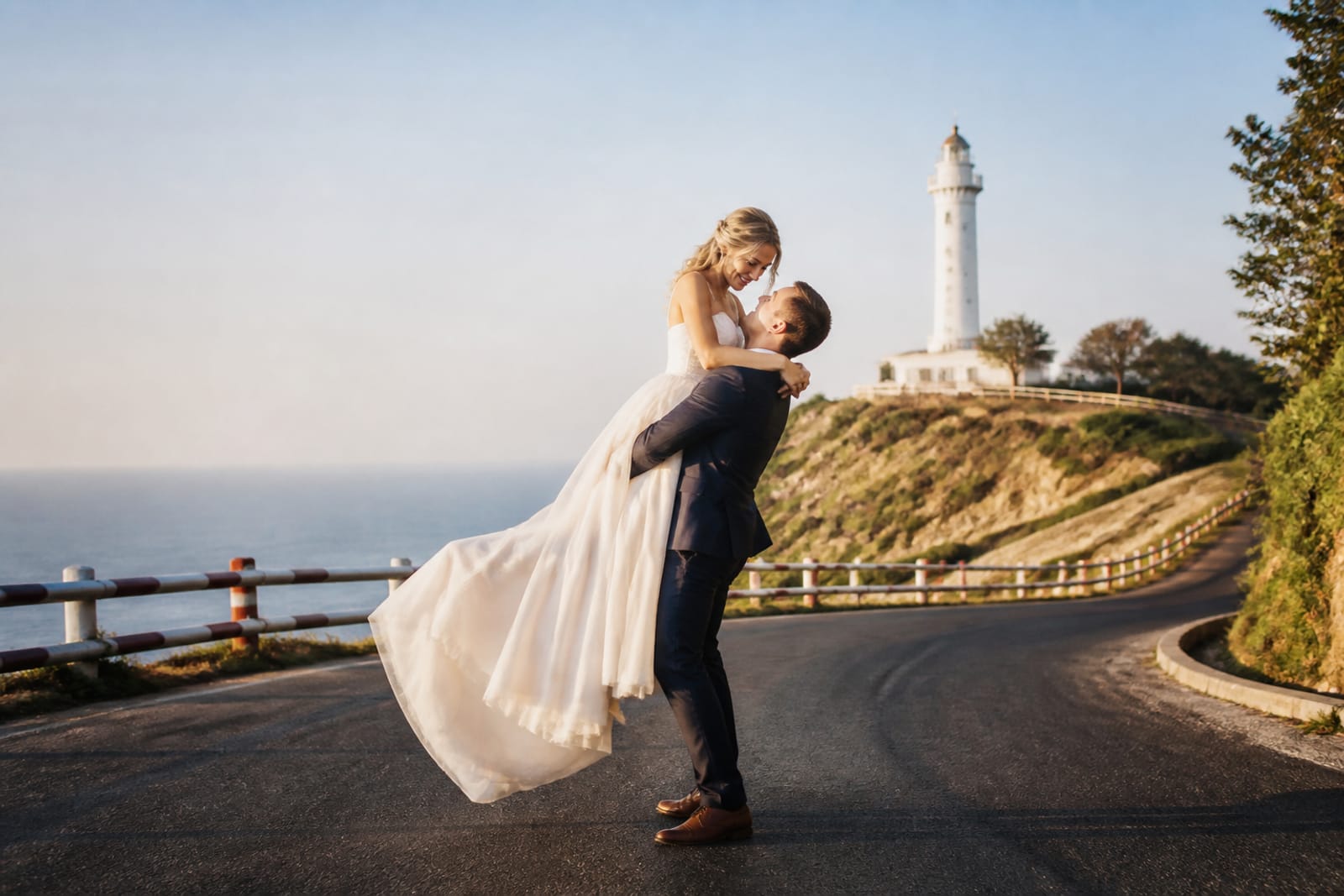
Vung Tau's dry season runs December through April, when humidity is lower and morning fog clears by 6:00 am. February–March offer the softest light because the sun hasn't climbed as steeply. The rainy season (May–November) brings afternoon downpours, grey skies, and high humidity that wilts ao dai fabric and complicates makeup touch-ups in the heat. For time of day: arrive 30 minutes before sunrise (typically 5:30–5:45 am in winter, later in summer) so your photographer can scout the tide line and position you before light peaks. Golden hour (6:15–7:15 am) is your window for the best frames; after 8:00 am, the sun climbs steeply and creates harsh shadows across the face. Evening (5:30–6:30 pm) works but reflects less gold off the sand and draws crowds from the promenade bars.
| Season | Light quality | Crowd level | Practical factors |
|---|---|---|---|
| Dec–Jan | Soft, low angle, less haze | Quieter mornings | Cool air; ao dai sits well; tide tables matter |
| Feb–Apr | Golden, consistent 6–7 am | Weekdays empty, weekends busy | Slight humidity rise; fabric drapes; book early |
| May–Sep | Harsh overhead, grey mornings | Afternoon storms | Wilts makeup, wet sand, few frames usable |
| Oct–Nov | Unpredictable, typhoon risk | Varies | Avoid unless you must; weather is the enemy |
Book your photographer for a weekday if possible (Monday–Thursday crowds are minimal on Back Beach). Weekends pull day-trippers from Saigon by 9:00 am.
How do you find and vet a local Vung Tau photographer?
Since Cáo Studio doesn't operate in Vung Tau, you'll need a local team. Start by searching Instagram for "Vung Tau ao dai photographer" or "Vung Tau couple photoshoot" and filter by location tags. Look at 10–15 photographers' recent posts (within the last 3 months) to assess their work: Do they shoot early morning on Back Beach? Is their editing consistent? Do they frame ao dai with breathing room (wide shots, movement, not stiff poses)? Check if they've posted series from the same location—it shows they understand the beach's changing light.
Message 3–4 photographers directly with your session date, outfit details, and morning time (5:30 am start). Ask:
- Have you shot ao dai photoshoots on Back Beach in this season?
- Who handles makeup and hair—you, or do they coordinate?
- Do you have experience with tidal schedules and tide pools?
- Can you provide a shot list (wide, movement, detail) or do you style poses?
- What's included in the quote—how many edited images, how many outfits, delivery time?
Vet their response time (same day or next morning is good; weeks later is a flag). Ask for references—a past couple's WhatsApp or email—and message that couple directly: "How was the early wake-up? Did the tide timing work? Were you happy with the edited photos?" A photographer who stalls or avoids references probably hasn't built a reliable ao dai practice. Confirm they have a backup plan if weather turns (indoor location, rescheduled morning, or partial refund policy).
For comparison, Cáo Studio's ao dai photoshoot team in Ho Chi Minh City can advise on Vung Tau day trips and coordinate makeup/hair as part of one booking—ask on WhatsApp if this fits your timeline.
What should you wear and prepare the morning of the shoot?
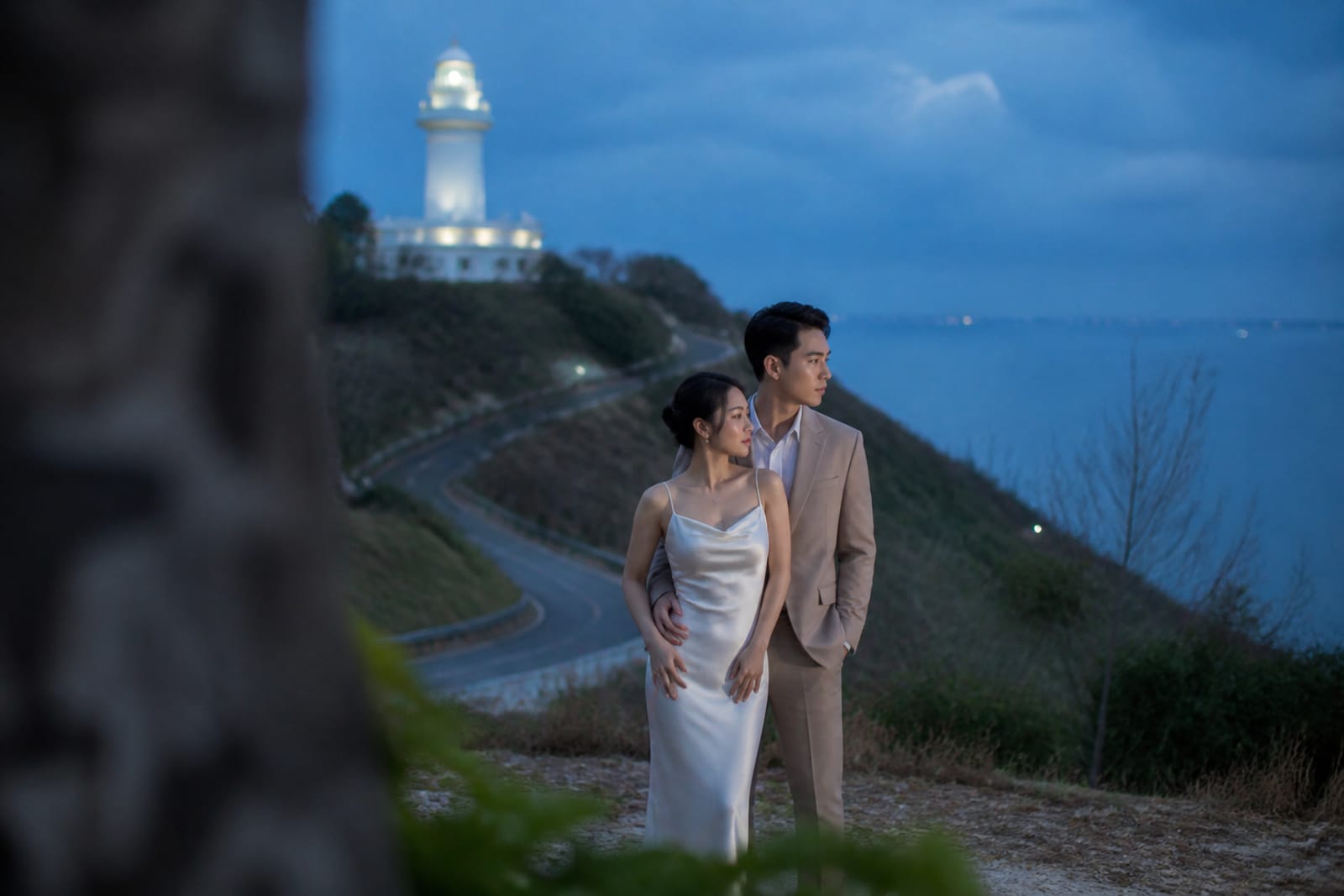
An ao dai is lightweight silk that clings to sweat and sand. Wear minimal undergarments (a thin slip or seamless shorts) to avoid visible lines under the fabric. Bring a soft cotton robe or large scarf to cover the ao dai between shots—sand damages silk, and wind kicks it up unexpectedly. Pack a small bag with tissues, lip balm, a hairbrush, and water; have your photographer or a friend carry it so you can walk freely.
Choose your ao dai 2–3 weeks before the shoot so any tailoring (hem, sleeve, bust) is done. Vung Tau's sand is fine and clingy; ask your tailor if they recommend treating the hem to resist staining. Wear flip-flops or sandals to the beach—change into bare feet only when the photographer is ready to shoot, so you don't track wet sand. If shooting two outfits, bring them in a dry bag and change behind the promenade's public restroom (confirm it's open before your session date).
Makeup should be waterproof (primer + long-wear foundation) because ocean spray and early morning humidity will test it. If you're not hiring a makeup artist separately, arrive with a base already applied and bring powder for touch-ups mid-shoot. Most Vung Tau photographers don't include hair and makeup services—if this matters to you, consider Cáo Studio's makeup & hair at your hotel service in Ho Chi Minh City, which can coordinate with a local photographer, or book a separate makeup artist in Vung Tau 1–2 days before.
How do you work around practical challenges on the beach?
Tide and sand: Check tide times for Vung Tau on a lunar calendar or tide app 2 weeks before your shoot. Low tide exposes flat, packed sand ideal for walking shots. High tide floods the beach and narrows your usable space. Avoid neap tides (weakest variation) when the beach is either waterlogged or too narrow. Confirm your photographer knows the tide table for your date.
Footprints and water damage: Every footprint is visible on wet sand at first light. Ask your photographer to shoot wide first (silhouettes, distance shots), then move closer for medium and detail frames. This way, wet sand doesn't ruin early setups. Bring plastic bags to protect your ao dai hem if you must walk through shallow water; remove them only seconds before framing.
Wind and fabric: Morning breezes off the ocean are often strongest 6:30–7:30 am. Coordinate with your photographer to use movement (walking, turning, fabric flowing) as your shot, not fight it with static poses. A gusting wind that seems chaotic in the moment often creates the best frames.
Heat and fatigue: Bare feet on sand warm up quickly; bring a damp cloth to cool your feet between setups. Drink water constantly, even if you don't feel thirsty—dehydration in early heat causes dull skin in photos. Plan a 10-minute break halfway through if the shoot is longer than 2 hours.
Transport and logistics: Arrange a driver or rent a motorbike the evening before so you're not rushing on shoot day. Stay overnight in Vung Tau (a simple guesthouse near the promenade) to avoid the 2-hour predawn drive from Saigon. Wake at 4:45 am, eat a light breakfast, and be at the beach by 5:30 am. A tired, hungry couple photographs poorly.
📸 Book on WhatsApp — ao dai photoshoot | 💄 Makeup & hair at your hotel | 🌸 See the lookbook
What should you check before confirming a booking with a local photographer?
Before you send a deposit, ask for a written confirmation (WhatsApp screenshot is fine) that includes:
- Session date, start time, and end time. Confirm 5:30 am or your preferred time in writing.
- Location specifics. Which part of Back Beach—north end near the rock formations, or central promenade? Does the photographer have a backup indoor location if weather turns?
- Number of outfits and changes. Can they hold time for two ao dai or a dress-change break?
- Edited deliverables. How many photos are included? What format (digital, printed, album)? When will you receive them?
- Hair and makeup. Is this included or your responsibility? If separate, do they have trusted vendors to recommend?
- Payment and cancellation. What's the deposit amount, balance due date, and refund policy if you cancel or weather forces a reschedule?
- Weather contingency. What happens if it rains? Do they offer a free rescheduled morning, or a partial refund?
- Backup contact. Confirm their WhatsApp or phone number and reply time if you need to reschedule 24 hours before.
If a photographer avoids any of these questions, look for another one. Clarity now prevents arguments later.
For couples already in Ho Chi Minh City, Cáo Studio's couple photoshoot service can advise on Vung Tau timing and light, or you can book a full pre-wedding photoshoot in the city and plan Vung Tau as a separate local hire. Ask on WhatsApp to compare options—sometimes a one-day Saigon + Vung Tau double location is faster than booking two separate vendors.
📸 Book on WhatsApp — ao dai photoshoot | 💄 Makeup & hair at your hotel | 🌸 See the lookbook
---
FAQ
Can Cáo Studio shoot an ao dai photoshoot at Vung Tau Back Beach?
Cáo Studio operates in Hanoi, Ho Chi Minh City, and Hoi An. We don't have a Vung Tau base, so we don't coordinate shoots there. This guide shows how to find a local photographer. Contact us on WhatsApp if you'd prefer a photoshoot in Saigon instead, or want advice on combining a city session with Vung Tau logistics.
What time should we arrive at Back Beach for an ao dai shoot?
Arrive 30 minutes before sunrise (typically 5:30–5:45 am in winter) so your photographer can scout the tide line. Golden hour light lasts until 7:15 am; after 8:00 am, the sun climbs steeply and shadows flatten frames. Book an early morning time in your photographer's confirmation.
Do we need a permit or permission to shoot on Vung Tau Back Beach?
Back Beach is public. No permit is required for personal photography. Commercial photo tours or large crews may need permission—ask your local photographer if they've handled this before on this beach.
Should we hire a separate makeup artist for a Vung Tau shoot?
Most Vung Tau photographers don't include makeup and hair. If you want professional makeup, book a local artist in Vung Tau 1–2 days before, or consider Cáo Studio's hotel makeup & hair service in Ho Chi Minh City and do a Saigon shoot instead.
What's the best way to protect the ao dai during a beach photoshoot?
Wear a cotton robe between setups to shield the fabric from sand and salt spray. Avoid walking in water unless the photographer frames it as a shot; use plastic bags to protect the hem. Change back into a dry bag afterward, and rinse the ao dai in fresh water within 24 hours to prevent salt staining.
How far in advance should we book a Vung Tau photographer?
Book 2–3 weeks ahead, especially for December–April. Message 3–4 photographers with your date and ask for same-day responses. Vet their Instagram portfolio and request references from past couples before sending a deposit.
Can we shoot both morning and evening on the same day?
Yes, but morning (5:30–7:15 am) is superior for ao dai because light is softer and beaches quieter. Evening (5:30–6:30 pm) adds crowds and harsher light. Most couples choose morning for the main session and use evening for a casual second outfit if time permits.
What if weather looks bad the morning of our shoot?
Confirm your photographer's weather policy in writing before booking. Reliable photographers offer a free reschedule to the next calm morning, or a partial refund if you must cancel. Don't expect to shoot ao dai in heavy rain—fabric wilts, makeup runs, and the beach turns grey.
FAQ
Can Cáo Studio shoot an ao dai photoshoot at Vung Tau Back Beach?
Cáo Studio operates in Hanoi, Ho Chi Minh City, and Hoi An. We don't have a Vung Tau base, so we don't coordinate shoots there. This guide shows how to find a local photographer. Contact us on WhatsApp if you'd prefer a [photoshoot in Saigon](/saigon) instead, or want advice on combining a city session with Vung Tau logistics.
What time should we arrive at Back Beach for an ao dai shoot?
Arrive 30 minutes before sunrise (typically 5:30–5:45 am in winter) so your photographer can scout the tide line. Golden hour light lasts until 7:15 am; after 8:00 am, the sun climbs steeply and shadows flatten frames. Book an early morning time in your photographer's confirmation.
Do we need a permit or permission to shoot on Vung Tau Back Beach?
Back Beach is public. No permit is required for personal photography. Commercial photo tours or large crews may need permission—ask your local photographer if they've handled this before on this beach.
Should we hire a separate makeup artist for a Vung Tau shoot?
Most Vung Tau photographers don't include makeup and hair. If you want professional makeup, book a local artist in Vung Tau 1–2 days before, or consider [Cáo Studio's hotel makeup & hair service](/makeup-and-hair) in Ho Chi Minh City and do a Saigon shoot instead.
What's the best way to protect the ao dai during a beach photoshoot?
Wear a cotton robe between setups to shield the fabric from sand and salt spray. Avoid walking in water unless the photographer frames it as a shot; use plastic bags to protect the hem. Change back into a dry bag afterward, and rinse the ao dai in fresh water within 24 hours to prevent salt staining.
How far in advance should we book a Vung Tau photographer?
Book 2–3 weeks ahead, especially for December–April. Message 3–4 photographers with your date and ask for same-day responses. Vet their Instagram portfolio and request references from past couples before sending a deposit.
Can we shoot both morning and evening on the same day?
Yes, but morning (5:30–7:15 am) is superior for ao dai because light is softer and beaches quieter. Evening (5:30–6:30 pm) adds crowds and harsher light. Most couples choose morning for the main session and use evening for a casual second outfit if time permits.
What if weather looks bad the morning of our shoot?
Confirm your photographer's weather policy in writing before booking. Reliable photographers offer a free reschedule to the next calm morning, or a partial refund if you must cancel. Don't expect to shoot ao dai in heavy rain—fabric wilts, makeup runs, and the beach turns grey.
Ao dai, makeup, hair and a local photographer in Hanoi or Saigon — one WhatsApp message.