/ao-dai-photoshoot
Ao dai wedding photos at Vung Tau lighthouse: a planning guide
Vung Tau lighthouse sits on a rocky peninsula south of Ho Chi Minh City, accessible by boat or coastal walk. Ao dai photos there work best in the dry season (Dec–Apr), in early morning (6–7:30 am) or late afternoon (4–5:30 pm) when side light hits the rocks and coast. The shoot involves a 30–90 minute coastal walk depending on tide and access, so wear shoes under the ao dai, bring a stylist or use the hotel's makeup artist, and book a local Vung Tau photographer—Cáo Studio is based in Hanoi and Saigon and does not operate there. Plan for weather delays (wind, sea spray), tidal access changes, and a 5–7 day turnaround for edited files from a local vendor. 📸 Book on WhatsApp — ao dai photoshoot
Vung Tau lighthouse is a 40-minute drive south from Ho Chi Minh City. The rocky foreshore, crashing waves and solitary beacon create a cinematic backdrop for ao dai portraits—but only if you choose the right time, tide and crew. Many travellers imagine Vung Tau as an easy afternoon add-on to a Saigon shoot; it is not. This guide walks you through what a real Vung Tau shoot demands, who suits it, and how to hire the right local photographer.
Why Vung Tau lighthouse for ao dai, and when does light work best?
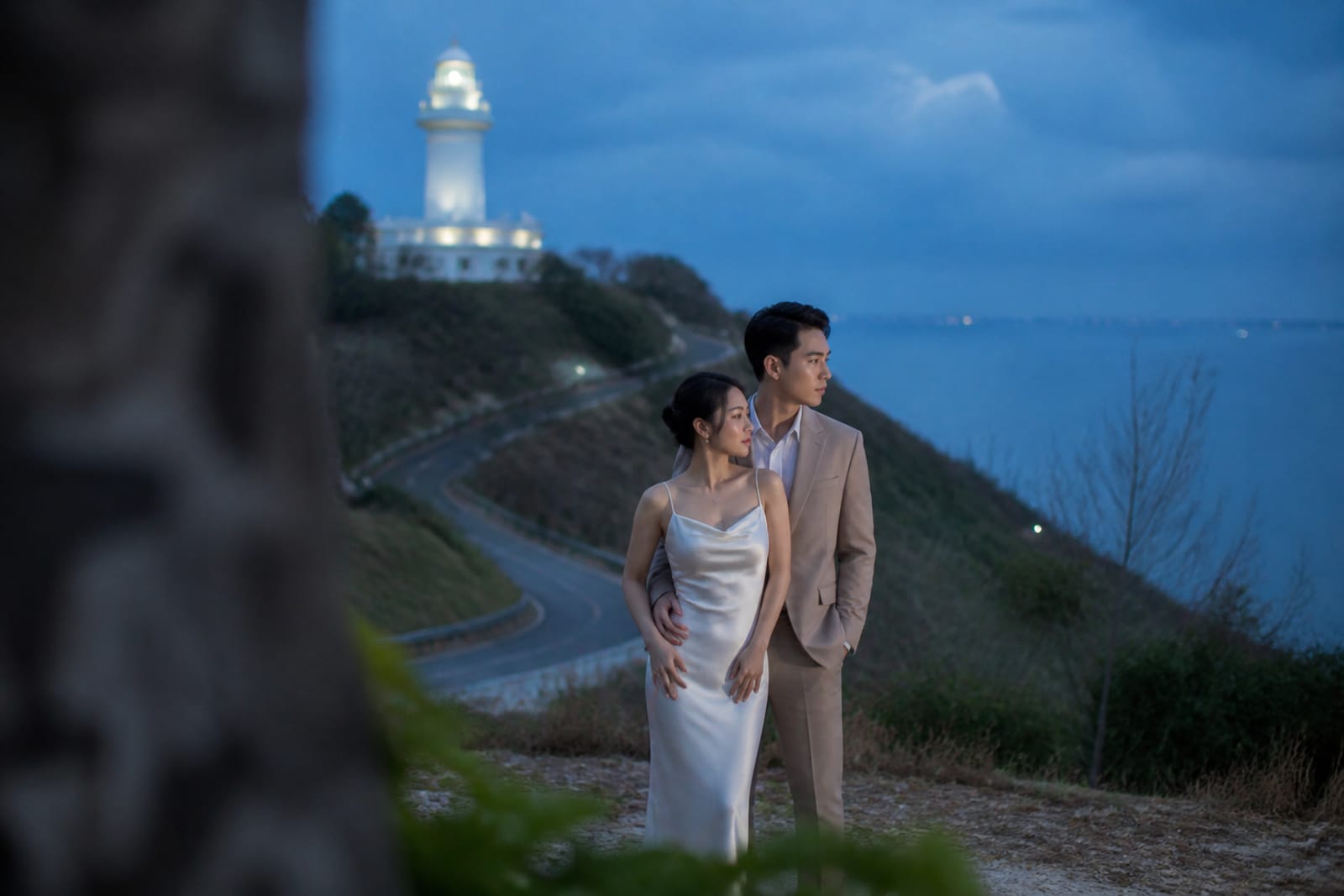
Vung Tau's rocky headland gets soft, directional light early (6–7:30 am) and late (4–5:30 pm) year-round. The dry season (Dec–Apr) has the clearest skies and lowest chance of afternoon sea spray; the wet season (May–Nov) brings unpredictable rain and wind, making shoots risky. Early morning light rakes across the rocks, casting shadows that frame the ao dai's fabric; late afternoon light is warmer and comes from behind the lighthouse, backlighting the figure against the coast. Mid-day light is flat and harsh—avoid 10 am to 3 pm. Sunrise shoots (6–7 am) require a 5 am pickup and finish by 8 am; sunset shoots (4:30–6 pm) run the risk of overcast skies in the May–Nov season. Book a photographer who has shot the lighthouse before and knows the tide schedule.
What's the difference between tides, access and shooting time?
Tides determine whether you can walk the rocks safely. High tide (check local tidal tables before booking) floods the lower rocks and limits your movement to a narrow upper path; low tide opens the foreshore but means a longer, more strenuous walk. A two-hour shoot at high tide uses only 40 minutes of usable light and framing; the same shoot at low tide can spread across three different rock formations and water pools, yielding more variety. Access also depends on whether your route is the main pathway (gentle slope, often crowded with visitors) or the eastern rocks (steeper, fewer people, riskier footing). A photographer who knows the lighthouse will scout the tide, time of day and visitor flow before you arrive and plan the exact sequence. Ask your photographer in advance: which tide window do you prefer, and why? How long will we actually walk?
Should you shoot at the lighthouse itself, or nearby coastal spots?
| Location | Best for | Light window | Why it works |
|---|---|---|---|
| Main lighthouse beacon | Drama, iconic framing | 6–7 am, 4–5:30 pm | Solitary structure; rocks frame wide shots; tide matters most here |
| Eastern rocky outcrop | Intimate close-ups, water reflections | 6–7:30 am (side light) | Lower foot traffic; pools reflect fabric; rougher terrain |
| Coastal cliff path (north) | Walking sequences, profile shots | 6:30–7:30 am | Sea is backlit; less dramatic than lighthouse; flatter light |
| Beach coves (south, Back Beach) | Softer sand backdrop, fewer tourists | 6–8 am, 4–6 pm | Less iconic but easier logistics; works if main lighthouse tide is high |
The main lighthouse offers the strongest visual statement but demands the most careful timing and footwork. Nearby coves and cliff paths are less recognizable but safer and less weather-dependent. Many photographers split a session: 45 minutes at the lighthouse, 45 minutes at an easier nearby spot. This hedges the risk that light, tide or crowds force a change of plan.
How do you handle makeup, hair and the ao dai itself on a coastal shoot?
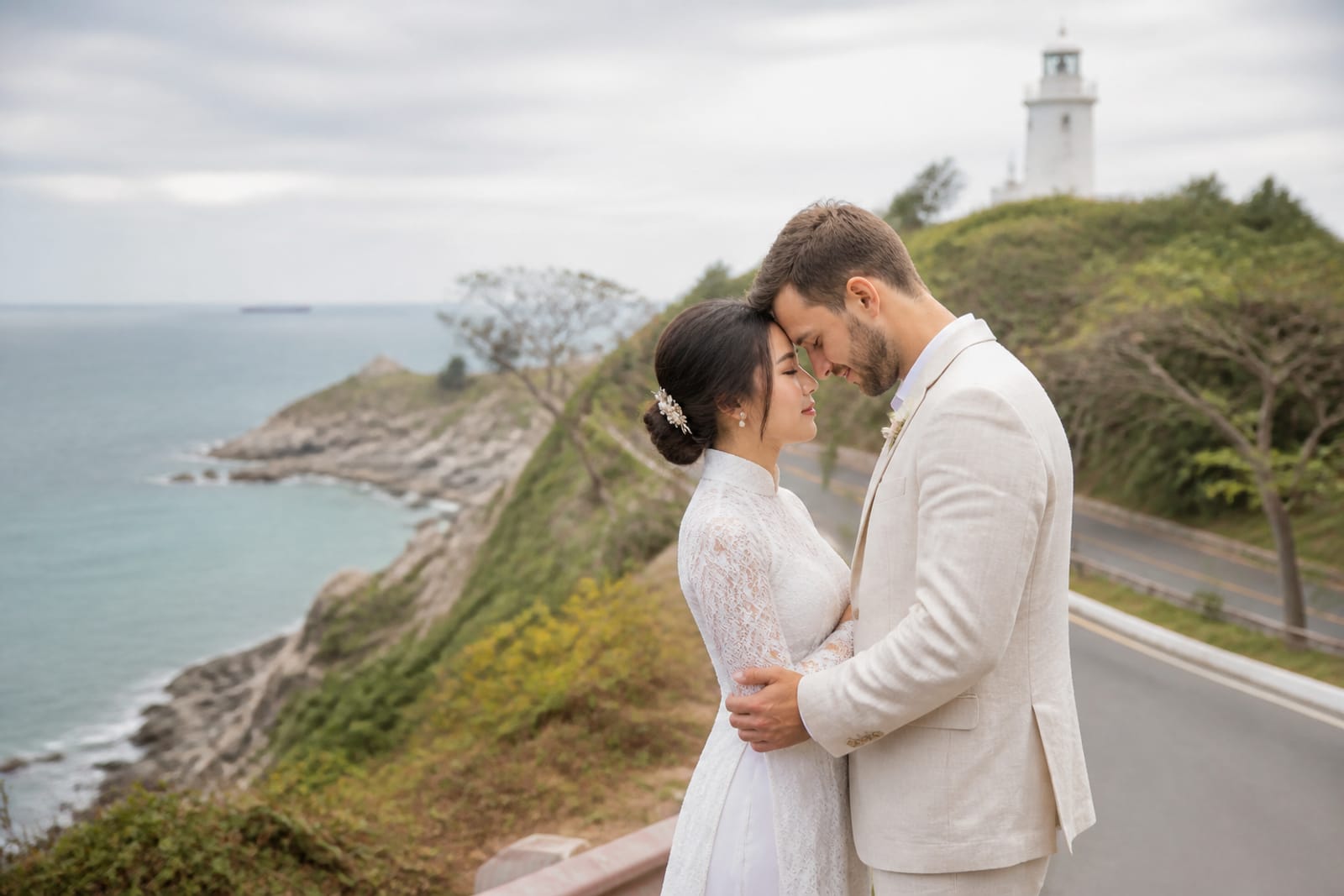
Vung Tau's salt air, wind and sea spray wreak havoc on makeup and hair. A makeup artist who understands coastal conditions uses waterproof eyeshadow, long-wear lip tint and a strong setting spray; hair is pinned low or braided, not loose. Many Vung Tau shoots involve the ao dai dragging across rocks, getting wet, or tangling in sea spray—bring a spare underslip and shoes. The ao dai itself should be rented or brought already, not pressed at a hotel, because it will wrinkle in the car. A stylist who travels to Vung Tau (rather than a hotel makeup artist who has never been to the coast) knows which pins hold the ao dai secure during a rocky walk and whether to tie it up for movement or let it flow for standing portraits.
Cáo Studio operates from Hanoi and Saigon but does not send a stylist to Vung Tau. If you want coordinated makeup, hair and photography, book your hotel's makeup service (confirm they understand coastal wind and spray) and hire your own local Vung Tau photographer. Alternatively, ask a Saigon-based stylist whether they will travel to Vung Tau and what the additional cost factors are (travel time, extra setting spray, backup outfit). For pre-wedding or couple shoots with multiple outfits, factor in 30–45 minutes for a costume change on location—there is no private space at the lighthouse, so a large beach towel or changing tent is essential.
How do you find and vet a Vung Tau photographer?
Vung Tau has no shortage of photographers, but few specialize in ao dai or understand the lighthouse's light and tide. Vet by portfolio: look for images shot at the lighthouse (recognizable beacon, specific rock formations) in early morning or late afternoon light; avoid portfolios with only mid-day, flat-lit images. Ask about their Vung Tau shoot frequency, how many sessions they have done at the lighthouse, and whether they provide a tidal forecast and light plan before the shoot.
Red flags: photographers who promise "sunset" without checking the season's cloud cover or tide height; those who say "flexible timing" (you cannot be flexible with tides); those who do not ask about your ao dai fit or stylist's coastal experience. A strong local photographer will ask: What time of day and season? High or low tide? Do you have a stylist, or shall I recommend one? How many outfits, and where will you change?
Interview at least two. Ask for a WhatsApp chat to discuss your shoot, not a form. Request a quote in writing (confirm whether it includes edited files, delivery timeline, and whether they offer a second photographer if weather is uncertain). Avoid photographers who charge per image or offer unlimited images; instead, hire by day rate or half-day rate and agree on a number of edited finals upfront (typically 40–80 retouched images for a 2–3 hour shoot).
What to check before you book a Vung Tau ao dai shoot.
- Season: Dry Dec–Apr only. May–Nov carries rain and wind risk.
- Time of day: 6–7:30 am (early morning) or 4–5:30 pm (late afternoon). Avoid 10 am–3 pm.
- Tide: Ask your photographer to provide the tidal forecast for your shoot date. Confirm whether high or low tide suits your desired framing.
- Stylist and makeup: Confirm your makeup artist (hotel-based or travel-based) has coastal experience and brings waterproof products.
- Ao dai: Rent or bring already (do not press at the hotel the day of). Have a backup underslip and flat shoes.
- Walking distance: Ask your photographer how long the walk is and whether you can manage it in your ao dai. Bring a beach towel for costume changes.
- Weather backup: Does your photographer offer a rain date? What is their policy if the shoot is cut short by weather or tide?
- Files and timeline: Confirm how many retouched images you receive, the delivery timeline (typically 5–7 days for local vendors), and whether you get high-res files or digital downloads only.
- Access and permits: Vung Tau lighthouse is open to the public; no special permit is needed, but confirm with your photographer whether any new restrictions apply when you book.
---
For a guided, coordinated experience with makeup, hair and photography all on one message, Cáo Studio's team shoots in Hanoi, Ho Chi Minh City and Hoi An. If Vung Tau is your chosen location, hire a local Vung Tau photographer and use this guide to vet them. If you want a studio-coordinated shoot, consider a Saigon ao dai session and add Vung Tau as a separate half-day with a local vendor. Many couples do both: a controlled studio or urban Saigon shoot in the morning, then hire a Vung Tau photographer for an afternoon lighthouse session.
📸 Book on WhatsApp — ao dai photoshoot
---
FAQ
Can Cáo Studio shoot my ao dai wedding photos at Vung Tau lighthouse?
No. Cáo Studio operates from Hanoi and Saigon and does not travel to Vung Tau. We recommend booking a local Vung Tau photographer experienced with the lighthouse's tide and light. Alternatively, book a Saigon ao dai shoot with us and hire a separate local vendor for Vung Tau.
What month is best for Vung Tau lighthouse ao dai photos?
December to April (dry season) offers the clearest skies, lowest rain risk and most predictable tides. May to November brings afternoon downpours and sea spray, making early morning shoots risky. Book during dry season if possible.
Do I need a permit to shoot ao dai at Vung Tau lighthouse?
No special permit is required; the lighthouse foreshore is open to visitors. However, confirm with your photographer whether any access rules have changed. Avoid peak visitor hours (10 am–2 pm) for fewer bystanders in your frames.
How long does a Vung Tau ao dai shoot usually take?
A typical session runs 2–3 hours, including travel from your hotel, a 45–60 minute coastal walk with multiple framing positions, and costume or location changes. Early morning shoots finish by 8 am; late afternoon shoots run 4–6:30 pm. Ask your photographer their preferred session length.
Should I bring my own ao dai to Vung Tau, or rent locally?
Rent an ao dai in Saigon or Vung Tau before your shoot day (confirm the rental shop's delivery/pickup policy). Do not press it at your hotel the morning of the shoot—salt air and humidity will wrinkle it again. Bring a spare underslip and flat shoes under the ao dai for walking rocky terrain safely.
How quickly will I get my edited photos from a Vung Tau photographer?
Most local photographers deliver retouched finals in 5–7 days via digital download or a shared cloud link. Confirm the delivery timeline and file format (high-res JPEG, RAW, or proof images only) when you book. Cáo Studio typically delivers in 48 hours, but we do not shoot Vung Tau.
FAQ
Can Cáo Studio shoot my ao dai wedding photos at Vung Tau lighthouse?
No. Cáo Studio operates from Hanoi and Saigon and does not travel to Vung Tau. We recommend booking a local Vung Tau photographer experienced with the lighthouse's tide and light. Alternatively, book a [Saigon ao dai shoot](/saigon) with us and hire a separate local vendor for Vung Tau.
What month is best for Vung Tau lighthouse ao dai photos?
December to April (dry season) offers the clearest skies, lowest rain risk and most predictable tides. May to November brings afternoon downpours and sea spray, making early morning shoots risky. Book during dry season if possible.
Do I need a permit to shoot ao dai at Vung Tau lighthouse?
No special permit is required; the lighthouse foreshore is open to visitors. However, confirm with your photographer whether any access rules have changed. Avoid peak visitor hours (10 am–2 pm) for fewer bystanders in your frames.
How long does a Vung Tau ao dai shoot usually take?
A typical session runs 2–3 hours, including travel from your hotel, a 45–60 minute coastal walk with multiple framing positions, and costume or location changes. Early morning shoots finish by 8 am; late afternoon shoots run 4–6:30 pm. Ask your photographer their preferred session length.
Should I bring my own ao dai to Vung Tau, or rent locally?
Rent an ao dai in Saigon or Vung Tau before your shoot day (confirm the rental shop's delivery/pickup policy). Do not press it at your hotel the morning of the shoot—salt air and humidity will wrinkle it again. Bring a spare underslip and flat shoes under the ao dai for walking rocky terrain safely.
How quickly will I get my edited photos from a Vung Tau photographer?
Most local photographers deliver retouched finals in 5–7 days via digital download or a shared cloud link. Confirm the delivery timeline and file format (high-res JPEG, RAW, or proof images only) when you book. Cáo Studio typically delivers in 48 hours, but we do not shoot Vung Tau.
Ao dai, makeup, hair and a local photographer in Hanoi or Saigon — one WhatsApp message.