/ao-dai-photoshoot
Ao dai wedding photos Ha Giang buckwheat: guide & local options
Ha Giang buckwheat flower photoshoots happen in a remote northern plateau where autumn blooms (Oct–Nov) create soft, overcast light and wide white landscapes ideal for ao dai portraits. A session means 2–4 hours with a local photographer, starting before dawn for the best angle—mist over fields, mountains. You need transport (rented motorbike or booked driver), an ao dai that suits outdoor wear (cotton, silk blends; layers underneath for cold mornings), and realistic expectations: mountain roads are long, weather unpredictable, and crowds gather weekends. Cáo Studio operates in Hanoi, Ho Chi Minh City and Hoi An; for Ha Giang, you'll book a local photographer with mountain and ao dai experience—ask them to have shot buckwheat fields before, to time sunrise/sunset light, and to know the safe, least-crowded spots within the 2–3 week peak bloom window. ---
Where are Ha Giang's buckwheat flowers, and how do you get there?
Ha Giang province sits 160 km northeast of Hanoi, a 4–6 hour drive through winding mountain roads. Buckwheat fields scatter across the plateau, with the most photographed clusters near Quan Ba town and along the main Ha Giang–Phong Tho road. You reach them by rented motorbike (if experienced), hired driver, or minibus tour. Buckwheat blooms in a narrow window—roughly Oct–Nov, peaking mid-to-late Oct depending on autumn rain timing—so check with locals on arrival for current bloom status. The location is rugged and accessed only by steep, narrow roads; any photoshoot is part of a multi-day trip, not a same-day return from Hanoi.
📸 Book on WhatsApp — ao dai photoshoot
What's the light like at buckwheat fields, and when should you shoot?
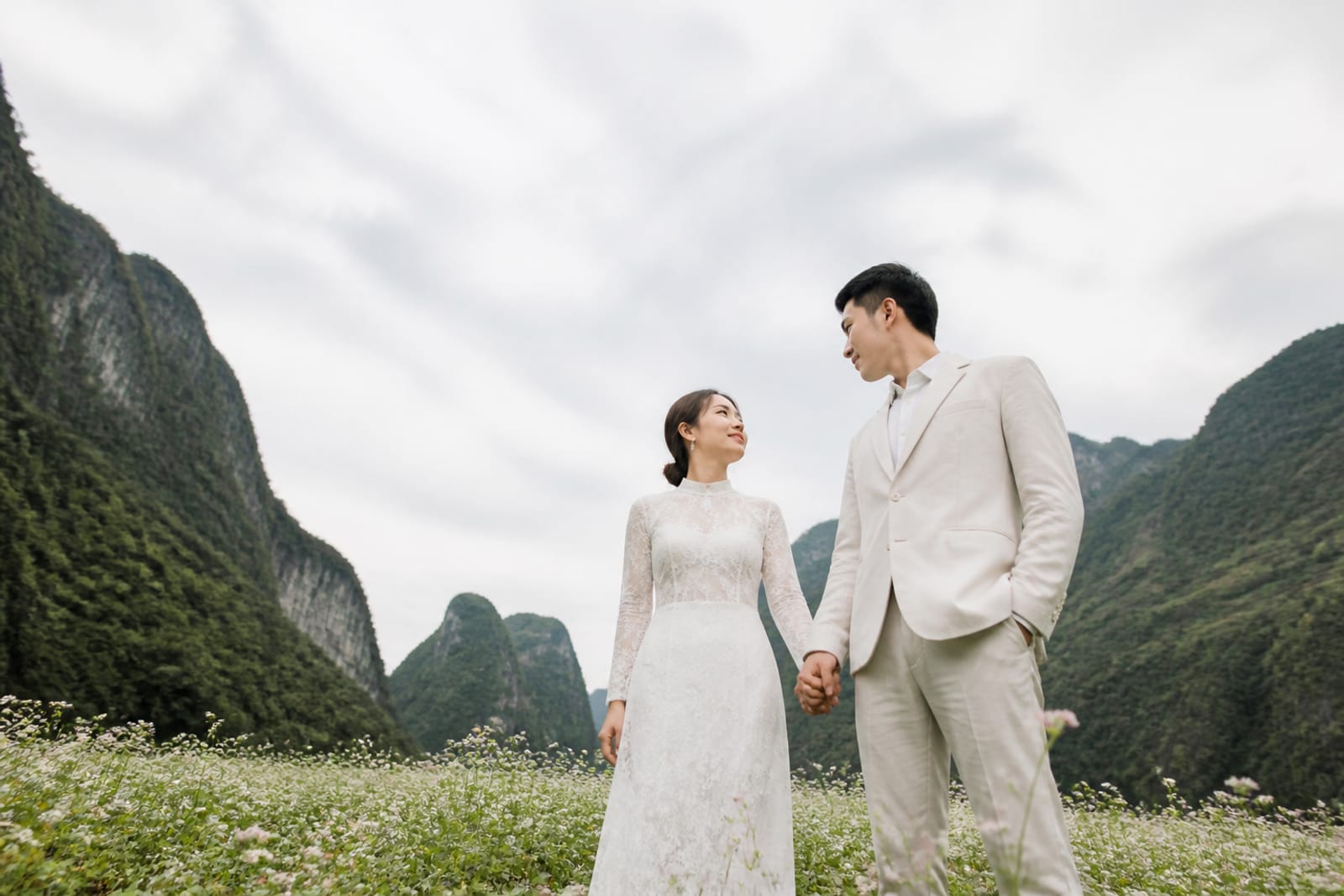
Buckwheat flowers photograph best in soft, diffused light. Overcast mornings (6–7:30 am) produce cool whites with no harsh shadows; the white blooms stay bright without glare. Midday sun flattens color and creates blown highlights—avoid 10 am–3 pm. Late afternoon (4–5:30 pm) works if cloud cover holds; golden hour here is brief and the mountains throw early shadows. Wind is common on the plateau—it moves the flowers and cools the air, so layers under the ao dai matter. Plan to shoot in two 2-hour windows (dawn, late afternoon) rather than one long session; it gives you better light twice and lets your hair and makeup refresh.
Should you wear an ao dai, or choose something practical?
A lightweight ao dai (cotton or silk blend, not heavy brocade) works if fitted to move freely when walking between fields. Wear breathable layers underneath—thermal leggings or a slip dress—for warmth (mornings are 8–12°C) and to support outdoor movement without chafing. Avoid purely decorative ao dai; ask a local seamstress in Hanoi or Ha Giang to adjust the side splits higher if needed. Practical alternative: wear the ao dai for 30–40% of shots (dawn, safer ground), then change to simpler clothes (plain tunic, linen trousers, scarf) for walking and detail frames. Many travelers mix both—ao dai in the fields, casual outfit in the village paths. Your photographer should guide outfit changes based on what they scout on arrival; don't commit to a single outfit for a mountain shoot where light and footing shift fast.
Who should you hire: tour operator, local photographer, or coordinate from Hanoi?
| Option | Best for | Logistics | Drawback |
|---|---|---|---|
| Hanoi photographer (Cáo Studio or similar) | Quality, editorial ao dai shots | Multi-day trip; you travel together; professional gear | High cost for travel time; few Hanoi studios do mountain shoots regularly |
| Local Ha Giang photographer | Budget, local knowledge, flexibility | Book via guesthouse or Facebook; they know bloom timing and safe roads | Variable skill; may lack ao dai or makeup experience; communication in English unpredictable |
| Organized tour + photographer | Convenience, guaranteed transport | Book 1–2 weeks ahead; tour includes guide, driver, photographer | Crowds; fixed 3–4 hour slots; little personal direction |
| Solo (friend, partner's phone) | Free, private, no booking stress | You do the directing; one person in every frame | No professional eye; backgrounds blurry or cluttered; light wasted |
For ao dai photoshoots—editorial, not casual—hire a photographer, not a tour guide. If you're based in Hanoi and have 3+ days, ask Cáo Studio whether mountain shoots fit their scope (many do as part of a northern trip). If not, find a local Ha Giang photographer who has ao dai portfolio work and has shot buckwheat before—ask to see proof (specific photo dates, ao dai details, field backgrounds). Budget-conscious travelers: hire a good local photographer for one morning, capture ao dai and casual outfit in the best light, then explore fields yourself for iPhone snapshots the rest of the day.
How do you prepare outfit, makeup, and hair for a cold, windy mountain shoot?
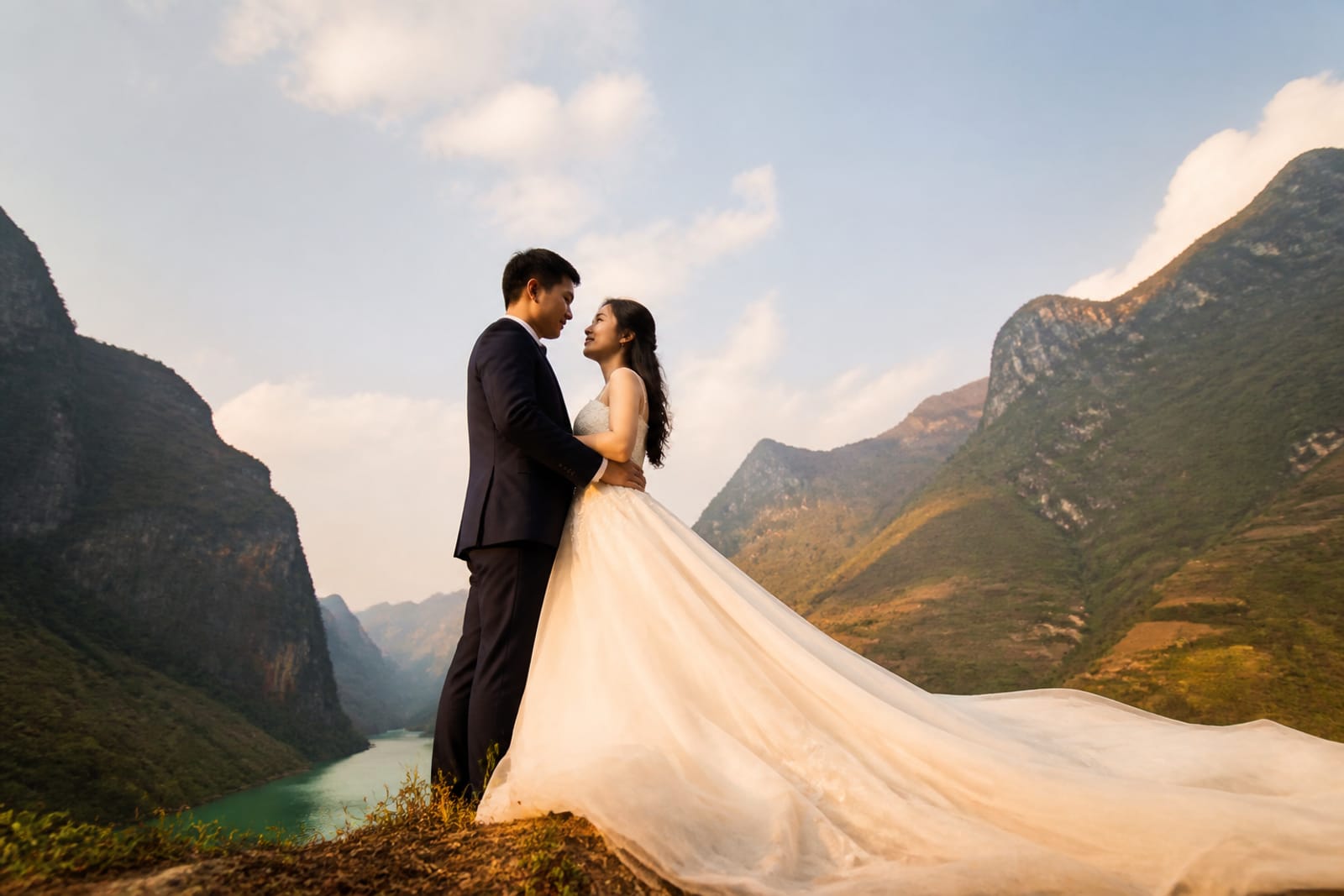
Wind and cold break most travel makeup. Use a long-wear base (primer + full-coverage foundation), waterproof mascara and brow product, and a lip stain instead of gloss. Have the makeup artist or hotel stylist apply in the guesthouse before sunrise—don't rely on roadside touch-ups in a cold van. Hair works best in a loose braid or low bun (wind-resistant) rather than loose waves; use bobby pins and light hairspray, not heavy gel. Bring a wool scarf or shawl (doubles as prop and warmth layer) to drape over the ao dai's shoulders during wait times. Expect wind to tousle hair between frames—your photographer should shoot quickly and plan 15-min intervals for re-pin and re-settle. If hiring a local photographer, ask ahead whether they can coordinate with a local hair/makeup artist or if you should arrange it from Hanoi. Makeup & hair services can advise remotely—WhatsApp photos of your guesthouse and light conditions help them recommend what travels.
What are the real risks, and how do you avoid them?
Weather: Buckwheat blooms require autumn rain to survive; heavy downpour in Oct or Nov can flatten or wash away flowers in 48 hours. Check local weather 3–5 days before your trip; if forecasts show hard rain, reschedule to a different week if possible.
Road conditions: Mountain passes are steep and narrow; motorbike accidents are common. Hire a driver rather than self-driving; it costs more but frees you to scout and rest. Avoid riding motorbikes in rain or after dark.
Bloom timing: The 3-week peak is a window, not a guarantee. Arrive mid-Oct; if bloom is early or late that year, you may find fewer flowers. Book a guesthouse with flexibility to extend stays.
Crowds: Weekends (Fri–Sun) attract tour groups; flower fields are packed 8 am–12 pm. Shoot on weekdays or before 6:30 am. Sunrise solitude is real if you commit to the 5 am start.
Authenticity: Tour operators sometimes show 5-year-old photos or edit blooms in. Ask your photographer or guesthouse owner for recent shots (dated within 2 weeks of your visit); trust their honesty on current conditions more than Instagram.
---
What to check before you book
- Photographer's ao dai experience: Ask to see 5+ ao dai shoot examples (not just street fashion). If they've never shot ao dai, they'll miss the fabric and posture nuances.
- Buckwheat field scout: Confirm they've visited the fields in the current season and have a backup spot if primary field is damaged.
- Bloom confirmation: Message 3–5 days before arrival asking, "Is buckwheat in bloom now?" Don't rely on photos older than 2 weeks.
- Weather plan: Ask what they do if it rains; do they reschedule or offer indoor portraits as a fallback?
- Team: If hiring for ao dai, check whether hair/makeup is included or separate. Some photographers work solo; others coordinate with a stylist.
- Gear: Confirm they bring a tripod (for couple frames with a timer), a weatherproof bag (mountain dust and mist), and backup batteries. Mountain cold drains power fast.
- Post-delivery: Ask turnaround (typically 2–3 weeks for local photographers; Cáo Studio delivers in 48 hours for Hanoi/Saigon shoots). Ask how many edited photos you receive and in what format (digital only, or prints available).
---
Is a Ha Giang shoot right for you?
Buckwheat photography suits couples and individuals who:
- Have 3+ days to spend (1 day travel, 1–2 days shooting and exploring).
- Love editorial, moody outdoor framing over posed studio backdrops.
- Are comfortable with cold mornings and winding roads.
- Want a season-specific moment (Oct–Nov blooms don't repeat; the experience is time-bound).
If you prefer a same-day shoot, controlled studio light, or guaranteed weather, couple photoshoots in Hanoi or Ho Chi Minh City are more reliable. If you're in Ha Giang anyway (road trip, trekking holiday), add one morning ao dai shoot—it pays off. If you're flying in for a 5-day Vietnam trip, prioritize Hoi An ancient town or a Hanoi ao dai photoshoot where light, logistics, and timing are more predictable.
---
FAQ
Can I rent an ao dai in Ha Giang, or should I bring one from Hanoi?
Ha Giang has limited rental shops, mostly basic styles. Rent in Hanoi before you go, or bring one from home. Quality rentals in Hanoi offer fitting and styling advice; mountain shops focus on tourist volume, not fit.
What if buckwheat fields are already past peak bloom when I arrive?
Late-season fields still have scattered flowers and strong green foliage—less dramatic, but still usable for ao dai portraits. Golden-hour light compensates. Chat with your photographer or guesthouse on arrival to adjust the shot list.
Do I need a special visa or permit to photograph in Ha Giang?
No special permit for tourist photography. Respect local property (ask permission before entering private fields). Be aware some remote areas have light military presence; avoid photographing checkpoints or officials.
Should I hire a photographer from Hanoi to travel to Ha Giang, or find someone local?
Local photographers save travel cost and know current conditions. Hanoi photographers (like Cáo Studio if available) bring editorial experience and faster editing. If budget allows, hire local; if you want polished output and don't mind cost, consider a Hanoi-based team for a multi-day trip.
How many photos do I get from a Ha Giang buckwheat shoot?
Local photographers typically deliver 50–80 edited images; turnaround is 2–3 weeks. Confirm the number and format (digital gallery, USB, or prints) before booking.
FAQ
Can I rent an ao dai in Ha Giang, or should I bring one from Hanoi?
Ha Giang has limited rental shops, mostly basic styles. Rent in Hanoi before you go, or bring one from home. Quality rentals in Hanoi offer fitting and styling advice; mountain shops focus on tourist volume, not fit.
What if buckwheat fields are already past peak bloom when I arrive?
Late-season fields still have scattered flowers and strong green foliage—less dramatic, but still usable for ao dai portraits. Golden-hour light compensates. Chat with your photographer or guesthouse on arrival to adjust the shot list.
Do I need a special visa or permit to photograph in Ha Giang?
No special permit for tourist photography. Respect local property (ask permission before entering private fields). Be aware some remote areas have light military presence; avoid photographing checkpoints or officials.
Should I hire a photographer from Hanoi to travel to Ha Giang, or find someone local?
Local photographers save travel cost and know current conditions. Hanoi photographers (like Cáo Studio if available) bring editorial experience and faster editing. If budget allows, hire local; if you want polished output and don't mind cost, consider a Hanoi-based team for a multi-day trip.
How many photos do I get from a Ha Giang buckwheat shoot?
Local photographers typically deliver 50–80 edited images; turnaround is 2–3 weeks. Confirm the number and format (digital gallery, USB, or prints) before booking.
Ao dai, makeup, hair and a local photographer in Hanoi or Saigon — one WhatsApp message.