/pre-wedding-photoshoot
Avoid crowds at Cau Dat tea hills: when & how to shoot
Cau Dat tea hills sit at roughly 1,500 metres elevation near Da Lat, a three-hour drive south of Ho Chi Minh City. The rolling green terraces are most empty before 8 am and after 4 pm; mid-morning to mid-afternoon swarms with day-trippers. Book a photoshoot in the dry season (Dec–Apr) when light is clear and paths are walkable; avoid rainy season (May–Nov) when afternoon downpours and mist make it unpredictable. Work with a photographer experienced in high-altitude landscape shooting—one who times the light and choreographs your movement rather than posing you at viewpoints. Cáo Studio does not operate in Da Lat; this guide helps you plan with a local team or vet one you find.
Cau Dat tea hills are a wedding photoshoot hotspot because the landscape does the emotional work for you—rolling terraces, soft mist at sunrise, emerald rows that frame a couple walking into distance. The trade-off is logistics. Height, distance, crowds and unpredictable weather mean the shoot lives or dies on timing and local expertise. If you're flying to Da Lat for a wedding photoshoot, you need a plan before you book the photographer.
What time of day actually keeps crowds away?
Most day-trip tour buses arrive between 9 am and 2 pm, clustering visitors at the main lookout and the closest tea rows. Early morning (5:30–7:30 am) and late afternoon (4:30–6 pm) are genuinely quiet—you'll see farm workers and maybe one or two other couples. The light at sunrise is soft and directional; by 7 am it hardens. Late afternoon gives you back-lit rows and long shadows, which reads cinematic in photos. Plan your session for one of these windows, not midday, and ask your photographer how they'll position you so the camera avoids busy spots in the frame.
📸 See how our team directs light and movement
Which season gives you the best light and safest paths?
| Season | Best for | Why it works | Walking difficulty |
|---|---|---|---|
| Dec–Feb | Clear, cool, early mist | Dry mornings, crisp light, daytime temps 12–18°C | Paths are walkable; occasional frost early morning |
| Mar–Apr | Warm, clear, long shadows | Dry, light is golden, ground is firm | Easy; peak wildflower bloom by late Apr |
| May–Nov | Lush, moody, rare quiet | Fewer tourists; afternoon rain likely; mist obscures distant rows | High; muddy paths, visibility cuts off frames, showers force retakes |
The dry season (Dec–Apr) is non-negotiable for Cau Dat. Rainy season (May–Nov) brings afternoon downpours that roll in within 15 minutes—your photographer has maybe two hours to work before light dies and paths become slippery. Even mornings are unpredictable; mist can hang until 10 am, flattening the texture of the tea. If you're set on a rainy-season date, understand you're paying for weather risk, and your photographer needs contingency shots indoors or at lower-altitude spots like Da Lat Flower Gardens or Tuyen Lam Lake.
How do you book a photographer who actually knows this location?
Cáo Studio operates in Hanoi, Ho Chi Minh City and Hoi An; for Da Lat, you'll need to hire a local photographer or a Saigon-based team willing to travel. Vet them on three points: (1) they've shot Cau Dat in both dawn and dusk light and can show you the frames; (2) they understand the walk—how steep it is, how far from parking, which terraces allow couples to move naturally; (3) they arrive 30 minutes before your session start to read the light, not at the exact minute. Ask for their strategy: Will they park at the main entrance or hike to a quieter section? Will they shoot wide first to capture the scale, then move closer? Do they have backup indoor locations (Studio Da Lat does lighting; some hotels have gardens)?
If you're based outside Vietnam and want a familiar team managing the entire pre-wedding shoot, including a Da Lat session, consider booking Cáo Studio's pre-wedding package for shoots in Hanoi, Ho Chi Minh City or Hoi An—these are locations where one integrated team (photographer, makeup, hair, styling) can deliver start to finish without coordination gaps.
What outfit choice matters most at high altitude?
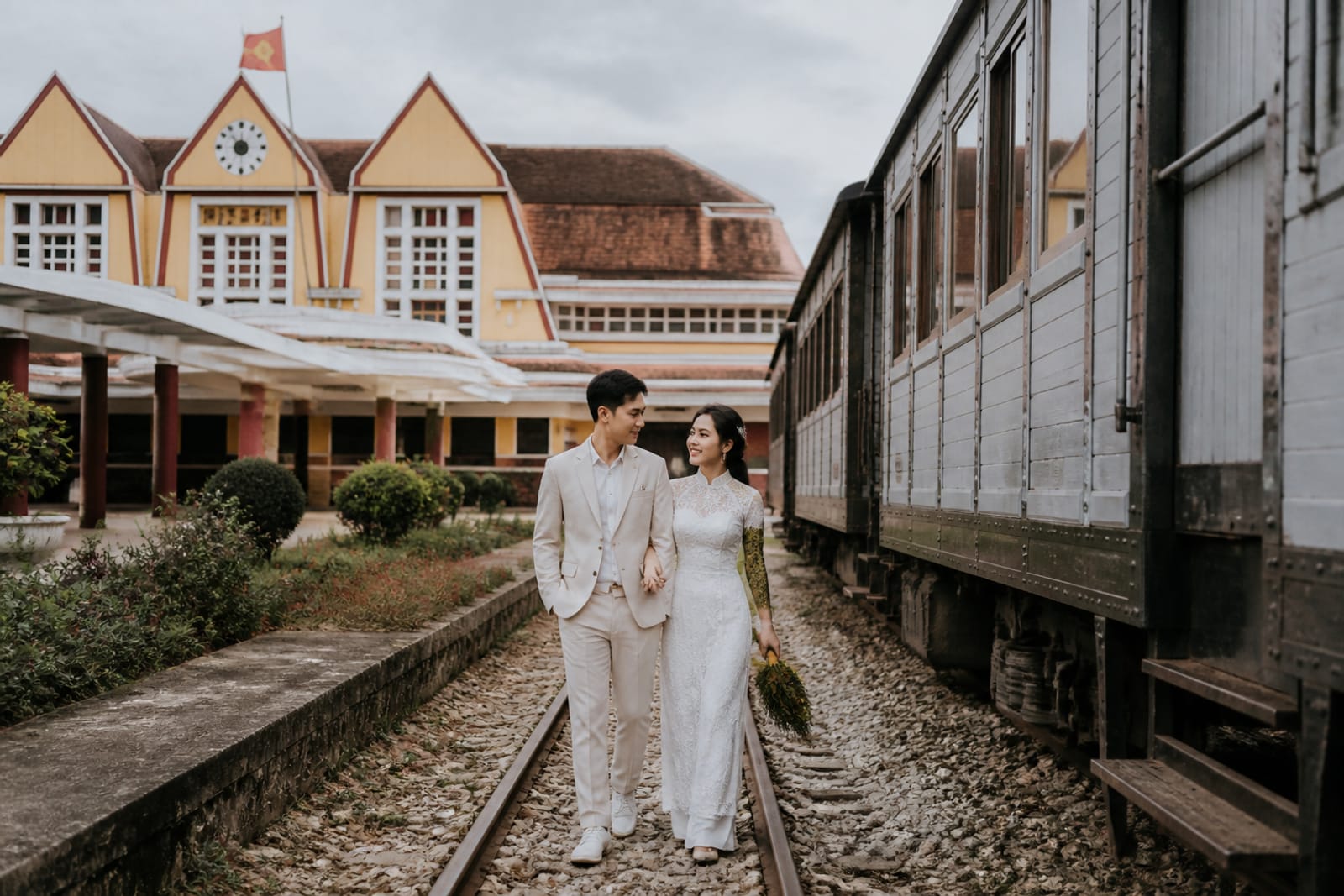
Cau Dat mornings are cool—10–15°C at 5:30 am—so layering is essential. Avoid heavy western wedding dresses with multiple layers; they're hot when you walk uphill to a quiet terrace and create bulk in photos. An áo dài (the traditional Vietnamese tunic) is ideal: it breathes, moves beautifully in wind, and the colour contrasts with green tea. If you're wearing western dress, choose a slip or a sleek gown and bring a cardigan or shawl for early morning; remove it once light warms. Avoid white entirely—it glows unevenly in early light. Cream, blush, rose-gold or deep jewel tones photograph better in soft, directional light. Bring flat or low-heeled shoes; the paths are steep and uneven, and blisters end shoots early.
If you want to wear áo dài for part of the session, ask your photographer whether they offer rental or coordinate with a local rental shop. Cáo Studio's áo dài rental is available in Ho Chi Minh City; for Da Lat, your photographer should have a list.
What weather, permit and logistics should you plan for?
Entry to Cau Dat tea hills requires a permit (issued on the day; check current price on the official Da Lat tourism site—costs are subject to change). Arrive early to secure it before crowds queue. The drive from Da Lat town takes 20–30 minutes on a winding road; if you're coming from Ho Chi Minh City, factor in three hours plus a stop for makeup. A makeup artist should arrive at your hotel by 4:30 am for a 5:30 am shoot departure—tight, but doable. Some couples skip makeup and go natural (works with soft dawn light); if you do wear makeup, waterproof foundation is essential because dew, steam from tea-picking and physical exertion will test it.
Bring water, sunscreen and a light rain jacket (even in dry season, mist can feel damp). Your photographer should carry lens cloths—dew condenses on glass fast at that altitude. If rain threatens (forecast shows showers after 10 am), confirm with your photographer the day before: do you still go, do you move the shoot earlier, or do you reschedule? Flexibility saves wasted travel.
How do cost factors change when you shoot at a remote location?
Booking a photographer for Cau Dat involves travel time, altitude logistics and weather risk. Photographers in Ho Chi Minh City charge differently for a shoot 2 hours away vs. in-city. Early-morning starts add a premium (they're out before dawn). If you're changing outfits (western dress, then áo dài), time extends and energy depletes—you may need to split the session across two days or hire two photographers. Makeup and hair for remote locations may cost more if the artist has to travel or if the hotel is far from Cau Dat.
Cost factors, not prices: confirm with your photographer how they charge for travel time, early morning, number of outfits, and weather contingency. Some include parking and permit in a flat rate; others add them. Ask upfront to avoid friction on the shoot day.
For comparison: if you're open to moving the shoot to Ho Chi Minh City or nearby Hoi An, a one-team shoot with Cáo Studio simplifies logistics and removes travel uncertainty—the team manages light, makeup, styling and frames all at once.
What to check before you book a Da Lat photographer.
- Portfolio: five or more Cau Dat shoots (dawn and afternoon); ask to see the same spot shot in two seasons.
- Timeline: confirm session duration, number of locations, outfit changes and delivery (edited files, video, timeline).
- Backup plan: what happens if it rains, mist blocks light or you feel unwell? Are there refunds, rescheduling or alternative indoor locations?
- Support: do they send a detailed pre-shoot brief (what to bring, when to arrive, where to park, what to wear)? Do they stay in touch by WhatsApp the day before?
- Makeup coordination: if you're hiring a makeup artist, does the photographer have a trusted contact, or do you source separately and brief both teams on timing?
FAQ
Can I avoid crowds at Cau Dat if I shoot in rainy season (June–September)?
Rainy season has fewer tourists, but afternoon downpours force early finishes and mist flattens texture. Paths become muddy. Your photographer loses light by 4:30 pm. Dry season (Dec–Apr) is worth the wait for reliable framing.
What's the parking and walk situation at Cau Dat?
Parking is near the main entrance. Quieter terraces require a 10–15 minute uphill walk; wear flat shoes. Your photographer should scout the route beforehand to judge difficulty and plan shot locations.
Should I hire a local Da Lat photographer or a Saigon team?
Local photographers know the light and terrain. Saigon teams (like Cáo Studio) bring consistent style but need travel time and cost factoring. Choose based on comfort with local coordination vs. familiar team familiarity.
Do I need a permit to shoot at Cau Dat for wedding photos?
Yes, entry permits are required. Check the official Da Lat tourism site for current pricing and rules. Your photographer should handle the permit on arrival day, before crowds queue.
Can I reschedule if weather is poor on shoot day?
Confirm the rescheduling policy with your photographer in the booking contract. Early-morning forecasts help—if rain is predicted after 10 am, move the shoot earlier. If forecasts show all-day rain, reschedule to the next clear day.
What if I want a professional makeup artist for early-morning light?
Arrange a makeup artist the night before (hotel or home visit). Budget extra time—a 5:30 am shoot needs makeup arrival by 4:15 am. Waterproof products are essential; dawn light and dew test coverage fast.
FAQ
Can I avoid crowds at Cau Dat if I shoot in rainy season (June–September)?
Rainy season has fewer tourists, but afternoon downpours force early finishes and mist flattens texture. Paths become muddy. Your photographer loses light by 4:30 pm. Dry season (Dec–Apr) is worth the wait for reliable framing.
What's the parking and walk situation at Cau Dat?
Parking is near the main entrance. Quieter terraces require a 10–15 minute uphill walk; wear flat shoes. Your photographer should scout the route beforehand to judge difficulty and plan shot locations.
Should I hire a local Da Lat photographer or a Saigon team?
Local photographers know the light and terrain. Saigon teams (like Cáo Studio) bring consistent style but need travel time and cost factoring. Choose based on comfort with local coordination vs. familiar team familiarity.
Do I need a permit to shoot at Cau Dat for wedding photos?
Yes, entry permits are required. Check the official Da Lat tourism site for current pricing and rules. Your photographer should handle the permit on arrival day, before crowds queue.
Can I reschedule if weather is poor on shoot day?
Confirm the rescheduling policy with your photographer in the booking contract. Early-morning forecasts help—if rain is predicted after 10 am, move the shoot earlier. If forecasts show all-day rain, reschedule to the next clear day.
What if I want a professional makeup artist for early-morning light?
Arrange a makeup artist the night before (hotel or home visit). Budget extra time—a 5:30 am shoot needs makeup arrival by 4:15 am. Waterproof products are essential; dawn light and dew test coverage fast.
Ao dai, makeup, hair and a local photographer in Hanoi or Saigon — one WhatsApp message.