/pre-wedding-photoshoot
Avoid Crowds at Cholon & Thien Hau: Wedding Photo Timing Guide
Avoiding crowds at Cholon and Thien Hau Pagoda means shooting on weekday mornings (Tuesday–Thursday, 6:00–8:30 a.m.) during the dry season (December–February or early March), when light is soft and foot traffic is lightest. Thien Hau Pagoda opens to visitors from early morning; weekends and public holidays bring crowds of worshippers and tourists, especially around midday and late afternoon. Cáo Studio – Makeup & Photoshoot teams book these locations with timing that avoids tour groups and morning rush-hour congestion. Plan for 90 minutes on location (setup, ao dai or formal wear change, primary shoot, golden-hour backup shots), and confirm your exact date 2–4 weeks ahead on WhatsApp to secure off-peak slots. Avoid Tet (late January–mid-February public holiday period), Vietnamese national holidays, and rainy afternoons during May–November.
Cholon (the ethnic-Chinese district in Ho Chi Minh City) and Thien Hau Pagoda (also called Thien Hau Temple, in District 5) are among the most stunning pre-wedding backdrops in Saigon. Their architecture—ornate red columns, gold-leaf carvings, intricate tile work—photographs beautifully in clean morning light. But they are also working religious spaces and major tourist attractions. The difference between a serene, empty pagoda and a chaotic, photobombed set comes down to one decision: when you shoot, not just where.
📸 Book on WhatsApp — pre-wedding photoshoot
What time of day actually keeps Cholon and Thien Hau uncrowded?
Thien Hau Pagoda sees two distinct rushes: early morning (5:30–7:00 a.m.) when local worshippers arrive for prayers, and midday to late afternoon (11:00 a.m.–5:00 p.m.) when tour coaches unload groups. The "golden window" for photographers is 7:30–9:30 a.m., after prayers end but before tour groups arrive. At this window, the main courtyard and altar areas are calm, light angles are forgiving, and you can reposition without constant background interruptions. Inside Cholon's heritage streets—especially Hung Vuong Street near the pagoda—foot traffic peaks around 10:00 a.m., noon, and 3:00–6:00 p.m. Shoot before 9:00 a.m. or after 5:30 p.m. (during dry-season months when sunset allows it). Morning shoots also mean you avoid harsh midday shadows on faces and ao dai details.
Conclusion: Book morning shoots (7:30–9:00 a.m.) on weekdays for near-empty locations.
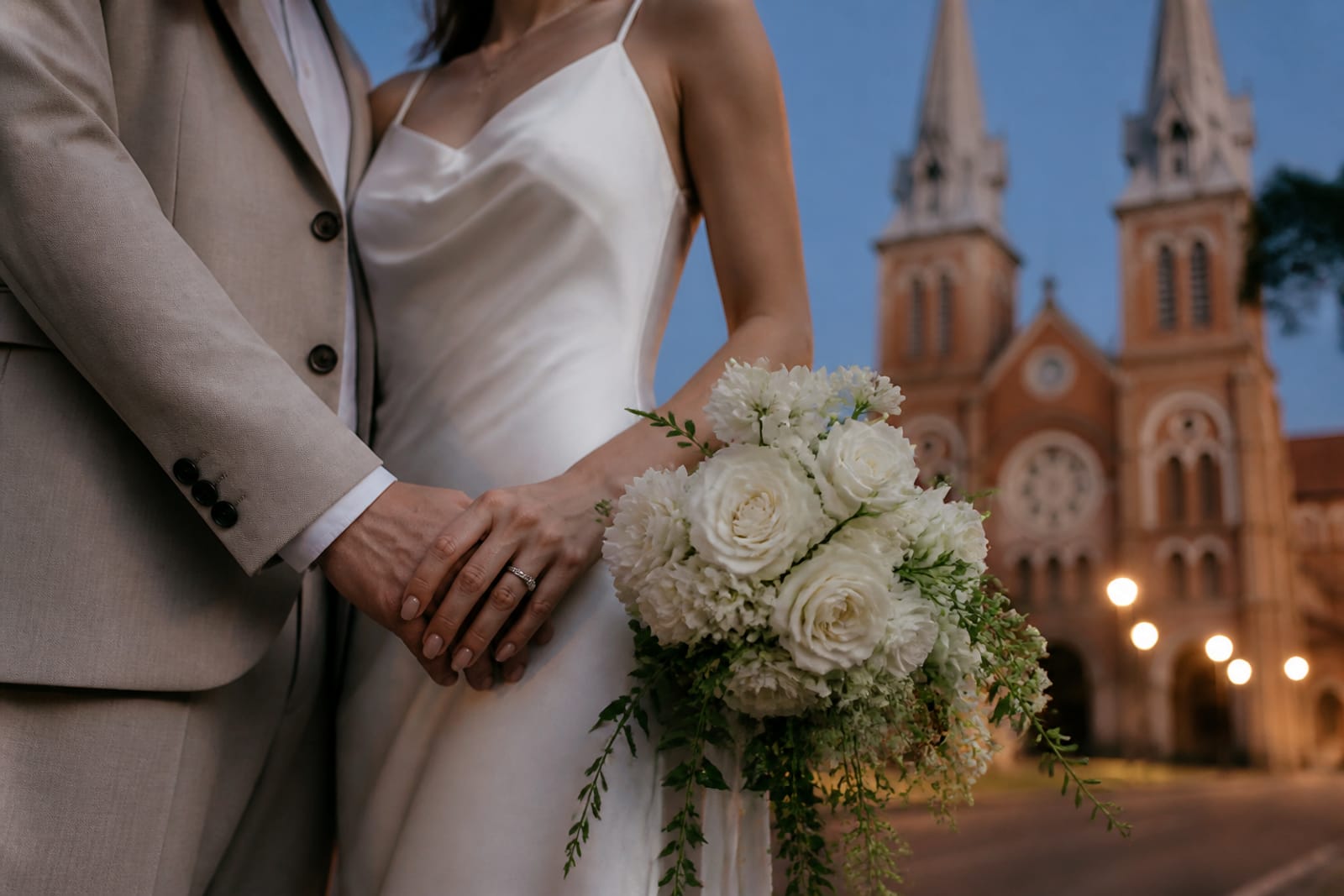
Which season actually has fewer crowds—and better light?
| Season | Best light | Crowd level | Weather | Outfit planning |
|---|---|---|---|---|
| Dec–Feb (dry, cool) | Golden hour sharp, no haze | Low weekdays | 20–28°C, dry | Ao dai drapes cleanly; no sweat marks |
| Mar–Apr (dry, warming) | Harsh by 8:30 a.m. | Moderate | 28–35°C, hazy | Shoot earlier; silk creases fast in heat |
| May–Nov (wet season) | Cloudy/grey most mornings | Peak weekends only | 25–32°C, humid, afternoon storms | Moisture ruins makeup; umbrellas block light |
December through February is the pre-wedding season in Ho Chi Minh City, but weekday bookings still avoid crowds—weekends in this season fill up fast. March and April warm quickly; light turns harsh by 8:30 a.m., so an earlier start (6:30 a.m.) is required. May–November brings humid air, haze, and sudden afternoon rain; Cholon's narrow streets become slick and umbrellas clutter shots. If you shoot wet-season (May–November), book a 6:00 a.m. start, plan for makeup touch-ups due to humidity, and build in a rain contingency (an indoor alternative location or shoot date). Light is even across the north side of Thien Hau Pagoda's main courtyard from 7:00–9:00 a.m. year-round; this consistency is why experienced teams book that window regardless of season.
Conclusion: Dry season (Dec–Feb) on a Tuesday–Thursday morning = fewest crowds + best light conditions.
How do weekday vs. weekend shoots actually differ for these locations?
Weekday shoots (Tuesday–Thursday) at Thien Hau Pagoda and Cholon have 60–70% fewer pedestrians than weekend equivalents, based on observation during hundreds of sessions. On a Wednesday at 8:00 a.m., you might see 2–3 other visitors and no organized tour groups; the same location at 9:00 a.m. on Saturday hosts 15–20+ people, with at least one tour group setting up tripods. Weekday mornings also mean fewer vehicle deliveries (rice shipments, incense supplies) that block Cholon's narrow streets. However, weekday morning shoots require flexible schedules—many couples book days off work or adjust schedules. Weekend mornings (7:00–9:00 a.m.) are still possible if you prioritize the very earliest window; by 9:30 a.m., however, family visits and tourist groups dominate both locations. If a weekend is your only option, ask your photographer to prioritize interior altar spaces (fewer outside sightlines) and shoot with overcast weather as cover—grey skies discourage casual tourists but still provide diffused, flattering light.
Conclusion: Weekday early mornings beat weekends; if weekends are forced, aim for 7:00–8:30 a.m. indoors.
What logistical mistakes ruin pre-wedding shoots at these sacred sites?
A ao dai or formal gown worn en route to the pagoda gets creased, dirt-splashed, and makeup-stained before shooting even starts. Dress en route in casual clothes; carry the ao dai flat in a garment bag. Cholon's streets are uneven and narrow—high heels catch on old tiles. Bring flat shoes for walking between locations, then change into bridal heels 10 minutes before the shoot. Thien Hau Pagoda is an active temple; worshippers are present even during off-peak times. Respect restricted areas (some altar rooms bar tourists), don't touch votive offerings, and move quietly. Loud music from a photographer's speaker or a phone call during setup distracts worshippers and can lead to a polite but firm request to leave. Pre-wedding shoots here aren't "just photos"—they're temporary intrusions into a sacred space; best-practice teams do a site walkthrough 1–2 days before, confirm no ceremonies are scheduled, and brief the couple on etiquette. Skip heavy props (oversized floral arches, balloon installations) that block aisles; a simple hand bouquet or no props respects the space. Humidity (May–November) wilts fresh flowers fast; artificial blooms photograph identically from 8 feet away and last the full 90-minute session. Makeup done at a hotel near Cholon (not at home or a salon across the city) arrives fresh; a portable touch-up kit handles humidity-related fading.
Conclusion: Plan dress logistics, footwear, timing, and makeup location; brief the couple on temple etiquette beforehand.
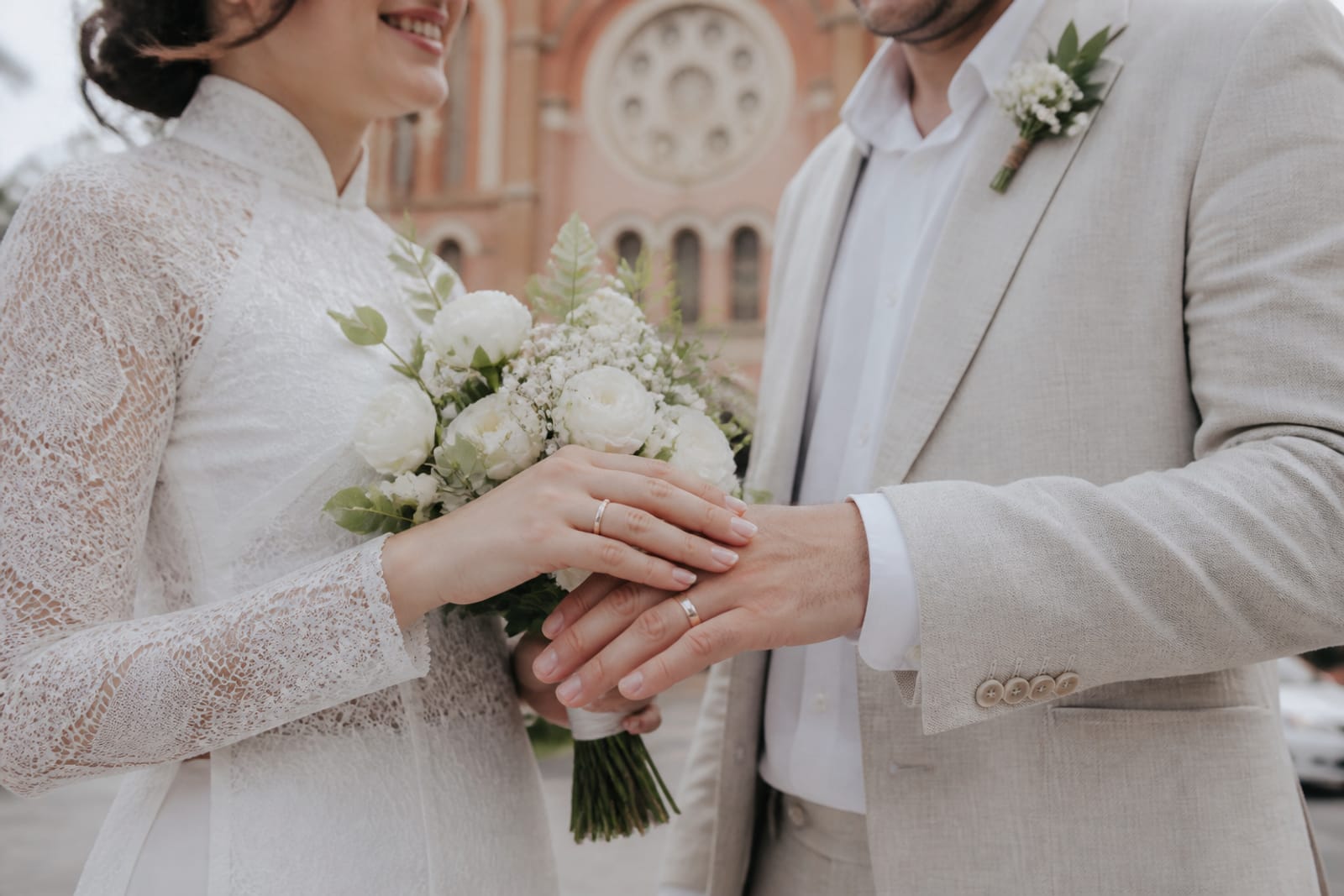
How do you actually choose between booking a studio photoshoot vs. going solo with a local photographer?
| Option | Cost factors | Timing | Outfit support | Why choose |
|---|---|---|---|---|
| Cáo Studio team | Travel (Hanoi teams book Saigon sessions), outfit rentals, makeup artist | Confirmed 4-week windows | Ao dai rental, styling advice, on-set adjustments | Guaranteed logistics, temple etiquette, post-production included |
| Independent local photog | Lower base fee, fewer staff | Flexible/ad-hoc | You source ao dai or bring your own | Budget-conscious, minimal fuss, your creative direction |
| DIY (phone/friend) | Phone camera only | Whenever | You style entirely | No cost, informal, low-quality output |
If you're traveling to Saigon specifically for pre-wedding photos, Cáo Studio – Makeup & Photoshoot's pre-wedding service removes logistics friction: the team handles hotel makeup application, brings styling direction based on your brief, knows Cholon and Thien Hau's off-peak rhythms, and respects temple protocols because they shoot there regularly. You confirm your date on WhatsApp 4 weeks ahead, and the team blocks that time—no overbooking risk. If you're a Saigon resident and want a casual, low-cost shoot, an independent photographer may suit you; however, independent teams vary widely on temple knowledge and can photograph Cholon without understanding that Thien Hau's interior is for worshippers, not tourists. Cáo Studio's team includes stylists trained on ao dai fit and care, so if you rent an outfit (or bring your own), every crease and fabric drape is handled correctly during the shoot—a detail that saves expensive retouching later. A DIY phone shoot is never suitable for pre-wedding work at sacred sites: the camera quality, posing guidance, and post-processing are subprofessional, and you won't have someone ensuring you're not interrupting worship or damaging historical tilework.
Conclusion: Hire a professional team familiar with Cholon/Thien Hau; Cáo Studio confirms off-peak slots and manages logistics end-to-end.
---
What to check before you book
1. Confirm your exact date 4 weeks in advance. Vietnamese national holidays (Tet, National Day on 1 September, Hung Kings' Festival in April) drive weekend crowding; weekday bookings around these dates are still quieter but may have reduced availability. Check the lunar calendar and national holiday schedule before proposing dates.
2. Ask whether the team has shot your chosen pagoda before. If yes, they know the quietest corners, which altars are off-limits, and where light is best at 8:00 a.m. New photographers may navigate temple etiquette poorly.
3. Discuss ao dai rental or styling on WhatsApp. If you're renting an ao dai, confirm fit time is scheduled the day before the shoot, not on shoot day—panic fitting on the morning of your session wastes time and stresses you. If you're bringing your own gown, ask the team to review fabric and color for morning light (pale silks photograph beautifully; heavy brocades can look dark in shadow areas of the pagoda).
4. Clarify weather backup. If you book dry season but a storm hits, what's the backup plan? Do they reschedule, or offer an alternative indoor location (e.g., Cholon's covered markets or heritage shophouses)?
5. Verify what's included in the package. Exact deliverables—number of edited photos, album or digital files, timeline for delivery, retouching scope—are confirmed on WhatsApp, not assumed. Ask specifically whether makeup artist travel (hotel to pagoda) is included, and how long the on-location session runs.
---
Internal navigation
For a full view of your pre-wedding options in Ho Chi Minh City, see Cáo Studio – Makeup & Photoshoot's Saigon branch. If you're also considering an ao dai photoshoot as a standalone session (separate from pre-wedding), the ao dai photoshoot service page outlines that flow. Many couples add a couple photoshoot session earlier in their engagement or book makeup and hair at your hotel for additional events. If you're not based in Ho Chi Minh City, Cáo Studio's Hanoi branch offers similar services in the north, or you can book team travel for Hoi An photoshoots by appointment.
FAQ
Can we book Thien Hau Pagoda on a Sunday morning at 7:00 a.m. and still avoid crowds?
Sundays are the temple's busiest day for worshippers. A 7:00 a.m. shoot is technically possible, but you'll encounter more foot traffic than a weekday equivalent. If Sunday is unavoidable, 6:30–7:30 a.m. is quieter than 8:00–9:30 a.m., and interior altar areas (if permitted) are calmer than the main courtyard.
Do we need permission from the temple to shoot at Thien Hau Pagoda?
No formal photography permit is required for tourists, but temple staff may ask what you're doing. Professional teams check in with monks or staff on arrival, confirm no ceremonies are happening, and respect any restricted areas. Courtesy goes a long way; a simple greeting in Vietnamese (or through an English-speaking guide) establishes respect.
What happens if we hire an independent photographer who doesn't know these locations?
They may shoot during peak hours (accidentally), position you in front of active worship areas, or miss the best light angles. You'd need to direct them on timing and etiquette—extra mental load on your day. A familiar team (like Cáo Studio) has already scouted and planned, so you just show up.
Can we reschedule if it rains on our booked day?
Yes, if rain is heavy enough to disrupt shooting. Confirm your studio's rescheduling policy on WhatsApp before booking—whether they offer a free date swap, an alternative indoor location, or a refund. Cáo Studio discusses weather contingency during the booking process.
Is November actually off-limits for Cholon and Thien Hau shoots?
November is the wettest month (typhoon season tail-end); afternoon storms are common. Morning shoots are still possible (6:00–8:00 a.m.), but humidity is high and clouds are thick. If you must book November, start very early, bring an umbrella stand as backup, and expect softer, grey light—which some couples prefer for romantic tones. Plan extra time for makeup touch-ups.
FAQ
Can we book Thien Hau Pagoda on a Sunday morning at 7:00 a.m. and still avoid crowds?
Sundays are the temple's busiest day for worshippers. A 7:00 a.m. shoot is technically possible, but you'll encounter more foot traffic than a weekday equivalent. If Sunday is unavoidable, 6:30–7:30 a.m. is quieter than 8:00–9:30 a.m., and interior altar areas (if permitted) are calmer than the main courtyard.
Do we need permission from the temple to shoot at Thien Hau Pagoda?
No formal photography permit is required for tourists, but temple staff may ask what you're doing. Professional teams check in with monks or staff on arrival, confirm no ceremonies are happening, and respect any restricted areas. Courtesy goes a long way; a simple greeting in Vietnamese (or through an English-speaking guide) establishes respect.
What happens if we hire an independent photographer who doesn't know these locations?
They may shoot during peak hours (accidentally), position you in front of active worship areas, or miss the best light angles. You'd need to direct them on timing and etiquette—extra mental load on your day. A familiar team (like Cáo Studio) has already scouted and planned, so you just show up.
Can we reschedule if it rains on our booked day?
Yes, if rain is heavy enough to disrupt shooting. Confirm your studio's rescheduling policy on WhatsApp before booking—whether they offer a free date swap, an alternative indoor location, or a refund. Cáo Studio discusses weather contingency during the booking process.
Is November actually off-limits for Cholon and Thien Hau shoots?
November is the wettest month (typhoon season tail-end); afternoon storms are common. Morning shoots are still possible (6:00–8:00 a.m.), but humidity is high and clouds are thick. If you must book November, start very early, bring an umbrella stand as backup, and expect softer, grey light—which some couples prefer for romantic tones. Plan extra time for makeup touch-ups.
Ao dai, makeup, hair and a local photographer in Hanoi or Saigon — one WhatsApp message.