/pre-wedding-photoshoot
Avoid Crowds at Fansipan Summit: Wedding Photo Timing Guide
Fansipan summit (3,143 m) draws tourists year-round, with crowds densest 8:30 am–12 pm and on Saturdays–Sundays. To avoid them, book a dawn cable-car slot (first car leaves ~6:30 am, check locally) and shoot within 90 minutes of arrival, before tour groups. Weather shifts fast—altitude brings cold, wind and sudden cloud cover that kills light. Late-Sep–mid-Oct offers gold foliage but clear skies only early. May–Aug is green and warm but saturated with rain. A local Hanoi-based team like Cáo Studio coordinates permits, timing and descent; solo couples risk missing the weather window or getting stranded by afternoon crowds. Confirm cable-car availability weeks ahead, hire a photographer familiar with Fansipan's microclimates, and bring a lightweight backup outfit (wind shreds fabric). ---
What time of day gives you the clearest light at Fansipan for wedding photos?
Dawn and early morning (5:30–8:00 am) deliver the best light: soft side-glow from the east, low contrast, and zero haze. By 9 am, tour buses arrive, and by 11 am, clouds roll in thick. Afternoon descents often face wind-driven mist that erases the view. If you're hiking up (not taking the cable car), start 4 am to reach summit by 7:30 am, but this demands fitness and two days of rest beforehand. Cable car is faster: 15 minutes to the top, zero exertion, maximum light window. A local photographer knows which car slot opens the light sweet spot; Cáo Studio's Hanoi team times shoots around cable-car schedules and sunrise angles specific to your wedding date.
📸 Book on WhatsApp — pre-wedding photoshoot
Which season actually works best for Fansipan wedding photos?
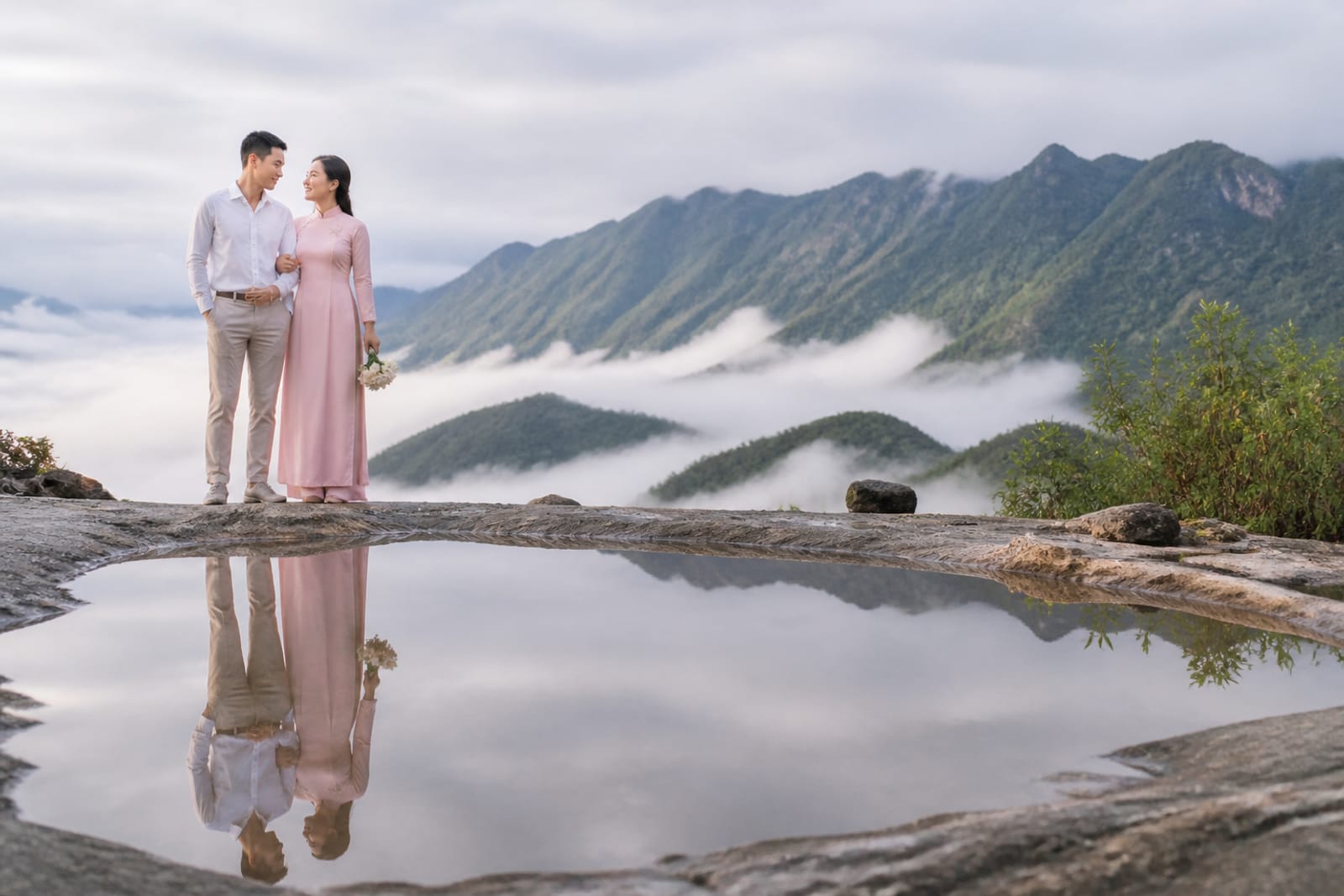
Late September through mid-October is the gold window: terraces glow amber, skies stay clearer longer, and the trek feels crisp rather than punishing. This period sits between summer rain (May–Sep) and winter fog (Dec–Feb). March–May looks green but crowds swell during Easter and school breaks. June–August is hot, humid, and downpours are frequent—afternoon clouds choke the summit by noon. Winter (Dec–Feb) is cold (can near 0°C), fog dominates, and snow occasionally blocks the trail. Spring wildflowers (Mar–Apr) draw wedding parties, so early slots fill months ahead. Book your preferred time 3–4 months in advance if you're targeting Sep–Oct.
Can you shoot a full wedding session at Fansipan without hiring a guide?
Solo couples can reach the summit via cable car and pose for selfies or hire a local guide to shoot handheld, but you'll face three logistics traps. First, permits: a formal photoshoot (more than casual tourist photos) may require coordination with Fansipan tourism office—unclear rules change seasonally. Second, timing: you have 90 minutes max before crowds peak and weather breaks; an experienced photographer knows exactly which outfits, angles and movement sequences work in that window. Third, descent: after the shoot, you're still 90 minutes by cable car from town, tired, and you can't re-shoot if light failed. A Hanoi-based pre-wedding team like Cáo Studio handles permits in advance, scouts the exact light window for your date, and books cable-car slots as part of the package—removing the guesswork and risk of wasted travel.
What should you wear to stay warm and look cinematic on a cold summit?
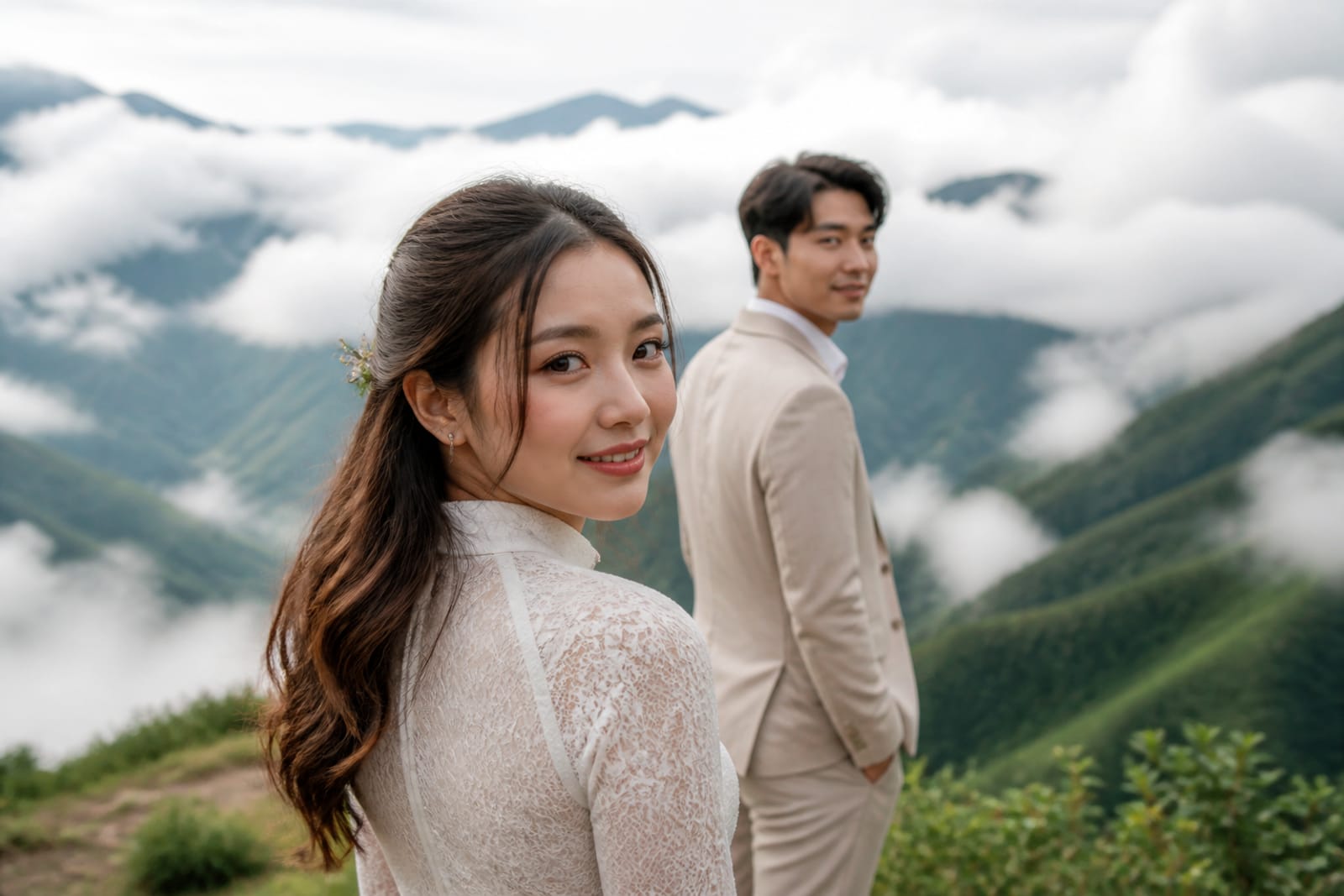
Fansipan's wind can gust 30+ km/h and temperature drops 6–7°C per 1,000 m of altitude. A heavy white or cream wedding dress will billow and fray in wind; a lightweight ao dai (silk or cotton-linen blend) moves better and photographs sharper in motion. Layer underneath: thermal leggings, a slim sweater, and bring a tailored shawl or faux-fur stole that anchors the look without bulk. Groom needs a fitted suit (wool or high-thread cotton) with a vest to keep warmth and frame shape—baggy layers read as shapeless on film. Shoes must grip: the stone platform is wet and slick; opt for leather soles treated with grip paste or hiking boots dyed to match the outfit. Bring two outfits: one for arrival (heavier layer, protected hair), one for the clearest light window (minimal fabric, pins tight). A makeup artist who's shot Fansipan before knows how wind and altitude affect makeup longevity and brings waterproof formulas and setting sprays rated for wind exposure.
How many people can you safely bring to avoid looking crowded in your shots?
Fansipan's summit platform (~2,000 m²) fills quickly once tour groups arrive. If you bring a 5–10 person wedding party, you're competing for sight lines and frames will show background chaos after 9 am. Best practice: keep your on-camera party to 3–4 (bride, groom, one or two close family) and shoot them moving (walking, looking at each other, standing at the edge) rather than static poses. A second-unit videographer can capture candid moments while the lead photographer locks the primary shots. If you want extended family photos, shoot them in segments: immediate couple at sunrise, then wider group at 8:15 am (before peak tour arrivals), then descent candids. A pre-wedding photoshoot team with experience at Fansipan knows the timing rhythms and will sequence your party to stay ahead of the crowd curve.
---
How to choose: Hanoi-based team vs. hiring a local guide photographer
| Option | Best for | Light & timing control | Logistics & permits | Why it works |
|---|---|---|---|---|
| Hanoi team (Cáo Studio) | Full-day itinerary, multiple outfits, permit coordination, polished edits | Scouts your date 2–3 weeks ahead, books cable-car slots in advance | Manages permits, descent timing, hotel coordination | One message: hair, makeup, camera, descent logistics all in-house. |
| Local Fansipan guide + phone photographer | Quick sunrise summit shot, tight budget, independent spirit | Relies on guide's experience, less scheduling control | No formal permit coordination, higher risk if weather shifts | Faster booking, lower upfront cost, but weather backup is weak. |
| Solo couple (self-shot or friend) | Intimate, no crew, maximum privacy | Unpredictable—depends on phone camera, no pro lighting knowledge | High risk: unclear rules, no permit filing, crowd conflicts possible | Lowest logistical load, highest photo-quality risk; storm/crowd can wreck the day. |
---
What to check before booking a Fansipan wedding photoshoot
- Permit status: Ask your photographer if they've filed formal permission with Fansipan tourism or if the shoot falls under "tourist photography" (unregulated). Confirm in writing before paying a deposit.
- Cable-car booking: Ensure the photographer has relationships with the cable-car operator to reserve first-light slots. Don't rely on day-of availability; peak season slots book out weeks early.
- Weather backup plan: What happens if clouds roll in at 7:30 am and visibility drops to 20 meters? Does the photographer re-shoot free on a clear day, or keep edited frames shot in fog? Get this in writing.
- Outfit fit and wind testing: Ask if the photographer has tested your dress / groom outfit in wind conditions. A silk train or heavy veil can shred or wrap around the body. Lightweight, fitted silhouettes work better.
- Makeup and hair longevity: Confirm the makeup artist uses products rated for altitude, wind and cold. Powder and setting spray rated for extreme conditions differ from everyday formulas.
- Edit timeline and style: Fansipan shoots often have tricky lighting (harsh sun, extreme contrast, or flat cloud cover). Ask for a sample edited Fansipan photo to see how the photographer handles these tones and whether the style matches your vision.
- Descent and fatigue: Will the photographer cover the descent shoot? Many couples want candid moments during the cable-car ride down or at the base. Clarify what's included and whether you'll have energy left for a second location.
Cáo Studio's pre-wedding photoshoot service covers Hanoi-based couples and those traveling to northern Vietnam. For a Fansipan session, contact us on WhatsApp to discuss permit logistics, cable-car timing for your specific wedding date, outfit fit-checks, and descent options. We'll also outline edit delivery timing (typically 2–3 weeks for Fansipan shoots due to the technical editing required in that light).
---
Real risks and how to avoid them
Crowds block frames after 9:30 am. Tour buses arrive 8:15 am; by 9:30 am, the platform holds 300+ people. Solution: Cable car by 6:45 am, shoot by 8:30 am, descend by 8:45 am. One team (photographer + makeup artist + groom prep) moves faster than juggling three vendors.
Wind shreds fabric and shifts makeup. Gusts at the platform average 15–25 km/h and spike to 40+. Solution: Lightweight, fitted outfits (avoid trains, veils, or loose sleeves). Makeup artist brings travel-size setting spray and powder in wind-proof containers.
Cloud cover kills light by 10 am on rainy-season days. Late June–August and Sep–Dec see afternoon clouds roll in mid-morning. Solution: Confirm weather forecast 48 hours before and schedule descent at first sign of cloud thickening. A makeup & hair artist on-site can refresh between quick outfit changes if you need to pivot to a lower-altitude secondary location.
Cable-car maintenance or weather closures happen 3–5 days per month. Freezing rain, high wind, or routine service can shut operations. Solution: Book shoots 4–6 weeks ahead, not last-minute. Confirm cable-car status 72 hours before travel. Have a Hanoi backup location (Old Quarter, Red River) scouted in advance.
Descent fatigue leaves no energy for candids. After 2+ hours of hiking or cable-car climbing, couples are exhausted. Solution: If hiking, shoot the summit ultra-light (one outfit, 45 min) and save detailed couple shots for the descent trail or base lodge. If cable-car only, you'll have more energy for a secondary location in Hanoi after descent.
---
Fansipan offers frames no other Hanoi location can match—altitude, vastness, and a view that reads as otherworldly—but it demands precision timing and a photographer who knows the platform's light and crowd patterns. A pre-wedding photoshoot with a Hanoi-based team removes the logistics burden and maximizes your light window. Couples also often pair Fansipan with a secondary Hanoi shoot: ao dai photoshoot in the Old Quarter or Hoan Kiem Lake at golden hour, where crowds and weather are more forgiving.
📸 Book on WhatsApp — pre-wedding photoshoot
---
FAQ
How far in advance should I book a Fansipan wedding photoshoot?
4–6 weeks minimum for permit filing and cable-car slot reservation. Peak season (Sep–Oct) fills 8–12 weeks ahead. Confirm via WhatsApp at least 3 months out if you have a fixed wedding date and want zero rescheduling risk.
Is there a permit or fee to shoot professionally at Fansipan?
Fansipan tourism office has informal guidelines for formal photoshoots; exact fees and rules change seasonally. Your photographer should handle permit coordination before you arrive. Confirm this is included in the booking scope.
What if the weather is bad on the day of my shoot?
Most photographers offer a free re-shoot on the next clear day within 2–4 weeks. Get the weather-backup clause in writing before paying your deposit. Some teams also offer an alternate location (Red River sunrise, Hoan Kiem) if Fansipan is closed.
Can I wear a traditional Vietnamese ao dai at Fansipan in winter?
Yes, but layer underneath: thermal leggings and a slim sweater. A heavy silk ao dai will billow in wind and fade in cold light. A lightweight cotton-linen blend moves better and photographs sharper. Bring a tailored stole or shawl to anchor the look.
How long does a Fansipan wedding photoshoot actually take?
Summit time is typically 90 minutes (arrive by cable car 6:45 am, shoot by 8:30 am, descend by 8:45 am). Total door-to-door (hotel to Fansipan base and back) is 5–6 hours. Many couples add a secondary Hanoi location, extending the session to a full day. Confirm the exact itinerary on WhatsApp when you book.
FAQ
How far in advance should I book a Fansipan wedding photoshoot?
4–6 weeks minimum for permit filing and cable-car slot reservation. Peak season (Sep–Oct) fills 8–12 weeks ahead. Confirm via WhatsApp at least 3 months out if you have a fixed wedding date and want zero rescheduling risk.
Is there a permit or fee to shoot professionally at Fansipan?
Fansipan tourism office has informal guidelines for formal photoshoots; exact fees and rules change seasonally. Your photographer should handle permit coordination before you arrive. Confirm this is included in the booking scope.
What if the weather is bad on the day of my shoot?
Most photographers offer a free re-shoot on the next clear day within 2–4 weeks. Get the weather-backup clause in writing before paying your deposit. Some teams also offer an alternate location (Red River sunrise, Hoan Kiem) if Fansipan is closed.
Can I wear a traditional Vietnamese ao dai at Fansipan in winter?
Yes, but layer underneath: thermal leggings and a slim sweater. A heavy silk ao dai will billow in wind and fade in cold light. A lightweight cotton-linen blend moves better and photographs sharper. Bring a tailored stole or shawl to anchor the look.
How long does a Fansipan wedding photoshoot actually take?
Summit time is typically 90 minutes (arrive by cable car 6:45 am, shoot by 8:30 am, descend by 8:45 am). Total door-to-door (hotel to Fansipan base and back) is 5–6 hours. Many couples add a secondary Hanoi location, extending the session to a full day. Confirm the exact itinerary on WhatsApp when you book.
Ao dai, makeup, hair and a local photographer in Hanoi or Saigon — one WhatsApp message.