/pre-wedding-photoshoot
Avoid Crowds at Hoi An Ancient Town Wedding Photos
The Hoi An Ancient Town Ancient Town entrance ticket gates open early, and the quietest window is dawn (roughly 5:30–6:30 a.m. in summer, earlier in winter) before tourist groups arrive. Couples who shoot at sunrise catch soft, diffused light on the lantern-lined streets and Japanese Bridge with minimal foot traffic—ideal for ao dai portraits. The driest, coolest shooting season runs February through April, when light is even and crowds thin after Tet. Avoid October–November entirely: the rainy season brings typhoons and flooding in low-lying streets, making both logistics and safety difficult. Booking a professional team like Cáo Studio – Makeup & Photoshoot who know entry timing and quiet back alleys ensures you bypass crowds without losing iconic backdrops. Off-peak weekday mornings (Mon–Thu before 7 a.m.) yield the fewest tourists and the best light for pre-wedding sessions. 📸 Book on WhatsApp — ao dai photoshoot
Why does timing matter more than location in Hoi An?
Light quality and crowd density are inseparable in Hoi An. After 8 a.m., tour groups flood narrow streets, blocking sight lines and filling reflections in water. Sunrise (5:30–6:30 a.m. in warm months, 6:00–6:45 a.m. in winter) delivers soft, directional light across the Japanese Bridge and lantern-hung alleys before the heat peaks—crucial in May–August when midday heat climbs above 35°C. By 9 a.m., queues for iconic photo spots (the bridge, the assembly halls, riverside paths) become impassable. Early timing is non-negotiable; location adjustments alone cannot compensate.
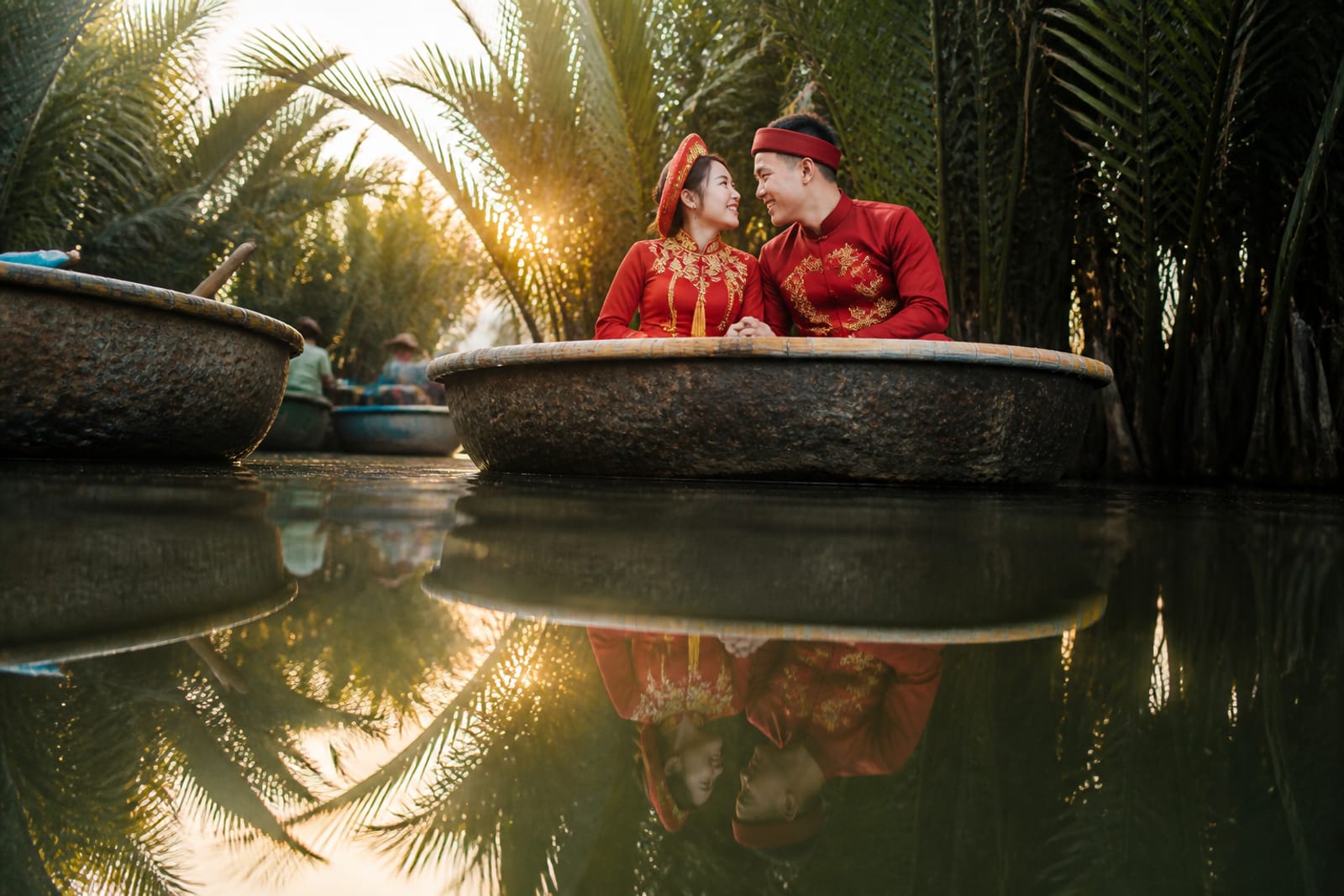
Which months allow you to shoot midday without melting?
| Season | Best for shooting | Light quality | Why it works | What to watch |
|---|---|---|---|---|
| Feb–Apr | All day, any hour | Mild, even, soft | Dry season; 25–30°C; minimal rain; green rice terraces visible from nearby | Cool early morning light best 6–8 a.m.; afternoon can still fade by 5 p.m. |
| May–Aug | Sunrise only (5:30–6:30 a.m.) | Golden, directional, intense | Dry but extremely hot (32–37°C); noon sun creates harsh shadows; dawn is the only comfortable window | Sunrise heat already 28°C; full makeup holds better before 8 a.m.; midday shoots risk wilting and sweat marks |
| Sep–Dec | Not recommended | Unpredictable; grey or wet | Rainy season; Oct–Nov worst for typhoons and flash flooding in Ancient Town streets; Oct–Nov also peak tourist season before Tet | Wet cobblestones reflect poorly; flooded alleys block access to riverside; humidity ruins hair and makeup; reschedule likelihood high |
| Dec–Jan (early) | Early morning only | Soft, cool, sometimes drizzly | Winter coolness returns; crowds lower post-Tet; light thinner than Feb–Apr | Drizzle common; bring backup umbrella; cooler (18–22°C) suits formal ao dai but reduces shooting hours |
Decision framework: Book February–April if you can; May–August requires sunrise commitment; skip September–December for wedding photos entirely.
How early do you need to arrive to beat crowds?
Couples must enter the Ancient Town by 6:00 a.m. at the latest to secure 60–90 minutes of nearly empty streets. The ticket gates open around 5:15 a.m.; arrival at 5:45 a.m. ensures entry before the first tourist buses (which typically begin parking by 6:30–7:00 a.m.). If shooting with a professional team, coordinate pickup from your hotel (or their base) by 5:15 a.m. to allow travel time. Makeup and ao dai dressing must finish before departure—most studios apply makeup and final touches at the hotel or a prepared space outside the Ancient Town, then enter with the couple. Delaying entry past 6:30 a.m. cuts your quiet window from 90 minutes to 45 minutes, substantially reducing location variety and pose options. Back-up timing: if dawn is impossible, book a weekday (Mon–Thu) session after 3:00 p.m., when afternoon heat clears mid-touring groups but before evening crowds arrive for lantern-lighting (dusk, typically 5:30–6:30 p.m.).
Which specific locations stay quiet longest?
The Japanese Bridge and the central riverside assembly halls are photographed by 95% of couples—avoid them between 7:00–8:00 a.m. and again 4:00–5:30 p.m. (sunset and lantern-lighting draw fresh crowds). Instead, shoot the less-traveled back lanes around the Cantonese Assembly Hall and the northern alley network leading toward the market—these remain quiet until 8:30 a.m. because buses deposit tourists at the main bridge entry. Riverside paths east of the central hub (near the French colonial buildings) stay quieter longer, though light angles favor morning shoots west-facing toward the bridge. Professional photographers familiar with Hoi An's layout—like Cáo Studio's team—know these micro-timings and can construct a shot list that moves through empty zones before crowds shift. Couples who rely on generic Instagram locations (the bridge at sunrise, the water reflections at the main steps) compete for space with hundreds of others; specificity in location scouting is your biggest crowd-avoidance tool.
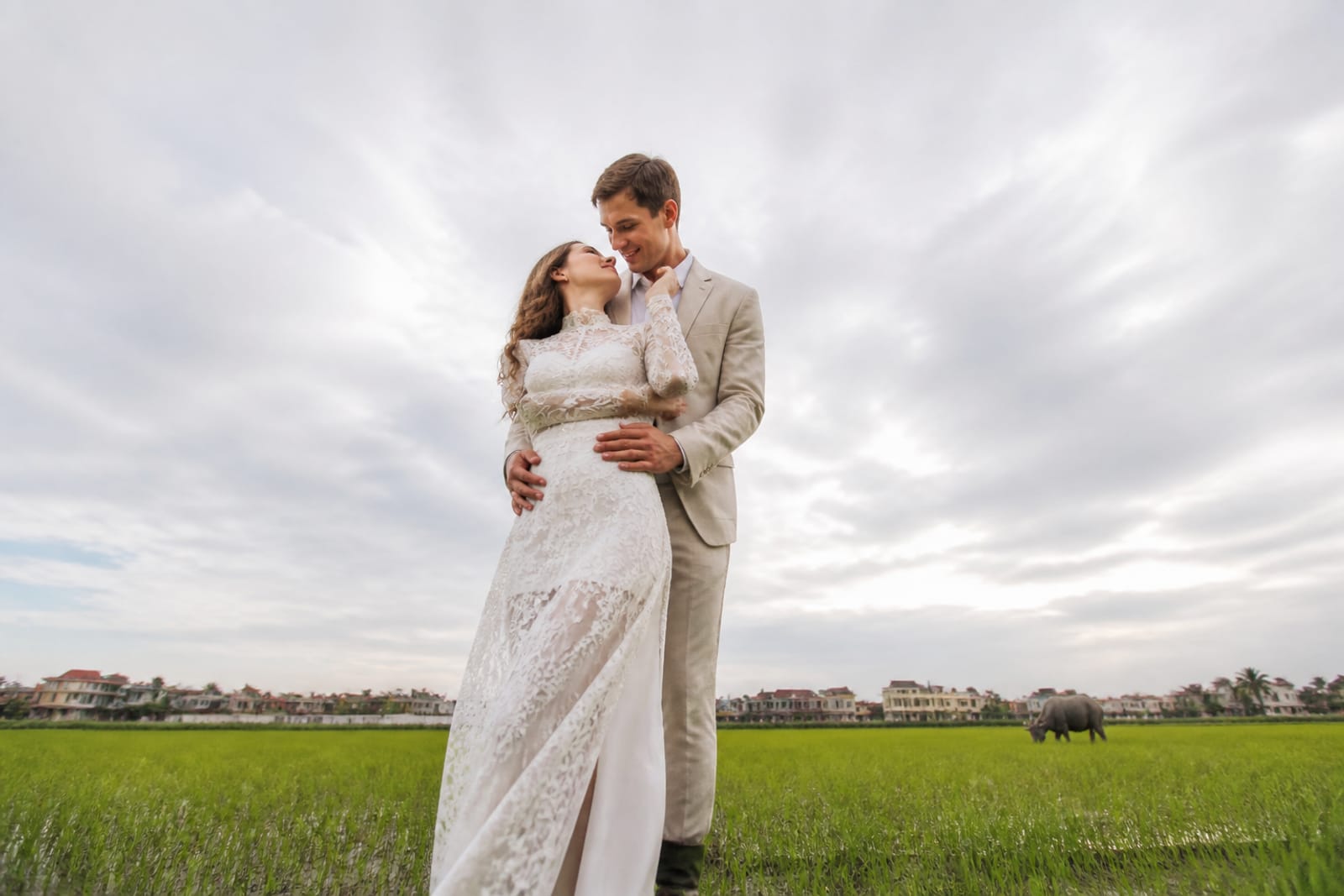
Should you hire a local photographer or book a studio?
Local independent photographers (hired via tourism boards or Instagram) are cheaper and nimble; they know Hoi An intimately. Downsides: inconsistent portfolios, communication delays in non-English, no backup if they cancel, and no guarantee of permit or timing knowledge—you may still arrive too late. Photography studios with Hoi An experience (like Cáo Studio – Makeup & Photoshoot, which travels to Hoi An by appointment) bring team coordination (makeup artist, stylist, photographer), professional gear, permit familiarity, and a structured timeline that prioritizes crowd avoidance. Studio services cost more but eliminate logistical risk; studios also include ao dai rental, hair/makeup, and editing in most pre-wedding packages. DIY with a tripod saves money but requires technical skill, early arrival discipline, and acceptance of lower-resolution final images. For couples prioritizing image quality and crowd-free experience, studio booking is worth the cost factor; independent photographers suit tight budgets and couples comfortable with smaller, unretouched galleries.
What happens if weather or crowds force a reschedule?
Rain is common Sep–Dec and possible (though rare) Feb–April. Professional studios include contingency clauses: a second shoot date at no extra fee, or a full rescheduling allowance if typhoons or flooding strike. Check rescheduling policy before booking. Crowds alone (crowds are not weather) are not a valid reschedule reason—couples must commit to early timing or accept midday heat or tourist backgrounds. If floods close the Ancient Town (Oct–Nov risk is highest), studios pivot to alternative Hoi An shoots: the rice terraces outside town, the Thu Bon River at sunrise, or a same-day rebook at a quieter nearby location. Confirm your studio's contingency protocol, backup locations, and refund/reschedule terms on WhatsApp before signing; no studio can prevent monsoons, but a good one prepares a Plan B.
What to check before you book
- Arrival time: Does the studio commit to 5:30–6:00 a.m. entry? Are pickup times confirmed the day before?
- Makeup location: Will makeup happen at your hotel or off-site? Travel time affects entry timing.
- Season & date: Book Feb–Apr only. If you're set on Sep–Dec, ask the studio's cancellation/reschedule policy explicitly—get it in writing.
- Entrance ticket: Confirm who buys the Ancient Town ticket and how much is included in your quote. Ask on WhatsApp.
- Outfit changes: How many ao dai or dress changes are included? Changing clothes in public (Ancient Town has no fitting rooms) adds time and requires privacy planning.
- Editing turnaround: When do you receive edited images? Studio timeframes vary.
- Backup locations: If weather or crowds worsen, where does the shoot move? Outside the Ancient Town? Another town? Get specifics.
- Team size & gear: Do they bring lighting, backup cameras, and an assistant? Larger teams can work faster in crowded conditions.
Cáo Studio operates in Hanoi, Ho Chi Minh City, and Hoi An by appointment—ask on WhatsApp for Hoi An dates and logistics. Check the pre-wedding photoshoot page for inclusions, and visit the FAQ for common questions on packages.
---
📸 Book on WhatsApp — ao dai photoshoot | 🌸 Pre-wedding photoshoot
FAQ
Can we shoot in Hoi An if we live in Hanoi?
Yes. Book a Cáo Studio session and confirm Hoi An availability on WhatsApp. The team travels to Hoi An by appointment; allow extra time for travel from Hanoi. Alternatively, shoot your pre-wedding session in Hanoi and visit Hoi An separately.
What if we can't arrive by 6:00 a.m.?
Shoot at 3:00–5:00 p.m. instead. Crowds thin after lunch, and late afternoon light is still soft if you finish by 5:30 p.m. (before sunset bustle). May–August: this window is hotter but avoids harsh midday sun. Expect fewer location options than a dawn shoot.
Do we need an entrance ticket if we book with a photography studio?
Yes. The Ancient Town entrance ticket is separate. Confirm with your studio on WhatsApp who purchases it and whether it's included in your session cost.
Is October–November really that bad for wedding photos?
Yes. Typhoons, flooding in low-lying streets, and 90% photo cancellation rates make Oct–Nov unsuitable. Rebook for Feb–April or May–August (sunrise only). Dec–Jan is possible but drizzly and darker.
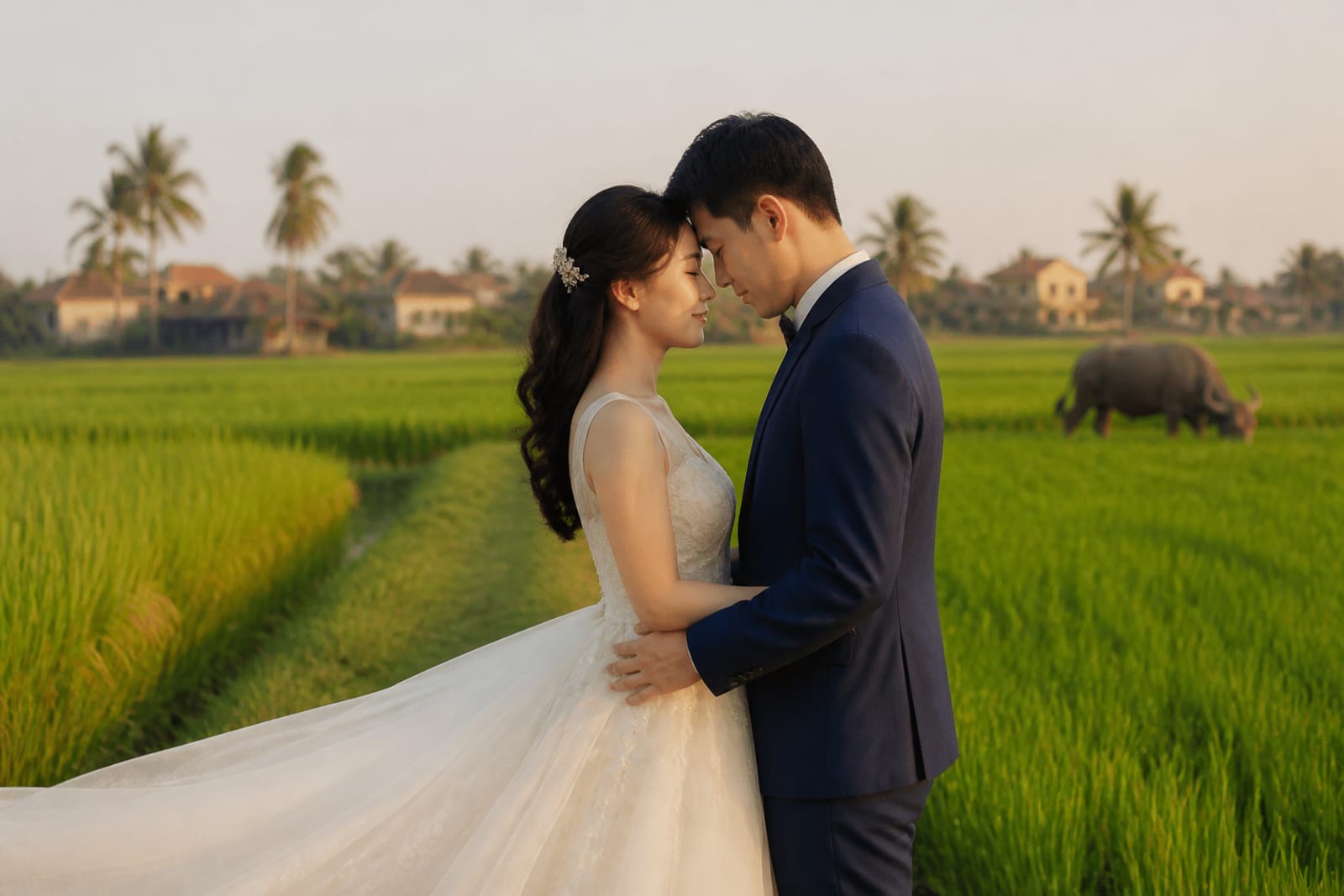
Can we include other locations (rice fields, river, villages) in our Hoi An session?
Yes, if you book extended time. Nearby An Bang Beach, Thu Bon River, and rice terraces are 10–20 minutes from the Ancient Town. Discuss location variety on WhatsApp when you confirm your session; it affects timing and team logistics.
What should we wear under the ao dai for photos?
Wear seamless nude or white undergarments (no visible panty lines or bra straps). Ask your studio or ao dai rental shop for fit advice; many studios offer ao dai rental as part of their service and can advise on layering and comfort for dawn shoots.
FAQ
Can we shoot in Hoi An if we live in Hanoi?
Yes. Book a Cáo Studio session and confirm Hoi An availability on WhatsApp. The team travels to Hoi An by appointment; allow extra time for travel from Hanoi. Alternatively, shoot your [pre-wedding session in Hanoi](/hanoi) and visit Hoi An separately.
What if we can't arrive by 6:00 a.m.?
Shoot at 3:00–5:00 p.m. instead. Crowds thin after lunch, and late afternoon light is still soft if you finish by 5:30 p.m. (before sunset bustle). May–August: this window is hotter but avoids harsh midday sun. Expect fewer location options than a dawn shoot.
Do we need an entrance ticket if we book with a photography studio?
Yes. The Ancient Town entrance ticket is separate. Confirm with your studio on WhatsApp who purchases it and whether it's included in your session cost.
Is October–November really that bad for wedding photos?
Yes. Typhoons, flooding in low-lying streets, and 90% photo cancellation rates make Oct–Nov unsuitable. Rebook for Feb–April or May–August (sunrise only). Dec–Jan is possible but drizzly and darker.
Can we include other locations (rice fields, river, villages) in our Hoi An session?
Yes, if you book extended time. Nearby An Bang Beach, Thu Bon River, and rice terraces are 10–20 minutes from the Ancient Town. Discuss location variety on WhatsApp when you confirm your session; it affects timing and team logistics.
What should we wear under the ao dai for photos?
Wear seamless nude or white undergarments (no visible panty lines or bra straps). Ask your studio or ao dai rental shop for fit advice; many studios offer [ao dai rental](/ao-dai-rental) as part of their service and can advise on layering and comfort for dawn shoots.
Ao dai, makeup, hair and a local photographer in Hanoi or Saigon — one WhatsApp message.