/pre-wedding-photoshoot
Avoid crowds at Ma Pi Leng Pass: wedding photo day timing guide
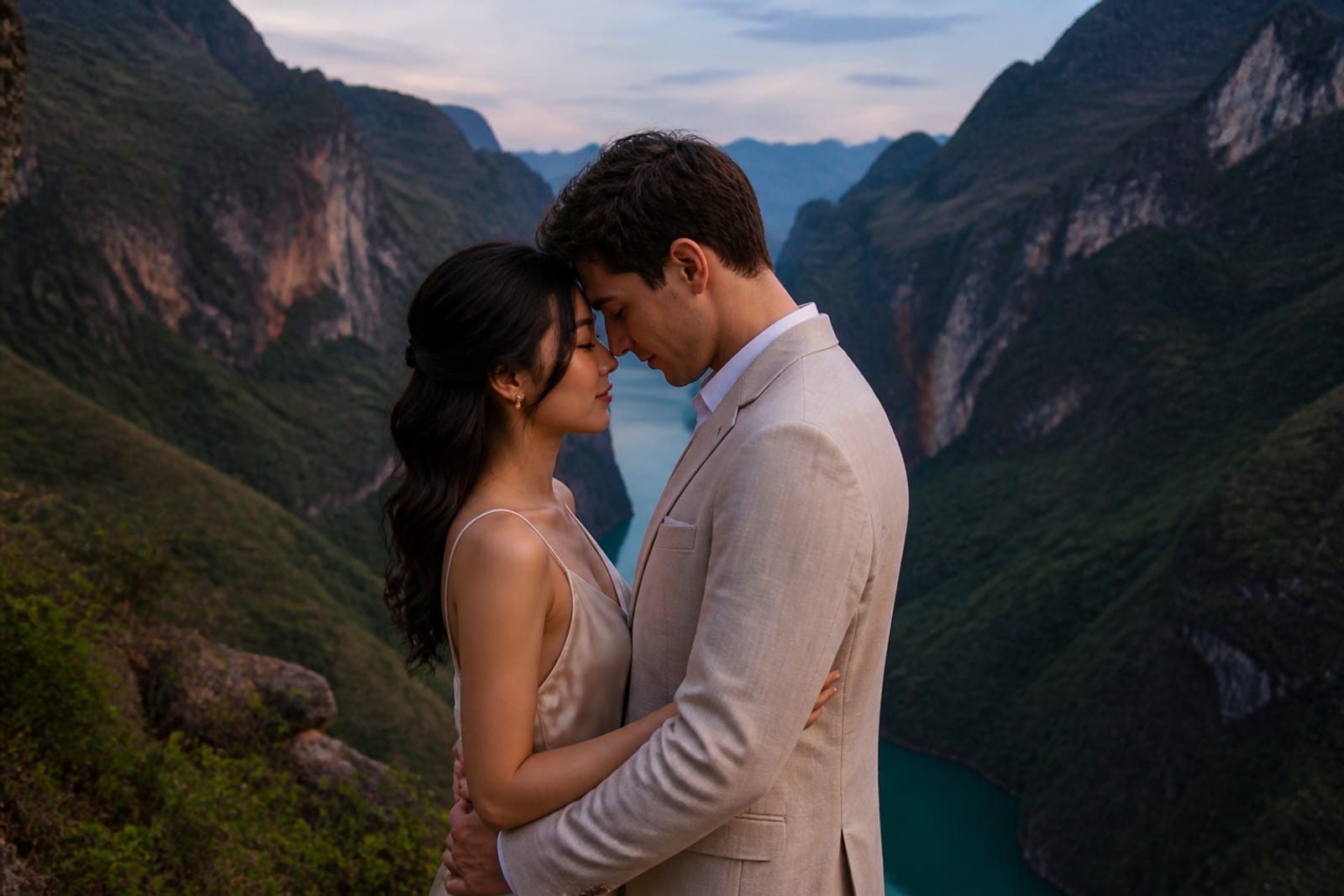
Ma Pi Leng Pass (Nho Que River, Ha Giang province) is a 500-meter gorge with north-south light that shifts from soft side-light at dawn to harsh overhead by 11 a.m., then rich amber after 4 p.m.—ideal for wedding frames from June to September when the river is fullest and morning fog clears by 7 a.m. Crowds peak between 9 a.m. and 3 p.m. on weekends and Tet season (late Jan–mid Feb); solo travelers and couples who shoot before 6:30 a.m. or after 5 p.m. (sunset around 6:30–7 p.m. May–Sep) find the pass nearly empty. The site sits 380 km north of Hanoi on a mountain road requiring 5–6 hours each way; a pre-wedding photoshoot here is part of a multi-day northern elopement trip, not a same-day add-on. Hire a Hanoi-based team (Cáo Studio coordinates photographers and logistics for such shoots) rather than sourcing a Ha Giang local solo, because outfit, makeup, and timing need one director across the road journey. 📸 Book on WhatsApp — pre-wedding elopement ---
Is Ma Pi Leng Pass actually empty at dawn, or just less crowded?
Before 6:30 a.m. on a weekday, the pass is functionally alone—you may see one or two motorcyclists or early hikers, but no organized tour groups. Weekend mornings (6–8 a.m.) see light foot traffic from domestic trekkers starting their Ha Giang loop. Sunrise itself (5:45–6:15 a.m. depending on month) attracts photographers, so arriving by 5:30 a.m. means you shoot the first light without an audience and leave before guides arrive with tour groups around 7:30–8 a.m. This narrow window requires discipline: your team must wake at 3:30–4 a.m., eat on the road, and be camera-ready in low light—possible only if hair and makeup were prepped the night before (a makeup & hair session at your hotel in the nearest town, Ha Giang city, is essential). Shooting at this hour also means you need a director experienced in pre-dawn ambient light, not a photographer who waits for daylight.
Which months let you shoot Ma Pi Leng without monsoon delays?
June through September is the open window. May sees scattered morning showers that clear by 7 a.m. but can trap your transport team for hours on the mountain road if a landslide blocks the route—check with Ha Giang authorities on road conditions before committing. October is still dry but overcast (grey light, no shadows). December through February brings mist and cold (your ao dai or wedding dress will wrinkle in humidity), and Tet holidays (late Jan–mid Feb) quadruple domestic tourism; the road crowds mean your 5 a.m. start becomes irrelevant. March and April are hot and dusty; July–August afternoon storms are intense but usually clear by evening, opening a 5–6:30 p.m. window if your team can delay sunrise and shoot golden hour instead. For a wedding shoot, June to August (before monsoon peaks) offers the best combination of clear skies, minimal crowds, and full river light.
Should you hire a local Ha Giang photographer or bring a team from Hanoi?
A local Ha Giang photographer knows the pass, road conditions and safe spots—invaluable for finding emergency exits if weather turns. But wedding frames demand continuity: the same person shoots your hotel makeup session, the road journey, and the pass itself, so light, framing and story stay coherent. If you hire a local solo photographer and a separate Hanoi makeup artist, the photographer may not know what look was planned, won't direct your outfit on arrival (creases, wind, sweat), and shoots the "monument pose" rather than a narrative (walking, looking at each other, sitting at the cliff edge). A coordinated team from Hanoi—photographer, makeup artist, stylist in one booking—arrives the day before, preps everything, shoots dawn, and handles continuity. Compare this to the DIY route: you source a Ha Giang local, a Hanoi makeup artist, maybe rent an ao dai locally (wrinkled, ill-fitted), and hope they work together on arrival. The first option costs more in travel time (6+ hours for the Hanoi team) but delivers one cohesive story. The second saves logistics but often yields disjointed frames and wasted time on-site.
| Option | Best for | Light & season | Why it works or fails |
|---|---|---|---|
| Coordinated Hanoi team (photographer + makeup + stylist) | Couples wanting one narrative, careful framing, pre-dawn shoots | June–Sep, 5–6:30 a.m. or 5–6:30 p.m., soft side-light | One director ensures outfit, makeup, light and story align; handles road delays with flexibility; pre-dawn requires overnight prep |
| Local Ha Giang photographer + separate makeup artist | DIY couples, budget-conscious, comfort with coordination risk | Any season, flexible hours, guided by local | Photographer knows site and roads; makeup artist unfamiliar with light needs or outfit condition; frames may feel disjointed; road experience doesn't guarantee wedding-narrative skill |
| Solo traveler (you + hired local, no makeup team) | Budget-first, casual shoot, comfort with minimal direction | Dry season (June–Sep), daytime (8 a.m.–4 p.m. to avoid harsh noon) | Fast to arrange, lowest cost; no narrative direction; frames tend toward "person in front of landmark"; weather/crowds on the day become stressful without a team buffer |
| Elope with a friend as photographer (no hired pro) | Intimate, spontaneous, absolute budget minimum | Any season, flexible; best light windows unused | Emotional, authentic; no professional framing or light knowledge; wasted light if friend is unfamiliar with the pass or camera settings |
What outfit and hair plan actually works in Ha Giang's dawn wind and river damp?
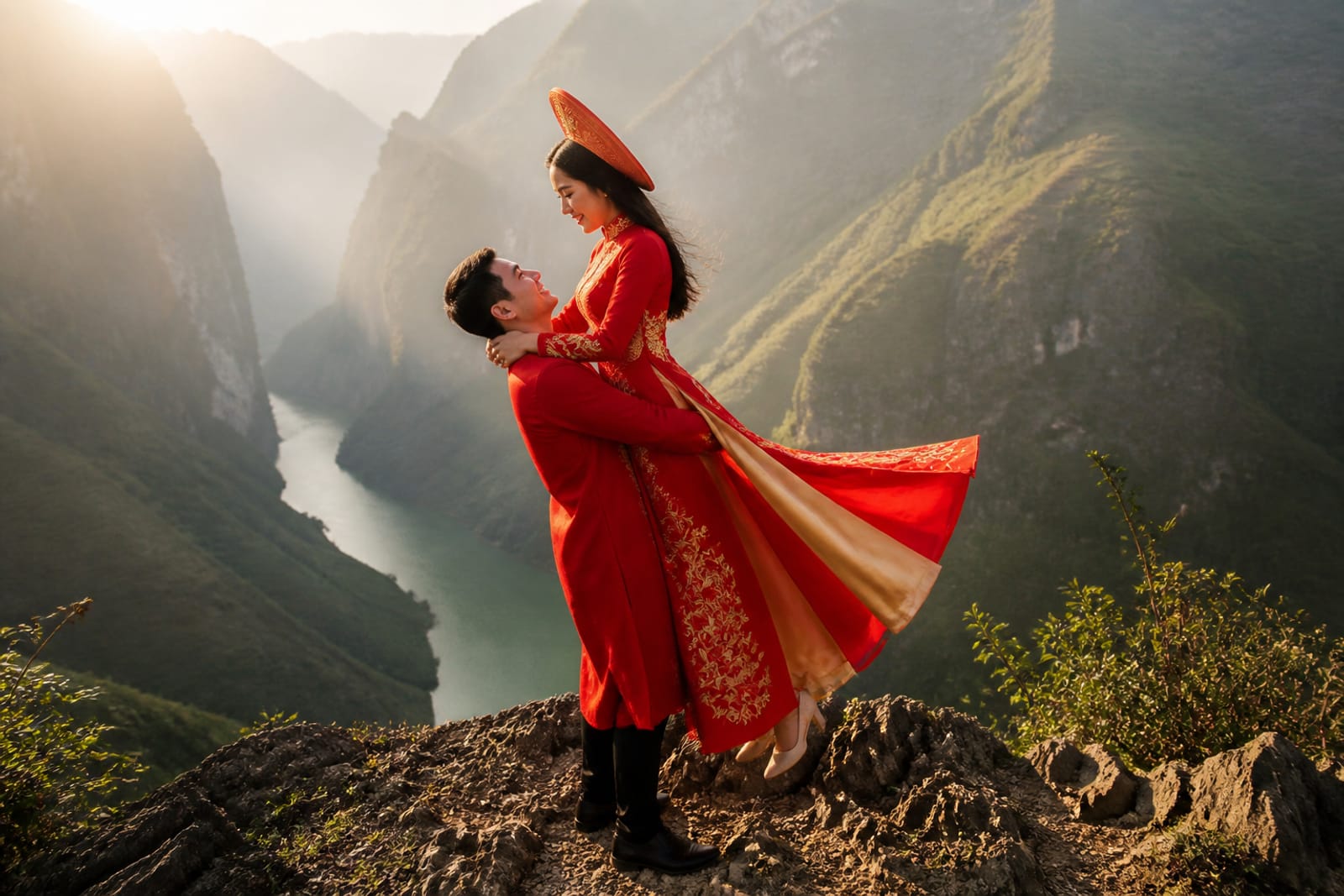
The pass sits 600 meters above the Nho Que River, so dawn brings updrafts, humidity and temperature swings of 5–10°C between cliff-top and river level. An ao dai (silk or cotton blend) will billow, wrinkle and absorb mist—order one a size larger, in a light color (white, cream, pale pink) so mist doesn't darken it, and have your makeup artist pack a steamer for the hotel room the night before (test it on a scrap ao dai first; poor steaming leaves creases). Hair in a tight bun, low ponytail or braids resists wind better than loose waves; bring bobby pins, a small brush, and hairspray rated for humidity (ask your makeup artist to pack this). If wearing a wedding dress, choose fitted bodice with a structured skirt (A-line, not tulle that catches wind); bring a wrap or shawl for the 5 a.m. cool. Avoid heavy jewelry that catches light unpredictably in pre-dawn soft-light; minimal earrings and a simple bracelet photograph better. Test your full outfit (dress, shoes, jewelry, hair) at your hotel the evening before, in natural light near a window, so you catch fit issues before dawn. Cáo Studio coordinates ao dai rental and wedding dress rental for shoots—if you book with the studio, hair and outfit are prepped together in your Hanoi hotel the day before departure, so you arrive at the pass camera-ready.
How do you actually get to Ma Pi Leng Pass on shoot day without losing light?
Hanoi to Ha Giang Pass is 380 km, roughly 5–6 hours by car depending on road condition and stops. You have three options:
Option 1: Overnight in Ha Giang city, pre-dawn shoot. Depart Hanoi on day one (afternoon), arrive Ha Giang city by evening, stay overnight, and leave your hotel at 4 a.m. on day two for a 1.5-hour drive to the pass, shooting by 5:45 a.m. (sunrise). This is the crowd-free window but requires early-morning discipline and coordination between your driver, makeup artist and photographer.
Option 2: Two-day northern loop. Day one: shoot the pass at dawn or evening, then explore nearby sites (Dong Van Karst, traditional villages) during midday (when pass crowds peak and light is harsh). Day two: return to Hanoi. This spreads logistics, gives you backup if weather delays the pass, and lets you gather multiple frame-sets (elopement at the pass, couple portraits in a quiet village, detail shots of ao dai at a traditional stone house).
Option 3: Hired driver + fixed timing. Book a driver and guide through a Hanoi tour operator (not recommended for wedding shoots—they prioritize schedules over light and emotion). You lose flexibility if weather or makeup timing delays the shoot.
Most coordinated teams choose Option 1 (overnight, pre-dawn) because it gives the best light and fewest crowds, or Option 2 (two-day loop) to build narrative depth and handle weather risk. Never plan same-day Hanoi–Ma Pi Leng–Hanoi for a wedding shoot (12-hour round trip, you arrive exhausted, light windows are missed, outfit gets wrinkled by travel). Ask Cáo Studio on WhatsApp about multi-day northern elopement logistics—the team coordinates transport, hotel, and timing so you focus on frames.
---
What to check before you book a Ma Pi Leng wedding shoot
Road access. Ha Giang authorities occasionally close the mountain pass for landslide repair (usually 1–2 weeks, announced 2–3 days in advance). Check with your photographer or guide 1 week before departure; a backup lower-altitude site (Lung Cu flag tower, 30 min away) should be part of your contract.
Weather forecast and monsoon risk. Book through a team (not a solo local) who has contingency—if monsoon downpour hits at 5:30 a.m., they know the river mood and can pivot to evening shoot or a sheltered village site nearby. A solo photographer often has no alternative and cancels.
Permit and guide requirement. Ha Giang Loop is open to motorcyclists and cars without special permit, but if you hire a guide or enter certain trekking areas near the pass, check if a local guide permit applies (rules change; ask locals on arrival).
Outfit fit and steaming. Rent or bring your ao dai or wedding dress 2–3 days early, not the morning of travel. Test it in daylight, steam it overnight, and have your makeup artist inspect the fit the evening before the shoot.
Transport coordination. Your photographer, makeup artist and driver must be booked as one package, not three separate vendors. Confirm departure time (4 a.m. or earlier) and hotel pickup in writing.
Light check at the site. If possible, your photographer should have shot at Ma Pi Leng before (in June–Sep at dawn or sunset) to know the exact light angle and safe framing zones. Ask to see their previous frames from the pass.
---
Learn more about pre-wedding photoshoots and elopement planning
Cáo Studio shoots pre-wedding and elopement sessions in Hanoi, Ho Chi Minh City, and Hoi An, including multi-day northern trips to Ha Giang and Ninh Binh. For a Ma Pi Leng Pass shoot, the studio coordinates the full team (photographer, makeup artist, stylist, driver liaison) from Hanoi, ensuring one narrative and crowd-free light windows. Explore the ao dai rental collection for pass-appropriate silks, or book a makeup & hair session at your Hanoi hotel the day before departure. Check the pre-wedding photoshoot page for other northern elopement sites and multi-day options, then message on WhatsApp to discuss Ma Pi Leng logistics and light timing with the team.
FAQ
What time does sunrise happen at Ma Pi Leng, and when do tour groups arrive?
Sunrise is roughly 5:45–6:15 a.m. (May–Sep). Tour groups begin arriving by 7:30–8 a.m. Shooting between 5:30–7 a.m. keeps you ahead of crowds but requires a 4 a.m. hotel departure.
Can you shoot Ma Pi Leng in December or January for a winter wedding?
Yes, but mist and grey overcast reduce directional light, and Tet holidays (late Jan–mid Feb) triple domestic tourism. June–September offers clearer skies and fewer crowds.
Do you need a permit or guide to shoot at Ma Pi Leng Pass?
The pass itself is open to tourists; no permit required. Hiring a local guide is optional but useful if weather shifts. Confirm current rules with Ha Giang authorities before travel.
How many hours should we block for a Ma Pi Leng wedding shoot?
Plan 4–5 hours on-site: 1 hour for pre-dawn setup and first light, 2–3 hours for multiple frame-sets and outfit changes, 30 min for wind/weather buffer. Add 7–8 hours total for Hanoi round-trip transport.
Should we bring a second outfit (dress or ao dai) to the pass?
Yes. Wind and mist may wrinkle or damp the first outfit after 1–2 hours. A second ao dai or dress lets you change and shoot fresh light in the later hour without rushed touch-ups.
What if monsoon rains block the pass on shoot day?
Book with a coordinated team (photographer + guide) who knows backup sites. A solo photographer has no alternative. Ask your team in advance what the backup plan is.
FAQ
What time does sunrise happen at Ma Pi Leng, and when do tour groups arrive?
Sunrise is roughly 5:45–6:15 a.m. (May–Sep). Tour groups begin arriving by 7:30–8 a.m. Shooting between 5:30–7 a.m. keeps you ahead of crowds but requires a 4 a.m. hotel departure.
Can you shoot Ma Pi Leng in December or January for a winter wedding?
Yes, but mist and grey overcast reduce directional light, and Tet holidays (late Jan–mid Feb) triple domestic tourism. June–September offers clearer skies and fewer crowds.
Do you need a permit or guide to shoot at Ma Pi Leng Pass?
The pass itself is open to tourists; no permit required. Hiring a local guide is optional but useful if weather shifts. Confirm current rules with Ha Giang authorities before travel.
How many hours should we block for a Ma Pi Leng wedding shoot?
Plan 4–5 hours on-site: 1 hour for pre-dawn setup and first light, 2–3 hours for multiple frame-sets and outfit changes, 30 min for wind/weather buffer. Add 7–8 hours total for Hanoi round-trip transport.
Should we bring a second outfit (dress or ao dai) to the pass?
Yes. Wind and mist may wrinkle or damp the first outfit after 1–2 hours. A second ao dai or dress lets you change and shoot fresh light in the later hour without rushed touch-ups.
What if monsoon rains block the pass on shoot day?
Book with a coordinated team (photographer + guide) who knows backup sites. A solo photographer has no alternative. Ask your team in advance what the backup plan is.
Ao dai, makeup, hair and a local photographer in Hanoi or Saigon — one WhatsApp message.